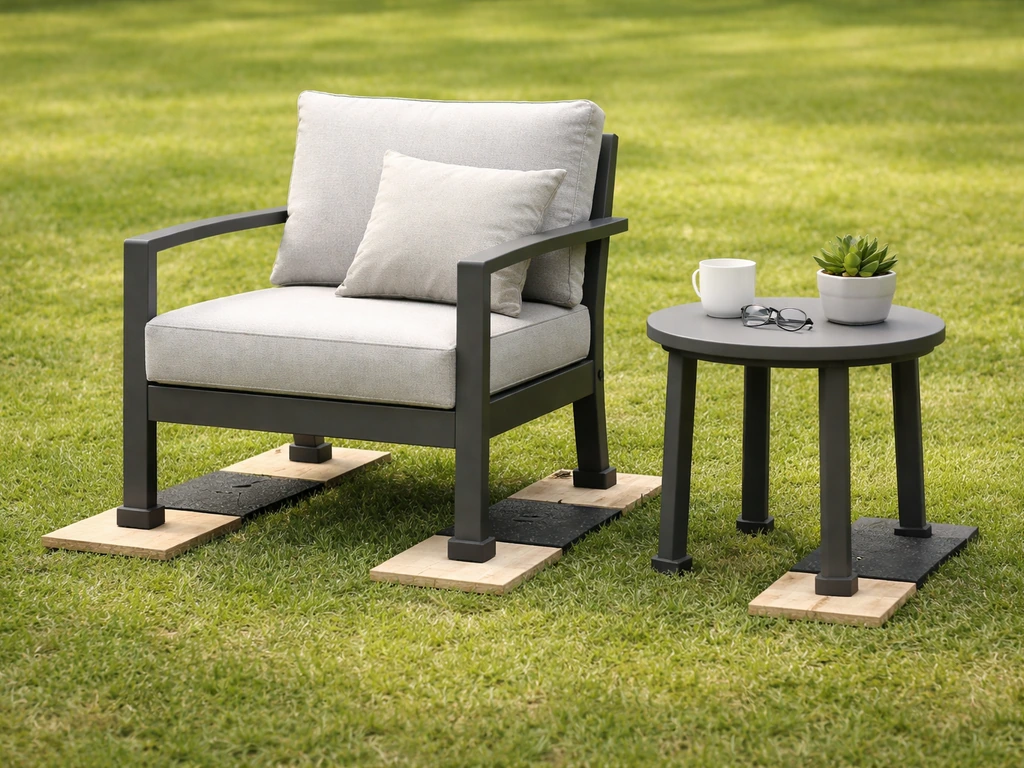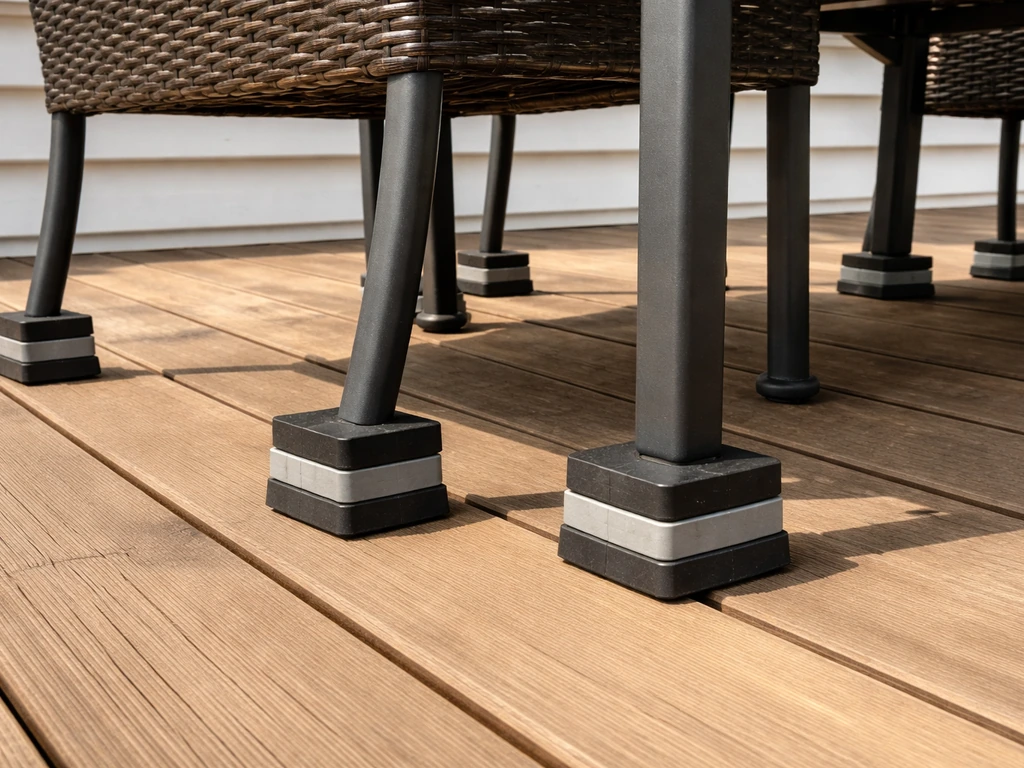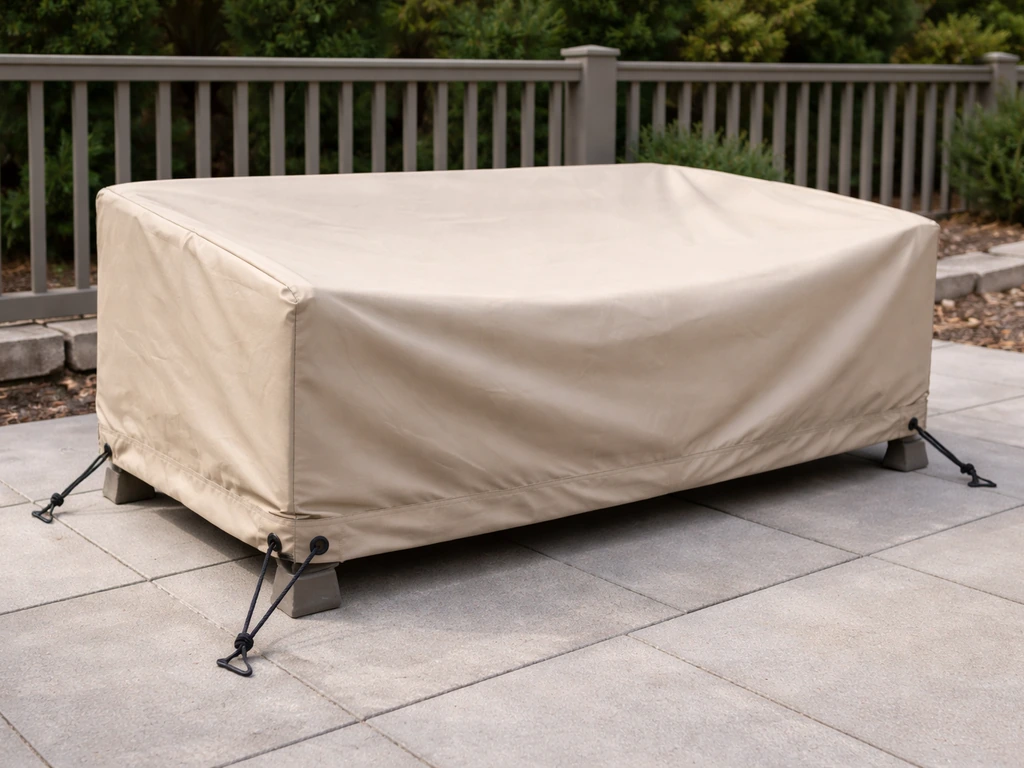
You can sell used patio furniture quickly and for good money by doing three things right: honest prep work that targets the biggest visual turnoffs, a realistic price based on what's actually selling locally right now, and a listing with real photos and real measurements. Most sellers skip at least one of these steps, which is why their sets sit unsold for weeks. Get all three right and you can move patio furniture in a weekend. Before you list or stage your outdoor space, it also helps to know what to put under patio furniture to protect the surface and improve comfort.
How to Sell Patio Furniture: Step by Step for Used Sets
Maren Grady
17 Jun 2026
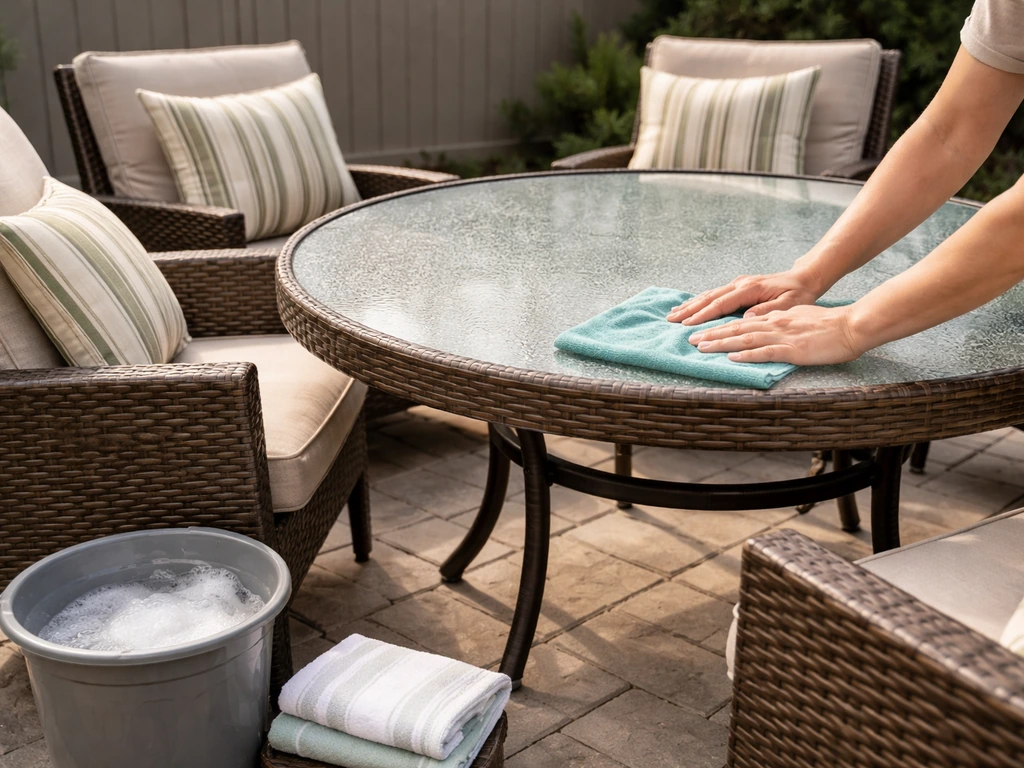
Decide what you can sell (and whether it's worth prepping)
Before you drag anything out to the driveway, sort your furniture into three buckets: sell as-is, prep before selling, or donate/trash. Not everything earns back the time you'd spend fixing it up.
Sell as-is candidates are pieces that are structurally sound, functionally complete (no missing parts that affect use), and just a little dirty or faded. Think wrought iron chairs that need a scrub, a teak dining table with a few surface stains, or an aluminum sectional that just needs its cushions replaced. These are worth cleaning and listing without major investment.
Prep before selling makes sense when a small fix dramatically changes the perceived value. Retightening wobbly joints, replacing a single broken strap on a resin chair, or recovering worn chair cushions can turn a 'meh' listing into a fast sale. A $10 can of spray paint on rusty cast iron legs, for example, can easily add $40 to $60 to what a buyer is willing to pay.
Donate or trash is the right call for furniture with structural damage (cracked welds, bent frames that shift the whole piece, rotted wood that flexes underfoot), missing parts that aren't easy to source, or cushion foam that's completely compressed and mildewy. Buyers will pass on these, and listing them just wastes your time. A donation to a local thrift store or habitat restore at least gets them out of your space.
One honest reality check: full matching sets almost always sell faster and for more than individual pieces. If you're selling a six-piece dining set, keep it together as long as possible. Splitting it only makes sense if you've had zero interest after two or three weeks.
DIY prep that actually boosts resale value
The goal here isn't to restore the furniture to like-new condition. That takes too long and costs too much to justify before a sale. The goal is to remove the things that make buyers immediately scroll past: grime, rust, floppy joints, missing pieces, and trashed cushions. Here's what actually moves the needle.
Clean everything thoroughly
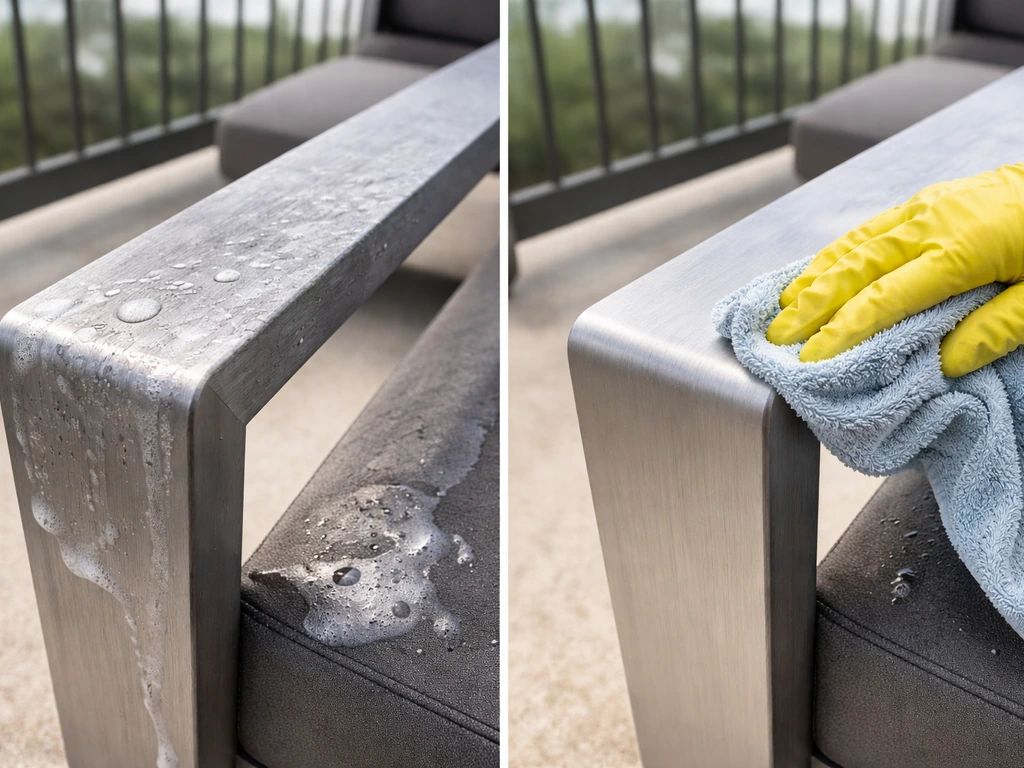
This is the single highest-return task. A thorough cleaning can make a $50 piece of furniture look like a $150 piece in photos. For most materials, a mix of dish soap and warm water with a stiff brush handles the bulk of it. For mold or mildew (very common on cushions and plastic furniture stored outdoors), a diluted white vinegar solution (one part vinegar to four parts water) or an oxygen bleach cleaner works well without damaging most surfaces. Rinse everything well and let it dry completely before photos. Wet furniture in photos reads as dirty.
For aluminum and steel, a quick wipe-down with a microfiber cloth after washing brings back the sheen. For wood (teak, acacia, eucalyptus), a light sanding with 120-grit sandpaper followed by a thin coat of teak oil or similar outdoor wood conditioner takes maybe 30 minutes and can make the difference between a buyer offering $80 and $150. If your patio furniture feels too low for your space, learn how to make patio furniture higher with safe risers and stable methods that keep the look and the structure intact.
Fix wobbles and tighten hardware
Wobbly chairs and tables are a massive red flag for buyers who are picking up furniture they can't return. Take 20 minutes to tighten every bolt, screw, and bracket you can reach. For chairs with loose back rails or arms, most hardware-store knockdown connectors (the kind used in flat-pack furniture) can be retightened with a simple hex key. If a bolt is stripped, a $2 replacement from the hardware store closes the problem entirely. For resin or plastic chairs that flex at the joints, a small bead of outdoor-rated epoxy on the inside of the joint while the piece is clamped flat can firm things up in a few hours.
Touch up rust and surface damage
Surface rust on cast iron or steel is almost always a cosmetic issue, not a structural one, and it's cheap to fix. Sand the rusty spots with 80-grit sandpaper, wipe clean, and apply a rust-converting primer followed by a matching spray paint in a satin or semi-gloss finish. Most spray paint jobs for outdoor furniture cost under $15 in materials and take about an hour including dry time between coats. Be honest in your listing that the piece has been touch-up painted, but the visual result speaks for itself. Buyers can see the difference between a rusting piece and one that's been cared for.
Cushions and reupholstery basics
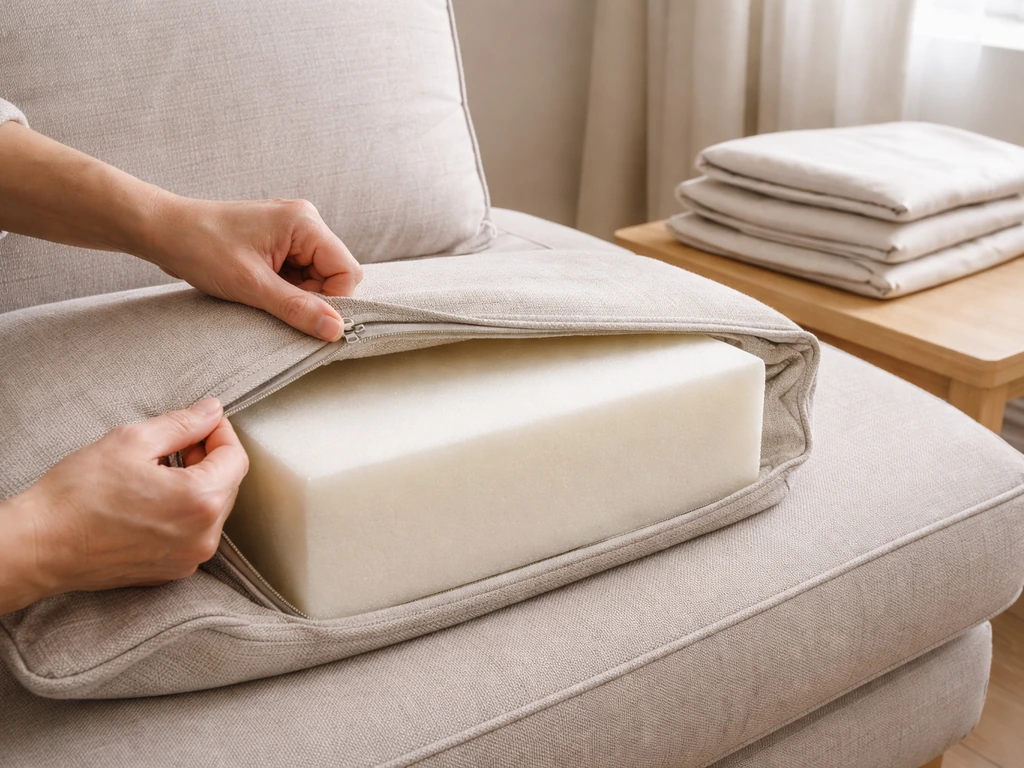
This is where the biggest value jump happens, and also where you need to be most careful about time investment. If the existing cushions are just dirty, wash the covers (most zip off) in cold water with mild detergent. If the covers are faded but the foam is still firm, a can of outdoor fabric spray paint (brands like Rust-Oleum make these) can refresh solid-color covers for about $10. If the foam is shot, flat, or smells musty, you have two realistic options: replace the cushion inserts (cut foam from a fabric store runs about $10 to $20 per seat), or sell the furniture without cushions and price it accordingly, noting in the listing that it needs new cushions. Buyers who are handy will appreciate the honest disclosure, and many prefer to choose their own cushion colors anyway.
Full reupholstery before a sale only makes financial sense for high-quality pieces (think heavy teak, cast aluminum, or name-brand sets) where the frame alone is worth $200 or more. For budget-tier furniture, the labor and materials for a full recover often cost more than the price bump you'd see.
Pricing used patio furniture realistically
The fastest way to land on a fair price is to look at what's actually selling on Facebook Marketplace and Craigslist in your area right now, not what people are asking. Search for the same type of furniture (material, style, size, brand if you know it), filter to recently sold if the platform shows it, and aim for the middle of what you see. Don't price based on what you originally paid.
A rough starting framework for condition-based pricing: used outdoor furniture in good condition typically sells for 20 to 40 percent of its original retail price. Excellent condition (barely used, no notable wear) might push to 50 percent. Worn but functional condition usually lands between 10 and 20 percent. If you don't know the original retail price, search the brand and model number on retailer sites to get a baseline.
| Condition | Typical Resale Range (% of Original Retail) | Notes |
|---|---|---|
| Like new (minimal use, no wear) | 40–55% | Must have original or matching cushions; clean throughout |
| Good (normal use, minor wear) | 25–40% | May have small scuffs or fading; fully functional |
| Fair (visible wear, faded, some rust) | 10–25% | Clean and repaired where possible; honest in listing |
| Poor (structural issues, missing parts) | 5–15% or donate | List at low price with clear disclosure; consider donating |
Decide on your strategy before you list. If you want to sell fast (clearing space before a move, for example), price 10 to 15 percent below comparable listings. If you want to maximize return and have time to wait, price at the high end of the range and let it sit a week before dropping. Don't price high with the plan to negotiate down unless you're genuinely okay with holding the item for weeks. Most local buyers just scroll past listings that look overpriced and never reach out.
One pricing tactic that works well: list a matching set together at a slight premium over the combined individual pieces, but also note in the listing that you'll consider selling pieces separately if the set doesn't move. This attracts buyers who want everything and keeps your options open.
Where to list and how to write a strong listing
Best platforms for local patio furniture sales
For most people, Facebook Marketplace is the single best place to sell used patio furniture right now. It has the largest local buyer pool, it's free to list, and the algorithm surfaces your listing to people nearby. OfferUp is a solid second option and pulls a slightly different audience. Craigslist is worth posting on as well, especially in larger cities where it still gets heavy traffic. Nextdoor is underrated for outdoor furniture because neighbors are already nearby, reducing the friction of pickup coordination.
If you're trying to move high-end pieces (a genuine Restoration Hardware teak set, for instance, or a Pottery Barn outdoor sectional), consider Chairish or even eBay with local pickup selected. These platforms attract buyers specifically looking for quality secondhand pieces and are less price-sensitive than local casual buyers. For low-value items (plastic chairs, worn side tables), a garage sale or curbside free listing gets them gone fastest.
Writing a listing that actually gets responses
Your listing title should include the material, the piece type, and the approximate size or set count. Something like 'Cast Aluminum Patio Dining Set, 6-Piece, 60-inch Table' tells buyers what they need to know before they even click. Avoid vague titles like 'Outdoor Furniture' or 'Patio Set - Great Condition' because they don't help buyers searching for something specific.
In the description, lead with the key selling facts: what it is, what material it's made of, the dimensions, how many pieces are included, the brand if known, and a brief honest condition note. If you are keeping the patio furniture yourself, the key is choosing a spot with enough walking room, safe clearance from doors, and sunlight where you want to relax In the description, lead with the key selling facts. Then add practical details buyers actually want: Does it fold? Does it disassemble for transport? Is there a cover included? Are the cushions included, and what color/material are they? Does it need any known repairs or touch-ups? Disclosing small issues upfront in your listing saves you awkward conversations when someone shows up in person.
- Material (teak, aluminum, wrought iron, resin wicker, powder-coated steel, etc.)
- Dimensions of each main piece (table: length x width x height; chairs: seat height and width)
- Number of pieces and what's included
- Brand and model number if visible (check the underside of chairs and the table frame)
- Cushion details (included or not, color, material, condition)
- Condition notes (fading, any touch-up paint, replaced hardware, washed cushions)
- Smoke-free and pet-free if applicable (buyers ask)
- Whether it disassembles and how easily
- Your general location (neighborhood or cross-streets, not full address)
Taking photos that actually sell
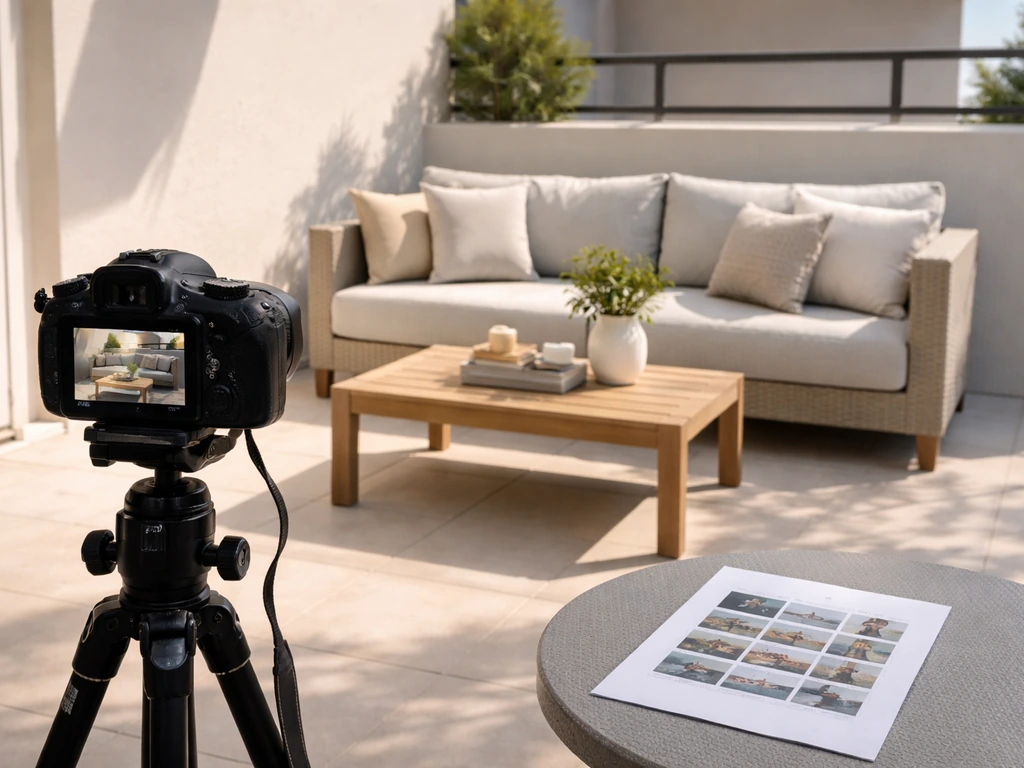
Good photos are the difference between a listing that gets 20 messages in two days and one that sits quiet for two weeks. Shoot in natural daylight, ideally in the morning or late afternoon when the light is soft and even. Stage the set on your patio or deck rather than in a garage or against a blank fence. If you follow a simple staging checklist, your patio furniture photographs better and buyers trust it more. You don't need to make it look like a magazine shoot, just show it the way someone would actually use it. Buyers on local platforms are skeptical of stock-looking photos pulled from a manufacturer's page, and real-use photos build immediate trust.
Take at least 8 to 10 photos: a wide establishing shot of the full set, shots of each main piece individually, close-ups of the condition details (including any wear, fading, or touch-up work), the underside or back of one chair (showing construction quality), and a photo of any tags, labels, or brand markings you found. If there are flaws, photograph them clearly. A buyer who sees a scuff in the photos and shows up to find that exact scuff is far less likely to try to renegotiate than a buyer who feels surprised by it.
Selling logistics: pickup, safety, and avoiding scams
Setting up pickup safely
Keep communication on the platform's own messaging system until the sale is done. Buyers who push to move the conversation to WhatsApp, text, or email very early in the exchange are a common red flag for scam attempts. Facebook’s Marketplace safety guidance also says that if you spot signs of suspicious activity, you should cancel the conversation and report the listing or person, and it includes advice about meeting in person and avoiding unsafe payment methods. Facebook, OfferUp, and Craigslist all note this in their safety guidance, and it's a pattern that's consistent across platforms.
For most patio furniture sales, a driveway or front yard pickup is the natural setup. You don't need to invite strangers inside your home, and you shouldn't. Have the item outside and visible when the buyer arrives, inspect it with them, collect payment, and help them load it. If the buyer is setting it on grass instead of a driveway, include tips for leveling and protecting the grass so the pickup and setup go smoothly set up patio furniture on grass. That's the whole transaction. If you're at all uncomfortable with a buyer for any reason, OfferUp maintains a network of Community MeetUp Spots (usually in front of police stations or business entrances) where you can arrange the exchange in a public, often camera-monitored location.
Payment: what to accept and what to avoid
Cash is still the simplest and safest option for local patio furniture sales. Venmo, PayPal Friends and Family, Cash App, and Zelle are widely used and generally fine for local pickups where the buyer is physically standing in front of you when they pay. The key rule: don't release the item until you have confirmed payment in your account, not just a screenshot or a pending notification.
Never accept payment via gift cards, wire transfer, cryptocurrency, or cashier's checks. These are the most common formats used in resale scams. Cashier's check schemes in particular are well-documented: the buyer sends a check for more than the asking price, asks you to refund the difference, and the check later bounces, leaving you out both the item and the refund money. The FTC recommends reporting payment scams to ReportFraud.ftc.gov if you encounter them.
Also avoid taking deposits or down payments before meeting in person. If a buyer says they need to 'hold' a piece with a payment before pickup day, this is another common scam setup. A simple 'I'll hold it for 24 hours once we have a confirmed pickup time, but no deposit needed' is a reasonable policy that keeps serious buyers and screens out bad actors.
Loading heavy furniture safely
Be upfront in your listing about what the buyer needs to bring for pickup. A six-piece cast aluminum dining set with a 60-inch table is not a one-person job. Note in the listing that the buyer should bring help and a truck or SUV with adequate space. Have moving blankets or old towels on hand to protect items during loading, especially glass tabletops. Disassemble what you can before the buyer arrives so pickup is faster and loading is safer. If a table has a removable umbrella hole cover or a glass top that lifts off, have it already separated.
Closing the deal: communication, negotiation, and final checks
Most patio furniture buyers will make an offer below your asking price. This is normal and expected, especially on local marketplaces where negotiation is part of the culture. The easiest way to handle this: price your item $15 to $25 above what you'll actually accept. If you also want taller patio furniture, focus on raising the seat height or adding proper risers so it feels right for comfort raise the height of my patio furniture. That gives you room to meet them partway and feel like a win for both sides. If someone offers dramatically below your asking price (more than 30 percent off), a polite 'I'm firm at $X but happy to work with you' is a totally reasonable response.
When you get a serious inquiry, respond quickly. Buyers on local platforms are often messaging multiple sellers at once, and the first seller to respond with clear, helpful answers usually gets the sale. Answer every practical question directly: yes, it disassembles; yes, the cushions are included; the table is 60 inches by 36 inches; pickup works anytime Saturday afternoon. Short, direct answers convert better than long enthusiastic paragraphs.
Confirm the pickup time via message (so you have a record), give the buyer your general cross-streets or neighborhood at the time of confirmation, and share your exact address only once you're set for a specific pickup window. When the buyer arrives, give them a moment to look the piece over without pressure. If they find something they didn't expect, address it honestly: either acknowledge it and stand firm on price, or offer a small discount to close the deal on the spot. Most of the time, a buyer who's driven to see the piece is motivated to take it home.
Once payment is in hand and the item is loaded, the sale is done. There's no return policy in private party sales, and it's fine to state that in your listing. A quick message after pickup ('Great meeting you, hope you enjoy it!') is a nice touch on platforms like Facebook where ratings and reviews affect your seller profile. Good ratings make your future listings more trustworthy to new buyers, which is worth the 10 seconds it takes.
If you're planning to replace what you're selling with a new setup, it's worth thinking about staging and placement before the new pieces arrive. How you position furniture on your patio, what you put underneath it, and how you arrange it for the space you have are all practical decisions that affect how the next set holds up and how much you enjoy using it. If you want the next set to sell faster, you should also know how to raise patio furniture by improving access, cleaning, and protection from weathering staging and placement. Getting those details right from the start means you'll be less likely to be in the same resale situation in a few years.
FAQ
How do I decide whether to sell as a set or split the patio furniture into individual pieces?
Use your photos and one quick timing test. If the listing gets no saves or messages for 2 to 3 weeks, then split by “complete seating groups” (for example, chairs plus table, sectional plus matching pieces). Keep pieces together only when they look interchangeable at a glance, buyers can tell they belong in one layout, and the set includes the key anchor piece (usually the table or sectional corner/ottoman).
What measurements do buyers care about most for patio furniture listings?
Include outside measurements for tables and the seat height and overall height for chairs. For dining sets, also add the table length and width, and for loungers note the fully extended length or the shortest stored length. If you have cushions, list cushion thickness and whether the cushions are removable or zip-on, since that affects fit under umbrellas and storage space.
Should I advertise that items are “sanitized” or “mold-free” if I cleaned them?
Only claim it if you can support the result with what you did and what you observed. A safer approach is describing the cleaning steps you used, for example “washed cushions and covers, then fully dried before listing.” Avoid broad guarantees, since mildew and odors can return if items were stored damp.
How can I make sure buyers understand pickup logistics for heavy patio sets?
State whether the set disassembles and what tools are needed, for example “table legs unscrew with a wrench included” or “sectional separates into X pieces.” For pickup, list whether you need the buyer to bring a truck, trailer, or straps, and mention stairs or driveway slope if they apply. This prevents the common “I thought it would fit in my car” problem.
Do I need to remove rust or paint before listing, or is touch-up enough?
Touch-up is fine when rust is only on surface areas and the frame is solid. You do not need to refinish everything, but you should remove loose rust and clearly show the repaired areas in close-up photos. In the description, mention the touch-up locations (for example “legs have rust-converting primer and satin black paint”) so buyers do not assume hidden damage.
What should I do if my cushions smell musty even after washing?
Drying time matters more than washing alone. If the odor persists after covers dry completely, do not just restage, either replace the cushion inserts or sell the set without cushions and price it accordingly. Also disclose the situation, because buyers can smell odor quickly during pickup.
Is it worth replacing cushion inserts if the rest of the furniture is older?
Usually yes when the frames are in great shape but cushion foam is visibly compressed or uneven. It tends to be best for sets where buyers want a full “ready to use” look in photos. If the frame needs other repairs, focus on tightening and cleaning first, then reassess cushions based on how much your photos improve after reupholstering.
How do I handle negotiation without losing money?
Decide your minimum price before you list, then price slightly above it and use firm language for big drops. If an offer is more than about 30% under your number, respond with a one-line boundary (for example “I can do $X, firm, if you pick up on Saturday”). If the buyer is close, offer a small on-the-spot incentive like “I can take $X if you pick up today.”
What’s the safest way to accept payment when the buyer is at the pickup location?
Confirm the payment method requires your account balance at the moment you accept. For Venmo, Zelle, Cash App, and similar, ask the buyer to send the payment only after you have agreed on pickup, then check that it is marked complete, not “pending,” before you release the furniture. For any method that cannot be reversed instantly, avoid handing over items first.
How do I recognize a scam attempt related to furniture sales?
Red flags include requests to move the conversation off-platform immediately, pressure for a deposit, insisting on unusual payment types (gift cards, wire, crypto), and “overpayment” where they ask for a refund of the difference. Another common pattern is asking for personal details before confirming pickup time and location.
What should I say about no-return policy in a private sale?
You can keep it simple and neutral in the listing, for example “sold as-is, no returns.” Avoid sounding hostile. Also mention that buyers are welcome to inspect the items at pickup, since the best “safety net” is giving them time to check condition before loading.
Can I sell patio furniture that’s stored outdoors all year, even if it looks dirty?
Yes, as long as it is structurally sound and functionally complete. Outdoor storage often means cleaning and drying are the main fixes, but you should take close-up photos of joints, underside, and any cushion seams where mold can hide. If you discover rot in wood or bent frames that wobble after tightening, then donate or trash rather than list.