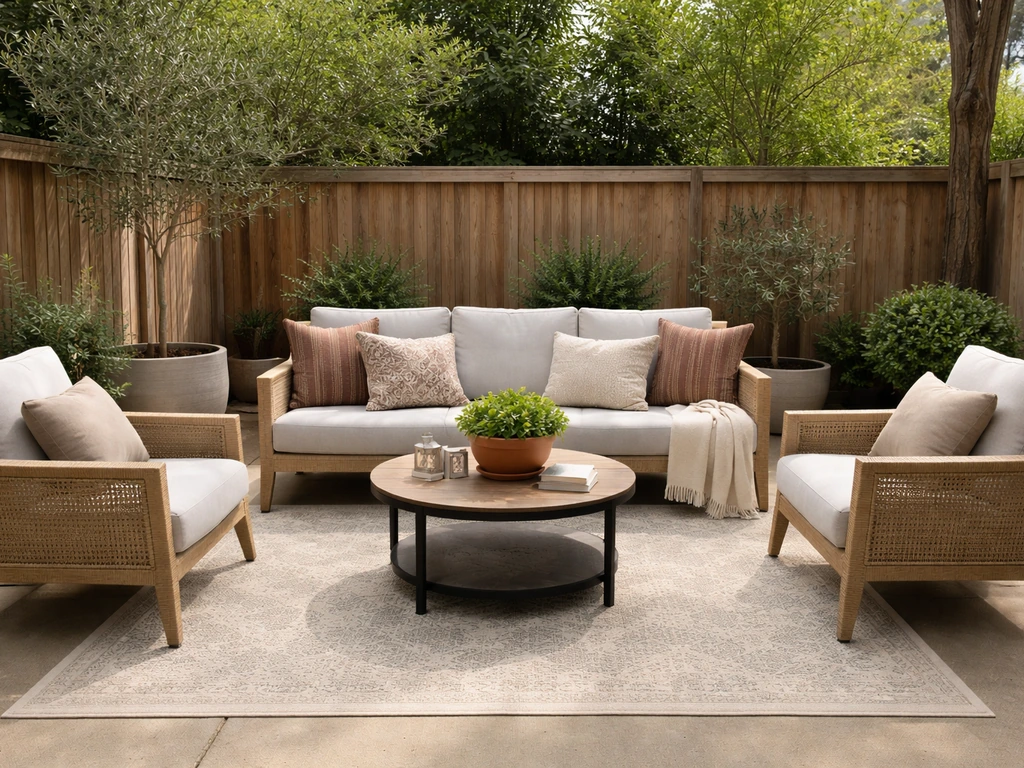
Under patio furniture legs, you want rubber or silicone furniture pads. Under a full dining or lounge set, you want a properly draining outdoor rug or mat sized to the group. The right choice depends on your surface: concrete, pavers, wood decking, composite, artificial turf, and grass each have different rules. Get this wrong and you end up with scratched decking, rust stains, mold under your rug, or a wobbly chair that rocks every time someone shifts their weight. Get it right and your patio looks better, your furniture lasts longer, and you spend way less time fixing preventable damage.
What to Put Under Patio Furniture: Best Options by Surface
Maren Grady
25 Jun 2026
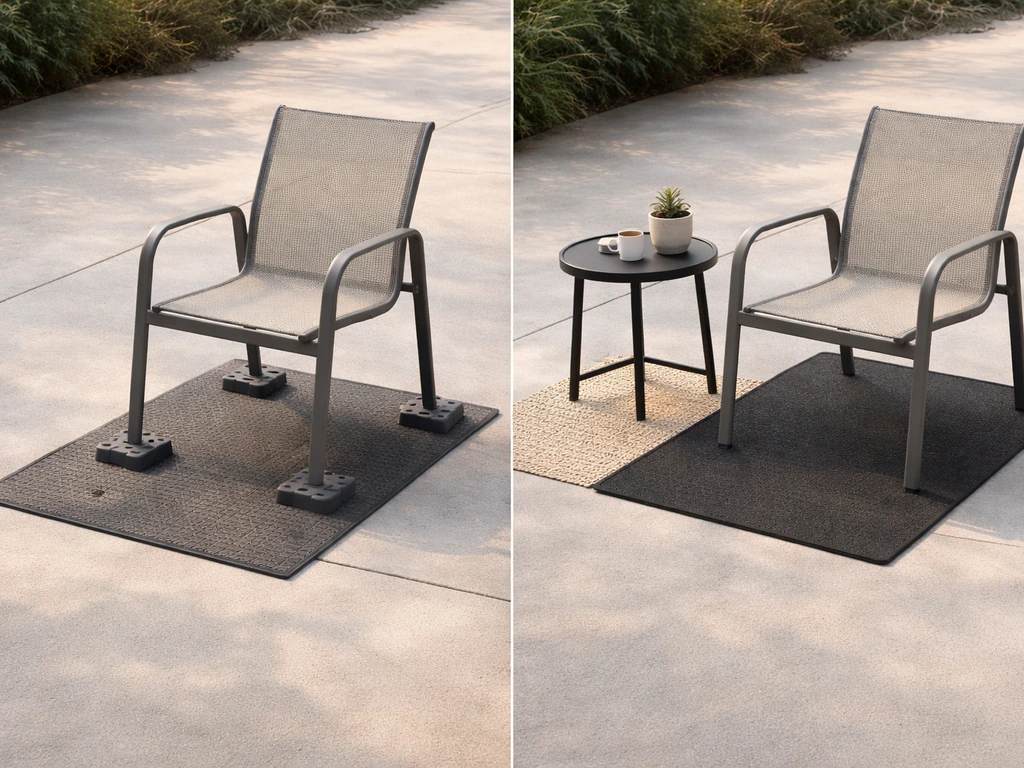
Why you actually need something under your patio furniture
Most people skip this step entirely until something goes wrong. Then they're scrubbing rust rings off concrete, replacing scratched composite boards, or dealing with a mold smell coming from under the rug they left out all summer. Here's what's actually happening when you put furniture directly on a bare surface with nothing underneath.
- Scratching and scuffing: Chair and table legs drag across concrete, pavers, and decking every time someone sits down or stands up. Over time that carves visible grooves or dull scratches into your surface.
- Rust staining: Metal legs sitting on a damp patio surface hold moisture at the contact point. That moisture causes the metal to oxidize, and the rust transfers directly onto your concrete or pavers as orange stains that are genuinely difficult to remove.
- Wobbling and rocking: Patio surfaces are rarely perfectly level. A table on an uneven paver or a sloped concrete pad will rock constantly unless you compensate for the height difference at the legs.
- Moisture damage to furniture: When legs sit directly on a porous surface or grass, water wicks up into the leg joints, swells wood fibers, corrodes metal hardware, and shortens the life of your set significantly.
- Mold and mildew buildup: An outdoor rug or mat placed directly on a surface traps moisture underneath. Without airflow, that moisture plus any organic debris becomes a perfect environment for mold growth, both on the rug and on the surface below.
- Weed and pest access: On grass or dirt, furniture left bare invites weeds to grow up through legs and gives insects a sheltered entry point into cushion bases and frame joints.
None of these are catastrophic on day one, which is exactly why people ignore them. But six months of ignoring them turns into real repair bills or replacement costs. A $10 set of silicone leg pads or a $40 outdoor mat is genuinely the cheapest maintenance you can do.
Choosing the right option for your specific surface
This is where most guides go wrong: they give you a one-size-fits-all answer when the surface you're working with changes everything. What works great on concrete can literally ruin a composite deck. Here's how to match the solution to what you're actually standing on.
Concrete patios
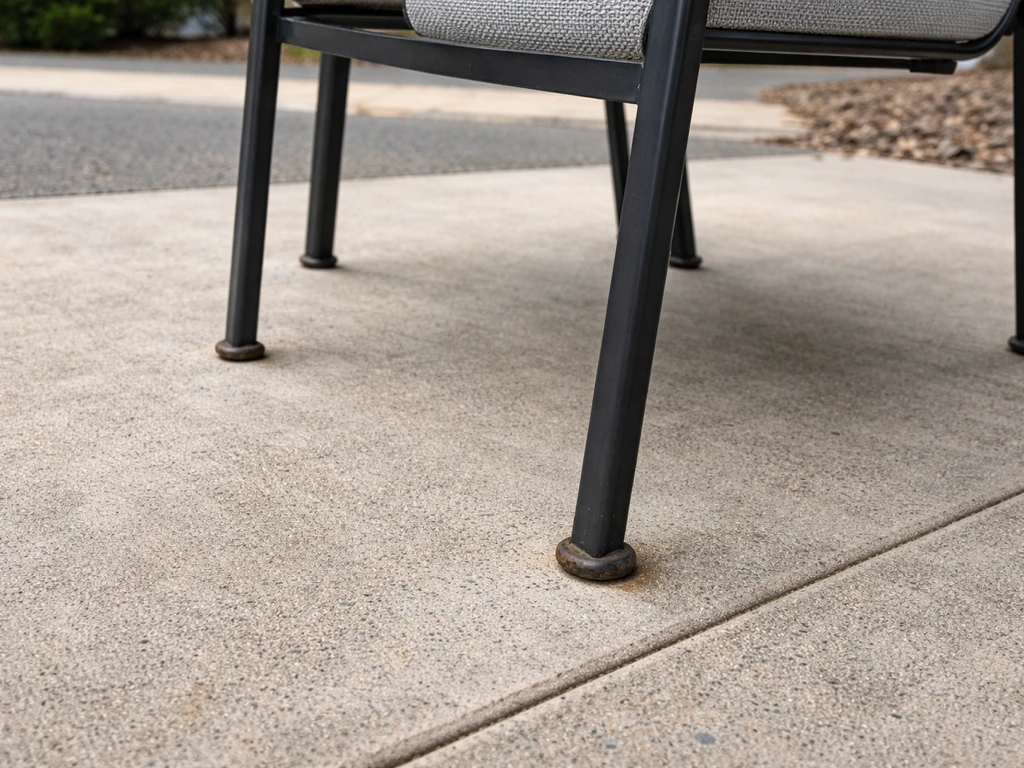
Concrete is hard, slightly abrasive, and often sealed with products that react poorly to rubber or latex. Use silicone or felt furniture pads on individual legs to prevent scratching. For a rug or mat under a full set, make sure it's labeled for outdoor/concrete use with a non-slip backing that isn't latex or rubber-based. Standard indoor rug pads with rubber or latex backing can transfer residue and stain sealed concrete. Look for pads specifically labeled 'safe for concrete' or 'non-staining.' On bare unsealed concrete, drainage matters less, but on sealed or painted concrete you want a mat with ventilation channels underneath to prevent moisture pooling.
Pavers and stone/brick
Pavers present two problems: the grout lines create an uneven surface that makes furniture rock, and the porous material holds moisture at leg contact points. Rubber or silicone leg caps work well here because the slight give in the material compensates for minor height differences between pavers. If a specific paver is noticeably lower than its neighbors and causing real wobble, adjustable leveling feet (threaded feet you can turn to raise or lower each leg independently) are worth the upgrade. For a rug, a flat-weave polypropylene outdoor rug without a heavy backing works well over pavers because it lets water drain through rather than pooling on top.
Wood decking
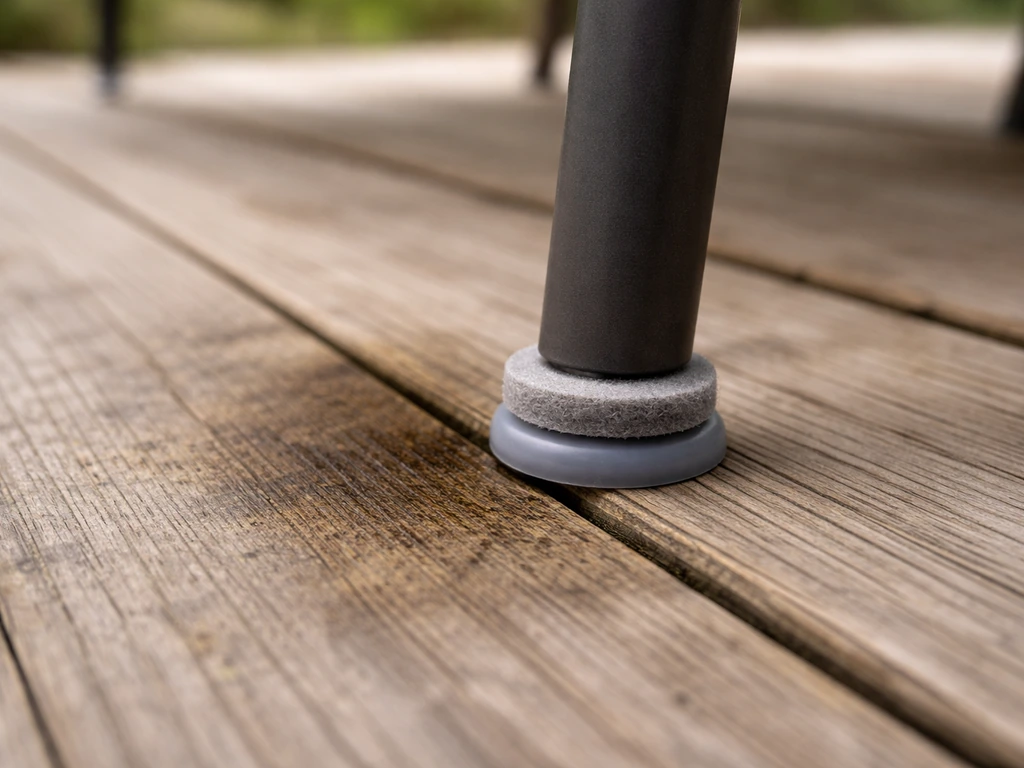
Wood decking is the most damage-sensitive surface on this list. It scratches, stains, and rots if you get moisture management wrong. Use felt or silicone furniture pads on legs, never hard rubber. For a rug, avoid any mat with a rubber or latex backing entirely: those materials trap moisture against the wood and can cause discoloration and contribute to rot over time. Choose outdoor rugs with an open-weave or mesh backing that allows airflow and drainage. Move rugs periodically (every few weeks in summer, more often after rain) to let the deck breathe and dry. This is one area where a rug done wrong causes more damage than no rug at all.
Composite and PVC decking
Composite and PVC decking are even more reactive to rubber than natural wood. blank" rel="noopener noreferrer">Manufacturers including TimberTech and Trex explicitly warn that vinyl and rubber materials can chemically react with certain composite and PVC deck surfaces, causing permanent discoloration. Use silicone leg pads only, not rubber or felt. For rugs, verify the mat's backing material before purchasing and avoid anything with a rubber underside. Polypropylene rugs with a thin non-rubber mesh backing are the safest option. When in doubt, contact your deck manufacturer with the rug backing material before committing.
Artificial turf
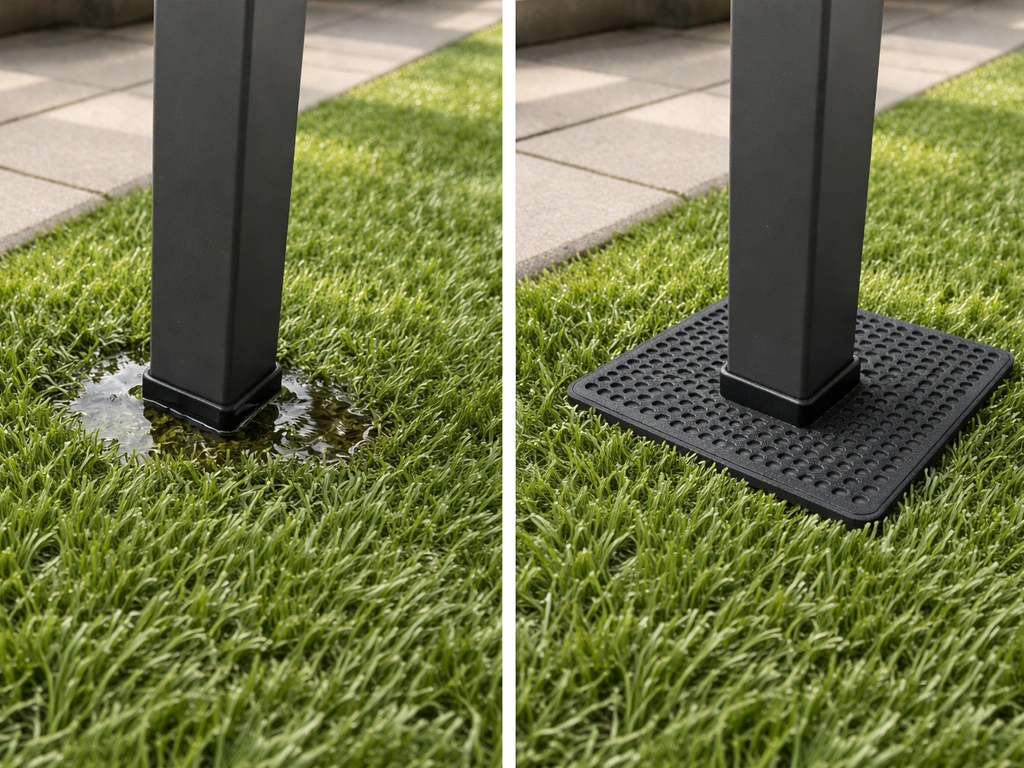
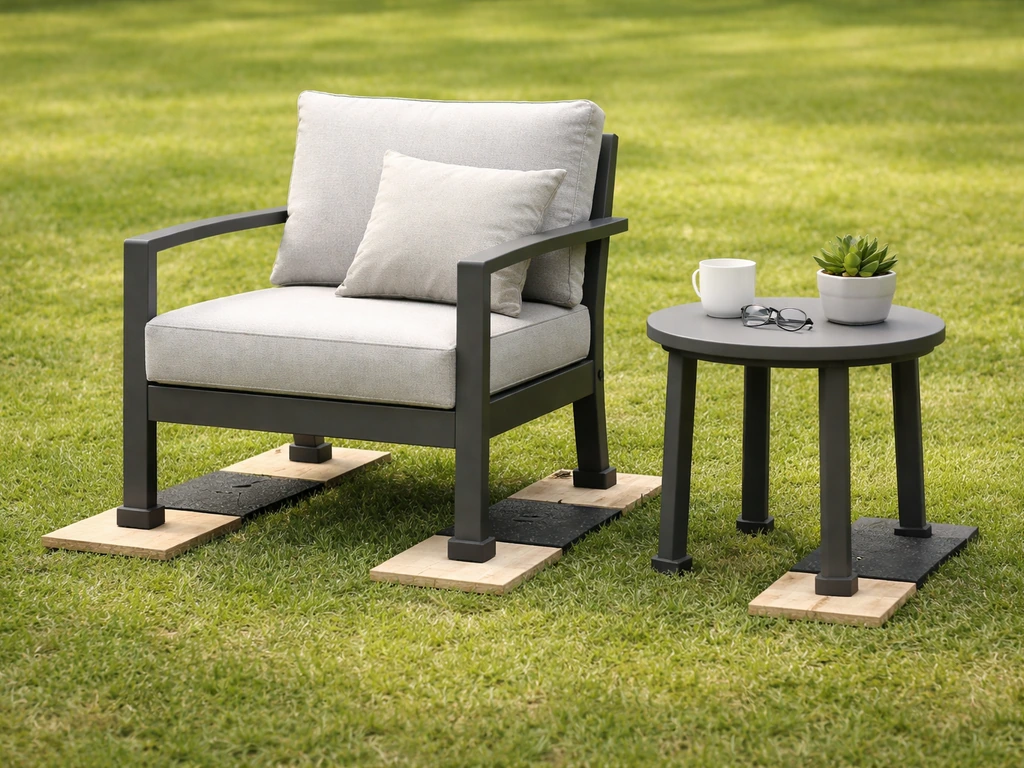
Artificial turf looks simple but drainage is the core issue. Heavy furniture sitting directly on turf compresses the fibers and blocks drainage holes, causing water to pool and the turf to smell. Place furniture on flat stepping-stone-style pavers or composite deck tiles set into the turf surface so the legs have a firm, non-compressing contact point. This also distributes weight more evenly and prevents leg sinkage. If the turf was installed over a drainage underlayment (like a dimpled-core polymeric mat), make sure your furniture placement doesn't create a dam across the drainage channels.
Grass
Grass is the most forgiving surface for the furniture itself, but the hardest on the lawn. Legs sink into soft ground, especially after rain, which causes the set to rock and lean. Wide rubber or plastic leg caps spread weight and reduce sinkage. For a full furniture grouping on grass, use a permeable ground cover rather than a solid mat: woven polypropylene landscape fabric or interlocking deck tiles let rain through while giving you a stable, level-ish surface. Avoid solid outdoor rugs or plastic tarps on grass entirely. They trap moisture, kill the grass underneath, and create a soggy mess that breeds mold. If you're setting up a permanent or semi-permanent outdoor dining area on grass, laying stepping stones or pavers under each leg is the most durable long-term fix. Setting up a furniture group on grass has its own considerations worth exploring in detail. If you want to avoid rocking legs and lawn damage, follow the steps below for how to set up patio furniture on grass setting up a furniture group on grass.
Furniture pads vs outdoor rugs vs mats vs ground covers
These four categories solve different problems, and knowing when to use each (and when to combine them) saves you from buying the wrong thing.
| Option | Best For | Key Benefit | Avoid When |
|---|---|---|---|
| Silicone leg pads | All hard surfaces: concrete, pavers, composite, wood | Prevents scratching and scuffing with no moisture trapping | You need significant height adjustment |
| Felt leg pads | Indoor use or light-duty dry conditions only | Smooth glide when moving furniture | Any outdoor surface with moisture exposure — felt absorbs water and deteriorates fast |
| Rubber leg caps/boots | Grass, soft ground, rough pavers | Cushions legs and reduces sinkage | Composite or PVC decking — can discolor surface |
| Adjustable leveling feet | Sloped or very uneven surfaces | Corrects height differences precisely | Surfaces where threading hardware might damage finish |
| Outdoor polypropylene rug | Concrete, pavers, wood decks (with correct backing) | Defines the space and protects a wide area | Grass or any surface where moisture trapping is a risk |
| Interlocking deck tiles | Grass, dirt, artificial turf, uneven surfaces | Creates a stable raised platform for furniture | Situations requiring flexible rug-style coverage |
| Woven landscape fabric / ground cover | Grass and dirt under furniture groupings | Suppresses weeds, allows drainage | Hard surfaces where it adds no benefit |
| Stepping-stone pavers under legs | Grass, soft ground, artificial turf | Permanent stable base per leg | Temporary setups you need to move frequently |
For most concrete and paver patios with a dining set or lounge group, the best combination is silicone leg pads on every leg plus a flat-weave polypropylene outdoor rug with a non-rubber, ventilated backing under the full set. That covers both the scratch-prevention problem at the leg level and the moisture/aesthetic problem at the full-set level. On wood or composite decking, drop the rug if you're not confident about the backing material and focus on the leg pads alone.
How to actually set it up: leveling, sizing, and placement
Step 1: Check for wobble before you do anything else
Place your furniture on the surface and press down on each corner. If any chair or table rocks, identify which leg is short or which surface point is low. Use a small bubble level placed on the tabletop or seat to confirm which direction is off. This tells you whether the problem is a leg length mismatch (common in cheaper furniture that warped) or a surface height problem (common on pavers and grass). The fix is different for each. You can raise patio furniture height by addressing the surface or by adding properly sized leg pads, shims, or leveling feet so the legs sit evenly how can i raise the height of my patio furniture.
Step 2: Fix the wobble at the leg
For minor wobble on hard surfaces, stack two silicone pads on the short leg. That's usually enough to correct a 2-3mm difference. For more significant height differences, adjustable leveling feet are worth the investment. These are threaded metal or plastic feet that replace your existing leg tips. You thread them in or out to raise or lower each leg independently, then lock them in place with a nut once the furniture sits flat. The key step people miss is tightening the locking nut after leveling: without it, the foot slowly spins back to its original position and the wobble returns within a week.
Step 3: Size your rug or mat correctly
For a dining set, measure the footprint of the table with chairs pulled out at least 18 inches on every side (that's the minimum pull-out distance for someone to sit and stand comfortably). Add those 18 inches to each side of your table dimensions to get your minimum rug size. So a 36x60 inch table needs a rug that's at least 72x96 inches. Going bigger is fine. Going smaller means chair legs drag off the rug edge every time someone sits, which defeats the purpose and creates a trip hazard. For a lounge grouping, the rug should sit under the front legs of every sofa and chair at minimum, with the full piece on the rug being ideal.
Step 4: Secure the rug so it stays put
Outdoor rugs on open patios catch wind constantly. On concrete or pavers, use a non-slip outdoor rug pad cut to size underneath, and place furniture legs directly on the rug to hold it down. For corners that still lift, rug anchor clips that grip the edge and attach to the ground with a stake work well and cost almost nothing. On decks, avoid tape or adhesive anchors that can damage the surface finish. Weight from furniture placement is usually enough on a deck if the rug is properly sized.
Step 5: Install furniture pads properly
Clean the bottom of each leg with rubbing alcohol before attaching adhesive pads. Any dirt or grease on the leg surface will prevent adhesion and the pad will fall off within days. Press and hold the pad for 30 seconds after applying. For screw-in or nail-in silicone caps, make sure the cap diameter matches the leg diameter exactly: a loose cap slides off, a too-small cap splits or never seats fully. Check all pads after the first week of use and replace any that have shifted or come loose.
Materials to avoid and mistakes that will cost you
I've made most of these mistakes myself, so I'll be direct about what goes wrong and why.
- Felt pads outdoors: Felt absorbs moisture immediately and holds it against your surface and leg. It degrades within one season outside and leaves a soggy residue. Felt is for indoor use only.
- Rubber-backed rugs on composite or PVC decking: The rubber chemically interacts with certain deck formulations and leaves permanent discoloration that cannot be cleaned off. Always check your deck manufacturer's compatibility guidance before placing any rubber product on the surface.
- Latex-backed rug pads on concrete: Latex residue bonds to sealed concrete over time, especially in heat, and leaves staining that requires aggressive cleaning to remove. Use only non-staining pads labeled explicitly safe for concrete.
- Solid mats or tarps on grass or wood: Anything that prevents airflow traps moisture. On grass it kills the lawn and creates mold. On wood decking it holds moisture against the grain and can cause discoloration, swelling, and eventually rot.
- Plastic sheeting under furniture on any surface: Plastic has zero drainage and zero airflow. It's the worst possible material for moisture management outside.
- Skipping pad replacement: Worn-down pads that are compressed flat provide almost no protection. A pad that's less than 1mm thick isn't doing anything. If you press a pad and feel no give, replace it.
- Using the same rug pad indoors and outdoors: Indoor rug pads are often made of latex or felt and will fail and stain outdoor surfaces. Always buy pads specifically rated for outdoor use.
- Ignoring slippery surfaces: Some outdoor mats become dangerously slippery when wet, especially on smooth concrete. If you're placing furniture near a pool or in a zone that gets wet regularly, test the mat's wet traction before committing.
Maintenance and seasonal protection
Regular in-season maintenance
Every two to three weeks during active use, lift your outdoor rug and check the surface underneath. You're looking for moisture, mold spots, debris buildup, and discoloration. Sweep or blow out any leaves, dirt, or organic material that has worked under the rug edges. If the surface underneath feels damp, let it dry completely before replacing the rug. This single habit prevents the vast majority of mold and deck staining problems. If you are trying to sell patio furniture, presentation matters, so make sure the setup prevents wobble, rust, and mold so buyers only see clean surfaces how to sell patio furniture. Wipe down metal furniture legs with a dry cloth after rain to remove standing water and prevent rust formation at the leg-to-surface contact point.
Cleaning rugs and mats
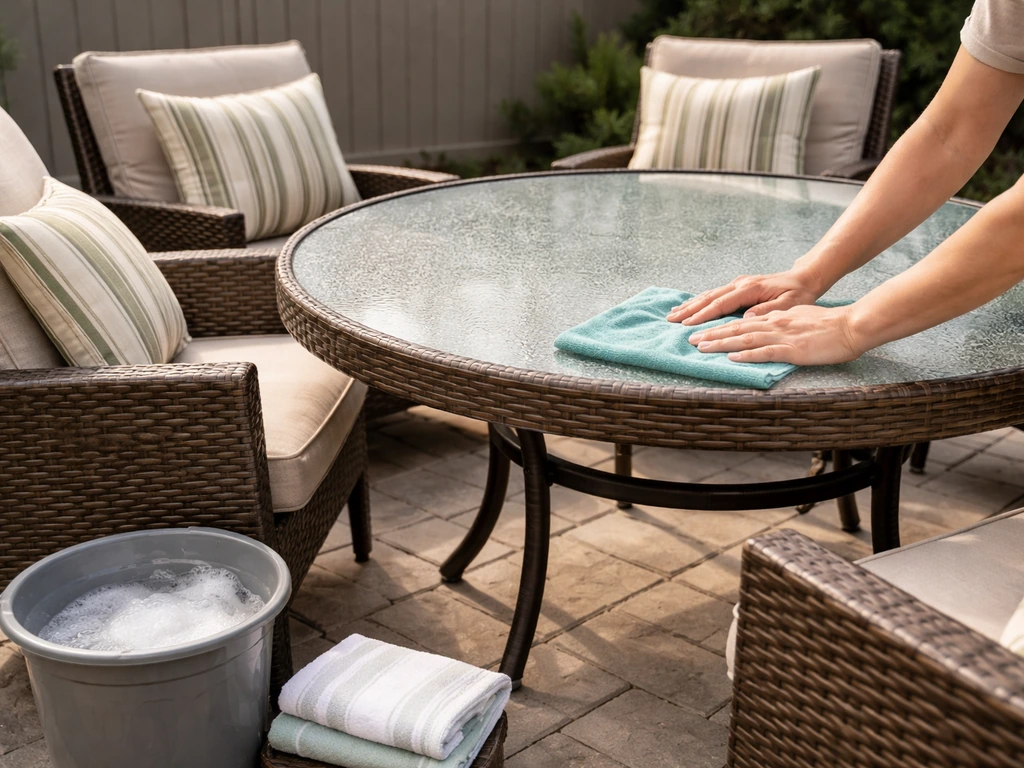
Most polypropylene outdoor rugs can be cleaned with a hose, mild dish soap, and a stiff brush. Roll the rug back, scrub both sides, rinse thoroughly, and let it dry completely before rolling it back into position. 'Completely dry' means bone dry, not just dry on top: if you roll a damp rug back onto a surface, you've just created a moisture trap. Lean it against a fence or drape it over a railing and give it a full day in the sun. For furniture pads, check adhesive pads monthly and replace any that are peeling, flattened, or visibly dirty.
End-of-season storage
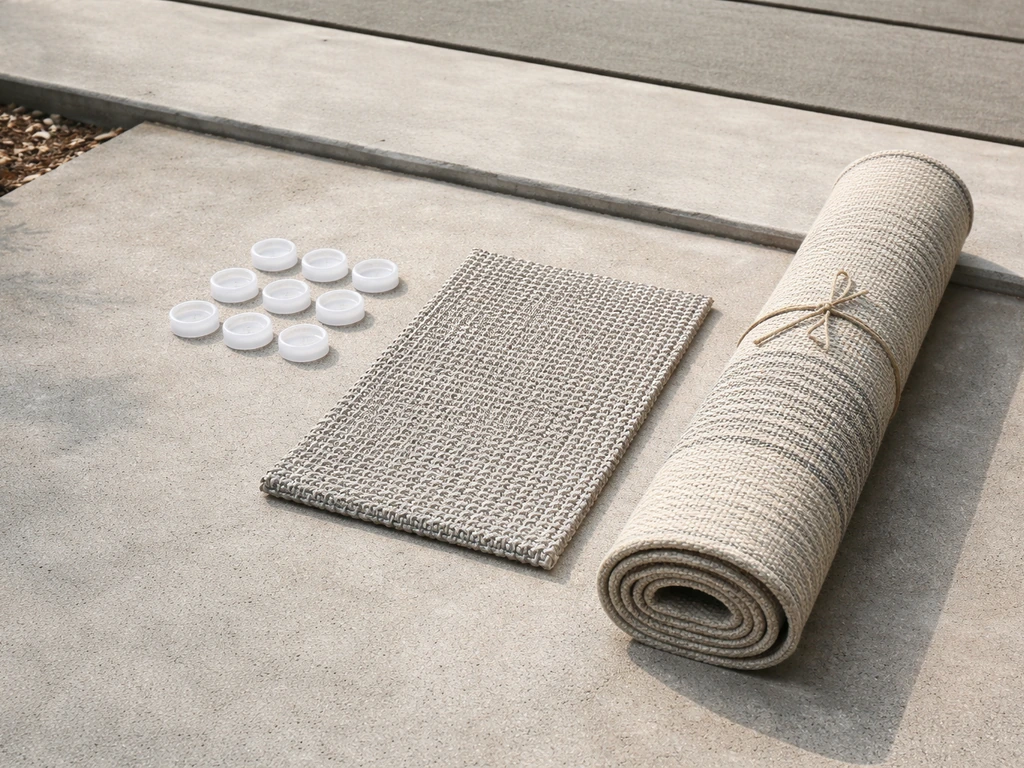
Before storing for winter, clean rugs and mats thoroughly as described above and let them dry completely. Roll rugs rather than folding them to avoid crease damage. Store in a dry indoor location, not in a damp garage or shed where they'll pick up mold. For furniture pads, replace any worn pads before storing so the set is ready to go next spring without a trip to the hardware store. If you're covering furniture for winter storage, avoid tight-fitting plastic tarps that trap condensation: breathable furniture covers prevent the moisture buildup that swells wood joints and corrodes metal hardware. Leave a small gap at the bottom of covers for airflow.
Quick decision checklist before you buy anything
- What surface am I working with? (concrete, pavers, wood deck, composite deck, artificial turf, or grass)
- Do I have a wobble or leveling problem? If yes, do I need stacked pads, adjustable leveling feet, or stepping-stone supports?
- Am I covering individual legs only, or putting something under the full set?
- If I'm using a rug or mat, does the backing material explicitly say it's safe for my surface type?
- Does the rug or mat drain water through it, or will it trap moisture?
- Is my rug sized at least 18 inches beyond every pulled-out chair position?
- Do I have a plan to move or clean under the rug every two to three weeks?
- Are my furniture pads in good shape, or do they need replacing before I start?
If you're working with a tight budget, silicone leg pads are the highest-value first purchase you can make. A pack of 20 adhesive silicone pads costs under $10 at any hardware store and solves scratching, rust transfer, and minor wobble all at once. An outdoor polypropylene rug from a discount home store (or even a secondhand shop) is a solid second step. You don't need to spend a lot to protect your set well. You just need to use the right materials for your specific surface and stay on top of the simple maintenance that keeps moisture from becoming mold. Following these steps is a practical way to raise patio furniture on the right base so it stays stable and lasts longer right materials for your specific surface.
FAQ
Can I put patio furniture directly on the patio if it is already level, or should I still use something underneath?
A good rule is to treat legs and the whole footprint as two different problems. Use silicone (or felt on some non-composite surfaces only) for leg contact, then add an outdoor rug or mat only if the surface needs moisture management. On wood and composite, prioritize leg pads and skip the rug unless you are certain about a non-rubber, ventilated backing.
What should I look for on an outdoor rug label when deciding what to put under patio furniture?
Not always. Outdoor rugs can have the right look but the wrong backing. If the underside is rubber, latex, or a solid plastic film, it can trap moisture and stain some surfaces. Choose polypropylene rugs with an open or mesh backing, and if you can, test the label for “outdoor” plus “non-staining” or “safe for concrete,” especially on sealed concrete.
Are felt pads ever a better choice than silicone for patio furniture legs?
For individual leg contact, silicone is the safer universal choice, because it resists cracking and does not rely on friction alone. Felt can work on some hard surfaces, but it may absorb moisture and increase staining risk on decks. If you have wood decking, composite, or PVC, stick to silicone leg pads only and avoid hard rubber.
My chairs still rock after I added pads, what is the fastest way to diagnose why?
If your furniture wobbles even after padding, it usually means either one leg is not matching the others (warped furniture) or your surface is uneven at that specific spot. Use a bubble level to check tabletop or seat level, then press down and observe which corner lifts. From there, choose between adding a pad stack (minor 2 to 3 mm) or using adjustable leveling feet (larger height differences).
Can I use shims instead of silicone pads or leveling feet under patio furniture?
Yes, but only in a way that does not trap moisture. Shims should be used sparingly and must be placed so the leg still contacts a stable, non-compressing surface. Avoid stacking loose wood or metal scraps on decks or grass. For hard-to-fix height issues, leveling feet are usually cleaner and more reliable than shimming.
Do rug pads work differently on sealed concrete than on unsealed concrete?
If you have concrete that is sealed or painted, a plain “rubber-backed” mat can cause trouble, including discoloration and moisture retention. Use a ventilated, non-rubber backing rug pad or a rug designed for concrete use. If the concrete is unsealed and you are only managing scratches, leg pads may be enough without adding a full mat.
What is the best option to put under patio furniture on real grass if I do not want to damage the lawn?
For grass, avoid solid rugs and tarps, because they block airflow and reduce water exchange to the lawn. A permeable ground cover (woven landscape fabric or interlocking tiles) lets rain through. If you want the most durable setup, place stepping stones or pavers under each leg to prevent sinkage and keep the furniture stable.
Is it okay to stack more than two silicone pads under one patio leg to stop wobble?
Use two silicone pads only for very small differences, and consider replacing or upgrading if the wobble returns. If you have to stack more than a couple layers to make it flat, it is often a sign that leveling feet will be more accurate long term, especially on pavers and grass.
Can I anchor a rug to a wooden deck with tape or adhesive so it does not move?
Not recommended. Many adhesive or tape anchors are risky on decks because they can damage the finish when removed. If you need to stop rug corners lifting, use non-damaging options like rug anchor clips that grip the edge and are staked in. On decks, rely on correct rug size and leg weight first.
How should I store outdoor rugs and leg pads during winter to prevent mold or damage?
Yes, but do it in a way that avoids trapped moisture at the underside. Before seasonal storage, make sure the rug is bone dry and clean both sides. Roll rugs rather than folding, and store them in a dry indoor space. Also inspect and replace any shifted or dirty pads before putting the furniture away.