To tie down a patio furniture cover so it stays put in wind, you need to use the grommets along the cover's bottom hem and secure them to the furniture frame using elastic ball straps, bungee cords, or nylon tie-down straps. blank" rel="noopener noreferrer">Run the cord through each grommet, wrap it under or around a solid part of the frame, then lock it in place with the ball or buckle.
How to Tie Down Patio Furniture Covers: DIY Steps
Maren Grady
11 May 2026
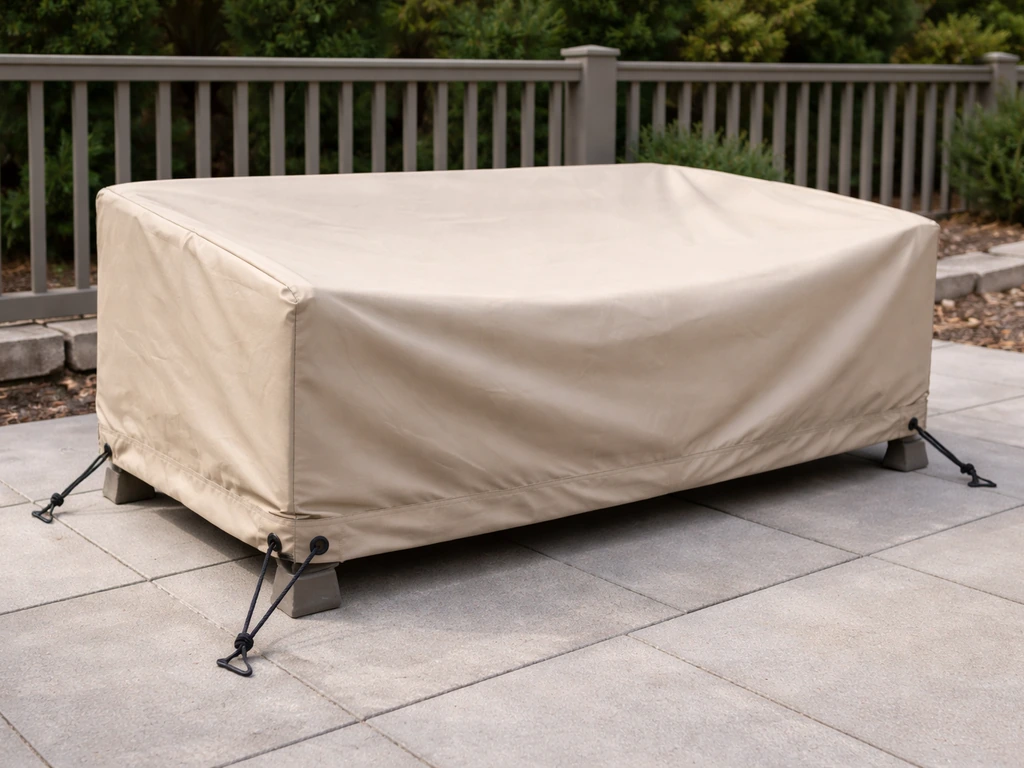
Do this at all four corners and at least one point along each long side, and keep steady tension on the strap as you wrap so the cover pulls snug without bunching. That basic method handles most situations. If you want a more wind-specific setup, focus on adding low tie points and checking strap tension after storms secure patio furniture from wind.
The details below will help you do it right without tearing the cover, scratching the furniture, or waking up to a soaked chair cushion.
Choosing the right cover and securing system
Before you worry about how to tie anything down, the cover itself has to fit reasonably well. A cover that's two sizes too large will sag, pool water, and fight you every time the wind picks up, no matter how many straps you use. Measure your furniture at its widest and tallest points and match those measurements to the cover's listed dimensions. A little extra length at the hem is fine since that extra fabric gives your tie-down cords something to work with. Too much overhang, and you're fighting physics.
For the securing system, you have a few real options. Elastic ball straps (sometimes called ball bungees) are the easiest to use and come pre-sized for furniture covers. Bungee cords with hooked ends work similarly but can scratch powder-coated or painted frames if the hook contacts bare metal. Nylon cam-buckle straps give you the most tension control and are the best choice for large sectionals or covers in high-wind areas. Velcro hem tabs are included on some covers but should be treated as a secondary system, not your only one.
| Securing Method | Best For | Wind Resistance | Risk of Damage | Approx. Cost |
|---|---|---|---|---|
| Elastic ball straps | Chairs, small tables, standard covers with grommets | Moderate (up to ~30 mph gusts) | Low if plastic ball used | $5–$12 for a pack of 6–8 |
| Bungee cords | Mid-size covers, loveseat covers | Moderate | Low-medium (watch metal hooks) | $4–$10 for a pack |
| Nylon cam-buckle straps | Large sectionals, dining sets, high-wind zones | High | Low if padded or routed away from finish | $10–$20 for a set of 4 |
| Velcro hem tabs | Light rain, calm conditions only | Low | Very low | Usually included with cover |
| Cover weights/clamps | Supplemental use on bottom hem | Moderate when combined with straps | Low | $8–$15 for a set |
My honest recommendation: buy a pack of elastic ball straps as your baseline. They're fast, they're forgiving, and most covers with grommets are designed for exactly that. Then add a nylon strap around the base of the furniture if you're in a spot that gets real wind. That two-layer approach has kept covers on my furniture through some rough spring storms.
Materials and tools you'll need
Nothing here is exotic. You probably have most of it already, or can grab it from a hardware store for under $20 total.
- Elastic ball straps (also called ball bungees) — 6 to 10 pieces depending on cover size
- Bungee cords (optional, as a secondary layer or if no ball straps are available)
- Nylon cam-buckle straps, 1-inch width — 2 to 4 pieces for larger covers or high-wind setups
- Zip ties — useful for temporary fixes or for bundling loose cord ends
- Soft cloth or foam pipe insulation — to pad any metal hook or buckle that contacts a painted or powder-coated frame
- A tape measure — to check cover fit before you start
- Scissors or a utility knife — for trimming excess cord length if needed
- Rubber furniture feet pads (optional) — to add grip between cover and legs on hard surfaces
You don't need a grommet kit for most jobs since quality covers come with grommets already installed in the hem. If your cover has lost a grommet or never had them, a basic grommet kit from any hardware store costs about $8 and takes ten minutes to install. It's worth doing before a storm, not after.
Step-by-step: tying down patio furniture covers
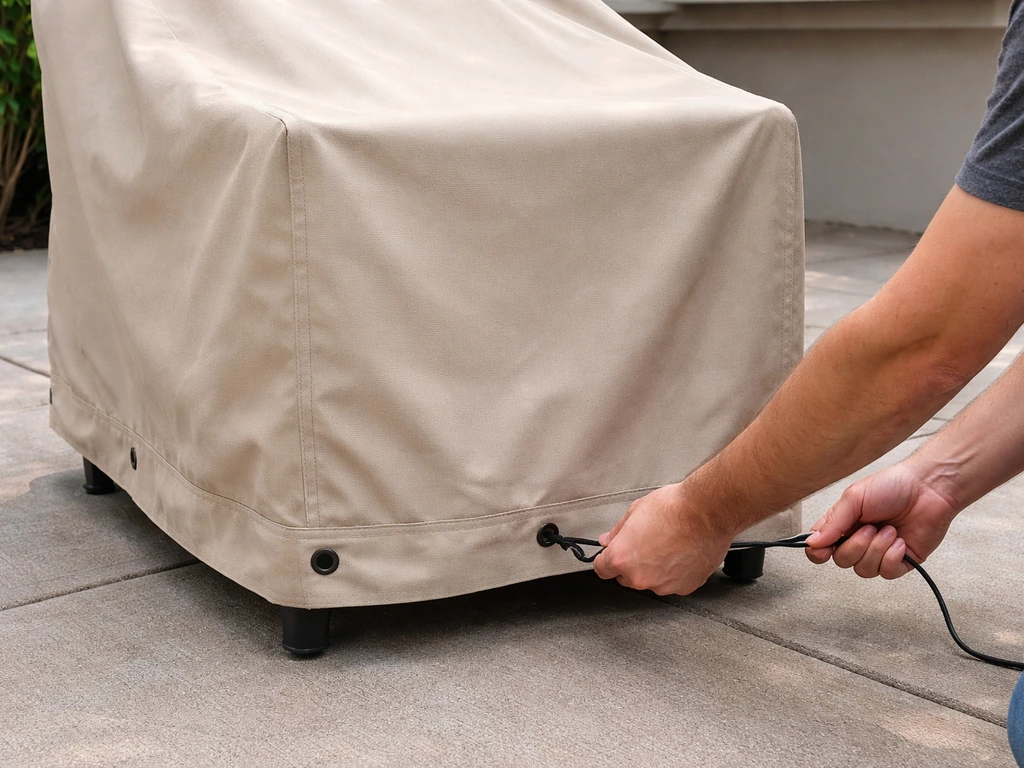
This method works for chairs, dining sets, loveseats, and sectional covers. The core principle is the same for all of them: secure the cover at multiple low points on the frame so wind can't get underneath and lift it.
- Place the cover over the furniture and center it. The grommets along the hem should sit near the bottom of the piece, ideally below the seat level. Adjust until overhang looks even on all sides.
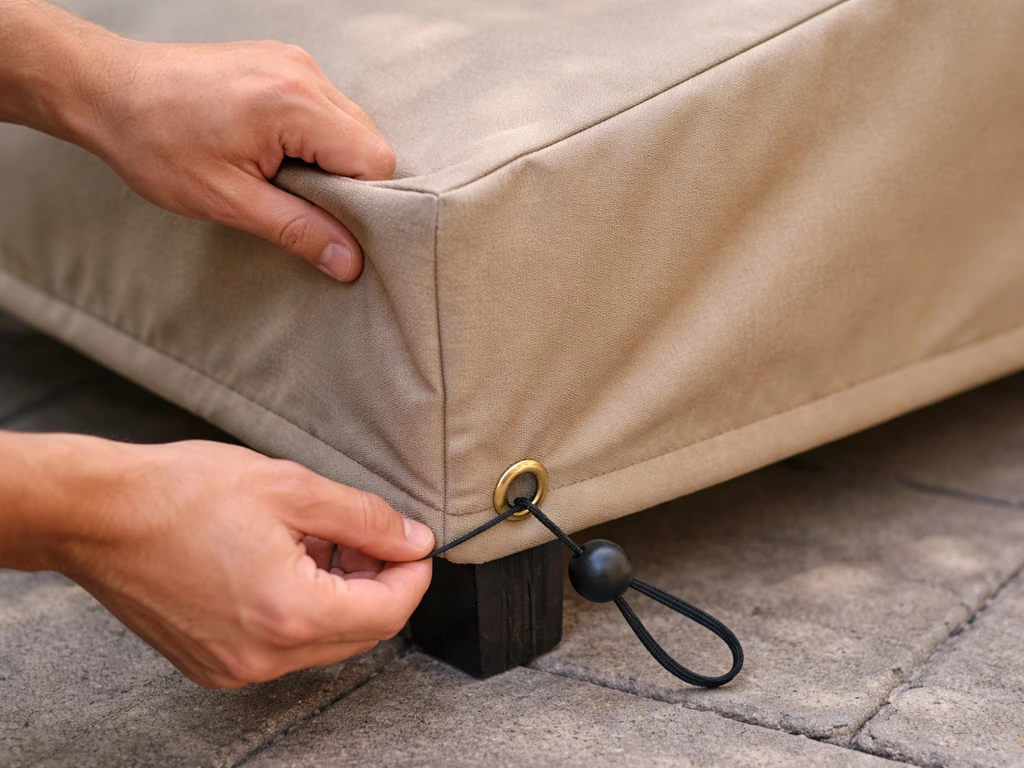
- Start at one corner. Take an elastic ball strap and feed the cord end through the grommet from the outside of the cover inward.
- Route the cord under or around the lowest rung, leg crossbar, or frame rail on that corner of the furniture. You want the attachment point to be as low and solid as possible — the lower the anchor, the harder it is for wind to lift the cover.
- Pull the cord back toward the grommet while maintaining tension. This is the step most people skip: keep pulling as you loop. The Patio Direct strap instructions specifically call this out — keep tension on the strap while wrapping so the cover stays snug, not slack.
- Insert the ball end through the cord loop to lock it in place. The ball should sit snug against the grommet hole on the outer face of the cover, holding it down. If you're using a bungee cord instead, slide the cord through the grommet, wrap it around the frame support, then feed the ball through the loop to secure it — exactly as described in both the SunSetter XT and Poly-Tex SUNSTOPPER installation methods.
- Repeat at all four corners before moving to the sides. Corners carry the most load in wind, so always do them first.
- Add mid-point straps along any long edges if the cover is over 6 feet in any direction. One strap per 3 to 4 feet of edge length is a good rule. A dining set cover, for example, needs corner straps plus at least one on each long side.
- Do a quick tug test on each strap. You should feel resistance immediately — there should be no slack before the cord starts to stretch. If it feels loose, unclip and re-route with more tension.
- For large sectionals or anything in a consistently windy area, run a nylon cam-buckle strap around the entire base of the furniture over the cover hem, like a belt. Thread it under the frame at two points, pull the cam buckle until the hem is snug to the furniture legs, and lock it off.
One thing I got wrong the first time: I routed the cord over the top of the frame rail instead of under it. That creates an upward angle on the pull, which actually helps the wind lift the cover rather than resist it. Always anchor low.
Preventing common failure points (wind, sagging, straps slipping)
Most cover failures come down to the same handful of problems. Here's how to spot them and what to do. During a hurricane, the same tie-down rules apply, but prioritize snug, low tie points and check your straps and grommets before the storm hits how to secure patio furniture during hurricane.
Wind getting underneath
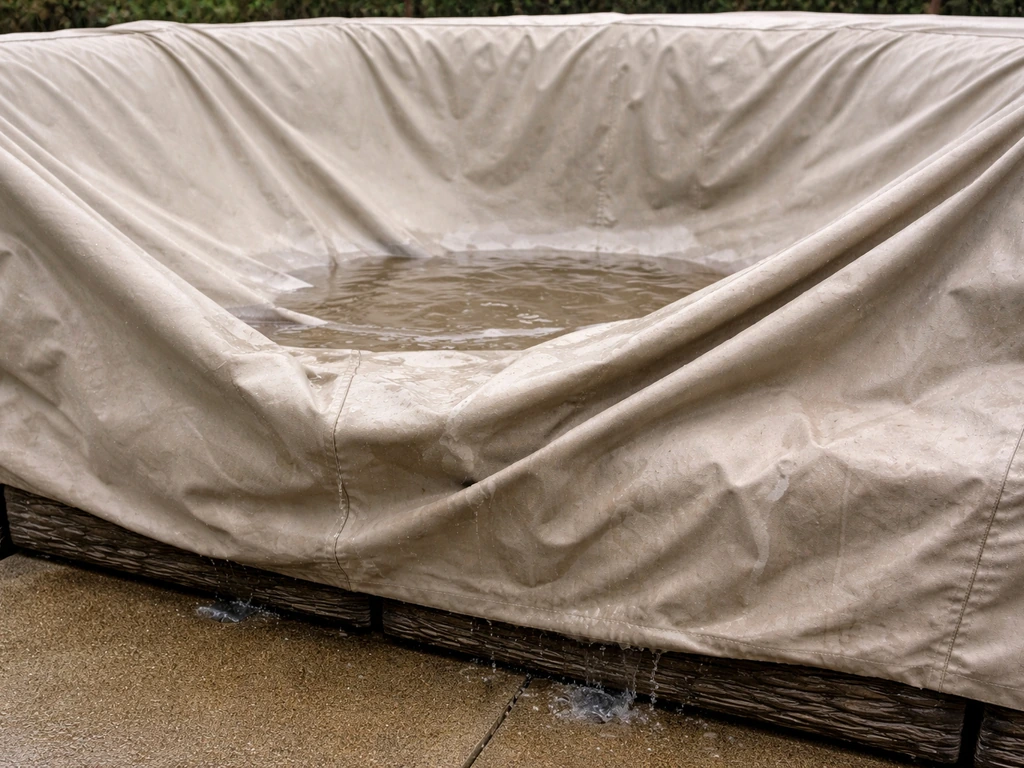
This is the most common one. Wind finds the gap between the cover hem and the ground or the furniture base and pushes up from underneath. The fix is simple: make sure you have tie points at regular intervals along the bottom hem, and that each cord is pulling downward and inward, not sideways. If your cover has no grommets near the bottom corners specifically, you may need to add them or run a strap around the outside of the whole piece.
Sagging and water pooling
Sagging almost always means the cover is too big, the furniture has an irregular shape, or something soft is pressing the cover inward. Cushions left under the cover make this worse because they compress over time and leave a concave pocket that collects water. Remove cushions before covering if you can, or prop the center of the cover up with a pool noodle, a foam wedge, or even a plastic container turned upside-down. Water pooling on a cover is heavy, a gallon of water weighs about 8 pounds, and a wide sag can hold several gallons, which stresses both the cover seams and the straps.
Straps slipping or loosening
Elastic ball straps lose tension over time, especially after UV exposure weakens the elastic. Check them at the start of each season and replace any that have gone slack or cracked. For nylon straps, the cam buckle can loosen if the strap surface is wet or slippery. Running the strap through the buckle an extra time (a double-pass) helps lock it. You can also add a small zip tie through the buckle to prevent rollback in sustained wind.
Grommets tearing
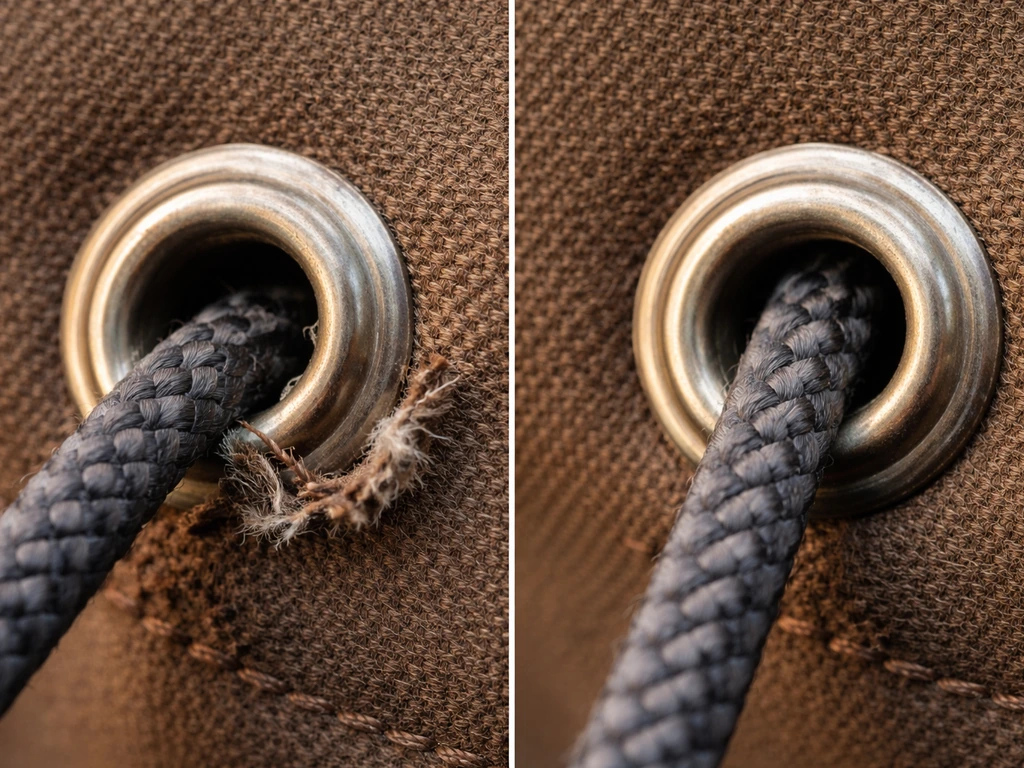
Grommets tear when the cord angle puts stress on the edge of the hole rather than the reinforced ring. Always make sure the cord passes cleanly through the center of the grommet and pulls straight down, not at a sharp sideways angle. If a grommet is already starting to pull through the fabric, reinforce it from the inside with a patch of heavy nylon or canvas fabric, then blank" rel="noopener noreferrer">re-install a grommet through both layers.
Don't just ignore a tearing grommet, by the next big windstorm it will be gone and the cover will be in your neighbor's yard. To reduce theft risk, make sure your cover is secured tightly so it cannot be lifted away to access the furniture underneath grommets that have shifted.
Using anchors and tie-down points safely
Finding the right anchor point on the furniture matters more than most people think. You want something solid, low, and smooth, a frame rail, a crossbar between legs, or a rung near the bottom. SunSetter’s PRO owner’s manual also includes handling notes and an appendix section on safely removing installed bungee cords SunSetter PRO Installation 2016 & prior. Avoid hooking cords over thin decorative elements, armrest tips, or anything that has visible wear. The cord will eventually abrade through it, and you'll have both a damaged strap and a damaged furniture piece.
For furniture with powder-coated or painted frames (which describes most steel and aluminum patio furniture), wrap any metal hook or buckle contact point with a short piece of foam pipe insulation or a folded cloth before it touches the frame. A metal hook rubbing against powder coat through an entire winter will scratch right through to bare metal, and that's where rust starts. It takes about 30 seconds to add that padding, and it extends the life of the finish considerably.
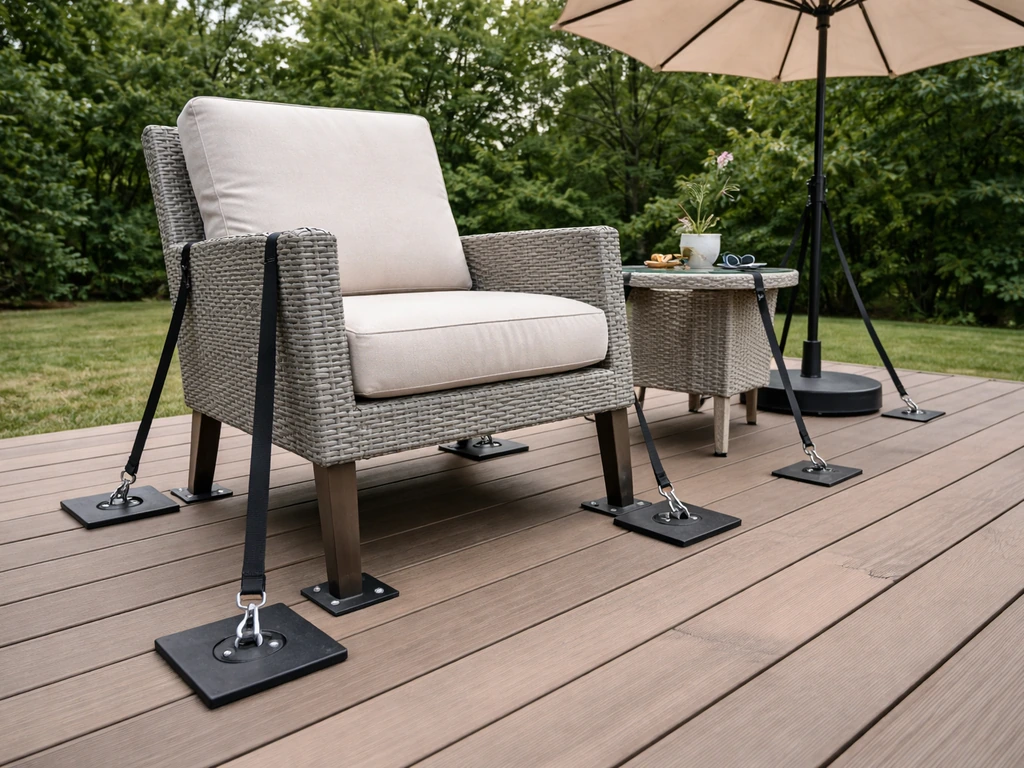
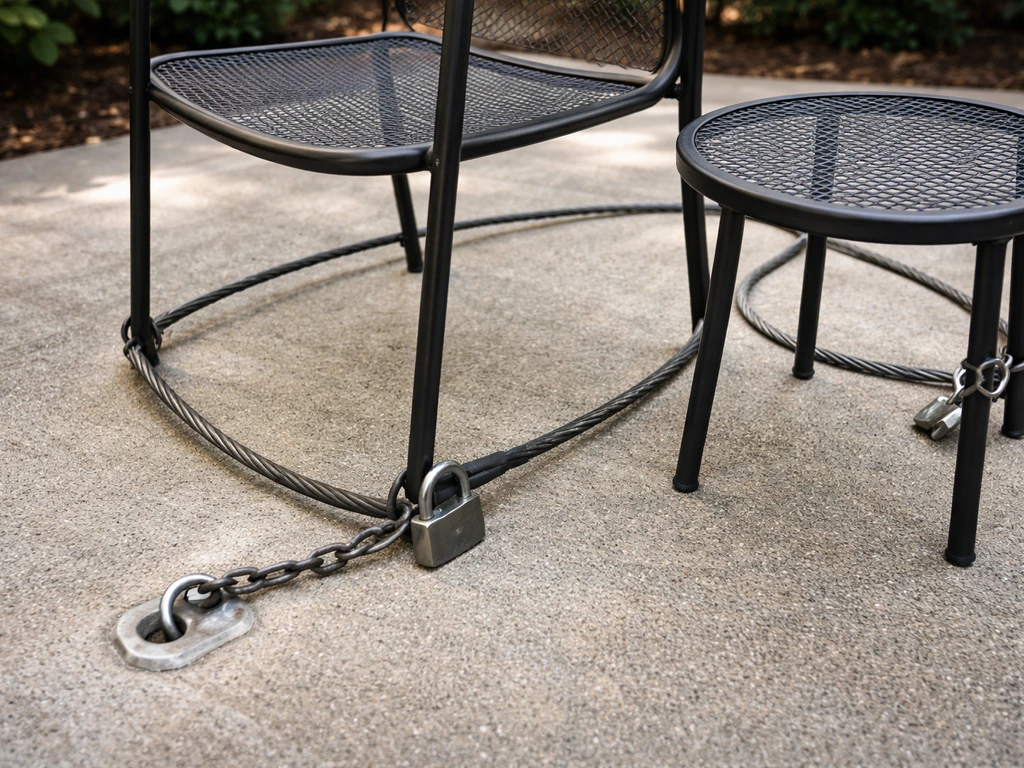
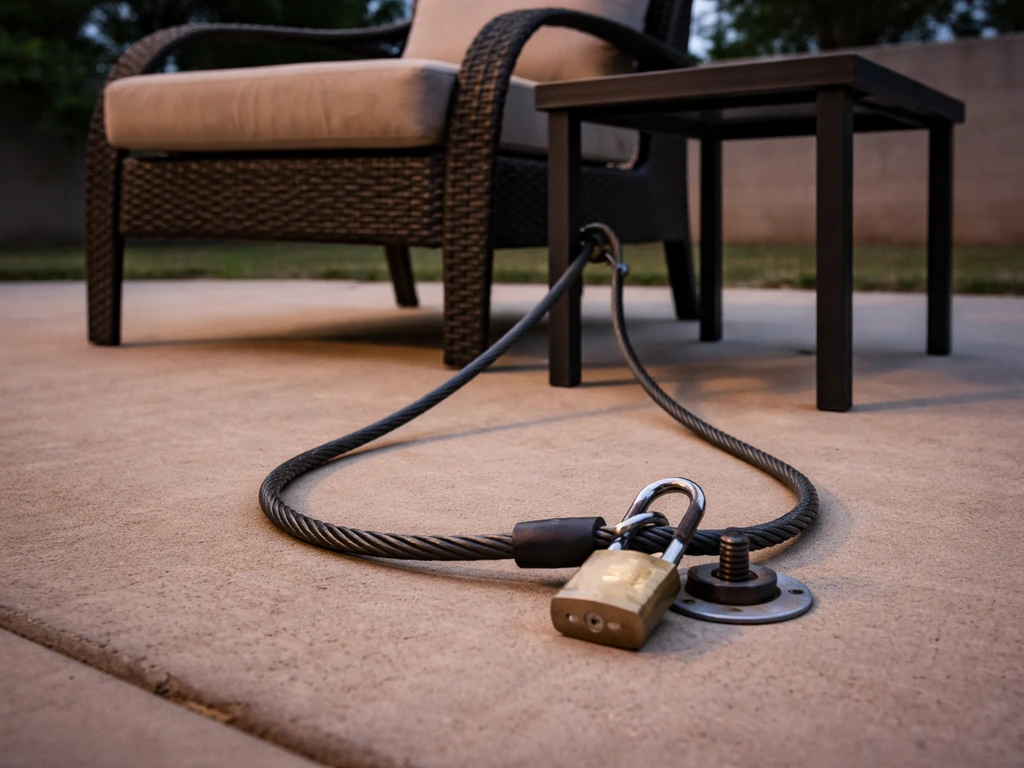
Deck anchors and ground stakes are a separate option for covering furniture that sits on a deck or patio surface. You can drive low-profile anchor stakes into soil around the furniture, then run straps from the cover grommets down to the stakes. If you want to truly lock up patio furniture, secure the cover ties to deck anchors or ground stakes so the setup cannot be pulled loose in strong wind how to lock up patio furniture.
This works well for large items like sectionals or dining sets where running cords under the frame is awkward. On hard surfaces like concrete or a composite deck, adhesive anchor pads or removable rail clamps can serve the same purpose. Just make sure any ground anchor is rated for the load and that you're not creating a trip hazard across a walkway.
One thing to avoid: don't tie cords so tightly that the cover is stretched hard against the furniture surface with no room for airflow. You need a little breathing room under the cover, especially with wood or wicker furniture, to prevent moisture from being trapped against the surface. Snug is the goal, not strangled.
Seasonal tips: winter vs rain coverage and removal/storage
Winter storage covers
Winter covering is about long-term protection, so the priority shifts slightly. You still want the cover tied down firmly, but you also need to make sure moisture isn't being trapped underneath for months at a time. Before putting the cover on for winter, let the furniture dry completely, clean off any mildew or dirt, and if you have cushions, bring them indoors.
For the cover itself, use a breathable cover material if possible, fully waterproof non-breathable covers can trap condensation against metal or wood and cause corrosion or mold. If your cover is non-breathable, leave a small gap at one edge at ground level for ventilation, and secure the rest tightly.
Check the cover at least once a month if you can, because snow load is heavy and a pooled sag full of ice can tear seams and collapse under its own weight.
Rain and summer covers
For temporary rain coverage, putting the cover on before a storm and pulling it off after, you can use a simpler setup. Ball straps at the corners and one or two points along the long sides is usually enough for a typical rainstorm. The bigger risk in summer is a fast-moving thunderstorm with strong gusts, so if you see that kind of weather coming, take the extra ten minutes to add your base strap around the furniture perimeter.
After the rain passes, pull the cover off, shake it out, and let it air dry before re-storing it. Folding a wet cover and leaving it in a bag or bin for a week is a reliable way to grow mildew on it.
Removing and storing the ties and cover
When the season changes and it's time to remove the cover, release the straps in order: sides first, then corners. This prevents the cover from pulling unevenly and stressing one side. Inspect every strap and cord as you remove it. Look for fraying, cracked elastic, corrosion on metal parts, or grommets that have shifted or partially pulled through.
Set aside anything that needs replacing before you store it so you're not hunting for damaged gear when you need it next fall. Store elastic ball straps out of direct sunlight, UV degrades rubber faster than anything else. A zippered mesh bag inside a storage bin works well and keeps the set together.
If you're securing a tarp rather than a fitted cover, the technique is similar but you'll need more anchor points since tarps don't have pre-placed grommets, that scenario overlaps with how to secure a tarp over patio furniture, which follows its own set of best practices.
If you're using a tarp instead of a fitted cover, you'll want to position extra tie-down points and keep the tarp taut to reduce lift and pooling how to secure a tarp over patio furniture.
Done right, a good cover and a solid tie-down setup is genuinely one of the highest-return maintenance moves you can make for outdoor furniture. Fifteen minutes of work in the fall can mean the difference between furniture that looks great for ten years and furniture that's chalky, rusty, and cracked by year three.
FAQ
Can I tie down a patio furniture cover if it doesn’t have grommets near the corners?
Yes, but you need low, corner-level anchors. Add grommets through the bottom hem near each corner (reinforce with a heavy fabric patch if the hem is thin), or run a strap around the outside perimeter so each corner has a downward, inward pull. Without corner tie points, gusts usually lift the cover edge even if the middle is secure.
What’s the best way to prevent scratching when using bungees or cam-buckle straps?
Avoid letting hooks or buckles touch bare painted or powder-coated metal. Wrap the contact area with a short piece of foam pipe insulation or a folded cloth, then route the strap so the hook load sits on a solid frame rail, not an armrest tip or thin decorative piece that can wear through.
How tight should the straps be, snug or very tight?
Snug but not stretched. If the cover is pulled hard against the furniture with no breathing room, moisture can stay trapped and materials like wood, wicker, and fabric can hold damp longer. A good test is that the cover stays taut enough to resist lift, but you can still see that it is not deforming tightly into every surface detail.
How often should I re-check the tie-downs during windy seasons?
Do a quick check after major wind events, and at least at the start of each season. Elastic ball straps can loosen over time, and cam buckles can roll if the surface is wet. Look specifically for any grommets that are starting to pull through and for fraying on the strap at the grommet exit point.
My cover keeps sagging in the middle. Is it only a size problem?
Size matters, but it is often caused by pooling and soft items pressing the fabric inward. Remove cushions before covering if possible, and if you need to protect the furniture with cushions on, avoid leaving them directly under the deepest point of the cover. You can also prop the center slightly with a foam wedge or pool noodle to reduce water “cupping” that adds weight to the sag.
Is it okay to leave a gap in the cover for ventilation?
It depends on the season and cover type. For winter on non-breathable covers, a small vent gap at one edge can reduce condensation buildup, but keep the rest secured tightly so wind does not get underneath. For breathable covers, you usually do not need intentional gaps, just maintain low tie points so the hem stays close to the frame.
What should I do if the grommets tear or pull through the fabric?
Stop using that cover in upcoming storms and repair it before relying on it again. Reinforce from the inside with a patch of heavy nylon or canvas, then re-install the grommet through both layers. Also correct the cord routing so it passes through the grommet center and pulls straight down, not at a sharp sideways angle.
How do I anchor a cover on a deck or patio without running straps under the frame?
Use low ground anchors or deck anchors rated for the load, then run the cover cords from the grommets down to those stakes. On hard surfaces like concrete or composite decking, adhesive anchor pads or removable rail clamps can work, but make sure the anchors do not create a trip hazard and that straps pull downward, not toward walkways.
Should I cover furniture during winter with cushions inside the cover?
Preferably not. Even if you tie down well, trapped moisture from cushions can increase mildew risk and accelerate fabric deterioration. Let furniture dry completely before covering, bring cushions indoors when you can, and if cushions must stay outside, ensure they do not create deep pockets that collect water.
When removing the cover, what’s the safest order to avoid damaging straps or the cover?
Release in this order: sides first, then corners. This prevents uneven tension that can stress seams and grommets. While removing, inspect for strap cracking, fraying, corrosion, and any grommets shifted or partially pulled through so you can replace parts before the next storm.