The most effective way to secure patio furniture from theft is to use a steel cable or chain threaded through multiple pieces, locked to a fixed anchor point like a ground anchor, wall ring, or patio door mount. That one step stops the majority of opportunistic grab-and-go thefts, which is what most patio furniture theft actually is. Add motion-activated lighting and keep high-value pieces out of easy street view, and you've covered about 90% of real-world risk without spending much money.
How to Secure Patio Furniture From Theft: Step by Step

Maren Grady
29 Apr 2026
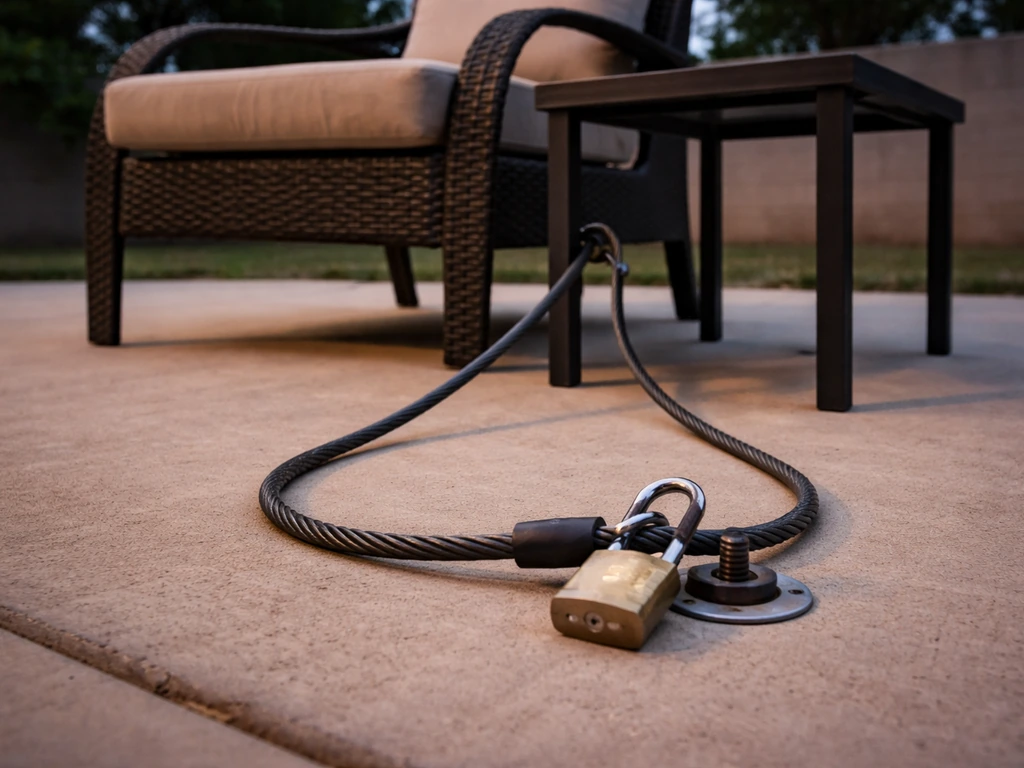
First: Is your patio actually high risk?
Before you buy anything, it's worth doing a quick 5-minute risk check. Walk out to your patio and ask yourself: Can someone walk onto this patio from the street without climbing or opening a locked gate? Can they see your furniture clearly from the sidewalk or road? Could they grab a chair or small table and be gone in under 30 seconds? If you answered yes to any of those, you have meaningful theft exposure and it's worth taking this seriously. If you want the practical steps, this guide walks through how to secure patio furniture with cables, anchors, and smart add-ons.
Most patio furniture theft is opportunistic. Thieves aren't planning for it the way they would a car theft. They walk through a neighborhood, spot an unsecured set of chairs or a nice dining table, and carry it off in under a minute. Police departments including Saint Paul and Tigard have specifically flagged patio furniture as a common target, and local reports note that unlocked gates and visible furniture from the street are the two biggest invitations. There's also a secondary risk worth knowing: a Town of Tonawanda police report flagged that patio furniture can be used to boost access to first-floor windows, meaning your chairs could literally help someone break into your house.
Higher-risk situations include: living on a corner lot, having a front or side patio visible from the street, being in a dense urban or suburban neighborhood, owning obviously expensive furniture (teak sets, cast aluminum, brand-name loungers), and leaving furniture out unattended for long stretches like holidays, vacations, or winter. If you're heading into a long weekend or a vacation, that's your cue to act now.
Lock it down: cables, chains, and padlocks
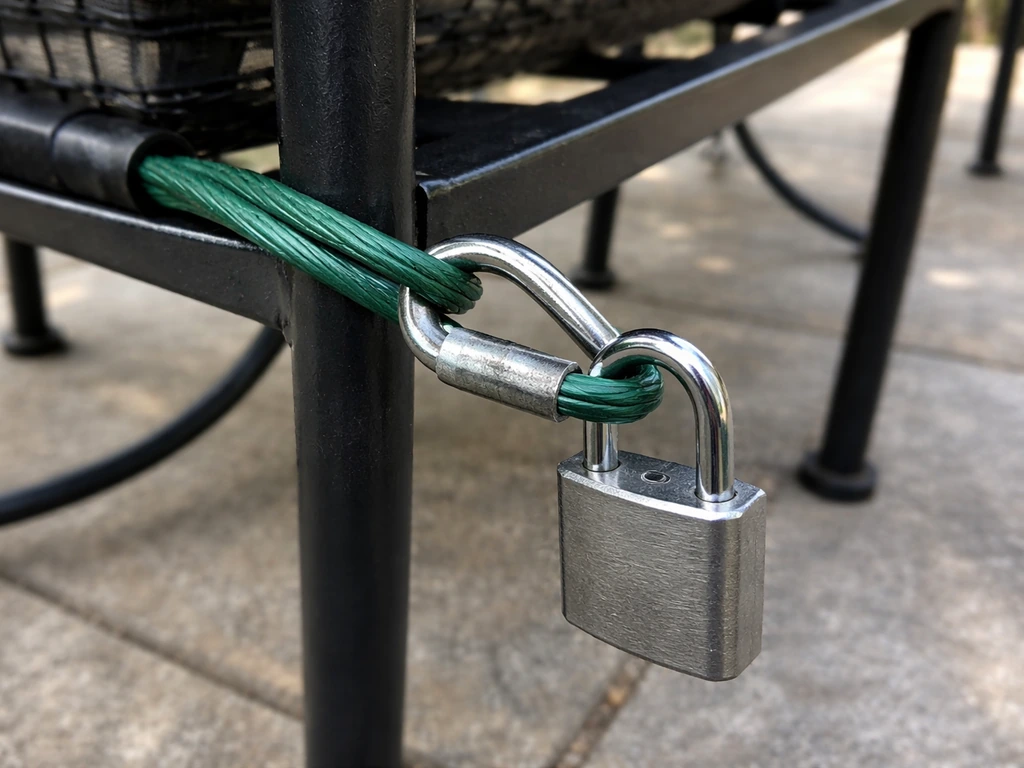
A heavy-duty steel cable with a quality padlock is your first line of defense and the easiest to implement. If you want the full walkthrough for how to lock up patio furniture end to end, follow the same locking approach with cables, anchors, and add-ons. Thread a 3/8-inch or thicker coated steel cable through the frames of your chairs, table legs, and any other pieces, then loop it to an anchor point and lock it. This threads everything together so a thief can't take one piece at a time, and it connects the whole set to something that can't be moved quickly. Following these tips on securing patio furniture with cables, anchors, and add-ons will help you cover the same common theft risks secure patio furniture.
For the cable itself, look for 3/8-inch galvanized steel cable with a PVC coating to protect both the cable and your furniture's finish. Length depends on your set, but a 15- to 20-foot cable handles most 4-6 piece dining sets. For chains, a Grade 70 transport chain (hardened steel) in 3/8-inch diameter is harder to cut than a standard hardware-store chain. Avoid thin braided cables under 1/4 inch. These are practically useless against bolt cutters and give a false sense of security.
For padlocks, choose a closed-shackle or shrouded-shackle design from a reputable brand. Open shackle locks are easy to attack with bolt cutters because the shackle is exposed. Sold Secure is an independent testing organization that rates lock strength, and their ratings are a good benchmark when shopping: look for at least a Sold Secure Gold rating for outdoor use. One important note from Sold Secure's own guidance: a cable is only as strong as its weakest point. The cable itself is usually easier to cut than the lock, so pair a strong cable with a quality lock and don't shortchange either.
If you want a combined locking-plus-alarm solution, Decibel Locks makes an outdoor furniture cable lock with a built-in tamper alarm. It's a good option if you want an audible deterrent on top of physical resistance without setting up a full alarm system. The alarm triggers if someone tries to cut or move the cable, which draws attention and tends to stop opportunistic thieves cold.
How to anchor different types of patio furniture
A cable is only as good as what it's attached to. If you loop it around a plastic planter or a thin deck rail, a thief can just lift the anchor point. You need to attach to something genuinely fixed, and the right method depends on your patio surface and furniture type.
Concrete and paved patios
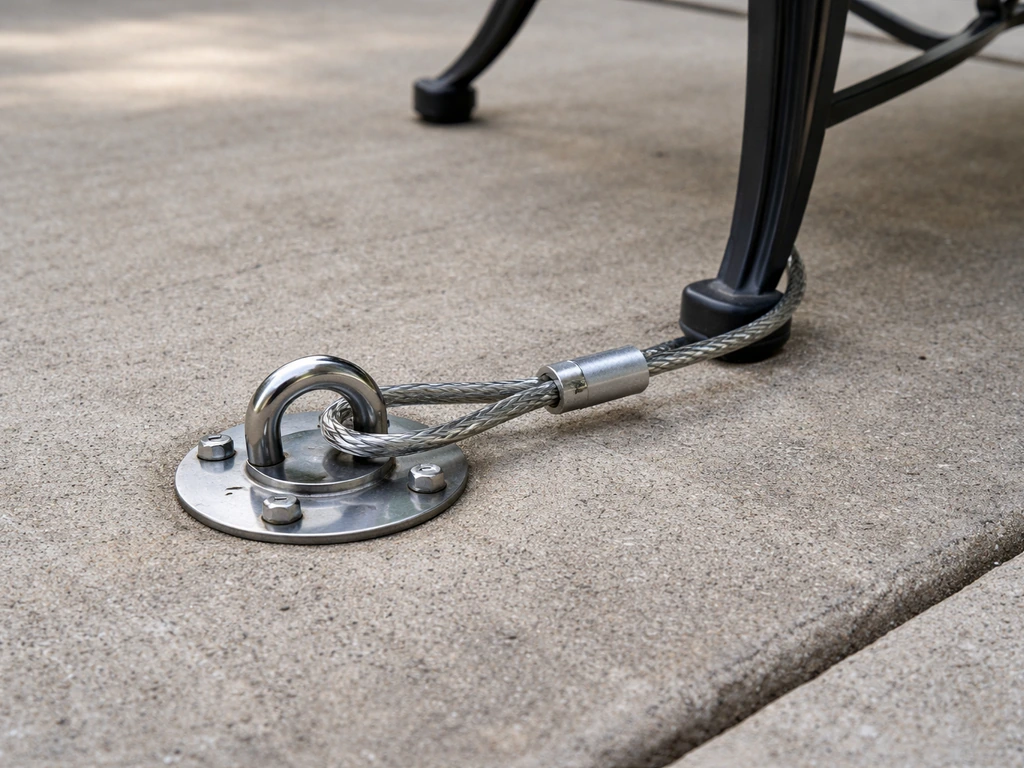
This is the easiest situation. Install a ground anchor (sometimes called a floor anchor or security anchor) directly into the concrete. Products like AnchorHog are specifically designed for this and come with installation instructions for concrete and brick substrates. The process involves drilling a hole in the concrete, inserting the anchor base, and bolting it down so only the loop or ring is exposed. Once installed, run your cable through the ring and lock it. AnchorHog's own instructions note that the padlock securing the cable also protects the anchor bolts from being reached and removed. Use a hammer drill with a masonry bit for this job, drill slightly smaller than the bolt diameter for a snug fit, and use masonry anchors rated for outdoor use. Budget roughly $20-40 for the anchor hardware.
Wood decks
For wood decks, you can bolt a security ring or anchor directly into a joist or structural beam below the decking. This is more secure than screwing into decking boards alone. Use a 3/8-inch or larger lag bolt with a heavy steel eye ring, going at least 2.5 inches into solid wood. Pre-drill to avoid splitting. Alternatively, use an anchor plate that distributes load across multiple screws. The cable then runs from the ring through your furniture frames.
No-drill options: patio door anchors
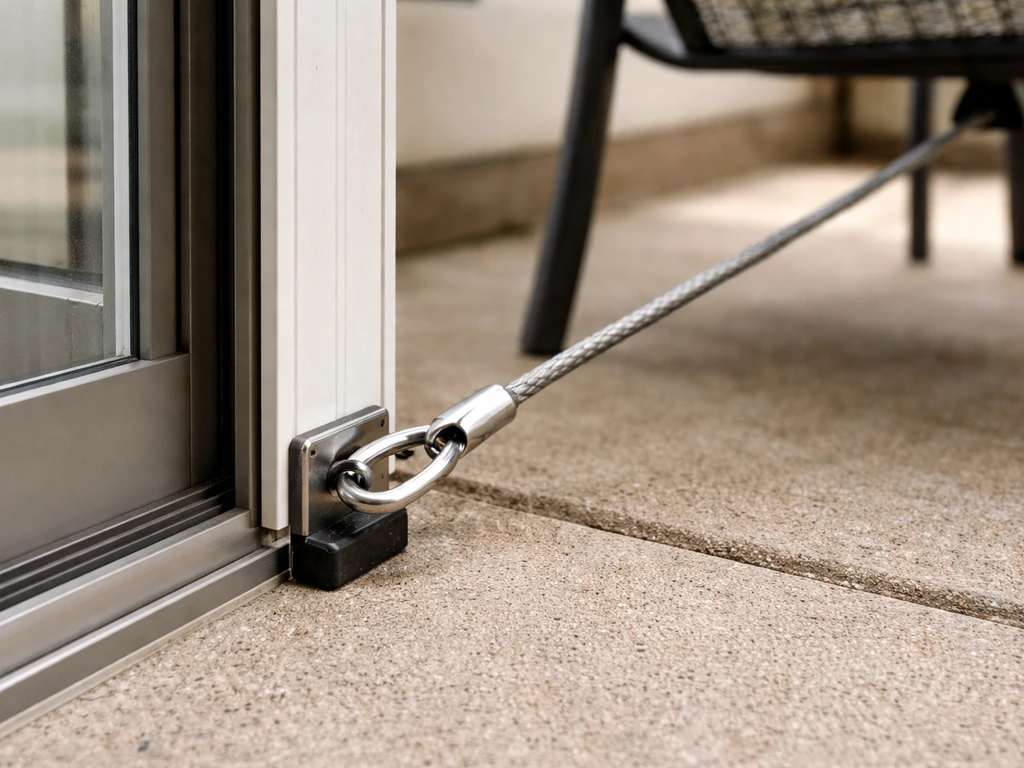
If you rent, don't want to drill, or have a small patio directly off a sliding glass door, a patio door anchor like PatioCOP is a practical no-drill alternative. It attaches to the door frame and provides a cable connection point. It won't stop a determined thief with tools the way a ground anchor will, but it addresses grab-and-go theft effectively and can be installed in minutes with no hardware.
Furniture type matters
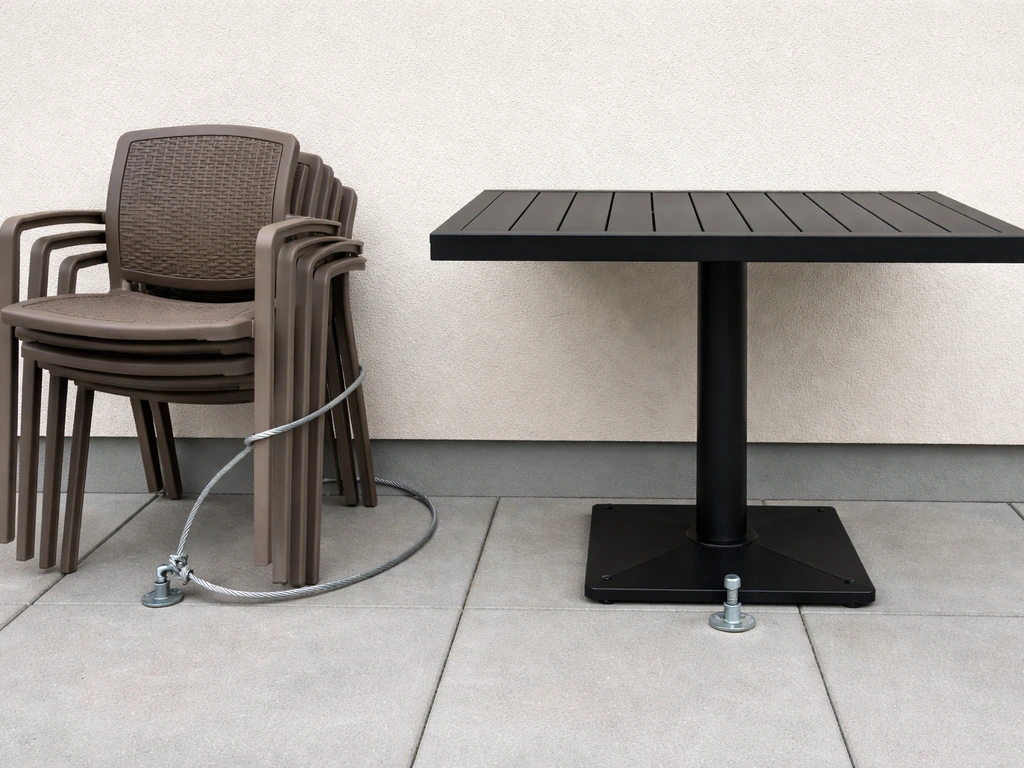
| Furniture Type | Theft Risk | Best Anchoring Method | Notes |
|---|---|---|---|
| Lightweight plastic/resin chairs | High (very easy to carry) | Cable through frame legs to ground anchor | Stack and cable through multiple chairs at once |
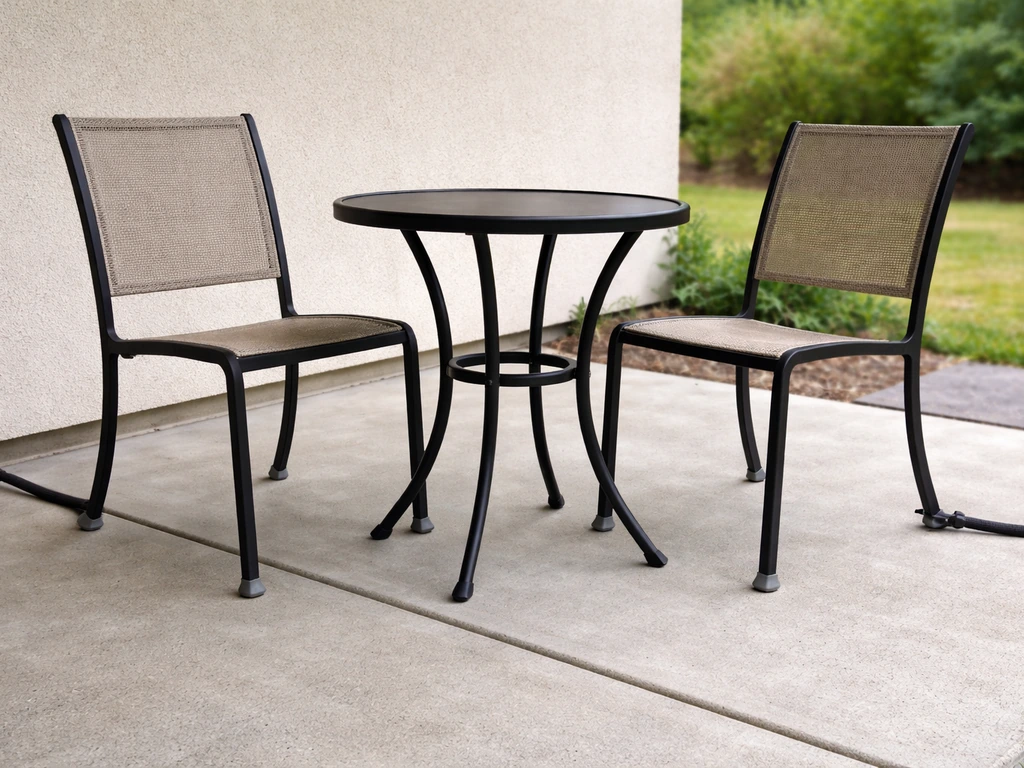
| Metal dining sets (aluminum/steel) | Medium-High | Cable through table frame + chair legs to ground anchor | Table can anchor chairs if table itself is bolted down |
| Heavy cast iron or concrete pieces | Low-Medium | Weight is a deterrent; still cable if portable | Focus on cable for any lighter companion pieces |
| Teak or wood furniture | High (high value) | Cable + ground anchor; consider engraving for ID | High resale value makes it a more planned target |
| Chaise loungers/sun beds | High (rolls easily) | Cable through frame loop, remove wheels if possible | Wheel locks also useful |
| Cushions and accessories | High (trivially portable) | Store indoors or in a locked deck box | No practical way to cable individual cushions |
Storage: when securing in place isn't enough
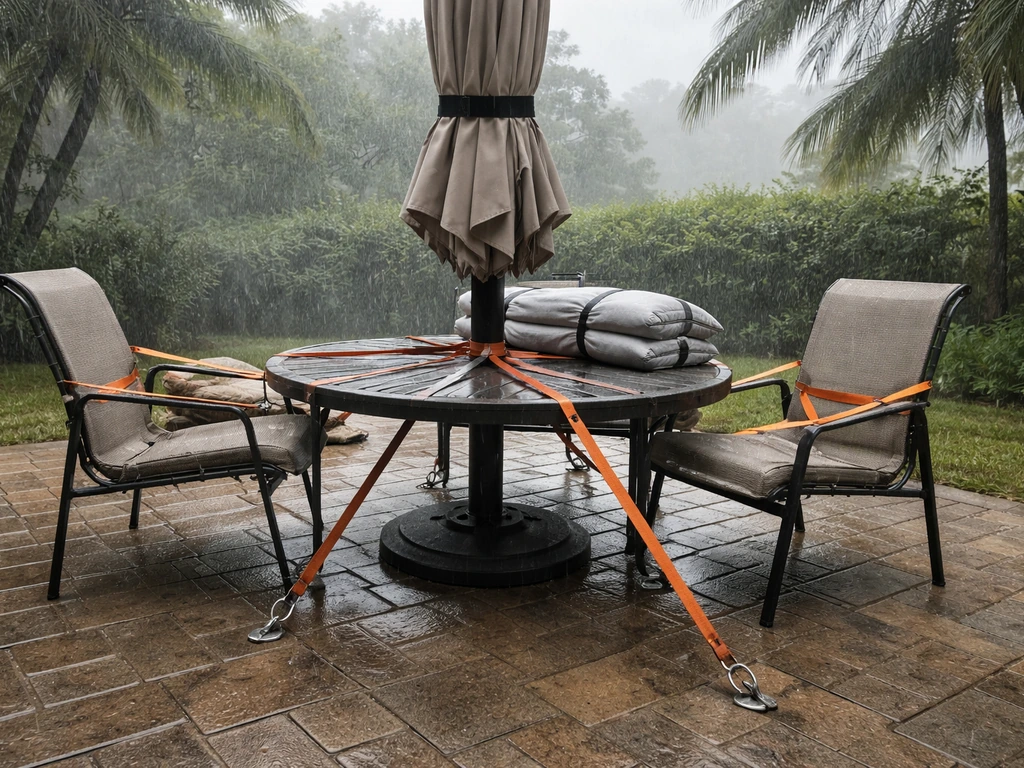
Sometimes the right answer is just to bring things in, and there's no shame in that. If you're leaving for a vacation, heading into a long holiday weekend, or going into the off-season, storing furniture is actually the most theft-proof option you have. For hurricane season, this same storage approach is a smart way to keep patio furniture safe when high winds and storm conditions make securing in place harder storing furniture is actually the most theft-proof option. A thief can't steal what they can't see or reach.
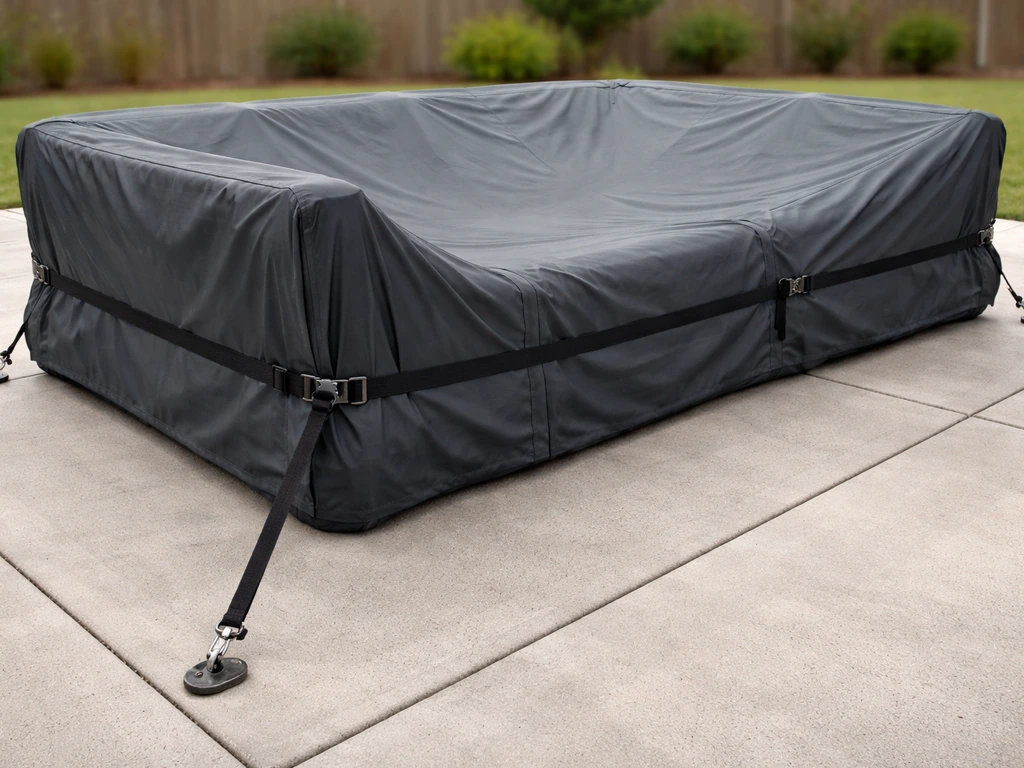
For short-term storage (overnight, a weekend, a few days away), a locked deck box or outdoor storage cabinet handles cushions, small accessories, and anything that can't be cabled. Full furniture pieces can go in a shed or garage. If that's not possible, stacking chairs and running a cable through the whole stack to a fixed point is a solid overnight habit. Patio furniture covers don't stop theft on their own, but a good fitted cover does hide what's underneath from casual street-level view, which reduces impulse targeting. If you want to tie down patio furniture covers so they actually help, use a fitted cover plus a cable lock underneath the cover. If you want to know how to secure patio furniture covers so they actually help, you need to use them as part of a complete locking setup. If you use covers as part of your routine, a cable under the cover keeps the actual pieces in place. Note that covers work best when paired with a cable lock, not as a standalone security measure.
For seasonal storage (fall through spring in cold climates), getting furniture into a garage, shed, or basement is the cleanest security solution and also extends the life of your pieces. If you're storing for months, this is also the time to check frames for rust or rot, clean thoroughly, and store cushions in sealed bags or bins to keep them from mildewing. The storage period that protects your furniture from theft also happens to be the same period that protects it from winter weather damage, so it's a double win.
Smart security add-ons: cameras, lights, alarms, and trackers
Physical locks stop a lot of theft, but smart security adds another layer that's worth having, especially if you have high-value furniture or a history of problems in your neighborhood. None of this needs to be expensive or complicated.
Motion-activated lights
This is the highest-value, lowest-cost upgrade you can make. A motion-activated floodlight covering your patio costs $20-60, takes about 20 minutes to install, and eliminates the darkness that makes opportunistic theft easy. Bright sudden light draws neighbor attention and makes a thief feel exposed. Mount lights so they cover the main approach paths to your patio, not just the patio itself. Most solar-powered options work fine for basic deterrence, but hardwired models are brighter and more reliable.
Outdoor security cameras
A visible camera is a deterrent before theft happens, and footage is useful if it does. Mount cameras at eye level near entry points to your patio, making sure nothing blocks the field of view. Security.org's guidance notes that cameras work best when they're visible, positioned to catch faces, and aren't obscured by foliage or structures. Pair the camera placement with the Tigard Police Department's advice: trim shrubs and trees that create hiding spots near your patio, both for camera sightlines and general visibility.
Alarms and trackers
Vibration or motion alarms can be attached to individual furniture pieces. They're battery-powered, inexpensive, and will sound if a piece is moved or tampered with. For high-value pieces like a teak set or premium dining table, a small Bluetooth or GPS tracker (Apple AirTag, Tile, or similar) hidden inside a hollow leg or under a table apron gives you location data if something is taken. Trackers won't prevent the theft, but they dramatically improve recovery chances and give you something concrete to give police.
Placement, habits, and reducing opportunity
The easiest theft prevention is making your patio a less attractive target in the first place. A lot of this comes down to placement decisions you make once and then mostly forget about.
- Position high-value pieces away from street view: keep them toward the back of the yard or behind a fence rather than visible from the road or sidewalk.
- Lock your gate. This sounds obvious, but unlocked gates are explicitly cited by police departments as a common entry point for backyard theft. A quality padlock on the gate adds 30 seconds of friction that many opportunistic thieves won't bother with.
- Don't leave portable accessories out: cushions, throw pillows, string lights, and decorative items are trivially easy to carry off and should come inside when you're done using them.
- Trim back shrubs and tall hedges near your patio. Dense screening feels private but also hides a thief from neighbor view once they're inside your yard.
- Get to know your neighbors. Neighborhoods with active communication (even just a group chat or a Nextdoor account) have better theft awareness. If your neighbor knows what your patio set looks like, they're more likely to notice something off.
- Mark your furniture. Engrave your address or a unique identifier into metal or wood frames. This makes pieces harder to sell and helps police identify recovered items.
- Build a nightly habit. Before you go in for the night, run the cable, lock the padlock, and bring in the cushions. It takes under two minutes and becomes automatic quickly.
One thing that trips people up: they secure furniture consistently all summer and then stop in September when they think "no one steals patio furniture in the fall." That's actually when some opportunistic theft spikes, because furniture is left out for transition weeks, owners are less vigilant, and pieces are moved around for cleaning or storage prep. Stay consistent right through until everything is fully stored for the season.
Your DIY shopping list and step-by-step plan
Here's exactly what to buy and do to get protected before your next high-risk period (holiday weekend, vacation, or end of season). This covers a typical 4-6 piece patio set on a concrete or wood deck.
Shopping list
| Item | Spec to Look For | Approx. Cost |
|---|---|---|
| Steel security cable | 3/8-inch coated, 15-20 ft | $15-25 |
| Closed-shackle padlock | Sold Secure Gold or higher, hardened shackle | $20-45 |
| Ground anchor (concrete patio) | AnchorHog or equivalent, rated for outdoor use | $20-40 |
| Security eye ring + lag bolt (wood deck) | 3/8-inch lag bolt, heavy steel ring | $8-15 |
| Patio door anchor (no-drill option) | PatioCOP or equivalent | $20-35 |
| Motion-activated floodlight | Solar or wired, 1000+ lumens | $20-60 |
| Vibration alarm (optional) | Battery-powered, adjustable sensitivity | $10-20 each |
| GPS/Bluetooth tracker (optional) | AirTag, Tile Mate, or similar | $25-30 each |
| Deck box with lock (for cushions) | Lockable latch, weatherproof | $60-150 |
| Hammer drill + masonry bit (concrete install) | Can rent from hardware store for ~$30/day | $0 if borrowing or renting |
Step-by-step implementation
- Do your risk check today. Walk your patio and answer: Can someone walk on without a key? Can they see the furniture from the street? Could they grab and go in under 30 seconds? Note what you find.
- Choose your anchor point. If you have a concrete patio, plan to install a ground anchor. If you have a wood deck, identify a joist location for a lag-bolt eye ring. If you rent or want a no-drill solution, pick up a patio door anchor.
- Install the anchor. For concrete: drill a pilot hole with a hammer drill and masonry bit, insert the anchor base, and bolt it down per the manufacturer's instructions. For wood: pre-drill into a joist and thread in the lag bolt eye ring. Tighten fully. For a door anchor: attach per the product instructions, usually a bracket that fits the door frame without drilling.
- Thread the cable. Run the steel cable through the legs and frames of every piece in your set, then loop it through the anchor ring. Start with chairs (stack them if you can, run the cable through the whole stack), then the table frame.
- Lock it. Insert the cable ends through the padlock shackle and click it shut. Test by trying to pull individual pieces free. Nothing should move more than a few inches.
- Install your motion light. Mount it above the main approach path to your patio, positioned to light up anyone walking toward the furniture. Test the motion zone during daylight using the manual test mode most lights have.
- Set up any extras. Attach vibration alarms to high-value pieces. Hide a tracker inside a table leg or under a chair frame. Add your address engraving to visible frame surfaces.
- Lock the gate. If your yard gate doesn't have a lock, add a padlock or combination lock today. This is a 5-minute job that closes one of the most common entry points.
- Bring cushions in or lock them up. Move them to a deck box (locked), a garage, or indoors. Don't leave them out overnight if you can help it.
- Tell a neighbor. Let one nearby neighbor know you have a nice patio set and ask them to text you if they see anything odd. This costs nothing and is surprisingly effective.
Total cost for a solid basic setup (cable, padlock, ground anchor, and motion light) runs roughly $75-130. That's a fraction of what even a mid-range patio set costs to replace, and it takes an afternoon to install. If you're already doing seasonal prep like covering or storing furniture, this security layer fits naturally into the same routine. The goal isn't to build a fortress, it's to make your patio the second-easiest target on the block. Opportunity is what drives most patio theft, so removing opportunity is what stops it.
FAQ
How do I know if I need to cable the whole set or just lock a couple of pieces?
If you can grab and carry a single chair or small side table in under 30 seconds, you should treat that as a “piece-by-piece” theft risk. The practical fix is to cable multiple items together (chair frames to table legs) and lock them to one fixed anchor, so removing one piece requires cutting multiple connections or lifting something heavy and anchored.
What’s the most common mistake people make when securing patio furniture with a cable?
Use the anchor as the deciding factor, not the “headline” strength of the cable. If the anchor is weak (plastic planter, loose rail, thin metal bracket, or anything that can be pried up), a thief can defeat the setup by removing the attachment point. Prioritize permanent mounts, like a concrete ground anchor, a joist/structural beam ring, or a properly attached patio door anchor to a real frame member.
Can I just run the cable around the cover, cushions, or light frames to lock everything down?
Yes, but only if the cable is routed through rigid structure and locked to something fixed. Threading a cable through loosely attached slats, fabric, or removable parts can be bypassed by taking the loose components off first. When in doubt, route through the main frame members, table leg hardware area, or any non-removable cross bars.
Is a motion-activated floodlight enough to stop patio furniture theft?
Often, motion lighting is most effective when it’s paired with a lock, because light alone can still leave the furniture removable if someone works quickly. Set the light to cover the approach path and consider a timer or sensitivity setting so it triggers reliably at night without constant false alerts from street traffic or wind-blown debris.
Do patio furniture covers actually prevent theft, or are they mostly for weather?
For overnight or during a trip, a cover can reduce casual visibility, but it should not be treated as security. If you want covers to help, use a fitted cover plus a cable lock underneath so the pieces cannot be pulled out under the fabric. Also, avoid leaving the cover loosely fitted, because thieves can grab edges and remove it faster than you expect.
My patio is quiet most of the year, should I lock furniture only in summer?
Seasonal movement is the risk window. Thieves may target transition weeks when furniture is partially stored or furniture is brought out for cleaning and rearranged. Keep cable locking and visibility controls consistent until everything is fully in the garage or shed, not just during peak summer.
Where should I place a GPS or AirTag-style tracker on patio furniture for best results?
A tracker helps you recover the property, but it does not stop the theft. Hide it where it is harder to find and remove, like inside a hollow chair leg, under a table apron in an area that stays protected from rain, and secure it so it cannot be easily pried out. Expect that thieves may disable or discard it, so pair tracking with physical locking.
I rent, what’s the best theft-prevention approach if I can’t drill anchors into my patio?
If you rent, prioritize options that do not require drilling into the structure. A no-drill patio door anchor can address grab-and-go theft effectively, but you should still keep the furniture out of direct street view. If you can get landlord approval, a structural mounting point (joist/beam) is much stronger than attaching to surface-level materials.
How can I test whether my anchor installation is actually secure?
If your cable can be lifted with the anchor, the setup fails. Test the system by tugging hard enough to simulate a thief pulling from one side, and check for anchor movement, looseness, or flex in the mount. For wood decks, mounting into structural members (or using an anchor plate that distributes load) matters more than just using a “big enough” lag bolt.
What should I look for when choosing a padlock and cable together?
If you choose locks, closed-shackle (or shrouded) designs reduce bolt-cutter access, but the bigger benefit is still the lock-cable pairing. Buy a cable and padlock you can inspect, then add a simple routine: check the shackle closure, look for frayed cable ends, and confirm the cable routing hasn’t shifted so the lock is always directly protecting the anchor loop point.
If I install a camera, how should I position it to make it useful for theft recovery?
Hardwired cameras or alarms can provide better reliability than battery-only options, but even a camera works best when it has an unobstructed view of faces and the main approach. Trim shrubs and reposition mounts so they do not rely on a narrow angle blocked by umbrellas, planters, or seasonal decor.
What’s the safest way to handle theft prevention if I only have room for overnight storage and not full indoor storage?
Stacking chairs can work for short periods only if you still lock the stack to an immovable point, since stacked chairs are easier to carry as a unit. For longer absences, plan on moving furniture indoors or into a shed or garage. If indoor storage is impossible, keep at least the top-level items cabled and use lighting so the “lift and go” advantage disappears.