Securing patio furniture means different things depending on your situation. For some people it's stopping chairs from sliding across a slick tile deck every time someone stands up. For others it's keeping a whole set from blowing into the neighbor's yard during a thunderstorm, or stopping someone from walking off with an expensive teak chair. The good news is that most of these problems are fixable with cheap hardware, the right anti-slip pads, and a little seasonal maintenance. This guide walks through all of it so you can figure out exactly what your furniture needs and get it done yourself.
How to Secure Patio Furniture: Step-by-Step DIY Guide
Maren Grady
29 Apr 2026
Quick checklist: what 'secure' actually means for your patio set
Before you buy anything or start drilling, it helps to know which problem you're actually solving. Most patio furniture has one or more of these failure modes, and the fix for each one is different. Run through this list and mark which ones apply to you.
- Wobbling or rocking: legs are uneven, joints are loose, or hardware has stripped out over time
- Sliding on slick surfaces: smooth-bottomed furniture on tile, composite decking, or sealed concrete with nothing gripping underneath
- Blowing over in wind: lightweight pieces (especially chairs and umbrella bases) tipping or skidding in gusts
- Loosening from rain and seasonal expansion: wood swells, metal expands, and bolts back out gradually when temperature and moisture cycles repeatedly
- Covers blowing off or tearing: improperly secured covers that leave furniture exposed to weather damage
- Theft or unwanted movement: furniture disappearing or being relocated by guests, kids, or opportunistic strangers
Most homeowners are dealing with two or three of these at once. Identify yours now and you'll spend a lot less time and money than someone who throws random solutions at the problem.
Know your furniture type and where it's most likely to fail
Different furniture materials fail in different ways. A lightweight resin chair and a solid teak dining set have almost nothing in common when it comes to weak points, so the fixes are totally different too.
Metal furniture (aluminum, wrought iron, steel)
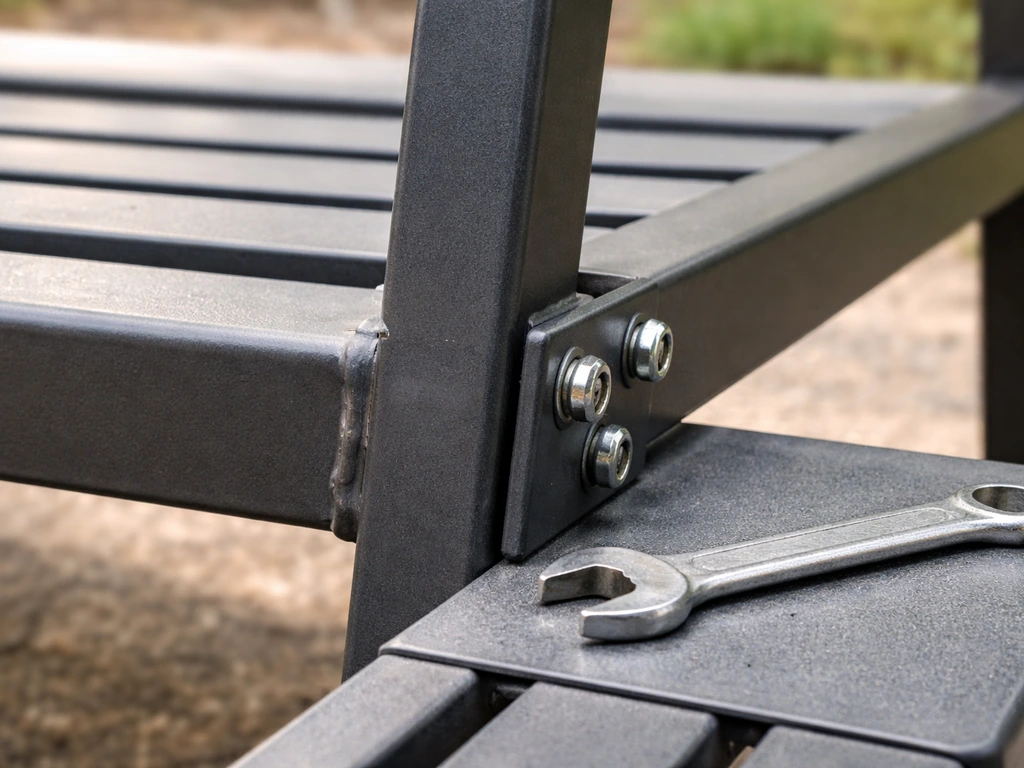
Aluminum is light and rust-resistant but also the most blow-over-prone material out there. Welded joints hold up better than bolted ones, but check all bolts and screws at least once a season because metal-on-metal connections loosen as the frame heats and cools. Wrought iron is heavy enough that wind isn't usually a problem, but watch for rust at joints and connection points because rust eats away at the structural strength of the joint over time. Steel falls in between and needs the most rust protection if you're in a humid or coastal climate.
Wood furniture (teak, eucalyptus, cedar, pine)
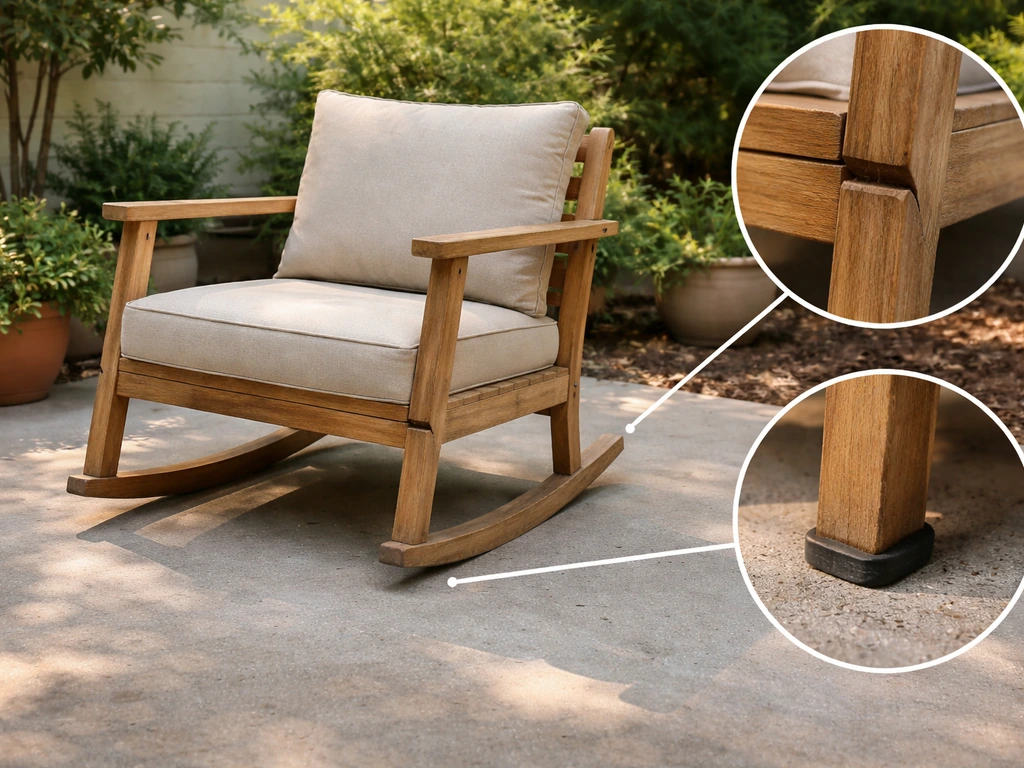
Wood expands in humidity and contracts when dry. That cycle is what backs bolts out of their holes and causes joints to loosen, sometimes in as little as one season. If your wood chairs wobble, the first thing to check is whether the bolts are still tight. Softwoods like pine are especially prone to screw holes stripping out over time. Teak and eucalyptus are more stable but still need annual hardware checks. Look at the legs too: if the feet have no rubber glides, the bare wood will scratch, split, or soak up water from a wet deck.
Wicker, resin, and plastic furniture
All-weather wicker is usually wrapped around a metal or resin frame, so wobble problems often come from the inner frame loosening rather than the wicker itself. Resin and plastic sets are the lightest of all, which makes wind a constant problem. They also tend to have hollow legs with no weight to hold them in place. Check the feet on resin furniture closely: cheap plastic glides wear down fast and leave nothing between the raw frame and your deck surface.
Umbrella bases and freestanding pieces
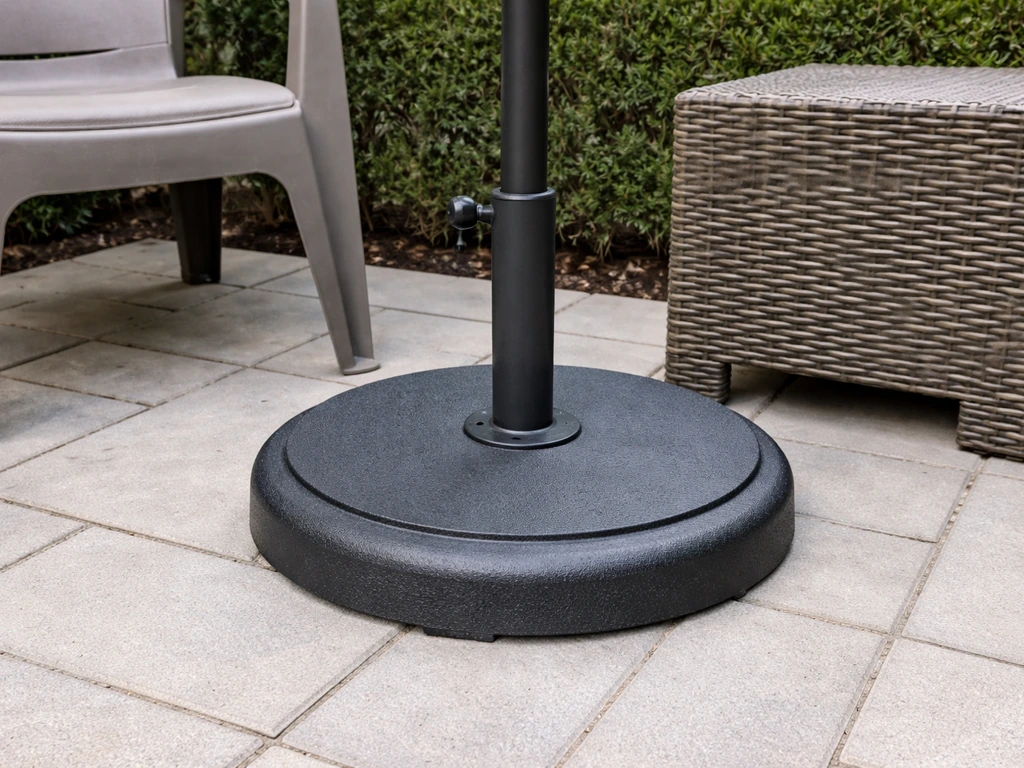
An umbrella base needs to be heavy enough to counteract the sail effect of the canopy. Most manufacturers recommend at least 50 pounds for a 9-foot canopy, and more if you're in a consistently windy area. A base that's technically the right size can still tip if the canopy is open during a gust. If your umbrella has toppled before, that's your furniture's biggest weak point right now.
Anchoring and anti-slip solutions by flooring type
Where your furniture sits matters almost as much as what it's made of. Here's what actually works on the most common patio surfaces.
Tile and smooth concrete
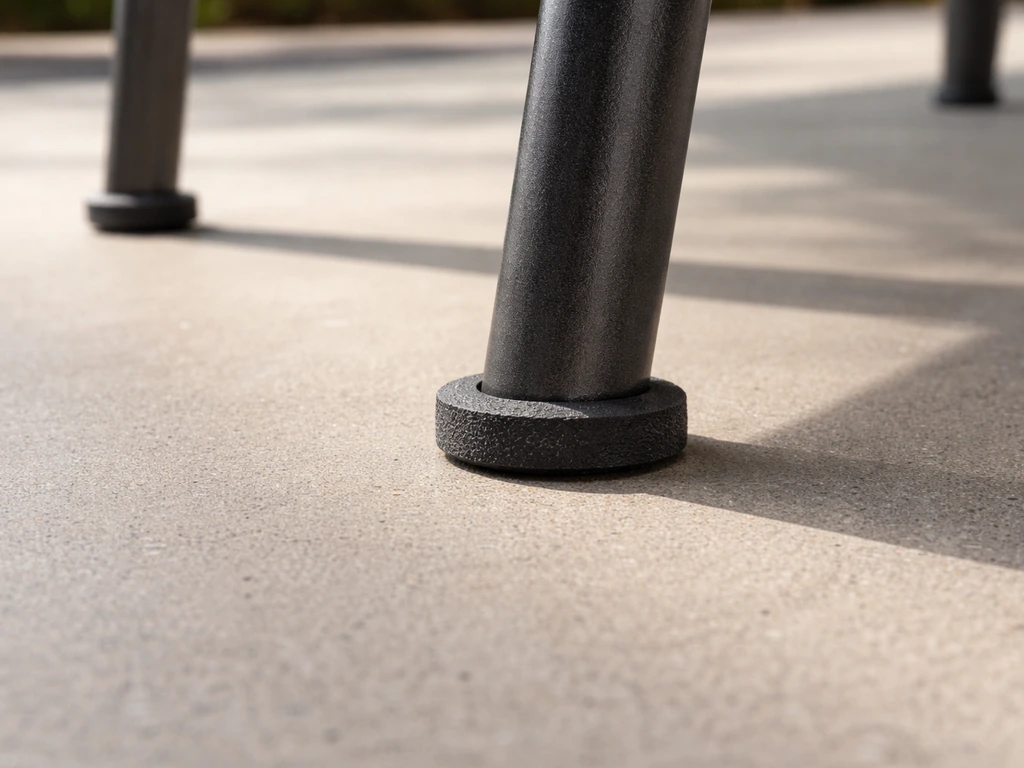
These are the slipperiest surfaces for patio furniture. Rubber or non-slip furniture feet are your first line of defense. Stick-on rubber pads from the hardware store cost less than $10 for a full set of chair feet and grip tile surprisingly well. For something more heavy-duty, furniture leg caps with rubber soles fit over existing legs and give much better traction. If you want a permanent fix, you can also use outdoor-rated furniture anchors: these are small floor brackets that bolt to the concrete with a masonry anchor and lock around the furniture leg. Expect to spend $15 to $30 per piece for that level of security, plus about 30 minutes of drilling per anchor point.
Wood and composite decking
The good news with decking is that you can actually screw into it if needed. Deck anchors or angle brackets screwed into the decking boards will hold heavy furniture solidly. For lighter pieces where you don't want to put permanent holes in the deck, anti-fatigue mat sections cut to fit under the furniture grouping work well and protect the decking surface at the same time. Non-slip furniture pads are still your first step, but on composite decking specifically, avoid hard plastic feet: they leave permanent scuff marks on some composite profiles.
Pavers and gravel
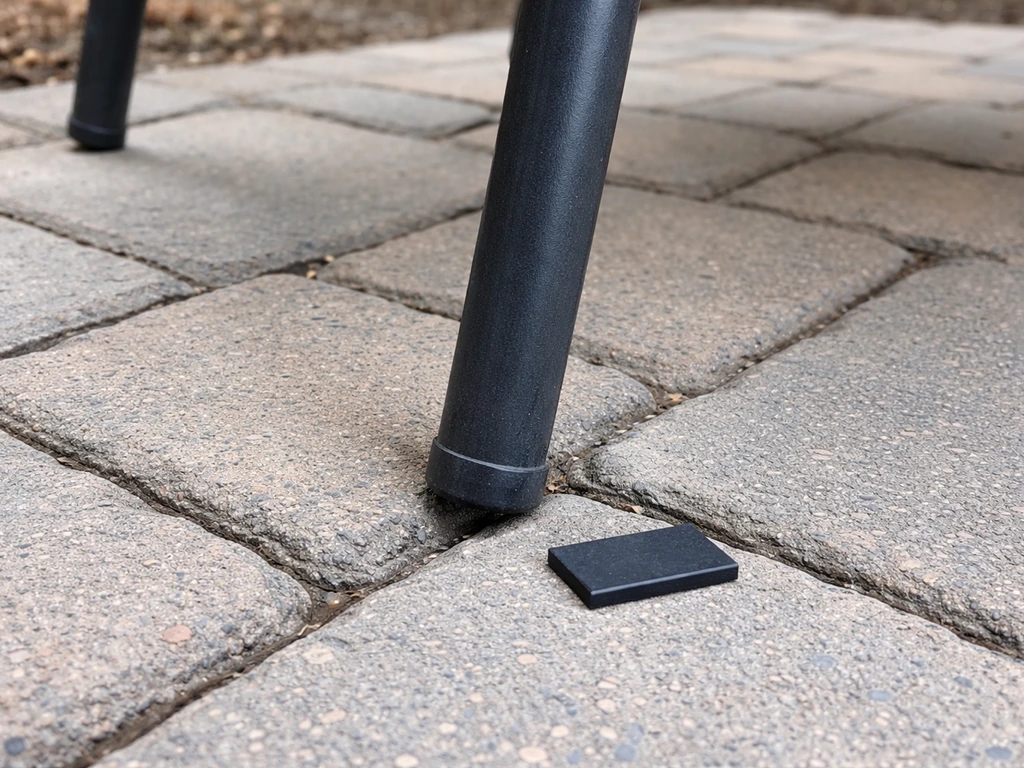
Uneven pavers cause wobbling before wind even becomes a concern. If your furniture rocks on pavers, check whether one leg is hitting a high joint rather than assuming the furniture itself is crooked. Rubber caps help bridge small gaps. For gravel, furniture tends to sink and shift, so wide rubber feet or even a section of outdoor rug under the piece will keep things stable. Ground stakes designed for outdoor furniture are also worth considering here: they're essentially large spikes that drive into soil or gravel and connect to the furniture leg or base via a strap or clamp.
Dealing with wind specifically
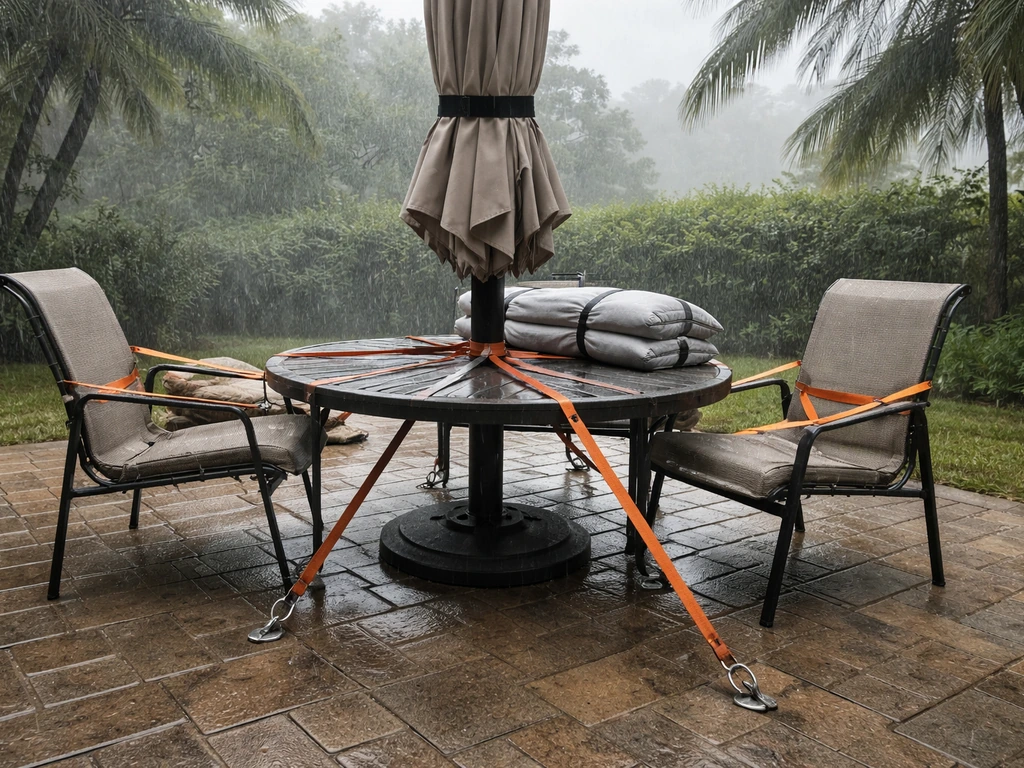
Wind is the most unpredictable threat. For everyday breezy weather, adding weight is the most reliable solution: furniture leg weights, sandbag-style base weights, or even decorative planters positioned strategically around the set. For more serious wind situations (think approaching storms or hurricane season), you need either hard anchoring with straps and brackets or a plan to move and store the furniture. If hurricane-force winds are in the forecast, follow these anchoring and storage steps to keep your patio set from lifting or tipping how to secure patio furniture during hurricane. If you are dealing with strong wind, focus on tie-down straps, anchors, and temporary storage so the set cannot lift or tip during gusts. Bungee cords and ratchet straps that connect furniture legs together and then to a fixed point like a deck railing are a popular budget option. Purpose-made furniture tie-down straps with weather-resistant buckles are more reliable and run about $20 to $40 for a set.
Weather-proofing and smart storage to stop damage before it causes loosening
Here's something a lot of people don't realize: most wobble and hardware problems don't start with poor hardware. They start with water getting into joints, wood soaking up moisture for weeks, or a cover that doesn't actually protect anything because it's pooling water and tearing. Prevention here saves you a lot of repair work later.
Using covers correctly
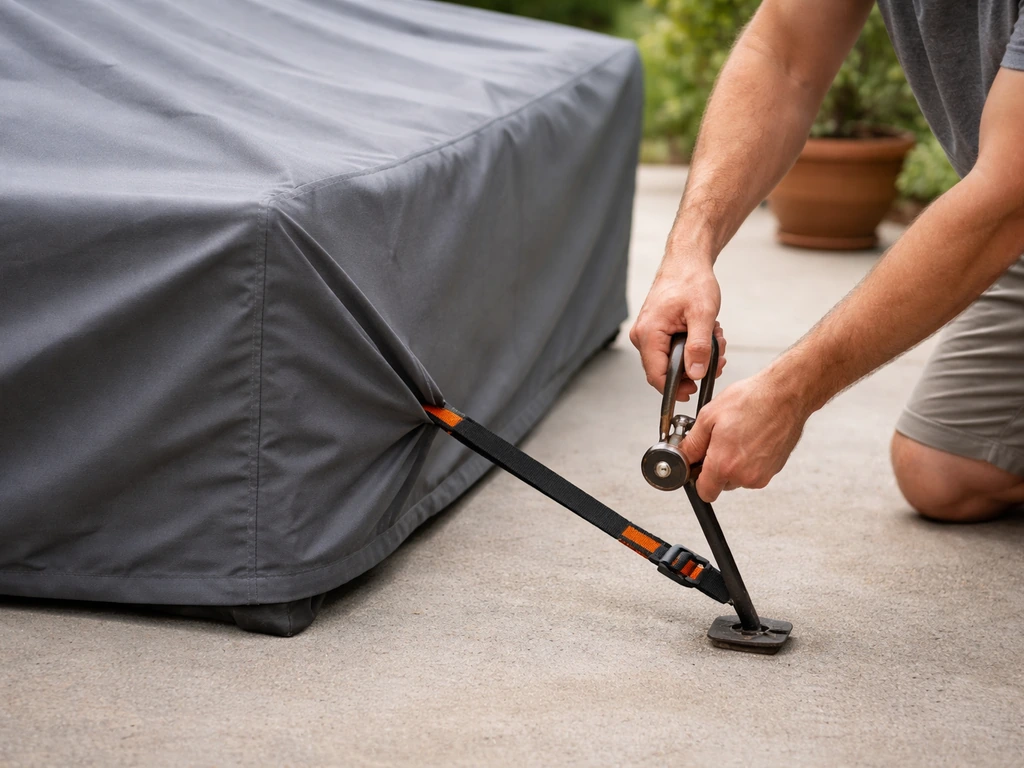
A furniture cover that fits but isn't secured will still blow off in serious wind because gusts create an upward lifting force underneath the fabric. A Home Depot patio furniture use and care manual hosted on its static PDFs also advises using a properly fitted cover to protect against rain, dust, and UV damage blank" rel="noopener noreferrer">A furniture cover that fits but isn't secured will still blow off in serious wind because gusts create an upward lifting force underneath the fabric.. If you need extra protection during storms, learn how to secure a tarp over patio furniture so it doesn't billow, pool water, or blow off. Every cover should be secured with its drawcord, buckle straps, or tie strings actually cinched tight. To fully protect your setup, use the cover's built-in straps and cinch points so it stays tight during gusts cinched tight. If your cover doesn't have these, buy one that does. Tie-down straps are also a smart choice if you want patio furniture covers to stay snug during strong wind. Pooling water on top of a loose cover is also a major problem: the standing water adds weight, and over time it tears the cover open and soaks whatever is underneath. Look for covers with a vent panel or a slight peak design that sheds water, and use a foam pool noodle or a cover support frame underneath to create a pitch and keep water from collecting.
Keeping furniture off wet ground
If you're storing furniture on the ground over winter, raise it. Even a few inches of clearance on furniture risers, pallets, or treated lumber blocks keeps the feet out of standing water and stops wood rot and rust from developing at the base of legs. This single habit extends the life of both wood and metal furniture significantly. I've seen teak chairs that were stored directly on a concrete pad develop cracking and staining at the foot that ruined the finish in one season.
Drying before covering or storing
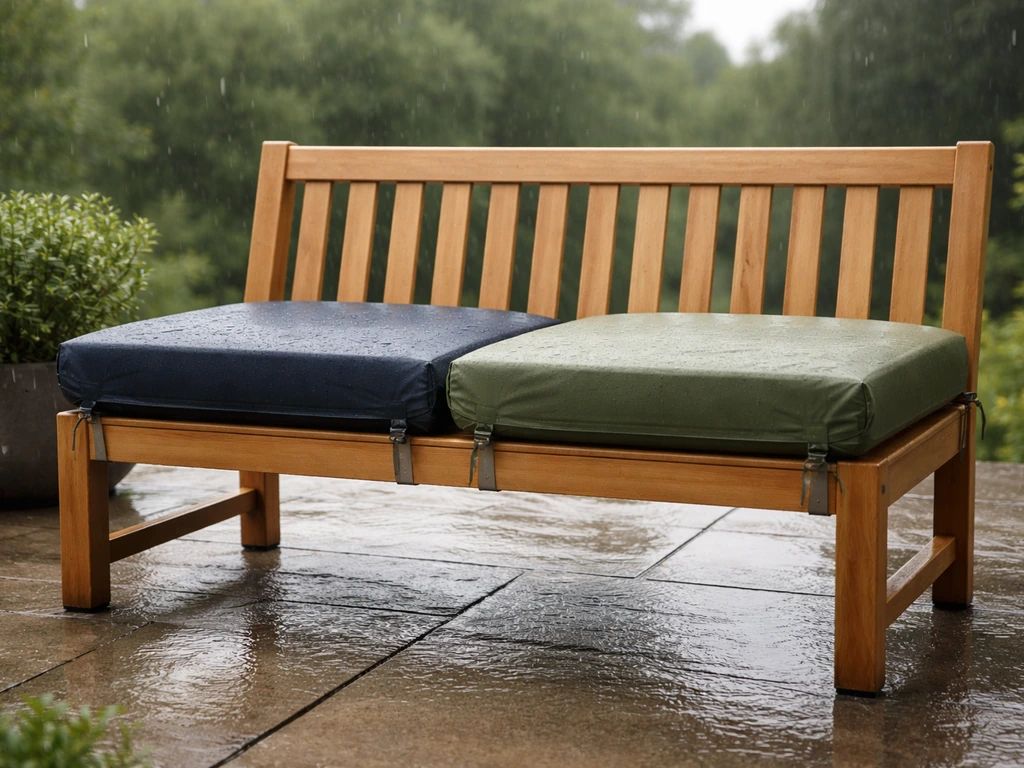
Never cover damp furniture. Trapped moisture under a cover creates exactly the warm, wet environment that accelerates rust on metal, mold on cushions, and rot on wood. Before throwing a cover on after rain, wipe the surfaces down and let things air out for at least an hour. When storing for winter, do a full dry day in the sun before bringing pieces into the garage or shed.
Tightening, repairs, and hardware upgrades that keep furniture solid
This is the section most people skip, and it's usually the reason their furniture starts wobbling again two months after they thought they fixed it. Hardware loosens. That's not a defect, it's just physics.
Start with a tighten-everything pass
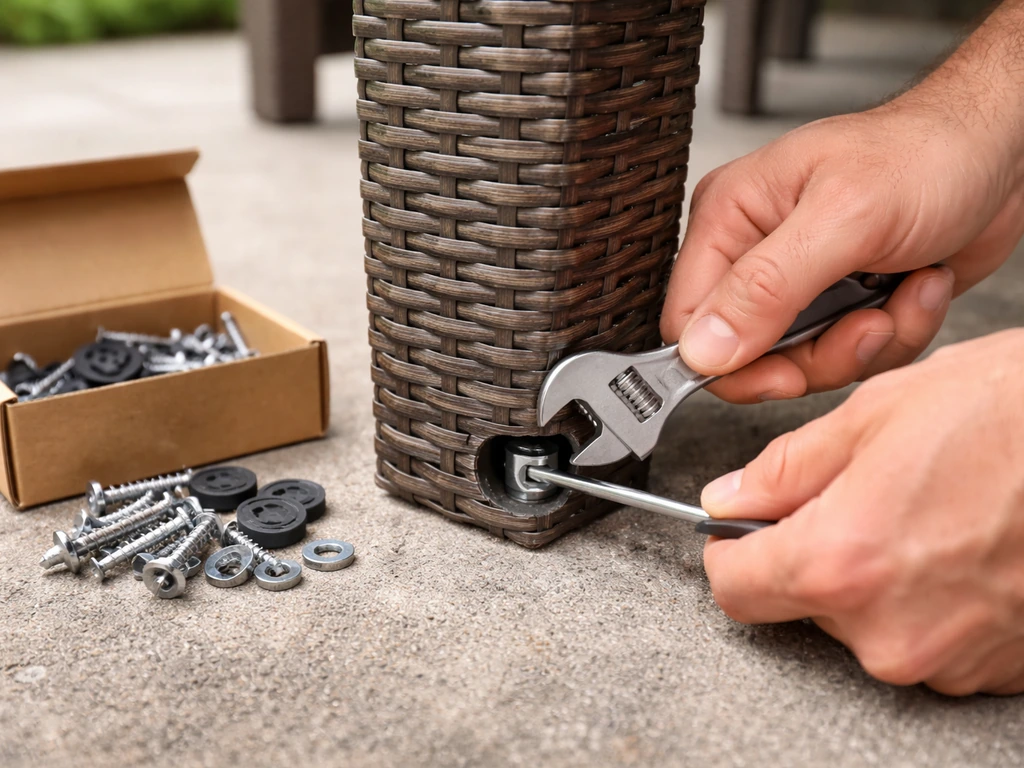
Once a year (spring is the best time), go over every bolt, nut, and screw on your patio set with the right driver or wrench. Don't just check if they're loose: actually tighten them. You'll be surprised how many quarter-turns you get out of hardware that looked fine. This one step fixes probably 70% of wobble complaints. Use a screwdriver and adjustable wrench, or a socket set if your furniture uses hex bolts.
When screws won't tighten anymore
If a screw just keeps spinning without tightening, the hole has stripped. Don't keep cranking on it. The easiest fix for wood furniture is to pack the hole with toothpicks and a dab of wood glue, let it cure overnight, then drive the original screw back in. The toothpicks give the threads something to bite into. For metal furniture, a stripped bolt hole usually means replacing the bolt with the next size up (slightly larger diameter) or adding a lock nut on the back side. Lock nuts and thread-locking fluid (like Loctite Blue) are cheap and prevent future loosening reliably. A Nyloc (nylon-insert lock nut) is a locknut with a nylon collar meant to increase friction on the screw threads to help prevent loosening blank" rel="noopener noreferrer">Wikipedia.
Upgrading to better hardware
If your furniture came with cheap zinc screws and you live anywhere with humidity, those screws are probably already rusting. Replace them with stainless steel or hot-dipped galvanized equivalents. Stainless costs a little more but won't corrode, won't seize in the threads, and won't leave rust streaks on your furniture. For wood joints that have loosened and can't be tightened back to solid, L-brackets or corner braces screwed to the inside of the joint will stabilize the connection for a fraction of the cost of new furniture.
Replacing feet and glides
Worn-down feet and glides are one of the most overlooked fixes in patio furniture maintenance. If the rubber is gone and you're down to the bare metal or plastic leg, your furniture is sliding, scratching your deck, and potentially collecting moisture at the base. Replacement rubber glides and leg caps cost $5 to $15 for a full set of four chairs and take about 10 minutes to install. Measure the leg diameter or opening before buying. You'll find universal fit options at most hardware stores.
Keeping furniture from being stolen or moved without permission
Patio furniture theft is more common than most people think, especially for high-value teak or cast aluminum sets. You can also use patio furniture locks, cables, or anchors so your set stays put even if someone tries to move it lock up patio furniture. You don't need to turn your patio into Fort Knox, but a few practical steps make your stuff a much less appealing target.
Placement and visibility
Furniture that's visible from the street or a neighbor's window is harder to steal quietly. Moving your set to a back corner that's invisible from the sidewalk might feel more private, but it also means a thief can work without anyone noticing. If your patio is visible from inside your home, even better. Motion-activated lights near the patio area add another deterrent layer for almost no cost.
Locks, cables, and straps
A coated security cable run through chair legs and around a fixed post or railing, secured with a padlock, stops casual theft effectively. It's the same concept as a bike lock. Galvanized steel cable with a plastic coating runs about $10 to $20 for a 15-foot length, and a weatherproof padlock is another $15 to $25. For tables, a heavy-duty anchor bolt drilled into the concrete or deck with a padlock ring is more permanent but basically impossible to remove without a grinder. Ground anchors designed for this purpose are available at home improvement stores for around $20 to $30.
Anti-move tactics for keeping things in place day to day
Beyond actual theft, a lot of homeowners just want their furniture to stay where they put it (kids, houseguests, and cleaning crews are notorious for rearranging things). Non-slip pads help here, and so do furniture groupings: a table with chairs tucked in close tends to stay as a unit better than individual scattered pieces. If you have a patio rug under the set, that's also surprisingly effective at keeping everything anchored in position without any hardware at all.
Your maintenance schedule: what to do every season
Securing your patio furniture isn't a one-time project. It's an annual rhythm. Here's the schedule I stick to, broken out by season.
Spring setup (April to May)
- Bring furniture out of storage and inspect every joint, leg, and surface for rust, cracks, rot, or damage that developed over winter
- Tighten every bolt, nut, and screw on each piece
- Replace any stripped screws with stainless steel equivalents
- Check and replace worn rubber glides and leg caps on all chairs and table legs
- Clean and dry furniture thoroughly before setting up for the season
- Reapply any protective oil or sealant to wood furniture (teak oil for teak, a good exterior wood sealant for softwoods)
- Set up umbrella base, confirm it meets weight recommendations for canopy size
- Position furniture with wind and visibility in mind
Summer maintenance (June to September)
- After any windstorm or severe weather, do a quick inspection for shifted or tipped furniture
- Check hardware on high-use pieces (chairs especially) once mid-season
- Make sure covers are secured properly every time you use them, and never cover wet furniture
- Inspect cover condition: look for tears, pooling points, or broken buckle straps and repair or replace before they fail entirely
- For hurricane-prone areas: have a clear plan for either hard-anchoring furniture or bringing it inside when storms are forecast
Fall storage (October to November)
- Do a full cleaning and drying session before storage
- Tighten all hardware one more time before putting pieces away
- Apply a protective oil or sealer to wood furniture before storing
- Raise stored furniture off the ground on blocks, pallets, or risers to prevent moisture contact
- Cover stored furniture if kept outdoors, with covers properly secured
- Store cushions and fabric pieces indoors in a dry location
- Bring in umbrella canopy or store it rolled and covered
Winter check (December to March)
- Check covers once a month if furniture is stored outdoors: make sure covers haven't blown off, torn, or started pooling water
- After heavy snow or ice, check that stored pieces haven't shifted or that covers haven't collapsed under weight
- Note any repairs needed so you're ready to tackle them in spring rather than scrambling when you want to set up
Following this schedule takes less than a few hours total per year and will genuinely double the useful life of most patio furniture. The spring tighten-and-inspect pass alone prevents most of the wobble, slide, and wind problems people deal with every summer. Start there, work through the other fixes as they apply to your specific set and flooring type, and your furniture will stay put no matter what the season throws at it.
FAQ
Do I need to drill into my deck or concrete to secure patio furniture?
Not always. Start with non-slip feet or leg caps, and only use deck or concrete anchors if sliding or blow-over persists. Drilling helps most when you need restraint during high wind or theft risk, but for light resin sets, adding weight plus tie-down straps to a fixed point is often enough without permanent holes.
What should I do if my furniture still slides after adding rubber pads?
First confirm you’re using the right pad type for your surface. Tile often needs either stick-on pads with proven texture grip or leg caps with rubber soles that increase contact area. Also check for rocking on uneven support points, if only one leg is bearing weight, the remaining legs will still slide. Replace worn glides, especially if the rubber has flattened or cracked.
How can I tell whether the problem is wobble, blow-over, or theft prevention?
Watch what happens right before the issue. Wobble usually shows up as a gradual rocking when someone sits or presses on the furniture. Blow-over happens during gusts, especially when the umbrella is open or a set acts like a sail. Theft prevention is different, it’s about keeping pieces from being carried off, typically requiring cables, locks, or anchors rather than anti-slip pads alone.
Can I use furniture tie-down straps year-round or only during storms?
You can keep straps in place year-round if they don’t trap moisture against wood joints or sit so tight that they rub through finishes. For umbrellas, use dedicated straps when windy weather is expected, but loosen and check connections after the season to avoid accelerated wear where straps contact the frame.
What’s the safest way to secure an umbrella that keeps tipping during gusts?
Don’t rely only on having a base that “meets the weight recommendation.” If the umbrella has ever toppled, treat the base and pole connection as the weakest point. Verify the canopy is closed during gusts, use a heavier base if possible, and add straps that connect the umbrella pole or frame to a fixed anchor point on the deck or railing.
Will outdoor furniture covers actually help, or can they make things worse?
They can make things worse if they’re loose or trap water. A fitted cover that isn’t cinched can billow and lift off during gusts, and pooling water accelerates rust, mold, and rot. Use covers with built-in tie points, venting or a slight peak for drainage, and ensure the furniture is fully dry before covering.
How do I prevent rust or rot when securing wood furniture?
After you tighten hardware, avoid leaving wood joints damp under a cover, especially during winter storage. If you’re replacing fasteners, choose stainless steel or hot-dipped galvanized screws for humid or coastal areas. Also periodically re-tighten, wood expands and contracts, and joints can loosen again even after you do it once correctly.
What do I do if a screw hole is stripped on a metal patio frame?
If a bolt spins without tightening, don’t keep forcing it. Practical options are replacing the bolt with the next slightly larger diameter if the design allows, adding a lock nut on the backside if access exists, or using an appropriate thread repair method for the material. The goal is to restore thread bite so vibration doesn’t re-loosen the connection.
Are lock nuts and thread-locking fluid required, or is seasonal tightening enough?
Seasonal tightening handles most looseness, but lock nuts and thread-locking are helpful when parts loosen repeatedly due to vibration or temperature cycling. Use them selectively, for example on connections that you can’t easily reach often, and avoid over-applying on materials or locations where you might need future disassembly.
How can I secure patio furniture on gravel or soft ground without anchors?
Wide rubber feet plus an outdoor rug or mat section can reduce shifting by increasing the footprint. Furniture leg stakes or ground anchors are the next step if movement continues, because they physically connect the furniture to the ground. If you’re using anchors, confirm they won’t interfere with irrigation lines or any buried utilities.
What’s the best deterrent for patio furniture theft if I don’t want permanent anchors?
Use a security cable through chair legs and around a fixed post or railing, with a weatherproof padlock. This is more removable than drilling anchors into concrete, but it still blocks casual grab-and-carry theft. For tables, consider temporary anchor bolts or a lockable ring setup if the surface allows it.
How often should I re-secure everything if the weather changes a lot?
At least once in spring, then again after major storm periods or before extended windy seasons. Loose hardware can return faster in freeze-thaw or high humidity climates, and worn feet can degrade between seasons. If you notice rocking or sliding after a few uses, do a spot check of the specific legs and connections first.