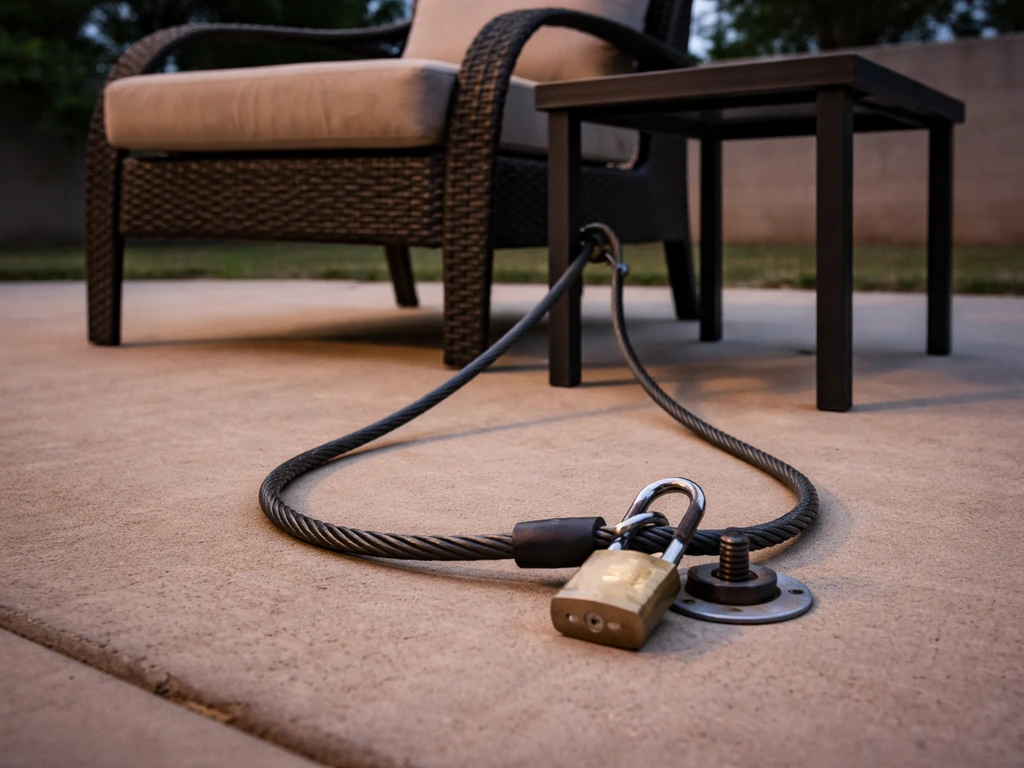
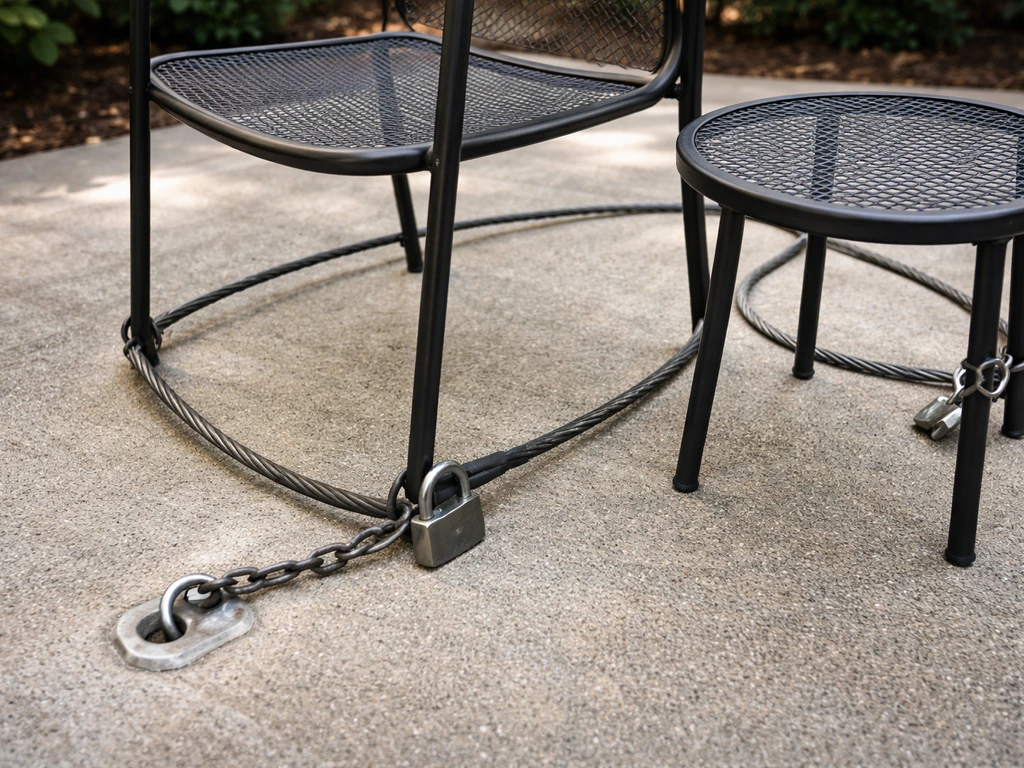
To lock up patio furniture, you need two things working together: a fixed anchor point attached to your patio surface (concrete, deck boards, pavers, or soil), and a cable, chain, or U-lock connecting that anchor to a structural part of the furniture itself. Get both right and even a determined thief or a gusty storm won't budge your set. Get either one wrong and you've just created the illusion of security. Get either one wrong and you've just created the illusion of security, so also review how to secure patio furniture from theft for the full checklist before you lock anything up.
How to Lock Up Patio Furniture: DIY Theft Proofing
Maren Grady
29 Apr 2026
First, figure out what you're actually protecting against
Theft and wind are very different problems, and mixing up your goal leads to buying the wrong hardware. Before you spend a dollar, be honest about which scenario you're really solving for.
Theft means someone is physically picking up or dragging your furniture off your property. This usually happens overnight or when you're away for extended periods. The fix here is a hard anchor to the ground or a wall, combined with a cut-resistant lock. If you're securing patio furniture from theft, you’ll want a hard anchor and a cut-resistant lock that match your furniture type hard anchor to the ground.
Visibility matters too: research consistently shows that a visible anchor and padlock setup deters opportunistic thieves before they even try. If theft is your main concern, you'll also want to read up on the broader topic of how to secure patio furniture from theft, since there are behavioral and placement strategies beyond just hardware.
Wind shifting is the other scenario, where furniture doesn't get stolen but it slides, tips, or "walks" across your patio after a storm. Here the goal is load distribution and restraint, not cut resistance. A bungee cord or a strap can work fine for mild wind, while a hurricane-prone area calls for something far more serious. If you're mainly dealing with weather, the guides on how to secure patio furniture from wind and how to secure patio furniture during a hurricane go deeper on those specific setups.
Many people need both, especially if they leave furniture out all season. The good news is that a properly installed ground anchor handles both scenarios at once.
Choose the right locking method and hardware
Here's where I see people overspend on the lock and underspend on everything else. A $60 padlock attached to a flimsy wire that loops through a plastic chair leg is worthless. The whole system is only as strong as its weakest point.
Cable lock kits
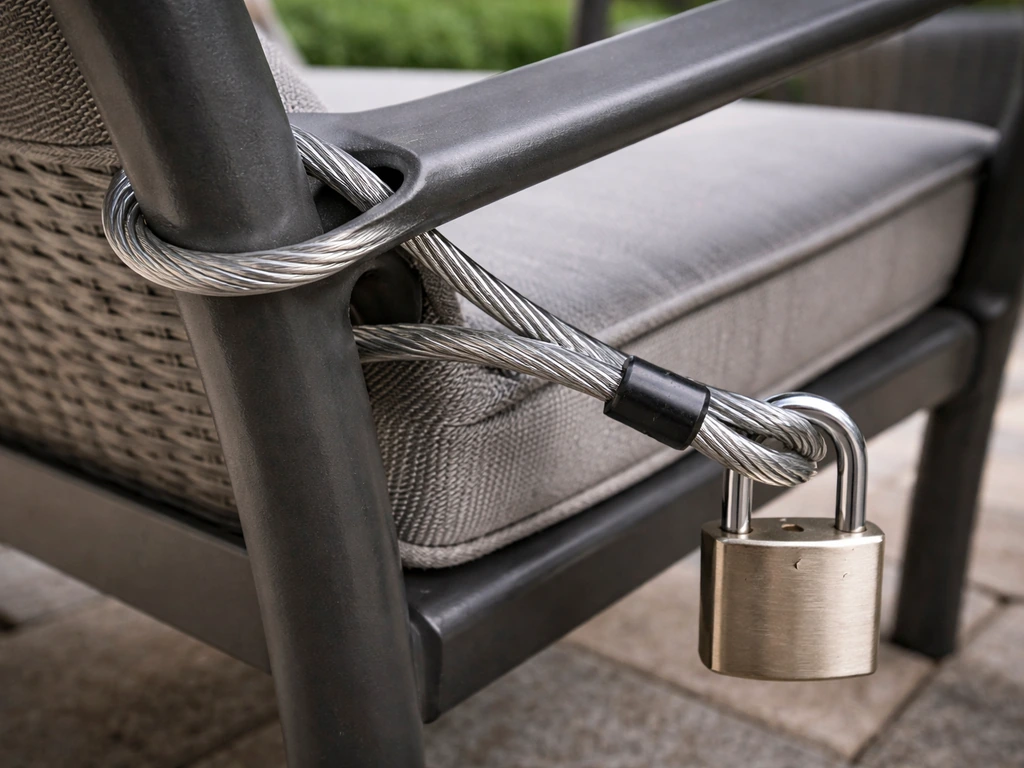
A stainless steel braided cable paired with a keyed padlock is the most versatile option for most homeowners. A 7-foot cable is long enough to loop through multiple pieces in a set, run down to a ground anchor, and still have working slack. Look for kits that come with the cable and padlock together, since mismatched hardware causes frustrating sizing problems. Expect to pay $30 to $60 for a decent kit. Avoid thin vinyl-coated steel cables sold for bikes, those are meant for low-risk deterrence, not real security.
U-locks
A quality U-lock like the ABUS Ultimate 420K (14mm hardened steel shackle) is excellent for single pieces with a structural frame loop, like a metal chair or a side table leg. The shackle has to physically fit through the geometry of your furniture, so measure your tube diameter or leg gap before buying. U-locks are harder to cut than cables and work beautifully on metal furniture. They're less practical for bulky wood or wicker pieces where there's no clean loop to pass the shackle through.
Chain locks
Heavy case-hardened chain with a padlock is the highest-security option for high-risk areas. A 3/8-inch or thicker hardened chain is extremely difficult to cut quickly. The downside is weight (expect 5 to 10 pounds for a 6-foot section) and cost ($40 to $100+). This is overkill for most suburban patios but makes sense if you have expensive teak or cast-aluminum furniture in an exposed location.
Straps and anchor kits
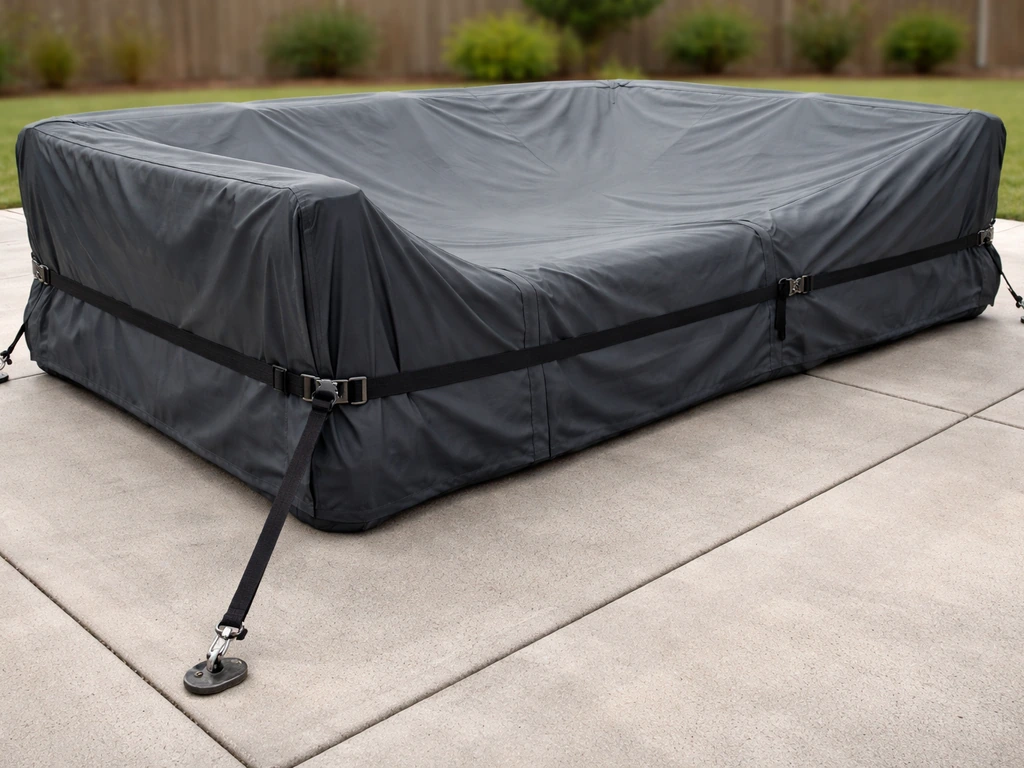
For wind restraint without full anti-theft security, ratchet straps or heavy-duty bungee cords running from furniture legs to a fixed point work well. If you also want to cover the furniture, use a secure tarp method that ties down to solid points so it cannot flap or loosen how to secure a tarp over patio furniture. These aren't cut-resistant, but they're cheap, fast to deploy, and easy to remove when you want to rearrange the patio.
They pair well with furniture covers too, which helps when you're also figuring out how to secure patio furniture covers against wind. If you’re also using covers, follow a dedicated approach for how to secure patio furniture covers so they stay snug in wind and don’t invite theft secure patio furniture covers against wind.
| Method | Best For | Cut Resistance | Cost Range | Ease of Use |
|---|---|---|---|---|
| Cable + padlock kit | Multiple pieces, versatile setups | Moderate | $30–$60 | Easy |
| U-lock (hardened steel) | Single metal-frame pieces | High | $40–$80 | Easy if it fits |
| Case-hardened chain + padlock | High-value pieces, high-risk areas | Very high | $40–$100+ | Heavier to manage |
| Ratchet straps | Wind restraint only | Low (not theft-proof) | $10–$25 | Very easy |
| Duckbill earth anchors | Soil/gravel surfaces, no drilling | Anchor strength varies | $20–$50 | Moderate |
Find anchor points on your specific furniture
This step trips people up because they try to lock through the wrong part of the furniture. The rule is simple: only attach to structural members that are welded, bolted, or screwed into the main frame. Never attach to decorative trim, armrests that clip on, or any part that can be removed with basic tools.
Metal furniture (aluminum, steel, cast iron)
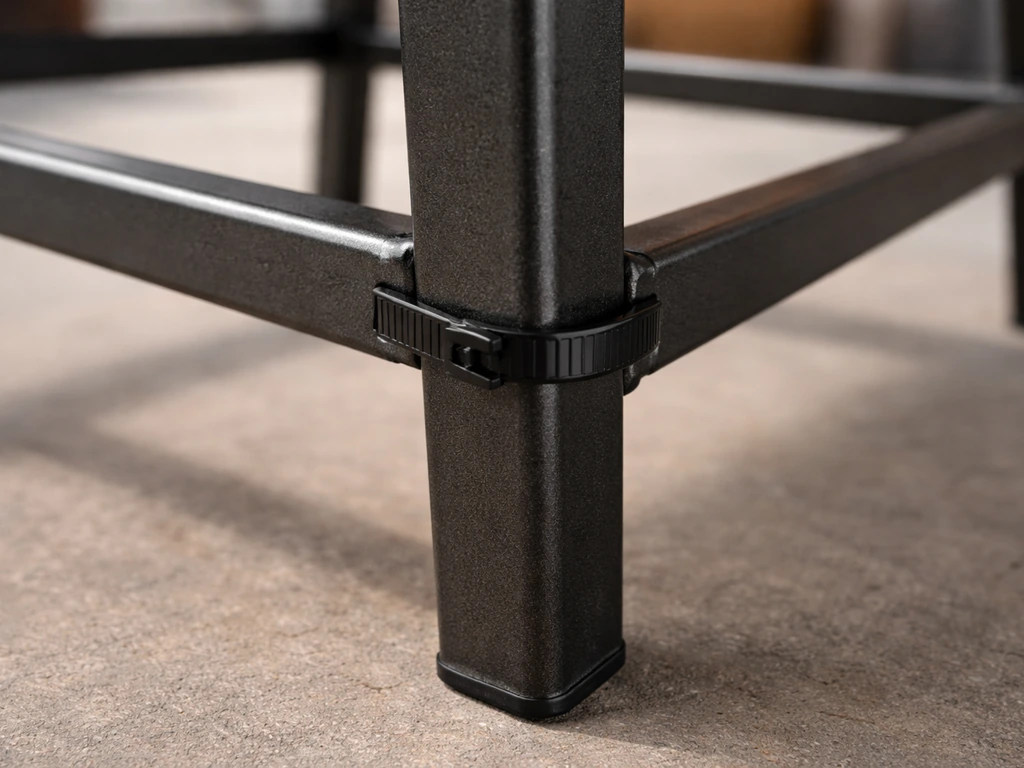
This is the easiest category. Look for a lower cross-brace between the legs, a welded loop at the base of a chair leg, or the gap between two rungs of a table base. Any of these work as cable or chain pass-through points. If there's no natural loop, you can add a security eyebolt to a hollow section of frame, but check that the frame wall is thick enough (at least 1.5mm steel) to hold a load.
Wood furniture (teak, cedar, eucalyptus)
Wood furniture rarely has natural cable pass-through points. Your best option is to run a cable around a structural leg close to the bottom rail, or install a stainless steel eyebolt through a leg (add a washer and nut on the inside face to spread the load). Don't run cables through decorative slats; a sharp tug will just pull the slat off.
Resin and plastic furniture
Resin chairs and tables are lightweight and honestly tough to secure well because the material isn't strong enough to resist a focused pull on a cable. Your best bet is to loop the cable around the base of the furniture (not through it) and keep the cable very short to eliminate slack. Alternatively, stack and store resin pieces inside when you're not using them, since no lock setup is going to stop someone motivated enough to just snap a cheap resin leg.
Wicker and rattan furniture
Most outdoor wicker is woven over a powder-coated aluminum or steel frame, so the actual anchor point is that internal frame. Look under the seat or along the bottom edge for exposed frame sections. Run your cable through the frame, not the wicker weave, which will just break under tension. A cushioned piece with a solid aluminum base is actually easier to secure than it looks.
Install ground anchors correctly for your patio surface
This is the part where most DIYers cut corners and then wonder why everything is loose after the first storm. The anchor is only as good as how it's installed into the surface beneath it.
Concrete patios
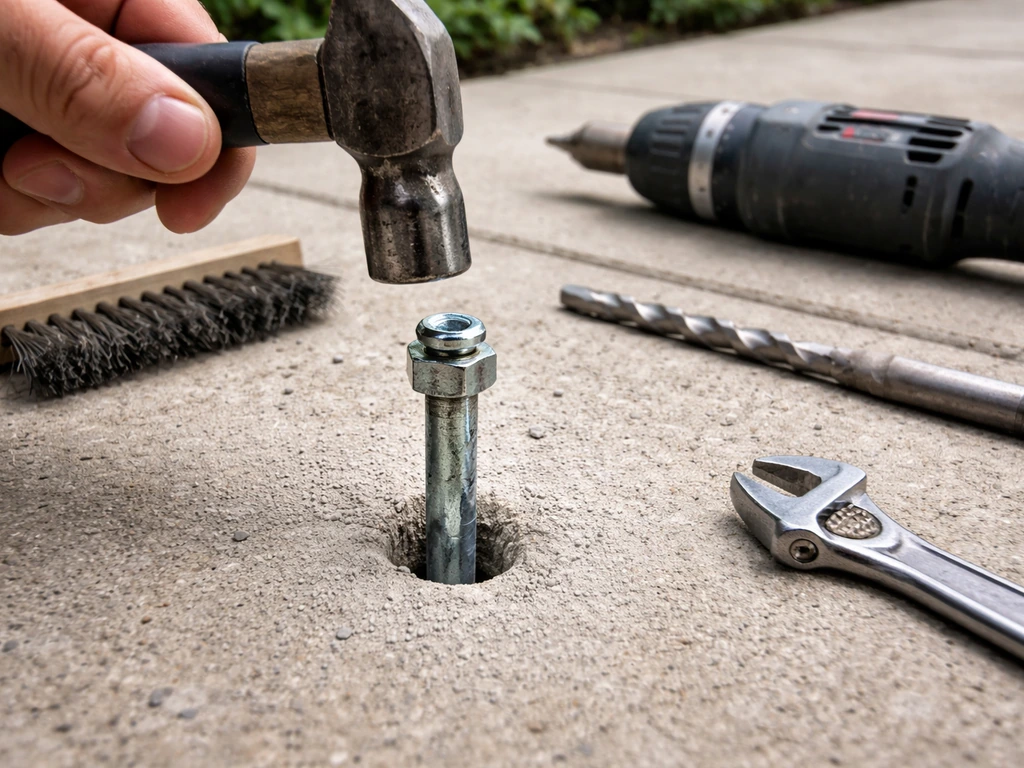
Wedge anchors are the gold standard for concrete. You drill a hole to the specified diameter (match the drill bit exactly to the anchor size, there's no wiggle room here), clean out the dust, insert the anchor, and tighten until the wedge expands against the hole walls. Minimum embedment depth matters: going too shallow means the anchor pulls out under load. Follow the manufacturer's minimum depth spec, which is often around 1.
5 inches for smaller anchors but can be more for heavier-duty hardware. Also keep anchors at least 5 anchor-diameters away from the edge of the slab and 10 diameters from each other, otherwise the concrete can crack and the anchor loses holding strength. A hammer drill makes this job much easier and can be rented for about $25 to $40 per day.
Wood deck boards
For wood decks, use a stainless steel eyebolt or a dedicated wood/concrete ground anchor product rated for outdoor use. Drill a pilot hole, thread in the eyebolt, and add a large washer and nut on the underside of the deck board (you'll need access from below, which is usually possible through the deck joist spacing). Stainless steel hardware is non-negotiable here; galvanized fasteners will rust and stain your deck within a season or two. Use stainless lock washers as well to prevent the nut from backing off due to vibration over time.
Pavers
Pavers are tricky because they're not structurally continuous. You have two real options: pull up one paver and install a surface-mount anchor bolted into the compacted base below, then reset the paver around the anchor stem, or use a heavy base plate anchor that sits on top of multiple pavers and distributes the load across a larger area. Avoid drilling directly into individual pavers; they crack easily and an individual paver isn't strong enough to resist a serious pull anyway.
Gravel and soil
For gravel or bare soil, earth anchors are your tool. Duckbill-style earth anchors are driven into undisturbed soil with a rod, then rotated 90 degrees when you pull up on the cable, so they lock perpendicular to the pull direction underground. Holding strength depends heavily on soil compaction and moisture content, so drive them into firm, dry soil for best results. Loose or saturated soil dramatically reduces holding capacity. In really soft soil, consider a larger-diameter anchor or multiple anchors connected together.
Locking setups for different furniture configurations
Single chairs or side tables
For one piece, a U-lock or short cable directly from the furniture frame to a ground anchor is the cleanest approach. Keep the cable or chain as short as possible. Every extra inch of slack gives a thief more leverage and lets wind lift or drag the piece further. Aim for less than 6 inches of play in the final locked position.
Full dining sets (table plus chairs)
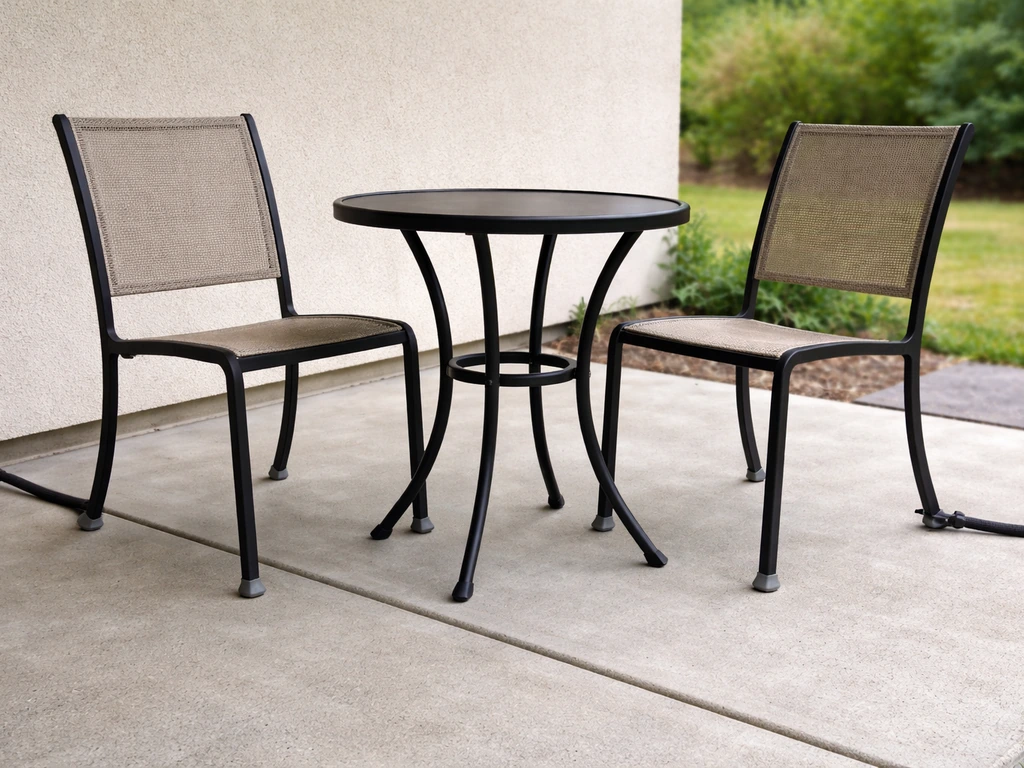
The most efficient approach for a full set is to run a single long cable through the base of each chair and the table pedestal or leg, then lock the ends of the cable together at one anchor point. Thread the cable through the lowest structural point on each piece so the loop can't be lifted off. With a 7-foot cable you can typically daisy-chain four to six chairs and a table, but measure your setup first. Alternatively, lock chairs to the table frame with a secondary short cable, and anchor only the table to the ground. This works if the table is heavy enough that it won't tip.
Lounge chairs and sectionals
Deep-seat lounge chairs and sectionals are bulky but often lighter than they look, especially aluminum-framed ones. For a sectional, connect the individual sections to each other with short cables at the frame joints, and then run one anchor cable from the connected group to a fixed point. Treating the whole sectional as one unit that requires only one anchor point saves hardware and installation time.
Umbrellas
A patio umbrella is often the most theft-attractive and wind-vulnerable item on the patio. If it's in a weighted base, the base itself should be anchored or replaced with a base that bolts to the surface. Run a short cable through the lower pole and the base frame. In high-wind situations, removing the umbrella canopy entirely is smarter than relying on any anchor, since the wind load on an open canopy is enormous.
Weatherproofing your hardware and protecting your furniture
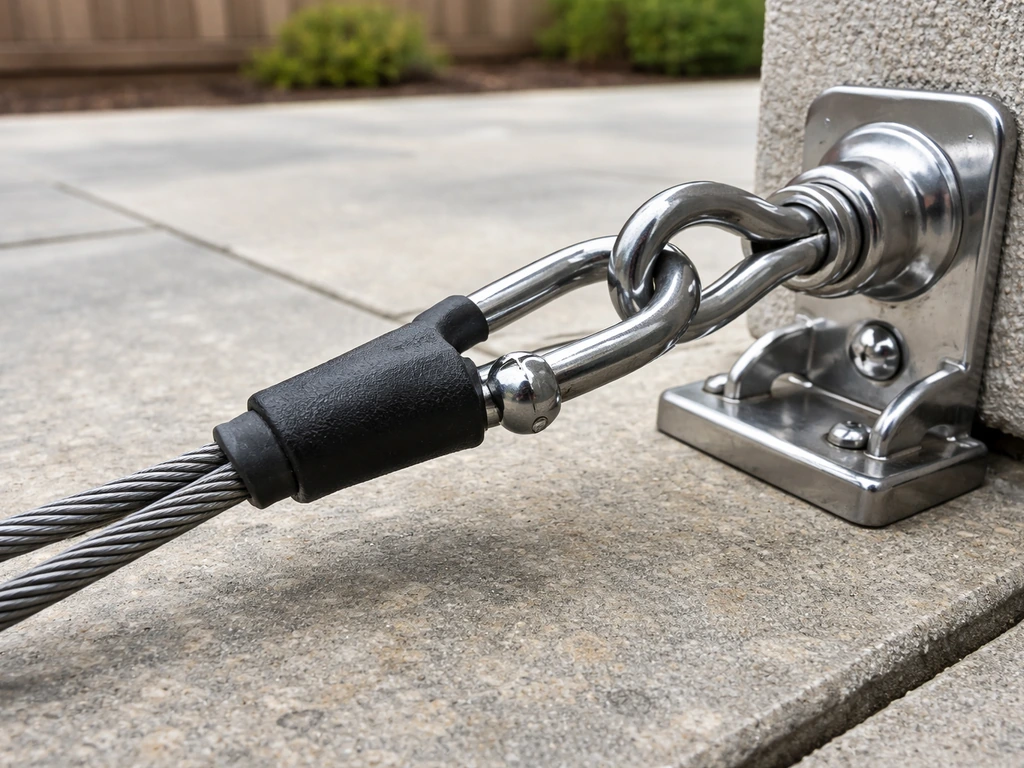
Here's a mistake I made early on: I installed a good anchor setup and then watched the hardware rust into a solid, impossible-to-open mess within one summer. Outdoor security hardware has to be built for the environment or you'll be cutting it off yourself by spring.
Stick exclusively to stainless steel cables, shackles, eyebolts, and washers. Stainless doesn't need painting or coating to resist corrosion outdoors. For padlocks, look for ones with stainless steel or hardened steel shackles and weatherproof bodies. Before installation, apply a thin coat of dielectric grease (non-silicone formula) to all threaded connections, lock cylinders, and cable ends. This prevents galvanic corrosion where two different metals touch and keeps lock cylinders from seizing up in cold or wet weather.
Where cable passes through or around painted furniture frames, wrap the contact point with self-amalgamating tape or a small section of rubber tubing before threading the cable through. This prevents the cable from wearing through the paint or powder coat finish, which leads to rust on steel frames or corrosion on aluminum. It's a five-minute step that saves you from refinishing work later.
For wood furniture, the anchor eyebolt hole should be sealed with exterior wood sealant before installation to prevent moisture from wicking into the grain. Moisture intrusion around fasteners is the number-one cause of wood rot on outdoor furniture.
Finally, check your entire setup at the start of each season and after any major storm. Tighten any fasteners that have backed off, inspect cables for fraying at bend points, and re-lubricate lock cylinders. A five-minute check in spring and fall extends the life of your hardware by years.
Troubleshooting and quick next steps
Even well-planned setups run into real-world problems. Here are the most common ones and how to fix them.
Common problems and fixes
- Anchor point loosening after storms: The most common cause is incorrect installation depth or hole diameter. Pull the anchor, clean the hole, and reinstall to the correct embedment depth. If the concrete around the hole is cracked, move to a new location at least 12 inches away.
- Can't find a pass-through point on the furniture: Add a stainless steel eyebolt to a structural frame member, or loop the cable around the base of the furniture with a ferrule-crimped end to prevent the loop from riding up over the frame.
- Cable slides through a gap and creates too much slack: Use a shorter cable or add a cable stop (a crimped ferrule or a carabiner clipped through the cable loop) to prevent the cable from traveling more than a few inches in any direction.
- Lock cylinder won't open after being left outside: Spray with a penetrating lubricant (WD-40 is fine for freeing a stuck lock), then clean and relubricate with a proper lock lubricant or dielectric grease. If it's fully seized, the lock likely needs replacement. Going forward, use a weatherproof padlock cover.
- U-lock shackle doesn't fit through the furniture geometry: You have two options: switch to a cable lock that can snake through tighter spaces, or drill a 3/4-inch hole through a non-structural wooden component to create a pass-through (don't drill into structural load-bearing wood members).
- Furniture still shifts in wind even when anchored: The cable has too much slack. Shorten it so there's less than 6 inches of play. Also check that you're anchoring to the lowest point on the furniture, since anchoring higher up allows the base to swing out.
- Hardware is rusting and staining the furniture: Replace all non-stainless hardware immediately. Add rubber or nylon washers between the metal hardware and the furniture surface to prevent contact staining.
Your setup checklist before you're done
- Confirm your anchor is installed into solid, undisturbed substrate (concrete, compacted base, or firm dry soil) at the correct depth.
- Verify that all cable pass-through points are on structural frame members, not decorative or removable parts.
- Tighten all connections and check that there are no more than 6 inches of slack in the final locked position.
- Apply dielectric grease to all threaded connections and the lock cylinder.
- Wrap cable contact points against the furniture with rubber tubing or self-amalgamating tape.
- Pull hard on the entire setup in three directions (up, sideways, outward) to test before you walk away.
- Set a reminder to inspect and re-tighten everything at the start of next season.
None of this has to be complicated or expensive. A $40 cable kit, a properly installed wedge anchor or earth anchor, and 30 minutes of careful installation will outperform a $200 lock attached carelessly to the wrong part of the furniture every single time. Start with the anchor, work outward to the furniture, keep the slack short, and use stainless hardware throughout. That's genuinely all there is to it.
FAQ
Can I lock up a full patio set using only one ground anchor point?
If you have only one anchor point available, loop chairs and the table into a single cable run, then lock at the anchor, rather than trying to lock each piece separately. Keep the cable tight so the furniture cannot be lifted clear as a group, and connect to the lowest structural points to prevent “walk-off” even if one chair shifts slightly.
What if I cannot drill into my patio, can I still lock furniture securely?
Yes, but only if you can anchor to something structural and immovable. Use a strap or secondary cable to prevent movement, then tie the main anti-theft cable into a real ground anchor or wall anchor that is rated for load. If the “attached-to” point on the furniture is decorative or clip-on, the system will fail even when it looks secure.
How can I tell if my locked setup is actually strong enough before a thief or storm tests it?
For theft resistance, do a “lift test” after installing: try to raise each furniture piece by hand at the locked end and watch for slack growth at the bends. If you can pull the cable high enough to expose structure, tighten routing and reduce slack to under about 6 inches. Also test the anchor connection by rocking the base of the furniture, not the lock itself, since thieves attack the furniture leverage points.
Are patio furniture covers enough for theft-proofing?
Not for theft security. Tarps and covers help with weather and visibility, but they do not stop a determined grab. If you use a cover, tie it down to solid points with a method that cannot be lifted, flapped, or untied quickly, and still run a cut-resistant lock system underneath for the actual restraint.
How do I choose between anti-theft hardware and wind restraint hardware?
For wind-only situations, you can use restraint hardware that is quick to remove, like ratchet straps, because the goal is to prevent sliding and tipping rather than to resist cutting. For theft-prone setups, upgrade to cut-resistant cable or chain and shorten slack, since straps and bungee cords can be undone or stretched.
What are common cable routing mistakes that ruin otherwise good hardware?
Avoid leaving long cable loops where someone can grab and pry them. If you must pass around furniture, route the cable close to structure and keep bends tight but not kinked. Do not run cable through decorative slats, and do not let the cable rest on painted edges without protection, because abrasion can weaken the finish and eventually the attachment surface.
When should I choose a U-lock instead of a cable or chain, and what should I measure first?
U-locks work best when the furniture has a rigid frame gap or a welded loop that the shackle can pass through. If the geometry does not let the shackle go fully through, you risk partial contact and leverage that can deform the frame. Measure the exact tube diameter or leg gap and confirm clearance for the shackle plus any padding you plan to use.
What should I do if my anchor seems to pull out after a storm?
If the anchor fails to hold, the problem is usually installation (wrong drill bit size, dusty holes, insufficient embedment, or anchors too close to slab edges or each other) rather than the lock. Re-check embedment depth and hole cleanliness, then re-install with the manufacturer’s recommended spacing. For pavers, confirm you anchored into the base, not just the paver itself, since pavers can shift or crack under load.
How do I maintain locks and anchors so they do not seize up or rust over the seasons?
Yes, but plan for expansion and moisture. Use stainless hardware for exterior metal-to-metal connections, and apply dielectric grease to threaded parts to reduce galvanic corrosion and lock cylinder seizure. After storms, remove and re-thread any cable sections that have shifted against sharp edges to prevent wear-through.
How should I lock down a patio umbrella in windy areas?
Use two-stage protection: anchor the base against movement, then secure the furniture-to-base connection. For umbrellas, anchor the base frame itself to the patio surface, and when high winds are expected, remove the canopy since the aerodynamic load can overpower even a well-anchored pole.
What is the best approach for locking sectional or modular furniture so it cannot be separated?
Start by attaching to structural steel, welded loops, or frame members, then add a secondary support if the furniture has multiple independent pieces. For sectional sets, connect sections to each other at the frame joints, then lock the assembled group with one anchor cable to reduce extra hardware and prevent a thief from separating and transporting one segment at a time.