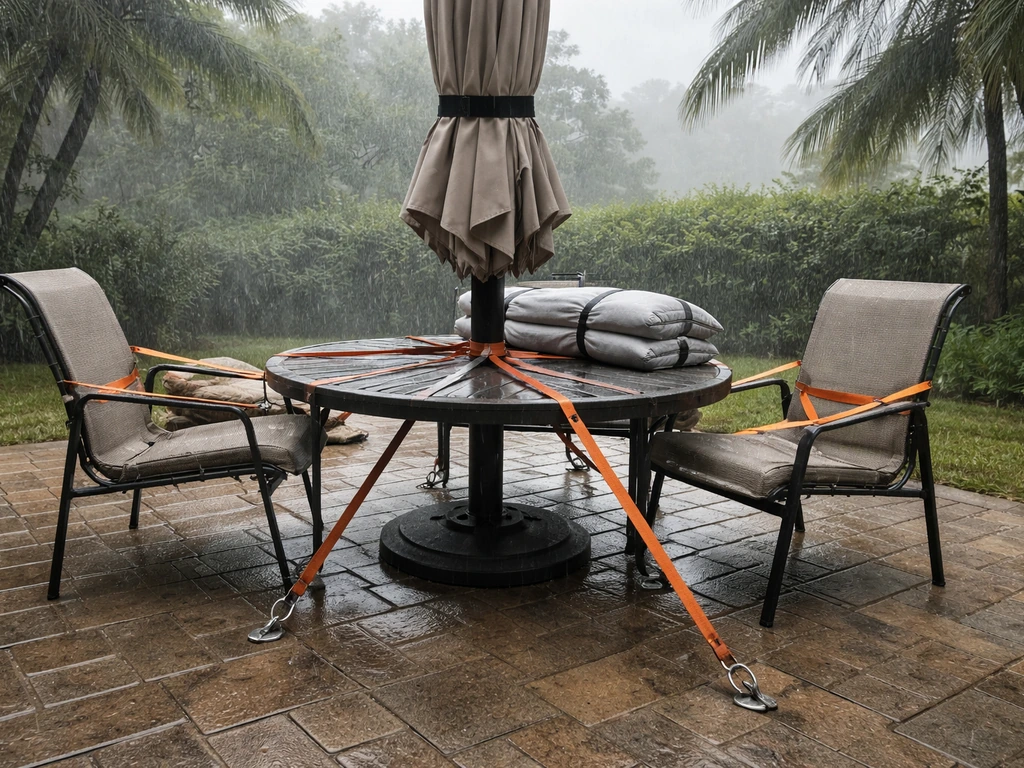
If a hurricane is in the forecast, move or anchor every piece of patio furniture you own before sustained winds hit 74 mph (64 knots). FEMA also advises bringing all outdoor furniture inside before the storm blank" rel="noopener noreferrer">move or anchor every piece of patio furniture you own before sustained winds hit 74 mph (64 knots). At that threshold, a standard resin chair, a patio umbrella, or even a sofa cushion becomes a windborne missile that can shatter windows, damage your home, and injure neighbors. The safest option is always to move everything indoors. If you want a practical way to keep items from becoming windborne, review how to secure patio furniture from wind so you know what to strap, where to anchor, and what to bring inside. When that's not possible, strap heavy pieces to structural anchor points using ratchet straps rated for at least 500 lbs, drive auger ground anchors into the soil for freestanding items, and get absolutely everything lightweight inside a garage or shed. Do it at least 24 to 48 hours before the storm arrives, not the night before.
How to Secure Patio Furniture During a Hurricane
Your hurricane furniture protection plan: when to act and what to do first
The window to act is smaller than most people think. By the time a hurricane watch is issued for your area (typically 48 hours before arrival), you should already be moving furniture. When a hurricane warning goes up (36 hours out), your outdoor patio should be completely clear. Waiting until the day before means you're competing with rising winds, rain, and a whole list of other emergency prep tasks.
Triage works like this: move the lightest and most aerodynamic items first, because they'll travel farthest and cause the most damage. Umbrellas, lightweight folding chairs, throw pillows, and small planters are your top priority. Then work up to heavier items like chaise lounges, dining sets, and grills. If you have limited indoor storage, the lightest stuff always gets the room.
- 48 hours out: Check your indoor and garage storage space. Make a mental map of what goes where so you're not guessing in a panic.
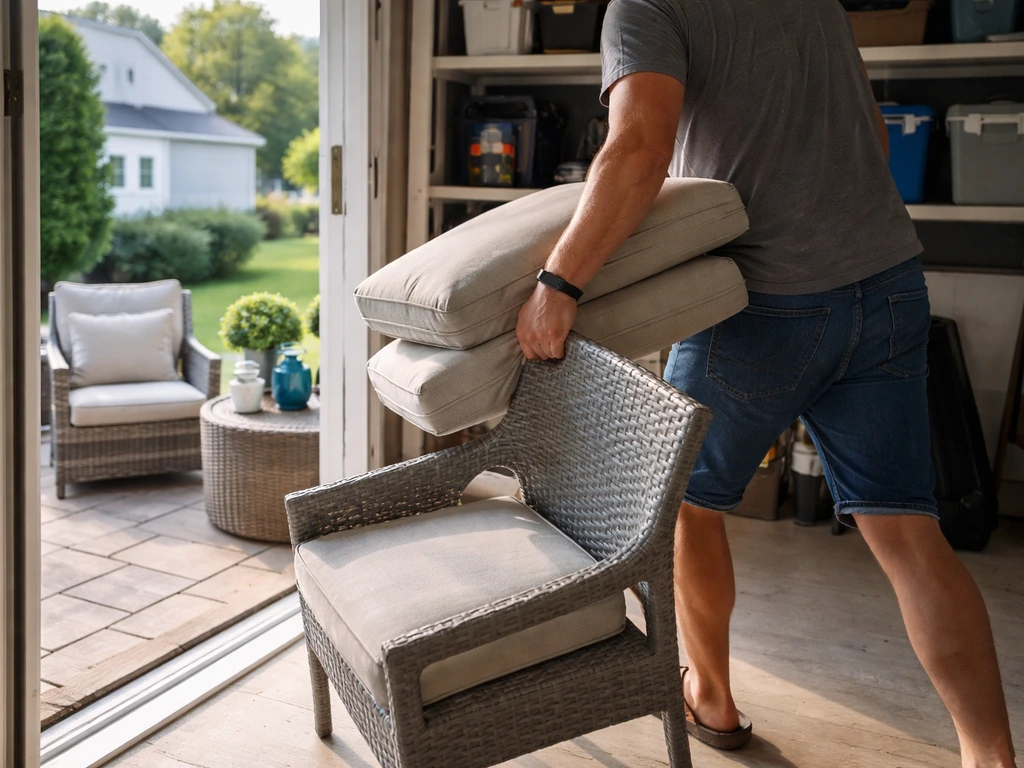
- 36–48 hours out: Move all small, lightweight, and aerodynamic items indoors. Umbrellas, folding chairs, cushions, small tables, planters, and decorative accessories go first.
- 24–36 hours out: Move or anchor mid-weight furniture. Strap down anything too heavy or awkward to bring inside.
- 12–24 hours out: Final sweep. Remove anything left outdoors and take a photo of your secured items for insurance documentation.
- Do not anchor and walk away thinking it's done. Re-check all straps and anchors the morning of the storm if you still have safe access.
FEMA is clear on this: outdoor objects that are not secured become windborne debris. That includes lawn furniture, potted plants, trash cans, tools, and anything else sitting on your patio. If you want a complete, step-by-step checklist for the entire setup, see our guide on how to secure patio furniture. For day-to-day risk, you can also learn how to secure patio furniture from theft by locking or anchoring it when you leave it outside. This isn't just about protecting your stuff. An unsecured table flying through a neighbor's window is a safety and liability issue.
Secure it or move it: a decision guide for each furniture type
Not everything on your patio should be treated the same way. The right call depends on weight, material, and whether you have somewhere to put it. Here's a practical breakdown.
| Furniture Type | Best Action | Backup if No Indoor Space |
|---|---|---|
| Lightweight folding chairs (resin, aluminum) | Move indoors | Stack and strap tightly together, then anchor to railing or wall |
| Plastic/resin stacking chairs | Stack and move indoors | Stack, band together with ratchet strap, anchor to structural post |
| Metal dining chairs (wrought iron, steel) | Move indoors or to garage | Strap to table legs or anchor to deck railing |
| Dining table (heavy, metal or wood) | Move indoors or to garage | Strap to deck structure or wall-mount anchor points |
| Chaise lounge (aluminum or resin frame) | Move indoors | Fold flat, strap to ground with auger anchors or railing |
| Adirondack chairs (wood) | Move to garage or shed | Flip upside down, strap to railing or structural post |
| Deep seating sectional (heavy frames) | Move indoors or to garage | Strap frame sections together and to structural anchor points |
| Patio umbrella (any size) | Disassemble and store inside | Remove canopy, strap closed pole to railing or post |
| Gas/charcoal grill | Roll into garage | Chain or strap to wall anchor; never use propane indoors |
| Planters and pots | Move indoors | Group together in a corner, strap to wall or railing |
| Outdoor rugs and mats | Roll and bring indoors | Roll tightly, strap against a wall or fence |
A note on materials: metal and wood furniture is heavier and less likely to catch wind the way plastic does, but it can still move in sustained 74+ mph gusts. Wrought iron is the most resistant to liftoff, but even a heavy iron chair can tip and roll if winds hit it at an angle. No material is hurricane-proof sitting unsecured on a patio.
Tie-down and anchoring methods that actually hold
Bungee cords are not hurricane tie-downs. I want to be direct about this because a lot of people reach for bungees first. They stretch, they lose tension, and they can snap back and seriously injure you if they slip. Save the bungees for holding a tarp in low-wind conditions or bundling items together on a calm day. If you want to use a tarp, make sure you know how to secure a tarp over patio furniture so it stays tight and does not act like a sail in high winds. For hurricane prep, you need ratchet straps, proper auger anchors, and rated hardware.
Ratchet straps (your main tool)
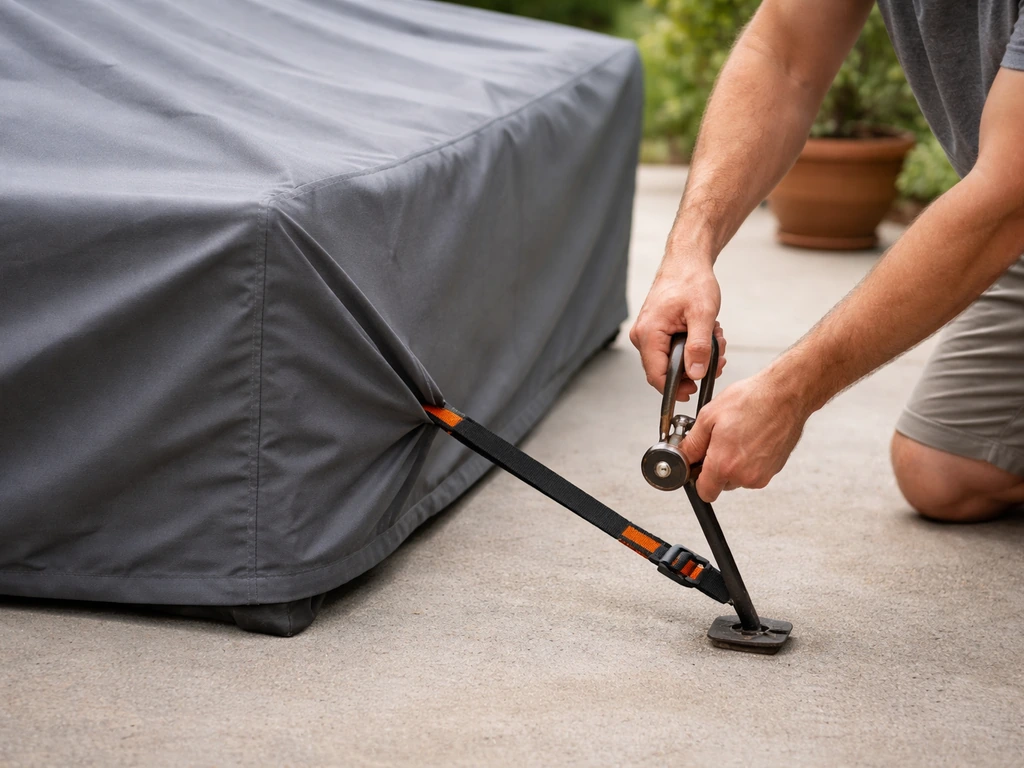
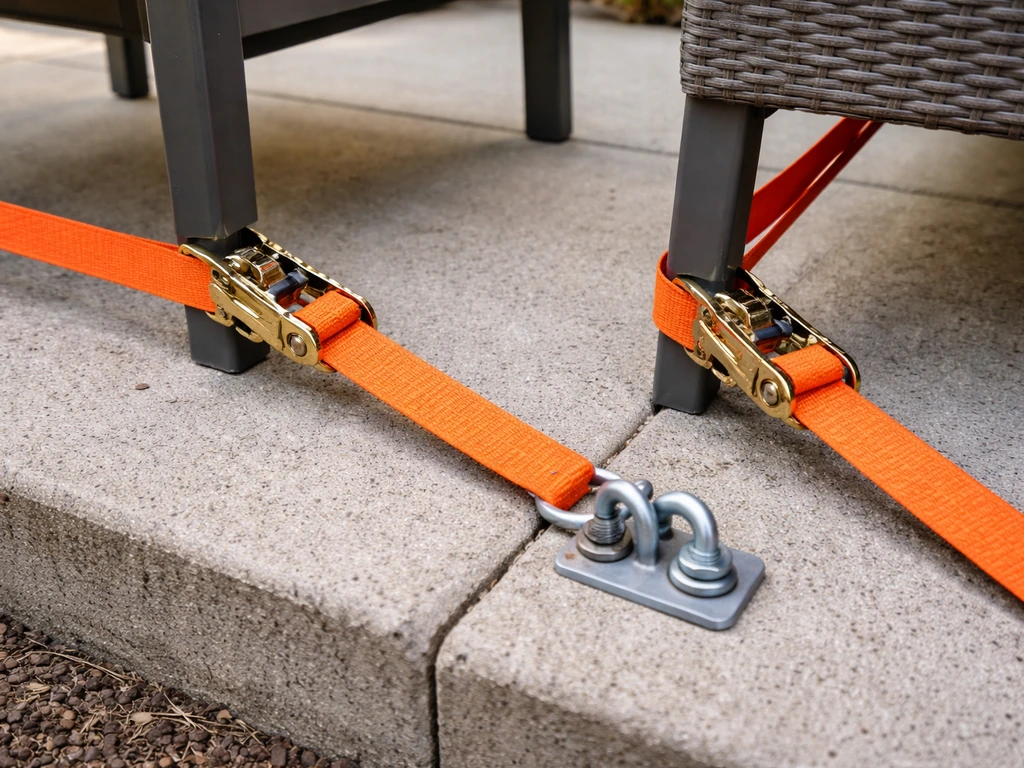
Use polyester ratchet straps rated to at least 500 lbs (and ideally 1,000 lbs or more for heavy pieces). These are the same straps used to secure cargo on trucks. You can buy a 4-pack for around $20 to $30 at any hardware store. Run the strap under the furniture frame and over it, connecting to a solid anchor point. Tighten the ratchet until the strap is firm with no slack. The strap should not be able to shift or slide under the furniture when you push on it.
Ground anchors (for soil and grass areas)
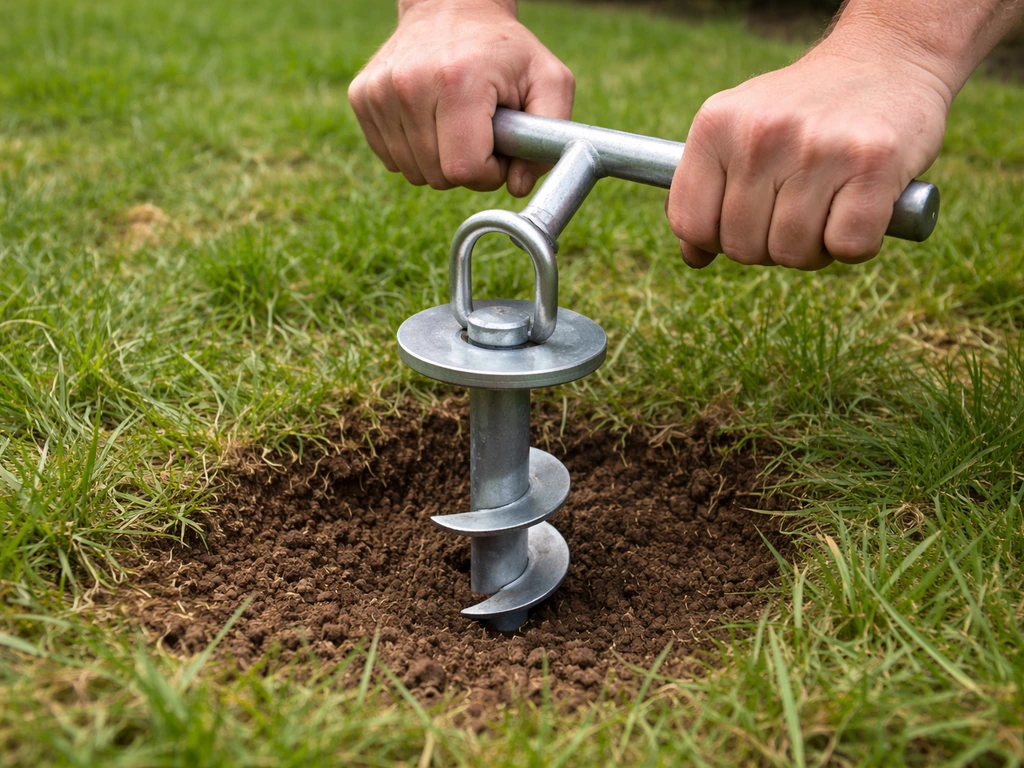
Auger-style ground anchors (also called screw anchors or earth anchors) are the best option when you have soil to work with. They screw down 8 to 12 inches into the ground with a T-bar handle and have a D-ring at the top for attaching straps. Holding power varies by soil type: sandy or loose soil holds less than compacted clay. For hurricane conditions, use two anchors per furniture piece and space them apart to resist uplift from multiple directions. FEMA's own anchoring guidance for manufactured housing points out that soil type and anchor geometry directly affect holding capacity, so don't trust a single stake driven straight down into soft soil.
Deck and railing anchor points
If you have a wood or composite deck, lag bolt anchor rings or D-ring tie-down plates into the structural joists (not just the decking boards) before storm season starts. These give you a solid anchor point you can clip straps to. Run a ratchet strap from the furniture frame to two anchor rings using a low-angle pull to resist both sliding and uplift. For metal railings, wrap straps around the railing post and use a double-pass connection rather than relying on a single loop, which can slip.
What to do on concrete patios and pavers with no anchor points
This is where most people get stuck. If your patio is concrete or pavers with nothing to anchor to, you have a few options. First, stack and bind furniture tightly together into a compact, low-profile bundle using ratchet straps, then push the bundle into a corner formed by two solid walls. Two walls meeting at a right angle dramatically reduce how much wind can act on the pile. Second, if your home has exterior wall-mount anchor eyes or hurricane straps already installed (common in Florida construction), use those. Third, if you have nothing at all, the correct answer is to move everything indoors. A concrete patio with no anchor points and no walls nearby offers almost no resistance to a category 2 or higher storm.
Umbrellas, lightweight chairs, and accessories: the items that hurt the most if you miss them
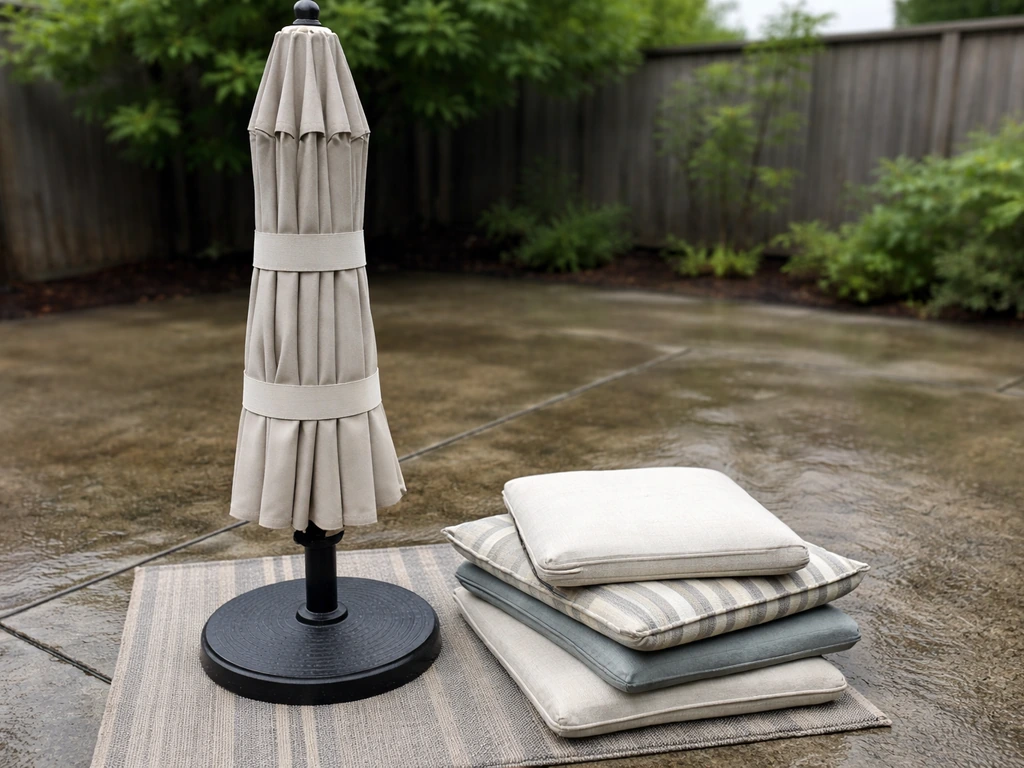
Patio umbrellas are one of the most dangerous items to leave outside during a hurricane. An open umbrella acts exactly like a sail. Even a closed one with a fabric sleeve still has enough surface area to become airborne in strong gusts. Here is the only acceptable procedure for umbrellas before a hurricane: close it, strap the canopy to the pole with the built-in or fitted fabric strap, remove the canopy if possible, and then either disassemble the pole and store the whole thing indoors or remove the canopy entirely and strap the bare pole flat against a wall or railing. Most cantilever umbrella manufacturers specifically say to close and secure umbrellas in adverse weather conditions, and that guidance was written for ordinary storms, not hurricanes.
Lightweight folding chairs are the next big risk. A standard resin folding chair weighs 5 to 8 lbs and can be picked up by winds well below hurricane force. Stack them, tie the stack with a ratchet strap, and move them inside. If you truly cannot store them indoors, fold and stack them against a solid wall or in a protected corner, then strap the stack to a structural anchor point. Do not just lay them flat on the ground and hope for the best. A stack of chairs bound together is far more manageable than ten individual chairs scattered across your yard and a neighbor's fence.
Don't overlook small accessories. Planters, decorative lanterns, small side tables, outdoor candles, wind chimes, string lights, doormats, and outdoor rugs all need to come inside. By one Florida emergency planning standard, any object weighing under 5 lbs can become windborne and travel long distances in hurricane conditions. NOAA’s National Hurricane Center warns that debris such as signs, roofing material, siding, and small items left outside can become flying missiles during hurricanes any object weighing under 5 lbs can become windborne. If it can be picked up with one hand, it needs to be inside a building.
Cushions, covers, and fabrics: protect them without making things worse
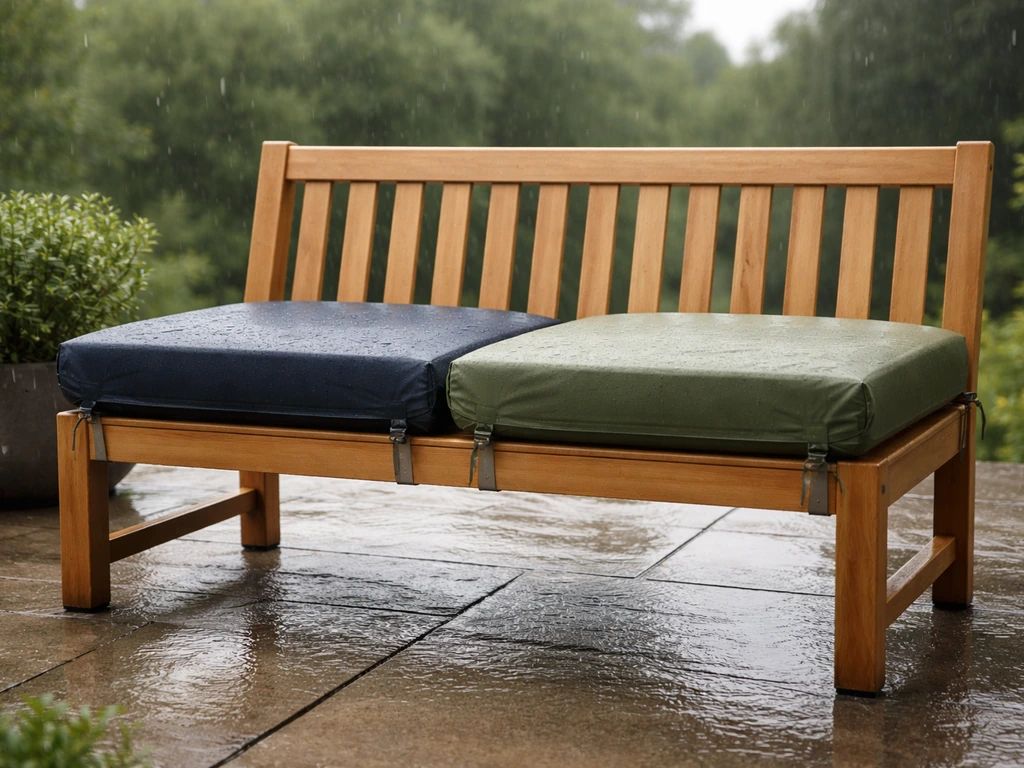
Cushions should always come inside. Full stop. Even if the cushions are made from outdoor-rated Sunbrella or similar performance fabric, they will absorb water, grow mold, and potentially fly away in hurricane winds. Take them off the furniture, let them air dry completely if they're damp, and store them in a dry indoor space. Stacking damp cushions in a garbage bag in a garage is a recipe for mold and mildew. Dry them first, then stack and store.
Here's the counterintuitive part about furniture covers: using a standard loose furniture cover during a hurricane can actually make things worse. When wind gets underneath a loose cover, it creates lift, exactly like a wing. That lift can flip furniture or turn a cover into airborne debris itself. If you're leaving a piece outdoors and want to protect the finish, either use a cover specifically designed with wind-resistant vents and tie-down cords that you secure tightly under the frame, or skip the cover entirely. A loose cover flapping in hurricane winds adds zero protection and increases debris risk.
If you do use a cover, thread a ratchet strap or nylon cord through the cover's grommets or hem loops and tie it underneath the furniture frame on multiple sides so it cannot catch wind from below. Pull it snug enough that there is no billowing material. And even then, in a Category 2 or stronger storm, my honest recommendation is to just skip the cover and move the furniture instead.
If you're also thinking about how to tie down or secure covers in everyday windstorms (not just hurricanes), that's a slightly different problem with its own set of solutions worth exploring separately.
Supplies checklist and step-by-step workflow for today
What to have on hand before you start
- Ratchet straps: at least 4 to 6 straps rated 500 to 1,000 lbs (about $20 to $30 for a 4-pack)
- Auger ground anchors: 4 to 8 stakes, 8 to 12 inches long with D-ring tops ($10 to $20 for a pack)
- Deck anchor rings or lag eye bolts: pre-installed into structural joists before storm season
- Heavy-duty zip ties or velcro straps: useful for bundling smaller items
- Storage bins or garbage bags (waterproof): for cushions, small accessories, and fabric items
- Marker or masking tape and a pen: label cushion sets so reassembly is easy
- Smartphone: take photos and video of all secured and stored items before the storm for insurance documentation
Step-by-step workflow
- Survey your patio. Walk through and make a quick mental list of every item: chairs, tables, umbrellas, cushions, planters, rugs, accessories, grills. Count them.
- Clear indoor storage first. Open the garage, spare room, or basement and actually move things around to create space. Don't start hauling furniture only to find there's no room.
- Remove all cushions and fabrics. Check that they are dry, then stack and store them inside in a clean, dry area.
- Disassemble or close all umbrellas. Remove canopies if possible, collapse poles, and store indoors. If the pole must stay outside, strap it flat and tight against a wall or structural post.
- Move all lightweight items indoors: folding chairs, small tables, planters, decorative objects, rugs, mats, string lights, and anything under about 20 lbs.
- Move mid-weight and large furniture next: dining sets, chaise lounges, Adirondack chairs, deep seating sections. If they won't fit inside, position them against a solid wall or in a sheltered corner.
- For items staying outside, apply ratchet straps. Run straps under and over the frame, connect to anchor points (auger stakes or deck hardware), and tighten until firm with zero slack.
- Roll the grill into the garage. If propane, disconnect and store the tank outside but away from the home in an upright position in a sheltered area.
- Remove furniture covers or secure them tightly with straps threaded through grommets beneath the frame. No loose, billowing fabric.
- Take photos and short video of everything secured outdoors and everything stored indoors. Upload to cloud storage so you have documentation even if your phone is damaged.
- Do a final walk-through and pick up anything you missed: small rocks, garden tools, bird feeders, decorations, anything that can move.
After the storm: inspection, cleaning, and preventing long-term damage
Wait until authorities give the all-clear before going outside. Hurricane force winds can persist longer than you expect, and even after the eye passes, conditions on the backside of the storm can be dangerous. Once it is safe, approach your patio carefully and watch for downed power lines, broken glass, and unstable structures before you start moving furniture back.
Before you move or discard anything damaged, take photos and video of the scene. FEMA specifically recommends documenting all damage before cleanup for insurance purposes. If cushions or upholstery fabric were damaged, hold onto a swatch of material as documentation before replacing or discarding it. This sounds like a minor detail but it matters when you're filing a claim.
Inspect each piece systematically
- Metal frames (steel, wrought iron, aluminum): check welds and joints for stress cracks, look for paint chips and bare metal that will start rusting immediately, and check for any bending at the legs or connectors
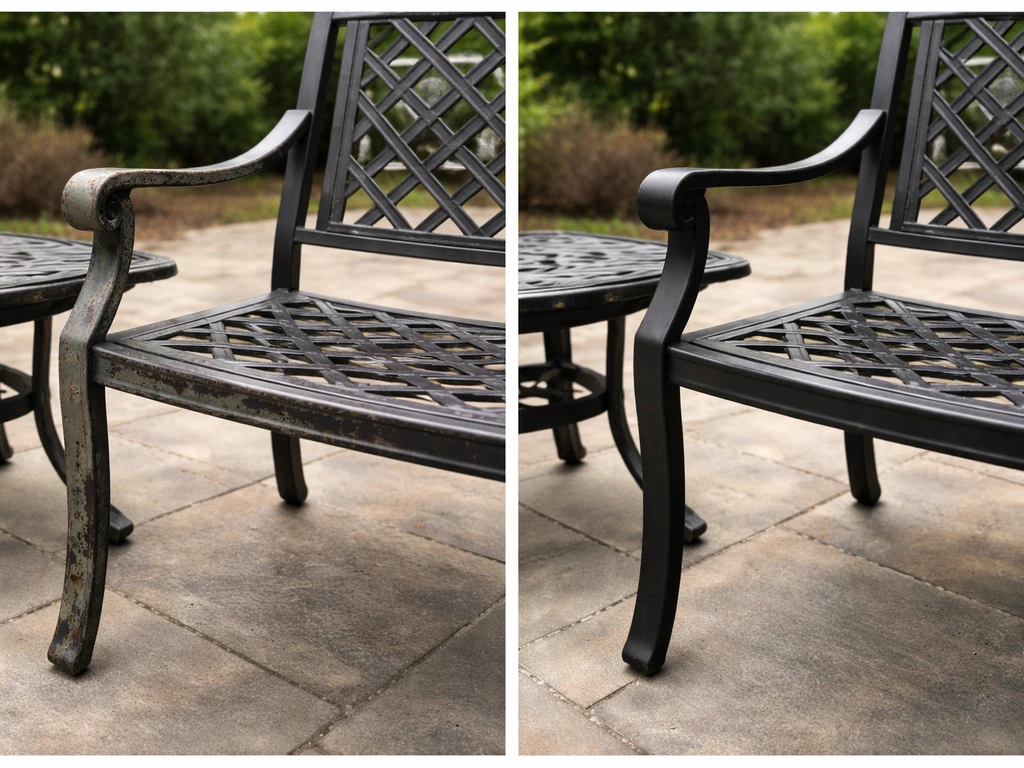
- Wrought iron and steel specifically: sand any rust spots down to bare metal, prime, and touch up with outdoor metal paint before they spread
- Wood frames: look for cracks, splitting at joints, any hardware that pulled through the wood under strap tension, and signs of water swelling
- Resin/plastic: check for stress cracks at connection points and fittings, especially if pieces were stacked under load
- Fabric and cushions: check for water saturation, mold smell, or mildew spots; air dry completely before storing or using
- Ratchet straps and anchors: inspect for fraying, corrosion, and bent hardware; FEMA recommends checking anchoring components for signs of damage after use
Rust is the biggest long-term threat to wrought iron and steel furniture after a storm. Salt air combined with post-hurricane moisture creates ideal conditions for rapid oxidation. As soon as you inspect a metal piece, wipe it down with a dry cloth, treat any exposed metal with a rust-inhibiting primer, and apply touch-up paint. Doing this within 48 hours of the storm passing will save you from having to deal with deep pitting or structural rust damage six months later.
For cushions and fabrics that got wet despite your best efforts, lay them flat in the sun to dry as quickly as possible. FEMA's flood cleanup guidance emphasizes that rapid drying is the key to preventing mold growth. If cushions were submerged in floodwater, treat them as potentially contaminated and consult with a restoration specialist before putting them back in use.
Once everything is clean, dried, inspected, and repaired, reassemble your patio in reverse order and do a check of all connections, hardware, and straps before calling it done. If your ratchet straps or ground anchors were stressed during the storm, replace them before the next season. Stretched or corroded straps won't hold in the next storm, and the whole point of this process is that it works reliably every time you need it.
FAQ
What should I do if my secured patio furniture starts shifting during the hurricane?
If a piece is already moving or making noise during the storm, do not try to retrieve it. The safest move is to shelter inside until winds drop, then reassess. Any time you can feel or see movement, it means the restraint is not holding against uplift or sliding, and re-entering a patio area before the all-clear can put you near flying debris and downed lines.
Is one ground anchor or strap enough for a table or grill?
Yes. Do not assume that because an anchor is holding one furniture leg it will hold in uplift from the side. For strapping, use a low-angle pull and, when possible, add two anchors per piece positioned so each strap has a different load direction. For example, a dining chair or small table should be restrained at opposite corners rather than one strap to a single stake.
Where exactly should I place ratchet straps on a lounge chair or sectional?
Avoid using straps over cushions, fabric slings, or decorative frames because those points can tear or slip. Instead, route ratchet straps under the furniture frame, through reinforced bars, or around structural cross members, then tension until there is no slack and no ability to shift when you push firmly from the side.
Can I bag wet patio cushions and bring them inside right before the storm?
You can store indoor items quickly, but do not seal wet cushions or damp fabrics in plastic bags for storage. Wet materials trap moisture and can start mold growth within days. Dry first (flat and in airflow), then store in a dry space with circulation.
If I’m short on time, what should I secure or move first?
A hurricane is different from a typical high-wind event, so you should not “time test” tie-downs in a hurry. If you only have a short window, prioritize moving everything under 5 lbs and all items with sails or lift surfaces (umbrellas, rugs, open covers, planters) first, then strap heavy items second.
Are furniture covers useful if I leave the furniture outside?
Do not rely on covers that are only tensioned at the top. Loose covers can billow, catch wind underneath, and flip or lift furniture. If you absolutely must cover, use a wind-resistant design with vents and dedicated tie-down cords anchored under the frame on multiple sides, so the cover cannot balloon from the base.
Should I reuse ratchet straps and ground anchors after a hurricane?
Yes, but inspect and correct it afterward. After the storm, replace any strap that shows stretching, fraying, pulled webbing, or damaged ratchet components, and replace any ground anchor that was lifted, bent, or cannot be re-tensioned securely. Reusing compromised hardware is a common failure point next season.
Can I substitute bungee cords for ratchet straps if I don’t have enough straps?
Do not use bungee cords as hurricane tie-downs. Even if they seem tight at first, they stretch, lose tension under dynamic loads, and can snap back if they slip. For hurricane prep, use polyester ratchet straps rated at least 500 lbs, ideally higher for heavy pieces.
What are my options if my patio is concrete or pavers and I have no place to anchor straps?
If your patio has pavers or concrete with no structural tie points, you have limited options. The most reliable choice is still to bring items indoors. If you cannot, compress furniture into a low-profile bundled stack and wedge it into a corner formed by two solid walls, then add straps to any permanent structural elements you do have.
How should I secure a patio umbrella before a hurricane if it has no hurricane-rated strap?
For umbrellas, the key is eliminating sail area. Close the umbrella, secure the canopy to the pole using the built-in strap or a fitted strap, remove the canopy if possible, then either store the entire umbrella indoors or strap the bare pole flat against a wall or railing so it cannot catch wind.
Can I tie straps to a railing, fence post, or decorative stake?
Yes, and it depends on what the “anchor” is. If it’s a loose object like a decorative stake, it can pull out in saturated or soft soil. Use structural anchors such as joists (not decking boards), wall-mount anchor points, or properly installed earth anchors, and avoid tying straps to items that can move like railing accessories.
Do wheeled patio items need a different tie-down approach?
If your furniture has wheels, make sure wheels do not allow sliding. Strap to the frame and, if you must leave it out, block movement by positioning pieces so they cannot roll or shift, then tension straps so there is no slack that could let wheels engage under gusts.
What quick inspections should I do before reusing patio furniture hardware next season?
After the storm, replace or re-secure anything that was stressed, and re-check at least once before the next season. A quick check includes confirming anchors are fully seated, straps pull tight with no slack, and hardware connections are not corroded or bent. If you see rust starting on fasteners or anchor rings, treat and protect them promptly.