The fastest fix is a non-slip shelf liner cut to fit under each pillow or cushion. Lay it between the cushion and the seat surface, and you'll stop about 80% of everyday sliding in under five minutes with zero tools. For actual wind-driven blowing, you need to combine that grip layer with either ties secured to the chair frame or a weighted insert inside the cushion cover. Do both and your pillows will stay put through most storms without you having to chase them across the yard.
How to Keep Patio Pillows From Blowing Away Fast
Maren Grady
31 May 2026
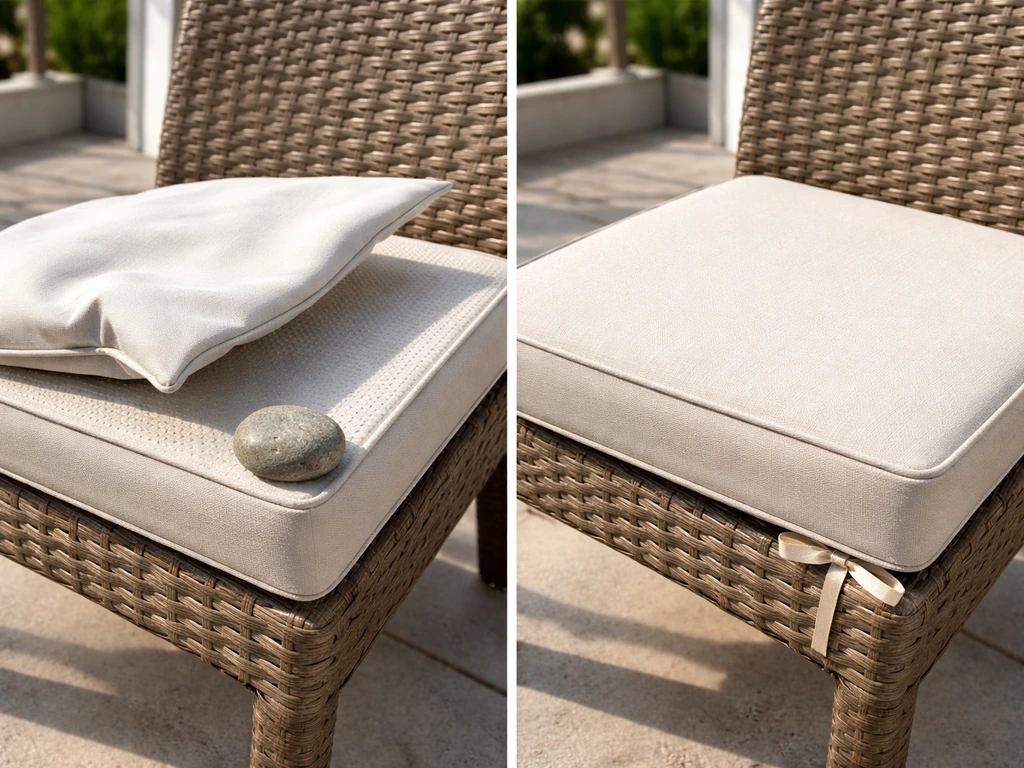
Why your patio pillows keep moving (quick diagnosis)
Before you buy anything or start modifying your cushions, spend 60 seconds figuring out which problem you actually have. Pillows move for a few different reasons, and the fix depends on the cause.
- Wrong size: A cushion that's too small for the seat has nothing to brace against and will slide freely in any direction. Measure your seat and compare it to the cushion dimensions before doing anything else.
- Smooth cover material: Silky or tightly woven polyester covers have almost no friction against metal or wood frames. Even a light breeze moves them.
- Damp conditions: A wet cushion on a wet seat can actually have less grip than a dry one because the surfaces are essentially lubricating each other.
- No ties or broken ties: Many outdoor cushions come with fabric corner ties. If yours didn't, or if the ties snapped off, there's nothing holding the cushion to the chair at all.
- Lightweight filling: Thin decorative pillows with polyester fiberfill weigh next to nothing. A strong gust treats them like a sail.
- Sloped or curved seat surfaces: Sling chairs and curved wicker seats naturally pitch cushions forward or sideways because there's no flat horizontal base underneath.
- Wind direction and furniture placement: If your chairs face the prevailing wind or sit in a channeled breeze between walls, they'll always be harder to manage.
Nine times out of ten, it's a combination of a smooth cover, a lightweight fill, and missing tie points. Fix all three and you're done. If it's just one of those, a single fix is usually enough.
Fast fixes you can do today
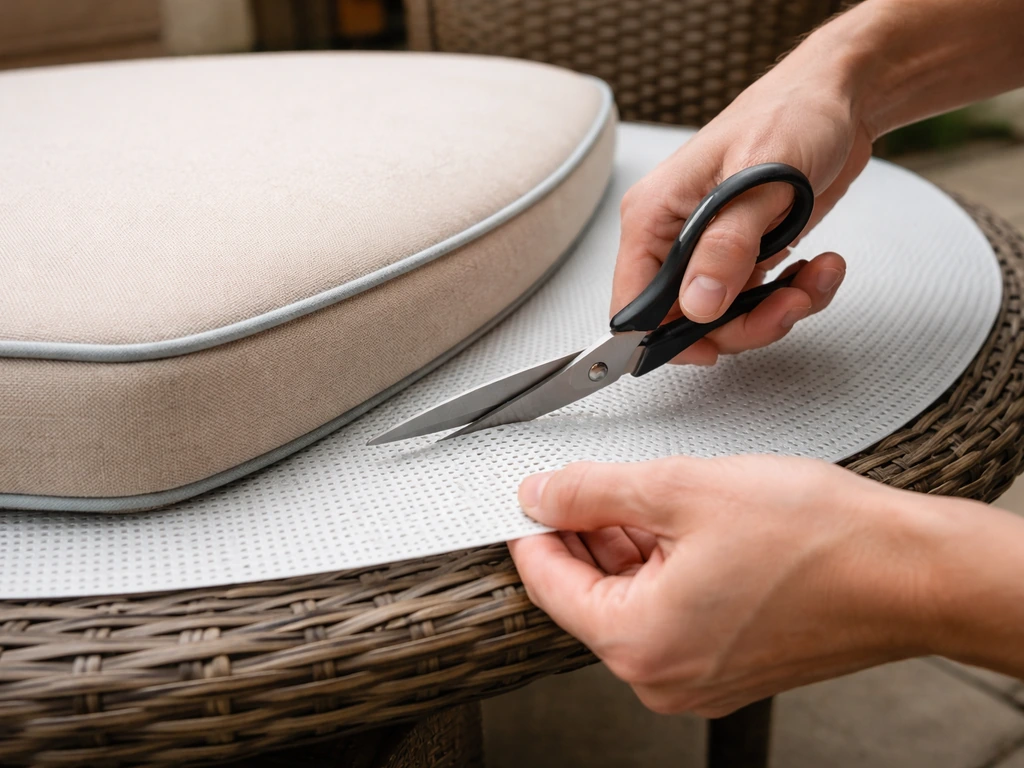
These require no tools, minimal budget, and you can do them right now with things you may already own. Start here before investing in any hardware.
Cut a shelf liner to fit
A non-adhesive grip liner like Con-Tact Grip Premium is my go-to first step. Cut it to match the footprint of your cushion, place it between the cushion and the seat, and you immediately add friction without sticking anything permanently to your furniture. A full roll costs about $8 to $12 and covers several chairs. The liner is removable, won't harm powder-coated metal or teak finishes, and works on almost every seat surface. Scissors and a ruler are all you need.
Rearrange and reposition
Rotate your chairs so the seat back faces the wind direction. This turns the chair frame itself into a windbreak for the cushion. This same wind-resistant thinking can also help when you need the chairs themselves to stop moving in gusts windbreak. It sounds almost too simple, but if your patio has a consistent wind direction in the afternoon, this alone can make a big difference without spending a cent.
Use what's already on the cushion
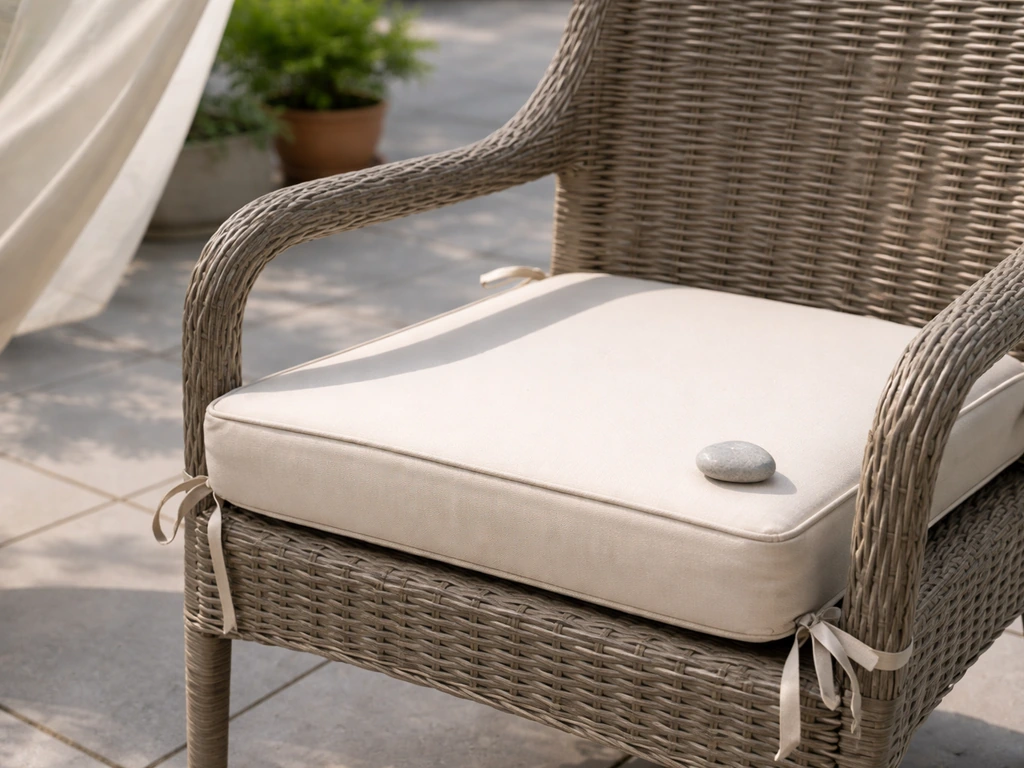
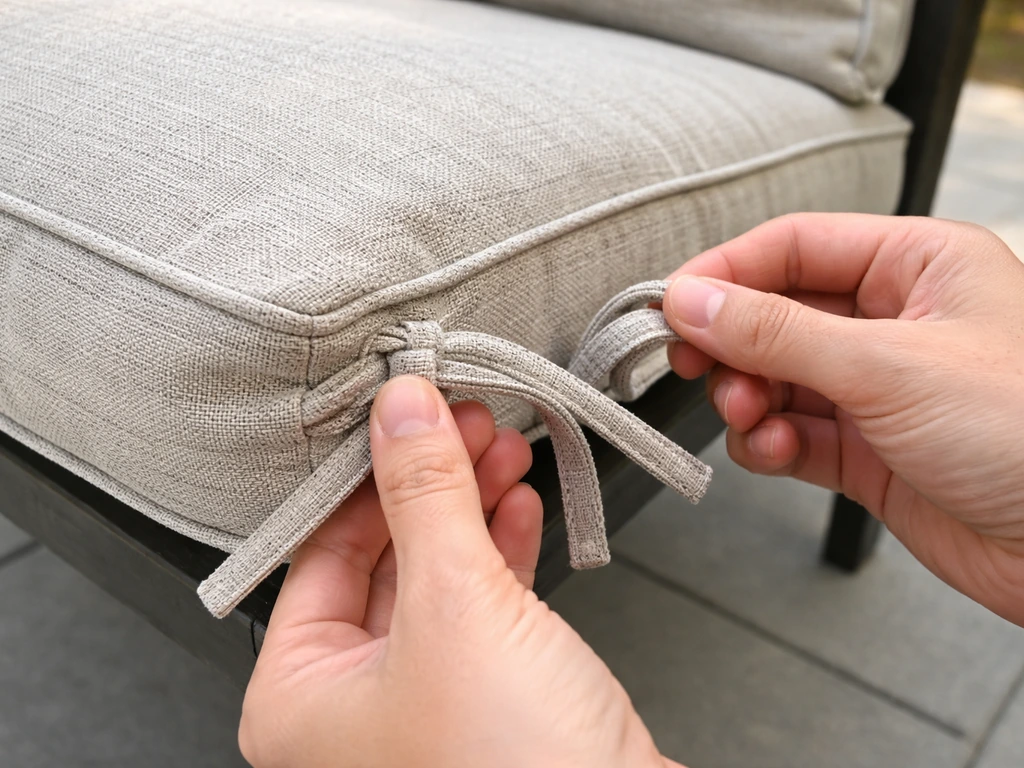
Check whether your cushions have fabric ties sewn into the back corners. Many standard outdoor cushions include them but owners never use them because the chair doesn't have obvious tie-off points. Look for small holes or slats on the back of the seat where you can thread and knot the ties. Even looping them around a crossbar works. If the ties are there and you haven't been using them, start today.
Non-slip grip solutions for common patio surfaces
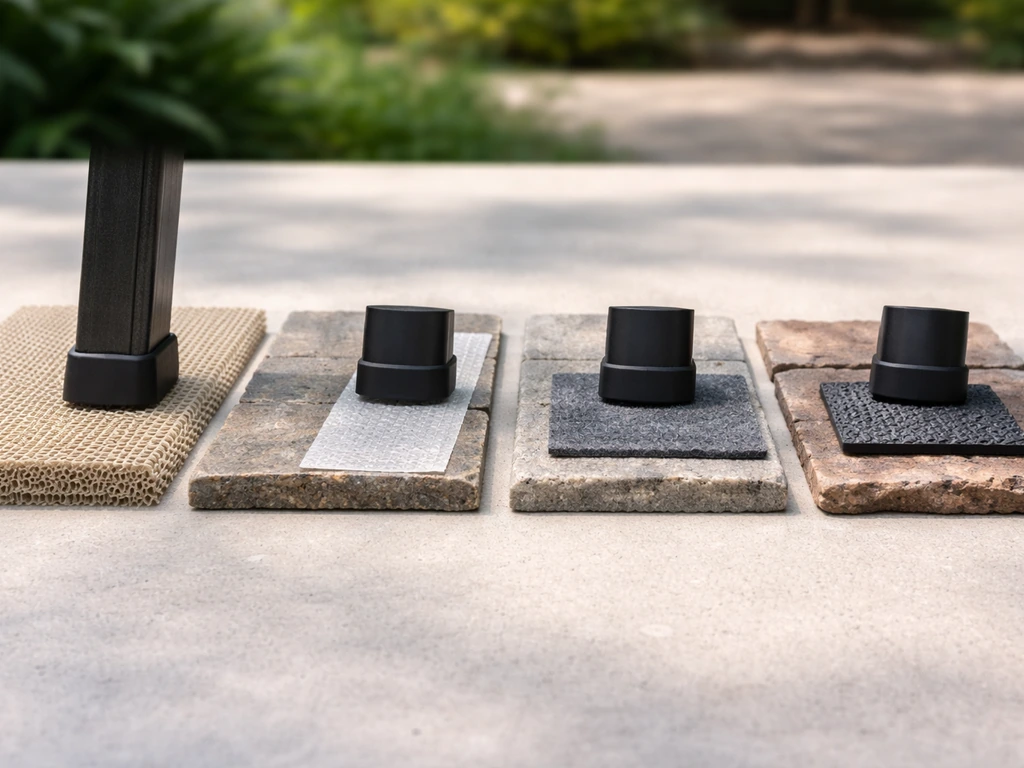
Not every grip solution works on every surface. Here's what actually sticks (literally and figuratively) depending on what your furniture is made of.
| Surface Type | Best Grip Solution | Notes |
|---|---|---|
| Powder-coated metal | Non-adhesive shelf liner or anti-slip rug tape on cushion underside | Avoid permanent adhesives that can chip the coating |
| Teak or painted wood | Non-adhesive shelf liner; anti-slip tape rated for painted wood | Uline and similar tapes specify compatibility with painted wood and sealed surfaces |
| Wicker or rattan | Non-adhesive liner cut to the seat shape; ties looped through weave | Flat liner bridges uneven weave gaps and gives cushion a stable base |
| Sling fabric frames | Ties threaded through sling weave or velcro straps clipped to frame | Grip liners don't work well on flexible sling fabric; anchor is the right approach |
| Concrete or tile patio (floor cushions) | Scotch Outdoor Carpet Tape or Gorilla Anti-Slip Tread Tape on underside | Clean surface thoroughly first; these tapes are rated for wet/outdoor conditions |
For anti-slip tape to actually hold long-term, the surface prep matters more than the tape brand. For anti-slip tape to hold long-term, the product’s own guidance also emphasizes cleaning the surface thoroughly before installing fresh tape surface prep matters more than the tape brand. Wipe down both surfaces with rubbing alcohol, let them dry completely, then apply. I skipped this step once and the tape peeled off in a week. Cleaned properly, the same tape lasted a full season.
If you're using adhesive tape directly on the underside of a cushion cover, test a small corner first. Some outdoor fabrics like Sunbrella are woven and breathable, which means adhesive may not bond as well to them as it would to a tighter weave.
Anchoring methods: ties, straps, clips, and securing to frames
Grip layers slow cushions down. Anchors actually hold them in place. If you want, you can also anchor the whole chair setup so heavier patio items are less likely to get blown away in high wind how to keep patio furniture from flying away. If your goal is how to keep patio rugs from blowing away, these same anchor ideas can help with rugs too keep patio cushions secure. For any cushion in a consistently windy spot, you want at least one anchor point in addition to your grip layer.
Using existing or added fabric ties
If your cushion has corner ties, thread them through slats or around frame rails and tie a square knot (not a bow, which unties easily). If the cushion doesn't have ties, you can add them without a sewing machine. Cut 12-inch strips of ribbon or nylon webbing, fold them in half, and secure them to the cushion corners with iron-on hem tape or a heavy-duty fabric glue like E6000. Let the glue cure for 24 hours before use. Position the attachment points at the back two corners of the seat cushion and the lower corners of any back cushion.
Elastic straps under the seat
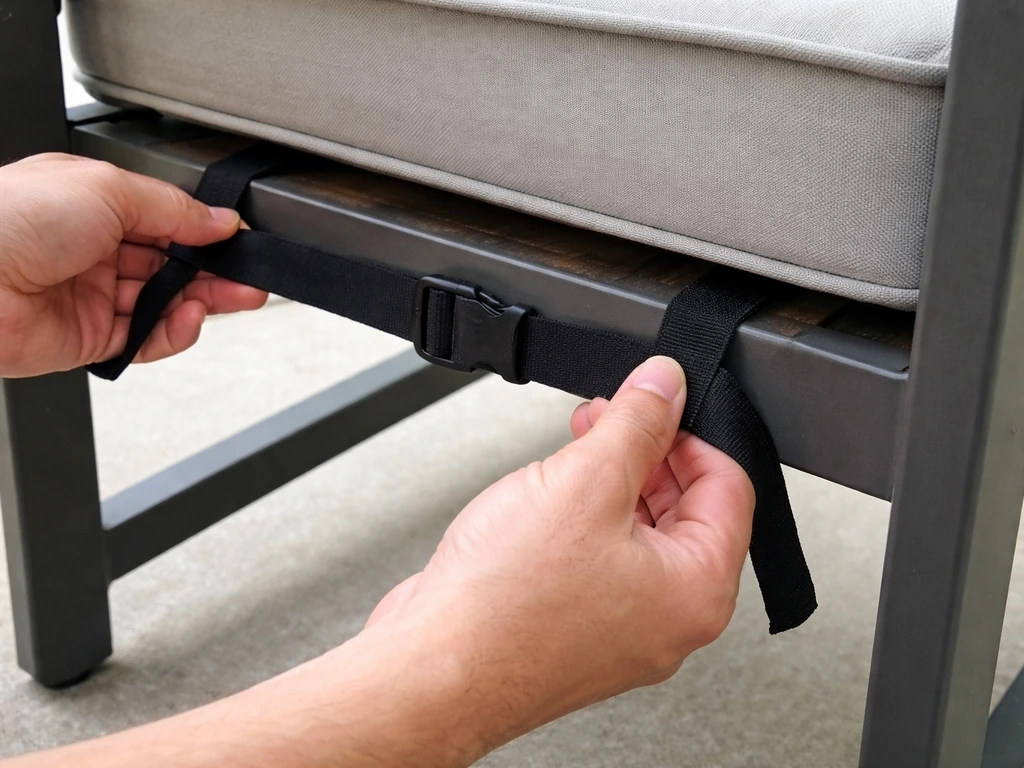
For seat cushions on solid-bottom chairs, run an elastic strap with a buckle underneath the seat from front to back, then loop it over the cushion edges. This is the same concept used on outdoor bench cushions that come with built-in straps. You can buy adjustable elastic straps at any fabric or outdoor store for a few dollars. Thread the strap under the seat rails, pull the cushion down snug, and buckle. This works especially well on wood slatted seats where ties would slide between slats.
Hook-and-loop (Velcro) for back cushions
Back cushions on Adirondack chairs, loveseats, and deep-seat patio sofas are the most likely to catch wind and fly. Sew or glue the loop side of hook-and-loop tape to the back of the cushion, and attach the hook side to the chair back using adhesive-backed Velcro strips. Press firmly, hold for 30 seconds, and let cure overnight. This creates a connection strong enough to survive most wind events but removable when you want to clean or store the cushion. Note: test adhesive-backed Velcro on a hidden area of your chair first, especially on painted or stained wood.
Clips and carabiners for metal frames
Small bungee cords or s-hook clips threaded through built-in cushion grommets and attached to chair frame rails are a fast, completely reversible solution for metal-framed chairs. If your cushions don't have grommets, you can add them with a grommet kit (about $8 at any hardware store) in the corners of the cover. This is a good option for dining chair cushions that you remove and replace frequently, since clips come on and off faster than ties.
Adding weight and improving cushion fit
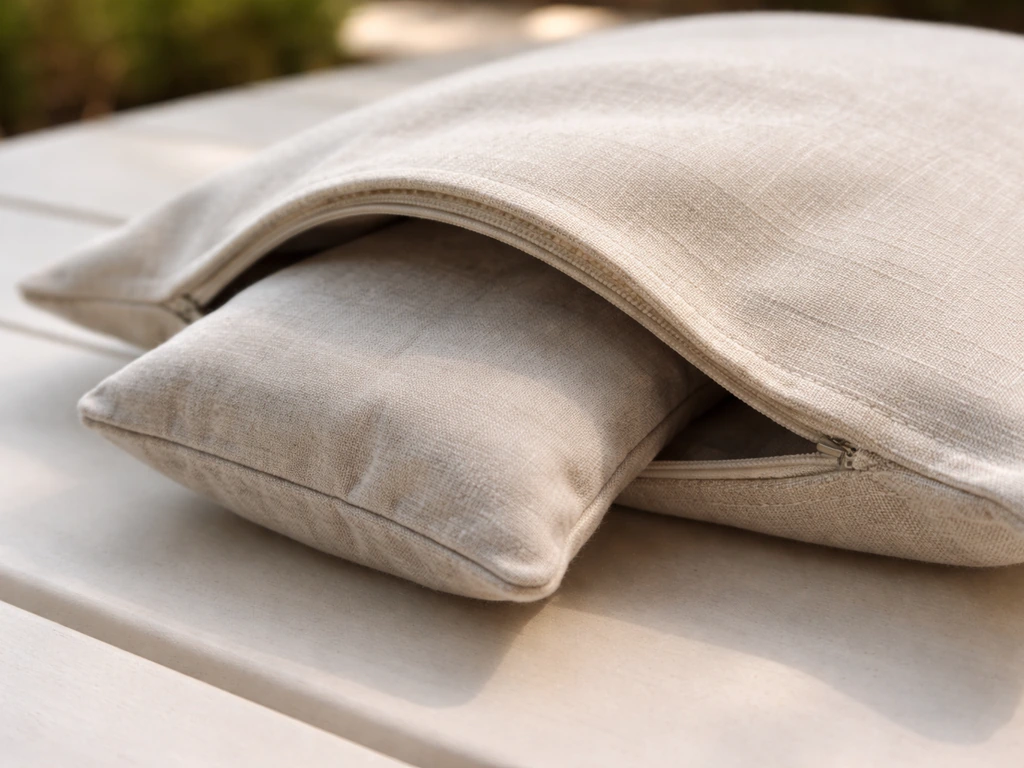
Sometimes the simplest answer is that the pillow is just too light to stay put on its own. A decorative throw pillow that weighs 4 oz will blow away in a 20 mph gust no matter how grippy your liner is. Here's how to add weight without replacing everything.
Weighted inserts
Products like PillowWeights are small weighted inserts you place inside the pillow cover alongside the fill. Each insert weighs 1 pound and the company claims they're wind-tested to hold cushions secure up to 50 mph. You slip them into the corners of the cover so they sit low and spread the weight evenly. For a standard outdoor throw pillow, one insert per pillow is usually enough. For seat cushions on exposed chairs, two inserts positioned at the front corners do the most work. This is one of the cleaner solutions because there's nothing to attach to the furniture itself.
Choosing heavier fills and covers
If you're buying new pillow inserts anyway, choose polyester fiber inserts with a higher fill weight, or look for foam inserts rather than loose fiberfill. Foam is denser and heavier for the same size, and it also keeps its shape better after rain. On the cover side, a heavier canvas or solution-dyed acrylic cover adds a bit of weight and grips surfaces better than a slick polyester weave.
Fixing the fit
A cushion that fits the seat snugly has far less room to shift than one that's 2 inches smaller on each side. If your seat is 20 inches wide and your cushion is 18 inches wide, that 2-inch gap on each side is what the wind exploits. Either replace the cushion with one sized to the seat, or add a foam border strip around the perimeter of the insert inside the cover to fill it out. Closed-cell foam weatherstripping from any hardware store works surprisingly well as a shim here.
Choosing weatherproof pillows and playing the long game
All the anchoring tricks in the world work better when the pillow itself is designed for outdoor conditions. If you're replacing pillows or planning for next season, here's what to look for.
What to look for in an outdoor pillow
- Solution-dyed acrylic fabric (like Sunbrella): Woven rather than printed, so color doesn't fade and the texture actually grips surfaces better than smooth polyester.
- Breathable covers: These dry faster after rain, which means less chance of wet-on-wet slipping and less mold buildup that degrades grip surfaces over time.
- Built-in corner ties: Non-negotiable for seat cushions in wind-prone areas. A cushion without ties is always going to be harder to manage.
- Flatter inserts for seat cushions: High-loft inserts look great indoors but act like a sail outdoors. A flatter, denser seat cushion sits lower and has less surface area for wind to catch.
- Water-resistant or quick-dry fill: Polyester fiberfill that holds water gets heavier and misshapen. Look for fills marketed as quick-dry or waterproof-core.
Storm prep: what to do when serious weather is coming
Even the best-anchored pillows should come inside when a real storm is forecast. Wind-driven rain saturates outdoor fabric fast, and once a cushion is soaked through it takes days to fully dry. Before a storm, pull all decorative throw pillows inside first since they're the lightest and most likely to become projectiles. Seat cushions with ties can stay in place through moderate wind if the ties are properly secured, but anything above about 40 to 50 mph (roughly tropical storm force) is worth taking in. If you want to keep a patio swing from blowing over, the same anchoring and storm-prep approach helps everything stay put in gusty weather best-anchored pillows. The same logic applies to keeping patio cushions and other soft furnishings protected, and it's worth having a storage plan before storm season rather than scrambling when weather hits.
Seasonal storage done right
At the end of the season, clean every cushion and pillow before storage. Sunbrella and similar fabrics can handle a diluted bleach solution (about 1 cup bleach to 1 gallon water) for mold and mildew, followed by a thorough rinse and complete air drying. This is the step most people skip and then wonder why their cushions smell the following spring. The most important rule: never store a cushion that isn't completely dry. Even slight moisture trapped in a storage bin or bag will cause mold growth over a few months.
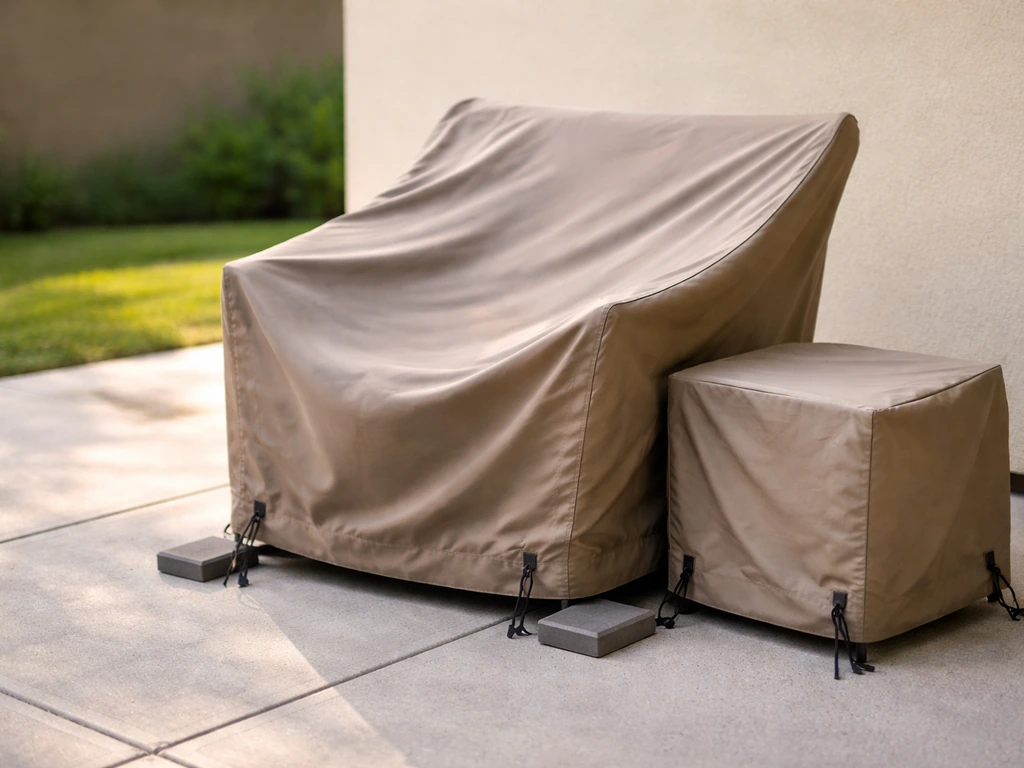
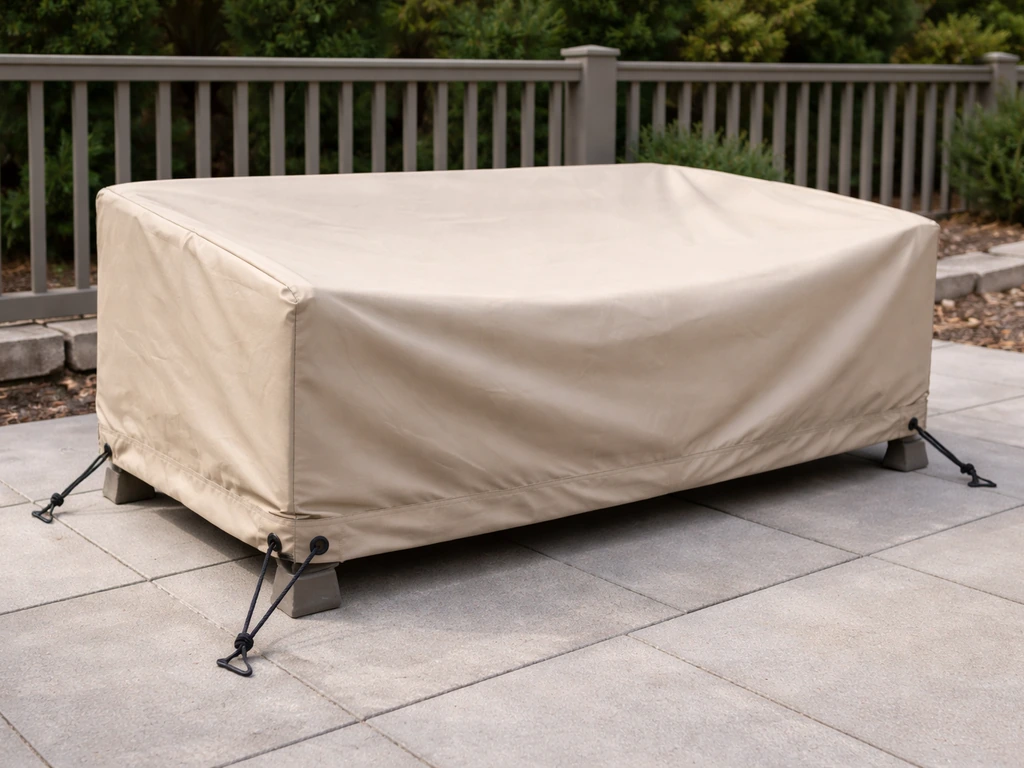
For storage, use a large plastic bin with a lid, a dedicated outdoor storage box, or breathable fabric storage bags designed for cushions. Keep them in a garage, shed, or basement rather than on the patio. If you do have to store cushions outdoors, a waterproof outdoor furniture cover over the whole chair with cushions attached is better than leaving pillows loose. Tuck a few moisture-absorbing packets into the storage container to handle any residual humidity. When spring comes and you bring everything back out, let pillows air out for a day before use to off-gas any stored odors.
Getting your pillow-securing system right is mostly a one-time project. Cut your grip liners, add ties or Velcro where needed, size your cushions properly, and you'll spend the rest of the season actually sitting outside instead of retrieving pillows from the flower bed.
FAQ
Why did my anti-slip tape or adhesive stop working after a week?
Test any adhesive contact on an underside or hidden seam first, and let it cure fully before you rely on it. Adhesives can fail sooner on fabrics that shed water or have a slick coating, and UV plus heat can weaken the bond over weeks, so recheck high-stress corners after the first sunny day.
Do I really need both grip liner and straps or Velcro?
Use a grip layer even when you add ties, Velcro, straps, or weighted inserts. Wind can pry loose what was only friction-held, and friction alone can’t resist repeated gusts plus vibration, especially on smooth vinyl, acrylic, or painted metal.
What should I do if my cushion has no ties or grommets?
If your cushion has no tie points or grommets, start by adding a non-adhesive grip liner plus corner anchors made with ribbon or webbing. That avoids drilling and lets you dial in placement, then you can switch to grommets and clips later if you want faster on-off.
Where is the best place to anchor corners so they don’t still shift?
Choose your attachment location by wind exposure: for seat cushions, anchor the back two corners first, then add front anchoring only if the cushion still rides up. For back cushions, focus on the top and outer edges because they catch the most air and lift before sliding.
Which attachment methods work best on breathable outdoor fabrics like Sunbrella?
Don’t attach to the cushion cover fabric if it is very breathable or loosely woven. For tricky covers, anchor through grommets (bungee clips) or use removable grip liner plus weighted inserts, because cover-only fixes can delaminate or pull stitches after rain cycles.
What if the wind direction changes during the day?
For angled chairs, rotating the chair to shield the seat is often more effective than increasing friction. When wind is from multiple directions, use at least one mechanical connection (ties, straps, Velcro, or bungees) plus the grip layer so movement from any direction is resisted.
Can I add weight to my pillow or cushion without it bunching or shifting?
Yes, but do it deliberately: add weight low and toward the corners, then verify the cushion still sits flat without bunching. If you see the insert shifting, sew or glue small corner positioning points inside the cover, or add two lighter inserts instead of one heavy insert.
What’s the best type of insert for long-term outdoor use?
For foam or fiber inserts, choose fill that matches how the cushion dries. Foam holds shape and resists flattening, while loose fiber can clump after wet weather; either way, fully dry before storing or the odor and mildew risk returns even if the system kept the cushion in place.
My grip liner keeps shifting, what’s the fix?
If a liner is sliding, it usually isn’t being cut precisely or the contact surfaces aren’t clean. Cut with a small clearance so it seats flat, then wipe both surfaces with alcohol and let them dry completely before inserting, especially on teak sealants, powder-coated paint, or dusty fabric.
Should I leave cushions outside during a big storm?
Remove decorative throw pillows before storms, but cushions with properly tied or anchored systems can often stay out during moderate wind. As a practical rule, if you expect near-tropical-storm gusts or sustained high wind, treat all soft items as bring-in items to avoid rain saturation and multi-day drying.
How should I store patio cushions so they don’t grow mildew?
In most cases, store in a dry indoor location in sealed bins or breathable bags to prevent moisture and mildew. If you must store outdoors, keep cushions attached to the chair and use a full cover over the chair, then add moisture-absorbing packets inside the storage container.