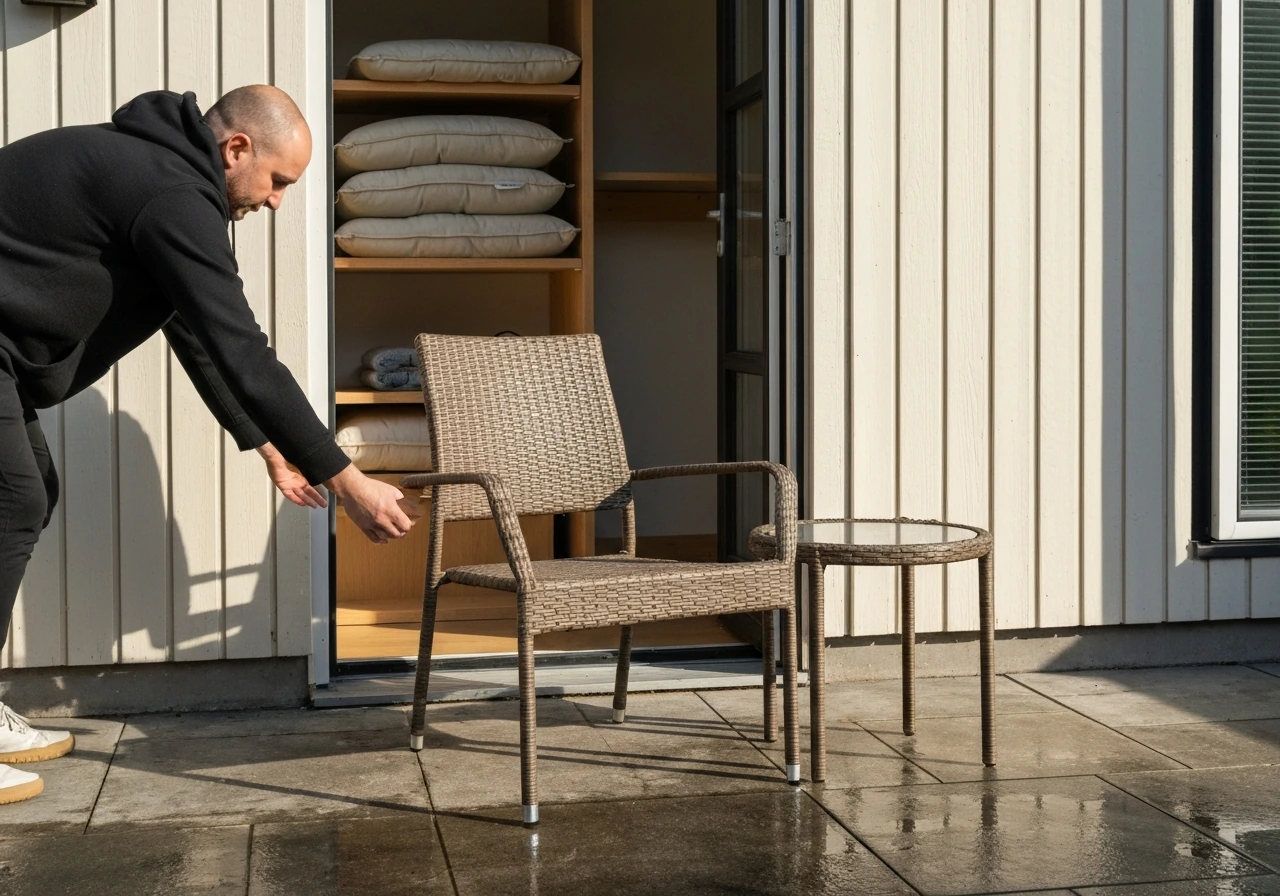
Move everything you can indoors first, anchor what you cannot move, and strip off all cushions, umbrellas, and covers before the wind picks up. That is the core rule. Patio furniture sitting loose on a deck or patio in a hurricane does not just get damaged, it becomes a projectile that can shatter windows, puncture walls, and injure people. FEMA, NOAA, and the CDC all say the same thing: bring outdoor objects inside or secure them well before tropical-storm-force winds arrive, which can happen as early as 36 hours after a hurricane warning is issued. If you have a watch, start now. In a hurricane watch area, NWS says to prepare to bring inside loose, light-weight objects, while in a hurricane warning area you should complete time-critical tasks like storing those objects and installing storm shutters. If you have a warning, you are already behind.
What to Do With Patio Furniture in a Hurricane
The timeline you need to follow: before, during, and after
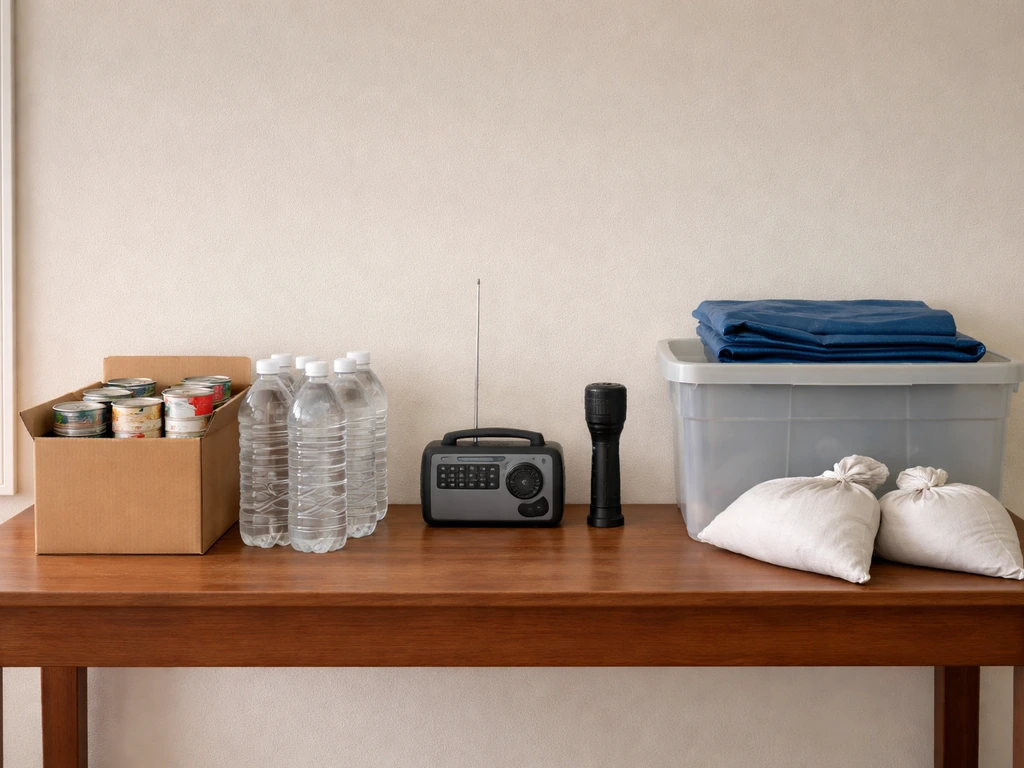
Here is the honest truth about hurricane prep timing: most people wait too long. A hurricane watch is typically issued about 48 hours before tropical-storm-force winds (39 mph and up) reach your area. A hurricane warning comes about 36 hours out. Once winds hit 39 mph, it is genuinely dangerous to be outside moving furniture, and anything still loose at that point is a hazard. So the window is tighter than it feels.
| Storm Phase | Time Window | What to Do With Furniture |
|---|---|---|
| Hurricane Watch | ~48 hours out | Start moving lightweight items indoors; make a full inventory; gather rope, straps, and covers |
| Hurricane Warning | ~36 hours out | Complete all moves indoors; anchor anything left outside; remove all cushions, umbrellas, and loose covers |
| Tropical-storm-force winds begin | 39+ mph | Stay inside; do not go back out to secure anything |
| Storm passes / all-clear issued | Varies | Wait for official guidance before going outside; then inspect, clean, and dry everything |
During the storm itself, your job is nothing. Do not go outside to check on furniture, no matter what you hear. After the storm, wait until local authorities have given the all-clear, then do a full walk-around inspection before you start handling anything. Downed power lines, standing water, and debris are all real hazards in the immediate aftermath.
Take stock first: what to move and what to tackle in what order
Not everything on your patio carries the same risk or requires the same effort. Before you start hauling things around, do a quick mental inventory and rank by danger. The lightest, loosest items are the biggest projectile threats and should move first, even if they are cheap and easy to replace. Heavy items that can be anchored come last.
Here is the priority order I use, moving from highest risk to lowest:
- Umbrellas and umbrella stands (these become spears in high wind and should come in first)
- Loose cushions and pillows (they soak up water, go airborne easily, and destroy themselves quickly)
- Lightweight plastic chairs and side tables (almost zero wind resistance but very high flight risk)
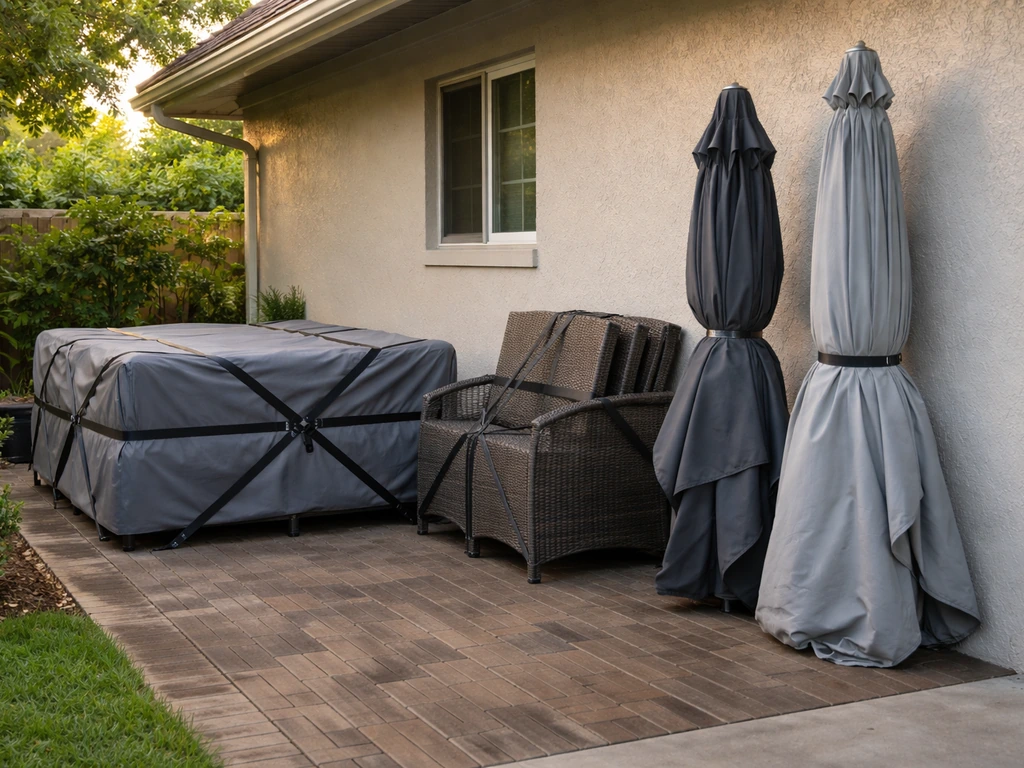
- Fabric covers and tarps already on furniture (remove them — a loose cover in 60 mph wind turns into a sail that pulls the furniture with it)
- Small decorative items, planters, and accessories
- Folding chairs and folding tables
- Standard dining chairs and accent chairs
- Full dining tables (heavy but worth moving if you have help and space)
- Large sectionals and lounge sets (these may stay outside anchored if they genuinely cannot be moved)
- Built-in or extremely heavy items like concrete benches or large stone tables (anchor or leave, see below)
If you only have 30 minutes, clear the top four categories first. That alone removes most of the projectile risk from a typical patio setup.
How to handle different furniture materials
Different materials fail in different ways during a hurricane. Knowing what each one is actually vulnerable to helps you prioritize and also helps you fix damage correctly afterward. Here is a breakdown by material.
Metal furniture (aluminum, steel, wrought iron)
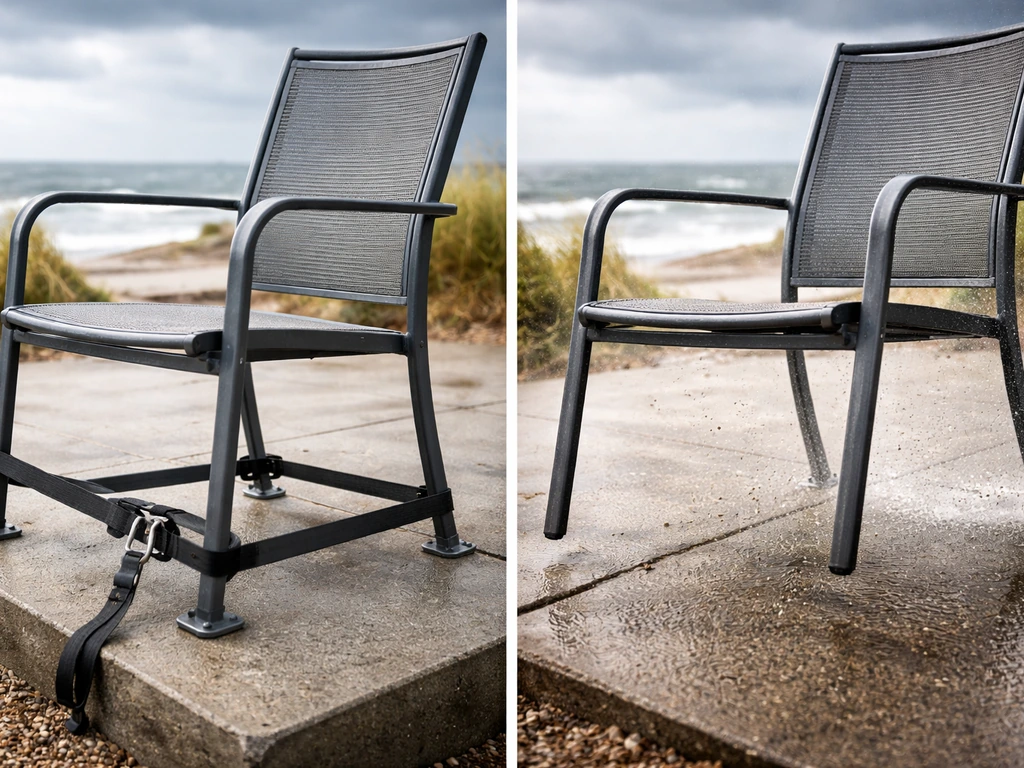
Metal furniture is heavy enough to stay put in moderate wind but will absolutely move (and become airborne) in sustained hurricane-force gusts. The bigger threats are rust and salt spray. If you are in a coastal area, even a near miss from a hurricane can coat everything in salt-laden water, and bare metal that sits wet for days will start to rust fast. Move metal furniture indoors if at all possible. If it has to stay outside, stack chairs seat-to-seat to reduce the wind profile, tie them together with heavy-duty rope or ratchet straps, and anchor the bundle to a fixed point like a porch railing or fence post. After the storm, rinse everything with fresh water as soon as possible to remove salt, then dry it thoroughly before rust has a chance to set in.
Wood furniture (teak, cedar, pine, eucalyptus)
Wood is surprisingly heavy once it is soaked, which sounds like a good thing but is not, because it also swells, warps, and cracks when it cycles between wet and dry repeatedly. Untreated or poorly sealed wood sitting in heavy rain for two or three days after a hurricane is going to swell at joints and show surface cracking at minimum. Move wood furniture indoors if you can. If not, stack it tightly and tie it down, and cover it with a breathable cover or a tarp that is tied down at every corner (not just draped over it). Loose tarps act like parachutes. After the storm, dry wood furniture in a shaded, ventilated area rather than in direct sun, which can cause the surface to crack as it dries too fast.
Plastic and resin furniture
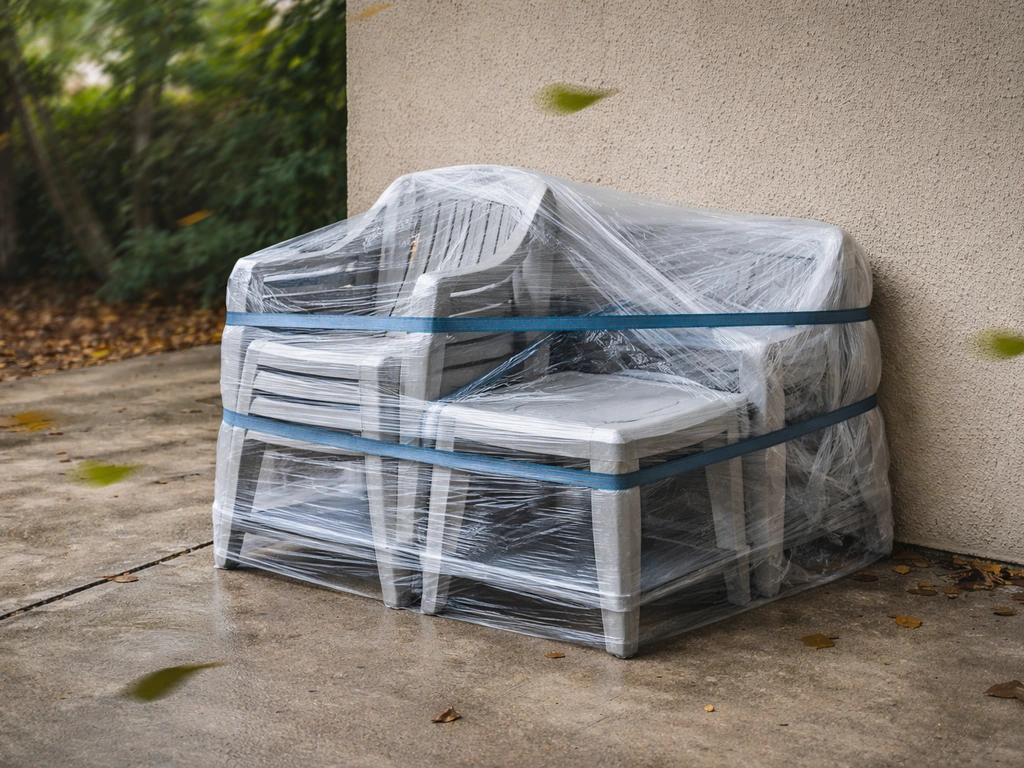
Plastic and resin chairs and tables are the biggest projectile problem in any hurricane. They are light, catch the wind easily, and can reach dangerous speeds even in tropical-storm-force conditions. These need to come inside, full stop. Stack them in a garage, a bathroom, a closet, or even a hallway. If indoor space is genuinely not available, stack them in a tight bundle, tie them together at multiple points, and weight them down by placing heavier furniture on top or anchoring to a fixed structure. Do not leave them loose under any circumstances.
Wicker and rattan (including synthetic resin wicker)
Natural wicker is the most vulnerable material you can have outside in a hurricane. It absorbs water deeply, swells, loses structural integrity, and grows mold fast in the warm, humid conditions after a tropical storm. Natural wicker should absolutely come indoors. Synthetic resin wicker is more durable in rain but it still catches wind and the frames can bend if the piece takes a hit or a fall. Move it inside if possible; anchor it tightly if not. After the storm, inspect all wicker pieces for broken strands or frame bending before you put weight on them.
Cushions, umbrellas, and fabric covers need special handling
This is the category where people most often make a mistake by either leaving things out assuming they will be fine, or worse, covering furniture with a loose tarp and leaving the cushions underneath. Here is the right approach for each.
Cushions and pillows
blank" rel="noopener noreferrer">Every cushion and pillow comes inside, no exceptions. If you are dealing with regular rain (not hurricane wind), you can use the same general approach: move cushions and fabric inside to prevent soaking and mold, then dry everything thoroughly Every cushion and pillow comes inside, no exceptions.. Even outdoor fabric cushions are not designed to sit submerged or soaked for 24 to 72 hours. The foam cores will soak up water, take days to dry, and start growing mold before they feel wet on the outside. Bring them into your house, garage, or a dry storage area. If storage space is tight, stack them flat on a dry floor, cover them loosely with a sheet, and they will be fine. I keep large garbage bags on hand to quickly wrap cushion sets if I run out of storage space. It is not elegant but it works.
Umbrellas and patio canopies
A patio umbrella in a hurricane is a genuine safety hazard. Even a closed, clamped umbrella will act like a wing in sustained high winds and can launch the entire base or pull itself free and fly. Close the umbrella completely, remove it from the base, and store it horizontally indoors or in a garage. If you cannot bring it inside, lay it flat on the ground and tie it down at multiple points. Never leave an open umbrella outdoors in any storm, not just hurricanes. For pergola canopies and shade sail setups, remove the fabric panel entirely and roll it up for storage. Leave the frame if it is structurally sound, but take the fabric.
Furniture covers and tarps
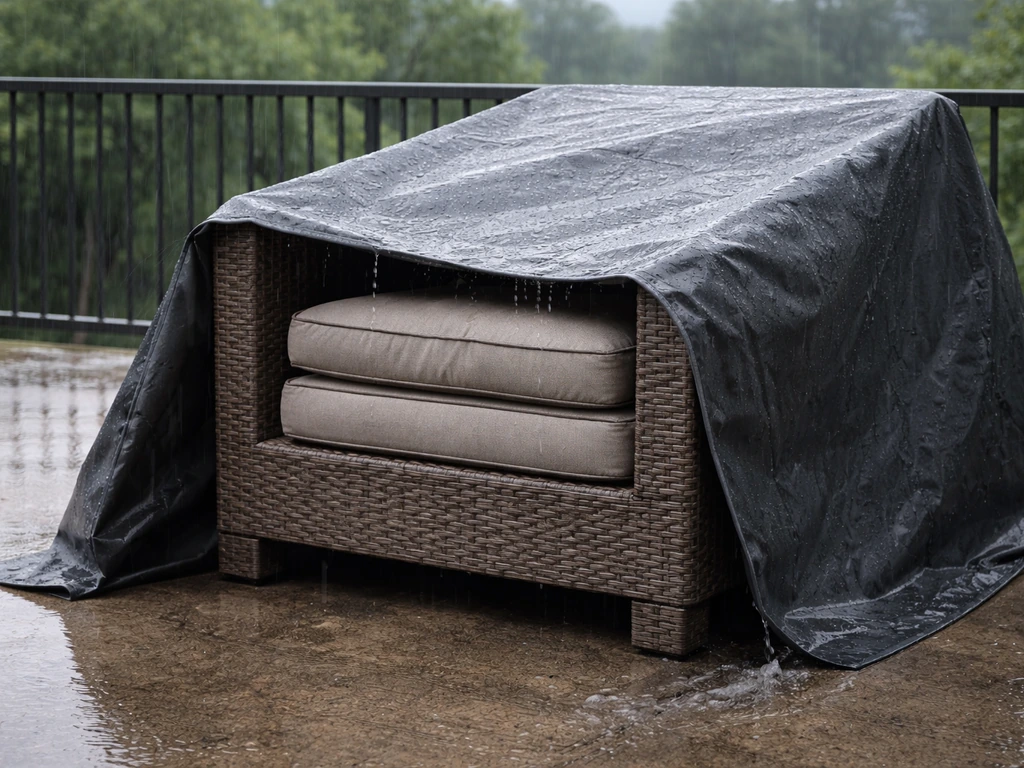
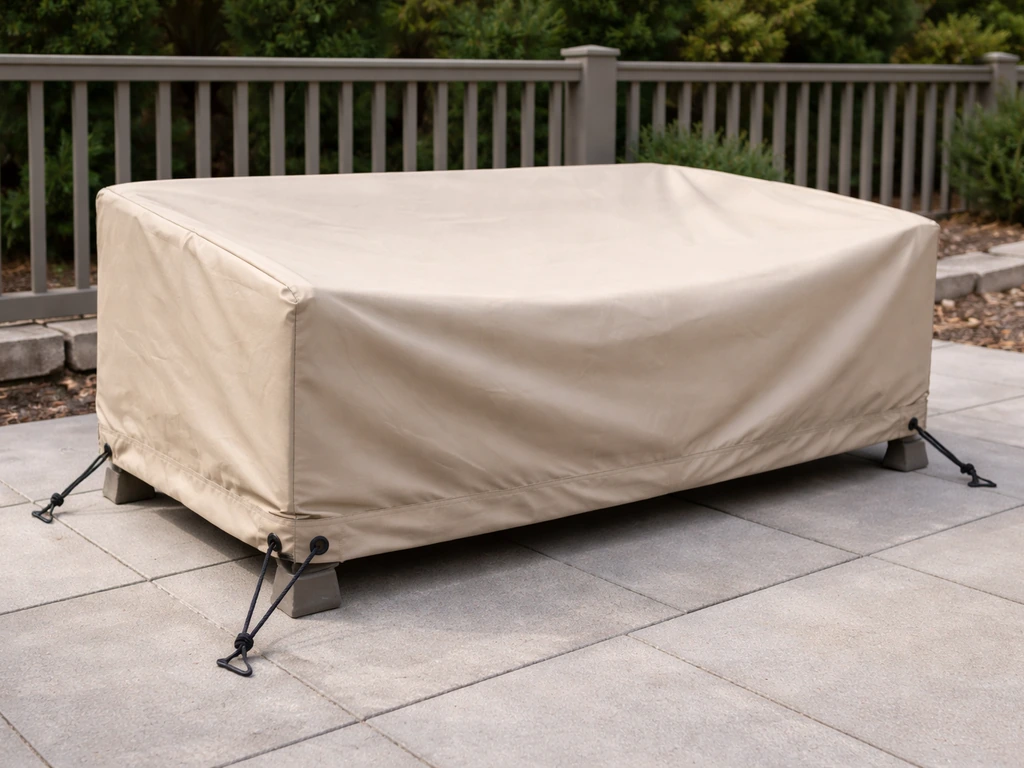
This is worth saying clearly because it surprises a lot of people: standard furniture covers are not appropriate hurricane protection on their own. A cover that is not secured with tie-down cords or straps at every anchor point will act as a sail and either peel off the furniture entirely or pull the furniture with it. If you use covers, they must be properly tied down at every loop with weather-resistant cord. Even then, covers work best for rain and dust, not sustained gale-force wind. The better approach is to use covers only on furniture that has already been moved to a sheltered location, like a covered porch or garage corner. If covers vs. tarps vs. other protection options is something you are weighing for regular rain events, that is a different calculation than hurricane prep. This also applies to rainy days, where loose covers can trap moisture or get lifted by gusts.
Covers, storage, or anchoring: picking the right method
The right protection method depends on what you have, where you are, and how much time you have. Here is how to think through the decision:
| Method | Best For | Key Requirement | Big Mistake to Avoid |
|---|---|---|---|
| Move indoors (garage, shed, house) | All furniture, all materials | Enough indoor space | Waiting too long so you run out of time or daylight |
| Anchoring with straps/rope | Heavy items that cannot be moved (large sectionals, heavy tables) | Fixed anchor point (railing, post, wall bracket) | Using bungee cords — they snap in high wind; use ratchet straps or rope with secure knots |
| Stacking and weighting | Plastic chairs, lightweight folding furniture | Heavier furniture or sandbags to hold the stack down | Stacking too high without tying — a tall stack is more unstable, not less |
| Covering with tied-down tarp | Large items on a covered porch or in a sheltered corner | Tarp anchored at every point with cord or weights | Draping a loose tarp over furniture and leaving it — it will fly |
| Submerging in pool (pool furniture only) | Lightweight aluminum or resin pool loungers | Pool with enough room | Putting furniture with fabric or wood elements in the pool — they will be damaged |
One method that actually works for pool furniture specifically: some homeowners submerge lightweight aluminum or plastic pool loungers in the pool itself. The water holds them down and keeps them from flying. This only works for pieces that can tolerate submersion, so no wood, no cushions, and no fabric slings. Everything else follows the rules above.
If you are anchoring furniture that is staying outside, use ratchet straps or heavy rope tied to a structural anchor point. A fence post, a porch railing bolted to the house, or a deck ledger board are all solid options. Bungee cords, twist ties, and flimsy twine will not hold in sustained wind. I learned that the hard way when a bungee cord snapped at 50 mph and sent a chair into my neighbor's fence.
After the storm: inspection, cleaning, drying, and fixing damage
Once the all-clear is given, take your time before you rush to bring everything back out. The goal now is to catch damage early, because a scratch that gets treated immediately stays a scratch, but one that gets ignored for two weeks in humid post-storm weather becomes rust, rot, or mold.
Start with an inspection walkthrough
Before you move any furniture back outside, look at your patio space first. Check for standing water, debris, downed power lines, and damage to the deck or patio surface itself. Then go through every piece of furniture with fresh eyes:
- Metal: look for scratches that have gone through the finish coat, any surface rust starting, and bent legs or frames
- Wood: check for cracks, swelling at joints, raised grain, and any separation at glued seams
- Plastic/resin: look for stress cracks (often hairline), especially at corners and leg bases
- Wicker/rattan: check for broken or lifted strands, bent frame members, and any mold starting at the base
- Cushions: press the foam firmly with your hands to check for water retention; smell them for early mold
- Umbrellas: check rib hinges for bending and the fabric for tears, mold spots, or seam separation
Cleaning after salt spray and storm debris
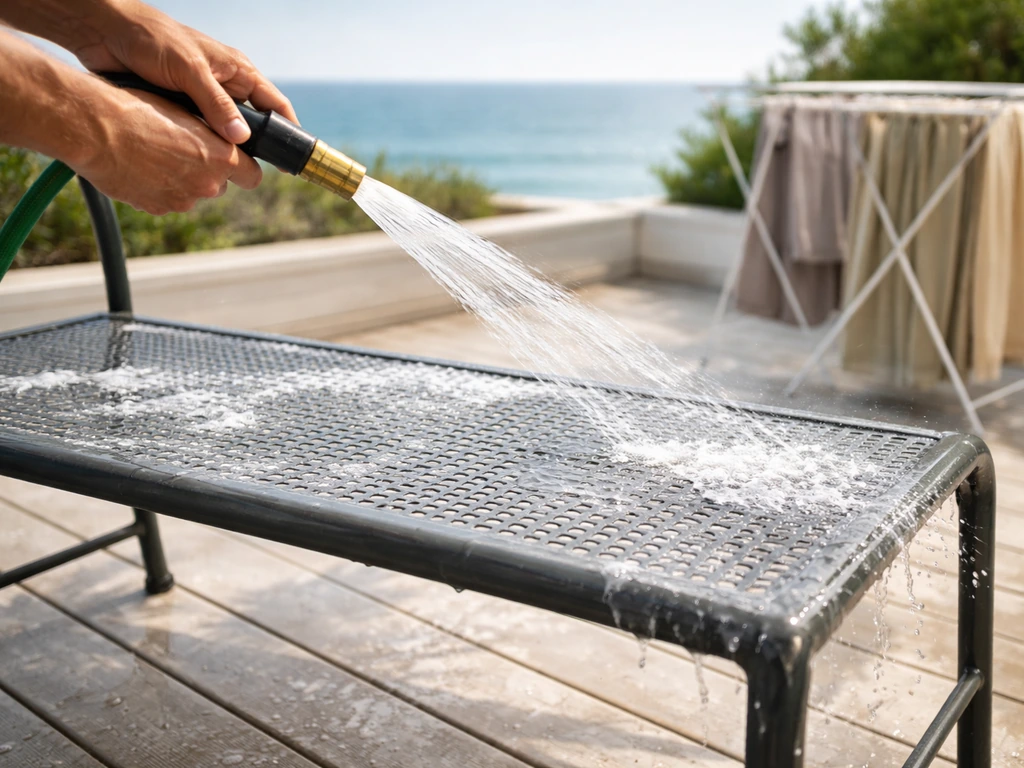
If you are in a coastal area, rinse everything down with fresh water before you do anything else. Salt residue is the fastest way to start corrosion on metal, stain sealers on wood, and degrade synthetic materials over time. Use a garden hose with a spray nozzle and rinse all surfaces, undersides, and joints. For general storm debris cleanup, a mild dish soap solution and a soft-bristle brush handles most grime without scratching finishes. Avoid pressure washing metal furniture immediately after a storm if there are any scratches, since you can force water and contaminants deeper into the damage.
Drying properly matters more than people think
Drying is where people rush and create problems. Metal furniture should be dried with clean towels and then left in moving air (not direct hot sun, which can blister paint on already-stressed surfaces). Wood should dry slowly and evenly in shade with good airflow; direct sun after a heavy soak causes the outside to dry and shrink faster than the interior, which leads to cracking. Cushions should be stood on edge in a sunny, breezy spot so air can move through the foam, not laid flat where moisture stays trapped. If a cushion still feels heavy or smells off after 48 hours of drying, the foam core is holding water and mold is likely already starting.
Fixing common storm damage yourself
Most hurricane damage to patio furniture falls into a few categories that are very DIY-fixable if you catch them early. Surface rust on metal can be sanded back with 220-grit sandpaper, treated with a rust-inhibiting primer, and touched up with spray paint matched to the original finish. Wood that has swollen at joints usually needs to dry completely before you assess whether it needs re-gluing; do not force a swollen joint because you will crack the wood. For mold on cushion fabric, a solution of one part white vinegar to one part water applied with a brush and left to air dry handles mild cases. Severe mold that has penetrated the foam means the cushion needs replacing rather than cleaning. Wicker strands that have lifted or snapped can be re-woven and reglued with outdoor-rated adhesive, which is a straightforward repair if you are patient.
One last thing: use the aftermath as a chance to note what held up and what did not. If your cheap plastic side tables became projectiles this time, consider replacing them with heavier resin or aluminum pieces before next season. If your cushions took on water, look at upgrading to quick-dry foam options. Hurricanes are terrible, but they are also a very honest stress test of your outdoor setup, and the lessons are worth acting on while they are fresh.
FAQ
What if I run out of time and can’t bring all patio furniture inside?
If you cannot get everything inside before wind ramps up, focus on the items most likely to fly, then secure. Do not rely on “lightly weighted” items or loose straps. For anything staying out, tie multiple pieces together into one bundle and attach that bundle to a real structural anchor (not just railing caps or decorative posts). If you are missing proper anchors, the safer choice is to leave the piece where it is rather than reposition it in building-force winds.
Are patio furniture covers enough if I secure them with straps?
Avoid covering furniture in place with a tarp and thinking it will protect against wind. Tarps can lift and create a sail effect, especially when they are not cinched at every anchor point. If you have time to stage a cover at all, only do it after the furniture is moved into a sheltered spot like a garage corner or under a secured porch.
Can I store cushions in plastic bags or bins instead of bringing them fully inside?
Yes for many outdoor cushions, but treat it as a temporary moisture-control step, not hurricane protection. Wrap cushions after you bring them indoors so they stay clean and dry, then store them so air can reach edges (stack flat or stand on edge, depending on space). Do not store cushions tightly packed in plastic bags with no airflow for days, because trapped moisture can still drive mold.
When is it safe to inspect and clean patio furniture after the storm?
Do not clean, hose down, or move furniture while the storm is in progress. After the all-clear, start with a hazard check (debris, standing water, and especially downed power lines). Only then should you inspect furniture, and for coastal areas do a fresh-water rinse first to stop corrosion before you attempt any repairs.
What tie-downs should I avoid, and what should I use instead?
Small bungee cords and twist ties are not reliable in sustained hurricane wind, they can snap or loosen. Use ratchet straps or heavy-duty rope that is rated for outdoor load and connect to a structural anchor. Also, re-check knots and strap tension after the first gust surge if you have a safe window to do so, because initial tightening often relaxes.
What if my deck or patio doesn’t have a “good” place to anchor furniture?
If your furniture is on a floating or lightweight surface (some deck systems, freestanding patio platforms, or balcony floors), anchor points may not be truly structural. Test anchors only after the storm when it is safe, and before next season upgrade to anchors that go to framing members or a bolted ledger. If you cannot identify a solid anchor, plan to bring that furniture inside instead.
Can I leave a closed umbrella outside during a hurricane if it’s clamped?
No. Even “closed” umbrellas can act like wings in high winds, and the base can break free. The safest approach is to close the umbrella completely, remove it from the base, and store it horizontally indoors. If it cannot be brought inside, lay it flat and tie it down at multiple points, not just around the pole.
What are the first things to check on metal patio furniture after the storm?
For metal, rinsing and drying are the main priorities, then look for pitting, bubbling paint, and creases in tubing. If you see fresh rust spots, sand lightly, prime, and repaint as soon as possible. If paint is badly flaked, do not just cover it, scrape back to stable coating so rust does not creep underneath.
How do I know if a storm-soaked cushion is beyond cleaning?
If your cushion smells musty or feels heavy after about 48 hours of drying, assume the foam core stayed wet. That typically means mold growth is already underway, and cleaning alone may not solve it. In that case, replace the cushion rather than trying to re-use it, because odors can return and mold can spread to surrounding fabrics.
Is synthetic resin wicker safe to use again after a hurricane if it looks okay?
Synthetic resin wicker can still be damaged even if it is more water-resistant than natural wicker, frames can bend and joints can loosen. After the storm, inspect the frame for warping and the weave for broken strands before you sit on it or stack items on top. If the structure flexes or a joint feels loose, repair or replace before regular use.