When it starts raining, your first move depends on what you have outside. Cushions and fabric come in immediately. Metal furniture gets tilted or covered so water doesn't pool. Wood and resin can handle a normal shower just fine, but they need to be dried and wiped down within 24 to 48 hours to keep mold from taking hold. That's the core of it. Everything else in this guide is about doing those steps right so you're not dealing with rust, mildew, or warped wood a season from now.
What to Do With Patio Furniture When It Rains
Maren Grady
11 May 2026
Quick steps during a rain shower
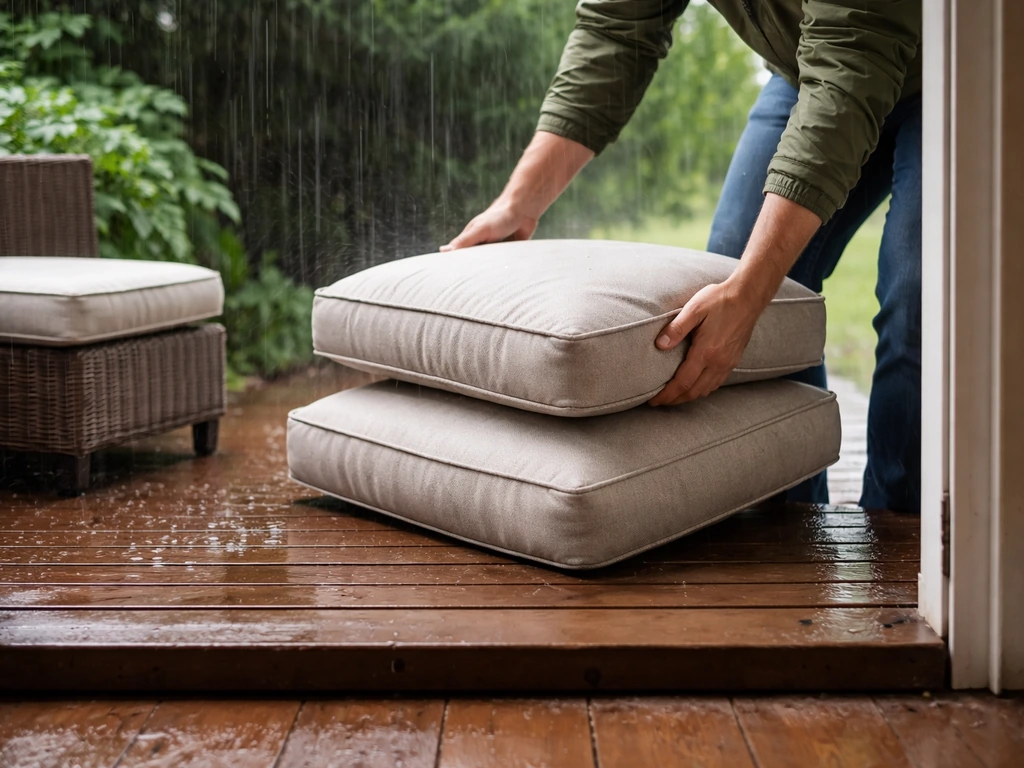
You don't need to panic and haul everything inside every time clouds roll in. But you do need to act on the right things fast. Here's what I do the moment rain hits:
- Grab the cushions first. This is non-negotiable. Seat cushions and back cushions are the most vulnerable thing on any patio, and even a short shower can soak the foam inside if the fabric isn't fully waterproofed. Bring them inside or stash them in a deck box.
- Tilt or lean chairs against a wall or table. This stops water from pooling in seat wells and speeds up draining. A chair sitting flat with an inch of standing water in the seat is a mold problem waiting to happen.
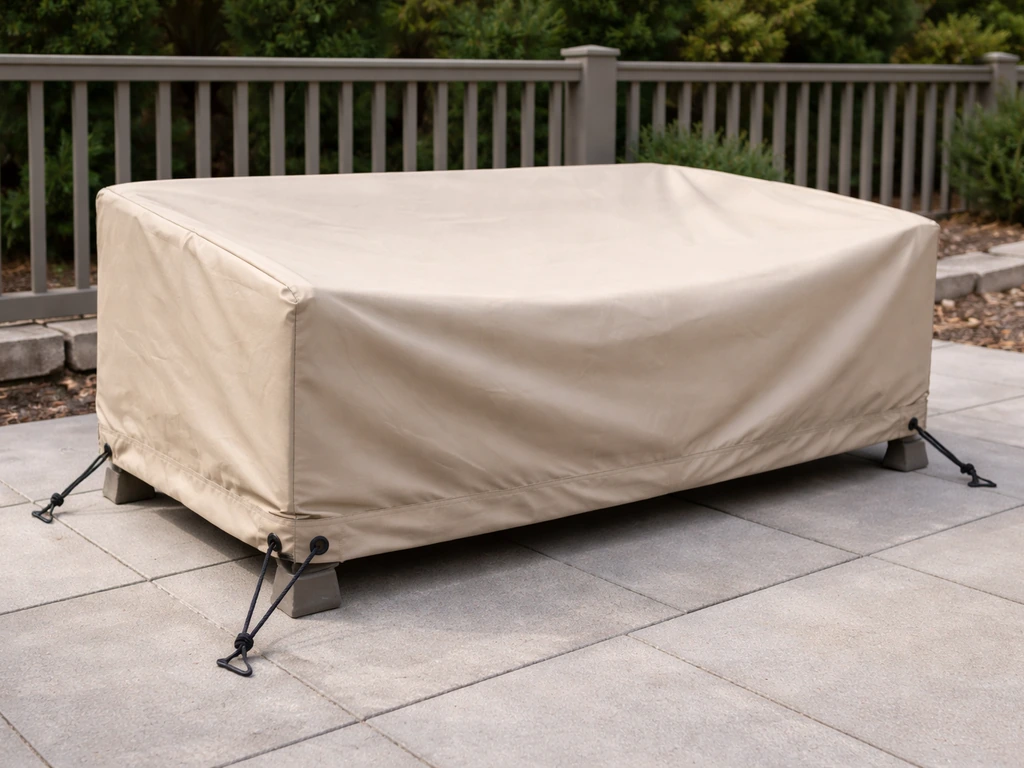
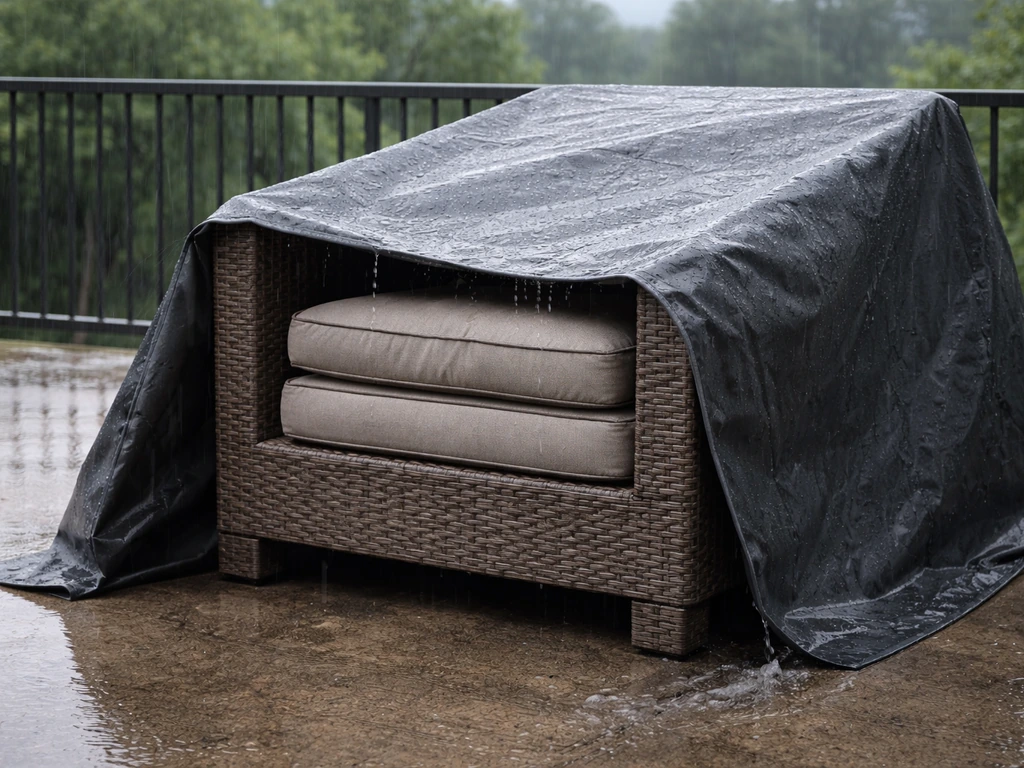
- If you have covers nearby, throw them on. A quick cover beats a full cleanup later. Just make sure the cover isn't going to create a giant water-trapping pocket — a poorly fitted cover with a saggy middle pools water just as badly as leaving the furniture uncovered.
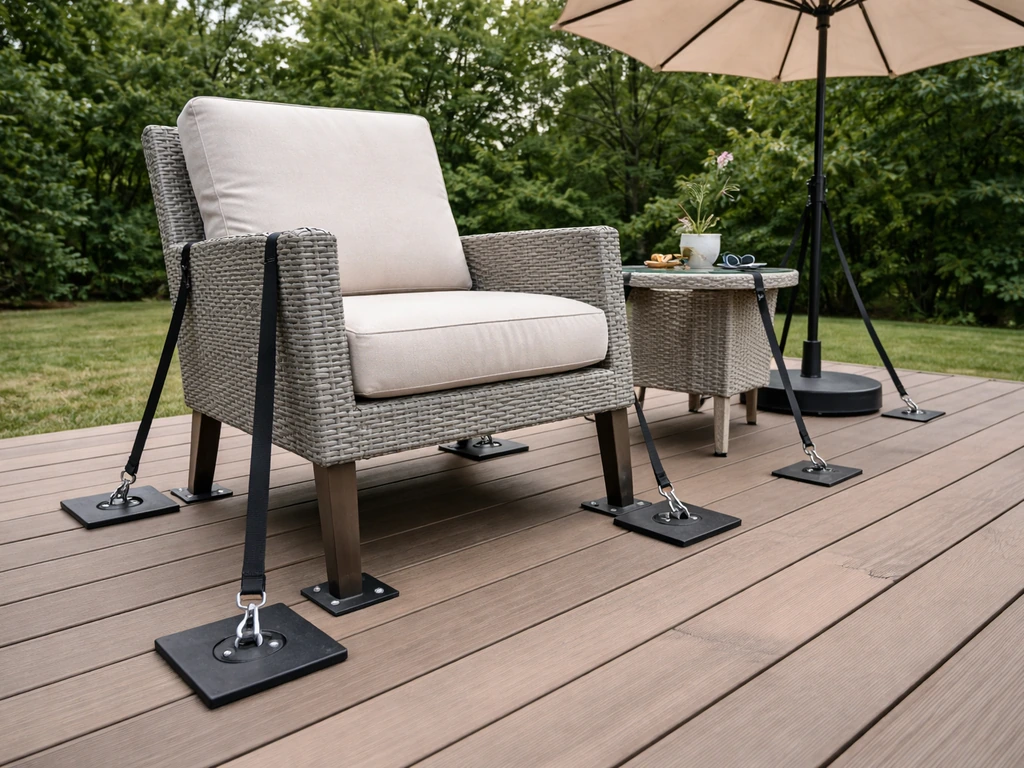
- Check for anything that can blow around. Lightweight plastic chairs, small side tables, and decor items can tip or skid in wind-driven rain. Cluster them together or move them against a wall to reduce the chance of dings and scratches.
- Leave the umbrellas down. If you haven't already closed your patio umbrella, do it now. An open umbrella in rain and wind is asking for a broken rib or a toppled base.
The goal during the shower itself isn't perfection, it's damage control. You can do the real drying and cleaning once the rain stops.
Deciding what to protect vs what can stay out
Not all patio furniture is equally bothered by rain, and understanding which materials are vulnerable saves you a lot of unnecessary running around. Here's how the common materials actually hold up:
| Material | Rain Vulnerability | What Happens If Left Wet | Priority Level |
|---|---|---|---|
| Cushions / fabric | Very high | Foam absorbs water, mildew sets in within 24–48 hours, fabric can stain or rot | Move first, every time |
| Metal (iron, steel) | High | Rust forms where water contacts bare or chipped metal — iron reacts with oxygen and moisture to create iron oxide | Cover or dry promptly |
| Untreated / bare wood | High | Wood absorbs moisture and swells; repeated wetting and drying causes warping, cracking, and finish failure | Cover or bring in |
| Sealed / treated wood (teak, cedar) | Moderate | Well-maintained sealer resists moisture, but prolonged pooling can still degrade finish over time | Cover for extended rain |
| Wicker / rattan (natural) | High | Natural wicker swells, warps, and molds when wet repeatedly | Bring in or cover |
| Synthetic wicker / resin wicker | Low–moderate | Water-resistant but trapped moisture at joints and frames can lead to mildew | Wipe down after rain |
| Plastic / resin | Low | Handles rain well; standing water can breed algae and mildew on the surface | Dry and wipe when convenient |
| Aluminum | Low | Aluminum doesn't rust; light oxidation is possible but not a major concern in rain | Lowest priority |
The big takeaway: cushions and anything iron or steel need your attention first. Natural wood and natural wicker come second. Aluminum and quality resin furniture are the most forgiving and can honestly stay out through normal rain with minimal fuss, as long as you wipe them down afterward.
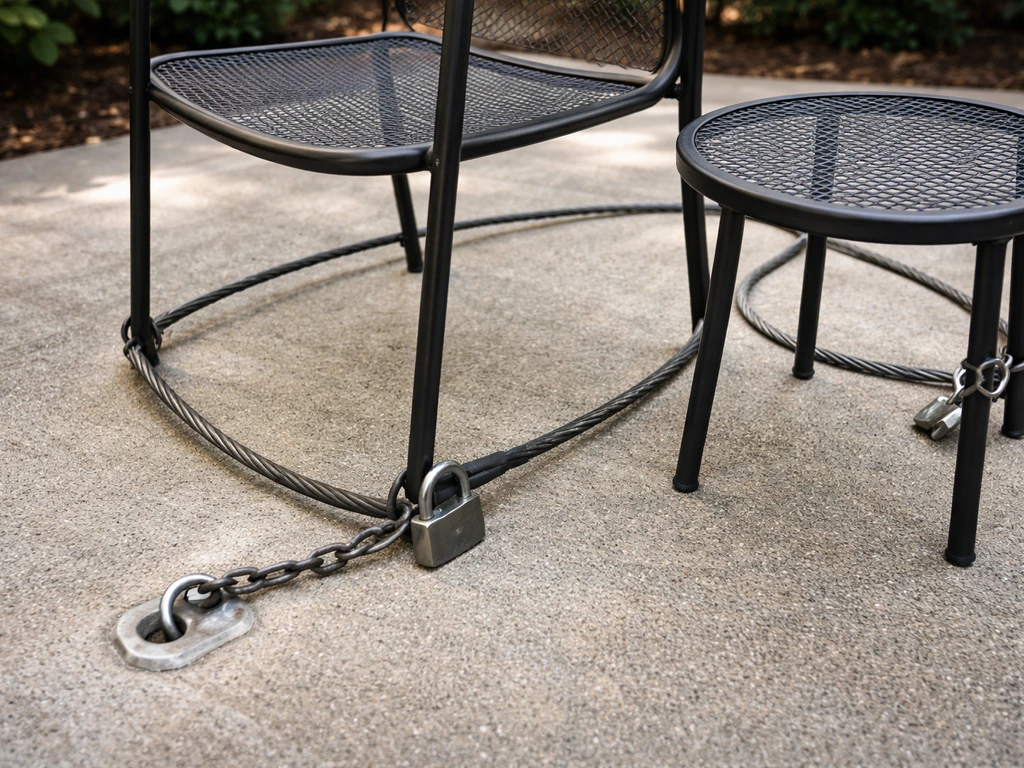
It's also worth thinking about whether a hurricane or severe storm is coming rather than just a passing shower, the actions you'd take for that are a lot more drastic and involve securing or removing everything entirely. If a hurricane is in the forecast, you should plan for securing or moving patio furniture well before strong winds arrive hurricane or severe storm. For everyday rain, the table above is your guide.
How to dry patio furniture safely after it gets wet
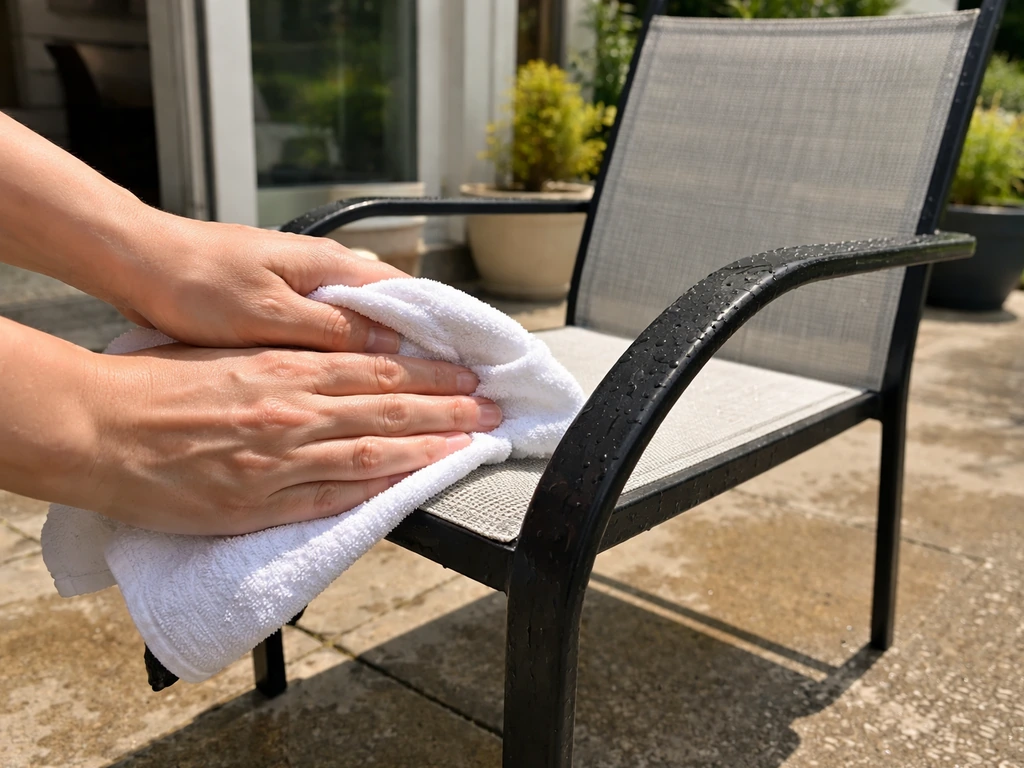
Here's where most people fall short. They bring the cushions in, let the rain pass, and then just leave everything to air dry on its own. That works sometimes, but if it's humid out, or if water pooled in joints and crevices, you can still end up with mold within 24 to 48 hours. The EPA and CDC both flag that window as the mold-prevention deadline, and I've learned the hard way that humid summer days slow evaporation enough to make that deadline feel very tight.
Drying the frames (metal, wood, resin, wicker)
- Move furniture into sunlight and airflow if possible. A breezy, sunny spot dries things dramatically faster than shade.
- Wipe down all surfaces with a dry cloth or old towel. Don't skip the undersides, joints, and any hollow tubing — these hold water longer than flat surfaces.
- For wood furniture, let it dry slowly and naturally after wiping. Avoid pointing a heat gun or hair dryer at it — rapid drying stresses the wood fibers and can cause cracking. The National Park Service's museum conservation guidance specifically cautions against fast-drying wet wood for exactly this reason.
- Tilt or flip furniture to let water drain from hollow legs, tube frames, and seat channels.
- Don't rush to re-seal or re-treat wood. Techniseal's product guidance says to wait at least 12 hours after rain before applying any sealer, and Teak Master recommends at least 3 hours of drying before applying weatherproofing products. Sealing damp wood traps moisture inside and speeds up the damage you were trying to prevent.
Drying cushions and fabric
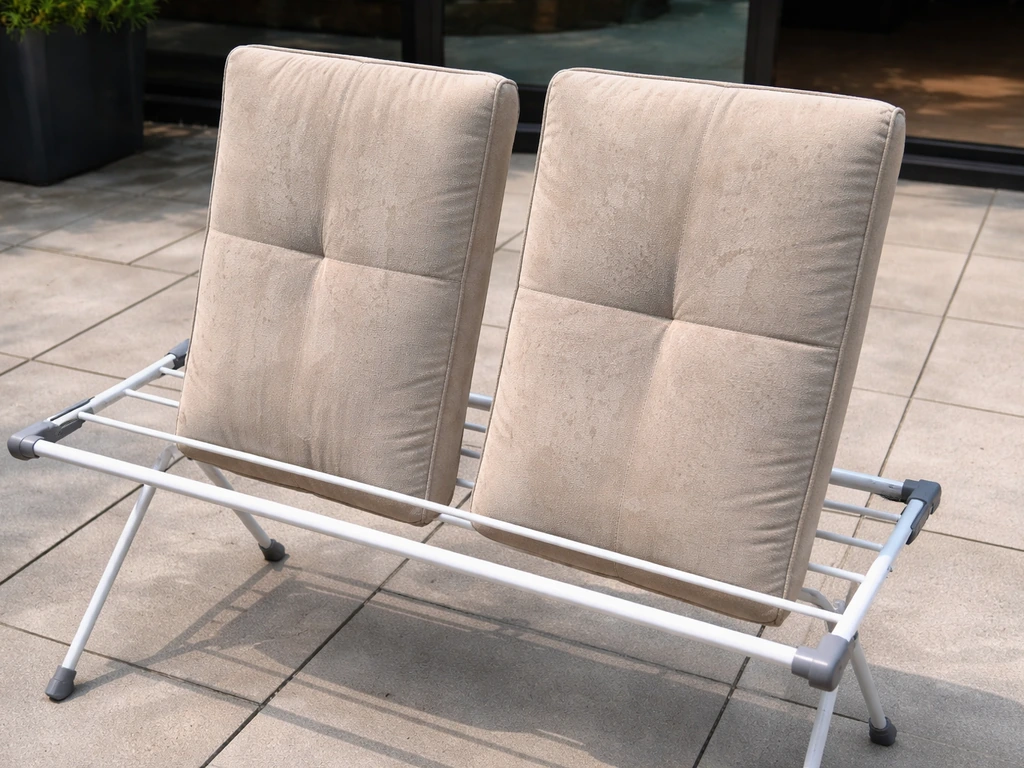
Cushions are the highest-effort item to dry properly, and also the most important. The outer fabric might feel dry while the inner foam is still holding moisture. Here's how to handle them:
- Stand cushions on their edges instead of laying them flat. This lets gravity help pull water down and out rather than keeping it pooled in the foam.
- If the cushion cover is removable, unzip it and pull the foam insert partially out to increase airflow to the interior.
- Set them somewhere with good airflow — a covered porch, garage with the door open, or indoors near a fan all work. Direct sun is great if the fabric can handle UV, but check the care label.
- Lowe's outdoor fabric guidelines suggest allowing up to 48 hours for full drying after significant moisture exposure, and that tracks with my experience. If you squeeze a cushion corner and moisture comes out, it's not dry yet.
- If you notice a musty smell or see any gray/white fuzz forming, treat it immediately — don't wait to see if it goes away. That's mildew starting and it spreads fast.
Seasonal storage options: covers vs indoor storage
Once you're past the immediate rain response, the bigger question is how you're handling protection long-term. There are two main strategies: furniture covers that let you leave pieces outside, and moving furniture fully indoors for the offseason or during bad weather stretches. Both work, but they work for different situations.
Furniture covers
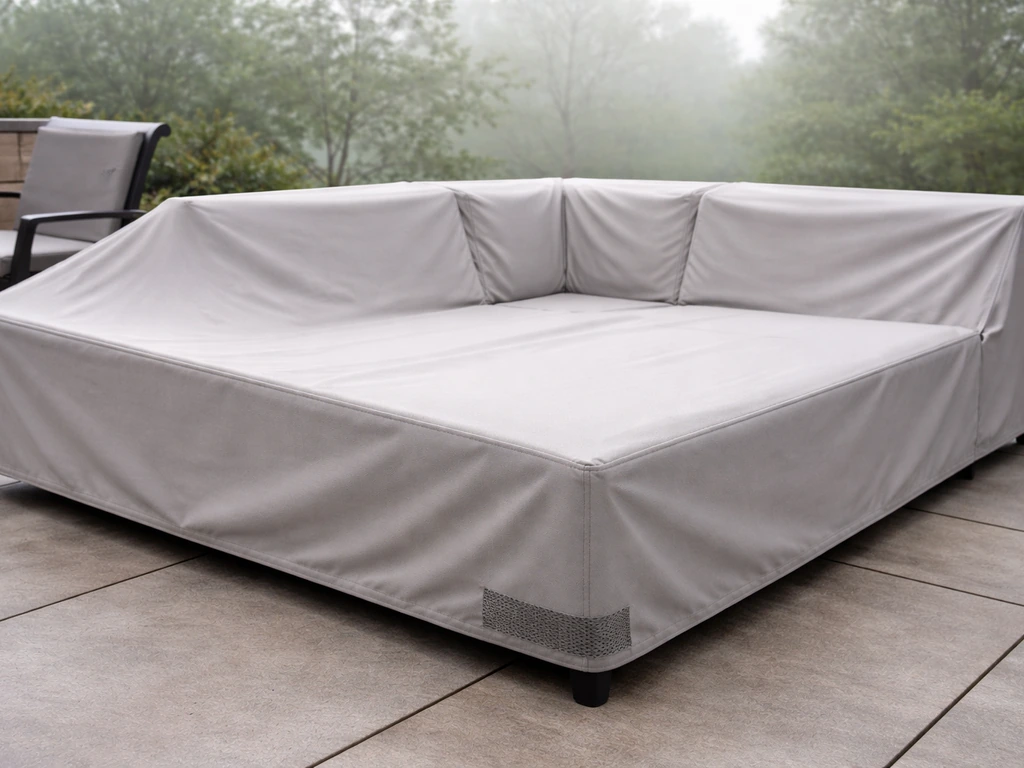
Covers are the practical choice for most homeowners because hauling furniture in and out constantly isn't realistic. The key things to get right are fit, breathability, and pooling prevention. A cover that sags in the middle will collect water in that low spot, keeping moisture pressed against your furniture surface for hours or days. Coverstore and Resort Chairs both specifically call out pooling as a cause of rust, warping, and mold, not just an annoyance. A good cover fits snugly, has air vents or breathable fabric to prevent condensation buildup underneath, and ideally has a drawstring or tie-down to stay put in wind. Non-breathable covers trap humidity inside, which creates the exact conditions you're trying to prevent.
Whether a tarp works as a cover is a legitimate question if you're on a budget, but it comes with real tradeoffs around breathability and pooling. That's a topic worth digging into separately if you're considering it.
Indoor storage
For the offseason, or any time you're expecting extended rain or storms, moving furniture fully indoors is the best protection you can give it. A garage, shed, or basement works. The main thing people get wrong here is storing cushions in a damp space or stacking furniture without cleaning it first, you're just sealing mold in for the winter. Always clean and fully dry everything before it goes into storage, and make sure the storage area has reasonable airflow. If you're in a climate with cold winters, knowing when to bring your patio furniture inside and when it's safe to take it back out is its own separate calculation.
| Factor | Covers | Indoor Storage |
|---|---|---|
| Cost | Low to moderate (budget covers from $15–$40, quality covers $50–$150+) | Free if you have space; shed/storage can cost more |
| Convenience | High — leave furniture in place | Low — requires moving pieces in and out |
| Protection level | Good for normal rain; weaker in severe storms | Best protection available |
| Risk factors | Pooling, condensation, wind blow-off | Mold if stored damp; damage if stacked carelessly |
| Best for | Everyday rain, mild climates, frequent use | Offseason storage, severe weather, delicate materials |
My honest recommendation: use covers for day-to-day rain protection during the season, and bring everything indoors once you're done using the patio for the year. That combination gives you convenience when you need it and real protection when it matters.
Cleaning and maintenance after rain
Once everything is dry, a quick post-rain cleanup prevents the slow damage that builds up over a season. You don't need to scrub everything after every shower, but after heavy rain, or if anything sat wet for more than a day, here's the routine I follow.
Basic post-rain cleaning for frames
- Use a soft-bristled brush or cloth and a simple solution of mild dish soap or non-bleach liquid laundry detergent and warm water. Forever Patio's cleaning guide recommends this for resin, and it works well on most materials.
- Scrub joints, welds, and crevices where dirt and moisture collect. These are the spots where mold and rust start.
- Rinse thoroughly with a hose. Bob Vila specifically points out that leftover soap residue can trap moisture against metal surfaces and accelerate corrosion — so rinse, don't just wipe.
- Dry with a rag or let air dry on a warm, breezy day. Don't skip this step for metal furniture.
- Do not use a pressure washer. Forever Patio's guide calls this out explicitly — the force can damage finishes, force water into joints, and strip protective coatings.
Dealing with mold and mildew
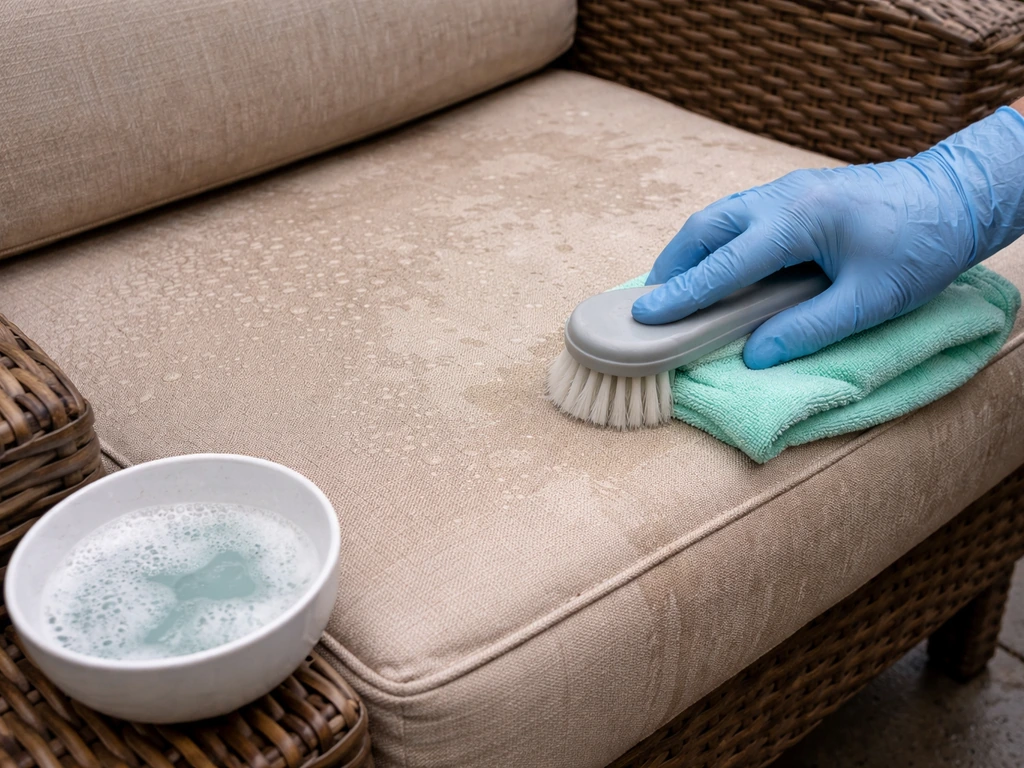
If you spot mildew (gray or white fuzzy patches, or a musty smell), catch it early. For most surfaces, a 50/50 white vinegar and water solution works well, spray it on, wait 10 minutes, scrub with a soft brush, and rinse. Outdoor Living Inc. Home Depot also maintains an “Outdoor” mildew-focused section with products marketed for removing mildew and mold stains [Outdoor Living Inc.
](https://www. homedepot. com/b/Cleaning-Cleaning-Products/Mildew/Outdoor/N-5yc1vZcb33Z1z0psugZ1z0psut). recommends this approach and it's gentle enough for wood, resin, and fabric.
For tougher mildew on frames, a solution of one gallon of hot water and powdered oxygen bleach (as recommended by Home Depot's outdoor furniture care guide) handles more stubborn cases without the harshness of chlorine bleach. Always test any solution on a hidden spot first, some finishes react badly to even mild acids or bleaches. Avoid harsh chemicals and standard chlorine bleach on wood surfaces, as they can raise the grain and cause cracking over time.
Cleaning cushions after rain
- Spray fabric with cold water first to loosen surface dirt.
- Scrub with a soft brush and mild soap solution.
- Rinse thoroughly — soap left in fabric holds moisture and smells.
- Stand upright to drain and air dry completely before storing or replacing covers.
- For mildew on fabric, the vinegar/water solution works, or a diluted oxygen bleach solution for more serious cases. Test first on the underside of a seam.
Long-term protection to prevent rust, mold, and fading
The goal is to stop having this same problem after every storm. These are the habits and one-time investments that make the biggest difference over a full season:
For metal furniture
Rust starts at chips, scratches, and bare metal spots. Touch up any damaged paint or coating with matching rust-inhibiting primer and paint before the season starts or as soon as you notice chips. Bob Vila explains that rust is a straightforward chemistry problem: iron, water, and oxygen make iron oxide. Remove the water and seal the bare metal, and you stop the reaction. Check welds and joints annually, these are the first places coatings fail.
For wood furniture
Wood is always going to gain and lose moisture, OSU Extension's research on wood-moisture relationships makes clear that this movement is unavoidable. Gloster’s teak care and maintenance guide also says teak can remain outdoors year-round and provides cleaning and drying timing guidance, including allowing time before further steps. What a good finish does is slow that process down and reduce the extremes. Re-seal or re-oil wood furniture once a year, ideally at the start of the outdoor season on a dry day with no rain in the forecast. Wait at least 12 hours after any rain before applying sealer. Keep an eye on the finish and if water stops beading and starts soaking in, it's time to re-apply.
For cushions and fabric
Spray cushion fabric with a water-repellent fabric protector (like 303 Fabric Guard or a similar outdoor fabric treatment) at the start of each season. This doesn't make them waterproof, but it dramatically slows absorption and gives you more time to act before moisture penetrates the foam. Store cushions in a deck box or bring them inside whenever rain is expected to last more than a few hours, that's the single biggest thing you can do to extend their life.
Cover management habits
If you use furniture covers, check them after every significant rain for pooled water. A pool of water sitting in a cover depression keeps moisture against the furniture surface for as long as it stays there, and that's enough time for rust or mold to start. Push the water off the cover, adjust the fit if it's consistently pooling in the same spot, and consider adding a support frame or cover prop underneath to create a tent shape that sheds water instead of collecting it. A properly fitted, breathable cover managed consistently does more for furniture longevity than any single cleaning product.
The bottom line on long-term protection is that it's mostly about consistency, not expensive products. Dry things within 48 hours, keep finishes maintained, store cushions out of the rain when you can, and catch rust or mold early when it's still easy to fix. Do that through a full season and your furniture will be in genuinely good shape when next spring rolls around.
FAQ
Can I leave patio furniture outside in light rain if I don’t have time to dry it right away?
Light, brief rain is usually fine for more forgiving materials like aluminum and quality resin, but you still need a plan to dry within 24 to 48 hours, especially for any cushions, iron, steel, and joints where water can pool. If the forecast shows the rain will keep coming or humidity is high, prioritize moving cushions and tilting or covering metal so water does not sit.
Is it ever better to keep cushions outside under a cover instead of bringing them in?
It can work if the cover is breathable and you prevent pooling, but most deck cushions still trap moisture inside foam once rain gets into seams. For extended rain or overnight storms, bring cushions into a dry, ventilated area or store them in a deck box that keeps them off the wet ground and out of humid air. If you must leave them outside, elevate them slightly and keep the cover from sagging over the middle.
What should I do during a rainstorm if I have furniture on a balcony or tight space?
Focus on water containment, not perfection. Move cushions and any iron or steel pieces to the driest spot you have, then tilt metal chairs so water runs off rather than collecting in seat channels. If you use covers, add tie-downs so wind does not loosen the cover and create a shallow basin that holds water.
How do I tell if water is trapped inside cushion foam after the rain?
The outer fabric can feel dry while the foam stays wet. Press firmly in multiple spots, then check the underside and seams; if any area feels cool or damp to the touch, it needs more drying time. If you can, run a fan aimed at the cushions and flip them or rotate them so airflow reaches both sides.
What’s the best way to dry furniture after rain, without damaging finishes?
Use towels for pooled water, then let air and airflow do the rest. Avoid high-heat blow dryers directly on delicate finishes, and do not apply sealer or protectants until the furniture has fully dried (at least 12 hours after rain for wood before using sealer). If you used cleaners for mildew, rinse thoroughly and let the surface dry completely before covering it.
Should I rinse patio furniture after heavy rain before storing or covering it?
If rain was followed by pollen, mud, or noticeable residue, a quick rinse helps reduce the gunk that can speed mildew. For most surfaces, a light rinse and then thorough drying within 48 hours is better than scrubbing right away, but do not soak wood or wicker beyond what is necessary.
Will using a tarp instead of a breathable cover cause problems?
Tarp-style covers often limit airflow, which can trap humidity and increase mildew risk under the cover. If you use one, keep it from touching the furniture (use a support or tent shape), and do not leave it on through extended wet weather unless you can dry and vent frequently.
How often should I check patio furniture covers during rainy weather?
For day-to-day rain, check after any significant storm or when you notice sagging. Look specifically for pooling in low areas, straps that shift in wind, and condensation buildup underneath the cover. Push pooled water off promptly and re-tighten or adjust the cover fit if it repeatedly collects in the same spot.
What if my wood furniture got rained on overnight, should I reseal immediately?
No, wait. Let the wood dry fully before applying sealer or re-oil, and plan for at least a day off from rain (the article notes a minimum of 12 hours after rain before applying sealer). If the finish still looks uniformly damp or water no longer beads, it likely needs longer drying time and then a re-apply.
How can I prevent rust when metal furniture got caught in rain?
After the rain, dry metal and wipe joints where water sits. If you see chips or bare spots on paint or coating, touch them up with rust-inhibiting primer and paint before the season sets in. Also check welds and joints annually, because coatings fail there first and water can creep under the surface.
What’s the right storage method for cushions in a garage or shed?
Clean and fully dry cushions first, then store them where airflow is reasonable. Avoid sealing them while they are still cool or damp, and do not stack them tightly in a musty, humid corner. If your storage area gets humid during storms, consider elevating cushions on breathable racks or keeping the deck box ventilated.
When do I need to treat rain as a severe-storm situation, not just a passing shower?
Use the forecast as your trigger. If strong winds or prolonged heavy rain are expected, secure or move furniture before gusts arrive, not after. In those cases, preventing wind-driven cover loosening and water intrusion into cushions becomes more important than routine drying.
What should I do if I spot mildew after rain but I cannot clean immediately?
Prioritize airflow first, then clean as soon as you can. If you need to delay, uncover and dry the furniture so the mildew does not keep spreading through damp material. When you clean, test any vinegar or oxygen-based solution on a hidden spot first, then rinse and dry fully before covering again.