Yes, you can absolutely use a tarp to cover patio furniture, and for a lot of homeowners it's the most practical and budget-friendly option available. A good tarp does a solid job protecting frames, tabletops, and dining sets from rain, UV, and seasonal grime. The catch is that a tarp used carelessly can cause just as much damage as leaving furniture uncovered: trapped moisture leads to mold, pooling water warps frames and causes rust, and a poorly anchored tarp becomes a sail in the wind. Do it right and a tarp works great. Do it wrong and you'll pull it off in spring to find a mildewed mess underneath.
Can I Use a Tarp to Cover Patio Furniture? How-To
Maren Grady
29 Jun 2026
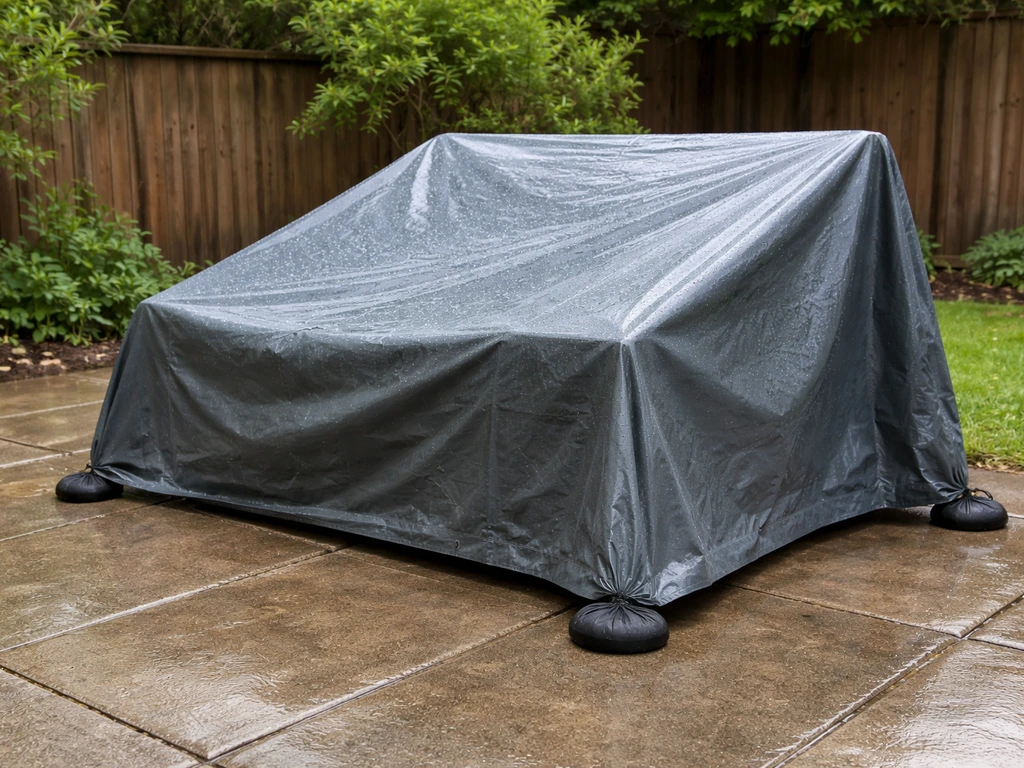
Is a tarp OK for patio furniture (and when it's not)
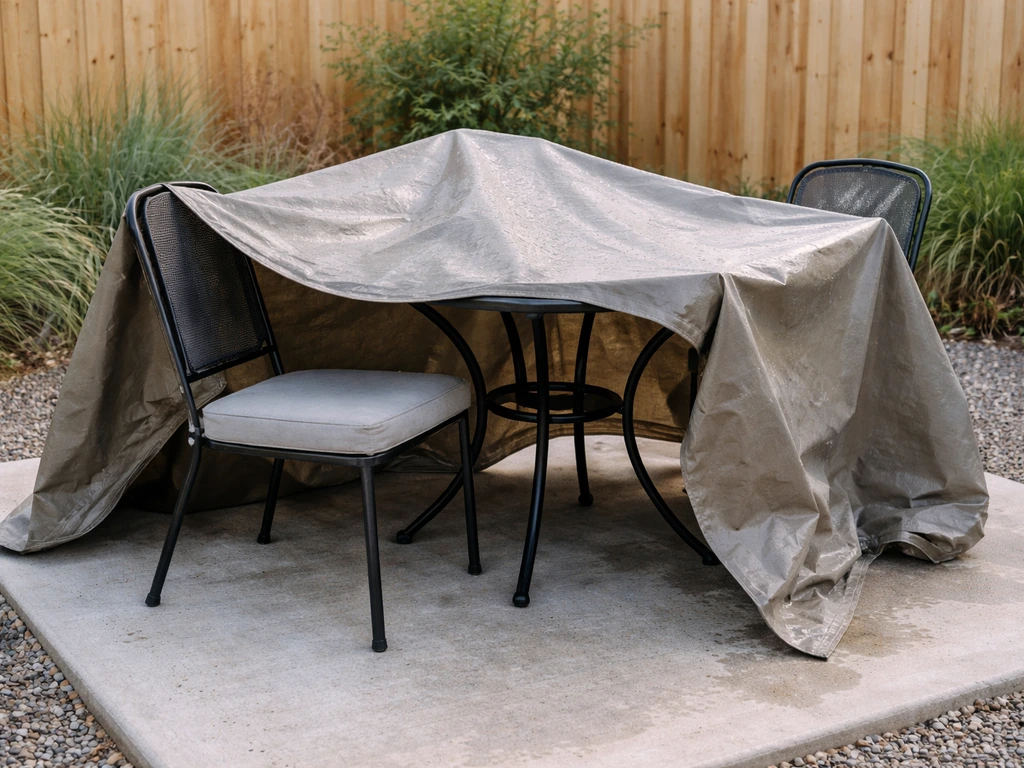
Tarps are a genuinely good solution for most hard patio furniture: metal frames, aluminum dining sets, resin chairs, and even teak and hardwood pieces, as long as you handle the ventilation and moisture side of things correctly. They're cheap, durable, and widely available. For seasonal protection or storm prep, they get the job done.
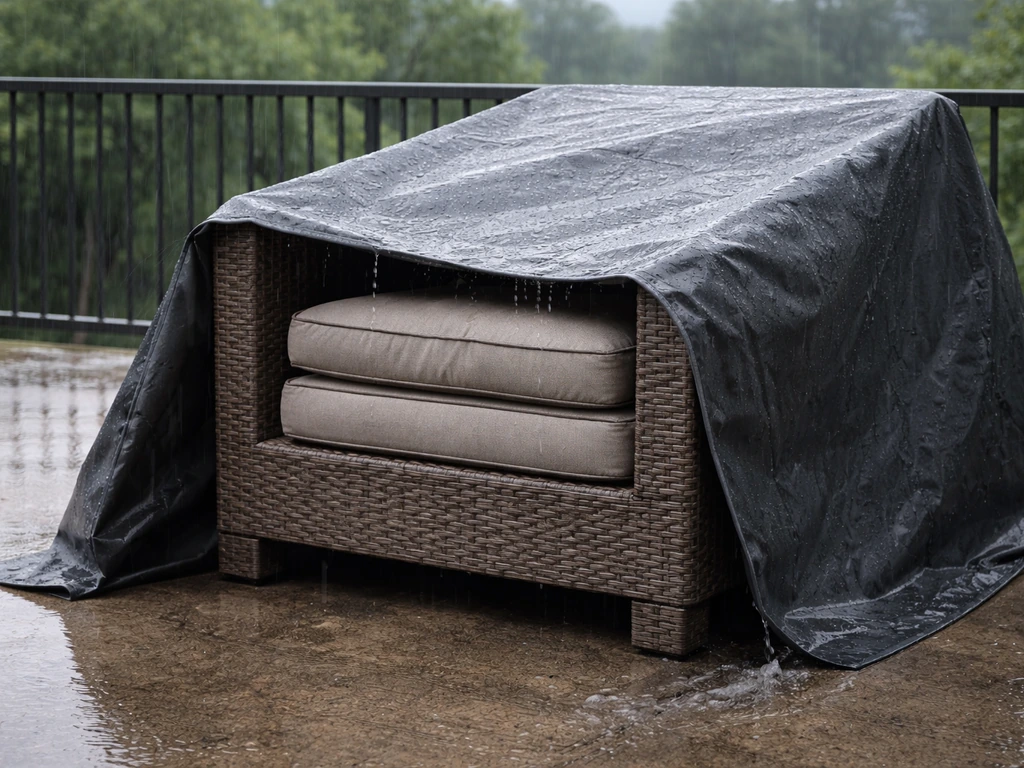
Where tarps run into trouble is with breathability. A standard polyethylene tarp is essentially a plastic sheet. It keeps rain out, but it also seals moisture in. If there's any dampness on the furniture when you cover it, or if overnight temperature swings cause condensation under the tarp, that moisture has nowhere to go. Wicker, teak, and cushioned pieces are especially vulnerable because trapped moisture in those materials feeds mold and mildew fast. A breathable cover with a waterproof outer layer and a venting membrane handles this better than a tarp, but a tarp works fine if you prep correctly and don't leave it sealed tight for weeks.
Here's when I'd say skip the tarp and use a purpose-made furniture cover instead: if you're covering wicker or rattan long-term (a non-breathable tarp will almost guarantee mildew), if you're leaving cushions under the cover rather than storing them indoors, or if your furniture stays covered for months at a time without being checked. For short-term rain protection, storms, or off-season storage of hard frames where you can check on things every week or two, a tarp is completely fine. If you're wondering about hurricane-level events specifically, that's a slightly different situation that calls for its own approach beyond just covering. For what to do with patio furniture in a hurricane, the key is to secure covers so wind can’t get underneath and to keep moisture from trapping under the fabric.
Choosing the right tarp and getting the right size
Tarp material and thickness
For outdoor furniture, you want a heavy-duty polyethylene tarp rated at least 6 mil thick, and ideally 10 mil or higher if you're covering for an extended season. Thicker tarps hold up better in wind, resist tearing at the grommets, and last multiple seasons. Standard blue poly tarps work fine for this. Canvas tarps are slightly more breathable but less waterproof and heavier when wet. Silver or tan heavy-duty poly tarps are your best bet for year-round outdoor use. Avoid the ultra-thin 2–3 mil tarps sold in bulk packs: they tear at the grommets quickly and don't hold up to wind.
If mildew is a real concern for you, look for tarps labeled "mildew resistant" on the packaging. Not all tarps carry that rating, but it does make a difference for long-term coverage. Some newer tarp products use a slightly more breathable mesh scrim inside the poly laminate, which helps with condensation. They cost a little more but are worth it for seasonal storage.
Sizing: measure before you buy
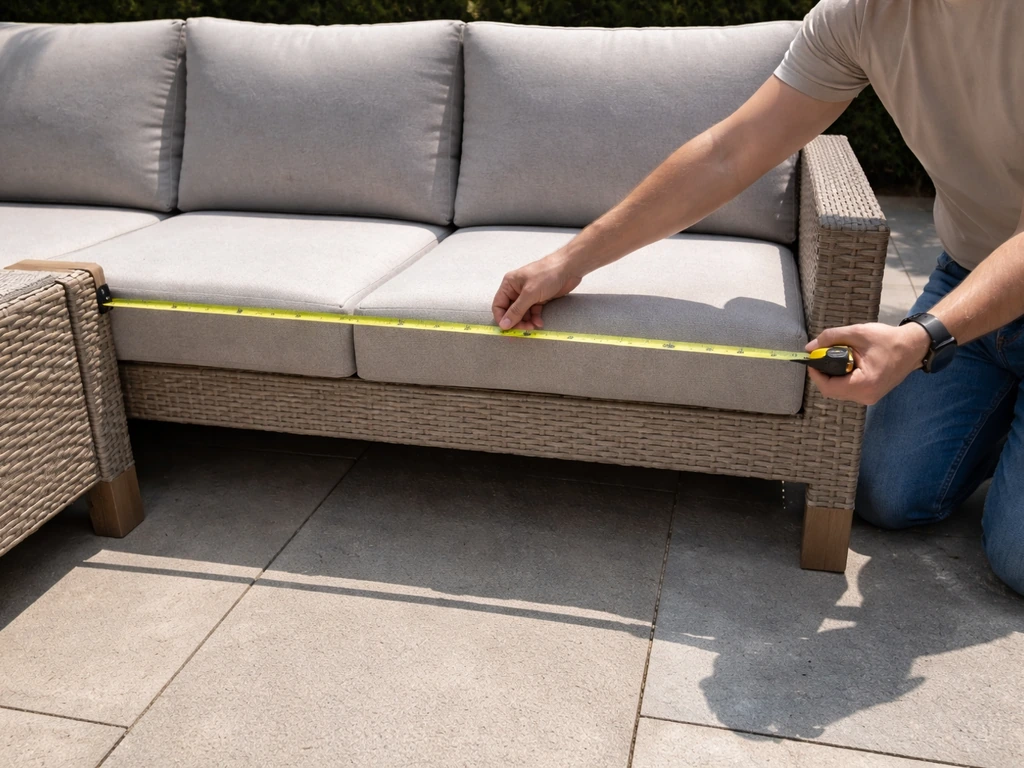
Getting the size wrong is the most common mistake. Creative Covers Inc. recommends measuring your patio furniture dimensions based on how you plan to cover it, including width, depth, and height depending on the piece, to choose the right cover Getting the size wrong is the most common mistake.. Too small and you can't drape it far enough down the sides to keep rain out. Too big and you end up with massive puddles of pooled water on top. Here's how to measure correctly:
- Measure the width of the furniture at its widest point, including armrests.
- Measure the depth front to back, including any footrests or extended legs.
- Measure the height at the tallest point (usually the chair back or umbrella hole).
- Add 12 to 18 inches to both the width and depth measurements. This gives you enough drop on each side to keep rain from blowing underneath.
- For a dining set with chairs pushed in, measure the full footprint of the table plus chairs, then add that 12–18 inch drop on all sides.
For example, a round 48-inch patio table with four chairs pushed in might have an overall footprint of roughly 8 feet wide by 8 feet deep. Add your drape allowance and you'd be looking at a 10x10 or 12x12 tarp. When in doubt, go one size up rather than down. You can always tuck excess, but you can't stretch a tarp that's too small.
Prep steps before you cover
This is the step most people skip, and it's also the reason they pull their cover off in spring to find mold. I've made this mistake myself: threw a tarp over slightly damp furniture right before a storm and came back three weeks later to furry cushions and rust streaks on the metal frame. The prep takes maybe 20 minutes and it saves you a season's worth of damage.
Clean the furniture first
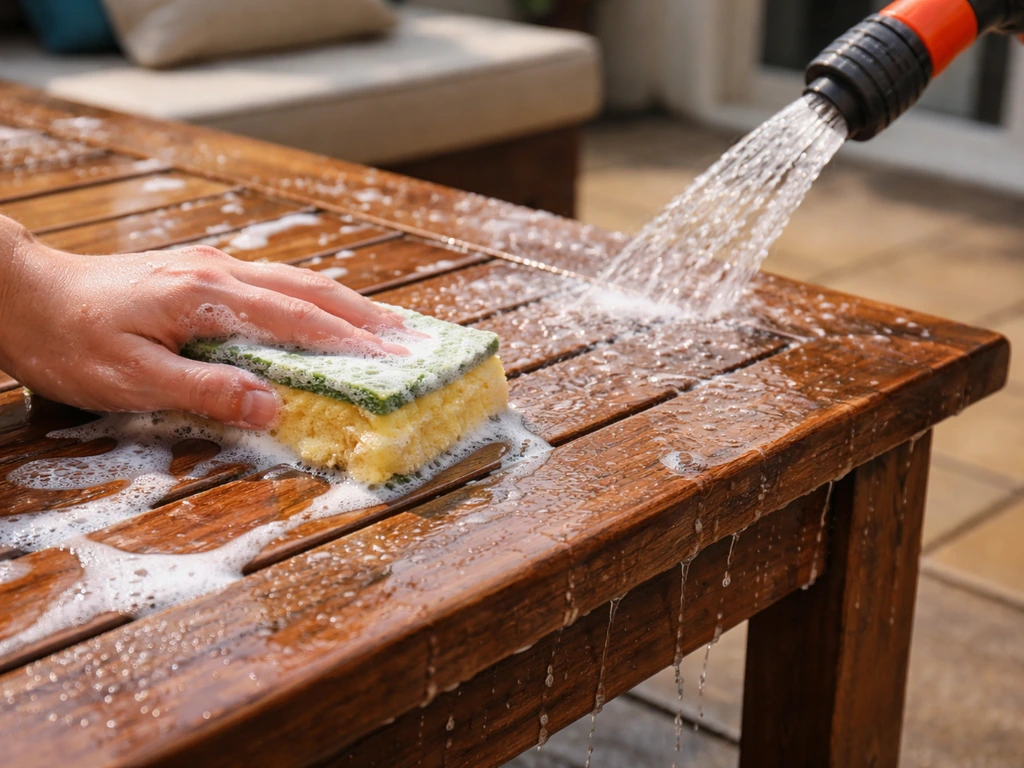
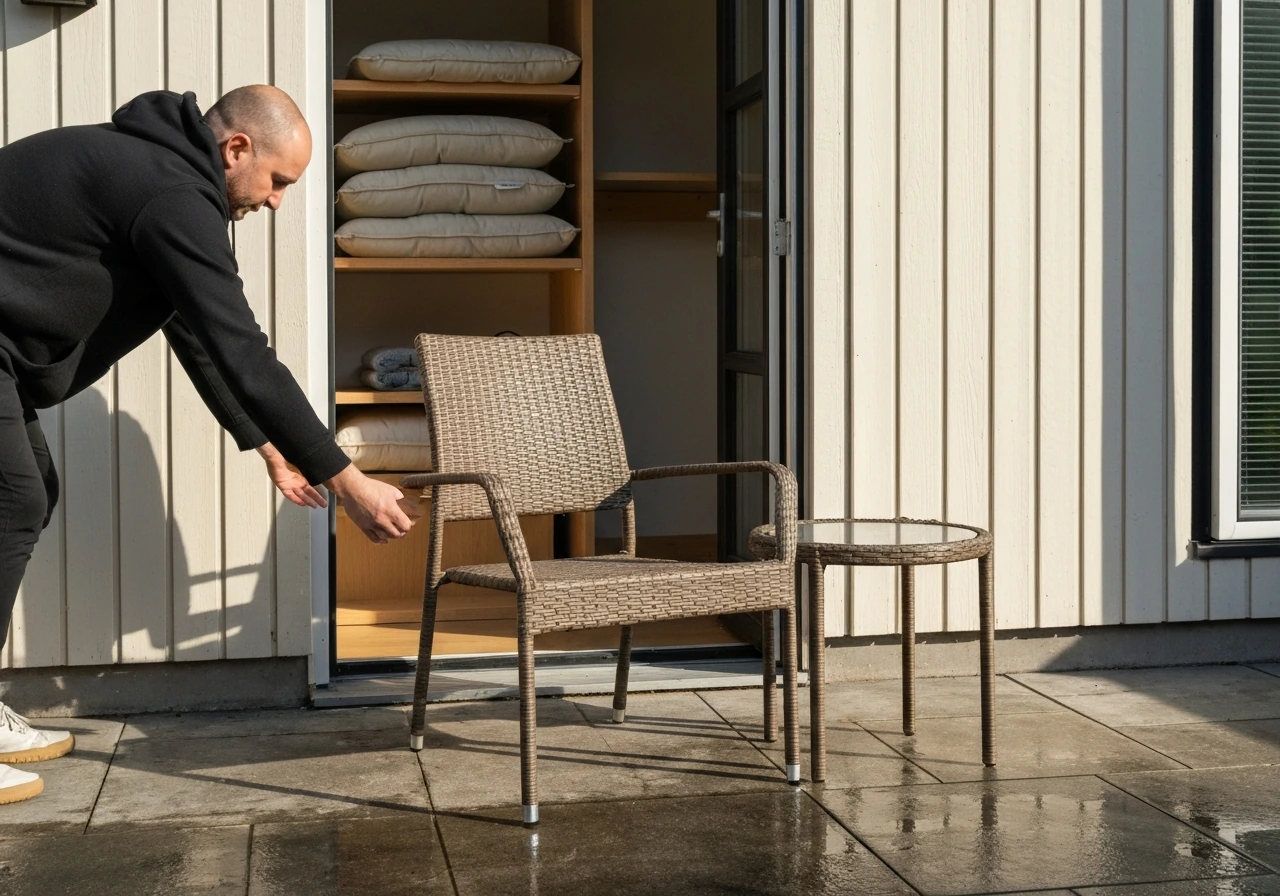
Wipe down all surfaces with mild dish soap and cool water, then rinse thoroughly. Pay attention to joints, crevices, and the undersides of tabletops, which collect dirt, pollen, and early mold spores. If you cover those spores under a tarp, you're basically incubating them. Let the furniture dry completely before anything goes over it. On a sunny day this takes an hour or two. On a cloudy day, give it a full afternoon.
Always cover dry furniture
This is the single most important rule: do not cover furniture that is still damp. Moisture trapped under a non-breathable tarp turns into condensation as temperatures change overnight. That condensation sits on the furniture surface with no way to evaporate, and within a few days you have the conditions for mold and mildew. If it rained recently, wait for a dry stretch or wipe the furniture down with a dry towel before covering. If you’re asking should you cover patio furniture when it rains, the safest approach is to cover only after the furniture is completely dry to prevent trapped moisture and mold.
Handle cushions separately
The best practice is always to bring cushions indoors for storage, or at minimum into a dry garage or shed. Tarps are not breathable enough to safely keep cushions dry over an extended period. If you absolutely must leave cushions outside under the tarp, make sure they are completely clean, completely dry, and laid flat on the seat surface so the tarp drapes properly over them. Any trapped dampness inside the foam will grow mold before you know it. Rinse off any soap residue from cleaning and let them air dry fully before they go under any cover. For the same reason, an umbrella should be closed, wiped dry, and ideally stored indoors or in a garage rather than left under the tarp.
How to drape, tension, and anchor the tarp
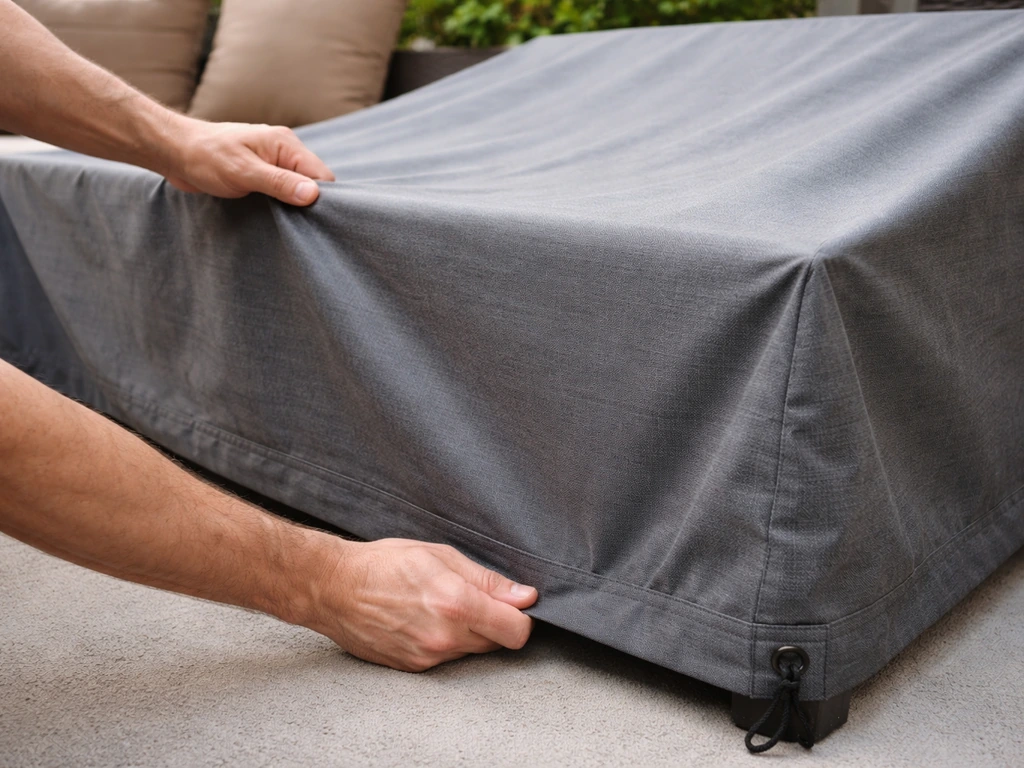
Getting the tarp on correctly is where most of the practical work happens. The goals are simple: no pooling water on top, no gaps at the bottom where rain blows in, and no loose flapping edges that the wind can grab. Here's how to do it.
Create a slope so water runs off
Flat horizontal tarps pool water. Even a few inches of standing water on a cover causes problems: it adds weight that stresses the furniture underneath, and it sits in contact with the fabric long enough to eventually push through seams or weaken the tarp material. The fix is to build a slight pitch into the drape. For furniture like chairs and sofas, the natural shape of chair backs often creates enough slope on its own. For flat dining tables, place an upside-down bucket or a sealed plastic storage bin in the center of the table under the tarp before you drape it. This creates a peak that channels water off to the sides. Aim for at least a 15 to 30-degree slope if you can manage it.
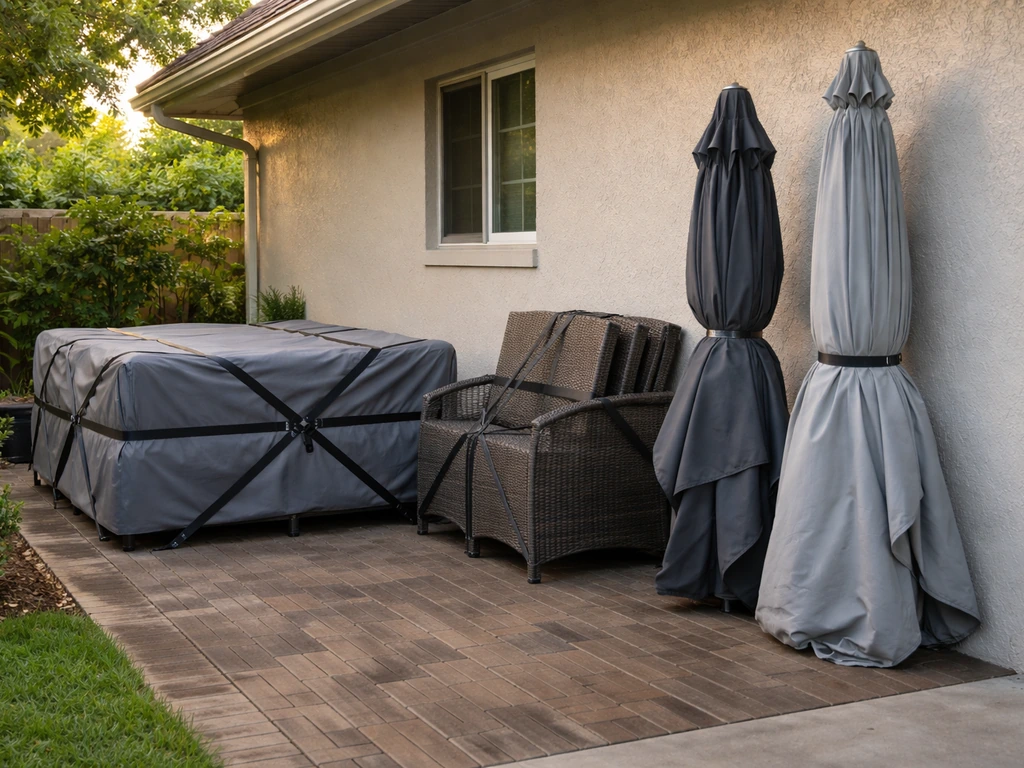
Secure the tarp so wind can't get under it
An unsecured tarp in any real wind becomes a loud, flapping problem that can scratch furniture finishes and eventually tear itself to pieces. Here are the best anchoring methods for patio furniture: Home Depot’s 10-mil heavy duty tarp installation guide covers securing tarps using grommets and fastening them to stable anchors like stakes or poles with ropes best anchoring methods for patio furniture.
- Ball bungees looped through the tarp's grommets and hooked to furniture legs or frame rails: these are gentle on grommets and stretch to absorb wind gusts without tearing the tarp.
- Bungee tie-down cords run under the furniture frame and hooked to grommets on opposite sides: this cinches the tarp snugly against the base of the furniture and keeps wind from lifting the edges.
- Rope threaded through grommets and tied to chair or table legs: this works well for heavier furniture with stable base legs.
- Sandbags or weight bags laid along the bottom edges of the tarp: a good backup method when there's nothing solid to attach to, especially useful for lightweight plastic furniture.
- Tarp clips with paracord: these grip anywhere along the tarp edge (not just at grommets) and give you more attachment points if the grommets are spaced too far apart.
Pull the tarp tight enough that there are no large loose sections flapping in the middle, but don't crank it down so tight that you're stressing the grommets hard. Grommets are almost always the first thing to tear, and once they go the tarp is done. Ball bungees are the gentlest option for this reason.
Leave a small gap for airflow
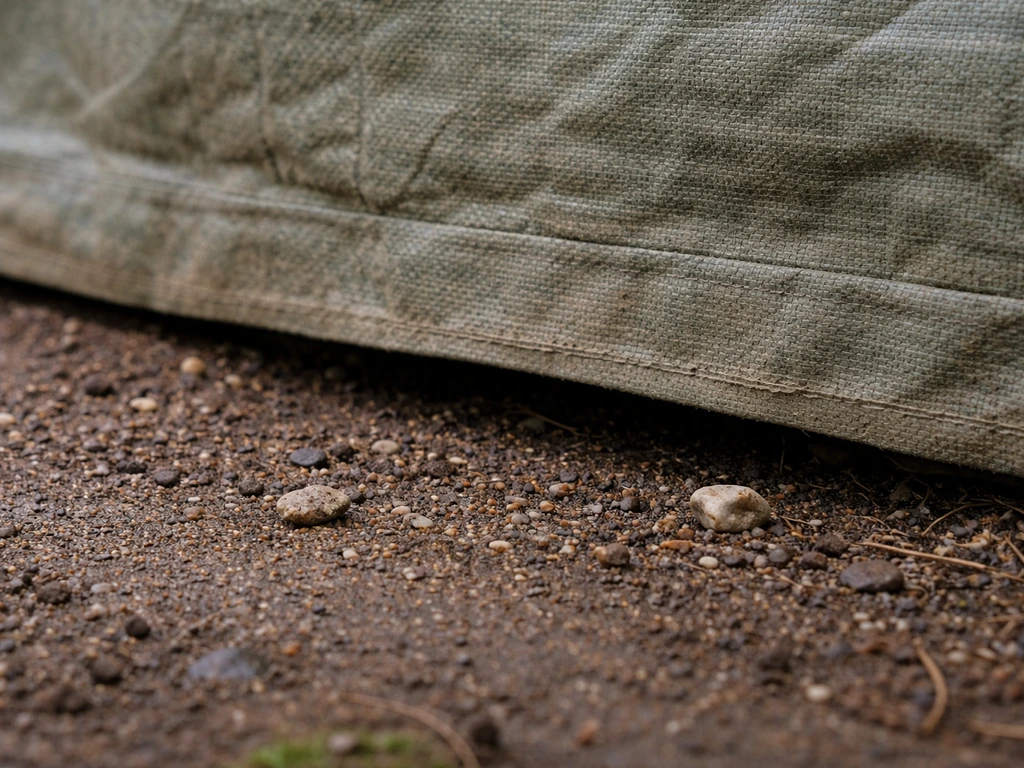
Here's a detail most tarp guides skip: sealing the tarp completely airtight all the way around the base actually makes the moisture problem worse. When temperatures drop at night, air trapped under the tarp cools and moisture condenses on the furniture surfaces. Leaving a small gap (a couple of inches) along one side, or not cinching every single anchor point all the way to the ground, lets air move through slowly. This isn't about leaving a big opening for rain to blow in: it's about preventing the sealed-greenhouse effect. If you're using the tarp as a permanent long-term cover, consider propping two furniture legs up slightly on small pieces of wood to improve airflow underneath.
Tips by furniture type
| Furniture Type | Key Risk Under a Tarp | What to Do Differently |
|---|---|---|
| Metal frames (aluminum, steel) | Rust at joints and scratched finishes from flapping tarp | Make sure tarp is tensioned tightly so it doesn't rub against the finish; dry thoroughly before covering |
| Teak and hardwood | Mildew in wood grain from trapped moisture; sealer damaged by damp conditions | Never cover damp teak; apply any sealer or oil before covering, not after; leave small air gap at base |
| Wicker and rattan | Mold and mildew inside weave from zero breathability under poly tarp | Short-term only; strongly consider a breathable purpose-made cover for wicker used long-term |
| Cushioned seating | Mold inside foam and fabric from sealed moisture | Remove cushions indoors every time; never store under a non-breathable tarp long-term |
| Dining sets (table + chairs) | Pooling water on flat tabletop surface | Create a center peak under the tarp; measure the full footprint including pushed-in chairs |
| Patio umbrellas | Mildew on fabric canopy when folded and sealed in | Close and dry umbrella fully; store indoors or in a garage if possible; do not tarp a wet umbrella |
Weatherproofing, wind security, and keeping mildew out
Think of this section as the ongoing maintenance side of tarping, not just the one-time setup. The furniture doesn't take care of itself once the tarp is on.
After heavy rain or storms
Walk out and check the tarp after any significant storm. Push off any water pooling on the surface before it soaks through or adds too much weight. If the tarp has shifted and gaps have opened at the base, re-secure it. If you're heading into a period of extended wet weather, this quick check every couple of days makes a real difference in how long the furniture comes out looking.
Take the tarp off on dry sunny days
This is the advice that surprises most people: experts actually recommend removing furniture covers on warm, sunny days to let the furniture breathe and any residual moisture evaporate. If you left your patio furniture covered, use the same warm, dry window as your cue for when to take out patio furniture and let everything air out before regular use. Leaving a sealed tarp on through a stretch of hot sunny weather can turn the space underneath into a mini greenhouse, trapping heat and humidity and creating perfect mold conditions. If the forecast shows several dry sunny days coming, pull the tarp off, let everything air out, and re-cover before the next rain. This is especially important for wicker, teak, and any piece with fabric or cushions.
Wind security checks
Bungees and cords stretch and loosen over time, especially with repeated temperature changes. etrailer describes bungee tie-down cords as single stretchy cords with hooks, which helps explain how they can stretch and loosen as conditions change Bungees and cords stretch and loosen over time. Every few weeks during the covered season, check that all your attachment points are still snug. A tarp that's half-secured is almost worse than no tarp: it flaps hard enough to scratch finishes and can rip itself apart in a moderate wind, leaving the furniture suddenly uncovered in a storm. If you're expecting strong winds, add extra anchor points along the edges rather than just relying on the grommets at the corners.
When to switch from a tarp to a proper furniture cover
A tarp is a tool, not a permanent solution. If you find yourself covering the same pieces every single season for months at a time, investing in purpose-made patio furniture covers with breathable membranes is the smarter long-term move. They fit better, handle ventilation properly, and protect finishes without the abrasion risk of a loose poly tarp. They cost more upfront (usually $30 to $80 per piece versus $15 to $25 for a tarp), but they last longer and do a better job on wicker, cushioned sets, and high-end wood pieces. For basic aluminum or resin furniture covered short-term, a tarp is completely fine and the cost savings are real.
Your do-it-today checklist
Here's the quick version you can work through this afternoon. Tape it to the inside of your storage shed if you want to make this easy every season.
- Remove all cushions and store them indoors or in a dry shed.
- Close the patio umbrella and store it indoors if possible. If not, wipe it completely dry before any cover goes on.
- Clean all furniture surfaces with mild soap and cool water; rinse well.
- Wipe everything dry with old towels and let it air dry for at least 1–2 hours on a dry day.
- Measure your furniture's full footprint (width x depth x height) and add 12–18 inches to width and depth for proper drape.
- Choose a heavy-duty poly tarp of at least 6 mil thickness (10 mil for seasonal coverage), sized to your measurements.
- If covering a flat dining table, place a bucket or bin upside-down in the center before draping to create a water-shedding slope.
- Drape the tarp over the furniture and pull it down evenly on all sides.
- Secure with ball bungees through grommets hooked to furniture legs, or run bungee cords under the frame. Add weight bags along edges if needed.
- Leave a small gap (1–2 inches) along one side at the base for air circulation.
- Check after the next rain: push off any pooled water and re-tighten loose anchors.
- On the next sunny dry stretch, pull the tarp off for a day to let the furniture breathe, then re-cover before rain returns.
If you're also trying to figure out when to bring furniture out for the season, or what to do when you're caught in a sudden downpour with no cover ready, those are worth thinking through as part of your overall seasonal routine. If you end up without a cover, there are still steps you can take right after the rain to reduce rust, mold, and warping what to do with patio furniture when it rains. The same prep principles apply across the board: dry furniture, good airflow, and secure coverage will keep your pieces looking good for years without a lot of ongoing work.
FAQ
Can I use a tarp over patio furniture if it’s under a covered porch or roof?
Yes, but you still need to prevent condensation. A tarp can trap moisture from damp air and foggy temperature swings even when direct rain is unlikely. If the furniture sits in a less-ventilated corner, check underneath after humid days and remove the tarp on warm, dry afternoons so any residual moisture can evaporate.
Should the tarp touch the cushions or fabric directly?
Try not to. If fabric or foam is under the tarp for more than a quick rain window, the tarp can keep moisture against the material. If you must cover cushions outside, lay them flat only when they are completely dry and clean, and make sure the tarp still drapes with a slight pitch so water does not pool on top of the cushion seams.
Is canvas tarp better than plastic poly for preventing mildew?
Canvas is often more breathable, so it can reduce condensation compared with standard polyethylene. However, canvas is not as good at blocking water, especially during heavy storms or windy sideways rain. For long outdoor coverage, heavy-duty poly with proper airflow gaps generally performs more predictably.
How often should I check the tarp during bad weather?
At minimum, inspect after any significant storm and then again every couple of days during extended wet spells. During the check, remove or push off any water pooling and confirm there are no new gaps at the base. If you notice sagging or flapping edges, re-tension and re-anchor promptly to avoid abrasion and tearing.
Can I leave a tarp on all winter?
It can work for hard metal, aluminum, and some resin pieces if you use a thick tarp, drape with a pitch to prevent standing water, and avoid sealing the area airtight. Plan to uncover on warm sunny days to let trapped humidity escape. For wicker or furniture with fabric and cushions, purpose-made breathable covers (or indoor storage) are the safer choice.
What’s the best way to stop rain from getting in at the bottom edge?
You want a balance: keep the bottom from lifting while also avoiding a sealed greenhouse. Use anchoring that holds the tarp tight at the base (ball bungees tend to be gentler than cord), and leave only a small amount of controlled airflow on one side rather than cinching every point completely airtight.
Can I put a tarp directly on a wooden table, or should I use something underneath?
For most situations, you can drape directly, but avoid contact that can hold moisture. If your furniture top stays damp for any reason, put the tarp over only after it dries fully. If you see standing water after the drape, add a center peak (bucket/bin method) so the tarp does not stay pressed against the surface with pooled water.
Will a tarp damage furniture finishes when it flaps in wind?
Yes. Flapping edges can scratch coatings and accelerate wear, and repeated rubbing can leave scuff marks on metal and painted surfaces. If gusts are common, add extra anchor points along the edges rather than relying only on corner grommets, and keep tension high enough that the middle is not loose.
What should I do if I covered damp furniture and mildew appears?
Uncover it immediately, move it into airflow, and wipe away surface mildew. Then clean with mild soap and rinse thoroughly, letting it dry fully before re-covering. If metal has rust streaks, remove loose rust and dry completely, since re-covering over active moisture will bring the problem back quickly.
Can I tarp teak furniture for months at a time?
Teak is more tolerant than some woods, but months under a non-breathable tarp still increases condensation risk. Use a thick tarp, maintain airflow with small vent gaps, avoid pooling by pitching the drape, and remove the tarp on warm dry days to air out the surface before putting it back.
Do I need to wash the furniture before covering with a tarp?
Yes, especially if pollen, bird droppings, or grime are present. Clean with mild dish soap and cool water, rinse well, and make sure the undersides and crevices are not left damp. Dirt plus trapped moisture can speed up mildew growth and discoloration under the cover.
Is there a tarp thickness limit I should avoid?
Avoid ultra-thin bulk tarps (often around 2 to 3 mil). They tear around grommets and can fail during moderate winds, which defeats the protective purpose. For seasonal coverage, a heavy-duty polyethylene tarp rated around 6 mil or higher is a safer baseline.