Yes, you should cover patio furniture when it rains, but not always, and not with just anything. For short showers on furniture made from teak, powder-coated aluminum, or all-weather resin wicker, leaving it uncovered is often fine. For heavy or prolonged rain, for cushions that are not quick-dry foam, and for bare steel or iron frames, covering is the right move. The mistake most people make is throwing a cheap PVC tarp over damp furniture and trapping moisture underneath, which causes more mildew and corrosion damage than the rain itself would have.
Should you cover patio furniture when it rains - quick guide
Maren Grady
15 Jul 2026
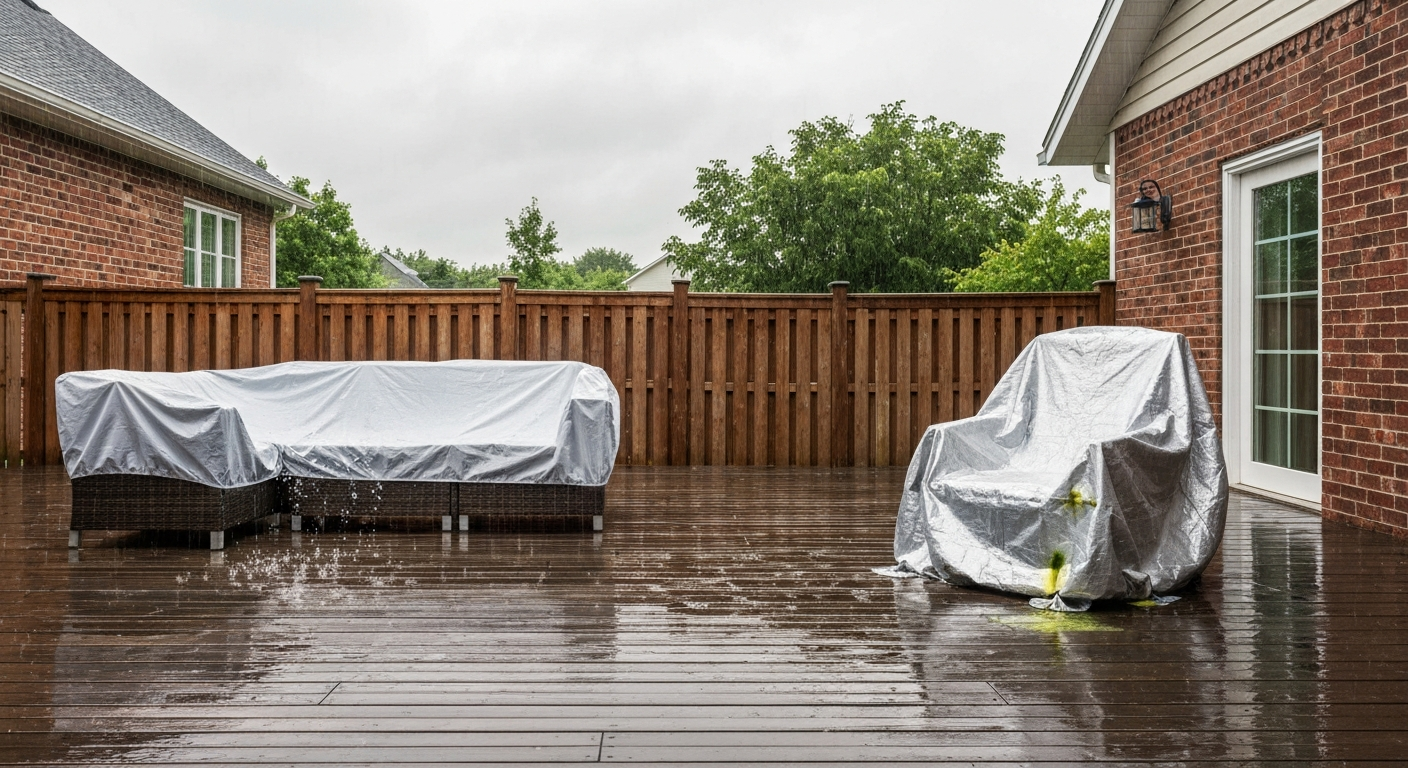
When to cover vs when to leave it alone
The decision really comes down to three things: how long it will rain, what your furniture is made of, and whether your cushions can drain and dry on their own. Here is a quick checklist you can run through before a storm rolls in.
Cover your furniture when:
- Rain is expected to last more than a couple of hours or overnight
- You have standard polyester or cotton cushions that cannot drain quickly
- Your frames are bare or painted steel, wrought iron, or cast iron
- You have solid wood furniture that is unfinished, aged, or has peeling sealant
- A named storm, hurricane warning, or high-wind advisory is in effect
- You are leaving town or will not be able to check on the furniture for several days
It is fine to leave it uncovered when:
- The rain is a quick shower of 30 minutes or less
- Your cushions use reticulated (quick-dry) open-cell foam that drains rapidly
- Frames are powder-coated aluminum, which forms its own oxide layer and does not rust
- Furniture is Grade-A teak, which is naturally oil-rich and highly water-resistant
- Your synthetic resin wicker is rated all-weather and has no cushions left on it
- Covers are not available and forcing a non-breathable cover over wet furniture would trap moisture
Pros and cons of covering patio furniture
Covering is not automatically the safe choice. I learned this the hard way after I left a PVC tarp over my cedar chairs for a week after a rainstorm. The chairs had been damp when I covered them, and I came back to a layer of gray mildew on every surface the tarp touched. Here is the honest breakdown.
| Covering your furniture | Pros | Cons |
|---|---|---|
| Breathable furniture cover (vented polyester) | Blocks rain and debris, allows moisture to escape, slows UV fading between uses | Costs $25–$80 per piece, can blow off in wind if straps are loose |
| Solid PVC tarp | Cheap ($5–$15), very waterproof, easy to find | Traps condensation and moisture if furniture is even slightly damp, can react with some wood finishes |
| Leaving furniture uncovered | Zero cost, no mildew risk from trapped condensation, fine for weather-resistant materials | Direct rain soaks cushions, accelerates rust on bare metal, can damage unsealed wood over time |
| Moving cushions indoors | Best protection for cushions, no cover needed for frames | Requires storage space, inconvenient for frequent rain |
The takeaway: a breathable vented cover on dry furniture is nearly always the best option. A PVC tarp on dry furniture is acceptable for short-term use. A PVC tarp on damp furniture or cushions is a mildew factory.
Short showers vs heavy storms: what to actually do
Your actions should scale with the severity of the rain. Here is exactly what I do, broken out by situation.
For a short shower (under 1 hour)
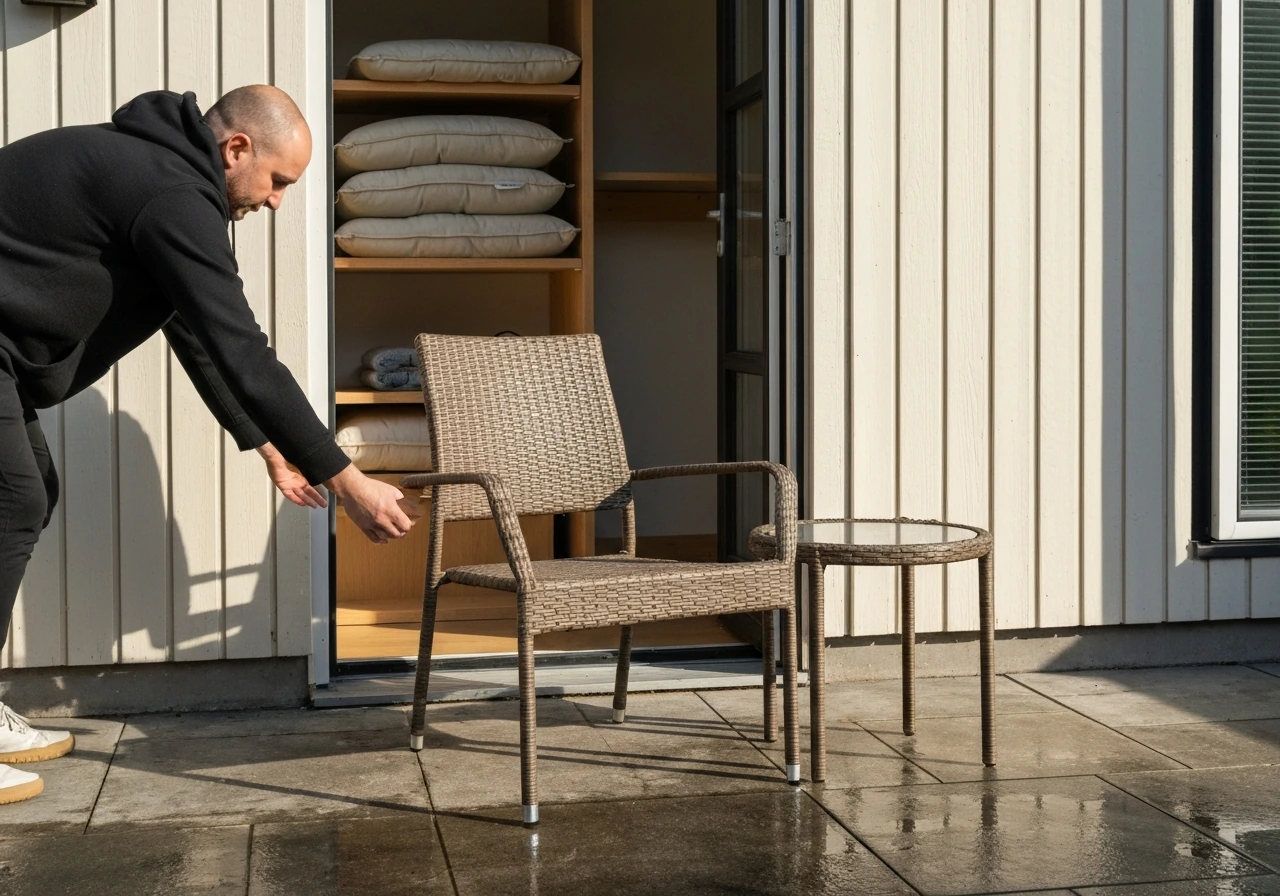
- Stack or lean cushions upright against a wall so water runs off rather than pooling on them
- Tilt seat cushions at a 45-degree angle or prop them on the furniture edge so they drain
- Leave aluminum, teak, and all-weather resin wicker frames as-is; they handle brief rain without issue
- If you have wrought iron or steel frames with any visible chips or rust spots, quickly drape a breathable cover or bring them under an overhang if it is easy to do
- After the shower passes, flip and stand cushions in the sun for 30–60 minutes before laying them flat again
For heavy or prolonged rain (multi-hour or overnight)
- Bring all standard cushions indoors or into a dry shed — this is the single most impactful thing you can do
- If cushions cannot come inside, stand them upright and drape a breathable cover loosely over the whole seating group, leaving a gap at the base for airflow
- Apply covers to frames only when frames are dry or nearly dry; wipe off standing water with a towel first
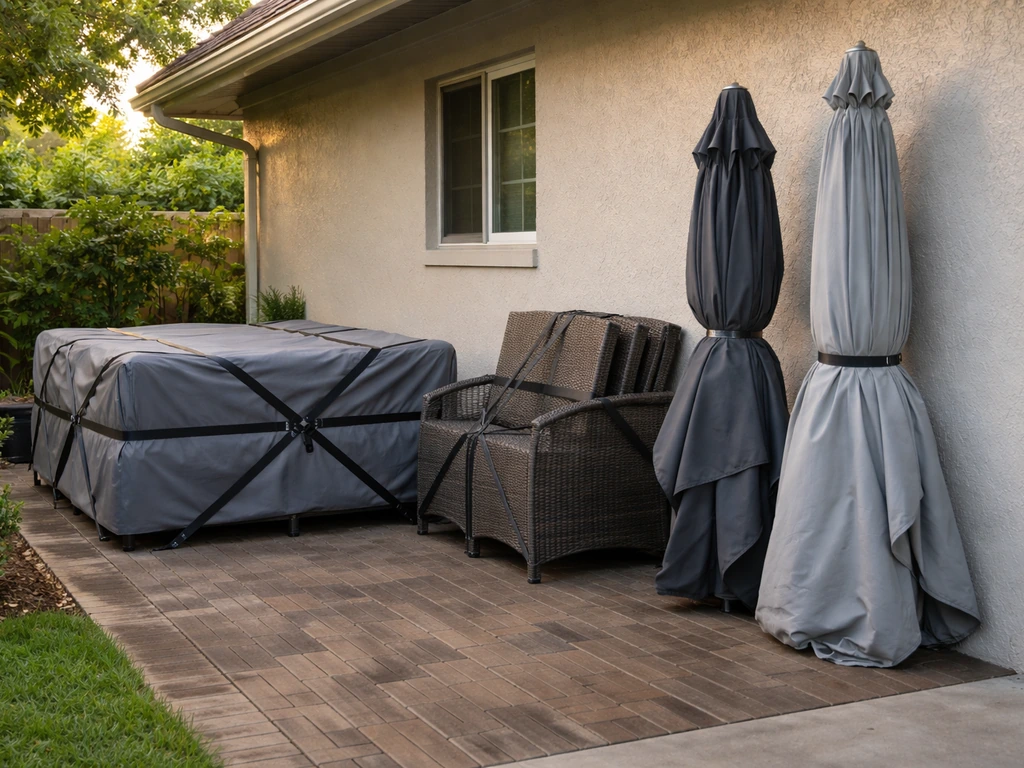
- Secure covers with the built-in straps or drawcords — a loose cover that traps and holds water is worse than no cover
- For wrought iron or steel, this is a mandatory cover situation; prolonged water on any chip or crack will start rust within hours
- Check covers the next morning and remove them as soon as the furniture underneath is confirmed dry
For a hurricane or high-wind warning
Covering is not the priority here, safety is. FEMA guidance and local emergency management agencies like Louisiana's GOHSEP and Palm Beach County's hurricane planning guides all list bringing in outdoor furniture as a standard pre-storm action. For more on timing for moving or storing outdoor pieces around storms and seasonal changes, see when to take out patio furniture. Loose patio furniture becomes windborne debris at sustained winds above 40–50 mph and can cause serious property damage or injury. If you cannot bring a piece inside, strap it to a fixed structure or stack and chain chairs together, then cover. A cover on a flying table is useless. For a full breakdown of storm prep actions, the article on what to do with patio furniture in a hurricane covers anchoring methods and indoor storage priorities in detail.
Breathable furniture covers vs tarps: which one to use
Purpose-built outdoor furniture covers from brands like Classic Accessories and Duck Covers are made from 300–600D polyester with a PU or PVC coating on the outside and either a soft fabric lining or built-in air vents on the inside. See Duck Covers product description & care notes, Classic Accessories (Duck Covers) for the manufacturer's guidance that breathable venting reduces condensation and that PVC‑backed fully waterproof covers can trap moisture against furniture unless items are bone‑dry Duck Covers product description & care notes — Classic Accessories (Duck Covers). Those vents are not a gimmick. Manufacturers include them specifically to reduce condensation buildup and lower mildew risk compared with fully sealed covers. Look for covers with sewn-in vents, taped seams for waterproofing, and elastic hems or adjustable straps. Expect to spend $25–$50 for a chair cover and $50–$80 for a sofa or dining set cover. That sounds like a lot until you price out a new set of cushions.
Tarps are a perfectly reasonable budget option, but they come with trade-offs. If you want to go the tarp route safely, there are specific steps you need to follow to avoid trapping moisture. I cover those in the next section.
How to use a tarp without trapping moisture
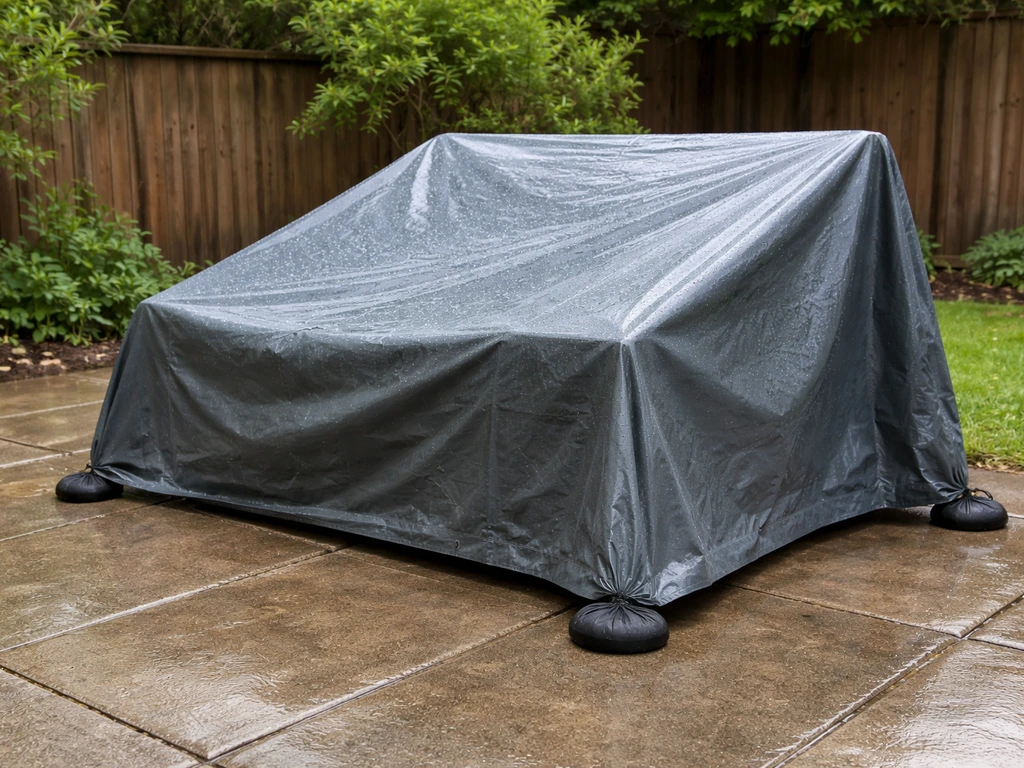
Using a tarp well is mostly about airflow and structure. A flat tarp draped directly over furniture creates a sealed tent that holds condensation against every surface. Here is how to do it right.
- Start with dry furniture. Wipe off any standing water and let metal or wood surfaces air-dry for at least 20–30 minutes before covering. This is non-negotiable with a non-vented tarp.
- Create a center high point. Set a tall pot, a bucket turned upside down, or even a pool noodle stood vertically in the center of the furniture group. This gives the tarp a peak so rainwater rolls off rather than pooling in the middle.
- Leave a gap at the base. Do not pull the tarp tight to the ground. Leave a 3–4 inch gap around the perimeter so air can circulate underneath and humidity can escape.
- Secure it against wind. Use bungee cords through the tarp's grommets, tied to furniture legs or weighted down with sandbags at the corners. A loose tarp that flaps in the wind will eventually pool water or blow off entirely.
- Avoid fully enclosing cushions under a PVC tarp. If cushions have any moisture in them, the tarp will concentrate that moisture against the foam. Either bring cushions inside or leave them to breathe separately.
- Remove the tarp as soon as rain stops. Do not leave a solid PVC tarp on furniture for days at a time. It blocks sunlight and airflow, which are the two things that naturally dry and refresh outdoor materials.
If you are buying a tarp specifically for furniture, a woven poly tarp with some breathability (not the shiny solid blue or silver PVC kind) is a better choice than a fully sealed tarp. It sacrifices a little waterproofing in exchange for much better airflow. For a deeper comparison of tarp types and how to rig them properly, the article on using a tarp to cover patio furniture walks through materials and rigging options in more detail.
Rain care for wood patio furniture
Not all wood is equal in the rain, and this is where a lot of DIYers make expensive mistakes by treating all outdoor wood the same way.
Teak
Grade-A teak is genuinely one of the most rain-tolerant natural materials in outdoor furniture. Its high natural oil content repels water and resists insects, and manufacturers like Carl Hansen and Son specifically note that teak can be left outdoors. For short to medium rain events, you can leave teak uncovered without significant concern. Over time, untreated teak will silver to a gray patina, which is purely cosmetic. If you want to preserve the warm honey color, clean it and apply a teak oil once or twice a season. For extended non-use periods or winter storage, a breathable cover or indoor storage is still recommended to prevent surface mold from sitting moisture. The key word is breathable: trapping moisture under a sealed cover defeats the point.
Pine, cedar, acacia, and other common outdoor woods
These woods need more attention. They are far less oil-rich than teak and will absorb standing water, swell, and crack if repeatedly soaked and dried without a proper sealant. Check the finish on your furniture at the start of each season: drip a few drops of water on the surface and see if it beads. If it soaks in, your sealant is gone and you need to re-apply an outdoor wood sealant or teak oil before rain season hits. For heavy rain events, covering these pieces is strongly recommended. After rain, wipe off standing water promptly and let them dry in sunlight before covering or storing. If you notice gray or black spots forming in joints and crevices, that is early mildew and needs to be addressed before covering the furniture.
Rain care for metal patio furniture and rust prevention
Metal furniture divides into two very different categories when it comes to rain, and mixing up your care approach can accelerate damage.
Aluminum (powder-coated or bare)
Aluminum does not rust the way steel does. It forms a thin aluminum oxide layer that actually protects the underlying metal. Powder-coated aluminum is even more resistant and is generally the lowest-maintenance metal option for outdoor furniture. For most rain events, you do not need to cover aluminum frames. The exception is coastal or pool environments, where salt and chlorine deposits can break down the powder coat over time, especially at chips or scratches. If you are in a coastal area, rinse aluminum furniture regularly with fresh water and mild soap, and inspect the coating annually. Aluminum care guide (vinyl & aluminum), XL Fencing (retailer/installer guidance) recommends routine cleaning with mild soap and water and avoiding harsh abrasives to preserve powder‑coat finishes and prevent localized corrosion from salt and chlorine Aluminum care guide (vinyl & aluminum) — XL Fencing (retailer/installer guidance). Touch up any chips with outdoor-grade spray paint matched to the finish before they become corrosion points.
Steel, wrought iron, and cast iron
These materials need to be covered in prolonged rain, full stop. Once the protective coating or paint on steel or iron is breached, even a small chip, water gets in and rust begins fast. See How to keep wrought/cast iron patio furniture from rusting, ShunShelter (how‑to article) for step‑by‑step touch‑up, sanding, and resealing guidance How to keep wrought/cast iron patio furniture from rusting — ShunShelter (how‑to article). The rust then pushes under the surrounding paint and the damage spreads quickly. My routine for iron and steel furniture: inspect every joint, weld, and edge at the start of the season. Sand any rust spots down to bare metal with 120-grit sandpaper, wipe clean, prime with a rust-inhibiting primer, and follow with outdoor-grade enamel paint. Touch up chips as soon as you notice them, not at the end of the season. For rain protection, use a breathable vented cover to prevent condensation under the cover, and remove covers during dry stretches so the metal can air out. After heavy rain, lift or tilt the furniture briefly to drain any water that has collected inside hollow tubes or legs.
A quick comparison by material
| Material | Rain tolerance | Cover for short showers? | Cover for heavy/prolonged rain? | Key maintenance step |
|---|---|---|---|---|
| Grade-A teak | High | Optional | Recommended (breathable) | Clean and oil 1–2x per season |
| Pine/cedar/acacia (sealed) | Medium | Recommended | Yes | Re-seal when water stops beading |
| Powder-coated aluminum | High | Optional | Optional | Rinse salt/chlorine, touch up chips |
| Steel/wrought iron (coated) | Low without coating | Yes | Yes (mandatory) | Inspect and touch up chips promptly |
| Resin/HDPE wicker | High (frame) | Optional (cushions: cover or remove) | Remove cushions indoors | Clean weave, protect cushions |
| Outdoor cushions (standard foam) | Low | Stack upright | Bring indoors or cover | Dry fully before covering or storing |
What about cushions and fabric?
Cushions are almost always the most vulnerable part of any patio set, and they deserve their own strategy. Standard outdoor cushions have water-resistant fabric covers but the foam inside is not designed to get repeatedly soaked. If standard foam stays wet, it takes one to two days to dry fully and mold can begin within 24–48 hours in warm, humid conditions. The best DIY investment you can make for low-maintenance cushions is replacing standard foam with reticulated (quick-dry) open-cell foam. Manufacturers report that reticulated foam retains less than 5% of water after immersion, compared to roughly 55% for regular foam. That means even if your cushions get rained on, they are essentially dry within an hour or two of sun and airflow. I replaced the foam in my lounge chair cushions two summers ago and have not brought them inside for rain since.
For fabric covers, solution-dyed acrylic fabrics like Sunbrella are genuinely water and mildew resistant, and Sunbrella's own care guidance allows diluted bleach for deep cleaning without damaging the fabric. However, even Sunbrella recommends that cushions be thoroughly dried before being covered or stored for any length of time, because sealing damp fabric under a cover, even a breathable one, creates the warm, dark, moist conditions that mildew loves. If your cushions get soaked in a storm, stand them on edge, prop the covers open if possible, and give them full sun before putting any cover back on.
After-rain care: drying, cleaning, and catching problems early
What you do in the hour after a rainstorm matters as much as what you did before it. Here is a quick post-rain routine that takes about ten minutes and prevents most of the common damage I see people dealing with at the end of the season.
- Remove any covers and shake off pooled water immediately — do not let water sit in the fold of a cover and drip back onto furniture
- Wipe metal frames with a dry cloth, paying attention to joints, welds, and hollow legs where water collects
- Stand cushions upright or drape them over chair backs to drain and air-dry; do not lay them flat on a surface
- Check wood surfaces for standing water in grooves or joints and wipe them out — this is where rot starts
- Inspect steel and iron pieces for any new chips, scratches, or rust-colored streaks; mark them with tape so you remember to do a touch-up when the surface is fully dry
- If you see any white haze or gray spotting on wood or fabric, that is early mildew and should be cleaned within a day or two before it establishes itself
Common mistakes to avoid
- Covering damp or wet furniture with a sealed PVC cover — this is the single most common cause of mildew on patio furniture
- Using a cover that is too large and pools water in the center instead of shedding it
- Leaving covers on for weeks at a time during humid weather — even breathable covers should be removed periodically to let furniture air out
- Forgetting to secure covers in wind — a cover that blows off in a storm and wraps around wet furniture is worse than no cover
- Treating teak the same as pine — teak can handle rain that would damage other woods, so over-protecting it with sealed covers can trap moisture unnecessarily
- Skipping the chip inspection on steel and iron at the start of the season — one small rust spot left untouched will be a fist-sized rust patch by fall
Budget-friendly DIY cover and storage ideas
Purpose-built furniture covers are the easiest option, but they are not the only option. If budget is the constraint, here are practical alternatives I have used or seen work well.
- A woven poly tarp from any hardware store ($8–$15) set up with a center peak structure works well for large dining sets if you follow the venting steps above
- Breathable canvas drop cloths (often $10–$20 at thrift stores or paint sections of hardware stores) are excellent for wood furniture because they let moisture escape while blocking direct rain
- Old outdoor tablecloths with a water-resistant backing can double as single-chair covers in a pinch — tie the corners under the chair legs
- DIY cushion storage: a large plastic storage bin ($15–$25) with a tight lid keeps cushions perfectly dry and doubles as extra outdoor seating with a cushion on top
- A simple lean-to pergola or shade sail over your seating area removes the need for covers entirely during rain — this is a longer DIY project but eliminates the daily cover routine
If you are heading into a period of extended non-use, whether that is a vacation, a wet season, or the end of summer, the article on when to take out patio furniture covers the full seasonal storage timeline and helps you decide when it makes more sense to store pieces indoors rather than managing covers all season. And if your furniture has already taken some rain damage, the articles on reupholstery and common repair projects on this site walk through exactly how to assess and fix what is worth saving.
FAQ
Should you cover patio furniture when it rains?
Usually yes — but it depends on the furniture material, how long it will stay wet, and the type of cover. Covering helps prevent surface damage, dirt buildup and reduces drying time for frames and cushions. However, non‑breathable covers can trap moisture and cause mildew or finish damage if furniture (especially cushions) is wet when covered. Use breathable covers or wait until items are dry before using fully waterproof tarps.
Quick checklist: when to cover vs leave patio furniture uncovered
Cover when: rain will be prolonged, you have cushions or fabrics that you can’t quickly dry inside, you don’t have quick‑dry foam, or you expect repeated wet/dry cycles. Leave uncovered when: the rain is a short shower and you can bring cushions inside or dry them quickly; furniture is teak or HDPE/plastic designed for continuous exposure; or you have breathable vented covers and the furniture is fully dry before covering.
What are the pros and cons of covering patio furniture?
Pros: protects surfaces/finish, keeps cushions cleaner, reduces drying time, cuts maintenance. Cons: non‑breathable covers can trap moisture and promote mildew, PVC can react with some wood finishes, covers can collect water if unsupported, and winds can flap or damage covers if not secured.
What types of covers are best — tarps, breathable furniture covers, or DIY options?
Best practice: use breathable, purpose‑made furniture covers with vents, straps/drawcords and a polyester or solution‑dyed fabric (300–600D) with water‑resistant coating. Use fully waterproof PVC tarps only for short periods and only over completely dry furniture; add structure (support pole or inverted funnel) and ventilation. Low‑cost DIY options: cut and hem breathable tarp fabric, build a simple frame to keep covers off surfaces, or use plastic bins/containers for cushions.
How do I use a tarp without trapping moisture under it?
Ensure furniture and cushions are bone‑dry before covering. Create airflow by leaving vents or small gaps, use breathable‑back tarps where possible, and prevent flat pooling by using a center support (pole, bucket of sand or inverted cone) so water runs off. Lift corners slightly to allow cross‑ventilation while still preventing direct rain entry.
Material‑specific guidance — wood (teak, treated wood): cover or not?
Teak: can often be left outdoors because natural oils resist moisture; cover for long inactive seasons or heavy storms and clean/oil if you want to preserve color. Other treated wood: cover in prolonged wet seasons, dry thoroughly before covering, and inspect/repair sealant or finishes after exposure. Avoid PVC touching unfinished wood long‑term.