You can waterproof patio cushions yourself using a spray-on water repellent like Rust-Oleum NeverWet, Star brite Ultimate Fabric Guard, or Nikwax TX.Direct. Clean the fabric thoroughly first, spray until saturated, let it cure for at least 6 hours, then hit the seams and zipper tape separately with a seam sealer like Gear Aid Seam Grip FC. That combo covers the three main failure points: the fabric face, the stitching lines, and the zipper. Done right, you get solid water repellency that lasts about six months before you need to recoat.
How to Waterproof Patio Cushions: Step-by-Step DIY
Maren Grady
5 Jun 2026
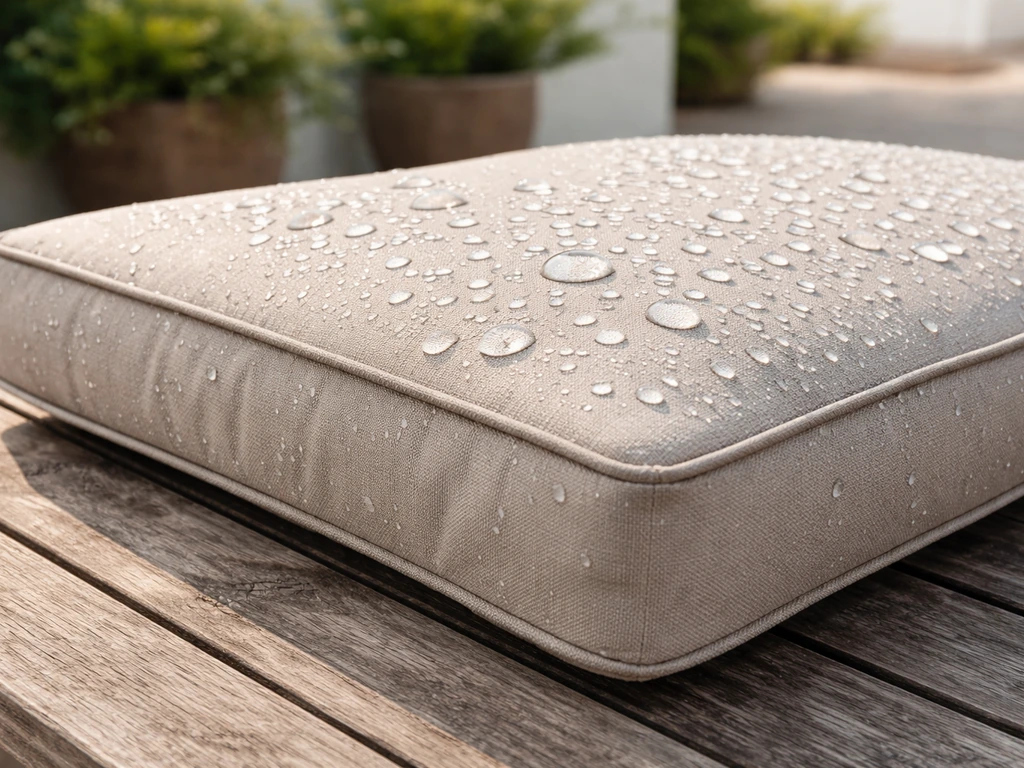
Pick the right waterproofing method for your cushion type
Before you grab a can of anything, figure out what you're actually working with. The treatment that works great on a thick Sunbrella slipcover is overkill (or wrong) for a thin polyester cover with a cheap foam interior. There are really three cushion scenarios you'll run into, and each one needs a slightly different approach.
Scenario 1: Fabric-only cushions with no removable cover
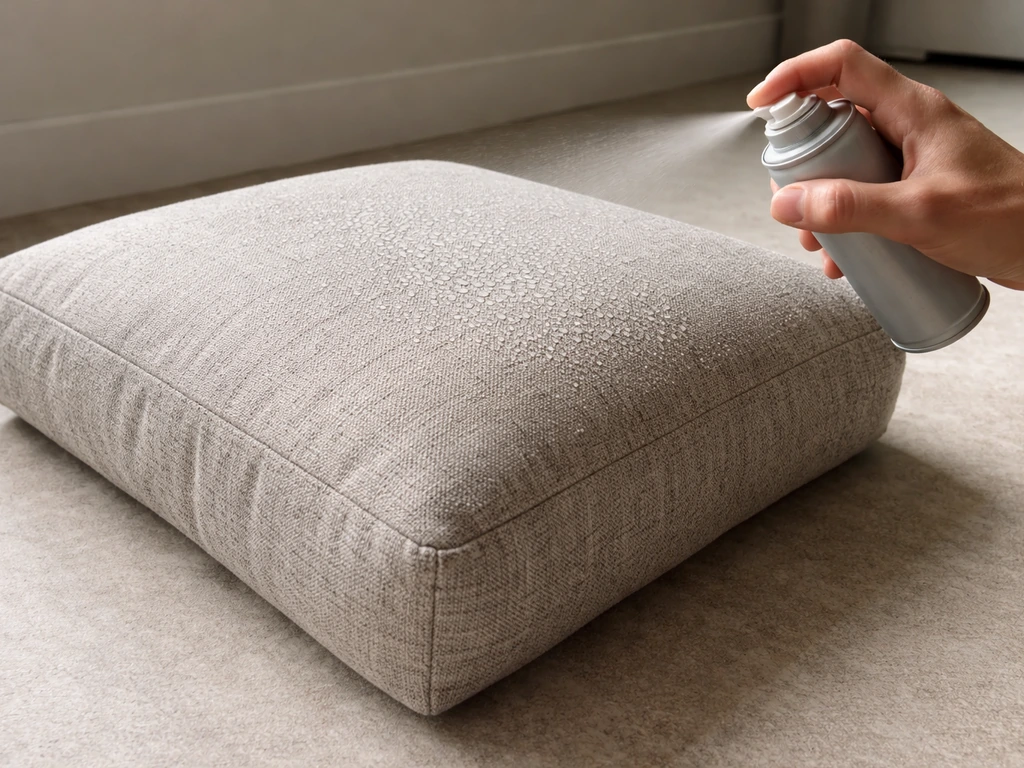
These are the simplest to treat. The whole cushion is one unit, so you spray the exterior fabric directly. A DWR (durable water repellent) spray is your best tool here. Products like Nikwax TX.Direct Spray-On or Rust-Oleum NeverWet ROC-30 are designed exactly for this. You wet the surface, let it cure, and the fabric sheds water instead of absorbing it. The catch: if water does eventually soak through (say, after a long heavy rain), the foam inside will hold that moisture for days. So waterproofing buys you time, not total immunity.
Scenario 2: Removable cover with foam interior
This is the most common setup and also the most involved to do properly. You should treat the cover fabric as one project and the foam as another. High-quality outdoor cushions sometimes use reticulated foam and breathable inner liners specifically so water can drain through and dry out, rather than pooling. If your foam is standard interior-grade foam (common on cheaper cushions), water that gets in will stay in. You can buy open-cell reticulated foam replacements fairly cheaply at fabric stores if yours has turned into a sponge. For the cover itself, treat it as described below.
Scenario 3: Sunbrella or performance fabric
Sunbrella and similar solution-dyed acrylic fabrics come with a factory-applied water repellent finish, but that finish wears off over time. You're not starting from scratch here, you're reviving what's already there. A DWR spray-on product is the right move. Don't use a hard film-forming coating on Sunbrella because it can clog the weave and trap moisture. Stick to repellents designed for outdoor upholstery fabric.
| Cushion Type | Best Treatment | Seam/Zipper Needed? | Recoat Interval |
|---|---|---|---|
| Non-removable fabric cover | DWR spray (NeverWet, Nikwax TX.Direct) | Yes, especially seams | Every 6 months |
| Removable cover, fabric only | DWR spray on cover fabric | Yes, including zipper tape | Every 6 months |
| Sunbrella or performance acrylic | DWR spray (Star brite, Nikwax TX.Direct) | Yes, zipper and seam sealer | Every 6 months |
| Foam interior (exposed or recovered) | Waterproof foam liner or cover treatment only | N/A (cover handles it) | With cover treatment |
Clean and prep cushions before sealing
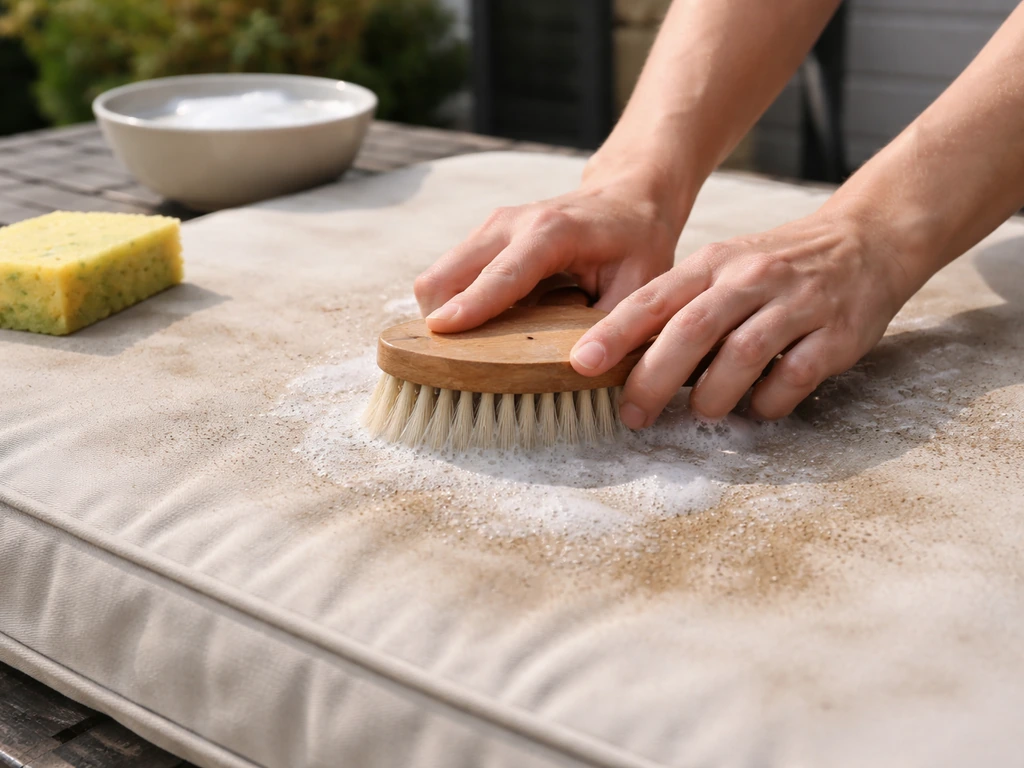
Here's where most DIYers mess this up: they skip cleaning or do a half-hearted wipe-down, then spray the waterproofing over dirt, pollen, and old sunscreen residue. The repellent can't bond properly to a contaminated surface, so it beads unevenly and wears off in weeks. I've made that mistake and wasted an entire can of Star brite on cushions that were still wicking water two weeks later. Clean first, always.
For most outdoor fabric cushions, a mild soap and water solution is all you need. Sunbrella's own care guides recommend a solution of about 1 teaspoon of mild soap (like Dawn or Woolite) per quart of water. Use a soft brush or sponge, work it into the fabric gently, then rinse thoroughly. Thorough means really thorough: Nikwax's instructions call for three full rinse cycles in clean water. Soap residue left in the weave will interfere with the repellent chemistry the same way grease does. Do not use detergent with brighteners, bleach, or fabric softener. Fabric softener especially will destroy any waterproofing you apply over it.
Once washed, let the cushions air dry completely before you apply anything. This is non-negotiable. Applying a DWR spray to damp fabric traps moisture underneath and the treatment won't cure evenly. On a warm sunny day, most covers dry in a few hours. If you're working in humidity or shade, give it overnight.
While the covers are drying, check the seams and zippers. Run your fingers along every stitched seam and feel for any gaps, loose threads, or areas where the stitching has started to pull. Press the zipper tape and check if it lies flat. These are the spots you'll treat separately in a later step.
Apply waterproof coating or sealant (fabric vs foam vs covers)
Treating the fabric surface
Lay the clean, dry cover flat on a surface you don't mind getting overspray on. For spray-on products like Rust-Oleum NeverWet ROC-30, hold the can 12 to 16 inches from the surface and coat the entire fabric until it looks wet and saturated. Don't just mist it. You need the fibers to be thoroughly coated, not just the surface layer. Work in overlapping passes and don't rush. Star brite Ultimate Fabric Guard works the same way: saturate the top surface completely. If you under-apply, you get patchy water repellency and you'll be wondering why water still soaks in at certain spots.
Nikwax TX.Direct Spray-On is worth calling out specifically because it's formulated to treat the outer face of the fabric without blocking the internal moisture vapor transfer. That matters for cushions you sit on because it means the fabric can still breathe, reducing that sweaty, sticky feeling you sometimes get with heavily coated outdoor furniture. Apply it to the outside face of the fabric only.
If you're doing a non-removable cushion, you'll need to flip it and treat the underside too, or at least the sides. Water gets driven in from odd angles during wind-driven rain, not just straight down from above.
What to do about the foam
You generally can't make standard foam waterproof by spraying it. The cells in most closed-cell or semi-open foams will absorb liquid no matter what you spray on the surface. The real solution for the foam is either a waterproof inner liner (a thin plastic or TPU bag that wraps the foam inside the cover) or switching to reticulated open-cell foam, which is designed to let water drain through and out rather than holding it. If your cushions are cheap and the foam already smells mildewy or compresses unevenly, replacing the foam with a reticulated version and adding a thin poly inner liner is the better long-term move. It costs maybe $20 to $30 in materials per cushion depending on size.
Waterproofing cushion covers: removable covers, zippers, and seams
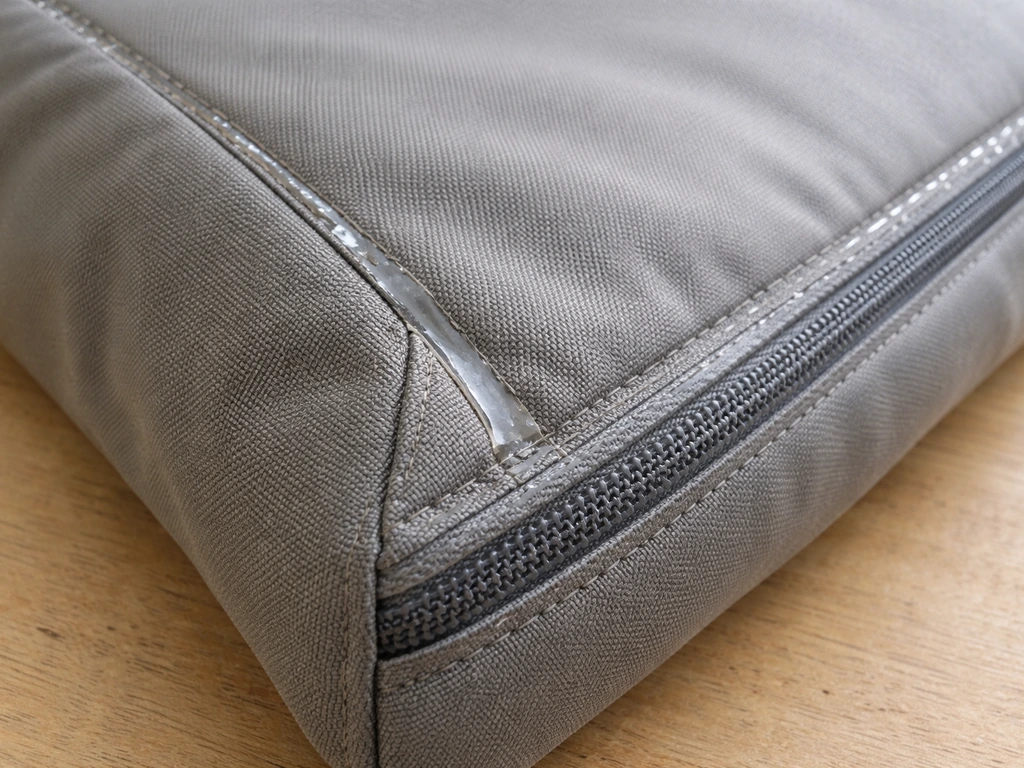
The fabric face of your cushion cover is the easy part. The seams and zipper are where water actually gets in, and most guides skip right past this. I've seen cushions with beautifully treated fabric that were still soaked through because the seam allowance acted like a wick. Here's how to deal with each failure point.
Seams
Every stitched seam is a row of tiny holes in the fabric. Water loves these. After you've applied and cured your main DWR treatment on the fabric surface, go back and apply a dedicated seam sealer to every exterior seam. Gear Aid Seam Grip FC is a good option because it fast-cures in about two hours, so you're not waiting around all day. Apply it in a thin, even bead along the seam line with the included brush or applicator. You don't need it thick, just thorough. Let it cure fully before testing or using the cushion.
Zippers
Zipper tape is one of the most overlooked water entry points on a cushion cover. Most outdoor cushion zippers are not waterproof by design (genuine waterproof zipper systems like YKK's PROSEAL line are rated by water pressure and used mostly in marine or technical gear, not in typical patio furniture). What you can do is treat the zipper tape fabric with the same seam sealer or a zipper-specific wax product. Close the zipper fully, then run the seam sealer along the zipper tape on the outside face. Also apply a thin coat over the zipper pull and slider. This won't make it bombproof, but it dramatically slows water ingress.
Removable vs non-removable covers
If your covers are removable, you have a real advantage because you can treat them off the cushion and get complete coverage, including the underside and all seams. Do the full treatment with the cover removed, cure it completely, then put it back on. For non-removable covers, work slowly and make sure you get into every seam fold and corner. A small foam applicator brush is helpful for working seam sealer into tight corners that a spray nozzle can't reach well.
Drying, recoat schedule, and how to test if it's actually waterproof
Drying and curing
After applying a DWR spray, the general guidance from products like Star brite Ultimate Fabric Guard is to allow at least 6 hours before use. Rust-Oleum NeverWet notes that dry and recoat times are based on 70 degrees F and 50% relative humidity, meaning in humid or cool conditions, add more time. As a practical rule: if you apply it in the morning on a warm dry day, don't use the cushions until the evening. If you applied it on a cloudy or humid day, wait until the next morning. Don't rush this. An under-cured DWR treatment will feel tacky, look streaky, and won't repel water effectively.
How to test water repellency at home
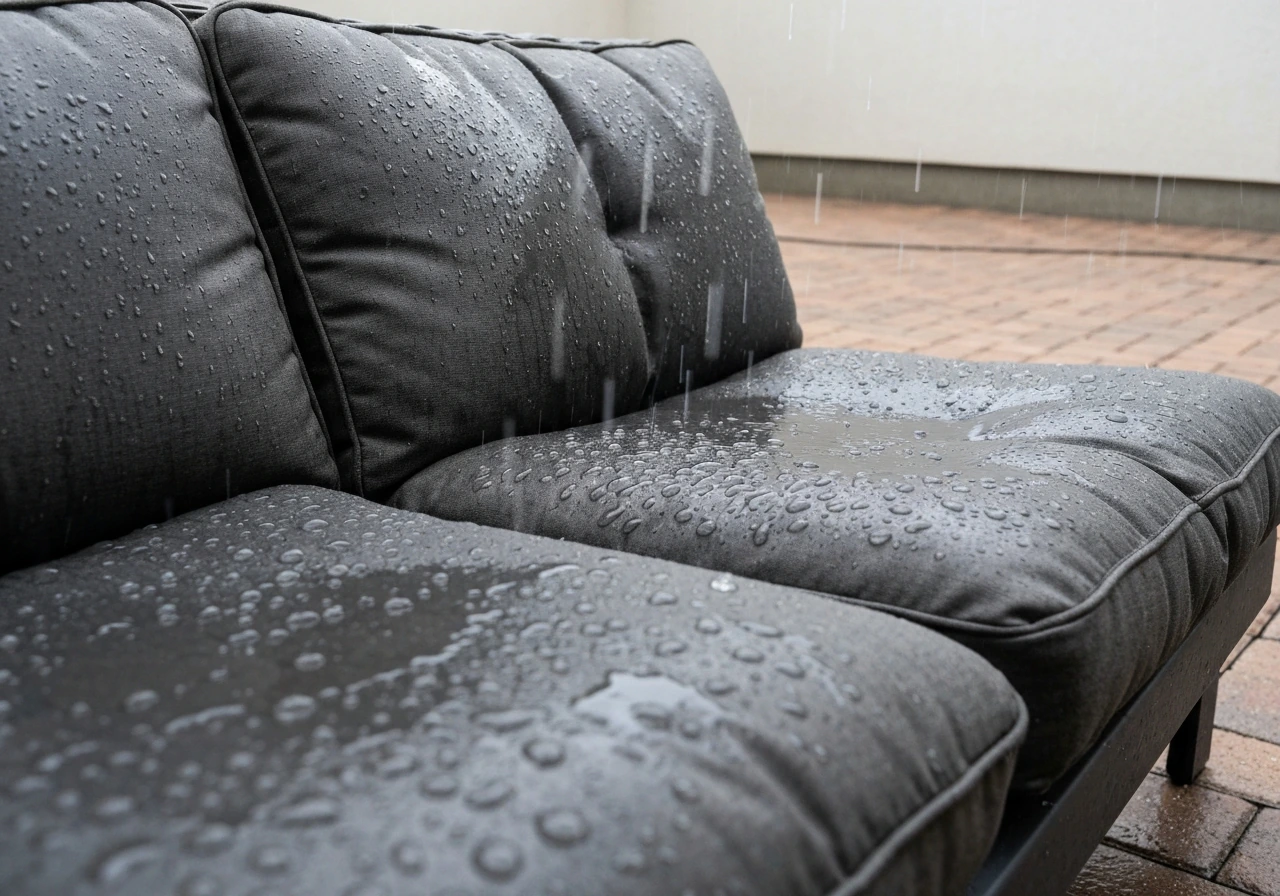
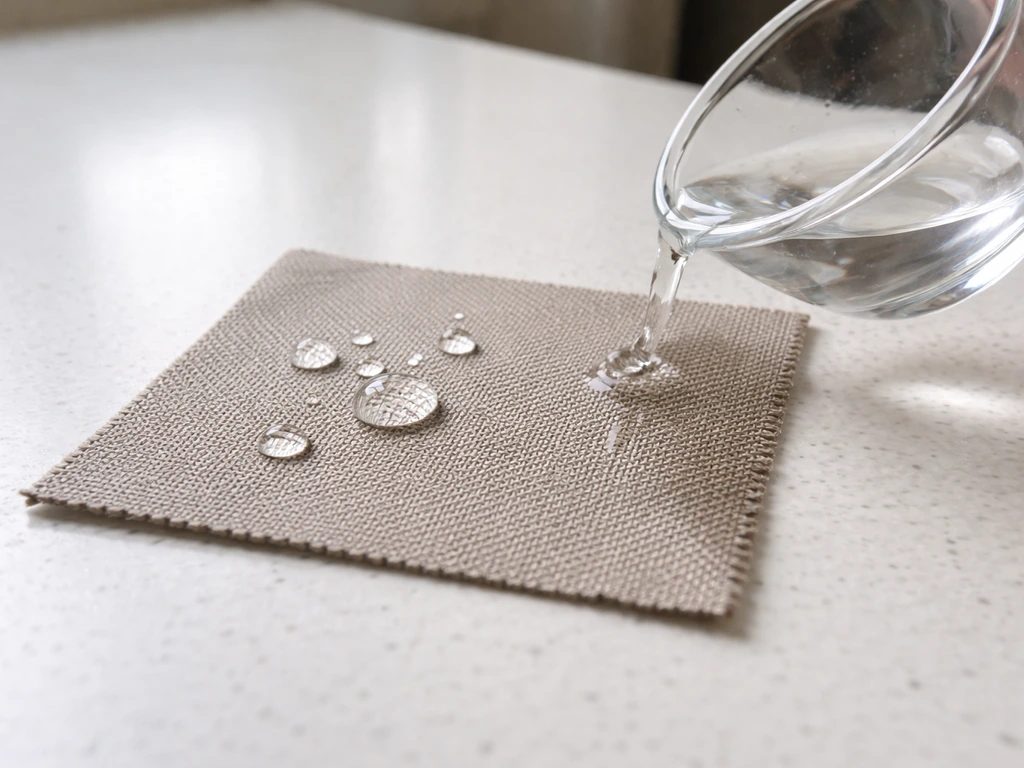
Once cured, the test is simple: pour a small cup of water onto the treated fabric from about 6 inches above. If the treatment worked, the water will bead up into rounded droplets and roll off without soaking in. This is called the bead test. If the water spreads flat and starts to darken the fabric (wetting out), the treatment either didn't cure fully, wasn't applied thickly enough, or the fabric still had residue on it. Let it cure another few hours and retest. If it still wets out, you'll need to clean the surface again and reapply.
When to recoat
DWR treatments don't last forever. Scotchgard's guidance for upholstery-type applications recommends reapplying every six months, and that's a reasonable benchmark for most outdoor cushions. If your cushions get heavy use, face direct sun all season, or you hose them down frequently, you might need to recoat every 3 to 4 months. The bead test tells you when it's time: if water stops beading and starts soaking in, it's time to recoat. You don't need to do a full deep clean every time you recoat, but a quick rinse to remove surface dust and pollen is still worthwhile before reapplying.
Prevent water damage with storage, airflow, and seasonal habits
Waterproofing treatment is one layer of protection. Your habits around storage and drying are just as important, maybe more so. Even the best DWR coating can't prevent mildew if you fold wet cushions into a sealed bin and leave them there for a week.
After rain, prop your cushions on their sides or stand them upright so water drains off the surface and air can circulate around all faces. After a rainstorm, move the cushions to a dry spot and prop them up so they can fully drain and air out before you put them away After rain. Laying them flat on a chair seat traps water against the bottom side where it can't evaporate. If you've wondered whether you can simply leave patio cushions outside in the rain or what to do with patio cushions when it rains, the short version is: a treated cushion can handle light rain fine, but you should always air-dry them fully afterward rather than letting them sit wet.
Airflow is the single biggest factor in preventing mildew. If your patio has a covered area or overhang, position cushions there when not in use. Even just tilting them slightly to allow drainage makes a real difference over a whole season.
Off-season storage
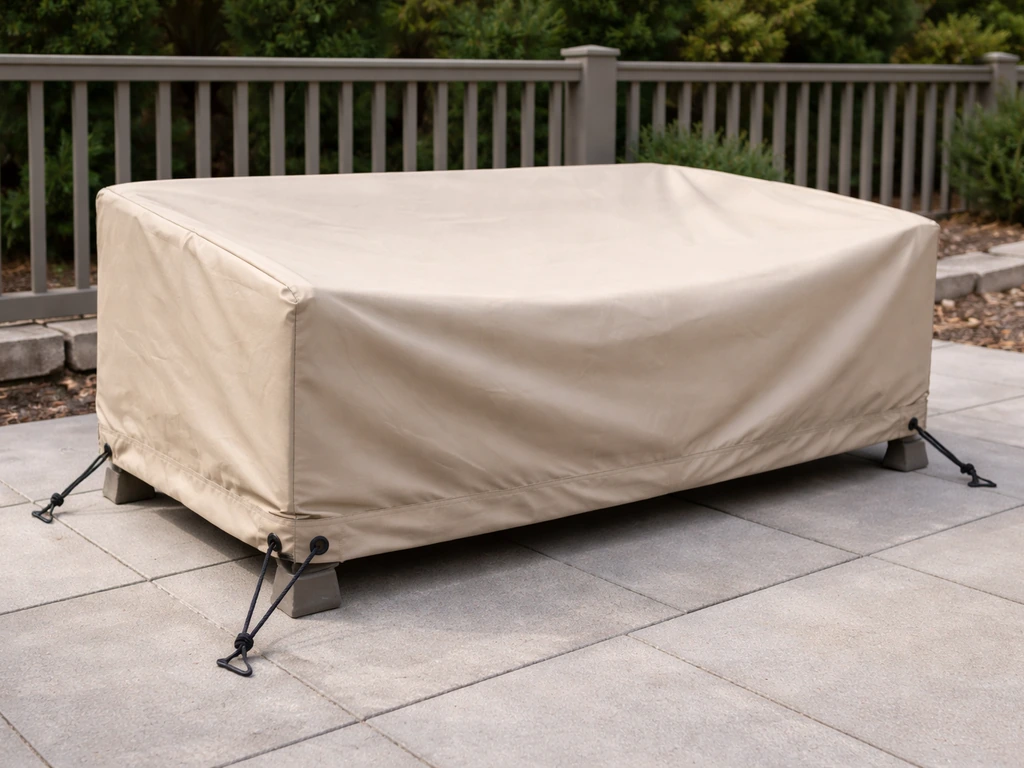
Before you pack cushions away for winter, make sure they are completely dry, not just surface-dry. A cushion that feels dry to the touch on the outside can still hold moisture in the foam core. Leave them out in full sun for a full day before storing. Store them in a breathable bag or bin, not in sealed plastic. Plastic traps any residual moisture and turns into a mildew incubator by spring. Canvas storage bags or ventilated deck boxes are much better choices.
This is also the right time to do your pre-storage recoat. Apply fresh DWR treatment in the fall, let it cure, then store. When you pull them out in spring, they're already protected and ready to go without a separate waterproofing day at the start of the season.
A note on Sunbrella and other performance fabrics
If your cushions use Sunbrella or another solution-dyed acrylic fabric, caring for them properly extends the life of the factory finish significantly. Rinsing thoroughly after cleaning (not leaving any soap residue in the weave) is critical, as is avoiding detergents that degrade the DWR chemistry. There's more depth on Sunbrella-specific care worth reading if that's what you're working with, since those fabrics have some quirks around cleaning and reapplication that differ from standard polyester outdoor fabric.
The bottom line is that waterproofing patio cushions is a real DIY project that takes maybe 2 to 3 hours the first time and gets faster on recoat days. Clean them right, saturate the fabric with a quality DWR spray, seal the seams and zipper tape, wait for a full cure, and then test it before the next rain. Add smart storage habits on top of that and your cushions will last years longer than untreated ones.
FAQ
Can I waterproof patio cushions without removing the covers?
Yes, but you must still treat the underside and every seam fold. Work in sections, flip or lift inner edges where possible, and use a small foam applicator for corners and zipper alcoves, since spray nozzles miss those spots. If you cannot reach the underside seams at all, expect shorter life because wind-driven rain often forces water in from the sides.
What’s the difference between water repellency and true waterproofing for cushions?
DWR treatments make the fabric shed water, not guarantee it stays dry inside. If water gets past the face or through seams or zippers, the foam can hold moisture for days. The practical goal is to slow water ingress long enough for the cushion to dry out, especially with correct drying and storage.
How do I know if my fabric is compatible with a spray-on DWR (and not a coating)?
Check whether the fabric is solution-dyed acrylic like Sunbrella, or polyester. For solution-dyed acrylic, stick to repellents intended for outdoor upholstery, avoid thick film-formers that can clog the weave, and apply only after thorough rinsing. If you are unsure, do a small patch test in an inconspicuous area and confirm you still get good beading after curing.
Should I seal only the seams and zipper, or also stitch lines inside the cover?
Focus on exterior seams and zipper tape, and if your construction includes exposed interior stitch lines on the outside surface, treat those too. If there is a seam that faces outward but sits under a flap or piping, water can wick along that line, so apply seam sealer into the visible groove rather than only along the top edge.
Is it safe to use the same seam sealer on the zipper pull and slider?
Usually yes, apply a thin coat on the zipper tape first with the zipper closed, then a light layer over the pull and slider area. Keep it thin so the zipper can move freely after curing. After cure, open and close the zipper several times to confirm smooth operation, and add another light coat only if water beads poorly in a later test.
How thick should the DWR application be, and what happens if I over-spray?
Apply until the fabric looks evenly saturated, not spotty, but avoid heavy pooling or runs. Over-spraying can create uneven cure, streaking, and a sticky feel, and it may increase stiffness. If you see drips, let it cure and then lightly brush off excess only after it has dried, then reassess with the bead test.
Do I need a second cleaning before reapplying DWR?
Not always. If the fabric is clean, you can usually do a quick rinse to remove dust and pollen before re-coating. If you notice oily sunscreen residue, sticky feel, or water stops beading quickly, do a proper wash again first, because residue blocks bonding and causes early failure.
What’s the best way to test before the next rain if my cushions are bulky and uneven?
Use the bead test, pour water from about 6 inches in a few spots, including seams, zipper areas, and the underside edges if visible. If you only test the center of the face fabric, you can miss seam or zipper failures that allow moisture to wick inward.
Can I waterproof foam by spraying it directly?
For most standard patio cushion foams, direct spraying does not make it liquid-proof because foam cells still absorb water. Better options are adding a waterproof inner liner (such as TPU) around the foam, or replacing with reticulated open-cell foam that drains and dries more readily. If you do not address the foam, you are relying on slowed ingress rather than true waterproofing.
How soon can I put cushions back in place after treating them in cooler or humid weather?
Use the longer cure times. A common rule is not to use until it fully cures and feels non-tacky, and in cool or humid conditions plan for overnight. If the treatment looks streaky or feels tacky after the stated minimum time, extend curing and retest with bead test before exposing to rain.
Do I need to recoat in sunny climates sooner than shady ones?
Yes. Strong sun and frequent hosing accelerate wear of DWR. If water stops beading, recoat sooner rather than waiting for a calendar interval, and if you hose down often, plan for more frequent touch-ups of seams and zipper tape where failure starts.
What should I do after it rains if the cushions still feel damp?
Do not fold or store them until fully dry. Prop them on their sides or stand them upright to let all faces drain and air circulate, then move them to a dry, breezy area if needed. If mildew smell appears, clean first before re-treating, since applying fresh DWR over mildew is likely to fail early.
Can I leave waterproofed cushions outside in light rain?
They can usually handle light rain better than untreated ones, but you should still air-dry afterward. Avoid leaving them pooled in wet conditions for long periods, since moisture can get into seams or zipper areas and remain trapped in the foam.