When rain catches your patio cushions off guard, the most important thing you can do is get them upright, out of puddles, and drying within the next 24 to 48 hours. That window is the difference between cushions that bounce back fine and ones that end up smelling like a wet basement. Here is exactly what to do, step by step, from the moment the storm hits to the point where your cushions are dry, clean, and ready for next time.
What to Do With Patio Cushions When It Rains
Maren Grady
27 Jun 2026
What to do the moment it starts raining
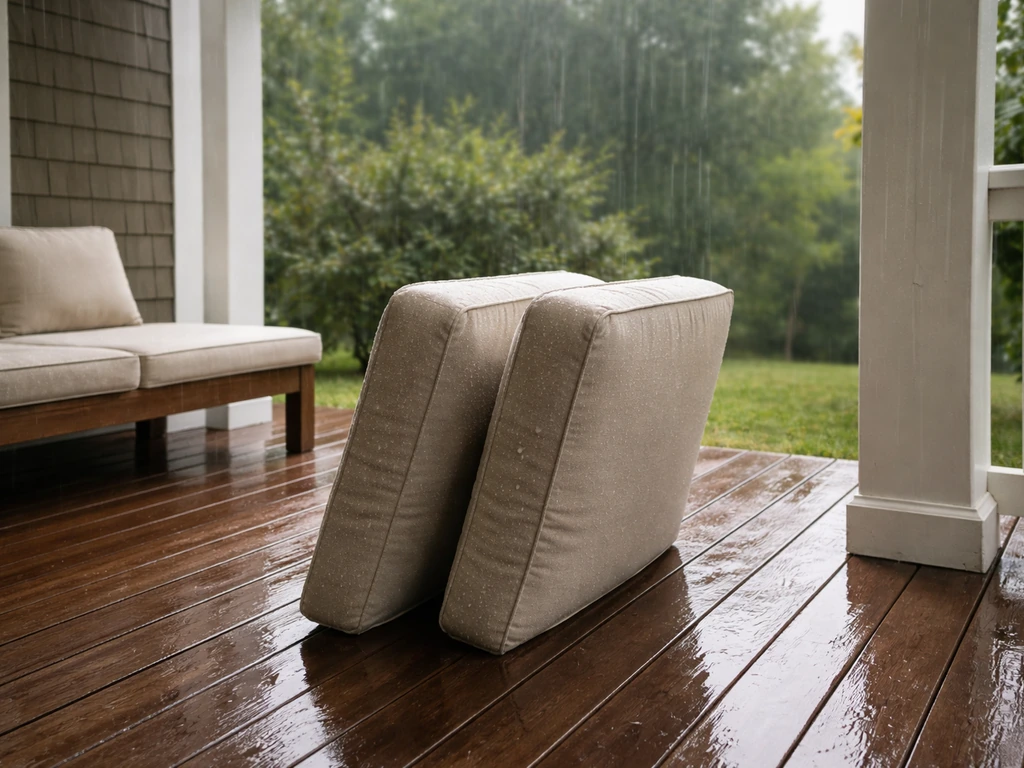
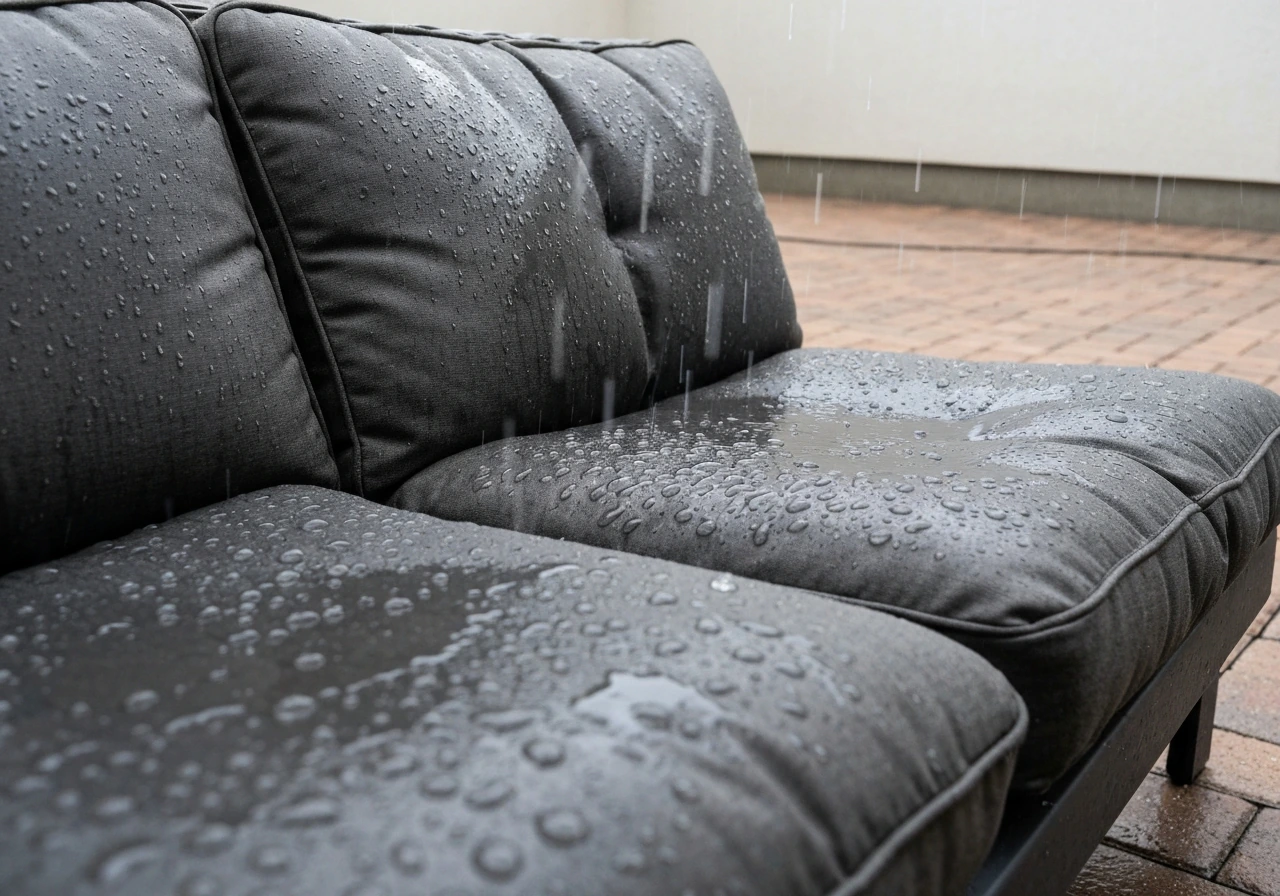
If you catch the rain early enough, the best move is simply to bring the cushions inside or under a covered porch. That said, most of us do not catch it early enough, so here is the realistic drill for when they are already wet.
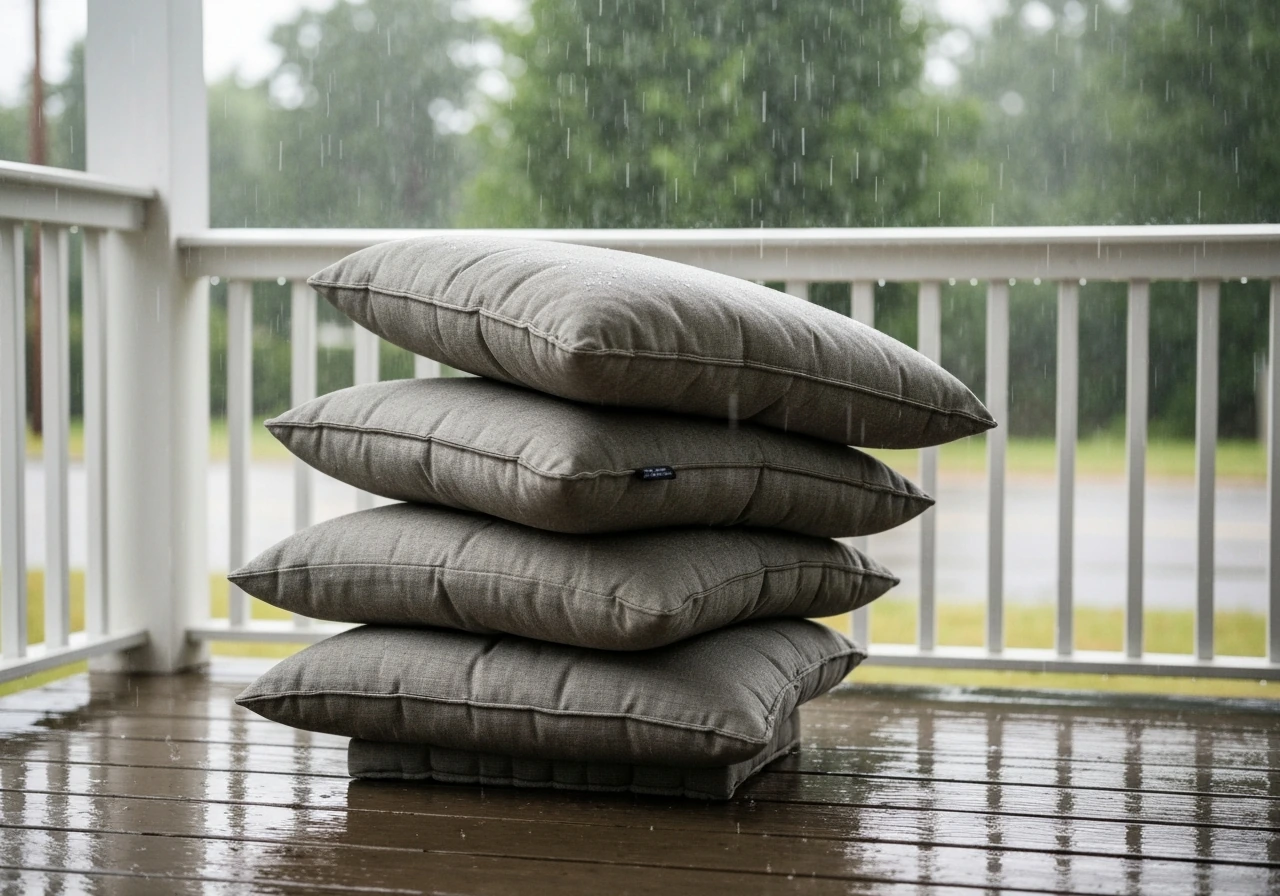
- Pull cushions off the furniture immediately and stand them on their edge rather than leaving them flat. Flat cushions pool water and push it deeper into the foam. Standing them upright lets water drain out and air circulate around both sides.
- Shake off any standing water and blot the surface with a dry towel. Blot, do not scrub. Scrubbing just drives moisture further into the fill.
- If you have a covered porch, garage, or even an open shed, move them there now. Getting them out of the direct rain is the single biggest thing you can do in the first five minutes.
- Remove cushions from any furniture with wooden frames right away. Trapped moisture between wet fabric and wood speeds up both mildew on the cushion and rot or staining on the frame.
- If you absolutely cannot move them yet, prop them vertically against the chair back or a wall so at least one face is open to airflow and water is not sitting on the surface.
One mistake I made early on was leaving cushions flat on the chair seats thinking the rain would 'wash' them. It just soaked the foam completely and doubled my drying time. Upright is always better.
How to dry patio cushions properly after the storm
Once the rain stops, your goal is to get every layer of the cushion dry within 48 hours. That is the CDC-backed threshold for preventing mold from taking hold in wet materials. Here is how to do it without damaging anything.
- Set cushions on their edge in a sunny, breezy spot. Direct sunlight and moving air are your best tools here. Lay them flat only if you flip them every hour or two.
- If the covers are removable and machine washable, unzip them and wash them separately. This also gives you a chance to check the foam inside for saturation (more on that below).
- Prop cushions slightly elevated off the ground if possible. Even just resting on a lawn chair or a couple of bricks improves airflow underneath.
- Give standard cushions at least 24 to 48 hours of dry time before putting them back on the furniture or packing them away. Thicker cushions with dense foam may need closer to 48 hours even in good sun.
- Test dryness before storing: press your palm firmly into the center of the cushion. If it feels even slightly cool or damp, it needs more time. Storing even a slightly damp cushion will trap moisture and start mildew within days.
Avoid using a hair dryer or heat gun to rush the process. High heat can shrink or warp fabric and may damage foam. Patience with airflow beats speed with heat every time.
Mildew prevention and quick cleanup steps
Mildew does not need much of an invitation. A damp cushion sitting in stagnant air is basically a welcome mat for it. The fix is ventilation and quick action, not heavy chemicals right away.
If you catch it early (surface odor, no visible spots)
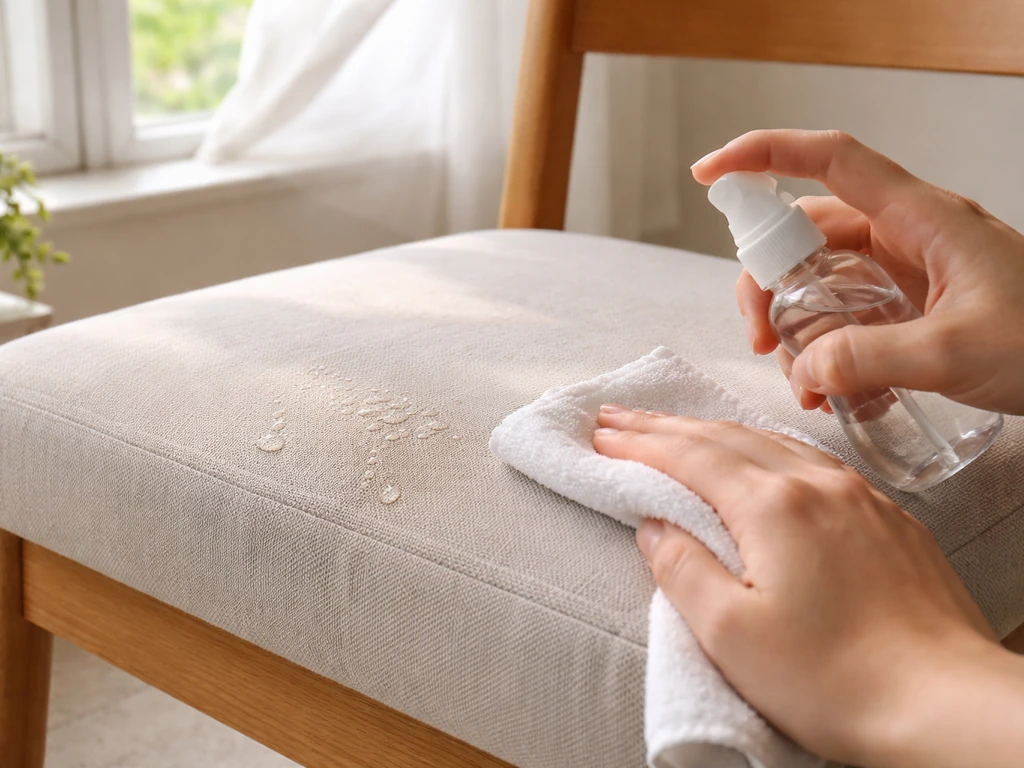
- Mix a solution of white vinegar and water (roughly 50/50) in a spray bottle.
- Lightly mist the fabric surface and let it sit for 10 to 15 minutes.
- Rinse thoroughly with clean water and stand the cushion upright to air dry completely in direct sun.
- Sunlight is a natural mildew deterrent, so letting cushions dry in full sun after any rain exposure is a smart habit.
If you see visible mildew spots
For visible mildew on Sunbrella or other performance fabrics, a bleach solution works well and is manufacturer-approved for those materials. For severe mildew or mold, Sunbrella recommends increasing the bleach solution quantities as needed, then rinsing thoroughly and air-drying a bleach solution (and for severe growth, increasing bleach quantities) and then rinsing thoroughly and air-drying. Mix 1 cup of bleach and 1/4 cup of mild dish soap per gallon of water. Apply it to the affected area, let it sit for 15 minutes, then rinse the entire cushion thoroughly to remove every trace of soap and bleach residue. Leftover soap residue is a common mistake that actually attracts more dirt and mildew later.
For non-performance fabrics like standard polyester or cotton blends, skip the bleach. Bleach can break down dyes and weaken fibers. Instead, try a fabric-safe mildew remover spray, testing on a hidden spot first. IKEA and similar brands specifically warn against using bleach on their outdoor cushion fabrics, so if you are unsure what fabric you have, default to a gentler cleaner and test first.
What to do if cushions got fully soaked
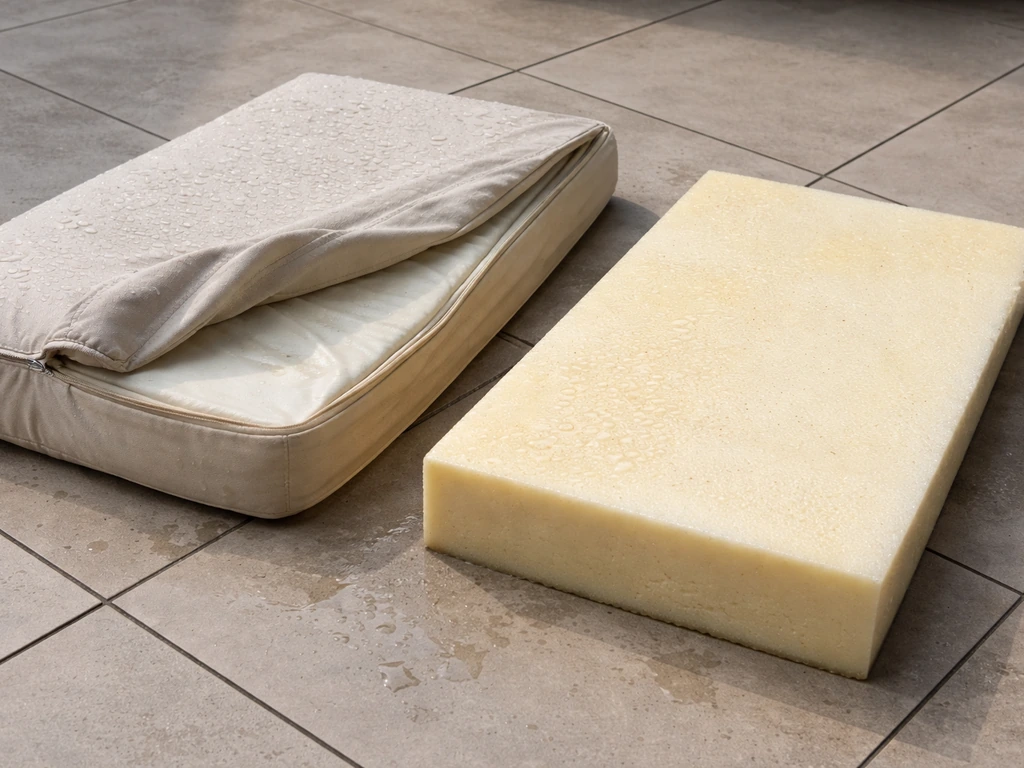
A surface-wet cushion and a waterlogged cushion are two different problems. Here is how to handle each scenario based on what is inside your cushions and how your covers are built.
Foam-filled cushions
Foam holds a surprising amount of water. If your cushion feels heavy and water squishes out when you press it, you need to drain the foam, not just dry the surface. Unzip the cover if it has a zipper (most outdoor cushions do) and pull the foam insert out. Stand the foam on its edge in a sunny spot and press it gently every 30 minutes or so to help water work its way out. Do not wring or twist foam, because it tears easily when saturated. blank" rel="noopener noreferrer">The foam itself can take 24 to 48 hours to dry depending on thickness. Dry the fabric cover separately at the same time.
One important note: most woven outdoor cushion care guides specifically say not to remove the fill for cleaning purposes, since it can shift or clump when replaced. But for a fully waterlogged cushion, getting the foam out to dry separately is worth the minor hassle of repositioning it later.
Fiberfill or polyester-fill cushions
Fiberfill dries faster than foam but can clump when wet. If you have a removable cover, take it off and gently fluff and reshape the fill while it dries. Hang it over a railing or a drying rack rather than laying it flat so air can get all the way around it. If the cover is not removable, stand the cushion on its edge and press it gently in different spots to help redistribute the fill and release trapped water.
Non-removable covers
If the cover is sewn shut with no zipper, you are dealing with the whole unit together. Stand it on its edge, blot the surface, and let airflow do the work. It will take longer than a cushion with a removable cover. If you have access to a wet/dry shop vacuum, pressing the nozzle against the fabric and running a slow pass can pull a surprising amount of moisture out through the fabric before you start air drying.
Safe cleaning methods by cushion material
Cleaning after rain is not complicated, but using the wrong product on the wrong fabric is where people cause more damage than the rain did. Once they are dry and clean, the next step is waterproofing patio cushions so future storms are less likely to soak through how to waterproof patio cushions. Here is a quick material-by-material breakdown.
| Fabric Type | Safe Cleaning Method | Avoid |
|---|---|---|
| Sunbrella / performance acrylic | Mild soap + water; bleach solution for mildew (1 cup bleach + 1/4 cup soap per gallon) | Harsh solvents, dry cleaning |
| Standard polyester | Mild detergent + water, spot clean with damp cloth | Bleach, abrasive scrubbers |
| Olefin / polypropylene | Mild soap + water, rinse well | High heat, strong bleach |
| Canvas / cotton blends | Mild soap + water, rinse thoroughly, air dry fully | Bleach (fades color), machine drying with heat |
| Woven outdoor fabric (over foam) | Clean in place with mild soap + water; do not remove fill | Aggressive wringing, bleach on colored weaves |
Regardless of material, always rinse thoroughly after any soap-based cleaning. Soap residue left in outdoor fabric actually attracts more dirt and creates a sticky surface that mildew loves. Rinse until the water runs completely clear, then air dry. If you own Sunbrella cushions, their care approach is detailed enough that it is worth reading up on Sunbrella-specific guidance for long-term maintenance.
Short-term covers and long-term storage to stop this from happening again
Once your cushions are dry and clean, the smart move is to set yourself up so the next rainstorm is not a crisis. This does not have to be expensive.
Short-term options for frequent rain
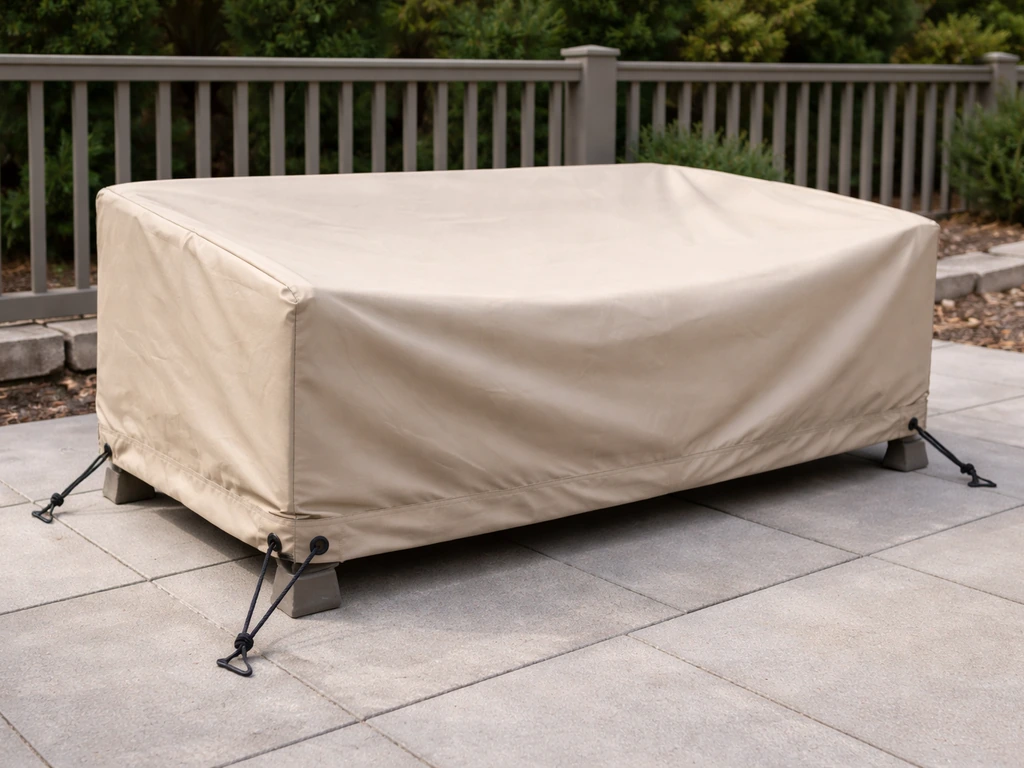
- A fitted patio furniture cover is the easiest single upgrade. Look for one with ventilation vents built into the sides. Covers without vents trap humid air underneath, which actually accelerates mildew even though the cushions are technically 'covered.' Ventilated covers cost anywhere from $25 to $80 and pay for themselves fast.
- Storage bin on the porch: a large deck box (roughly 100 to 150 gallon capacity) lets you toss cushions inside in under two minutes when rain hits. Prices start around $60 for basic resin models at big box stores.
- A simple DIY shelf or rack inside a covered porch or garage means cushions are off the ground, easy to access, and protected without any cover at all. This is the free option if you already have the space.
Long-term seasonal storage
When you are putting cushions away for the season or an extended period, the single most important rule is that they must be completely dry before they go into any bag, bin, or box. This is non-negotiable. Storing even slightly damp cushions in an enclosed space is the fastest way to ruin them. The moisture has nowhere to go, the temperature fluctuates, and by spring you will have a mildew colony you did not invite.
- Clean cushions before storing, not just after use. Dirt and organic material left on fabric will feed mildew over a long storage period even in dry conditions.
- Dry cushions fully in the sun for at least 24 to 48 hours before packing. Do the palm-press test described above.
- Use a breathable storage bag (canvas or non-woven fabric bags work better than sealed plastic for long-term storage because they allow minor humidity to escape). If you use a plastic bin, leave the lid slightly cracked or add a silica gel pack inside.
- Elevate stored cushions off a concrete floor if possible. Concrete holds and radiates moisture, especially in spring and fall.
- Check on them once mid-season if you are storing for more than two to three months. A five-minute check can catch a moisture issue before it becomes a full mildew problem.
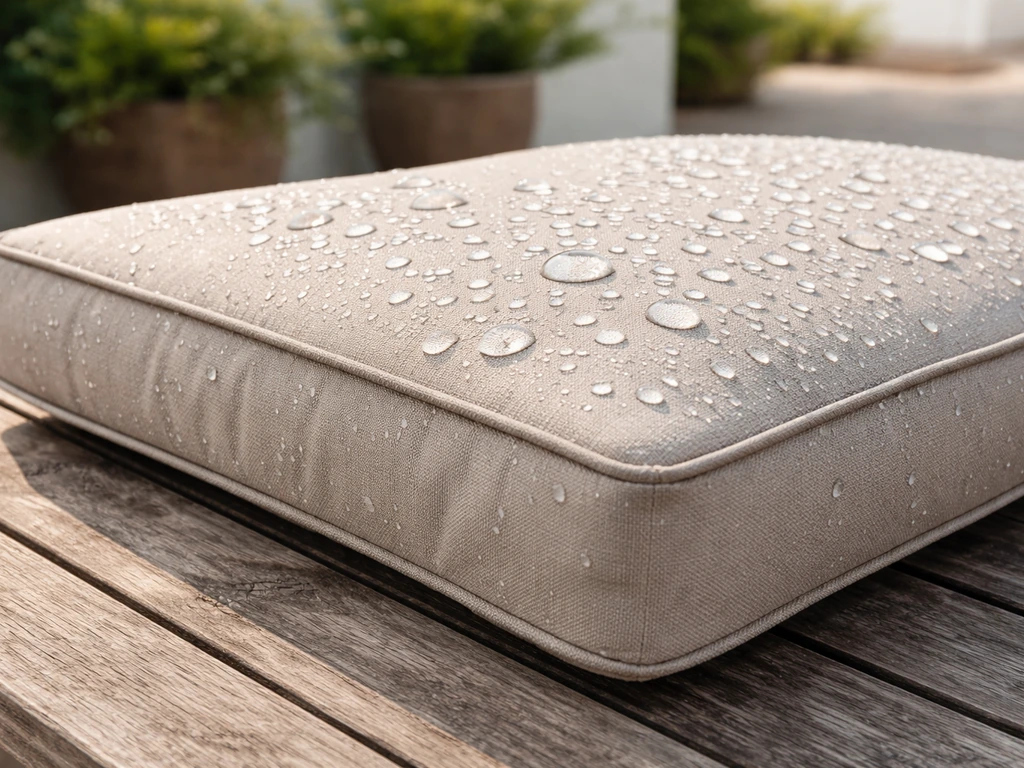
If you want to go a step further, applying a fabric waterproofing spray to clean, dry cushions before the rainy season adds a meaningful layer of protection. It will not make cushions completely waterproof, but it causes water to bead and run off rather than soaking in, which dramatically cuts drying time after any exposure. This pairs well with understanding whether your cushions can handle being left out in light rain at all, since some fabrics and fills handle moisture much better than others. If you are wondering, can you leave patio cushions outside in the rain, the safest answer is to avoid it whenever possible and move them under cover or bring them in as soon as you can.
Quick-action rain checklist to keep handy
- Stand cushions on edge immediately to drain water.
- Blot surface moisture with a dry towel.
- Move to covered area or bring inside.
- Remove from wooden furniture frames.
- If soaked: unzip and separate foam from cover, dry both separately.
- Air dry in sun and breeze for 24 to 48 hours minimum.
- Check for mildew and treat with vinegar or bleach solution depending on fabric type.
- Rinse all soap or cleaning product completely before drying.
- Do not store or re-cover until completely dry (use palm-press test).
FAQ
How long can patio cushions stay wet before I should worry about mold and bad odors?
Even if they look fine, plan to restart drying within 24 hours. If you cannot get airflow going that soon, prioritize moving them to a covered, ventilated spot and consider separating the cover from foam or fiberfill to reduce trapped moisture.
Can I leave patio cushions outside if it is only a light drizzle?
Sometimes, but use the “soak test” rule: if water is pooling, saturating seams, or lasting more than a short sprinkle, bring them under cover. Fabric that beads well may still trap moisture at the bottom edge where it sits on the chair or cushions base.
What should I do if the cushions smell musty even after they dry?
A lingering odor usually means moisture got into foam or fill. Re-dry fully with upright positioning and strong airflow, then spot-treat with a fabric-appropriate cleaner. For removable covers, wash and dry the cover separately, because the smell often resets when the cover and fill dry at different rates.
Is it safe to put wet patio cushions back into storage if the rain stopped overnight?
No. If they have any dampness at the core, storage will lock moisture in and accelerate mildew. Wait until the cushions feel dry all the way through, not just on the surface, then store in breathable conditions (open-air rack first, sealed bins only once fully dry).
Can I use a fan at home, or is that basically the same as using heat?
A fan is helpful and usually safer than heat. Aim airflow across fabric and around the cushion sides, rotate the cushion every few hours, and keep it upright so air reaches seams. Avoid heaters or high-watt space heaters close to fabric.
What is the best way to dry foam inserts without tearing them?
Keep foam upright on its edge and press gently to encourage water release. Do not wring or twist, and avoid leaning foam against sharp or rough surfaces that can crease fabric at the seam line.
If my cushion cover is removable, should I wash it immediately or wait?
Dry first if the inside is still waterlogged. Washing a cover while the foam or fill remains saturated can trap moisture when you reattach it. Remove the cover, dry the fill, and wash the cover once it is surface-dry or after it is fully dry, following the fabric instructions.
How do I rinse after cleaning so I do not leave soap behind?
Rinse until runoff looks and feels clean. A practical check is to touch the fabric, if it feels slippery or tacky, rinse again. Then air dry completely, because residue can reactivate during drying and attract more dirt.
Can I use a wet/dry shop vacuum on all patio cushion materials?
It can help on many outdoor fabrics, but test lightly on an inconspicuous spot first. Use a gentle, slow pass and keep the nozzle from snagging seams or pulling delicate outdoor textiles. Vacuuming helps start moisture removal, but it does not replace full air drying.
What waterproofing should I use after a rain incident, and when should I apply it?
Apply waterproofing only after the cushions are fully dry and clean. If you spray while any mildew or residue is still present, the treatment can lock in the problem. Also choose a product suited to your fabric type, performance fabrics versus standard polyester or cotton blends.