To care for Sunbrella patio cushions, brush off loose dirt regularly, clean with a mild soap-and-water solution using a soft brush, rinse thoroughly to remove every trace of soap, and always air dry completely before storing or covering. For mildew, use a bleach-based solution (1/4 cup dish soap plus 1 cup bleach per gallon of warm water), let it sit, then rinse well. That core routine handles 90% of what outdoor cushions throw at you.
How to Care for Sunbrella Patio Cushions: DIY Steps
Maren Grady
1 Jul 2026
Sunbrella is genuinely one of the easiest outdoor fabrics to maintain, but it does have a few quirks that trip people up. The biggest mistake I see is people scrubbing too hard, using the wrong cleaners, or skipping the rinse step. Get those three things right and your cushions can realistically last 10 years or more even through hard outdoor seasons.
Figure out what type of Sunbrella fabric you have
Not all Sunbrella is the same. The brand makes several fabric lines, and the one on your cushions affects how you clean it. The most common version you'll find on patio cushions is standard Sunbrella upholstery fabric, but there's also Sunbrella Horizon (a marine-grade vinyl-laminated fabric), Sunbrella shade fabric, and graphic-printed versions. Each has slightly different care notes.
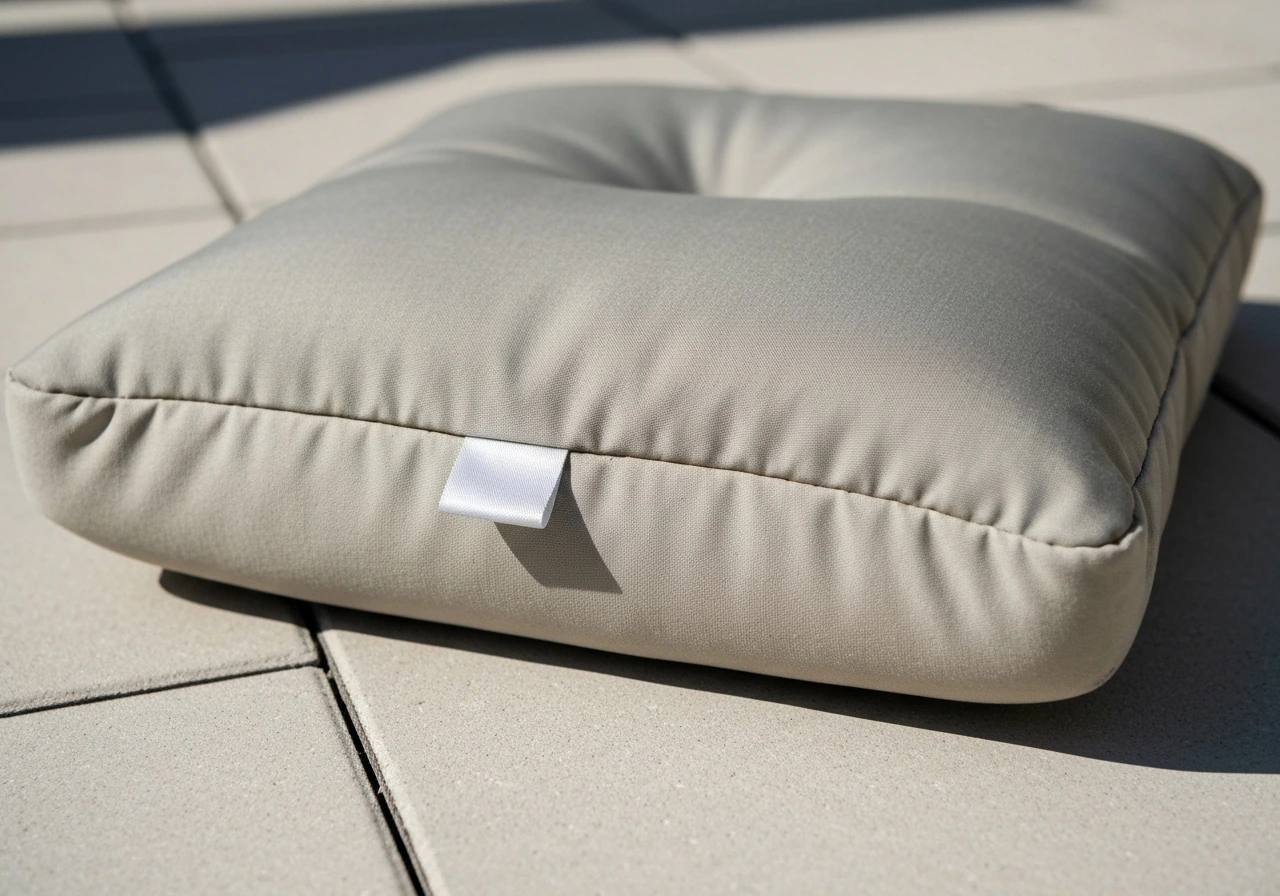
Start by flipping your cushion over and looking for a care label sewn into the seam or attached as a tag. On standard Sunbrella, you'll usually see a water-washing symbol (a tub with a hand) indicating hand or machine wash is okay, along with a crossed-out dry-clean symbol. That crossed-out dry-clean symbol matters: Sunbrella explicitly says do not dry clean their fabrics. If you see a tag that references 'Horizon,' you're dealing with the marine-grade version, which has similar cleaning instructions but is even more resistant to mildew growth by design.
If your cushions have no label at all (older cushions often don't), treat them as standard Sunbrella upholstery fabric. The cleaning approach is the same. The key thing to check before cleaning is whether the cushion cover is removable. Some Sunbrella cushion covers zip off and can be washed separately, but Sunbrella recommends checking with the furniture manufacturer first because internal cushion construction varies and some foam cores shouldn't get soaked.
Quick weekly maintenance that actually prevents the big messes
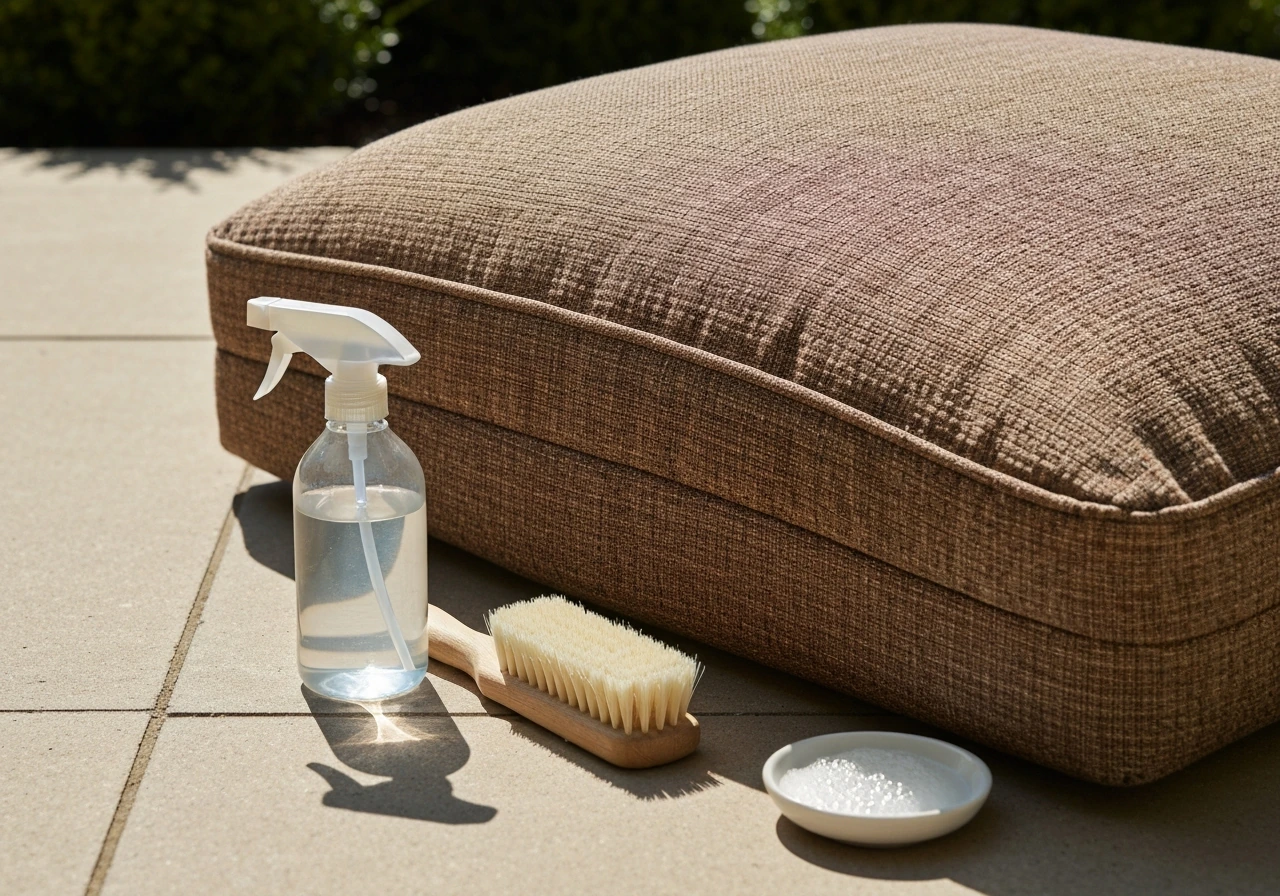
The best way to avoid a deep-cleaning session is a two-minute weekly habit. Sunbrella's own guidance is clear on this: brush off loose dirt before it gets embedded in the weave. Once dirt works its way into the fibers, it takes real effort to remove. A quick brush-off every week keeps that from happening.
- Use a soft-bristle brush (a natural-bristle hand brush or even a soft-bristle nail brush works great) to sweep off pollen, dust, leaves, and debris. Always brush in one direction rather than scrubbing back and forth.
- Shake the cushions out if they're small enough. This dislodges debris from the crevices between the fabric and the piping.
- If you had rain or heavy dew, stand the cushions on their edge or prop them at an angle so air can circulate around both sides and they dry fully. Trapped moisture between the cushion and a chair seat is how mildew starts.
- Spot-treat any fresh spills immediately. Blot up liquids with a clean cloth before they dry. The faster you act, the easier the stain comes out.
That's really it for routine upkeep. You don't need to spray anything, scrub anything, or do a full wash every week. The brush-off and dry-out habit is what separates cushions that look great at year five from ones that look trashed at year two.
Deep cleaning: mildew, embedded dirt, and tough stains
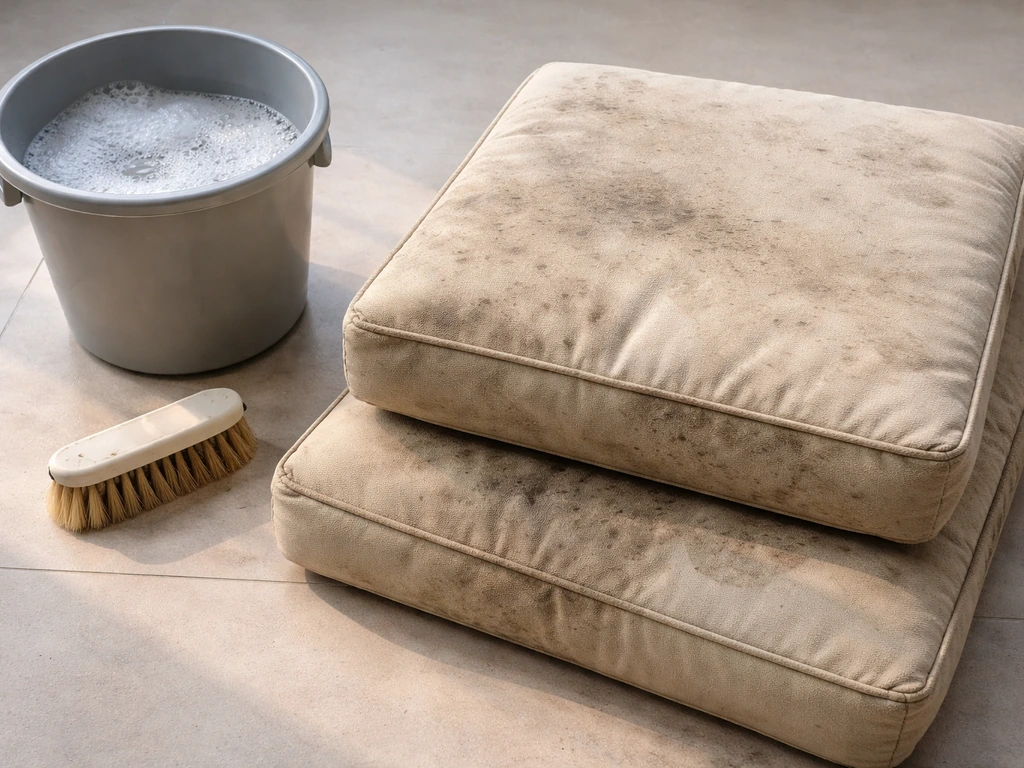
A few times a season, or whenever you notice staining, grime buildup, or those dreaded black mildew spots, you'll want to do a proper deep clean. Here's where people get into trouble by reaching for whatever cleaner is under the sink. Sunbrella fabric does not do well with abrasive powder cleaners, and hard-bristle brushes can actually fuzz up the fiber surface and make it attract more dirt over time. Stick to soft tools and fabric-appropriate cleaners.
General dirt and grime (the standard deep clean)
- Mix a solution of about 1 teaspoon of mild dish soap per 1 cup of warm water, or scale up to a bucket as needed.
- Brush off any dry loose dirt first. Cleaning wet dirt just smears it deeper.
- Apply the soapy solution with a soft brush or sponge. Work it gently into the fabric in light circular motions. No heavy scrubbing.
- Let it sit for a few minutes, then rinse thoroughly with a garden hose. This step is critical: leftover soap residue attracts dirt and can actually cause the fabric to look dingy faster. Rinse until the water runs completely clear.
- Allow the cushions to air dry fully in a spot with good airflow. Do not put them back on the chair or in storage while damp.
One thing I want to flag: do not use a pressure washer. Sunbrella specifically says not to use a power washer or high-pressure sprayer on their fabric. The force can damage the weave and break down the fabric's built-in water and stain resistance over time.
Mildew and black mold spots
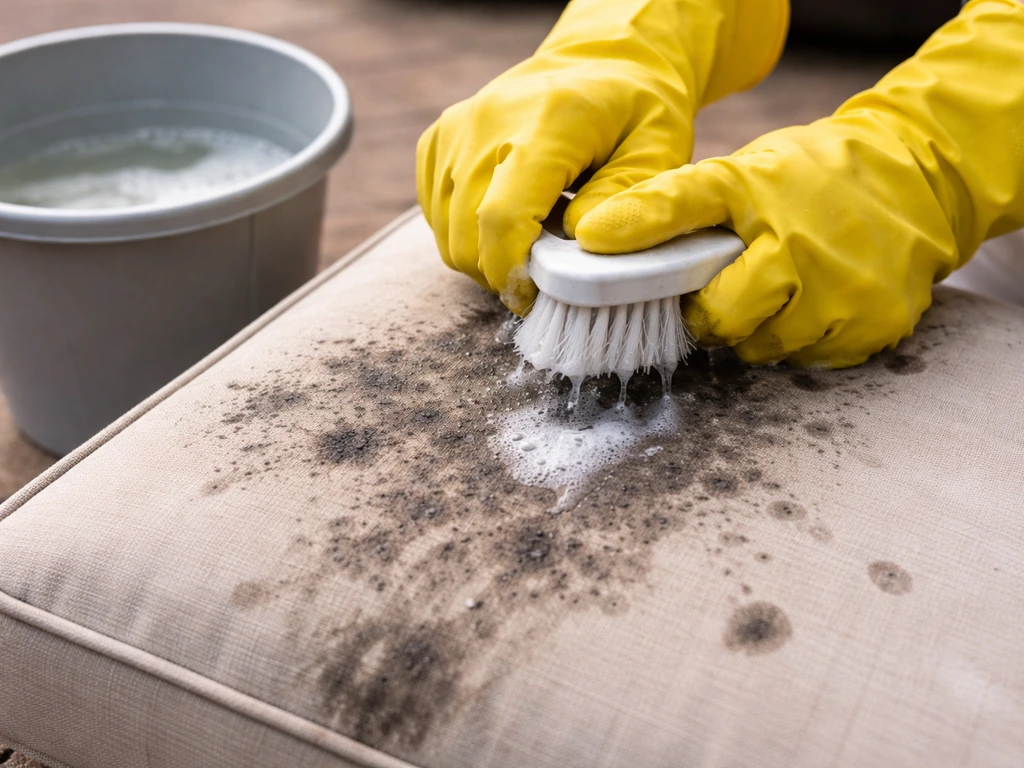
Mildew is the most common complaint with outdoor cushions, and honestly it's one of the easier problems to fix on Sunbrella. The fabric itself doesn't promote mildew growth, but dirt, moisture, and organic debris sitting on the surface absolutely can. Here's Sunbrella's official recipe for mold and mildew removal:
- 1/4 cup mild dish soap
- 1 cup bleach
- 1 gallon of warm water
- Mix the solution in a bucket. Wear rubber gloves and work in a ventilated area.
- Apply generously to the affected areas with a soft brush or sponge.
- Allow the solution to soak into the fabric for several minutes. For severe mildew, let it sit longer and reapply if needed.
- Scrub gently with a soft brush. You should see the black spots beginning to lift.
- Rinse extremely thoroughly with a garden hose. Bleach residue left on the fabric can cause fading over time, so rinse more than you think you need to.
- Let the cushion air dry completely in the sun if possible. UV light helps kill any remaining mold spores.
If you want a simpler option, Sunbrella also makes a product called Sunbrella Renew Mold and Mildew Stain Remover. It's a spray-on formula: spritz it on, wait 15 minutes, then rinse and let it dry. It's handy for spot treatment and doesn't require mixing anything.
For lighter mildew situations, a smaller-batch version of the same solution works well: 1 teaspoon dish soap plus 1 teaspoon bleach per 1 cup of water. For mold and mildew removal, Sunbrella’s cleaning guide specifies mixing 1 teaspoon (4 ml) dishwashing liquid with 1 teaspoon (4 ml) bleach per 1 cup (250 ml) water 1 teaspoon dish soap plus 1 teaspoon bleach per 1 cup of water. This is easier to mix up quickly for a small affected area without wasting a full gallon of solution.
Oil stains, sunscreen, and food spills
Sunscreen is probably the sneakiest stain on patio cushions because it soaks in invisibly and then shows up as a yellowish or brown shadow later. For oil-based stains like sunscreen, cooking grease, or similar, Sunbrella recommends their Sunbrella Extract Oil Based Stain Remover rather than a soap-and-water mix, which won't fully cut through oily residue. For water-based stains like drinks, food spills, and similar, Sunbrella Clean Multi-Purpose Fabric Cleaner works well, though the mild dish soap and water solution is often enough for fresh spills.
For dye transfer stains (like sitting on a colored towel that bleeds onto the cushion), Sunbrella's guide calls for a combination of dish soap with either isopropyl alcohol or a small amount of bleach in water. The exact ratio depends on how severe the transfer is, but starting mild and working up is always the right approach. Test any cleaner on a hidden section of fabric first before going after the main stain.
Drying right, and how to bring cushions back to life
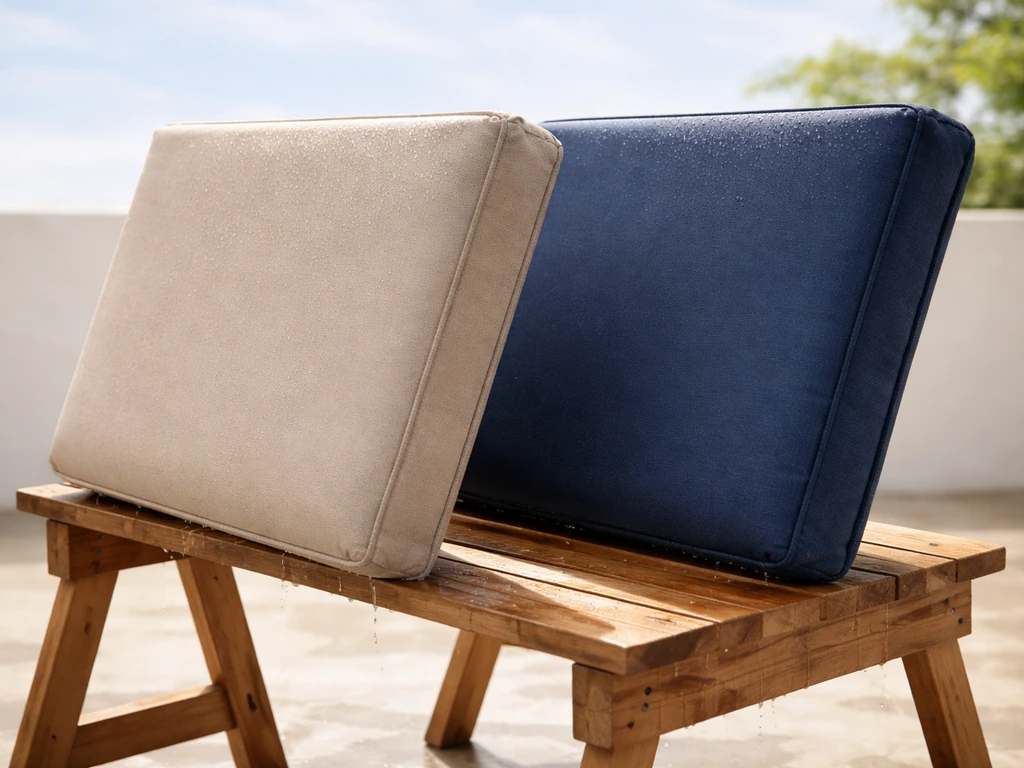
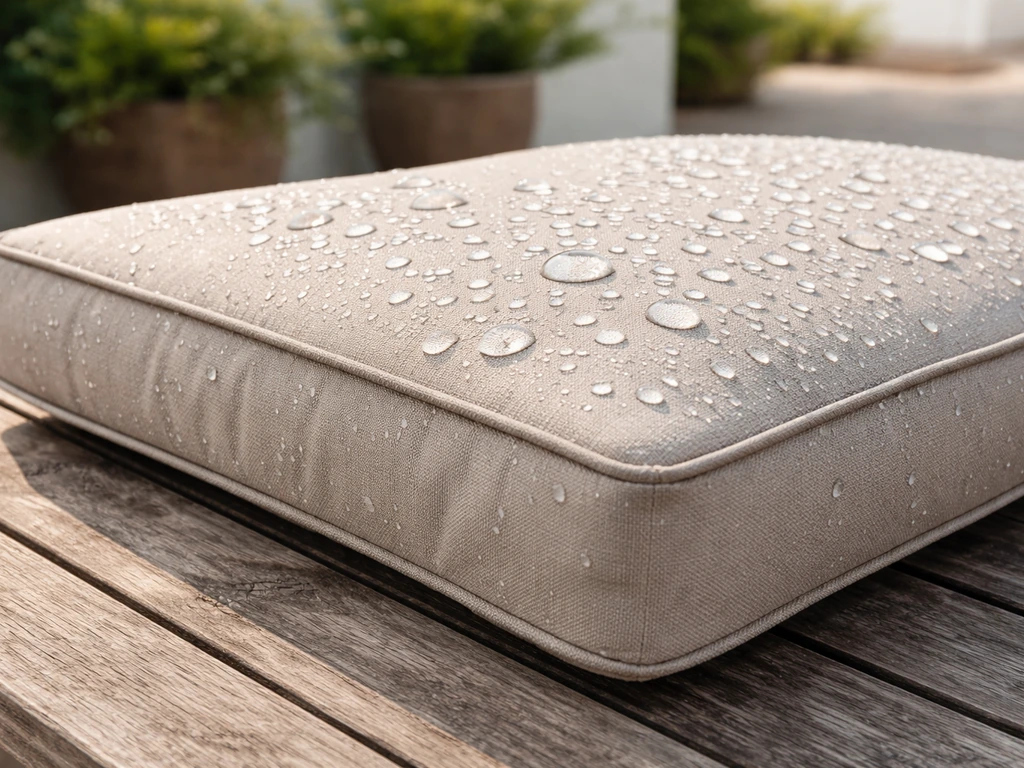
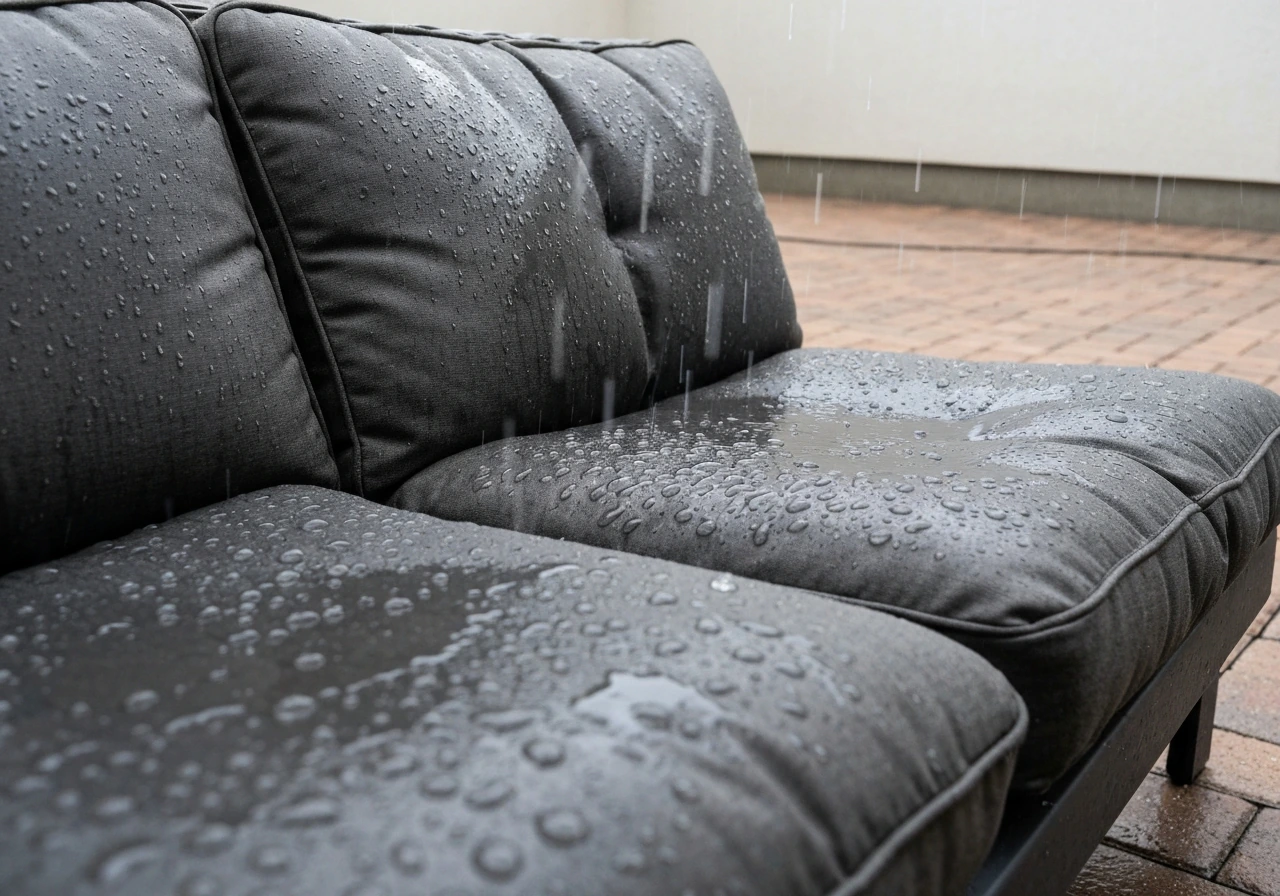
Here's where a lot of people accidentally cause damage after an otherwise good cleaning job. Heat is the enemy. Never put Sunbrella cushions in a dryer, and don't use a heat gun or direct-blast hair dryer on them. High heat can shrink the foam insert, warp the fabric weave, and strip the factory water resistance from the outer surface. Air drying is the only safe method. If the patio is getting wet from rain or irrigation, you can still use Sunbrella cushions, but let them drain and air dry fully to prevent mildew can patio pillows get wet.
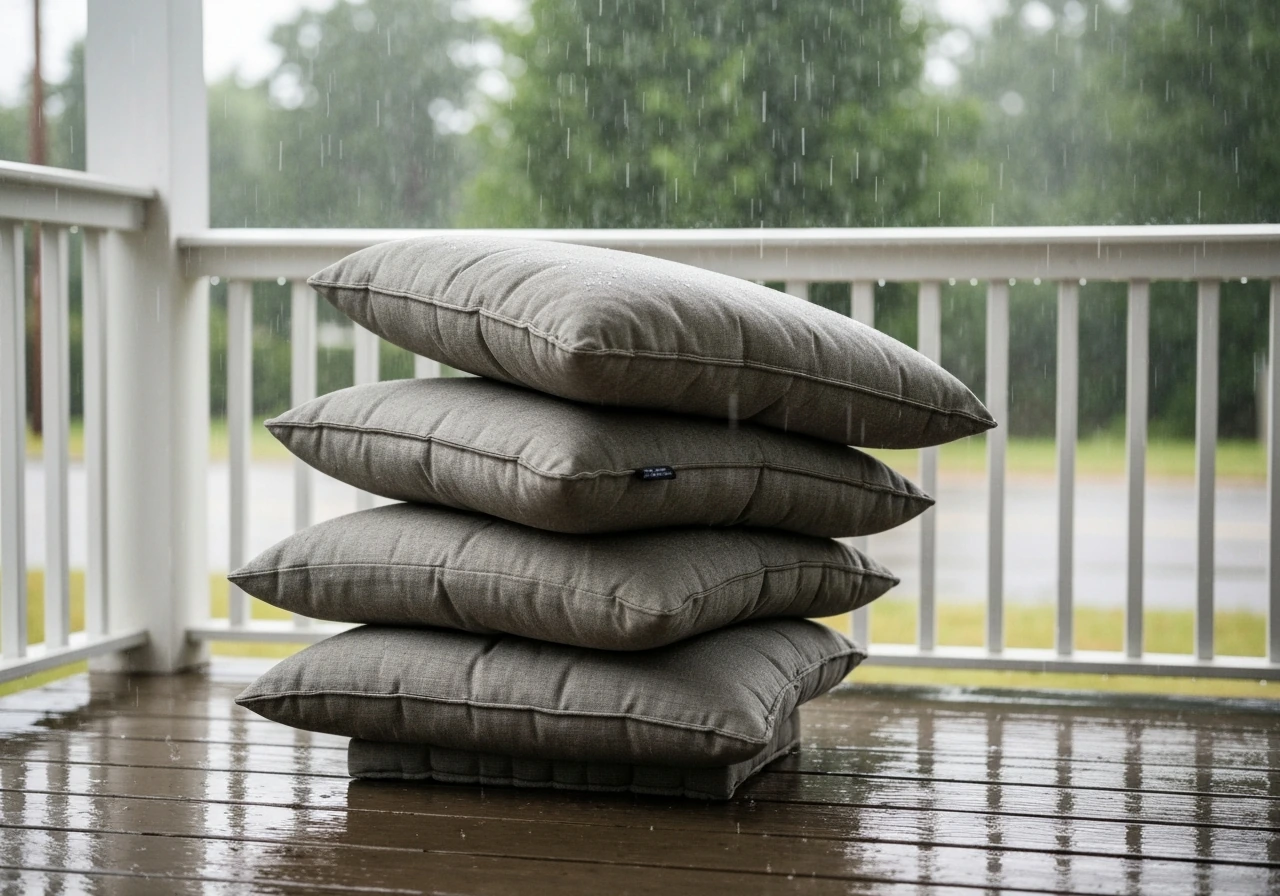
After rinsing, stand the cushions up on their long edge or lean them against a railing so air can circulate around all sides. A sunny, breezy day is ideal. Full drying can take anywhere from a few hours to a full day depending on the cushion thickness and weather. If rain hits before your cushions are fully dry, move them out of puddles right away and let them air-dry thoroughly before storing or covering them what to do with patio cushions when it rains. Thicker cushions (anything over 4 inches) should be turned halfway through drying to make sure moisture doesn't stay trapped near the bottom edge.
If your cushions have gone flat or lost their shape after years of use and washing, the fabric itself isn't usually the problem. The foam insert inside has compressed. If the covers are removable, you can replace just the foam insert without buying new cushions. Upholstery foam in the right thickness and density is available at most fabric stores or online, and cutting it to size is a manageable DIY job. This is a real money-saver compared to buying a full replacement set.
For cushions that just look a little tired or wrinkled after washing, lightly misting the fabric with water and smoothing it by hand while it dries usually does the trick. Sunbrella fabric relaxes and settles back into shape as it air dries, especially in light sunlight.
A seasonal protection plan that actually works
Sunbrella is tough, but giving it a seasonal care routine dramatically extends its life and reduces the deep-cleaning work you'll need to do year over year. Here's what I'd recommend as a practical schedule.
Spring (when you pull them out of storage)
- Inspect for any mildew that developed during storage. Even well-stored cushions can get spots if they went in with any residual moisture.
- Do a light soap-and-water wash to freshen everything up before the season starts.
- Check that all zipper pulls and seam stitching are intact. Catching a failing seam early means a simple repair rather than a full reupholster later.
Summer (active season)
- Weekly brush-off to prevent embedded dirt.
- Immediate spot treatment for spills.
- After rain events, prop cushions up to dry fully before laying them flat again. If you're dealing with frequent rain, it's worth knowing that Sunbrella handles moisture well, but sitting in standing water for extended periods isn't ideal for any cushion.
- Use a breathable outdoor furniture cover for extended periods when the furniture isn't being used, like when you leave for vacation. Avoid non-breathable plastic tarps, which trap moisture and create ideal mildew conditions.
Fall (prep for off-season storage)
- Do a full deep clean (the soap-and-water or mildew treatment if needed) before storing.
- Make absolutely sure cushions are 100% dry before putting them in storage. This is the single most important rule. Any trapped moisture will become a mildew colony by spring.
- Store in a breathable bag or cotton storage bin, not a sealed plastic tub. Airtight containers trap humidity.
- If storing indoors (garage, basement), keep them off concrete floors, which wick moisture upward. A shelf or pallet underneath makes a difference.
Using a vented outdoor furniture cover during the active season is a great middle-ground option if you don't want to bring cushions inside every time rain is in the forecast. If you plan to leave patio cushions outside during wet weather, make sure your setup allows them to dry fully and prevents moisture from getting trapped rain. The key word is vented: covers with air vents or mesh panels allow moisture to escape rather than pooling underneath. A sealed cover can actually cause more mildew problems than no cover at all.
When cleaning isn't enough: reupholstery and replacement options
Sometimes you do everything right and the cushion still looks rough. Here's how to diagnose whether it's worth saving.
| Problem | Likely Cause | DIY Fix Worth It? |
|---|---|---|
| Persistent mildew stains that won't bleach out | Mildew has penetrated deep into foam insert | Replace foam insert if cover is removable; otherwise replace cushion |
| Fabric is faded or discolored overall | UV damage, old fabric treatment worn off | Fading is permanent; reupholster with new Sunbrella fabric or replace |
| Fabric surface is fuzzy or pilled | Over-scrubbing with hard-bristle brushes over time | Cosmetic only; keep cleaning gently, or reupholster for appearance |
| Cushion has gone completely flat | Foam insert compressed or degraded | Replace foam insert (easy DIY if cover has zipper) |
| Seams splitting or fabric tearing | Age, UV brittleness, or physical damage | Small seams: hand sew or machine stitch. Large tears: reupholster |
| Cover zipper broken or stuck | Salt, rust, or wear | Replace zipper (moderate DIY) before buying a whole new cushion |
Reupholstering Sunbrella cushions yourself is genuinely achievable for a beginner. Sunbrella fabric is sold by the yard at most fabric stores and online, and it cuts and sews cleanly with a standard home sewing machine fitted with a denim needle. The cost of fabric plus new foam is typically a fraction of buying a replacement cushion set. If you have a full set of six or eight chair cushions to replace, the savings add up fast.
That said, be honest with yourself about the condition of what you're working with. If the foam is completely shot, the cover has multiple failing seams, and the fabric is brittle from years of UV exposure, a full replacement might be the smarter use of your time and money. The tipping point is usually when repairs on a single cushion start costing more than 40-50% of what a new replacement cushion costs. Below that threshold, DIY recovery almost always makes sense.
One more thing worth knowing: if your cushions are borderline and you're mostly fighting ongoing mildew and rain damage, look into whether improving your rain protection and storage habits can extend their life another season or two before you commit to replacement. If you improve waterproofing and off-season storage, you can cut down on mildew caused by rain and damp air rain protection. Small changes to how you handle wet weather and off-season storage often make a bigger difference than any cleaning product.
FAQ
Can I wash my Sunbrella cushion covers in a washing machine, or do I have to hand-wash?
Yes, if the covers zip off and the care label allows washing. In practice, wash covers separately from the foam, use mild soap and a soft brush, and rinse until no slick soapy feel remains, because detergent residue can attract dirt and make stains look “sticky” later.
Is it okay to machine dry Sunbrella patio cushions or throw them in the dryer on low?
Avoid it unless the care label specifically says otherwise. Even when Sunbrella is “washable,” high heat can shrink or warp the cushion, and dryers also reduce the fabric’s original water and stain resistance over time.
What should I do if mildew keeps coming back after I clean the cushions?
First, dry the cushion completely, then switch to a mildew-focused cleaning step rather than repeating general soap-and-water cleaning. After you rinse, stand cushions upright (on an edge) with airflow, and do not store them until they are fully dry, even if the surface feels dry.
Can I use bleach or alcohol to remove stains, and how do I avoid damaging the fabric color? (
Do a quick spot-clean test in an unseen area before treating the full cushion, because different Sunbrella lines and stain chemistry can react differently to alcohol and bleach mixtures. If you see fading or a color shift, stop and use a Sunbrella-specific cleaner for the stain type you have.
If my cushions smell musty, is it enough to just clean the fabric?
If the cushion cover is removable, replace the foam insert rather than soaking the entire cushion. Soaked foam stays wet inside and can restart mildew even if the cover looks clean, so you want to keep internal filling dry and replace it when it has compressed.
Why does sunscreen stain keep reappearing even after I clean with soap and water?
If the stain is oily (sunscreen, cooking grease), plain soap-and-water often leaves a shadow because it cannot break down oil residue. Use the oil-based stain remover approach for that category first, then rinse thoroughly and air dry fully.
What cleaning tools should I avoid, and what’s the safest brush type to use?
Don’t use scouring sponges, abrasive powders, or stiff wire/metal brushes. If you need extra lift, use a soft nylon brush and keep the pressure gentle, scrubbing less than you think you need, then rinse extremely well.
Can I use a pressure washer on Sunbrella cushions if they’re heavily soiled? (
Pressure washing is not recommended, and handheld pressure sprayers are risky too. Instead, use a low-effort method, soft brush plus cleaner, then rinse using a gentle flow or damp cloth, so you do not force water into seams.
What should I do the same day if my patio cushions get soaked in rain?
For heavy rain exposure, move cushions out of puddles immediately, blot excess water if possible, then air dry with good circulation. If you store covers or cushions while damp, mildew risk spikes, and later cleaning becomes much harder.
After spot-cleaning, why do the cushions look patchy or uneven in color?
If you only rewash a few areas, residue can look “lighter” than the surrounding fabric after drying. For best blending, clean the whole cushion face (or both sides consistently), rinse evenly, then allow full dry time so the fabric settles uniformly.
Is it safer to store Sunbrella cushions under a cover, or should I leave them uncovered outside?
If your outdoor cover is sealed, it can trap moisture and increase mildew. Use a vented or breathable cover, and make sure cushions are completely dry before covering, because trapped humidity matters more than whether rain is “blocked.”
When is it better to reupholster Sunbrella cushions instead of replacing them?
Before replacement, check whether seams are failing and whether the foam is fully compressed. If multiple seams are broken, fabric is brittle from UV, or foam is beyond repair, replacement can be more cost-effective than reupholstering one-by-one.