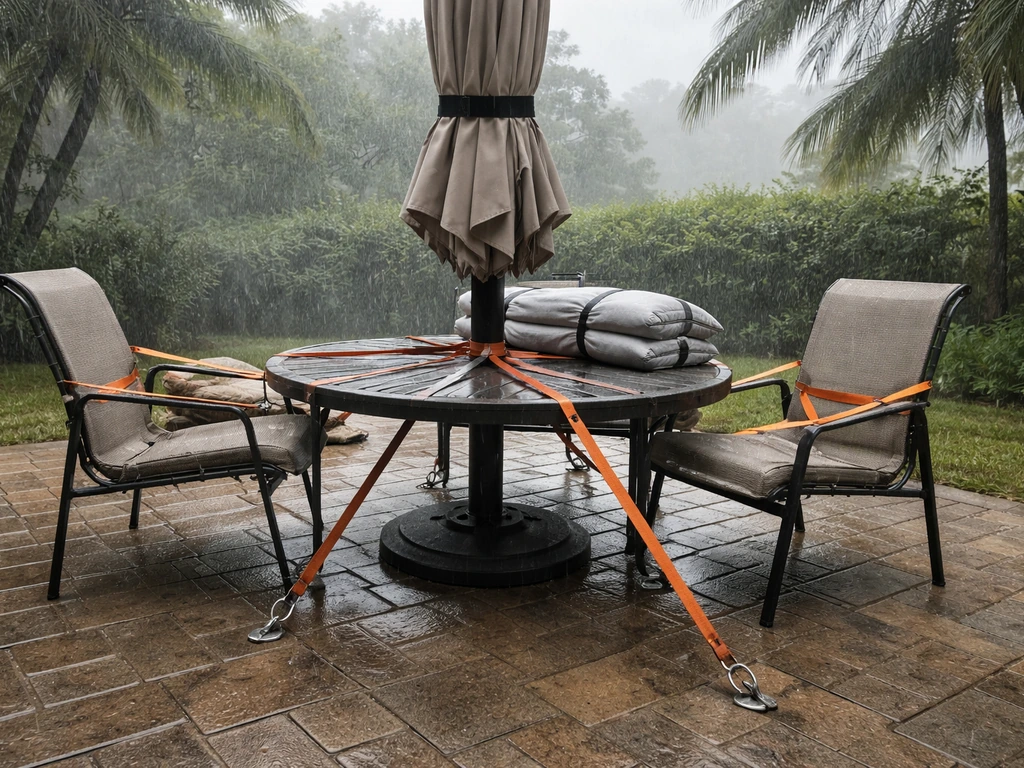
The most reliable way to secure patio furniture covers is to combine a well-fitted cover (one that pulls all the way down to the frame's lower edge) with at least two securement methods: either click-close webbed straps buckled under the frame, a drawstring or toggle cord pulled snug at the hem, or bungee cords routed through grommets and anchored to the frame. For hurricane-level winds, use the same logic but plan for stronger tension, more securement points, and regular re-checks after the storm begins how to secure patio furniture during hurricane. One method alone rarely holds in wind above 20–25 mph. Two together almost always do.
How to Secure Patio Furniture Covers From Wind
Maren Grady
29 Apr 2026
Why covers slip, blow off, or flap in the first place
Before you grab bungee cords, it helps to know exactly why your cover is failing. Most covers don't blow off in one gust. They work loose gradually. Wind gets under a slightly loose hem, the cover starts flapping back and forth, and that motion does two things: it slowly works the cover upward off the furniture, and the constant abrasion wears through the fabric or frays the tie points. Pooling water makes it worse. A big puddle on top of the cover creates a heavy sag that pulls the front hem up, which gives wind even more to grab. UV exposure through the gaps that form when a cover shifts also speeds up furniture degradation, which defeats the whole point of having a cover.
The root cause is almost always a fit problem. A cover that's too large for your furniture creates the loose fabric that flaps. Loose fabric is what wind grabs. Sharp corners or hardware on your furniture can stress the cover fabric as it moves, creating small tears that grow into real failures. Understanding this tells you what to fix first: before you add any hardware or clips, you need to address the fit.
Start here: fit, sizing, and surface checks before you secure anything
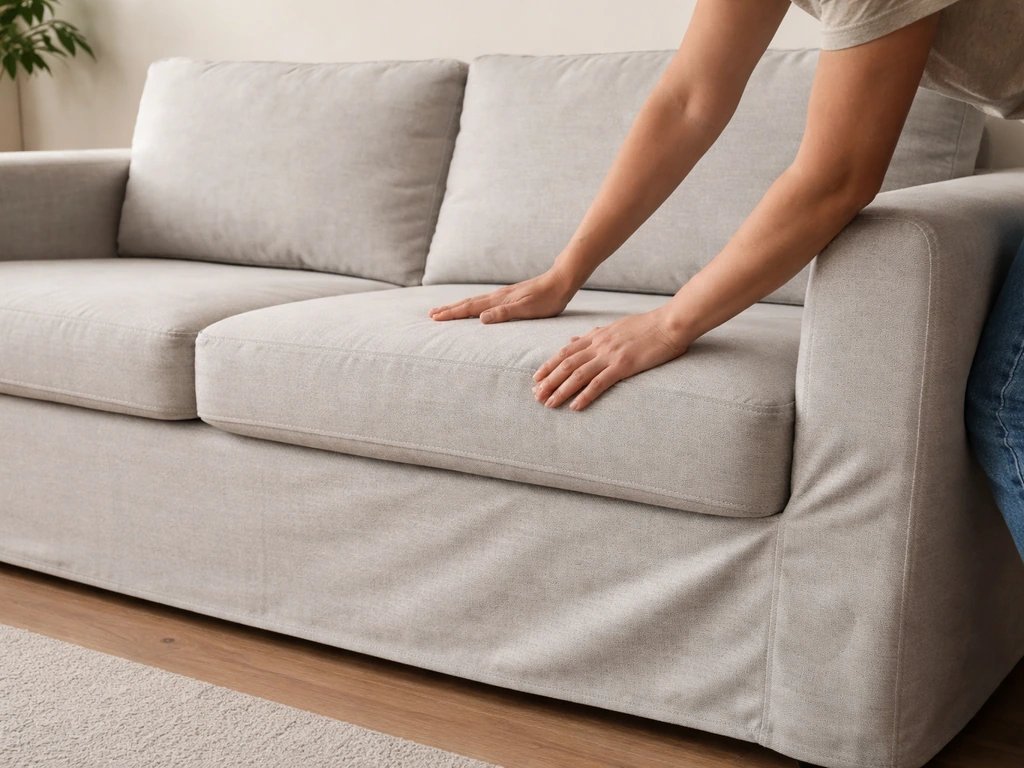
Pull the cover all the way down. That sounds obvious, but most people leave a few inches of gap at the bottom hem because the cover feels 'on' once it clears the seat cushions. It's not. The instructions from most cover manufacturers are explicit: pull the cover as far down as possible on the frame to prevent sagging on top. A cover that sits high is loose on top, which creates a wind catch. When you're putting a cover on, stand at one side, pull your side all the way to the ground level, walk to the other side and do the same, then go back and check that the cover is even all the way around.
Before you pull the cover on, do a quick surface check. Feel around the furniture for sharp corners, exposed screw heads, or broken weld points. These will stress your cover every time wind moves it. Wrap any sharp metal edges with a strip of old cloth or foam pipe insulation before covering. This one step can double the lifespan of a cover that keeps mysteriously tearing at the same spot.
On sizing: a cover that's more than 2–3 inches too large in any dimension is going to give you ongoing problems. If your current cover is significantly oversized, the cheapest fix is a fitted replacement. Look for covers with elastic hems, which are specifically designed to grip the lower edge of your furniture frame. An elastic hem acts like a drawstring that's always taut. Combined with one of the strap methods below, an elastic-hem cover is one of the most secure setups you can buy without drilling anything.
Straps, buckles, and ties: the most reliable everyday method
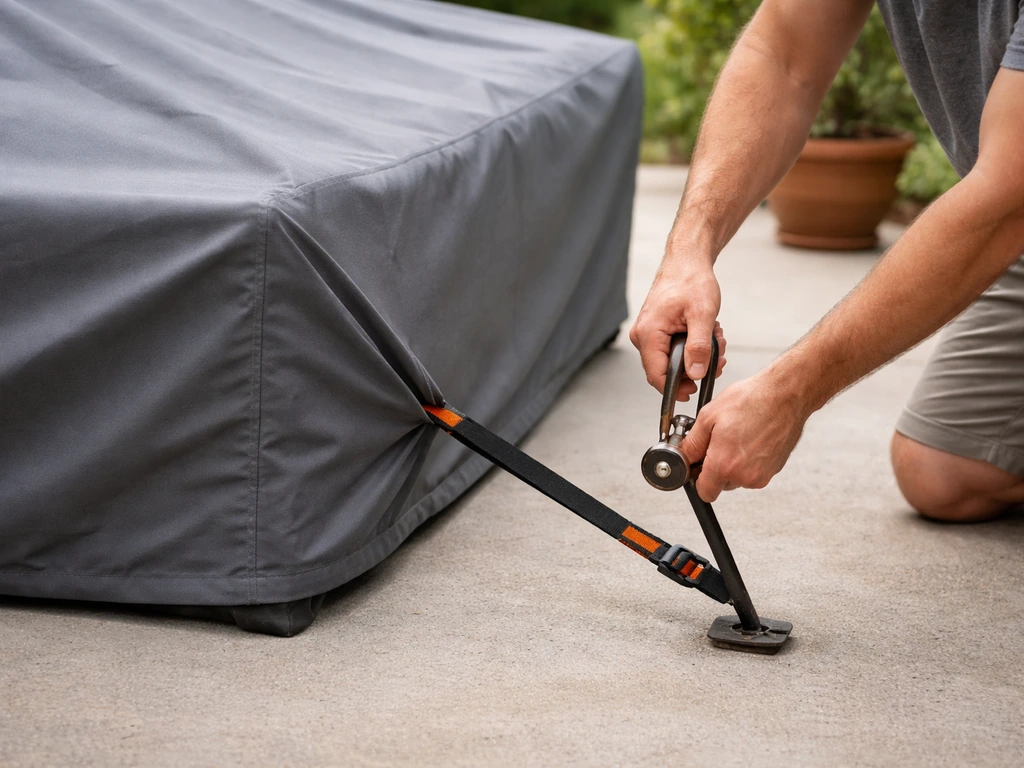
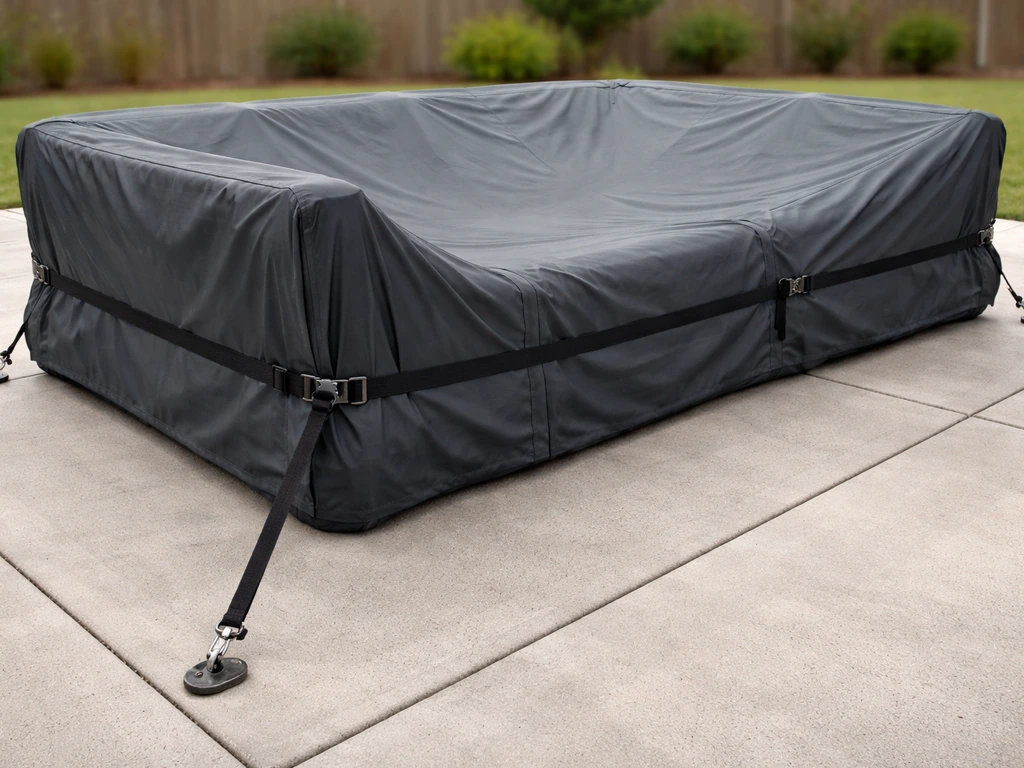
Most quality covers come with some kind of strap system, but a lot of people never use them correctly or skip them entirely. Here's how straps are actually meant to work. You route the strap through or around a structural part of the furniture frame (a leg, a lower crossbar, or a purpose-made hole in the frame), then wrap it around the outside and connect it to a corresponding strap on the other side using a click-close buckle. The key is tension: as you wrap, keep pulling the strap taut. A slack strap adds almost no holding power.
Many covers use a rip-and-grip (hook-and-loop) closure instead of click-close buckles, or combine both. These work fine for moderate wind but can release under sustained flapping in a strong storm. If your cover came with hook-and-loop straps and you live somewhere with regular high wind, it's worth replacing them with aftermarket click-close buckle straps, which cost about $5–$8 for a pack of four at any hardware store. Thread them through your existing strap loops or sew them on with outdoor-grade upholstery thread.
For drawstring or toggle-cord hems: pull the cord snug, then lock the toggle. If the cord is too long and bunches up, shorten it by tying a simple overhand knot closer to the toggle. A loose, bunched drawstring flaps and eventually works the toggle loose. Some covers have a 'pinch cordlock' style toggle, which you squeeze to open and release to lock. These hold better than sliding toggles in the wind.
Bungee cords, rope, and anchor point setups
Quick DIY setup with bungee cords
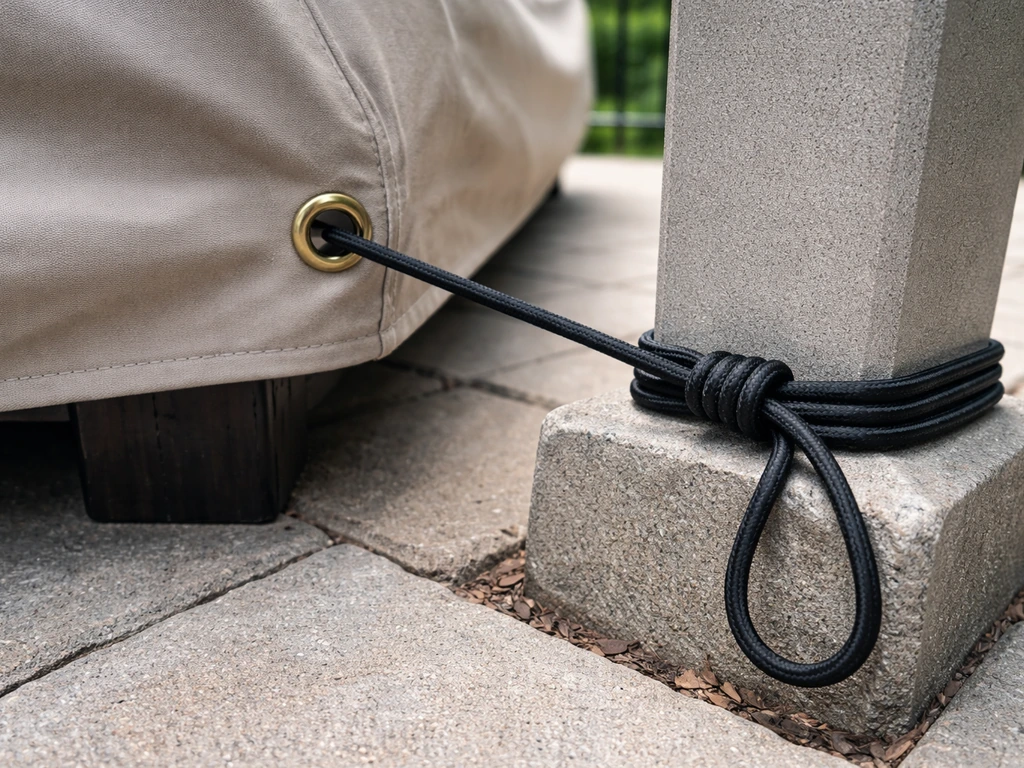
Bungee cords are the fastest, cheapest reinforcement you can add to any cover. The basic approach: route a bungee cord through a grommet in the cover fabric (most covers have at least two or four grommets at the hem), stretch it under the furniture frame, and hook the other end to a grommet on the opposite side or to the frame itself. For central covers (like over a grill or a single chair), hooking a bungee from a mid-point grommet to the base of the furniture keeps the cover anchored at its center, which is where wind lift usually starts.
If your cover doesn't have grommets, you can create an anchor point with a ball bungee: push the ball through the fabric (making a small gathered loop from the outside of the cover), and the ball holds on the inside while the cord extends outside to an anchor point. Space ball bungees every 18 inches along the hem for the most even hold. This mirrors how commercial shade structures are manufactured for wind resistance.
One important safety note about bungee cords: don't overstretch them. Stretching a bungee beyond its safe range risks snapping, which can cause a serious eye injury. A bungee stretched to about 50% of its rest length (so a 12-inch cord stretched to about 18 inches) is in its safe working range. If you need more reach, use a longer cord, not more stretch.
Rope systems for more permanent setups
If you want something more durable than bungee cords, a light rope or paracord system routed through grommets and tied off to the furniture legs works well for covers that go on and come off frequently. Use a simple trucker's hitch knot: it lets you apply tension easily and release without much effort. When grommets don't line up perfectly with your anchor points, tarp bungee cords are great for bridging the gap, since their hooked ends clip to almost anything.
For a more permanent setup on large dining sets or sectionals, you can install small screw-in eyebolts on the underside of furniture legs (into wood frames only) and run paracord between those fixed anchors and cover grommets. This takes about 20 minutes to set up the first time, but once the eyebolts are in, you can re-cover in under two minutes. Don't install eyebolts into painted metal legs without the furniture owner's consent, and avoid any approach that could scratch a deck or composite surface.
Using weights and managing water so the cover doesn't shift
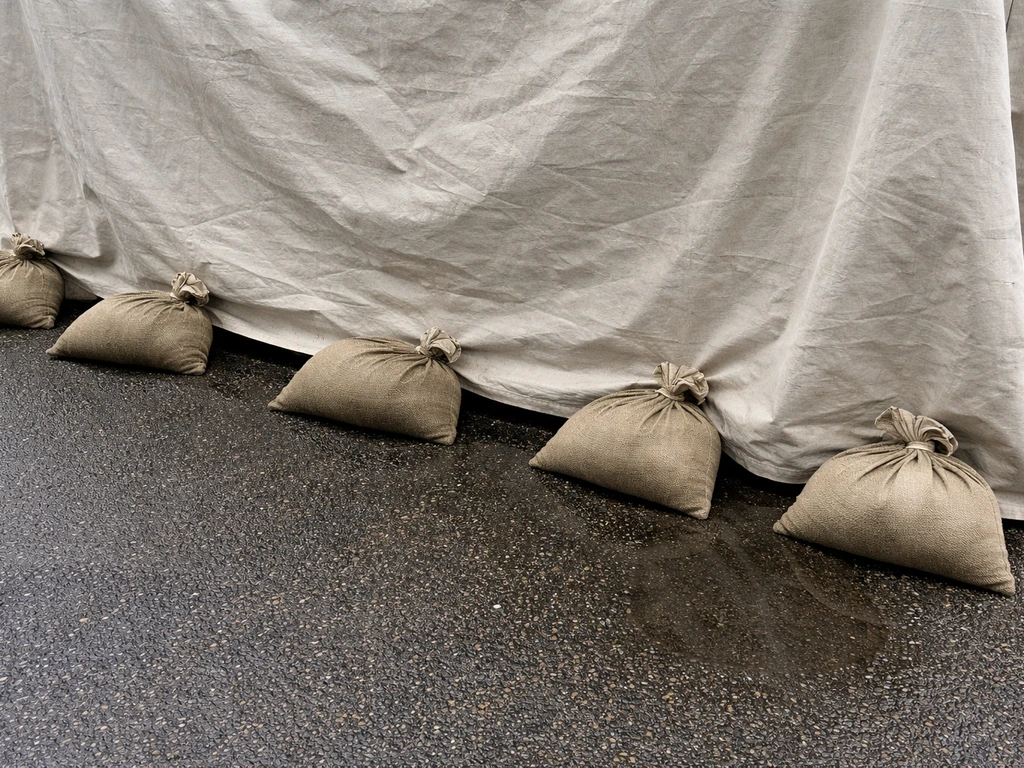
Weights are the easiest backup for covers where straps or cords aren't practical, or as an extra layer for high-wind situations. Sandbags placed against the lower edges of a cover add downward pressure that opposes wind lift. Small canvas sandbags (about 5–10 lbs each) placed at the four corners of a dining table cover are usually enough to hold it through moderate wind. You can make DIY sandbags from zip-lock bags filled with play sand and sealed in an old sock, which costs almost nothing.
Water pooling is a separate problem that contributes to cover failure in a less obvious way. When water collects in a depression on top of the cover, the weight creates a sag. That sag loosens the hem on two or three sides, giving wind an opening. The fix is to adjust the cover so it has a slight slope rather than a flat top, which encourages runoff. If water does pool after a rain, gently shake or lift one side of the cover to let the water run off. Don't let a heavy pool sit overnight. For recurring pooling in the same spot, tuck a small rolled towel or foam noodle under the cover at the low point to create a ridge that redirects the water.
Securing covers on different types of patio furniture
| Furniture Type | Main Challenge | Best Securement Method |
|---|---|---|
| Single chairs | Cover shifts laterally, no stable anchor base | Elastic hem + one bungee cord under seat |
| Dining table + chairs (combined cover) | Large surface area catches a lot of wind | 4-point strap system + corner weights |
| Sectional sofa | Odd shape, cover gaps between sections | Section-by-section covers with individual straps, or one large cover with 6+ anchor points |
| Chaise lounge | Long and low, cover slides lengthwise | Two straps cinched under the long rails, drawstring hem snugged tight |
| Grill / BBQ cart | Tall, top-heavy shape; lid lifts easily | Bungee cord from mid-cover grommet to base of cart, plus one strap under the frame |
For single chairs, the elastic hem alone often isn't enough because chairs have narrow legs that don't give the hem much to grip. Adding one bungee cord routed under the seat (from grommet to grommet across the short dimension) keeps the cover from riding up. For the same reason, it helps to use multiple securement points so your tarp or cover doesn’t shift in gusts when winds pick up how to secure a tarp over patio furniture. For sectionals, trying to hold one giant cover with a minimal strap system almost always fails. Either use individual covers per section (each with their own straps) or commit to six or more anchor points on the large cover, spaced roughly every 18 inches along the hem.
Chaise lounges are deceptively tricky because the cover slides along the long axis when wind comes from the head or foot end. Two straps cinched under the long rails, one near each end, solve this. Without them, even a tight drawstring will eventually allow the cover to creep lengthwise until one end is fully exposed.
What not to do (so you don't wreck the cover or the furniture)
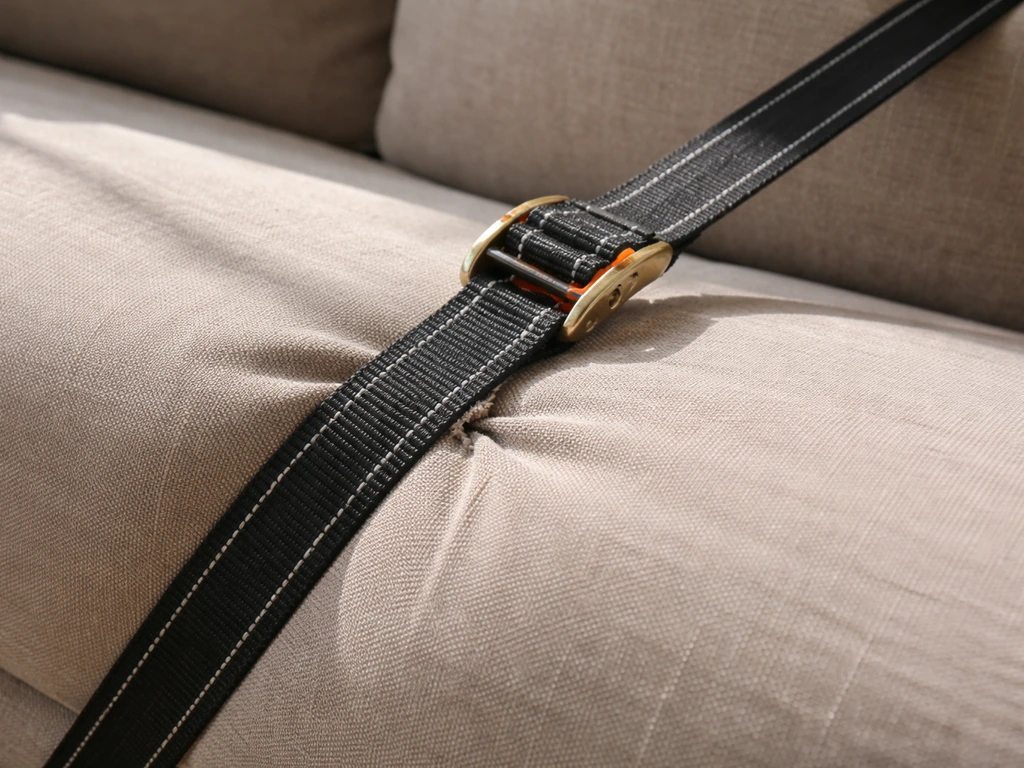
- Don't over-tighten straps to the point where they pull the cover fabric into a sharp fold. A tight strap against a pressed fold will eventually tear the cover at that point.
- Don't route straps or bungee cords over sharp metal edges without cushioning. The cord will fray or the cover fabric will wear through at that contact point.
- Don't drag the cover across concrete, gravel, or rough deck surfaces when positioning it. The abrasion damages the underside of the cover in ways you won't notice until it fails.
- Don't leave bungee hooks pointed outward where someone could catch them with a hand or foot. Hook them inward toward the furniture frame.
- Don't assume any cover will hold in a hurricane or extreme wind event. If you can't get a tight, multi-point securement and severe wind is forecast, remove the cover and store it, then bring in or tie down the furniture itself.
Seasonal re-covering and storm maintenance checklist
Before you put covers on for the season, do the following: remove all cushions and store them separately (cushions trap moisture under covers and cause mildew), make sure the furniture and any remaining surfaces are clean and fully dry, and check the cover itself for any fraying at strap attachment points, worn grommets, or small tears. A small tear in a cover gets dramatically worse once wind gets into it. Patch it with waterproof fabric tape before covering, not after.
- Clean and dry furniture surfaces before covering to prevent mildew forming under the cover.
- Inspect cover fabric, grommets, and strap attachment points for wear or damage.
- Pull the cover all the way down to the frame's lower edge and verify it's even on all sides.
- Route and tighten all straps, buckles, and drawstrings. Test each strap with a firm tug.
- Add bungee reinforcement or weights if wind is forecast above 20–25 mph.
- After any storm, go out and re-check tension on all straps and retighten. Bungee cords stretch and lose tension over time.
- If water has pooled, redistribute it before it creates a sag that loosens the hem.
- At end of season, remove the cover, clean it according to the manufacturer instructions (no bleach, no high heat), and let it line dry completely before folding and storing.
Re-checking tension after storms is something most people skip, and it's why covers that seemed fine in October end up across the yard in November. Bungee cords and strap buckles both loosen as temperatures drop and materials contract and expand. A 10-minute walk-around after any storm with winds above 20 mph, tightening whatever has gone slack, will keep your covers in place all season. This is especially important if you're also dealing with the broader challenge of securing patio furniture from wind in general, since covers are just one piece of that puzzle. To <a data-article-id="1AD95F21-7659-4FFE-8F27-65C7F3C84D09"><a data-article-id="1AD95F21-7659-4FFE-8F27-65C7F3C84D09">protect the furniture from theft</a></a>, add lockable strategies like anchoring the pieces or using a hardened cable lock through fixed points. To learn more about stopping movement during strong gusts, follow the full guide on securing patio furniture from wind as well.
FAQ
Can I leave a gap under the cover to allow airflow?
Yes, but only if the cover can still be pulled down to the frame level. Raise it for a few hours only if you have straps or cords that keep the hem tensioned, otherwise the lifting creates slack that wind can exploit, especially along the corners.
What should I do if the cover still pools water after rain?
If water pools on the top, do two things: create runoff by adjusting the cover so it has a slight slope, and clear debris from the low spot (leaves and grit act like a dam). If pooling keeps returning to the same place, add a small ridge (rolled towel or foam noodle) under the cover at that exact low point.
How can I tell if my buckle straps are secured correctly?
For click-close buckle straps, use the strap position your cover was designed for (around structural lower frame parts). After tightening, re-check that the strap is pulling straight and not rubbing on sharp edges, and ensure every buckle is fully latched, not just “snapped partway.”
Will hook-and-loop straps hold in strong, repeated winds?
Don’t rely on hook-and-loop alone if winds are frequent or sustained. Replace with aftermarket click-close buckle straps or add an additional method (for example, one bungee plus one strap). Hook-and-loop can release when the cover flaps repeatedly, even if it feels tight right after installation.
My cover tears near the grommets, what usually causes that?
If you see fraying at grommets, the cord or bungee may be sawing the fabric due to misalignment or over-tight tension. Re-route so the cord line is straight across the grommet, add a protective fabric patch over the wear area if needed, and inspect grommets for bending or pulled-out anchors before the next storm.
How stretched is too stretched for bungee cords on patio covers?
No, bungee cords typically fail sooner when they are overstretched or when they sit in one position for months and degrade. Use the safe working range (around half the rest length under tension), and inspect hooks and cord condition at the start of each windy season.
If my cover lacks grommets, how do I place ball bungees properly?
If you use ball bungees, spacing matters. Put them about every 18 inches along the hem so the pull is distributed evenly. If you only place one or two, the middle still sags and wind gets under the loose sections.
Is it safe to install eyebolts under patio furniture legs?
You can, but avoid drilling into painted or metal legs unless the furniture owner approves. For wood frames, install screw-in eyebolts only on the underside and then tie paracord to the cover grommets with consistent tension so you are not applying sideways force that could bend the leg.
Can I use sandbags instead of straps?
Yes, but the cover should still be fitted and secured. Use weights only as a backup to straps or cords, because weights do not stop the cover from lifting at the hem. Place lighter sandbags at the corners and avoid blocking the intended runoff path that prevents pooling.
What’s the fastest way to inspect a cover after a storm?
After severe wind, re-check three spots first: the hem tension along all sides, the strap or cord attachment points (buckles, toggles, knots), and the grommet or bungee contact areas. A cover can look mostly fine while small loosening starts at just one corner.
How many tie-down points do I really need for a large patio set?
Use multiple securement points because gust direction changes. A single tie works for a moment, but it cannot resist lift if the cover shifts and flaps. For large covers, aim for anchors spaced roughly every 18 inches along the hem, using straps or cords plus any needed center anchoring.
My cover is a little too big, what’s the best fix before adding more hardware?
Tie-down solutions often fail when the cover is oversized by more than a couple inches, because excess fabric flaps and forms repeated wind channels. If your cover is clearly too large, switching to a properly sized cover or an elastic-hem cover will usually outperform adding more straps to a poor fit.
How do I prevent a drawstring from loosening over time?
Yes, locking after tightening helps. For drawstrings, pull snug, then lock with the cordlock style and ensure there is no long loose tail that can snag and loosen. If your drawstring bunches, shorten it with an overhand knot near the toggle so it stays taut.
Why does my cover shift on chairs and chaise lounges even when it seems tight?
It can, especially for chairs with narrow legs and chaise covers that can creep lengthwise. Add a strap or bungee routed under the seat across the short dimension for chairs, and for chaise lounges add two straps under the long rails near both ends to stop sliding from head-to-foot wind.
Should I patch small tears before covering furniture again?
Yes. Even small tears get worse quickly once wind reaches them. Patch with waterproof fabric tape before covering, and then re-tighten or re-route the strap so the tear area is not under rubbing or tension during the next gust.
Does cleaning and drying the furniture before covering affect wind resistance?
It helps, but it is secondary to fit and tension. Cleaning and fully drying reduces mildew and degradation of the fabric and closures, and it is easier to spot worn grommets or fraying when the cover is dry and not under load.