The best way to <a data-article-id="8D31F235-1A60-46AB-895A-BE8D022A3176"><a data-article-id="1DF5FCA2-0D17-41E4-BF07-485CAF28B89D">protect patio furniture cushions</a></a> is to combine three things: a waterproof or water-resistant cover sized to fit snugly, tie-down anchors or non-slip pads to keep cushions from shifting in wind, and a habit of drying cushions completely before storing them. Do all three and your cushions can last five to ten years instead of falling apart in two. Skip even one and you'll be dealing with soaked foam, mildew smell, or cushions scattered across the yard every time a storm rolls through.
How to Protect Patio Furniture Cushions From Water and Wind
Maren Grady
29 Apr 2026
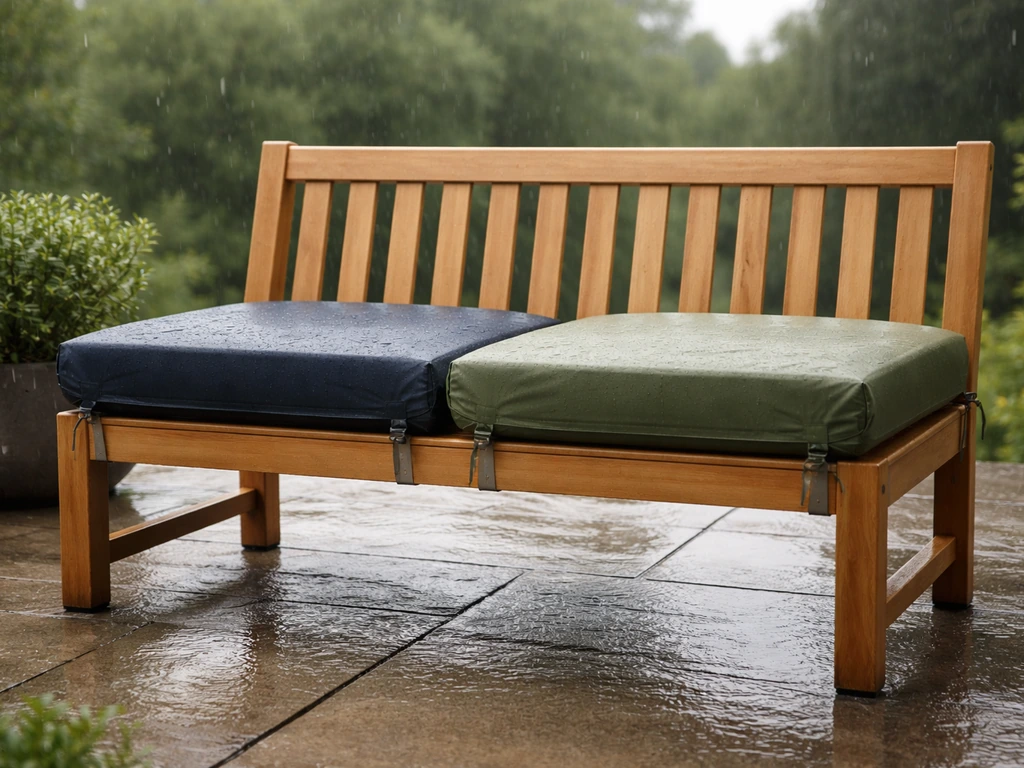
What you're really protecting against (and why cushions fail early)
Most outdoor cushions don't die from old age. They die from three specific problems: UV exposure that breaks down fabric and fades color, moisture that gets trapped inside the foam core and breeds mold, and wind that tosses cushions around until the covers fray and the fill compresses unevenly. They die from three specific problems: UV exposure that breaks down fabric and fades color, moisture that gets trapped inside the foam core and breeds mold, and wind that tosses cushions around until the covers fray and the fill compresses unevenly how to protect patio furniture from sun. Before you buy anything, it helps to know which problem is hitting your cushions hardest, because the fix is slightly different each time. If you're also protecting the furniture frames themselves, those have their own quirks depending on material, but cushions are their own battle and that's what we're focused on here.
Quick protection overview: what to do right now
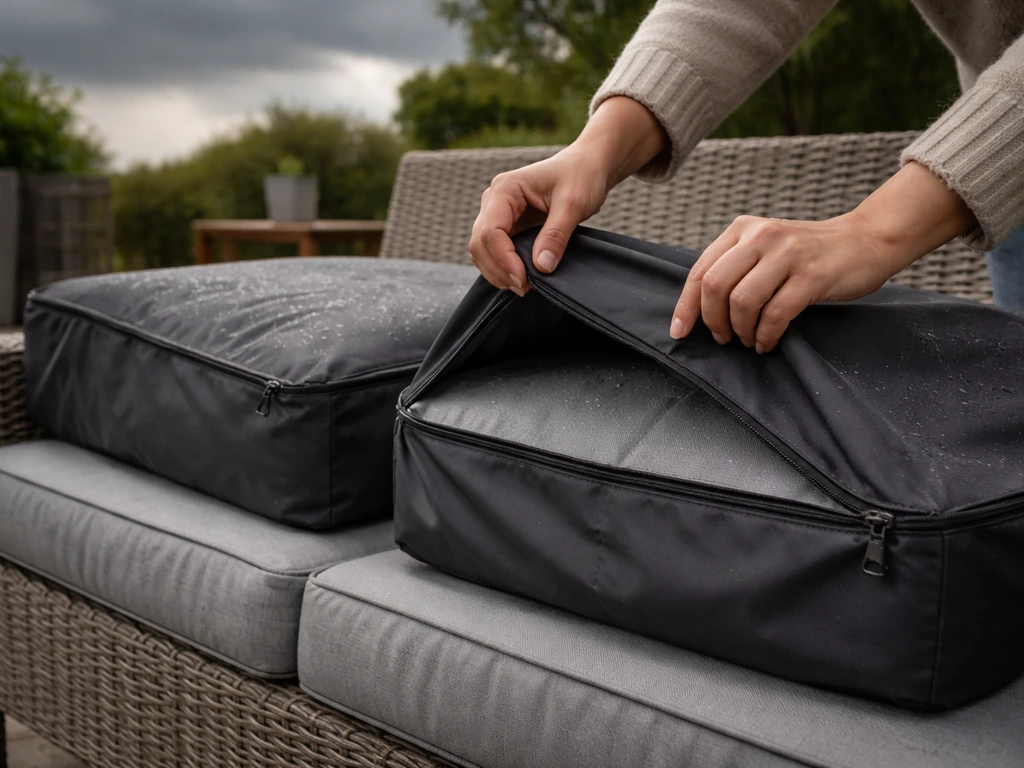
If you're reading this because rain is coming tonight or your cushions are already getting battered, here's the fast version. Get a fitted furniture cover or individual cushion bags that are rated water-resistant or waterproof (look for a hydrostatic head rating of at least 1,500mm for real rain protection). Add hook-and-loop straps or clip ties to keep covers from blowing off. For cushion-to-furniture contact, stick self-adhesive non-slip grip pads to the seat base so the cushion stops sliding. That combination handles the immediate threat. The rest of this guide gets into how to do each of those things properly so they actually work long-term.
How to stop cushions from sliding, shifting, and blowing away
This is honestly the problem that frustrates people the most, and it's also one of the cheapest to fix. Wind and movement cause cushions to creep forward off seats, tip off chair backs, or end up across the patio entirely. Here's where I made the mistake of thinking any solution would work: I used rubber shelf liner and it worked fine on flat surfaces but did nothing on slatted metal chairs because there wasn't enough contact area. p6s2: Here's where I made the mistake of thinking any solution would work: I used rubber shelf liner and it worked fine on flat surfaces but did nothing on slatted metal chairs because there wasn't enough contact area, and if you're dealing with aluminum frames, you'll also want to follow the basics in how to protect aluminum patio furniture. Match your anchoring method to your furniture surface.
For seat cushions on solid or mostly-solid surfaces
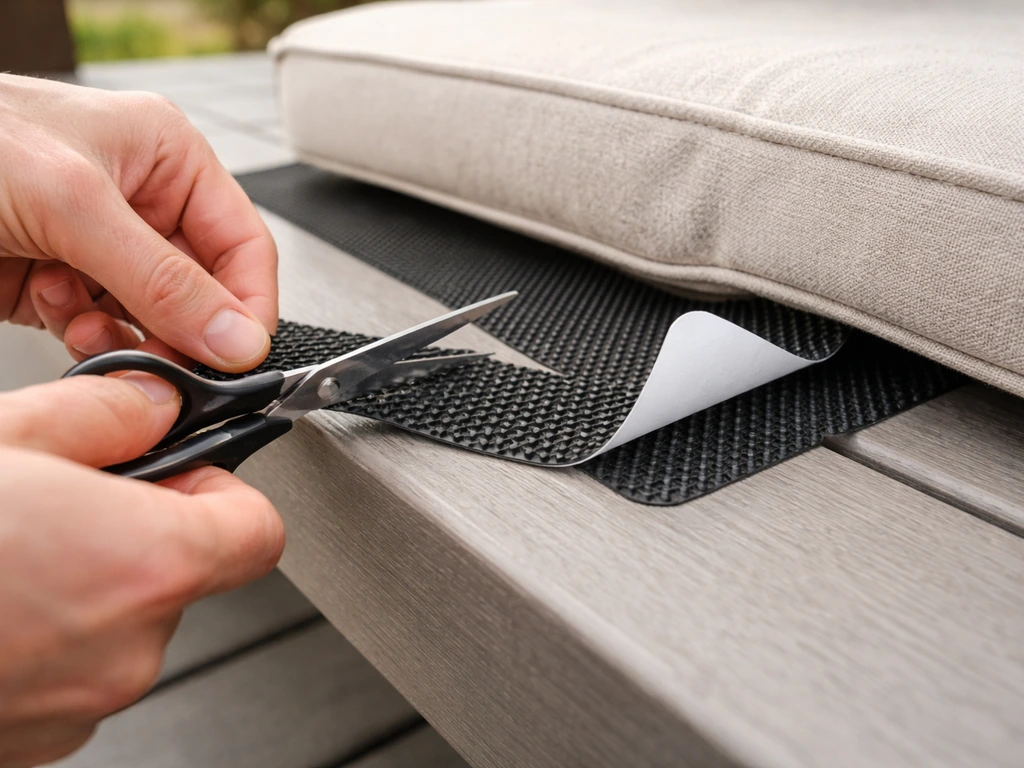
Self-adhesive non-slip grip pads (the rubbery mesh sheets sold for under $5 at any hardware store) are the simplest fix. Cut a few strips and press them onto the chair seat or bench surface where the cushion sits. The cushion grips instead of slides. You can also use rug-grip spray on fabric-bottomed cushions, but test it on a corner first because some sprays can stain or stiffen fabric.
For cushions with tie straps (the most reliable method)
If your cushions came with fabric ties, use them every time. Thread the ties through the chair slats or around the frame and tie a square knot, not a bow. Bows come undone in wind. If your cushions don't have ties, you can sew or hot-glue adhesive hook-and-loop (Velcro) strips to the underside of the cushion and the chair frame. A pack of adhesive hook-and-loop tape costs about $6 and takes ten minutes to apply. For cushions on loungers or sectionals, bungee cord clips looped under the frame rails work well as a low-budget backup.
For back cushions and pillows
Back cushions fall off constantly because they have almost no gravity helping them stay in place. Tie loops sewn to the back of the cushion and looped over the chair's back rail are the most reliable fix. If there are no loops, add them with fabric scraps and a needle and thread, or even zip ties in a pinch. For decorative throw pillows that aren't furniture-specific, just bring them inside when you're not using the patio. They're not built for outdoor life and no amount of anchoring replaces proper weatherproofing.
Rain and water protection: covers, waterproofing spray, and physical barriers
Water is the number one killer of cushion foam. If you're wondering how to protect patio furniture from rain in practice, start by treating water as the number one killer of cushion foam and prevent moisture from getting past the fabric first. Once moisture gets past the outer fabric and into the fill, it stays there far longer than you'd expect, and that trapped dampness is exactly where mildew starts. Your goal is to keep water from penetrating the fabric in the first place, and if it does get in, to make sure it can drain and dry instead of pooling.
Waterproofing spray: your first line of defense
A fabric waterproofing spray like Scotchgard Outdoor or 303 Fabric Guard applied to clean, dry cushion covers makes a real difference. Spray evenly from about 6 inches away until the fabric looks uniformly wet, then let it dry completely (usually 24 hours) before exposing cushions to weather. Reapply every season or after you wash the covers. It won't make cushions 100% waterproof in a heavy downpour, but it dramatically slows absorption and buys you time. Cost is around $10 to $15 per can and one can usually covers a full patio set.
Furniture covers: what actually keeps rain out
A good outdoor furniture cover does two jobs: blocks direct rain and creates airflow so condensation doesn't build up underneath. Covers that sit too tight with no ventilation trap moisture and cause more mildew than they prevent. Look for covers with vented sides or tie-down hems that keep the cover raised slightly off the ground. For individual cushions, dedicated cushion storage bags with a zipper and a small vent hole are ideal. Generic covers from big-box stores work fine as long as they're polyester or polyethylene with a waterproof coating on the outside and a soft lining that won't scratch furniture. Avoid thin plastic tarps over extended periods: they trap condensation, tear in wind, and can cause more moisture buildup than they prevent.
What to do when it rains and you didn't cover in time
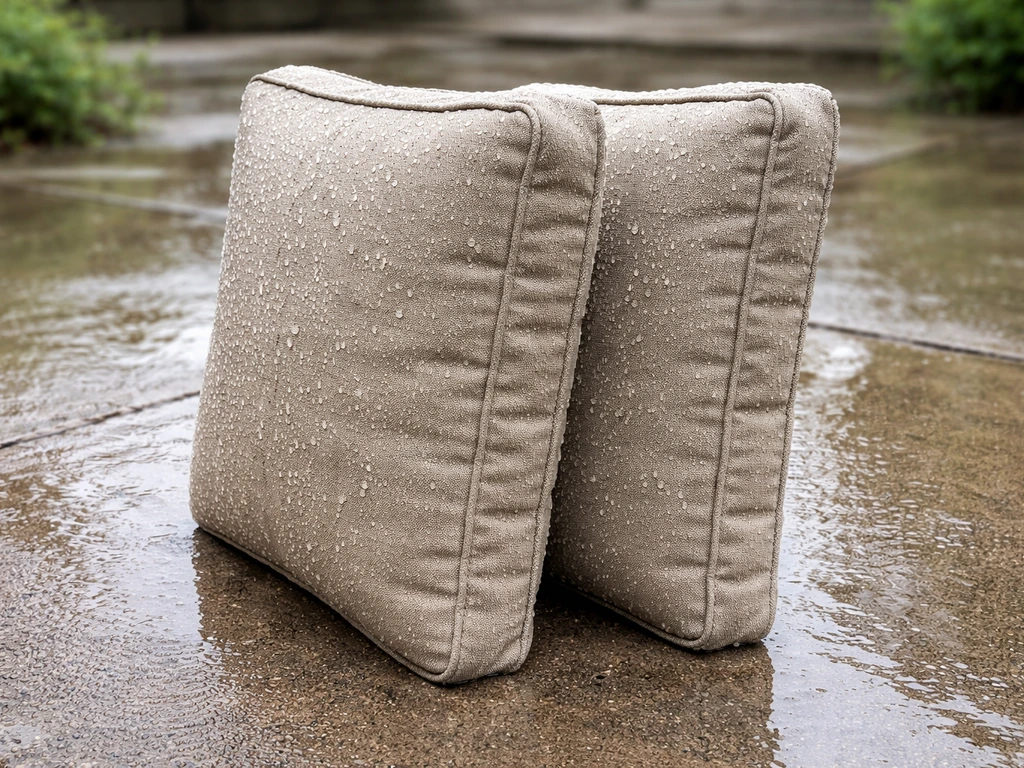
Don't panic, but don't just leave wet cushions sitting on furniture either. Stand them upright on their edges so water drains out from the bottom rather than sitting in the fill. If cushion covers are removable, unzip and remove them so both the cover and the foam insert can dry separately. A fan aimed at wet cushions dramatically speeds up drying time. The critical rule: do not stack wet cushions on top of each other. That's the fastest path to mildew I've ever seen.
Choosing the right cover and anchor for your cushion type
Not all outdoor cushions are built the same, and using the wrong cover or anchor for your specific cushion type is a common reason protection fails. Before you buy anything, take actual measurements. Don't guess and don't pull measurements off an old cover. Measure the actual cushion or the furniture area you want to cover. For sofa and loveseat cushions, measure the full seat width and divide by the number of seat cushions to get each cushion's width. For cushions with a hinge or fold (like attached back-and-seat combos), measure at the seam point, not across the whole piece. Write those numbers down.
| Cushion Type | Best Anchoring Method | Best Cover/Protection Approach |
|---|---|---|
| Loose seat cushion (flat, no ties) | Non-slip grip pads or adhesive hook-and-loop strips | Individual cushion bag or fitted seat cover with tie-down hem |
| Seat cushion with factory tie straps | Existing tie straps tied through frame slats | Furniture cover over assembled chair or individual cushion bag |
| Back cushion / lumbar cushion | Tie loops through chair back rail, or hook-and-loop to frame | Individual bag or store indoors; less suited to covers-in-place |
| Attached/strapped bench cushion | Built-in straps plus grip pads underneath | Full bench cover rated for outdoor use with side vents |
| Sectional seat cushions | Bungee clips under frame rails plus grip mat strips | Large sectional cover with multiple tie-down points and air vents |
| Decorative outdoor throw pillows | Bring indoors when not in use | Waterproof pillow inserts inside covers; store in a sealed bin off-season |
For covers, fit matters more than most people realize. A cover that's too large balloons in wind and either blows off or flaps against cushions and causes abrasion wear. A cover that's too tight traps moisture and can split at the seams. Aim for a cover that fits with about an inch of room on each side and has at least two tie-down or buckle points to secure it to the furniture frame.
Seasonal storage and maintenance that actually prevents damage
End-of-season storage is where most cushion damage happens, ironically. People rush to pack everything away before the first frost and don't take the time to dry or clean first. You end up opening the storage bin in spring to find mildew-covered foam and fabric that smells like a wet basement. It's a miserable surprise and completely avoidable.
Clean before you store (always)
Before storage, brush off any debris and spot-clean stains with a mild dish soap solution and a soft brush. Rinse thoroughly so no soap residue stays in the fabric (soap residue attracts mildew). For a deeper clean, mix one tablespoon of dish soap with one quart of warm water and scrub gently. For mildew that's already present, a solution of one part white vinegar to two parts water applied with a sponge, left for 10 minutes, then rinsed off usually handles it without damaging the fabric.
Dry completely before storing (this is non-negotiable)
This is the step people skip and then regret. Even a slightly damp cushion stored in a closed bin or bag will develop mildew within days. Stand cushions upright in a sunny, well-ventilated spot for at least 24 to 48 hours after any cleaning or rain exposure before putting them into storage. If you live somewhere humid, consider leaving them out an extra day just to be sure. Press on the thickest part of the foam: if it feels cool or spongy rather than dry and firm, it needs more time. Do not store until it's fully dry.
Storage: where and how
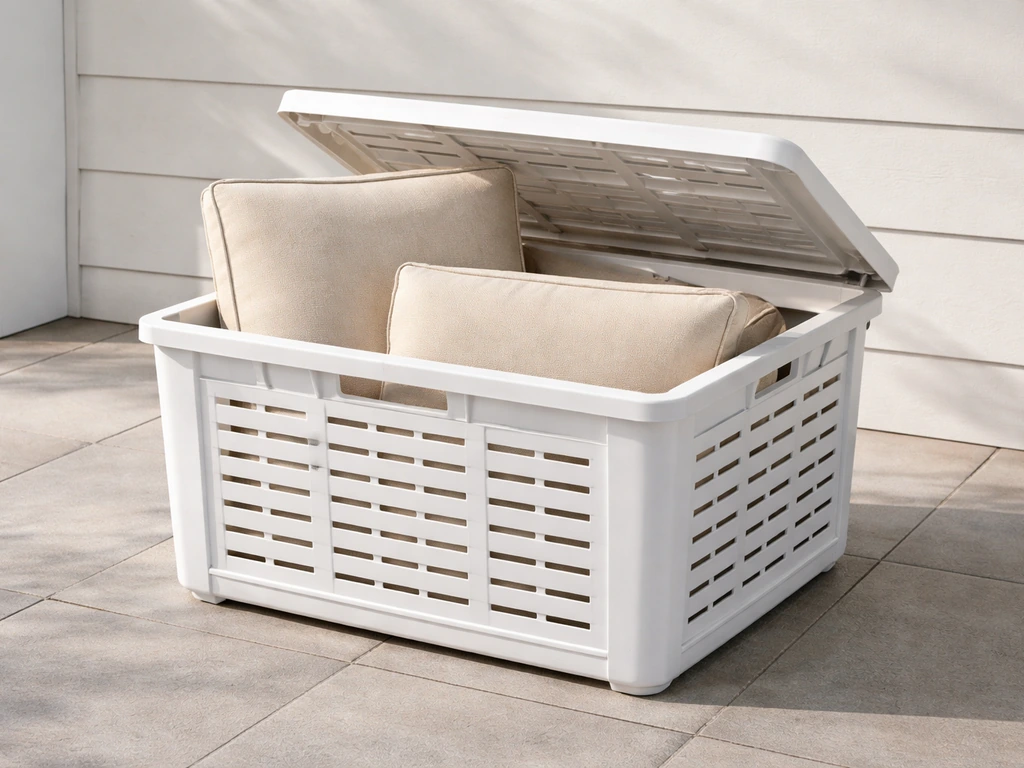
A deck storage box with a vented lid is ideal for in-season storage between uses. For full off-season storage, a clean, dry indoor space (garage, basement with a dehumidifier, or shed) beats outdoor storage boxes every time. Store cushions flat or on edge in breathable bags, not sealed plastic bags that trap any remaining moisture. Never stack more than three or four cushions high or the bottom ones compress permanently. If you must store them outdoors, use a storage box rated for outdoor use and throw in a few moisture-absorbing packets to protect against humidity.
Mid-season rotation and quick maintenance
Every month or two during the season, flip and rotate your cushions so they wear evenly. This prevents one side from fading faster than the other and keeps foam from compressing in the same spots. If a cushion gets rained on, stand it up to drain and dry before putting it back down. Reapply waterproofing spray at the start of each season or after every few washings, whichever comes first.
Fixing the most common cushion protection failures
Problem: cushions keep sliding off or blowing away even with grip pads
Grip pads need surface contact to work. If your furniture has widely spaced slats, pads don't have enough to grip against. The fix: add a small section of outdoor rug or a piece of outdoor fabric cut to the seat size between the chair and cushion. This creates a consistent contact surface for the pads to work against. Alternatively, install hook-and-loop strips directly onto the slats and the cushion base. If wind is the main issue rather than friction, tie-through anchoring to the frame is the only reliable long-term solution.
Problem: cover doesn't shed water and cushions still get wet
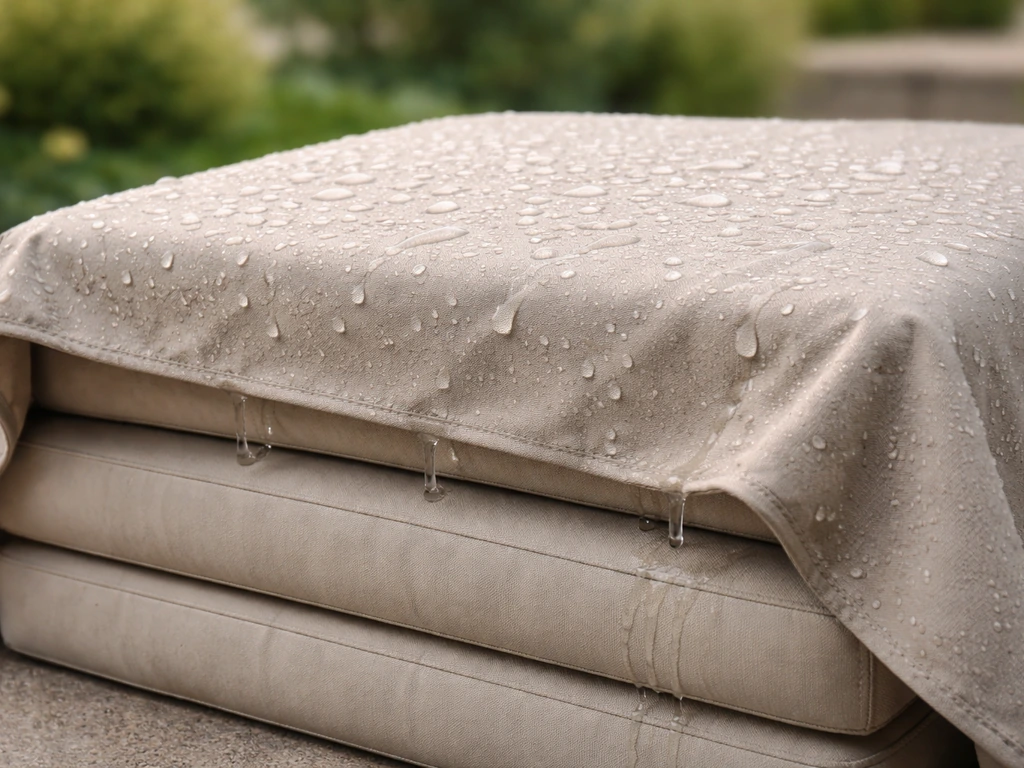
This usually means one of three things: the cover's waterproof coating has worn off, the cover fits too loosely and water pools on top instead of running off, or the cover doesn't have a breathable lining and condensation is forming underneath. For worn-out coatings, spray the cover itself with a waterproofing treatment like Nikwax or Scotchgard and let it cure. For pooling, choose a cover with a pitched or contoured top rather than a flat one. For condensation, look for covers with mesh vents near the base.
Problem: mildew smell that won't go away after cleaning
If you've cleaned the cover but it still smells musty, the mildew is likely in the foam insert, not just the fabric. Removable covers let you tackle this directly: take the foam insert out and scrub it with the vinegar solution, then rinse and dry it separately in the sun for a full day. Sunlight is genuinely effective at killing mildew on foam. If the smell persists after two or three treatments, the foam core may be too far gone and replacing just the insert (not the whole cushion) is often the budget-smart move. New foam cut to size runs about $10 to $30 depending on thickness and density.
Problem: cover keeps blowing off in wind
Covers blow off when their tie-downs are either too loose, too few, or attached to the wrong part of the furniture. To <a data-article-id="4CCE9246-8449-4D17-A3ED-DEC963DF6EBF">protect metal patio furniture</a>, use the same waterproof cover mindset, plus moisture control around joints and surfaces to prevent rust. If your patio set is wrought iron, also use the same cover-and-anchoring approach, and pair it with rust prevention to fully cover how to protect wrought iron patio furniture. Every cover should have at least four tie-down points: two on each side. Thread straps through furniture legs or around base rails, not just around the outside of the cover itself. For very exposed or windy spots, add bungee cord straps across the top of the cover from side to side and hook them to the furniture frame underneath. That cross-tension keeps the cover pressed down rather than lifting at the edges.
Once you've got the right cover, the anchoring sorted, and a solid dry-before-store habit in place, protecting patio cushions becomes genuinely low-effort maintenance rather than a recurring repair problem. Start with whichever issue is most urgent today (usually moisture or sliding), layer in the rest over the course of a season, and your cushions will make it through several years looking far better than the neighbors' will.
FAQ
What should I do if my cushions got wet but I cannot dry them for 24 to 48 hours?
Keep them out in the most breathable setup you can (upright on edge, spaced apart) and run a fan if possible. Avoid putting them into any zipper bag or closed storage bin until the thickest foam feels warm and dry to the touch, if it stays cool or spongy, give them more time.
Can I use a plastic tarp instead of a breathable cover to protect patio cushions?
It’s risky for long periods. Plastic tends to trap condensation underneath, especially when nights get cooler, leading to mildew even if the top looks dry. If you must use it temporarily, leave one side partially open for airflow and remove it as soon as conditions allow.
How can I tell whether my cover is too tight or too loose?
If the cover flaps and rubs against the cushion, it’s too large or under-secured (causes abrasion and fraying). If you consistently find dampness under the cover after dry days, it’s likely too tight or has no venting, condensation can build even without rain.
Do I need to waterproof both the fabric cover and the cushion foam?
Usually only the outer fabric needs treatment to slow absorption. Waterproofing the foam directly is not typical for most cushions and can cause other issues. Focus on keeping water out first, then ensure the foam can drain and dry if moisture gets through.
Is it better to store cushions in a garage, shed, or indoors?
Indoors is best because temperature and humidity swings are smaller. If you store in a garage or shed, use a dehumidifier or choose a storage setup with ventilation, and avoid sealed bags if the cushions are not fully bone-dry.
Can I leave cushion covers on the cushions while storing?
It depends on whether the cover and foam fully dried together. If covers are removable and the cushion was wet, remove the cover so the foam dries independently and you can reduce mildew risk in hidden seams.
What’s the safest way to anchor cushions if my chairs have slats with wide gaps?
Self-adhesive grip pads need enough continuous contact. Add a thin outdoor fabric or outdoor rug patch to create a full-grip surface, then apply the pads to the added surface. Alternatively, install hook-and-loop directly onto the slats if you have solid attachment points.
Why do my cushion covers still smell musty even after I dry them outdoors?
The mildew may have reached the foam insert, not just the fabric. If removable, take out the foam and spot-clean with the vinegar-water method, then sun-dry the foam separately for a full day. If odor returns after a couple of treatments, the foam may need replacement.
Should I reapply waterproofing spray every season or only after washing?
Do both, at minimum at the start of each season. Reapply sooner after frequent washings or heavy exposure, the key is that the fabric should look uniformly treated and dry fully before the next rain.
How do I prevent cushions from fading faster, besides using covers?
Rotate and flip cushions during the season so the same side does not face the sun daily. If you use covers, ensure they fit well and do not create constant movement in wind, constant cover flapping can cause uneven wear and color loss.