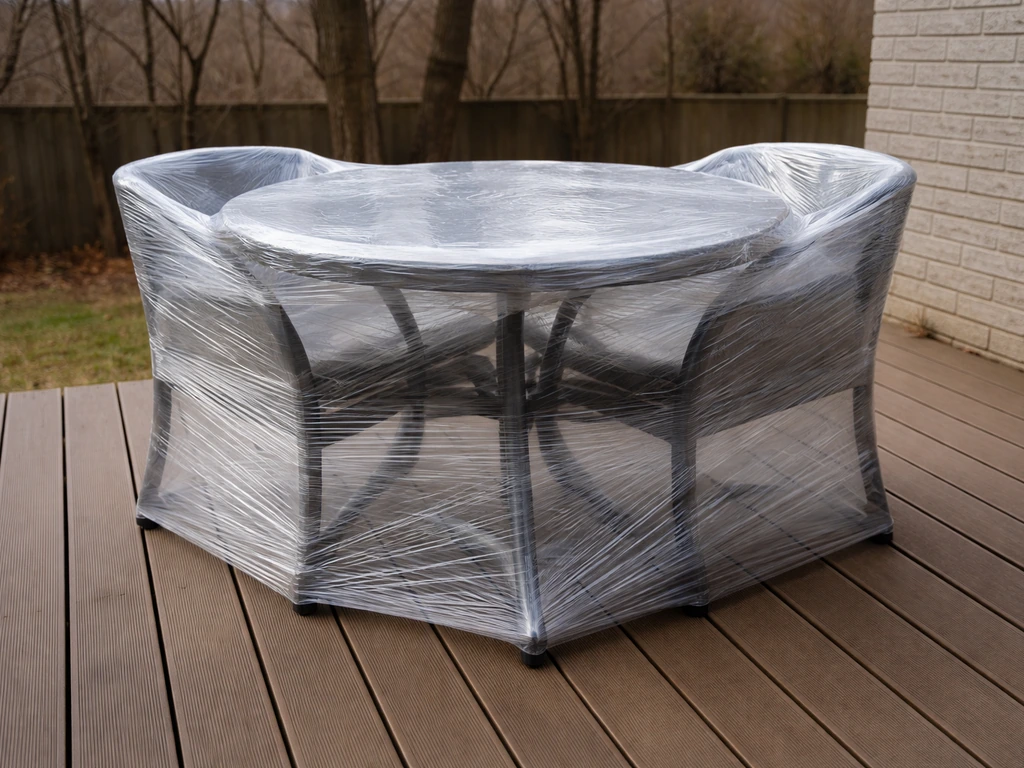
The safest way to protect patio furniture in winter is a four-step sequence: clean and fully dry every piece, treat or seal it based on the material, get it off the ground and under a breathable (not airtight) cover, and store cushions separately in a ventilated bag or bin. If you want to shrink wrap patio furniture, you will typically pay by the roll, and the right amount depends on the size of your set plus extra material for overlaps breathable (not airtight) cover. Do that before the first hard freeze and you will dramatically cut down on rust, warping, cracking, and mildew when spring rolls around.
How to Protect Your Patio Furniture in Winter DIY Guide
Maren Grady
1 Jul 2026
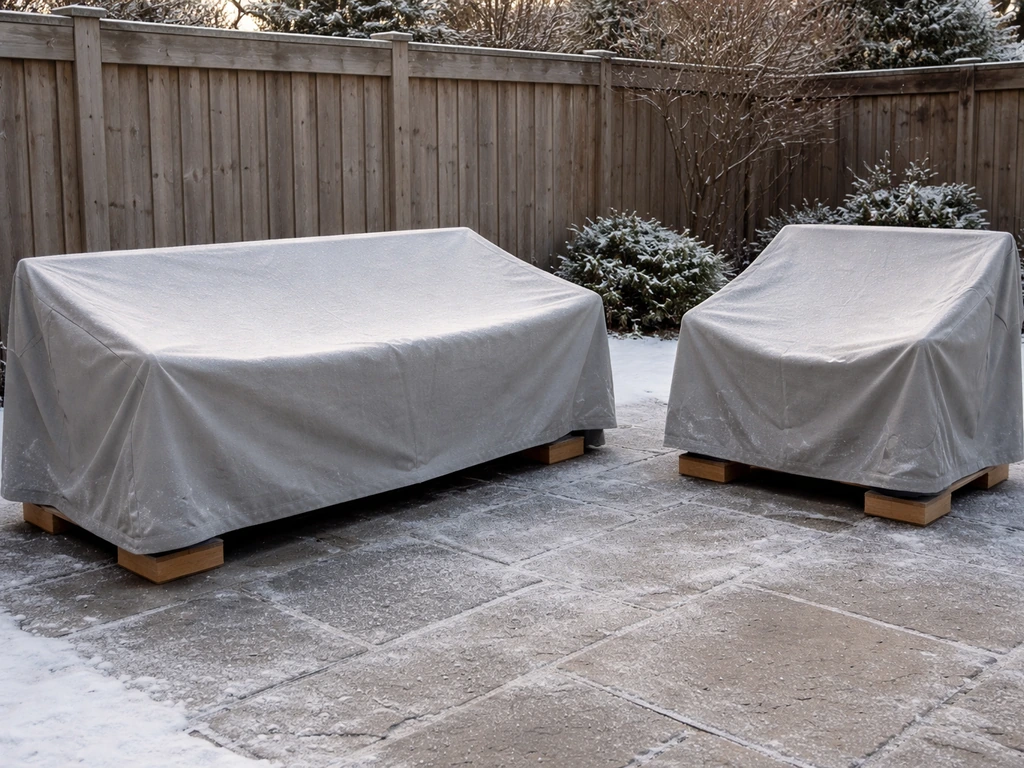
I know it feels like a lot of work for furniture that just sits outside, but here is what I learned the hard way: the damage does not come from cold temperatures alone. It comes from moisture cycling through freeze and thaw over and over again. A small crack in a wood joint fills with water, that water freezes, expands, and the crack doubles in size. Rust on metal starts under a cover that traps condensation all winter. Mildew on cushions starts when you bag them slightly damp in October and do not check until April. The steps below are specifically designed to stop all of that.
Start with your furniture type
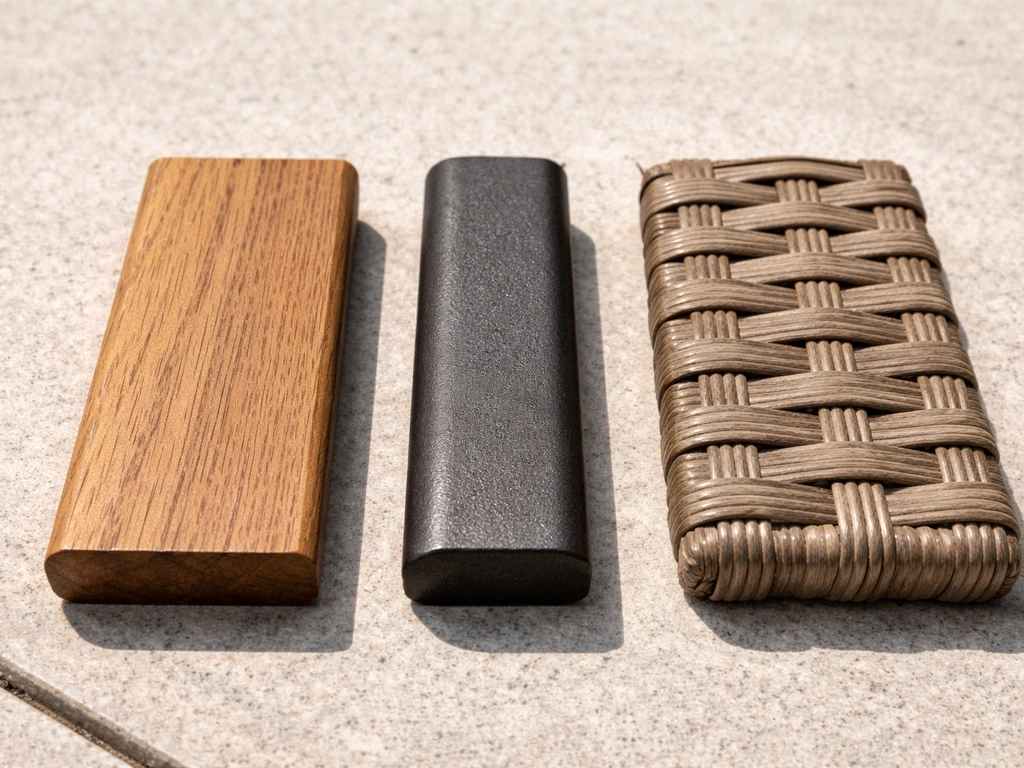
Not all patio furniture needs the same treatment, and using the wrong approach for your material can make things worse. Here is a quick breakdown of what each material is actually vulnerable to, so you know what you are fighting.
| Material | Biggest Winter Risk | Storage Priority | Can It Stay Outside? |
|---|---|---|---|
| Wood (teak, cedar, pine) | Warping, cracking, mildew | Seal before storing; covered storage preferred | Yes, if sealed and covered |
| Metal (iron, steel, aluminum) | Rust and corrosion on iron/steel; oxidation on aluminum | Clean, treat rust, cover with breathable cover | Yes, with proper cover and rust treatment |
| Wicker / natural rattan | Brittleness, cracking, mold on fibers | Indoor storage strongly preferred; breathable cover required | Risky; bring indoors if possible |
| Resin / plastic | Cold brittleness and cracking below freezing | Indoors or a covered, sheltered space | Short term only; bring in for hard freezes |
| Cushions and fabric | Mold, mildew, fabric rot | Always store indoors in breathable bags | Never leave out over winter |
Natural rattan and wicker are the most fragile in winter because the fibers can become brittle and crack when they dry out in cold air. If you have a genuine rattan set, indoor storage is not optional, it is strongly recommended. Resin wicker (the synthetic stuff on most modern patio sets) is far more forgiving, but it still benefits from being covered and sheltered. Plastic and resin furniture can handle cold better than wood, but below freezing temperatures make it brittle and prone to snapping under stress like a stack of chairs falling over.
Clean and dry everything before you store it
This is the step most people skip or rush, and it is the one that causes the most damage. Any dirt, bird droppings, pollen, or organic residue left on your furniture over winter becomes a food source for mold and mildew. On metal, it holds moisture against the surface and accelerates rust. On wood, it blocks any sealer you apply from penetrating properly. Clean first, every time, no exceptions.
How to clean each material
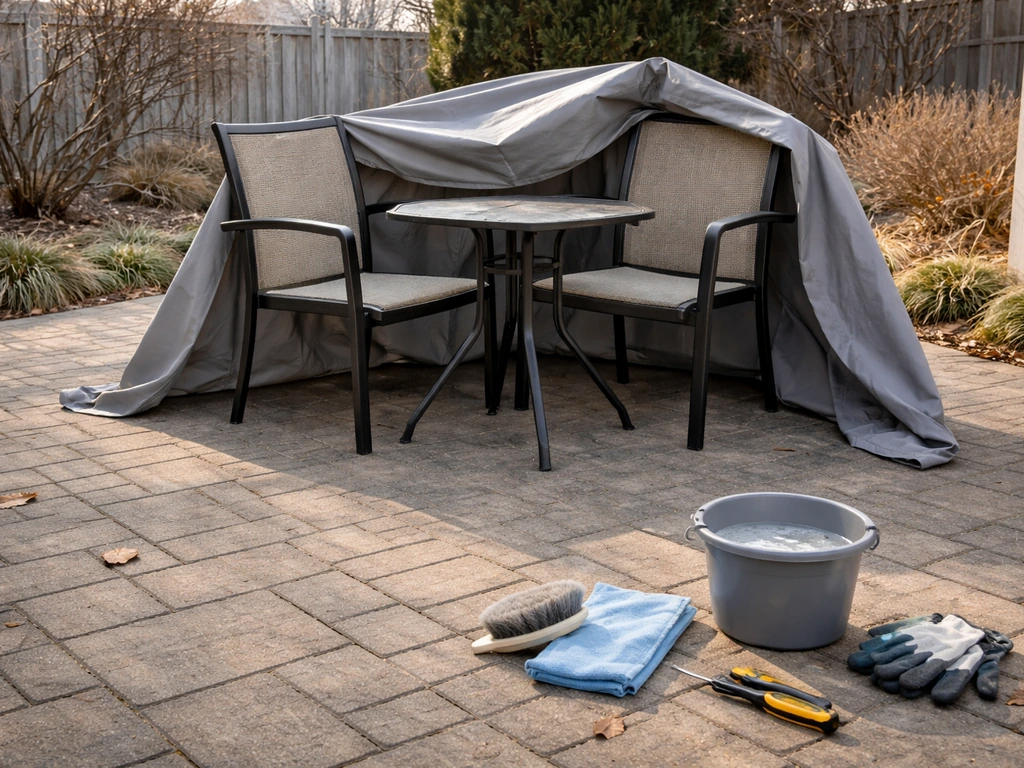
- Wood: Wipe down with a mild soap and warm water solution using a soft brush or cloth. Rinse gently and let it air dry completely, at least 12 hours in dry conditions before applying any sealer.
- Metal: Wash with soapy water and a non-abrasive cloth. Check for rust spots and sand them lightly with 120-grit sandpaper before treating. Dry thoroughly because any trapped moisture under a coat of rust inhibitor will continue to corrode.
- Wicker and rattan: Use a soft brush dipped in soapy water and work gently along the weave. Do not blast it with a hose and absolutely do not use a pressure washer, which can break fibers and push water deep into the weave. Let it air dry fully in a sunny spot.
- Plastic and resin: A simple wipe-down with soapy water and a sponge is all you need. Rinse and dry.
- Cushions and fabric: Brush off loose debris, then spot clean with mild soap and warm water. For mildew spots, a solution of warm water with a splash of white vinegar works well. Rinse and let cushions dry in the sun for at least two hours, or until they are genuinely dry all the way through, not just surface dry.
One thing worth saying clearly: do not use a pressure washer on any patio furniture. It is a common shortcut that removes protective finishes, forces water into joints and fiber gaps, and actually leaves your furniture more vulnerable going into winter. A garden hose on a gentle setting is fine for rinsing wood and metal frames. Hand cleaning is the right move for wicker and rattan.
After cleaning, the dry time matters more than people realize. Wood needs at least 12 hours in dry conditions before you apply a sealer. Cushions that feel dry on the outside can still be damp inside the foam. Give everything a full sunny day to air out before you move to the next step.
Seal and treat to stop rust, warping, and mildew
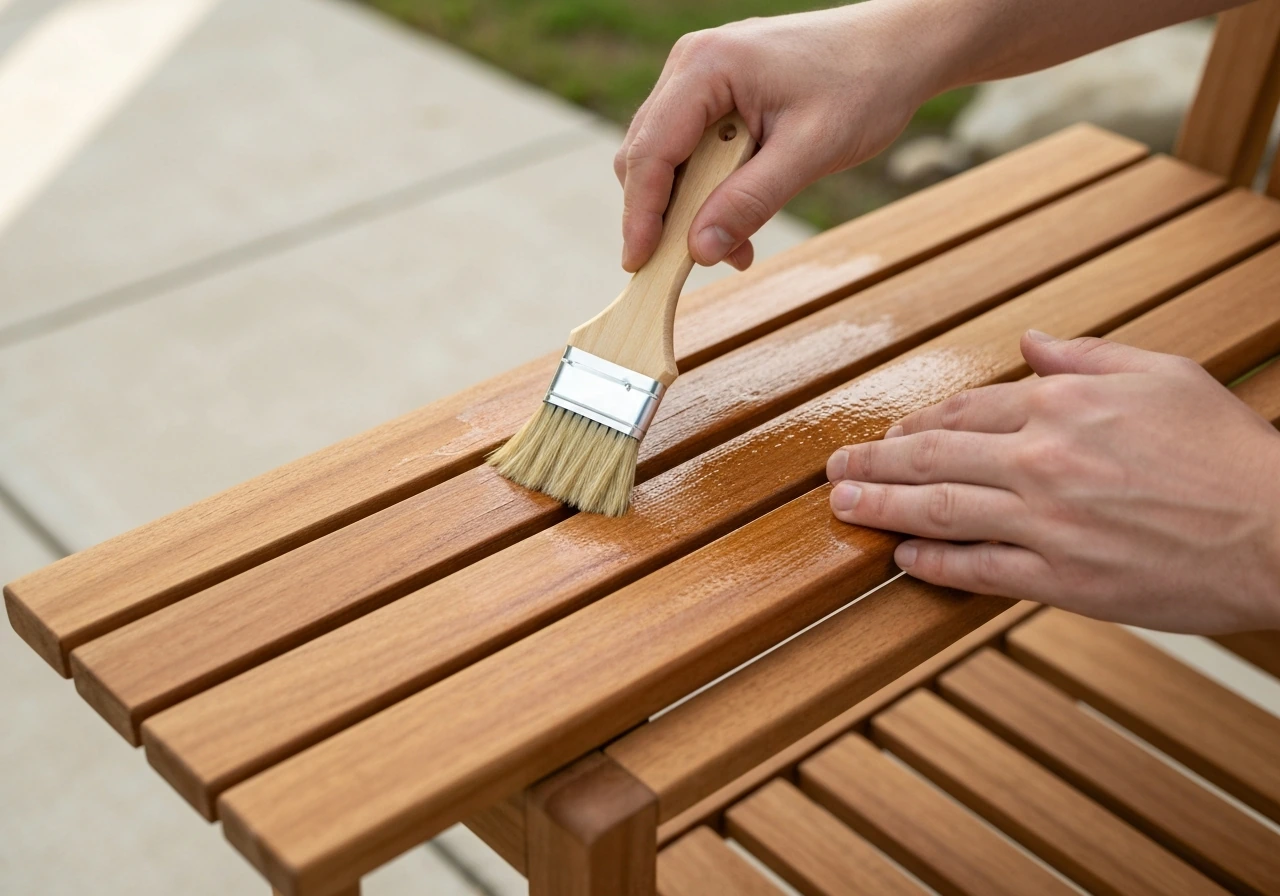
Once everything is clean and dry, you have a window to apply protective treatments before winter storage. This is the step that actually prevents damage rather than just hiding furniture from the weather.
Wood furniture
Apply a penetrating wood sealer or stain-sealer to teak, cedar, or any hardwood frame. Products like Penofin or similar penetrating oil-based sealers soak into the wood grain and protect from the inside out. Make sure the wood is completely dry before applying, and check the label for recoat timing. For Rust-Oleum’s water-based Restore product, cooler conditions require longer dry time and you should follow their dry-to-recoat and full cure guidance before spring restoration timing longer dry time in cooler conditions. With some products you can apply a second coat after about an hour, but full cure can take 24 hours or more depending on the product and temperature. Do not rush this. Applying sealer in cool, damp conditions reduces how well it penetrates. Time it for a dry day above 50°F if you can.
Metal furniture
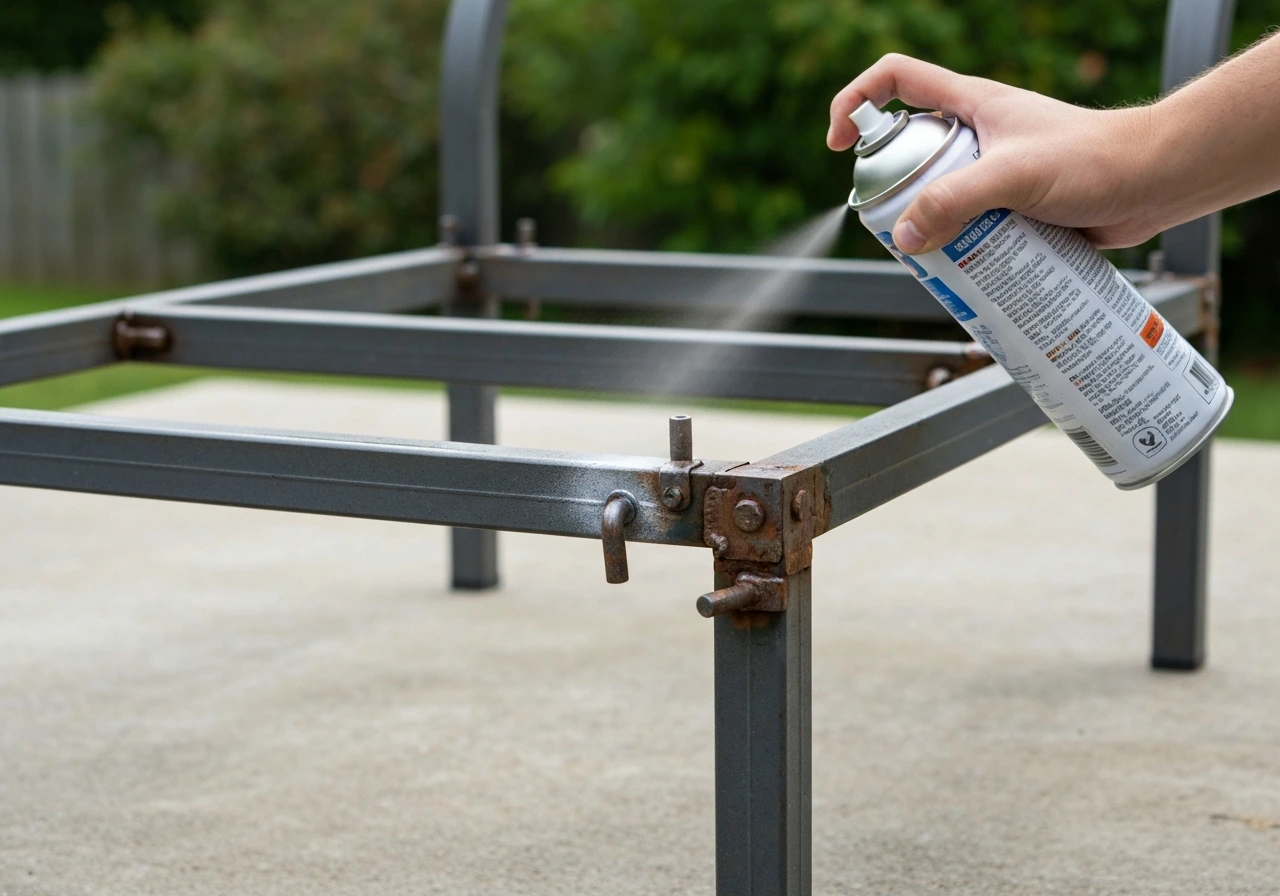
Iron and steel are the ones that rust. Aluminum oxidizes but does not rust the same way, though it still benefits from a wipe-down with a rust-inhibiting product. For iron or steel furniture with any existing rust, sand the rust spots back to clean metal, apply a water-based rust inhibitor primer, let it dry and cure fully, then apply a topcoat if needed. A couple of important cautions here: do not apply a water-based rust primer if rain or dew is expected before it can dry, and do not apply it if freezing temperatures are possible within 24 hours of application. Both will ruin the treatment. Spring or early fall are the better times to do this kind of refinishing work. As a quick winter prep step, wiping down clean metal surfaces with a light rust-preventive product is a good low-effort option.
Wicker and rattan
Natural rattan benefits from a thin coat of furniture wax or a rattan conditioner applied before storage. This helps keep the fibers flexible through the cold months rather than letting them dry out and crack. Do not over-apply, just a thin, even coat wiped on and buffed off. UV damage is also a real concern for rattan even in winter, since intermittent sun on snow-covered surfaces can still bleach and weaken the fibers. A breathable cover is essential.
Plastic and resin
Plastic furniture does not need sealing, but a wipe with a UV-protective spray or plastic restorer before storage helps prevent the chalky fading and brittleness that comes from prolonged exposure. It is a five-minute step and cheap to do.
Choosing and fitting protective covers the right way
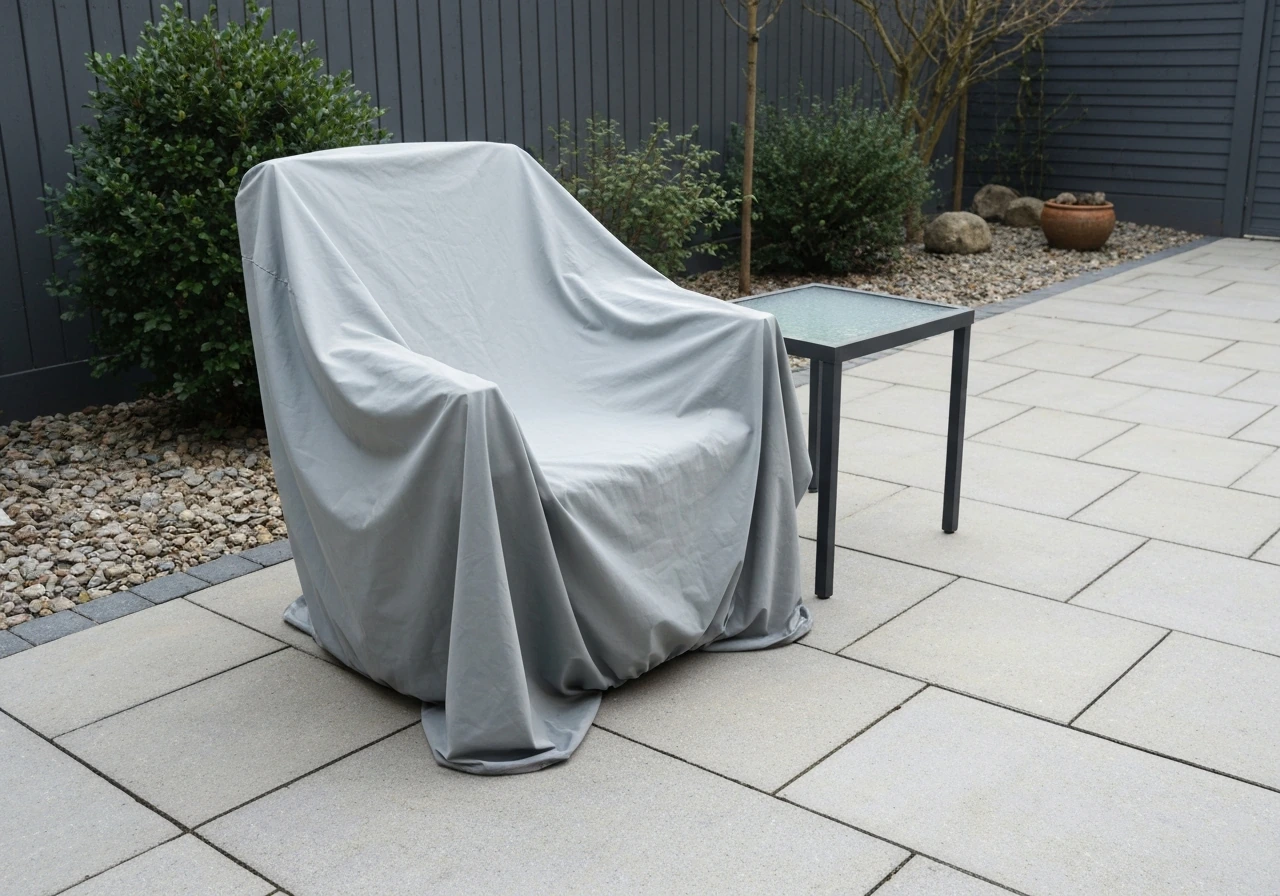
Here is the mistake I see most often: people buy a cheap polyethylene tarp, wrap it tight around their furniture, and think they are done. If you are trying to shrink wrap patio furniture, aim for a breathable fit or use shrink wrap only in a way that does not trap condensation wrap it tight. What actually happens is the tarp creates a sealed microclimate. On sunny winter days, the inside heats up, moisture builds, and then at night it cools and that moisture condenses on every surface inside. Repeat that freeze-thaw cycle a hundred times over winter and the cover has actually made things worse than leaving the furniture uncovered.
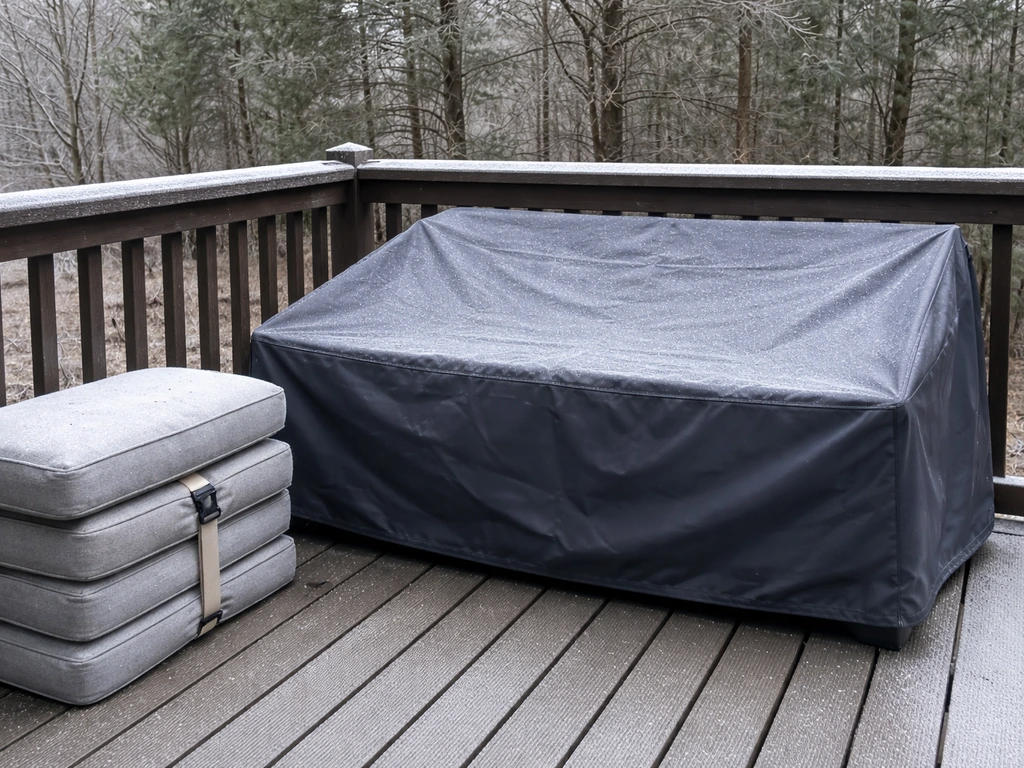
The right cover is water-resistant but breathable. That means it blocks liquid water from getting in while still allowing water vapor and humidity to escape through the fabric. blank" rel="noopener noreferrer">Breathable covers are designed to prevent liquid water penetration while allowing water vapor to escape, which helps reduce internal moisture buildup that can matter for materials like teak and wicker. Covers with mesh vents built into the sides are even better. Look for covers specifically marketed as outdoor furniture covers rather than general-purpose tarps. If you do want to use a tarp for budget reasons, there are ways to reduce the moisture trap problem, which are covered in the storage section below. If you do use a tarp, make sure you reduce moisture buildup so your furniture does not get trapped in a damp freeze-thaw cycle.
Getting the fit right
Cover sizing matters more than people think. A cover that is too tight puts strain on the seams and can create contact points where moisture pools against the furniture surface. A cover that is too loose billows in the wind, which acts like a bellows pumping outside air and moisture in and out. The ideal fit drapes over the furniture with a few inches of slack, pulls close enough to shed water off the sides rather than pooling on top, and has some kind of drawstring, cord, or strap at the bottom to keep it from lifting in wind. If water pools in the center of the cover because it sags, that pooled water eventually works its way inside and defeats the purpose.
For those comparing cover options, a full guide on how to cover patio furniture for winter and a separate piece on how to tarp patio furniture for winter go deeper into specific cover types, materials, and fitting strategies if you want more detail on that.
Get furniture off the ground and think about airflow
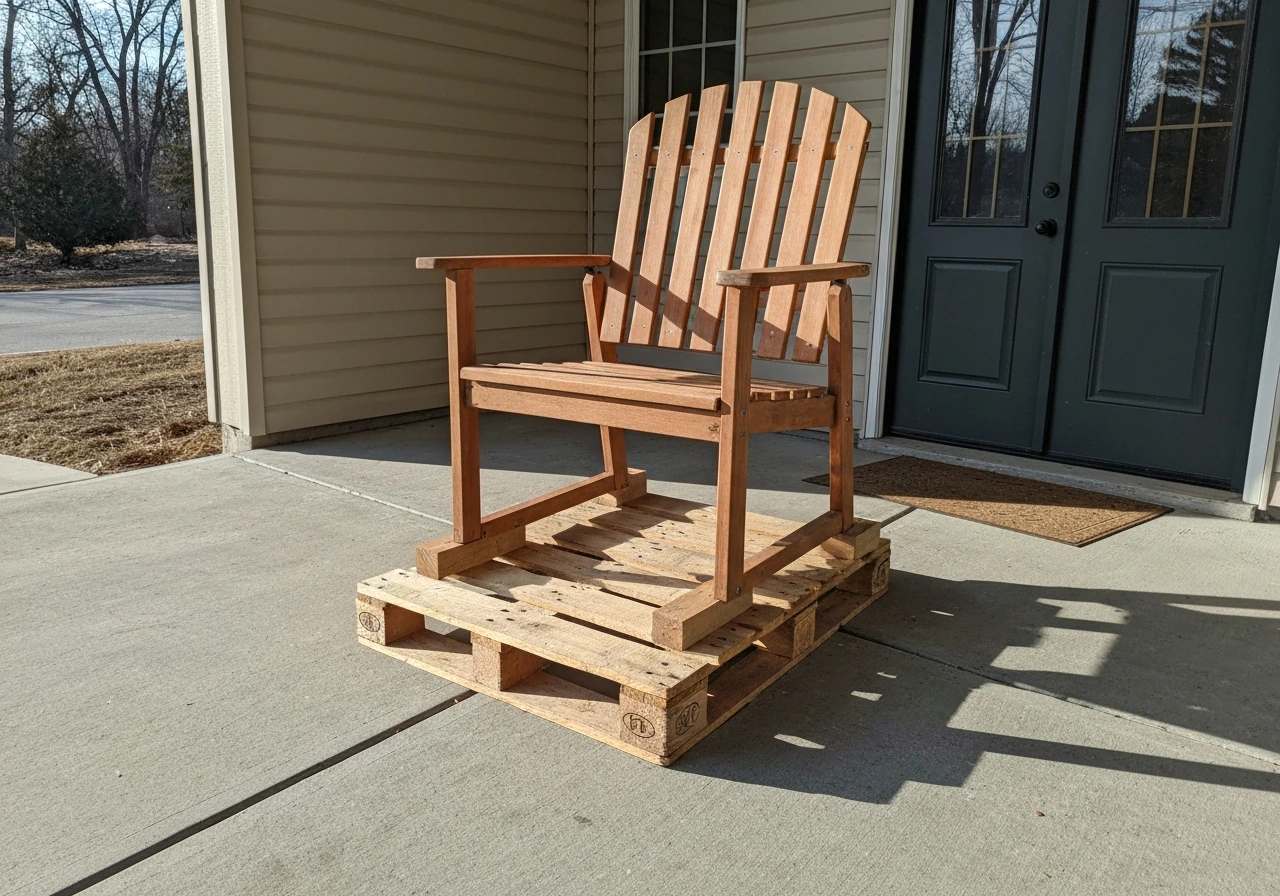
Ground contact is where a huge amount of winter moisture damage originates. Snow melts, water pools, and the bottom of your furniture legs or frame sits in that water for days. After the snow melts, check the legs and frame for standing water so it does not keep fueling freeze and thaw damage protect patio furniture from snow. Even with a cover, ground moisture wicks up into wood and metal. The fix is simple: get everything off the ground.
- Stack chairs and store them on a pallet, a few 2x4 scraps, or plastic furniture risers. Even two to three inches of clearance makes a meaningful difference in airflow and keeps the frame out of standing water.
- If you are storing inside a garage or shed, keep furniture away from exterior walls where condensation tends to form. Center of the space is better.
- If outdoor storage is your only option, choose a sheltered spot like under a covered patio, against a wall protected from prevailing wind, or under a deck overhang. Less direct exposure to rain and snow means less moisture load on the covers.
- For items staying outside under a tarp, elevating them even a few inches improves airflow underneath and dramatically reduces condensation buildup under the cover.
- Do not push covered furniture flush against a wall or fence. Leave a few inches of gap so air can circulate around the back.
If you are thinking about whether any of your furniture can just stay outside uncovered for winter, that is worth evaluating by material. The answer depends heavily on what you have and where you live. There is a detailed breakdown of that question in a related guide on whether you can leave patio furniture outside in the winter.
Cushions and fabric care: the mold prevention piece
Cushions should never winter over outside. Cushions should never winter over outside, especially if you are hoping to leave patio furniture outside in the winter can you leave patio furniture outside in the winter. Even marine-grade outdoor cushions with quick-dry foam will develop mildew if they sit covered and damp through multiple freeze-thaw cycles. The rule is simple: if your cushions are going into storage, they go indoors, and they go in dry.
How to store cushions properly
- Clean cushions thoroughly and let them dry in the sun until they are genuinely dry all the way through, not just dry on the surface. Press your hand into the center of the foam. If it feels cool or clammy, it is not dry enough.
- Once fully dry, store cushions in breathable storage bags or a ventilated plastic storage bin with a lid. Do not seal them in a regular plastic bag or plastic storage tub with an airtight lid. That sealed environment is exactly where mildew grows.
- If you are buying storage bags specifically for cushions, look for ones made from fabric or mesh-reinforced material that let air circulate while keeping dust, insects, and light moisture out.
- Store the bags or bins in a dry indoor location: a basement, closet, garage interior, or spare room. Anywhere that stays above freezing and does not get damp.
- If you do not have indoor space for all your cushions, a waterproof outdoor storage bench or deck box with ventilation gaps is a reasonable compromise, but check on them during the winter.
For fabric on fixed cushions or attached upholstery that cannot be removed, apply a fabric protector spray before covering the furniture. This adds a layer of water resistance and makes the fabric less hospitable for mildew spores. Let the spray cure fully before covering.
Quick winter check-ins: do not just set it and forget it
Once your furniture is covered and stored, the temptation is to ignore it until spring. Resist that. A quick check-in once a month through winter takes about ten minutes and can catch problems before they compound.
- Lift the cover edge and check for condensation pooling inside. If you see standing water or heavy moisture on any surface, the cover is trapping humidity. Air things out on a dry day and consider adding more ventilation.
- On unusually warm or sunny winter days, briefly remove covers to let trapped heat and moisture escape. A sunny 45°F day can create a greenhouse effect inside a dark cover, cooking moisture into the furniture.
- Check cover straps and tie-downs after any major storm. Wind can shift covers and expose sections of furniture or cause covers to pool water in new spots.
- Peek at cushion storage bags to make sure nothing has wicked moisture in from a leaky roof or basement pipe.
- If you spot a new rust spot or crack developing, flag it now. You will know exactly what needs attention in spring rather than being surprised.
Spring uncovering and restore steps
Do not uncover everything on the first warm day in March. Wait until nighttime temperatures are consistently above freezing and rain is not immediately forecasted. Uncovering furniture into wet spring conditions just starts the moisture cycle again before you have had a chance to assess what needs fixing.
- Remove covers on a dry, mild day. Lay them out to dry fully before folding and storing them for next year. Putting away damp covers into a bin is how you get mold on the covers themselves.
- Inspect every piece for winter damage: new rust spots on metal, cracks or checking in wood, brittleness in wicker joints, or any mildew on frames.
- Sand and treat any new rust spots before they spread. Hit them with a rust-converting product or sand back to clean metal and apply a rust-inhibiting primer. Do this before the first spring rain.
- Reapply wood sealer if the existing finish looks thin, faded, or if water no longer beads on the surface. Wait for dry conditions and temperatures above 50°F for best penetration. Full cure on most penetrating sealers takes 24 to 48 hours.
- Bring cushions out of storage only after frames are dry. Lay them in the sun for an hour before putting them back to freshen them up and confirm there is no hidden moisture.
- If any wicker joints feel loose or cracked, address them now with a rattan repair kit or appropriate adhesive before summer use puts stress on the weak spot.
- For any larger refinishing work on metal, like repainting a rusted iron set, time it for consistent warm dry weather. Touch dry is not the same as cured. Most exterior paint systems need three to seven days to fully cure before the furniture goes back into heavy use.
The spring restore step is also your chance to decide what needs a more serious repair or refresh before summer. Minor surface rust, a cracked wicker strand, a faded wood frame: all of these are much cheaper and easier to fix in early spring than mid-summer when you actually want to use the furniture.
The short version if you are in a hurry
If you only have one afternoon before the first freeze, here is the priority order. Pull cushions inside first, they take the most damage from winter moisture. Clean and dry the frames as best you can. Get anything off the ground. Throw a breathable cover over it all and secure it so it does not blow off. That is not perfect winter prep, but it is dramatically better than leaving everything uncovered and untreated. Come back on the next dry day and do the sealing and treatment steps properly. A two-stage approach is still far better than nothing.
FAQ
Can I use a cheap tarp instead of an outdoor furniture cover if I secure it well?
Yes, but only if the cover can breathe. If you must use a tarp, leave slack so air can move, do not wrap it tight around legs, and ensure the bottom is not sealed to the ground. Check weekly for condensation, sagging, or water pooling, and remove the tarp on clear dry days to air things out.
What should I do if I cannot store cushions indoors for winter?
Ideally remove cushions at the same time you cover the frames, because condensation trapped under covers will re-wet foam and fabric during freeze-thaw cycles. If you cannot fully store cushions indoors, keep them in a dry ventilated area and allow them to finish drying completely before boxing or bagging, then avoid opening and re-covering when it is damp outside.
How do I know whether it is safe to apply a wood sealer right before a cold snap?
For most sealers, apply when temperatures stay above the label’s minimum recoat and cure temperature for the full cure window. Avoid applying right before a cold front, and if rain or dew is likely within 24 hours, postpone. Even if the surface feels dry, cool damp air can prevent proper penetration and cause peeling later.
Do I really need rust protection for aluminum patio furniture?
Aluminum does not rust, but it can develop oxidation, white chalky buildup, and pitting if moisture sits on it and dirt remains. A simple pre-winter clean plus a light rust-inhibiting or oxidation-protective wipe-down helps, especially on joints where water can collect.
My patio set has mixed materials (wood top, metal frame, resin chairs). What is the best way to protect everything?
If you have a mix of materials, treat each one by its weak point: wood needs sealing, iron and steel need rust prevention, rattan needs conditioning or wax, and resin/plastic usually needs UV protection plus a breathable cover. Do not apply one product across different materials unless the label explicitly allows it.
What should I do if I already covered the furniture and now I notice mildew or dampness under the cover?
Yes. If you cover furniture in the first part of fall and later notice new condensation or dampness under the cover, re-clean only the affected areas, let everything dry in a sunny window, and replace or refit the cover if it is sagging or touching the furniture. Do not keep the same cover if it has been trapping moisture for weeks.
How often should I inspect my patio furniture cover during winter?
Check the cover at least monthly for sagging, pooled water spots, and areas where the fabric is pulled tight against the furniture. A quick test is to run your hand along the underside edges, if you can feel dampness or smell musty odor, remove and re-dry before re-covering.
Is shrink wrap ever a bad choice for winter protection?
Shrinking wrap can work, but only if it is done so moisture cannot form and stay trapped. You generally need proper cleaning and drying first, and you must avoid tight sealing that creates a closed condensation chamber. If your goal is long winter storage with freeze-thaw cycles, breathable covers usually reduce risk compared to fully sealed wrap.
What is the correct way to fix small rust spots on metal before covering?
For existing rust, sanding down to clean metal is key so the primer can bond, but avoid sanding in soaking-wet conditions. Let the primer dry and cure fully before putting on any topcoat, and never apply if rain or dew will hit before dry or if freezing is possible during the first day of curing.
Does elevating the furniture still matter if I use a cover?
If you cover outdoor furniture but still keep it on the ground, wicking moisture from the soil can defeat the cover. After snow melts, check leg bottoms and the frame for standing water, then elevate again if needed. Even a few inches of clearance can make a big difference in how long water stays in contact.
When is the right time to uncover patio furniture in spring, especially if there is rain in the forecast?
Wait until nighttime temperatures are consistently above freezing and rain is not expected soon. If you uncover on a warm but rainy stretch, water can reintroduce the moisture cycle before you have a chance to evaluate and dry surfaces, especially on wood seams and under cushion storage bins.