Cover patio furniture for winter by cleaning every piece thoroughly, letting it dry completely (this is the step most people skip and regret), then fitting dedicated breathable covers snugly over each item and securing them with straps, bungee cords, or leg clips so they survive wind without blowing off. Do it right and your furniture comes out of winter looking almost new. Do it wrong, specifically by trapping moisture underneath, and you will open covers in spring to find mold, rust, and ruined cushions.
How to Cover Patio Furniture for Winter: Step-by-Step DIY
Maren Grady
15 May 2026
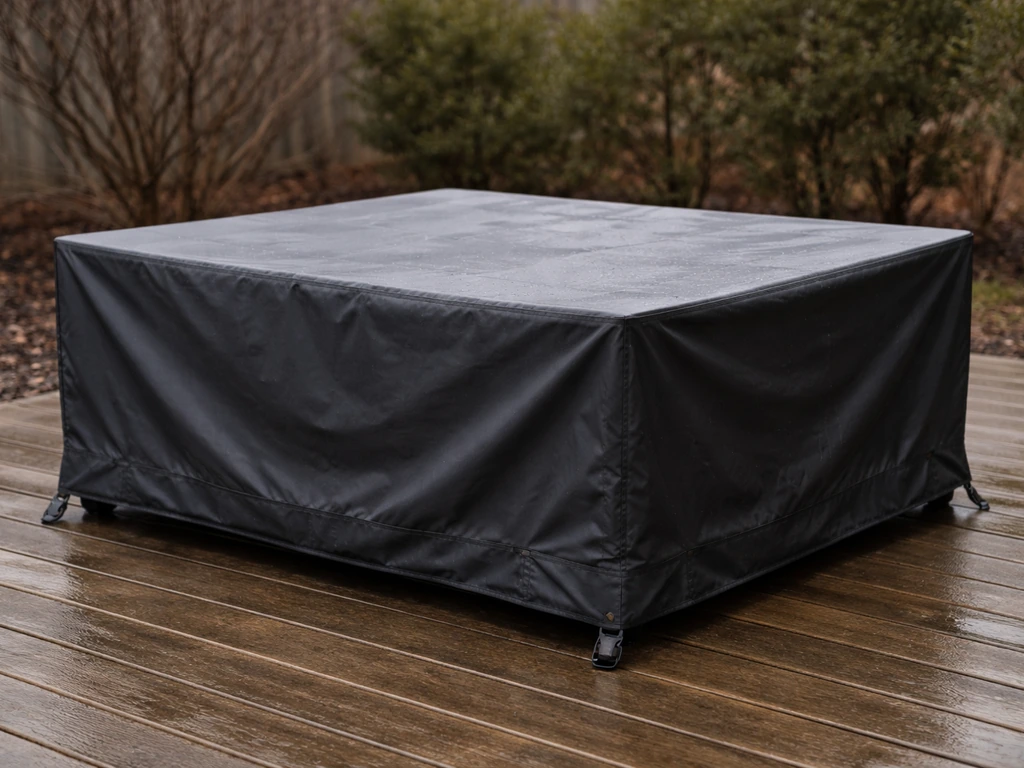
Choosing the Right Cover: Tarps vs. Furniture Covers vs. Storage Bags
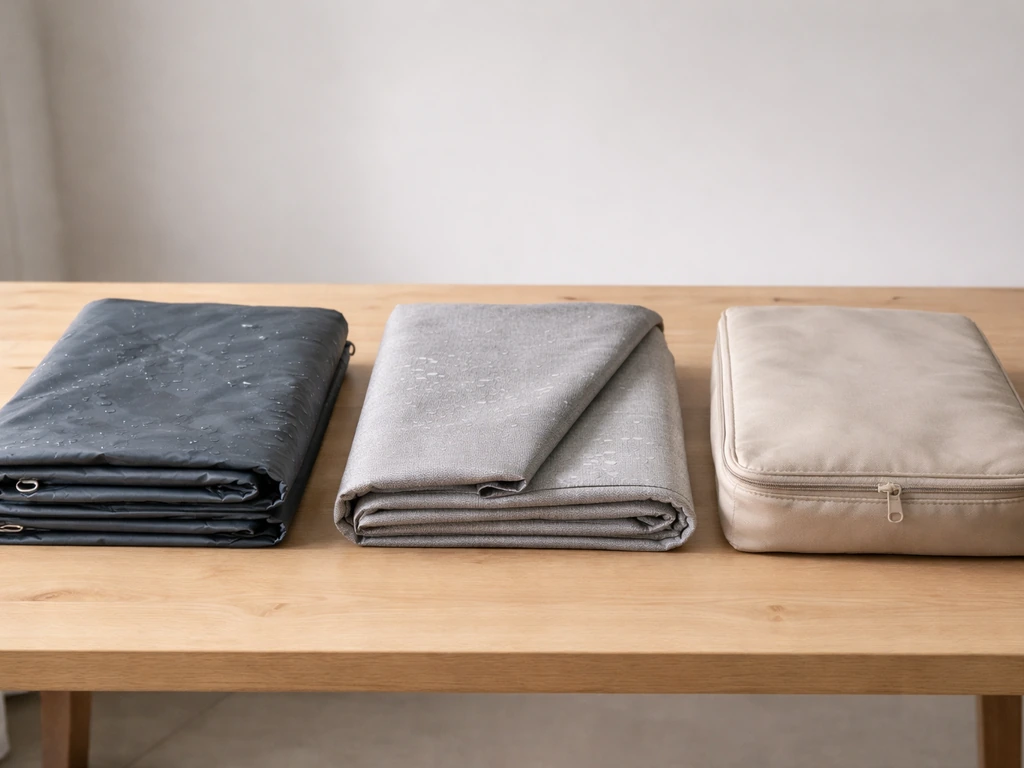
Before you buy anything, you need to understand the core tradeoff: waterproof materials keep rain and snow out, but they also trap condensation underneath. Breathable materials let a little moisture through, but they prevent the heat buildup and dampness that cause mold and mildew on your furniture. That tradeoff determines which product is right for your situation.
| Cover Type | Material | Waterproof? | Breathable? | Best For | Watch Out For |
|---|---|---|---|---|---|
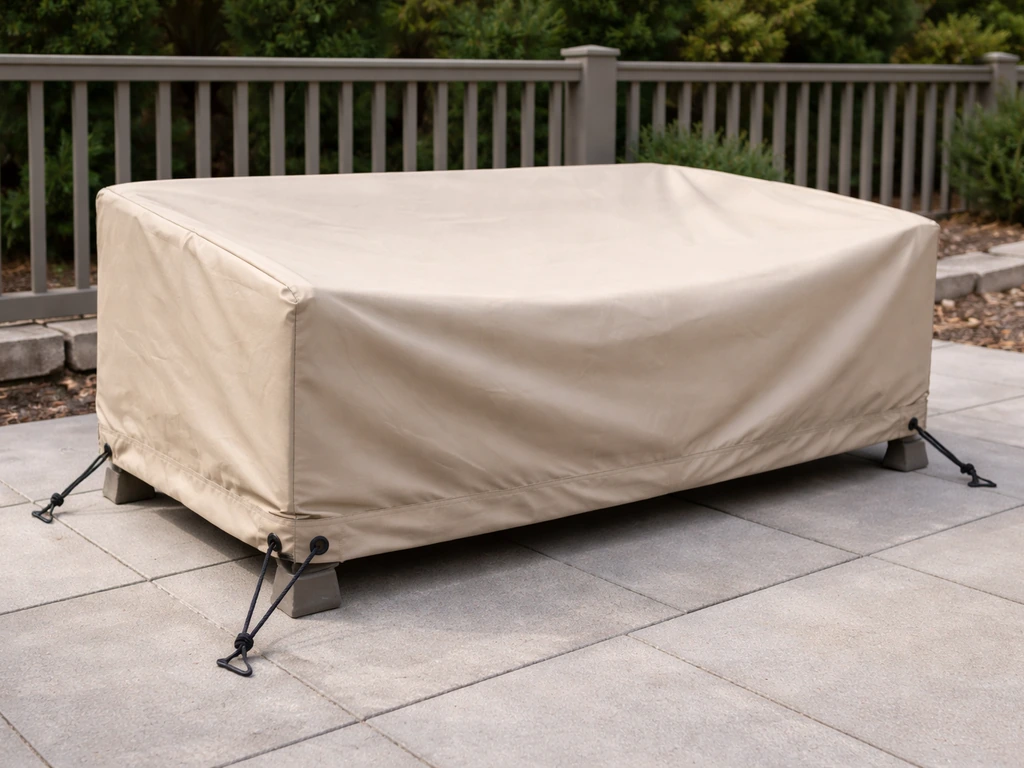
| Dedicated furniture covers | Polyester (coated or vented) | Water-resistant | Usually yes | Most patio sets, chairs, sofas | Cheap versions lack venting or UV protection |
| Vinyl covers | Vinyl/PVC | Fully waterproof | No | Metal furniture with no cushions | Traps condensation, accelerates rust and mold |
| Heavy-duty tarps | Poly tarp or canvas | Varies by material | Canvas only | Budget option, odd-shaped pieces | Loose fit catches wind, needs extra securing |
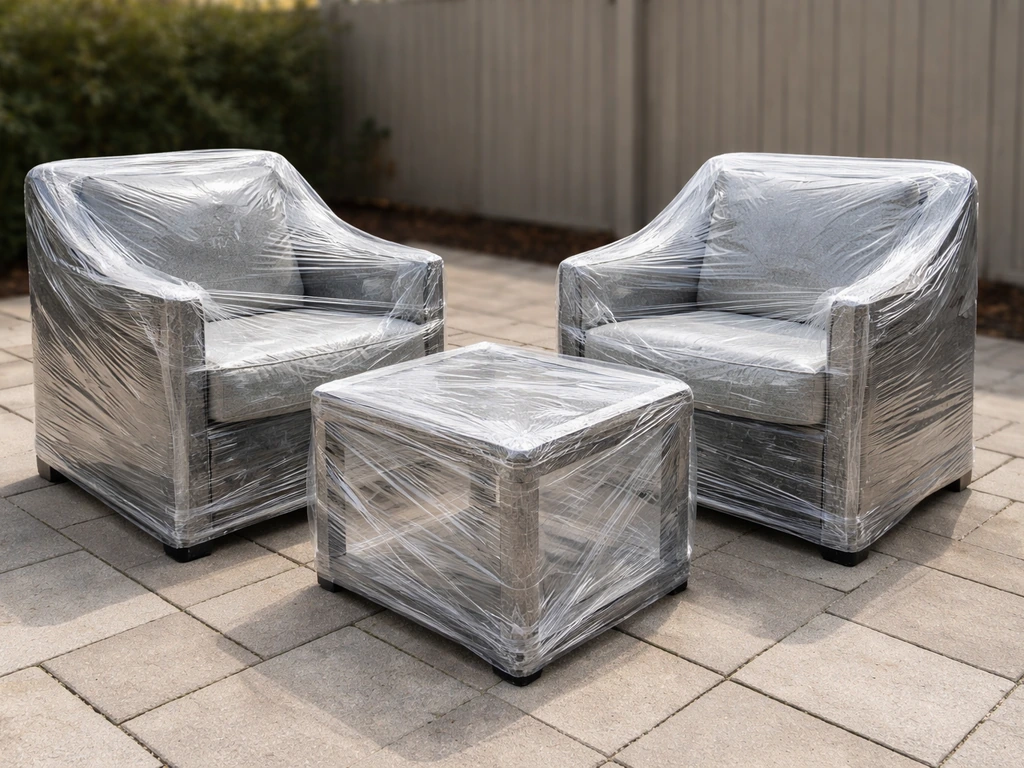
| Shrink wrap | Plastic film | Fully waterproof | No (needs vents) | Full sets stored in one bundle | Requires heat gun and added vents to prevent moisture |
| Storage bags/boxes | Polyester or nylon | Water-resistant | Often yes | Cushions and small accessories | Limited size options |
My honest recommendation for most homeowners: go with a polyester furniture cover that is specifically sized for your piece. Lowe’s also describes polyester outdoor furniture covers as sturdy and durable materials commonly used for covers polyester furniture cover. These combine UV resistance, water resistance, and breathability in one product. Vinyl is tempting because it is cheap and completely waterproof, but I have seen it cause more damage than it prevents by trapping condensation against metal frames and cushion fabric all winter long. If you are on a tight budget and want to use a tarp, canvas tarps breathe better than poly tarps, and either way you will need to secure them aggressively because loose tarps are basically sails. Shrink wrap is a real option for bundling an entire set together, but you must install vents to allow cross-flow ventilation or you will end up with a condensation problem inside the wrap.
Prep Steps Before You Cover Anything
Here is where most people go wrong. They pull out the covers, throw them over the furniture, and call it done. Then they wonder why everything smells like mildew in April. The furniture must be blank" rel="noopener noreferrer">completely clean and completely dry before you cover it for any extended period. Covering wet or dirty furniture is one of the fastest ways to ruin it.
Step 1: Clean the Frames
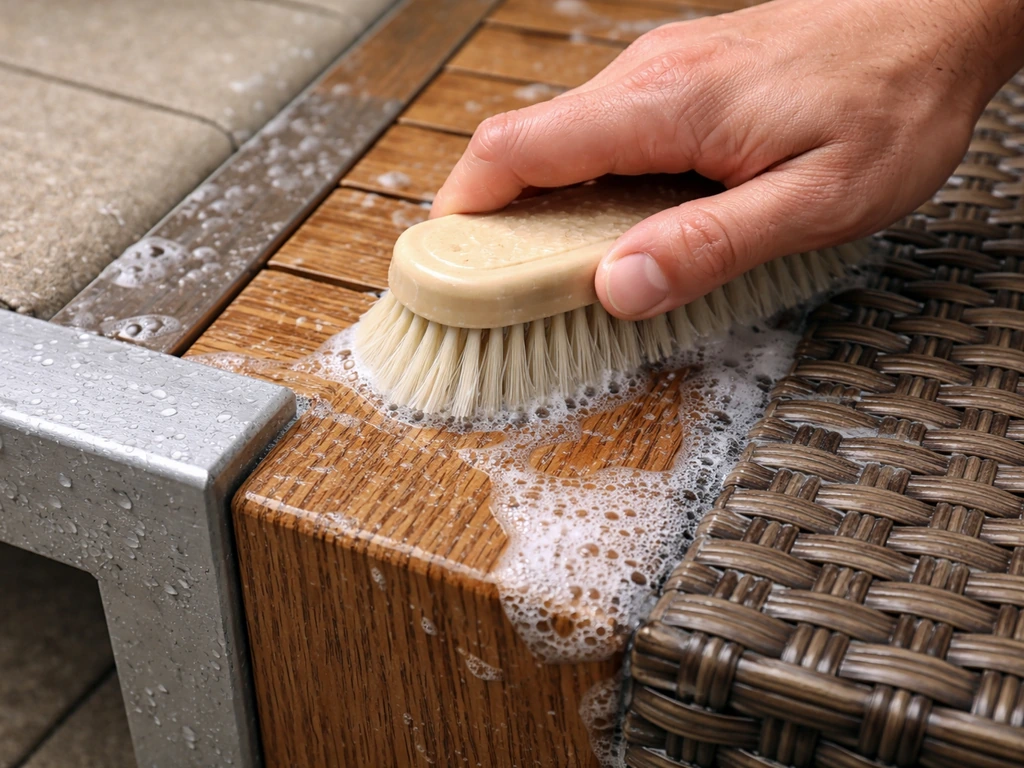
Wipe down all frames, whether aluminum, resin wicker, steel, or teak, with a mild soap and water solution. A ratio of about 1/4 cup of mild soap per gallon of water works well for most surfaces. Let the solution sit for about 15 minutes on any grimy spots, then rinse thoroughly. Pay attention to joints, welds, and crevices where dirt and moisture love to hide.
Step 2: Clean and Dry the Cushions Properly
Cushions deserve special attention because their foam cores hold moisture long after the surface feels dry to the touch. Wash cushion covers with the same mild soap solution, rinse them completely, and then let everything dry in direct sun. Do not rush this. What looks and feels dry on the outside can still be damp and heavy in the core, and that trapped moisture will grow mold all winter. A good rule of thumb: if a cushion still feels slightly heavier than normal, it is not dry yet. Kingsley Bate puts it plainly: water remaining in cushion fill and fabric casing will result in mildew and fabric stains. Wait until cushions are genuinely dry-through before you move on.
Step 3: Position Cushions on the Furniture
If you are leaving cushions on the furniture under covers rather than storing them indoors, stack back cushions flat on top of seat cushions before you cover the piece. This keeps everything consolidated, prevents cushions from flopping around in wind, and makes covering easier and neater.
Step 4: Label Your Pieces
If you have a large set with multiple similar covers, take 30 seconds to tag each piece with a strip of masking tape and a marker before covering: left armchair, right armchair, loveseat, and so on. You will thank yourself next spring when you are unboxing everything and trying to remember which cover fits which chair.
How to Cover Patio Furniture for Winter: Step-by-Step by Item
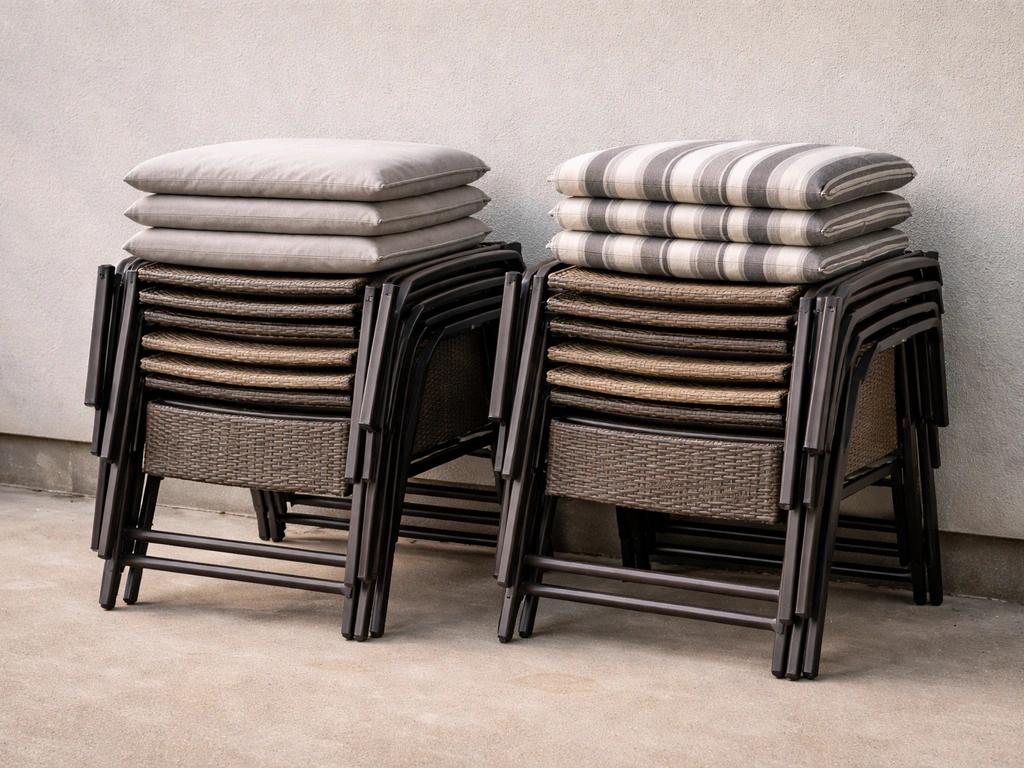
Covering Individual Chairs
- Fold or stack chairs if they are stackable. Stacking reduces the number of covers you need and makes each covered bundle more stable against wind.
- If chairs have seat cushions, either remove them to storage indoors or stack back cushions flat on seat cushions as described above.
- Slip the chair cover over from the top and pull it down over the legs until it reaches the ground or the lowest point it is designed to reach.
- Tighten the drawcord at the hem if the cover has one. It should be snug but not cinched so tight that the fabric strains.
- Attach any straps, ties, or leg clips to secure the cover (see the securing section below).
Covering a Sofa or Sectional
- Move the sofa or sectional pieces together into their normal configuration before covering. For a sectional, push all sections tight against each other.
- Lay any loose back cushions flat on top of seat cushions.
- Drape the cover over the top and work it down evenly on all sides so it does not hang lopsided. A lopsided cover catches wind badly.
- For sectionals, look for a buckle strap sewn into the inside front of the cover. Thread it underneath and connect it to the strap at the inside back. This keeps the cover locked underneath the furniture rather than just resting on top.
- Tighten all fasteners and check that the cover hem sits close to the ground on all sides.
Covering a Patio Table Set
Tables need a little more thought, and I have dedicated a full section to them below because the chair-positioning step makes a real difference in how well everything comes through winter. If you are wondering how to winterize patio furniture as a complete set, start by addressing tables differently than individual chairs.
How to Wrap Patio Furniture: Tight Wrap vs. Breathable Protection
Wrapping means something different from just dropping a cover on top. A tight wrap, typically using shrink wrap or a form-fitting fabric cover pulled taut, seals the furniture more completely and is better for areas with heavy snow loads or high winds. A breathable wrap uses a looser polyester cover that allows some air movement. Here is how to decide which approach to use and how to execute each one.
Breathable Wrap (Recommended for Most Furniture)
A breathable cover is your default choice for cushioned furniture, wood furniture, and anything prone to rust. Breathability is essential in reducing dampness, heat buildup, and condensation. Fit the cover as snugly as the design allows, use all built-in straps and drawcords, and then secure it with external ties or bungees. Snug is good. Airtight is bad.
Tight Wrap with Shrink Wrap
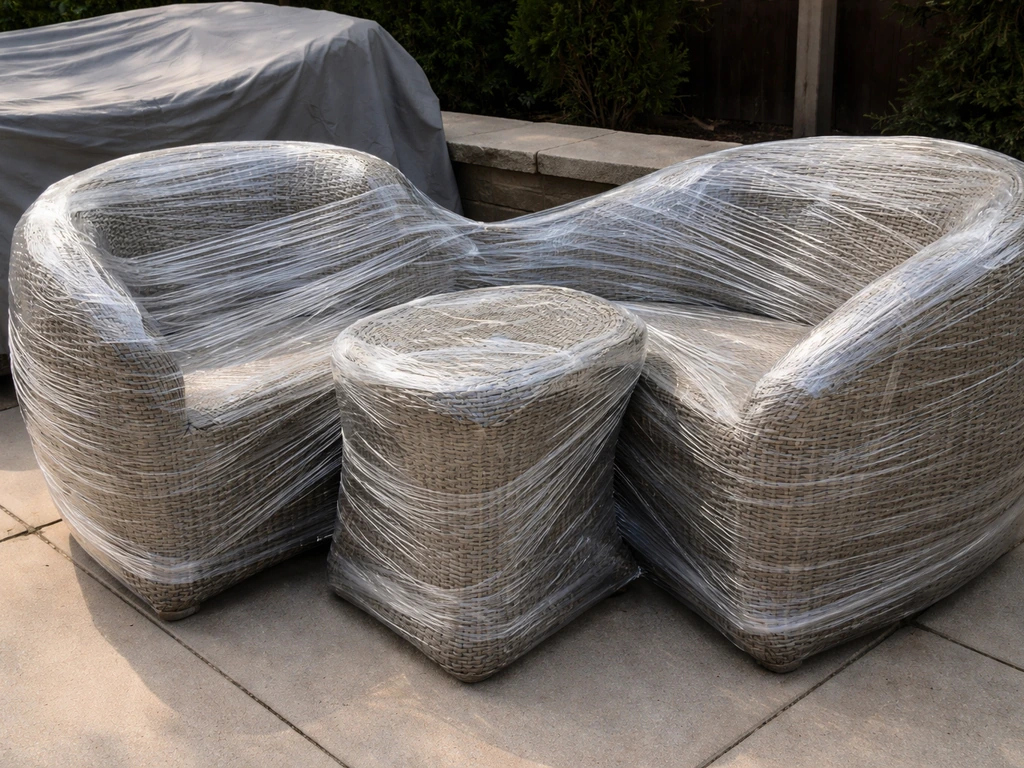
Shrink wrap is useful when you want to bundle a whole set together, or when a piece has an unusual shape that standard covers do not fit well. The problem is that shrink wrap does not breathe at all, and condensation will occur inside the wrap unless you take steps to prevent it. Install at least one shrink wrap vent (a small plastic disc designed for this purpose) into the wrap using a heat gun. The vent creates cross-flow ventilation that significantly reduces moisture buildup inside. Without it, you are creating a steam room around your furniture for five months.
Best Way to Cover a Patio Table for Winter
A patio table set is a little more involved than a single chair because you have the tabletop, the umbrella hole (if there is one), and the surrounding chairs to think about. Here is how to approach it so everything is protected without creating a cover that sags, collects water, or blows away.
- Remove the patio umbrella entirely. Never leave an umbrella inside a cover. Even a closed umbrella will catch wind and can damage both the umbrella and the cover over a winter. Store it separately, ideally indoors or in a garage.
- Push all the chairs in close to the table, tucking them as far under the table edge as they will go. This keeps the chair legs inside the cover's footprint rather than sticking out, and it creates a more stable bundle overall.
- If your chairs stack, stack two or three together and position each stack next to the table before you cover. Fewer items to cover means fewer opportunities for covers to blow off.
- Clean the tabletop and check the surface. Glass tops should be removed and stored flat indoors if possible. If you cannot store the glass top, cover it with an old moving blanket before putting the main cover on, to prevent scratching and provide an insulating layer against freeze-thaw cracking.
- Fit the table cover over the table and chairs as one unit if the cover is sized for a full set, or cover the table separately and chairs separately if you are using individual covers. A full-set cover is more wind-resistant because there are fewer gaps.
- Close the umbrella hole in the cover with the built-in velcro or zipper if the cover has one. If not, tuck the opening tight against the table base so rain cannot funnel in directly.
- Secure the cover using leg clips on each table leg, drawcords at the hem, and at least one strap running underneath. See the next section for exactly how to do this.
One thing I always do for large tables: after the cover is on, I press down gently on the center to make sure the top is not creating a bowl shape that will collect rainwater or melting snow. If it is, reposition the chairs slightly underneath so there is some structure supporting the cover from below. A sagging cover full of snow is one of the most common causes of cover damage mid-winter.
Securing Covers Against Wind and Weather
Even a perfectly fitted cover will blow off in a strong gust if you do not secure it. This is especially true for covers on chairs, which are light and tip easily. Here are the main options and when to use each one.
| Fastening Method | How It Works | Best For | Wind Rating |
|---|---|---|---|
| Drawcord/hem cord | Pulls the hem tight under the furniture | All covers as a baseline | Light to moderate wind |
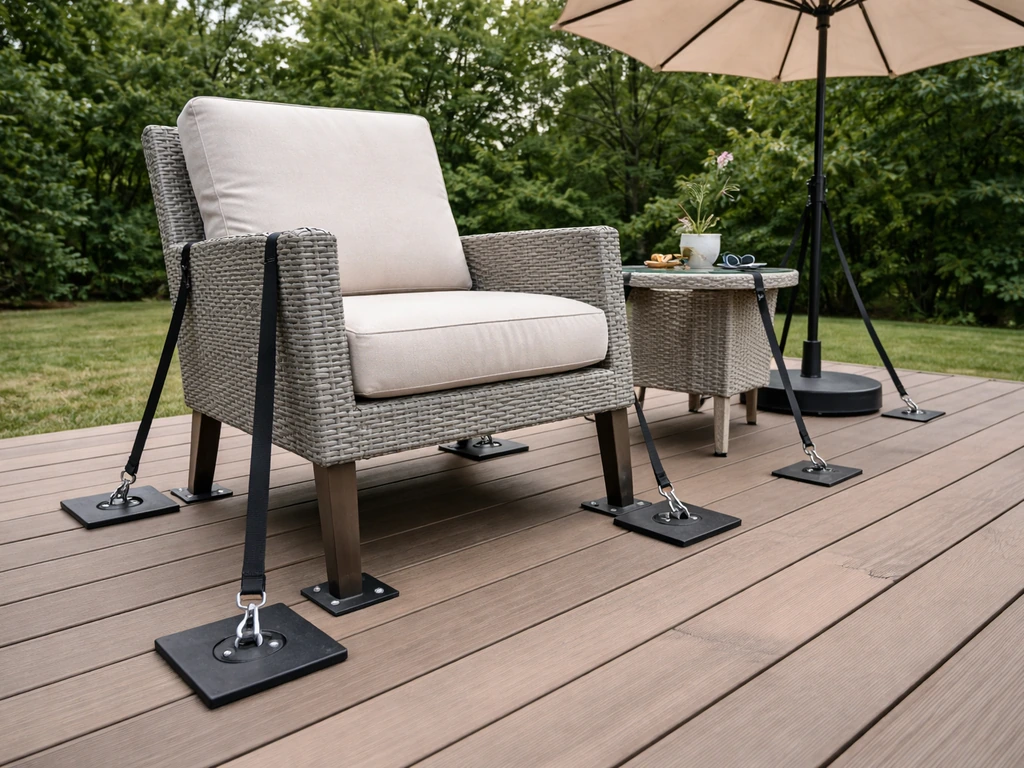
| Buckle straps | Strap threads under furniture and buckles on both sides | High-wind areas, sectionals, sofas | Moderate to high wind |
| Internal belt loop straps | Loop attached inside the cover, wraps the furniture frame | Any cover in moderate to high wind areas | Moderate to high wind |
| Leg clips | Plastic clips clamp cover to each leg | Tables and chairs with exposed legs | Moderate wind |
| Bungee cords | Hook through grommets or underneath furniture | Budget option, oddly shaped pieces | Light to moderate wind |
| Furniture weights/sandbags | Laid along the hem of the cover | Large flat covers on decks, backup for any cover | Supplement for severe conditions |
For moderate to high wind areas, use buckle straps as your primary fastener. The strap should locate the hole or gap in the furniture frame, wrap around the outside of the frame, and maintain tension throughout the wrap. The key is keeping tension on the strap as you wrap it, because a loose strap that flaps in the wind defeats the purpose. If your cover has both drawcords and straps, use both. Even a cover that fits perfectly can blow off in severe gusts without the fasteners tightened down.
For tables specifically, leg clips attached to each table leg are an excellent option because they grip the cover to the actual structure of the furniture rather than just cinching the hem. Coverstore makes a good point: tighten everything, because fit alone is not enough in a real winter storm.
Common Mistakes, Failures, and How to Fix Them
Most winter cover problems trace back to one of a few root causes. Here is what goes wrong, why, and what you can do about it.
Mold and Mildew Under the Cover
This is the most common complaint and it almost always happens because furniture was covered while still damp, or because a non-breathable cover trapped condensation all winter. If you open your covers in spring and find mold, clean it off with a mild soap solution immediately and let the furniture dry in full sun before deciding whether to refinish or treat any surfaces. Going forward, switch to a breathable cover and be fanatical about the dry-completely-before-covering rule. It is not optional.
Wet or Clammy Cushions in Spring
If cushions come out damp even though your cover looked intact, the moisture was almost certainly trapped inside the cushion core when you put it away. Cushion foam holds water deep in its structure long after the surface feels dry. Going forward, press firmly on the cushion center with both hands after cleaning. If water squeezes out or the cushion feels heavier than usual, keep drying. For the best protection, store cushions indoors in a dry location or in a breathable storage bag rather than leaving them under a cover on the furniture.
Condensation Inside a Non-Breathable Cover
If you are using a vinyl cover or shrink wrap and notice condensation droplets inside it when you check mid-winter, that is a warning sign. For vinyl covers, the practical fix is to switch to a breathable polyester cover. For shrink wrap, install a shrink wrap vent, which is a small plastic disc with a mesh screen that allows air to exchange without letting water in. Even one or two vents make a significant difference in moisture levels inside a wrapped bundle.
Sagging Covers Collecting Snow and Water
A cover that sags in the middle will collect snow, which melts into water, which sits and soaks through seams. The solution is to make sure there is something underneath the cover providing structure. For chairs, push them in under the table. For sofas, make sure cushions are stacked so the cover has a dome shape rather than a bowl shape at the top. If you have an oddly shaped piece with a flat top that naturally sags, lay a piece of foam pipe insulation or a pool noodle across the top before covering to create a slight peak that sheds water.
Covers Blowing Off Repeatedly
If your covers keep ending up across the yard, you need more fastening. Start by tightening every drawcord and strap you already have. If that is not enough, add leg clips, bungees through the hem grommets, or run a strap underneath the furniture and over the cover. For very light pieces like individual chairs, consider whether it would be simpler to bring them inside for the winter entirely rather than fighting covers all season.
Rust or Finish Damage After Covering
If you are seeing rust on steel furniture or finish peeling on painted frames after a covered winter, the cover is trapping moisture against the metal. This is the vinyl cover trap in action. Switch to a breathable cover, and before you cover next fall, touch up any scratches or chips in the frame finish with appropriate paint or sealant so bare metal is not exposed going into winter.
A Few Things Worth Considering Beyond Just Covering
Covering is the most practical approach for most people, but it is not the only one. If you are trying to decide whether to cover in place, tarp, or bring everything inside, the answer depends on your climate and how severe your winters get. Covering in place with quality breathable covers works well for mild to moderate winters. For areas with heavy snow loads or extended freeze-thaw cycles, tarping or moving furniture to a garage is worth the extra effort. Shrink wrapping a full set is a solid middle-ground option if you want everything bundled and secured without taking up garage space. Whatever approach you choose, the prep steps are the same: clean, dry, secure.
FAQ
Can I leave patio furniture covered all winter if there is ongoing snow melt and rain?
Yes, but only if the cover is breathable and the furniture is completely dry before covering. After the first big storm, do a quick mid-season check by lifting a corner (briefly) to confirm there are no condensation droplets and no damp smell underneath.
How do I know a cushion is truly dry enough to cover without mold?
Dry to the touch is not enough. If the foam feels colder or heavier than normal, or if you can squeeze water from the cushion after cleaning, it is not dry-through. A practical test is to weigh the cushion before and after drying, if you can, or to dry longer than you think using direct sun and airflow.
Should I remove cushions and store them indoors, even if I use breathable covers?
It depends on your climate and how breathable your cover is, but indoor storage is safest for long freeze-thaw seasons. If you must leave cushions on the furniture, stack them flat and ensure the cover cannot trap standing water or touch the cushion fabric directly in low spots.
What should I do if I open the covers in spring and see mildew or mold?
Clean promptly with mild soap and water, then rinse and dry in full sun. Avoid sealing over mold. If stains persist, treat only after the item is fully dry, and consider replacing cushion foam if the smell returns quickly after drying.
Is it better to use a tarp or a furniture cover for winter in wet climates?
In wet climates, breathable polyester is usually the safer default because tarps, even canvas, tend to trap moisture when they sit tight against frames and cushions. If you must use a tarp, it needs aggressive securing, extra spacing so it does not contact fabric, and frequent mid-season checks for trapped moisture.
How tight should I cinch the cover, and can I make it airtight?
Tight enough to prevent flapping and wind gaps, but not airtight. A fully sealed, airtight setup increases condensation risk, especially with non-breathable materials. Use built-in straps and drawcords, then rely on breathability rather than total sealing.
What is the best way to vent a shrink wrap bundle beyond adding one vent?
At least one vent helps, but larger sets benefit from multiple vents spaced across the bundle to improve cross-flow. Install vents early in the process so you do not have to reheat the wrap later, and check again after major temperature swings to make sure moisture is not collecting inside.
My cover sags in the middle, how can I fix it without buying a new one?
Add support under the cover so the fabric or wrap does not create a bowl. For chairs, adjust their placement under a table. For flat-top pieces that naturally sag, create a slight peak using a foam pipe insulation or pool noodle across the top edge, then re-secure.
Why do covers blow off even when they look well-fitted?
Most blow-offs happen from loose drawcords or straps that lose tension in wind, or from using only the hem cinch on lightweight pieces. Tighten straps and drawcords first, then add buckle straps, bungees through hem grommets, leg clips on tables, or a strap that runs under the furniture and over the cover.
Should I cover umbrellas and umbrella stands separately?
Umbrellas and stands often need different handling than chairs. Keep the umbrella in a closed position, dry it fully before covering, and if your set includes an umbrella hole, ensure the cover does not create a water-catching sag around the hole area.
Can I cover furniture right after washing it if it is not visibly dirty?
No. You can have a clean-looking surface that is still damp under cushions or in frame joints. Follow the dry-completely rule, especially for foam-core cushions and any pieces with crevices where moisture lingers.
What should I do if I see rust on steel frames after winter?
Rust usually means moisture was trapped against metal, often caused by non-breathable covers or poor drying before covering. Switch to breathable covers next season, and before covering again, touch up scratches and exposed metal with the appropriate paint or sealant so bare steel is not starting winter unprotected.
Is it worth bringing furniture inside for very light or small pieces?
Often yes if you have frequent high winds or extremely light chairs. For small, easy-to-move pieces, moving them indoors avoids repeated tightening, mid-season checks, and the risk of wind gaps that can trap moisture.