The fastest way to anchor patio furniture is to match your method to your surface: use auger-style ground stakes or earth anchors on grass and dirt, anti-slip pads or adhesive furniture grippers on concrete and pavers, and dedicated deck furniture anchors or strap tie-downs on wood or composite decking. For most setups, a combination of a non-slip base layer plus at least two strap or clip anchor points will stop furniture from shifting in winds up to about 40 mph. Anything heavier than that and you need to go semi-permanent with bolted floor anchors. Here is exactly how to do each one.
How to Anchor Patio Furniture: DIY Steps for Stability
Maren Grady
30 May 2026
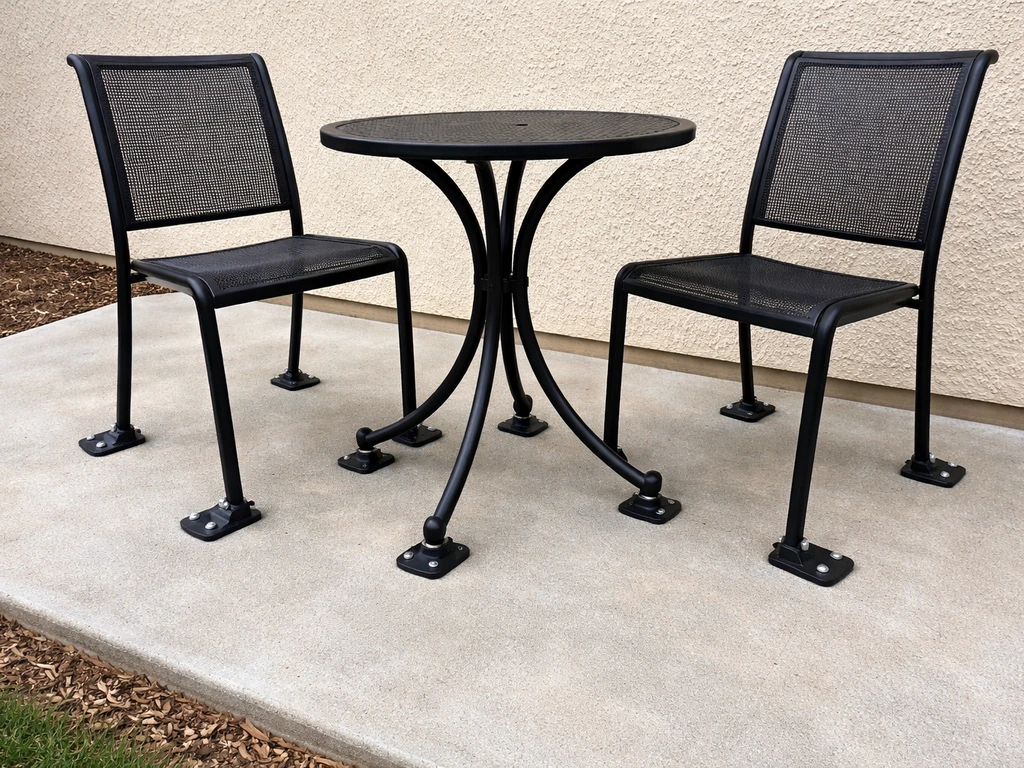
Why patio furniture moves (and what your anchoring needs to actually stop)
Furniture does not just blow sideways. Wind actually acts on outdoor pieces in two ways at once, and if you only solve one, the other will still get you. The first is lateral pressure: horizontal wind force that shoves chairs and tables across the patio. The second is vertical uplift: wind flowing over and under flat surfaces creates suction that can lift furniture straight up off the ground, even on a sheltered deck. This is why stacking chairs in a corner or pushing a table against a wall is not enough. The wind catches the underside and pops the whole thing.
Umbrellas are the biggest offender here. A cantilever or offset umbrella has a high center of gravity and a long arm that acts like a lever, multiplying the torque wind applies at the base. That is why a wobbly umbrella in a 30 mph gust becomes a projectile, not just an annoyance. The base weight has to go up significantly for offset designs compared to center-pole umbrellas. A general starting point: a 9-foot center-pole umbrella needs at least a 50 lb base, and that number climbs fast for offset styles. Anchoring supplements the weight, it does not replace it.
Sectionals and modular furniture have their own problem: the individual pieces rack and rotate against each other unless they are clipped or strapped together as a unit before you anchor the whole set. For sectionals and other modular pieces, clipping the furniture together the right way prevents racking and keeps every connection aligned when you anchor the set clipped or strapped together. If you anchor just one piece, the others still slide and pull on the connection. Treat the set as one object first, then anchor that object to the ground.
Pick the right anchoring method for your surface
The surface underneath your furniture controls which anchoring options are even possible. Here is a practical breakdown by surface type.
Grass and dirt
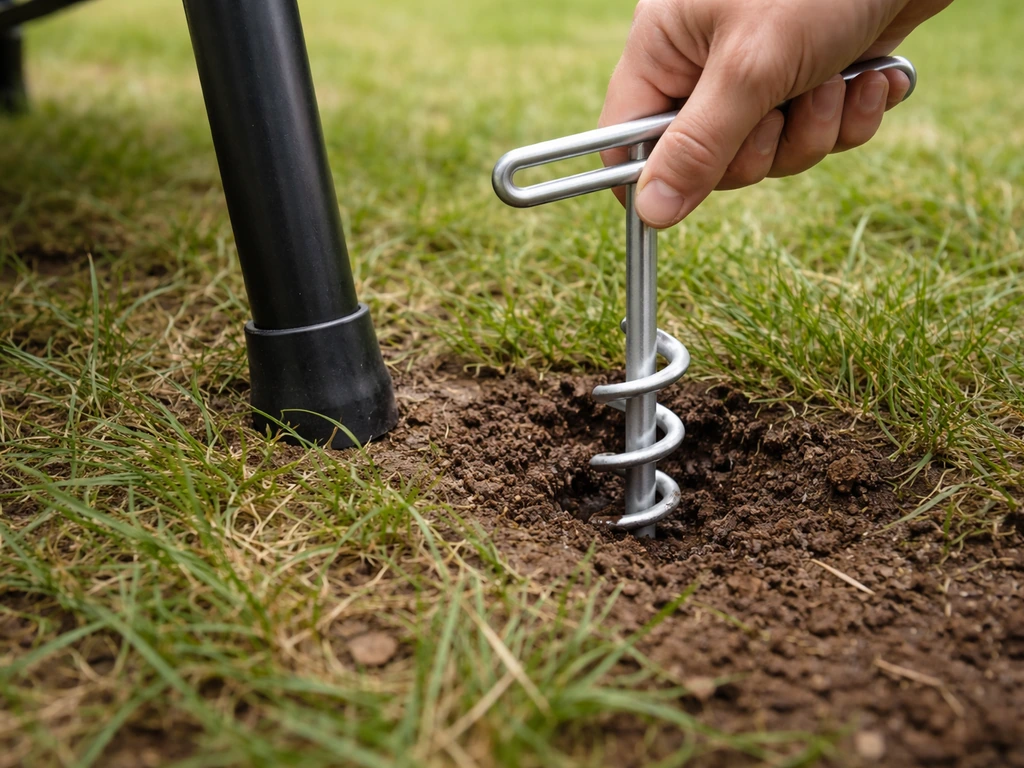
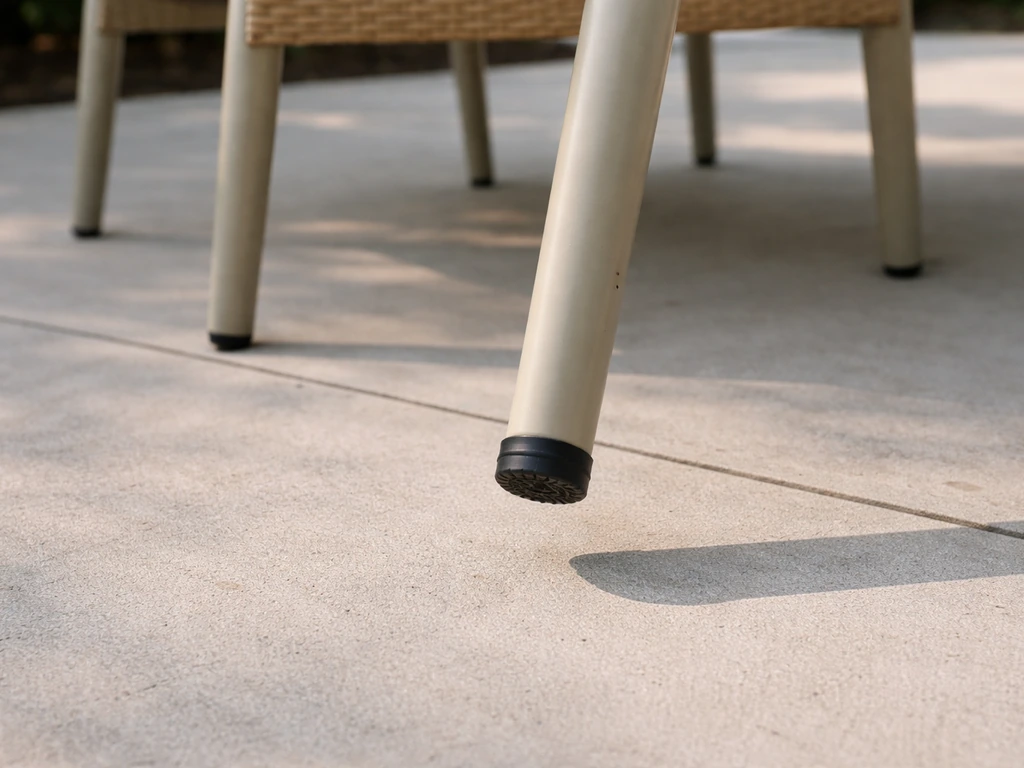
Auger-style ground stakes are your best friend on soft ground. These are corkscrew-shaped metal stakes (usually 10 to 18 inches long) that you twist into the earth by hand or with a cordless drill. They have a loop or eyelet at the top that you clip a strap or bungee anchor to. For larger furniture or a dining set, use one stake per corner of the arrangement. On soft, wet soil, go longer stakes or use two per corner to stop them pulling out. Rubber furniture feet or furniture coasters under each leg also stop the legs from sinking into grass over time.
Concrete patios
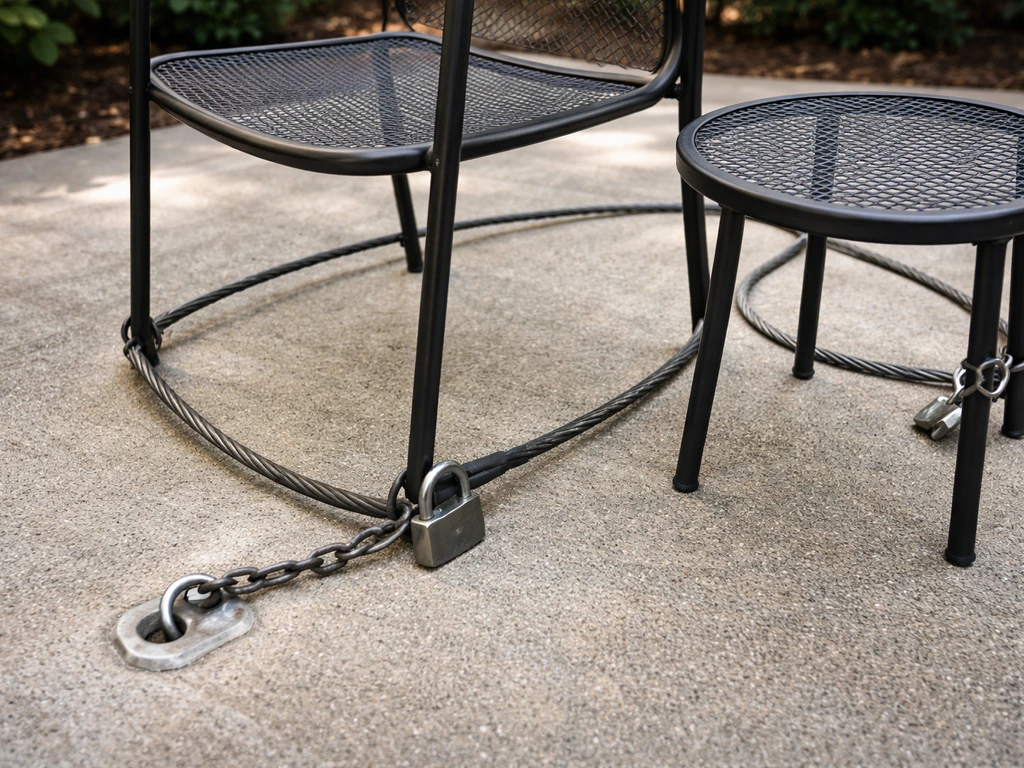
On solid concrete you have two real options: non-drilling grip pads, or drilled permanent anchors. Anti-slip rubber or PVC furniture pads under each leg handle everyday wind and prevent the scratching that bare metal legs cause on concrete. For genuinely windy areas, you need bolted floor anchors. Expansion sleeve anchors and wedge anchors are the two common types. Sleeve anchors are easier for DIY use because they tolerate slight hole size variation. Wedge anchors grip harder but require a precise hole and solid (not hollow) concrete, so avoid them on older slabs that might have voids. Always use stainless steel anchors outdoors because zinc-plated hardware will rust within a season in wet conditions.
Pavers and stone
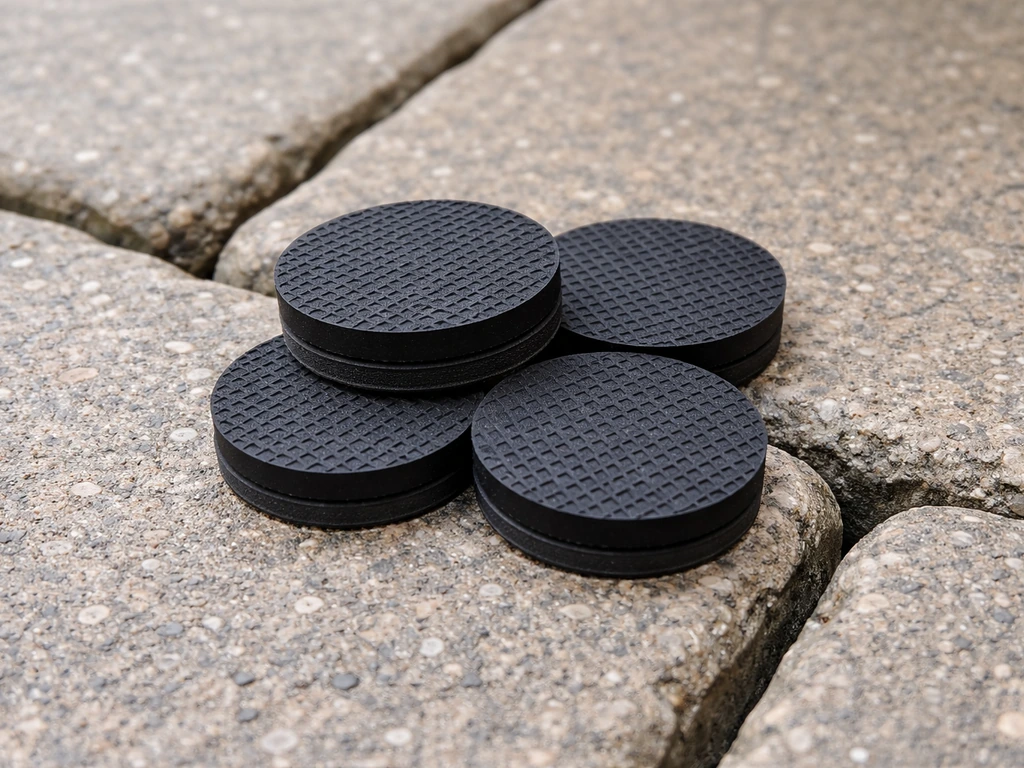
Pavers are tricky because they sit on a sand or gravel bed and individual stones can shift. Anti-slip furniture pads work well for everyday use. For permanent anchoring, the most reliable method is to run the anchor through the gap between pavers down into the concrete or compacted substrate underneath, which gives you solid purchase instead of relying on the paver itself. If your pavers are mortared, you can drill directly into them using a masonry bit, but test a hidden spot first as some thin pavers crack under drill pressure.
Wood and composite decking
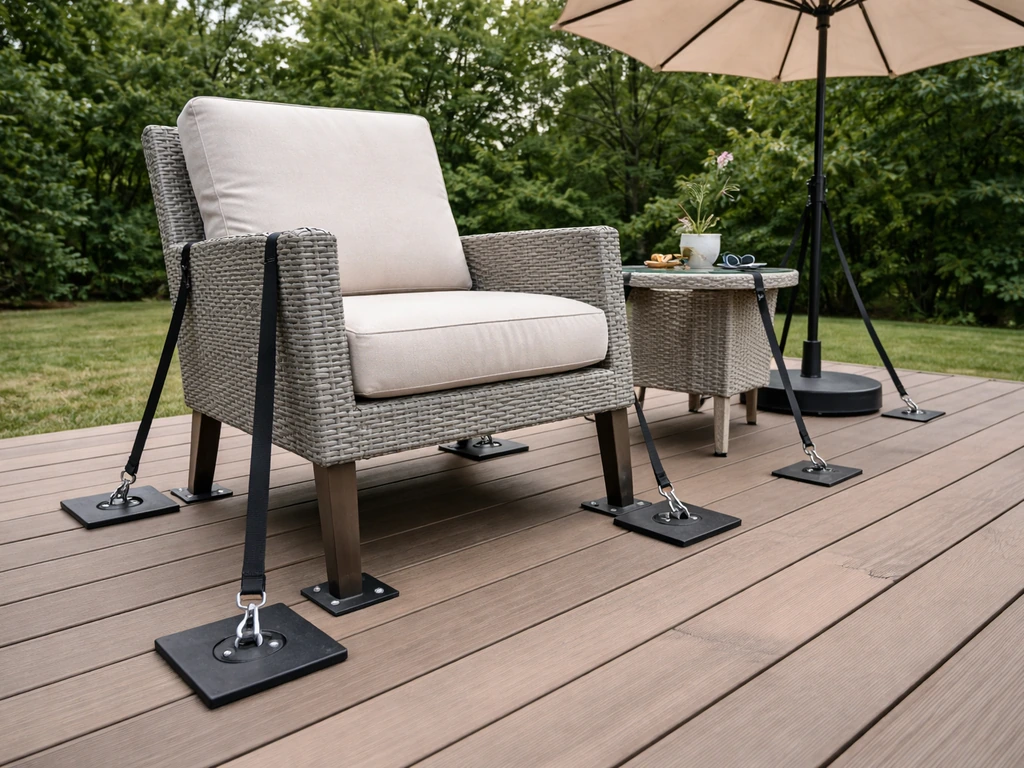
Deck surfaces need furniture-specific anchoring products because standard concrete anchors will split deck boards and void deck warranties. You can use deck furniture anchor brackets or strap tie-downs to anchor patio furniture to a deck without damaging the structure dedicated deck furniture anchors. Dedicated deck furniture anchors (the kind that integrate with the decking system by fitting between or beneath boards) are designed for exactly this. Some systems use a recessed bracket that slots into the deck gap and connects to a strap or cable at furniture leg height. Strap tie-downs looped around deck posts or railings also work well for larger pieces like dining sets and sectionals. Whatever method you use, follow the manufacturer's installation document carefully because load paths on decks are different from slabs, and wind uplift on an elevated deck can be significant.
Tools and materials shopping list
Before you buy anything, decide whether you want a non-drilling setup you can fully reverse (renter-friendly, seasonal furniture), or a permanent drilled anchor you install once and leave. Both work. The permanent option holds better in extreme wind, but the non-drilling option is faster to install and easier to remove for winter storage.
| Item | Non-Drilling Use | Permanent/Drilled Use | Approx. Cost |
|---|---|---|---|
| Anti-slip rubber furniture pads | Yes | As supplement | $8–$20 for a set |
| Auger ground stakes (10–18 in) | Yes (grass/dirt only) | No | $15–$35 for 4-pack |
| Adjustable furniture straps or tie-down straps | Yes | Yes (with anchor point) | $12–$30 |
| Bungee deck anchor clips | Yes | No | $10–$25 |
| Stainless steel sleeve expansion anchors | No | Yes (concrete/pavers) | $10–$20 for 4-pack |
| Stainless steel wedge anchors | No | Yes (solid concrete only) | $10–$25 for 4-pack |
| Deck furniture anchor brackets (e.g. MyDek style) | No | Yes (deck boards) | $30–$60 per anchor |
| Carbide-tipped masonry drill bit (matched to anchor size) | No | Yes | $8–$20 |
| Hammer drill or rotary drill | No | Yes | Rent for $25–$50/day |
| Umbrella base (50 lb minimum for 9 ft umbrella) | Yes | Yes | $40–$120 |
| Umbrella in-ground ground sleeve anchor | No | Yes (concrete/pavers) | $30–$80 |
A note on drill bits: bit sizing is not universal. Wedge anchors typically require a hole drilled to the exact anchor diameter. Sleeve anchors use a hole sized to the sleeve's expansion fit, which is slightly different. Always check the anchor packaging for the specified bit diameter before you drill. Using the wrong bit size is the number one reason DIY concrete anchors fail to hold.
Step-by-step installation for different furniture types and layouts
Chairs and small side tables on grass or dirt
- Push an auger stake into the ground 6 to 8 inches from the outside of the chair leg at a slight outward angle (about 10 degrees). Twist it clockwise until the top loop is at ground level.
- Clip a short adjustable strap through the loop and around the chair leg or lower crossbar. Tighten until the strap is snug but not deforming the frame.
- Repeat on the opposite side of the chair so wind from any direction meets resistance. Two stakes per chair is enough for moderate wind; add a third at the back for exposed areas.
- For a side table, one stake at each end of the base is enough if you strap to a leg on each side.
Dining set on concrete (non-drilling method)
- Clean the concrete under each leg with a stiff brush. Dirt and grit under a rubber pad kills the grip within a week.
- Place a thick rubber anti-slip pad (at least 3mm) under each table leg and chair leg. Press firmly.
- Run an adjustable strap diagonally from one table leg to the opposite table leg, passing underneath the table. Tighten until the table resists rocking. This creates tension that resists both sliding and uplift.
- Use grip-tight cushion clips on seat cushions to keep them from becoming wind-borne projectiles separately from the furniture.
Dining set on concrete (drilled sleeve anchor method)
- Position the table and chairs exactly where you want them permanently. Mark each anchor location with chalk or painter's tape.
- Move the furniture and drill each hole using a carbide-tipped masonry bit sized to your sleeve anchor's specification. Hold the drill perpendicular to the slab.
- Blow or vacuum debris from each hole. Debris prevents the anchor from reaching full embedment depth and will cause it to pull out under load.
- Insert the sleeve anchor and tap lightly with a hammer until flush. Thread the bolt through your anchor bracket or strap eye, then tighten with a wrench until the sleeve expands and grips. Do not over-torque or you will crack the concrete around the hole.
- Reposition furniture legs over the anchor brackets and connect with the strap or clip hardware included with your anchors.
- Test by pushing firmly on each piece from multiple directions. There should be no rocking or sliding.
Sectional and modular furniture
Connect all the individual sections together first using sectional clips or connecting straps before you do any floor anchoring. The whole assembly needs to move as one rigid unit or the anchor forces will work against the connections. Once the sections are clipped together, anchor the four outer corners of the combined unit using whichever floor method fits your surface. Using multiple tie-down strap points across the frame, at legs and crossbars rather than just the outer fabric or cushion area, is critical. Straps that contact only cushion fabric or wicker weave will cut through or pull free under load.
Patio umbrellas
- Start with the right base weight. A 9-foot center-pole umbrella needs at least 50 lb. Offset/cantilever umbrellas need significantly more because wind torque is higher. If the base is undersized, no anchoring will fully compensate.
- For concrete or pavers, use an in-ground anchor sleeve: drill a hole, insert the sleeve flush with the surface, and drop the umbrella pole in. The sleeve transfers wind load directly into the slab rather than relying on a weighted base alone.
- For grass or dirt, use a ground sleeve anchor. Drive the sleeve into the soil, then insert the pole. Add a strap from the pole to a nearby post or fence if the area is very exposed.
- Inspect the tilt mechanism and locking pin on the pole. A worn push-button tilt or a loose pole joint will let the umbrella lean and catch wind even if the base is perfect. Tighten or replace worn locking pins before relying on the base anchor.
- Always close the umbrella when you leave the area, especially overnight. No anchor is designed to hold an open umbrella in sustained wind.
Furniture on a deck or porch
On a deck, your anchor points are the deck structure itself. Use deck furniture anchor brackets that fit between or beneath deck boards, following the manufacturer's installation document exactly because load paths on elevated decks differ from slabs. For a quick strap solution, loop furniture-grade tie-down straps around deck post bases or structural rails and clip to furniture legs using carabiner-style clips. You can use the same approach for how to install patio furniture clips on many deck layouts by choosing the right anchors and attaching straps at the correct height. Avoid screwing directly into deck boards at random locations as this can introduce water infiltration points and may violate deck warranties. If you need to drill, use the designated hardware and seal every penetration with exterior-grade sealant immediately after installation.
Protecting surfaces and preventing rust and water damage
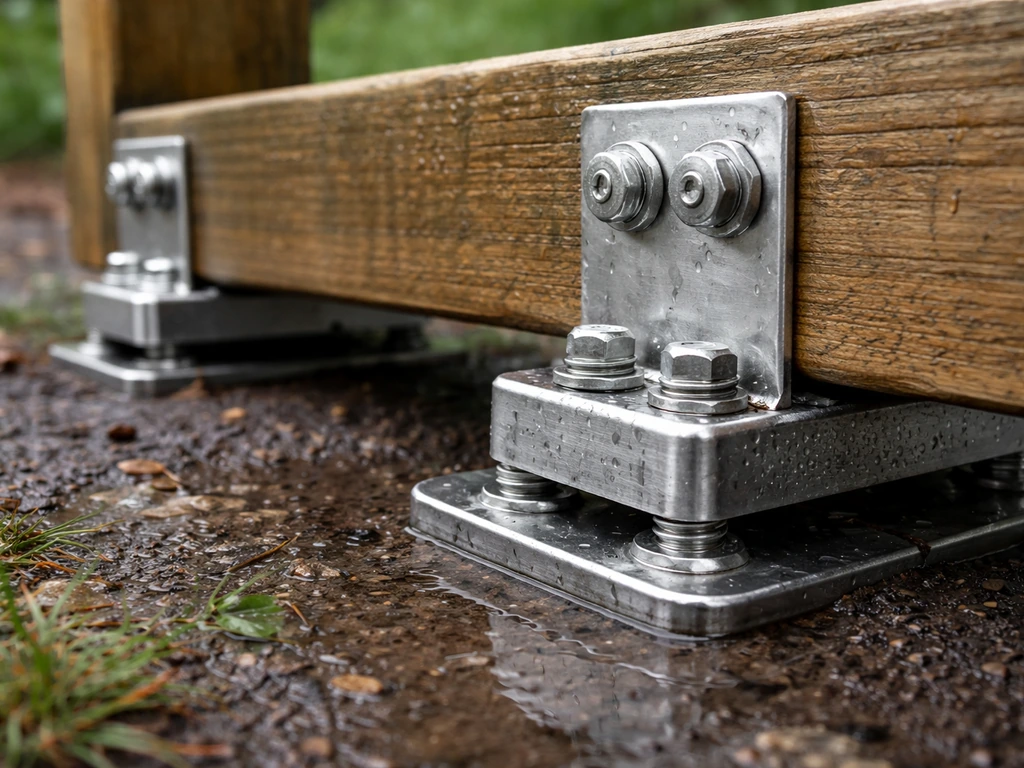
This is where I have watched a lot of otherwise good installs fall apart within a year. Metal anchors and brackets hold moisture against surfaces and against furniture frames, which accelerates rust and can stain concrete or rot deck boards. Here is how to prevent that.
- Use stainless steel anchors and hardware for all outdoor installations. Zinc-plated or galvanized hardware will rust visibly within one to two seasons in wet climates.
- Place a rubber or silicone washer between any metal bracket and the floor surface to create a small drainage gap and prevent moisture pooling.
- On wood decks, seal every drilled hole with exterior-grade silicone or deck sealant before inserting the anchor. Unsealed holes wick water directly into the joist or board and cause rot.
- Rinse anchor hardware and strap connectors at the start and end of each season to clear road salt, bird waste, and mineral deposits that accelerate corrosion.
- For concrete anchor sleeve receivers (the kind used for umbrella poles), fit a protective plug or cap over the opening when the pole is not in use. This keeps debris and water out of the sleeve and prevents the anchor from seizing up.
- Do not let furniture legs sit in standing water over the anchor brackets. Use rubber furniture foot caps or coasters to lift the leg slightly and let water drain away.
If it still shifts: troubleshooting before you give up
If you installed anchors and the furniture is still moving, the problem is almost always one of four things. Troubleshoot a wobbly patio umbrella by checking whether the looseness is coming from the base connection, the tilt joint, or the pole, since fixing those connection points often resolves wobble without relying only on extra weight check whether the looseness is coming from the base connection, the tilt joint, or the pole. Work through these before adding more hardware.
- The strap contact point is wrong. Straps looped around the outside of a cushion or across a thin wicker section will slip or deform under load. Reposition the strap so it contacts a solid metal or hardwood leg, a crossbar, or a structural frame member. Using two strap attachment points per piece prevents rotation even when one slips.
- The anchor is not fully engaged. Concrete anchors that were not cleared of drilling debris or were not set to the correct embedment depth will feel solid until the first real load, then pull free. Remove and reinstall with proper hole prep.
- The furniture is racking or rotating before the anchor loads. This happens with modular sectionals where the sections are not clipped together first. Connect the pieces as one unit, then re-tension the anchor straps.
- The mechanical connection at the furniture joint itself is loose. For umbrellas, check the pole-to-base collar bolt and the tilt locking pin. For chairs, check that all leg bolts are fully tightened. A loose joint means the piece flexes and rocks even when the anchor is holding the base.
- Add anti-slip underlay as a supplement. If the furniture is sliding on a slick surface before the straps can engage, a high-grip rubber mat under the whole piece (not just individual leg pads) gives initial resistance while the straps handle the bigger load.
- Upgrade if needed. Non-drilling solutions have real limits in high-wind zones. If you are in a coastal area or anywhere that sees sustained winds above 40 mph, permanent drilled anchors are the right tool for the job. It is not overkill, it is the correct spec for your conditions.
Seasonal maintenance and prepping for winter storage
Anchoring is not a set-it-and-forget-it project. Freeze-thaw cycles, heavy rainfall, and UV exposure all work on hardware over time. Spending 20 minutes at the start and end of each season saves you from discovering a failed anchor the hard way during a summer storm.
Start of season (spring)
- Pull any protective plugs from concrete sleeve receivers and inspect for debris or corrosion inside the sleeve. Clear with a brush and a blast of compressed air.
- Check all strap and clip hardware for UV cracking, fraying, or brittle spots. Replace any strap that shows surface cracking even if it has not failed yet.
- Re-torque all bolted anchors by hand. Freeze-thaw cycles expand and contract concrete slightly, which can back off bolt tension over winter.
- Inspect rubber anti-slip pads. They harden and lose grip over time. Replace any pad that feels stiff or has pulled away from its adhesive backing.
- Check umbrella base anchors and confirm the pole sits fully seated and the locking collar or pin engages cleanly.
End of season (fall)
- Remove straps and bungee clips from outdoor furniture before storage. Storing straps under UV and moisture while compressed against a frame causes them to set in a compressed position and lose elasticity.
- Back off strap tension on any furniture you are leaving outdoors over winter but not removing. Constant tension through freeze-thaw cycles fatigues strap material faster.
- Plug concrete sleeve receivers with the manufacturer-supplied cap or a cut rubber stopper to keep water from freezing inside the sleeve and cracking it.
- Clean and lightly coat any stainless or galvanized hardware with a corrosion inhibitor or marine-grade lubricant before covering or storing.
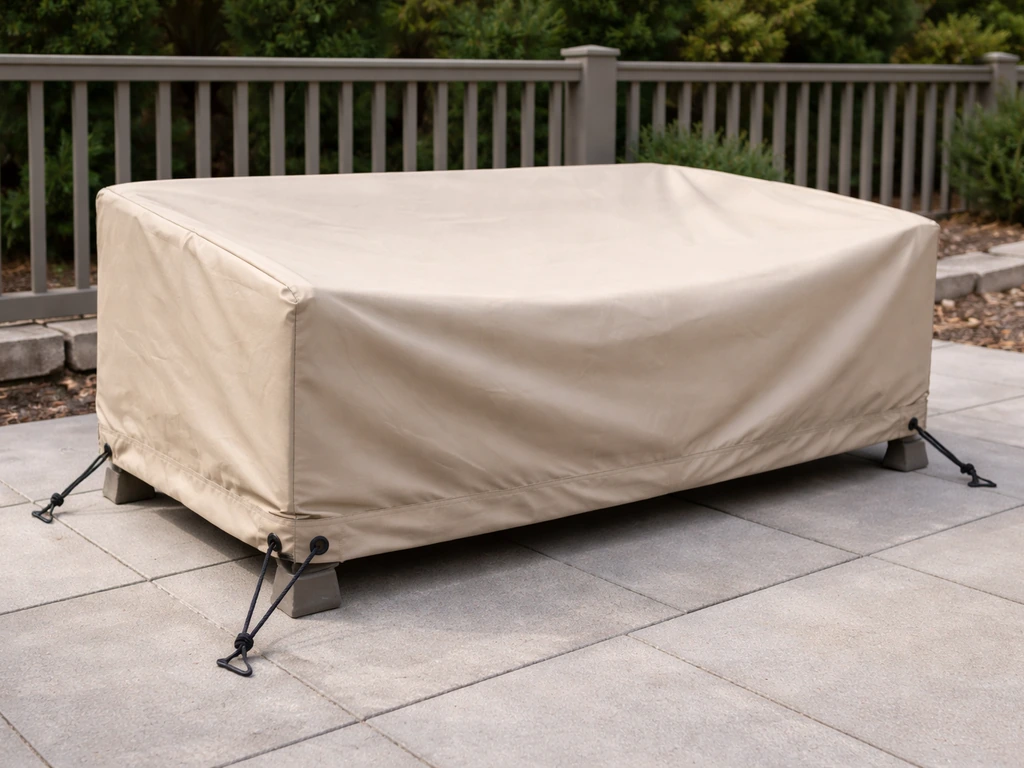
- If you are covering furniture in place rather than storing it, make sure anchor straps are re-tensioned after the cover goes on, since covers add wind catch area and increase the load on your anchoring system.
For surface-specific installs, the anchoring work on a concrete patio overlaps closely with the methods used when anchoring furniture to a deck or securing it to concrete directly, each of which has its own nuances around hardware selection and drilling approach. If you are securing patio furniture to a deck, choose deck-specific anchor brackets or strap tie-downs that connect to the deck structure, not just the boards. If you are dealing with a modular set, the clipping and connection step is worth its own focused look before you get to the floor anchoring stage.
FAQ
How many anchor points do I need for a typical patio set?
For most furniture, anchor at least two points tied to the frame, and use four outer corner anchors for dining sets or any rigid grid. If the set has stretchers, add straps at crossbars too, not just at the legs, because wind loads can twist the frame even when each leg seems secure.
Can I just weigh the furniture down instead of anchoring it?
Weight helps, but it does not stop vertical uplift. On windy days, suction can lift the whole base, especially with umbrellas and flat tabletops. Use a heavier base for umbrellas, then still anchor the umbrella stand or furniture frame for the best results.
What should I do if my umbrella base is heavy but the umbrella still wobbles?
Check for play between the umbrella pole and the base, then anchor the umbrella base to the surface or to structural deck points where applicable. Offset or cantilever umbrellas need a stronger torque resistance than center-pole designs, so consider both higher base weight and additional strap or clip anchoring.
How do I keep straps from cutting into wicker, cushions, or mesh?
Place straps so they contact structural parts, like chair frames, table frames, or designated tie points, not upholstery or weave. Use wider strap webbing and add soft protectors only between the strap and metal frame if needed to prevent abrasion, then pull straps snug without crushing the furniture.
My concrete anchors keep loosening, what are the usual causes?
Most failures come from wrong drill bit size, drilling into hollow or weak areas, or skipping the correct anchor type for the concrete condition. Confirm sleeve versus wedge requirements, clean dust from the hole, and use stainless outdoor hardware to prevent corrosion that slowly reduces holding strength.
Are non-drilling grip pads on concrete enough in really windy areas?
They are fine for everyday gusts, but in higher wind zones you generally need at least some mechanical anchoring or bolted anchors. A practical approach is to use grip pads under each leg for daily stability, then add strap tie-down points to ground anchors where uplift risk is high.
Can I drill into old pavers or mortared pavers for a more permanent anchor?
Sometimes, but it depends on thickness and how the pavers are set. If you drill directly into pavers, test a hidden spot first because thin slabs can crack under masonry drill pressure. The more reliable method is anchoring below the pavers through the joint into the compacted substrate or slab, where possible.
How do I anchor modular sectionals so they do not rack during storms?
First clip or strap the individual modules together so the combined unit acts like one rigid piece. Then anchor the four outer corners of the assembled unit. If you anchor only one section, the remaining sections can shift and force the connection to loosen.
Is it safe to anchor to deck boards if I avoid the main joists?
Avoid random board anchoring. Boards can split, and fastening into the wrong area can violate deck warranty terms or reduce water resistance. Use deck furniture anchor products that connect to the deck structure as designed, and seal every penetration immediately after installation if drilling is required.
How do I prevent rust or staining from anchors and brackets?
Use stainless steel components for anything outdoors and periodically check for gaps where water can trap against metal. After storms, inspect contact points between anchor hardware and furniture frames, then rinse off salty or muddy runoff so corrosion and residue do not build up.
Can I anchor furniture on gravel or uneven outdoor surfaces?
Use a method that reaches stable ground, not just the top layer. Auger-style stakes or earth anchors can work better on soft and disturbed soil than relying on pads, and for uneven areas you may need leveling blocks or coasters so each leg bears evenly before you attach straps.
How often should I check or retighten anchors?
Do a quick inspection at the start and end of each season, and after any major storm. Look for strap slack, pad displacement, movement at anchor points, and signs of hardware corrosion. Catching loosening early usually avoids having to replace degraded parts later.