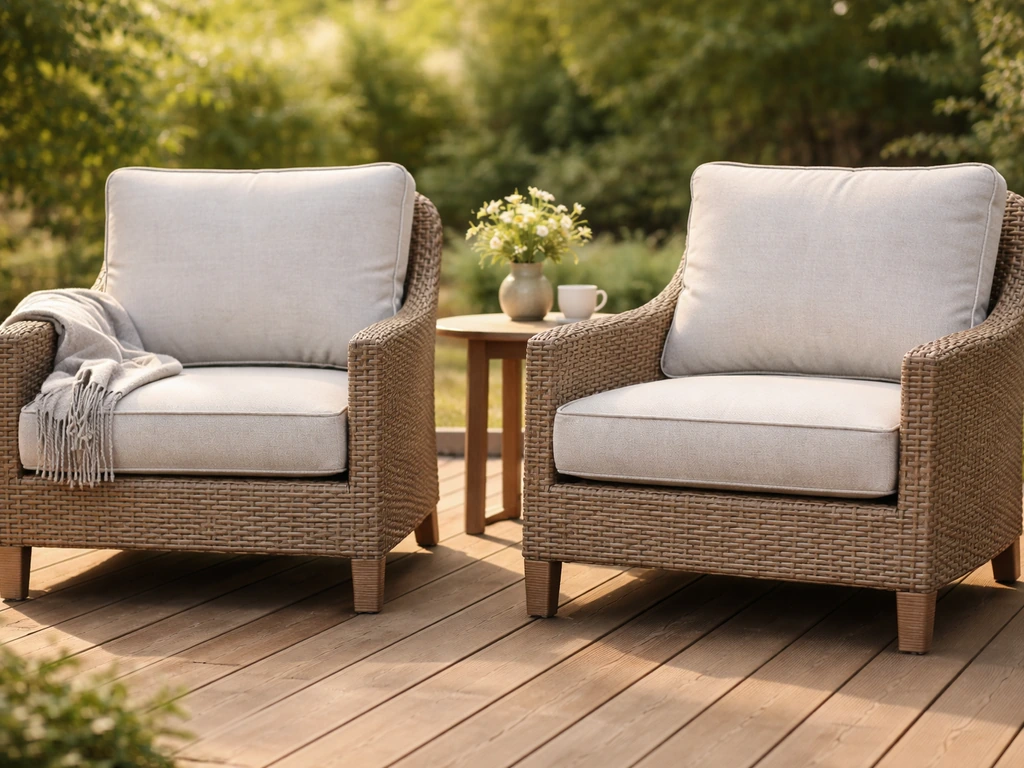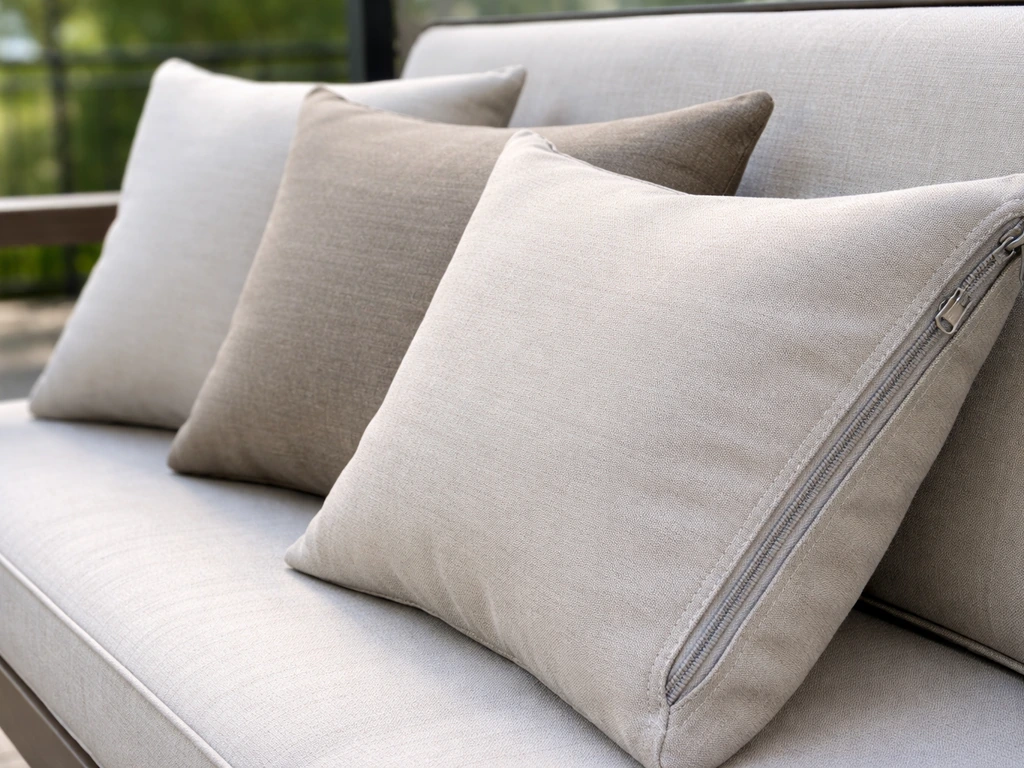
For a standard 20x20 inch seat cushion made from 54-inch wide fabric, you need roughly 3/4 yard per cushion for a plain cover with seam allowances. A typical set of four dining chair cushions runs about 2.5 to 3 yards total for solid fabric, or up to 4 yards if you're adding piping, boxed edges, or working with a patterned fabric. That's the ballpark, but the real answer depends on your actual cushion dimensions, whether you're doing a flat cover or a boxed gusset, and how many extras like zippers or piping you're adding. This guide walks you through the math step by step so you buy exactly what you need the first time.
How Many Yards of Fabric for Patio Cushions DIY Guide
Maren Grady
1 Jul 2026
Measure your cushions first (and write down the right numbers)
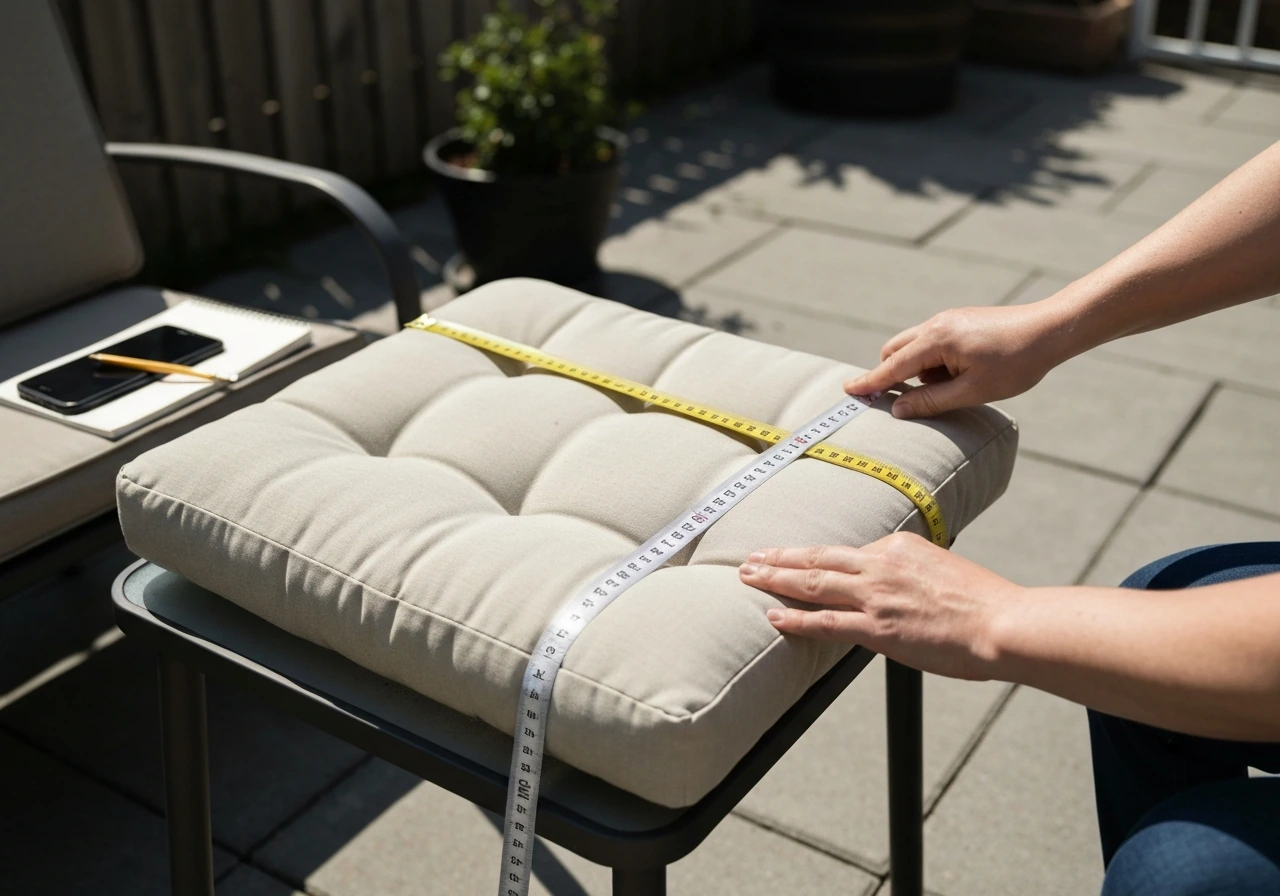
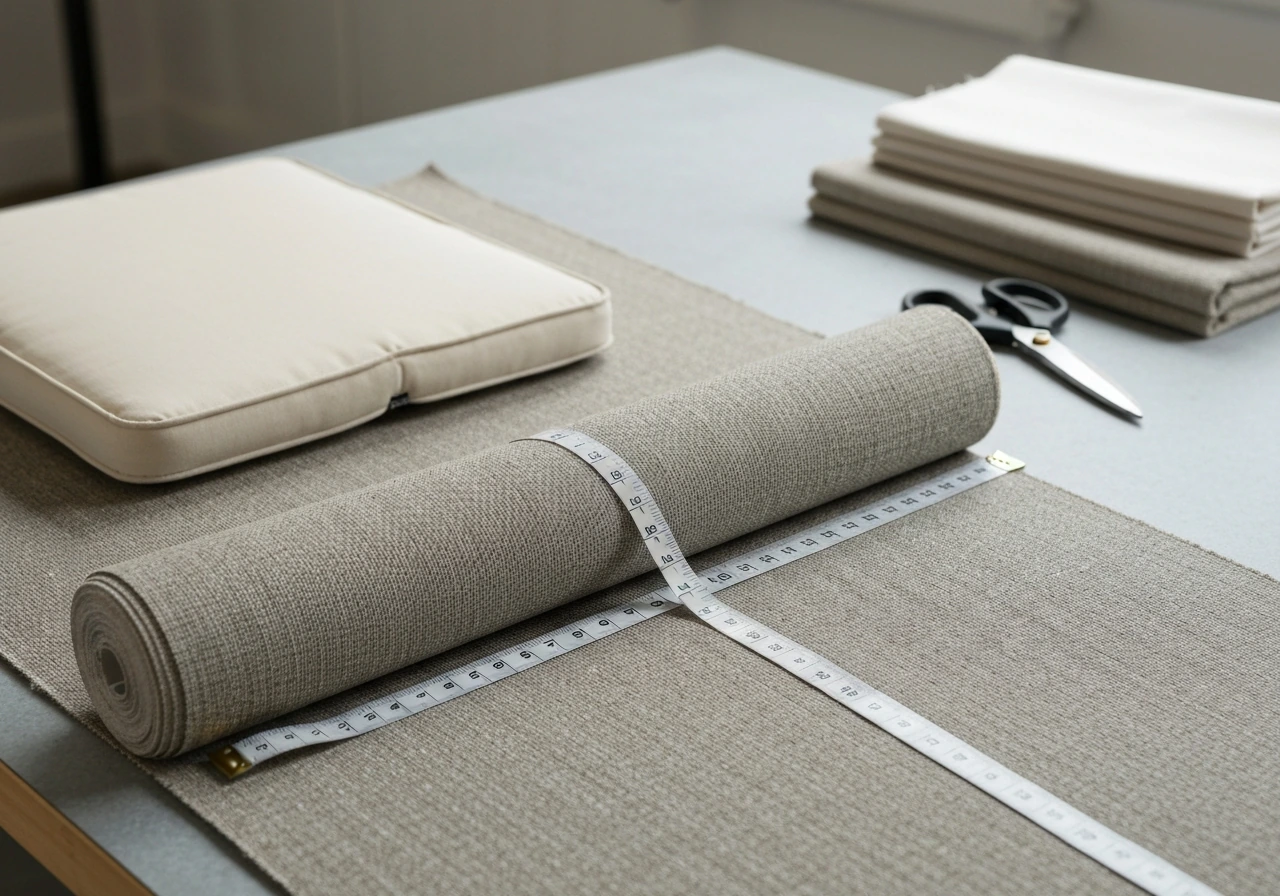
Here's where people get tripped up before they even open a browser to order fabric: they measure the cushion from edge to edge on the soft surface, which gives them an inflated number. Instead, measure seam to seam, meaning from one sewn edge across to the opposite sewn edge. That's the actual structural dimension your cover needs to match.
For every cushion, write down three numbers: width (front edge to back edge), length or depth (side to side), and thickness (how tall the cushion is when it's sitting flat). That thickness measurement matters a lot once you get to boxed edges and zippers. A thin 2-inch seat pad and a plump 5-inch deep-seat cushion need very different amounts of fabric even if their top faces look the same size.
For back cushions on deep-seating furniture, there's one extra consideration: if the back cushion sits behind a seat cushion, you may want to deduct the seat cushion's thickness from the back cushion height so the cover doesn't end up too tall when everything is assembled. Measure the back cushion in place, not just lying flat on a table.
- Width: measure across the front face of the cushion, seam to seam
- Length/depth: measure from front seam to back seam, seam to seam
- Thickness: measure the cushion's height at its tallest point (usually the center)
- Note whether the cushion is flat (no gusset), boxed (has a side panel), or T-shaped
- Count how many cushions of each size you need to cover
Keep a simple table in your phone or on paper with all of these numbers before you do anything else. It will save you from math mistakes later and it's the only way to get an accurate yardage estimate.
Choose your fabric width and plan your cutting layout
Most outdoor upholstery fabric is sold at 54 inches wide. That's the standard you'll encounter at fabric stores and online, and it's what most yardage calculators assume. Some specialty outdoor mesh and Phifertex-style fabrics also come in 54-inch widths. Occasionally you'll find 58-inch or 60-inch wide bolts, which gives you a little more room to work with, but 54 inches is the safe planning number.
One yard of fabric means a 36-inch long piece cut from a 54-inch wide bolt. That rectangle is 36 by 54 inches, or 1,944 square inches of usable material. The key to buying the right amount is figuring out how many cushion pieces you can nest into that space without waste, which is your cutting layout.
The simplest approach: sketch a rectangle 54 inches wide on paper (or a phone notes app), then draw your cut pieces inside it to see how many fit across the width. If your cushion pieces are, say, 22 inches wide (after seam allowances), you can fit two pieces side by side across a 54-inch bolt with 10 inches left over. Once you know how many pieces fit across, you can calculate how many lengths (yards) you need to cut all your pieces.
One thing worth knowing: some fabrics are railroadable, meaning the pattern runs across the width of the bolt rather than down the length. If you have a railroadable fabric, you may be able to cut wider seat cushion panels without piecing, which can reduce waste. Non-directional solid fabrics give you the most flexibility in layout. Fabrics with a one-way pattern or a definite up/down direction require all pieces to face the same way, which costs you more yardage.
The baseline yardage formula for cushion covers
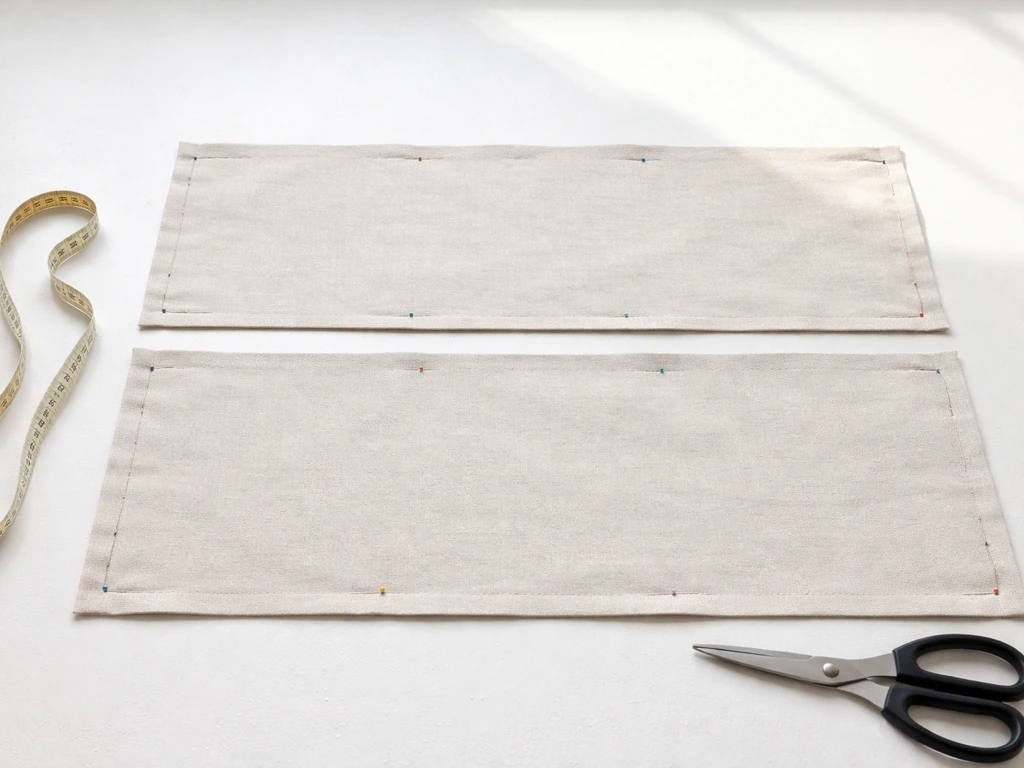
For a simple flat cushion cover (no gusset, no piping, just a top and bottom panel with a seam around the edge), the formula is straightforward. Add your seam allowance to each dimension, then figure out how many pieces fit across the fabric width, and calculate how many lengths you need.
A standard seam allowance for outdoor cushion covers is 1/2 inch on each side, so add 1 inch to both your width and your length measurements to get your cut dimensions. Comfort also depends on cushioning thickness, so if you plan to use thicker foam or additional padding, measure and adjust your dimensions before cutting your cover 1/2 inch on each side. For example: a 20x20 cushion needs a cut piece of 21x21 inches. You need two of those (top and bottom), so two pieces of 21x21 inches.
On a 54-inch wide bolt, two 21-inch wide pieces fit side by side (42 inches total, with 12 inches to spare). Each piece needs 21 inches of length. So for one cushion, you need 21 inches of fabric from the bolt, which is well under one yard. For four identical cushions, you need 4 pairs of panels, and with two panels fitting across the width each time, that's 4 cuts of 21 inches each, totaling 84 inches, or about 2.33 yards. Round up to 2.5 yards for a basic four-cushion set.
Here's the general formula written out: (Cut Width x Cut Length x Number of Pieces) divided by (Fabric Width x 36 inches) equals yards needed. Use this as your starting point, then add extra for everything in the next section.
Add extra for seams, piping, zippers, and boxed edges
A flat cover is the simplest case. The moment you add a boxed edge, piping, or a zipper, your fabric needs go up noticeably. If you want your patio cushions to feel more comfortable, plan the fabric for the cover first, then choose a supportive cushion thickness and filling that matches how you sit. Here's how each one changes the math.
Boxed (gusset) edges
A boxed cushion has a separate side strip (the gusset) that wraps around the perimeter between the top and bottom panels. The cut width for a boxed cover becomes: thickness + width + thickness + (2 x seam allowance). The cut length becomes: thickness + length + thickness + (2 x seam allowance). So a 20x20 cushion that's 4 inches thick needs cut pieces of (4+20+4+1) = 29 inches wide and 29 inches long. That's a noticeably bigger piece than the flat version. The gusset strip itself is cut at (thickness + 1 inch for seam allowances) wide, by long enough to wrap the perimeter.
Piping and welting
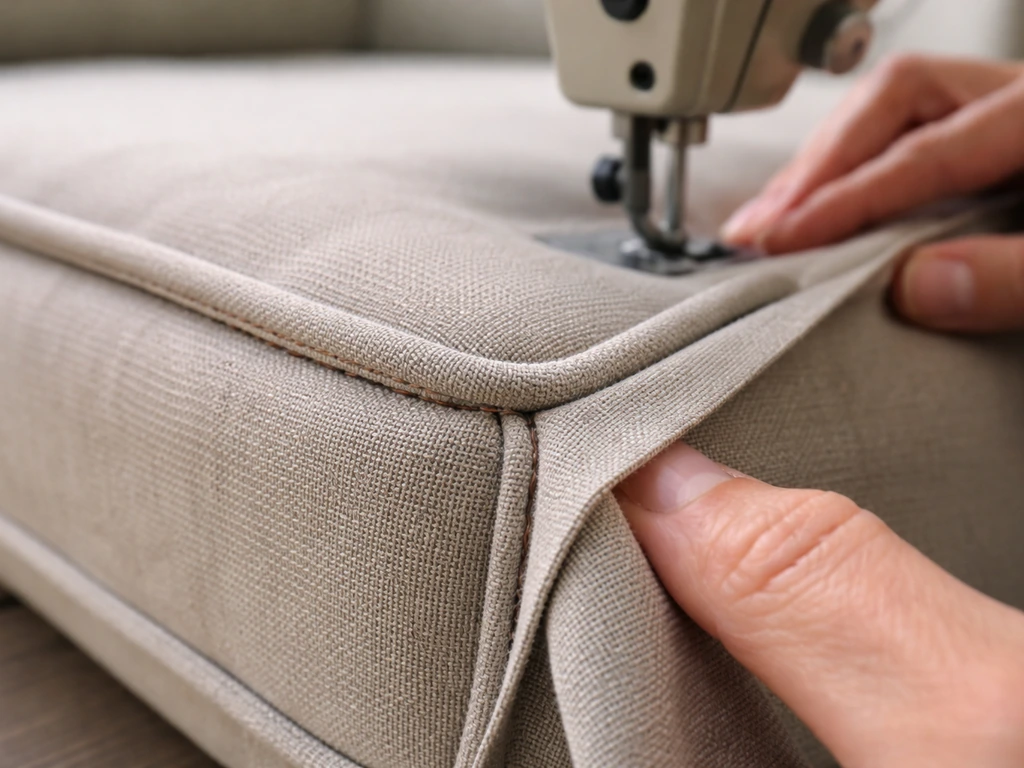
Piping is fabric-covered cord that runs along the seam edges and it adds a clean, professional look to any patio cushion cover. The catch is that piping strips are usually cut on the bias (at a 45-degree angle to the grain) for corners and curves, and that uses more fabric than you expect. A general rule of thumb for a typical cushion project: budget an extra 1. 5 yards of fabric per cushion component if you're doing bias-cut welt.
For biased welt (bias-cut welt), the COM & COL guide states to allow [1. 5 yards of fabric for welts for each job component](https://www. ourhousedesigns. com/documents/37/COM-COLBooklet10-24.
pdf). For four dining chair cushions with piping on the top and bottom seams, that adds up fast. If your piping seams are straight (no curves), you can get away with straight-cut strips, but budget at least an extra 1/2 yard per cushion to be safe. Also, if your cushion has thick piping or rounded top edges, add another 1/4 to 1/2 inch to your seam allowance to accommodate the extra bulk at the seam.
Zippers
Zippers on cushion covers typically run along one of the width edges, usually the back seam. They don't add much yardage on their own (the zipper panel is part of the bottom piece), but they do require consistent seam allowances throughout. A 1/2-inch seam allowance is standard for zipper installation on cushion covers. The main planning consideration is that you need to leave the zipper panel accessible in your cutting layout rather than nesting it underneath another piece.
Quick add-on reference
| Feature | Extra Fabric to Add |
|---|---|
| Boxed/gusset edges (4-inch thick cushion) | Add 8 inches to each cut dimension (2x thickness) |
| Piping, bias-cut (corners and curves) | Add 1.5 yards per cushion component |
| Piping, straight-cut (simple straight edges) | Add 0.5 yards per cushion |
| Thick piping or rounded edges | Add 0.25–0.5 inch to seam allowance |
| Zipper panel | Minimal extra; include in bottom panel layout |
| Ties or straps (4 per cushion) | Add 0.25 yard per cushion |
Pattern fabric: how repeat and direction change your yardage
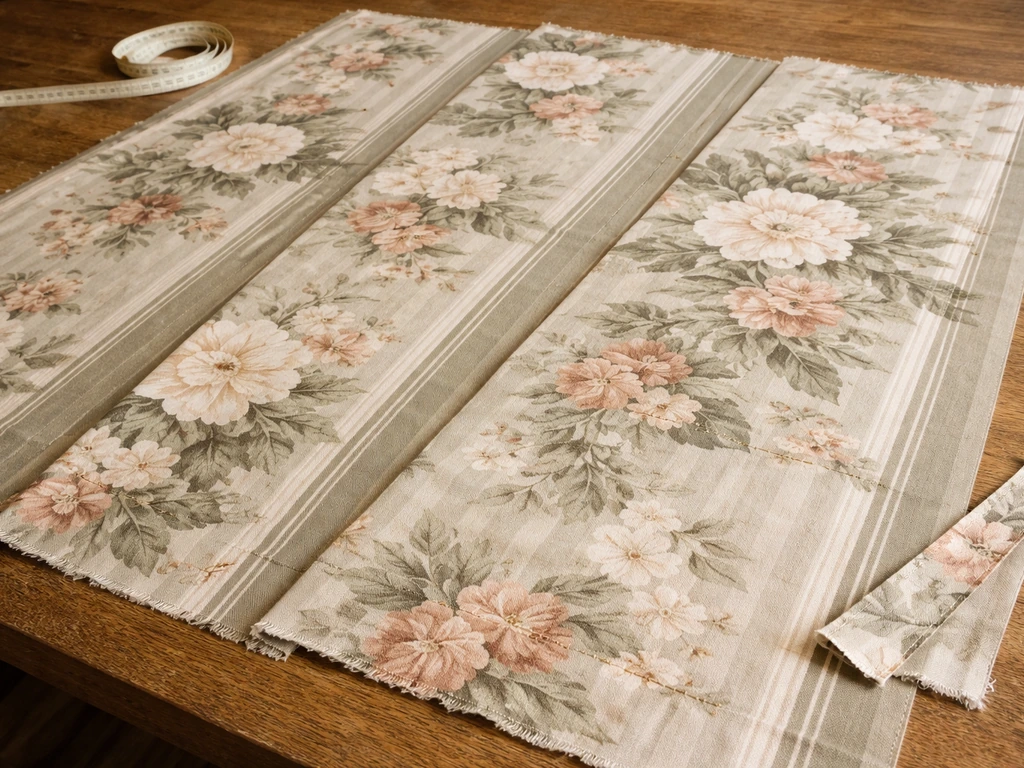
This is the section that surprises most first-timers. If you buy a fabric with a large floral pattern, a stripe, or any design with a visible repeat, you need significantly more yardage than the plain-fabric formula gives you. The reason: every panel has to be cut so the pattern starts at the same point, so the design lines up at the seams and looks centered on the cushion face. That means some fabric between cuts goes to waste.
The pattern repeat is the distance from one complete motif to the next, both horizontally and vertically. A fabric with a 12-inch repeat means the same design element appears every 12 inches down the bolt. When you cut your panels, you have to find that repeat start point each time, which can mean wasting up to one full repeat worth of fabric per panel.
The practical rule used by most upholsterers: add one full pattern repeat to your yardage estimate for every panel you cut. If you have a 12-inch repeat and you're cutting 8 panels for four cushions, add 8 x 12 inches (96 inches, or 2.67 yards) to your base yardage. That's a lot, and it's why patterned outdoor fabric projects cost more than they first appear.
For one-way directional designs (patterns that only look right from one angle), all pieces must be cut running the same direction, which can eliminate some of your layout flexibility and push yardage up further. A rough guide used in professional upholstery is to add about 28 percent to your flat yardage for a two-way repeat, and more for one-way fabrics depending on the repeat size.
If you're new to sewing cushion covers and thinking about making your own from scratch, this is one of the reasons starting with a solid or small-scale texture fabric is the smarter move for a first project. You can dive into pattern matching later when you're more comfortable with the process.
Common cushion types and quick yardage estimates
These estimates assume 54-inch wide outdoor fabric, a standard 1/2-inch seam allowance, and solid or non-directional fabric. These estimates assume 54-inch wide outdoor fabric and a standard seam allowance, but if you want the full step by step approach to how to make cushions for patio furniture, you should review the related instructions. Use them as a starting point, then adjust up for piping, patterns, or extra-thick gussets.
| Cushion Type | Typical Size | Flat Cover | Boxed Cover (3–4 inch gusset) | With Piping Added |
|---|---|---|---|---|
| Dining chair seat | 18x16 inches | 0.5 yard | 0.75 yard | 1–1.25 yards |
| Deep-seat lounge chair seat | 24x24 inches | 0.75 yard | 1–1.25 yards | 1.5–2 yards |
| Deep-seat back cushion | 24x20 inches | 0.75 yard | 1 yard | 1.5 yards |
| Bench cushion (4-foot) | 48x18 inches | 1.25 yards | 1.75 yards | 2.25 yards |
| Chaise lounge cushion | 72x21 inches | 1.75 yards | 2.25 yards | 3+ yards |
| Standard 20x20 throw-style seat pad | 20x20 inches | 0.75 yard | 1 yard | 1.25 yards |
For a full four-piece deep-seating set (two seat cushions, two back cushions) with boxed edges and piping, budget 10 to 12 yards for solid fabric and 14 to 16 yards for a patterned fabric with a medium-sized repeat. That feels like a lot, but running short mid-project is genuinely awful, especially if the colorway you chose gets discontinued between your first and second order.
Back cushions deserve a specific note: measure them in place on the furniture, not just as standalone foam pieces. A back cushion on a deep-seating sofa sits differently than one on a dining chair, and the cover dimensions need to reflect how the cushion actually sits in use. If you're also working on making new cushions from scratch, you'll want to think through these dimensions at the same time you're planning your fabric order. If you're planning to make a patio cushion from scratch, use these same measured cover dimensions to plan your cut pieces and yardage making new cushions from scratch.
Your shopping checklist: how much extra to buy and when to adjust
Once you've done your calculations, don't order exactly that amount. Every yardage formula assumes perfect cutting, no mistakes, and flawless fabric with no flaws. None of that is real life. Here's the buffer system I recommend based on the type of project.
- Solid fabric, simple flat covers: add 10 percent to your calculated yardage and round up to the nearest half yard
- Solid fabric, boxed covers with zipper: add 15 percent, round up to the nearest half yard
- Solid fabric, boxed covers with piping: add the piping yardage (see the table above) plus another 10 percent buffer on top
- Patterned fabric, any cover style: add one full pattern repeat per panel cut, then add another 10 percent on top of that total
- First time sewing cushion covers: add an extra half yard regardless of your calculated amount, because practice cuts happen
- Discontinued or limited-stock fabric: round up aggressively to the next full yard, not half yard
Before you hit buy, run through this quick checklist to make sure you haven't missed anything in your calculation.
- Did you measure seam to seam, not across the soft surface?
- Did you include cushion thickness in your cut dimensions for boxed covers?
- Did you add seam allowance (at least 1/2 inch per side) to every cut piece?
- Did you account for piping strips separately from your main panel yardage?
- Did you check whether your fabric is directional or has a pattern repeat?
- Did you add one repeat per panel if your fabric has a large-scale pattern?
- Did you add at least a 10–15 percent buffer on top of your final number?
- Did you confirm the fabric width is 54 inches (or adjust your formula if it's different)?
- Did you count all cushions: seats, backs, and any replacement throw pads?
One last honest note: outdoor fabric projects almost always use more material than the math suggests, because you're working with thick material on a home sewing machine and small adjustments are harder to make than they look. Buying a yard more than you think you need is almost always the better financial decision compared to paying for a second order and shipping. Leftover outdoor fabric also comes in handy for making patio pillows or repairing worn spots later, so it never truly goes to waste.
FAQ
How do I adjust yardage if my fabric is 58 inches or 60 inches wide instead of 54?
Use the same formula idea (cut area divided by bolt area), but swap the fabric width in the denominator. Since one yard is 36 inches long, the bolt area per yard is (fabric width x 36). So if your plan assumes 54 inches wide, divide by (58 x 36) instead, and you will typically need less than your 54-inch estimate, often by roughly 6 to 10 percent.
Do I need to subtract seam allowances when measuring my cushion dimensions?
No, seam allowances get added back in during the cut-dimension step. Measure seam to seam for the actual cushion cover size, then add your 1/2-inch seam allowance on each side (1 inch total) to get cut dimensions. Subtracting seam allowance at the measuring stage usually leads to panels that end up too small.
What if my cushion corners are rounded or my chair frame is not a perfect rectangle?
Rounding and irregular shapes reduce how cleanly pieces nest on the bolt, which increases waste. Instead of using straight “fit two panels across” math, sketch one panel shape in a 54-inch-wide layout and count how many full shapes you can fit, then add an extra buffer (at least 10 to 15 percent) because corners generate offcuts that rarely remap into other panels.
How much extra fabric should I buy for a cushion cover with both a boxed edge and a zipper?
Treat it like boxed-edge yardage plus a small zipper planning buffer. Zippers mostly affect layout and seam consistency, not total yardage, but boxed edges do add perimeter fabric and the gusset strips. A practical approach is to calculate boxed cover yardage first, then add about 1/2 yard per cushion to keep zipper-panel placement feasible without reshuffling your entire layout.
Does the cushion thickness measurement change how I calculate the gusset strip width?
Yes. For boxed edges, the gusset width is tied to cushion thickness plus seam allowances. If your cushion compresses under sitting, measure thickness while seated or use the foam height at the intended firmness, then add your seam allowance on top of that thickness so the cover does not pull tight or distort after assembly.
My fabric has a directional stripe, but I want all cushions to face the same way. How do I estimate that extra yardage?
For directional patterns, you generally lose some layout flexibility, so plan for more than the plain-fabric amount. A useful decision aid is to increase your flat yardage by roughly the percentage range the article describes for one-way or two-way repeats, then add one additional buffer yard for the last two or three panels if your repeat is large and you cannot “flip” panels to reuse offcuts.
What’s the best way to account for piping on corners so I do not run short?
Assume more bias cutting than you think and do not try to straighten bias strips at every corner. If your piping includes multiple corners or any curve, budget the higher piping surplus mentioned (extra bias-cut fabric). Also, cut piping lengths slightly longer than needed for each run so you can trim after sewing, this prevents the most common failure mode, ending up a few inches short at a seam.
How many yards should I add if I’m making covers for cushions that are slightly different sizes (not identical sets)?
Do not average them. Calculate cut dimensions and panel counts for each cushion size separately, then total the yardage. Different sizes force different nesting layouts, so the “identical four-cushion” shortcut can under-buy by more than one yard when one cushion panel cannot fit into the same across-the-bolt layout.
Is it better to buy extra or to switch fabrics if I’m close to running short mid-project?
If you are within about 1 yard of your needed amount, buying extra is usually cheaper than switching fabrics, especially for outdoor upholstery where the colorway can be discontinued. If you are short by multiple yards, prioritize finding the same fabric lot or colorway before switching, because pattern matching and dye lots can create visible differences between cushions.
Can I use leftover outdoor fabric from my cushion order for patio pillows, and will the leftovers likely be enough?
Often yes, but only if you planned for non-pieced panels. Leftovers are most useful for small items like lumbar pillows, seat pillow repairs, or replacing piping segments. If your cushion panels were heavily pattern-matched with significant repeat waste, the leftovers may be oddly sized, so measure what you have and plan pillow piece sizes that fit those offcuts to avoid ordering more.
What should I check right before cutting to prevent wasting an entire yard?
Confirm fabric orientation and repeat start point for pattern matching, verify whether the fabric is railroadable, and do one dry layout on paper or phone notes using the exact “cut dimensions” you computed (with seam allowances added). Then check nap or directional markings by looking at how the fabric lies when pulled, because it is easy to accidentally cut one panel reversed and lose seam alignment at the cushion face.