Yes, you can put patio furniture on grass, but whether it's a good idea depends on your furniture type, how long it'll sit there, and what's underneath it. On real grass, short-term placement is usually fine with the right underlayment. Long-term placement without protection will damage your lawn and can rust or rot your furniture. On artificial grass, you have more flexibility, but heavy or narrow-legged furniture will flatten the fibers and trap heat if you're not careful. The good news: a few simple steps fix most of these problems before they start.
Can You Put Patio Furniture on Grass? Safe Options
Maren Grady
20 May 2026
Real Grass vs. Artificial Grass: The Quick Breakdown
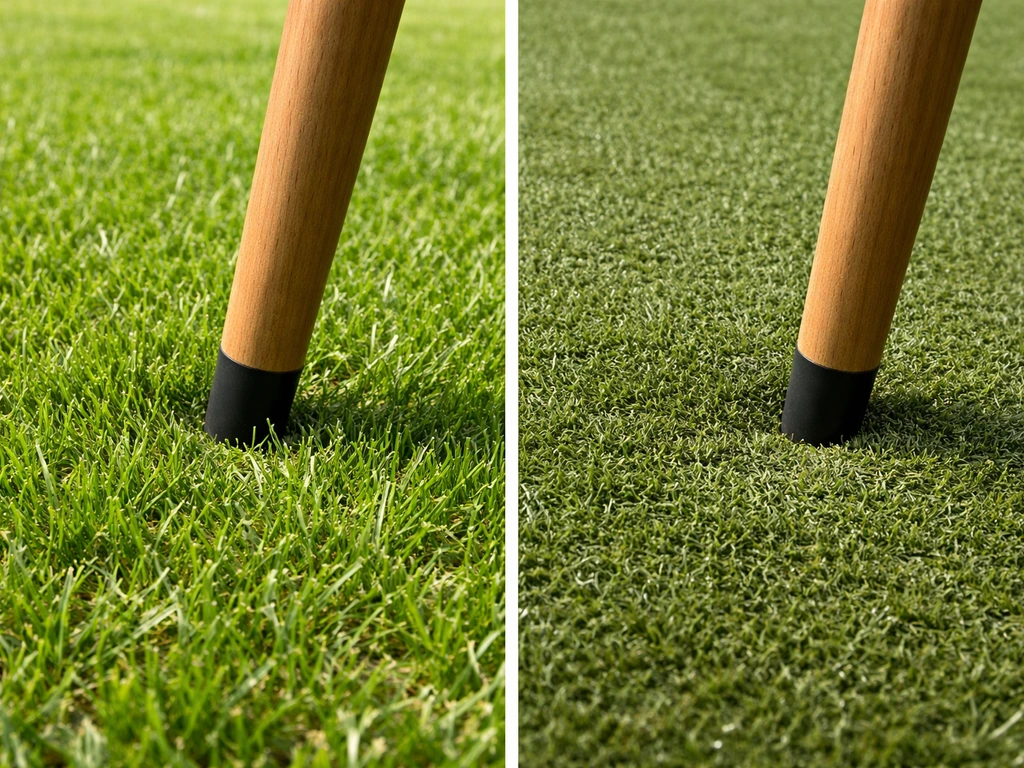
These two surfaces behave very differently under furniture, so it's worth separating them clearly before you start dragging chairs around.
Real Grass
Natural grass is living, and it reacts badly to two things: pressure and darkness. Heavy furniture compacts the soil underneath, which stresses the root system and can kill the turf. You'll know it happened when you move the furniture and find a [dead patch shaped exactly like your chair legs or table base](https://extension. umd.
edu/resource/drought-damage-lawns/). University of Maryland Extension researchers have documented this pattern repeatedly, specifically tying dead turf outlines to where objects sat or vehicles drove. The risk gets much worse when the soil is wet. Cornell Turfgrass Program advises avoiding traffic on moist soils, since wet conditions are the most common factor behind soil compaction [avoid traffic on moist soils](https://turf.
cals. cals. cornell. edu/lawn/lawn-care-the-easiest-steps-to-an-attractive-environmental-asset/advanced-care/soil-compaction/).
University of Minnesota Extension confirms that heavy loads on wet soil drive compaction deeper into the soil profile, which is much harder to reverse than surface damage.
Artificial Grass
Artificial turf doesn't die, but it does flatten. Heavy or narrow furniture legs compress the synthetic fibers and infill underneath them, and if you leave the furniture in one spot for weeks, those fibers may not spring back on their own. Heat is the other concern: on a sunny day, artificial turf can run 40 to 70 degrees Fahrenheit warmer than the surrounding air temperature, and that heat concentrated under a dark metal chair frame can accelerate wear on both the turf and the furniture finish. Drainage is also worth thinking about, because moisture that pools under a mat placed over artificial turf can breed mold if it can't escape.
| Factor | Real Grass | Artificial Grass |
|---|---|---|
| Damage from weight | Soil compaction, dead turf patches | Fiber flattening, infill compression |
| Moisture risk | High — wet soil compacts faster, furniture rusts | Moderate — drainage is usually built in, but can pool under impermeable mats |
| Heat risk | Low | High — turf surface runs 40–70°F hotter than air in direct sun |
| Recovery after furniture removed | Slow — may need aeration or reseeding | Faster — brush fibers upright, usually recovers |
| Best underlayment | Breathable outdoor rug or pavers | Perforated/ventilated pad or furniture feet pads |
| Long-term placement (months) | Not recommended without pavers | Okay with wide-footed furniture and periodic rotation |
When It's Fine and When You Should Not Do It
Not every furniture setup on grass is a recipe for disaster. Here's how to read the situation honestly before you commit.
Safe situations
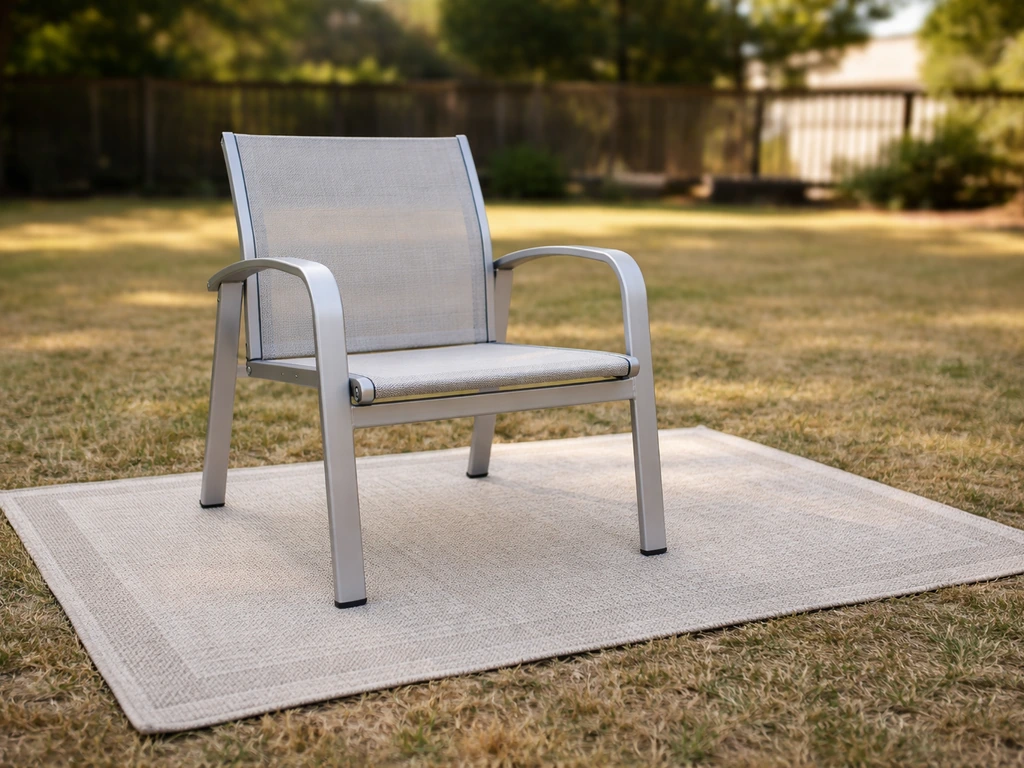
- Short-term or event use (a party, a weekend gathering) on dry, level ground with furniture that has wide feet or a flat base
- Lightweight aluminum or HDPE furniture, which spreads load better than heavy wrought iron or dense wood sets
- Flat, firm ground that isn't recently watered or waterlogged
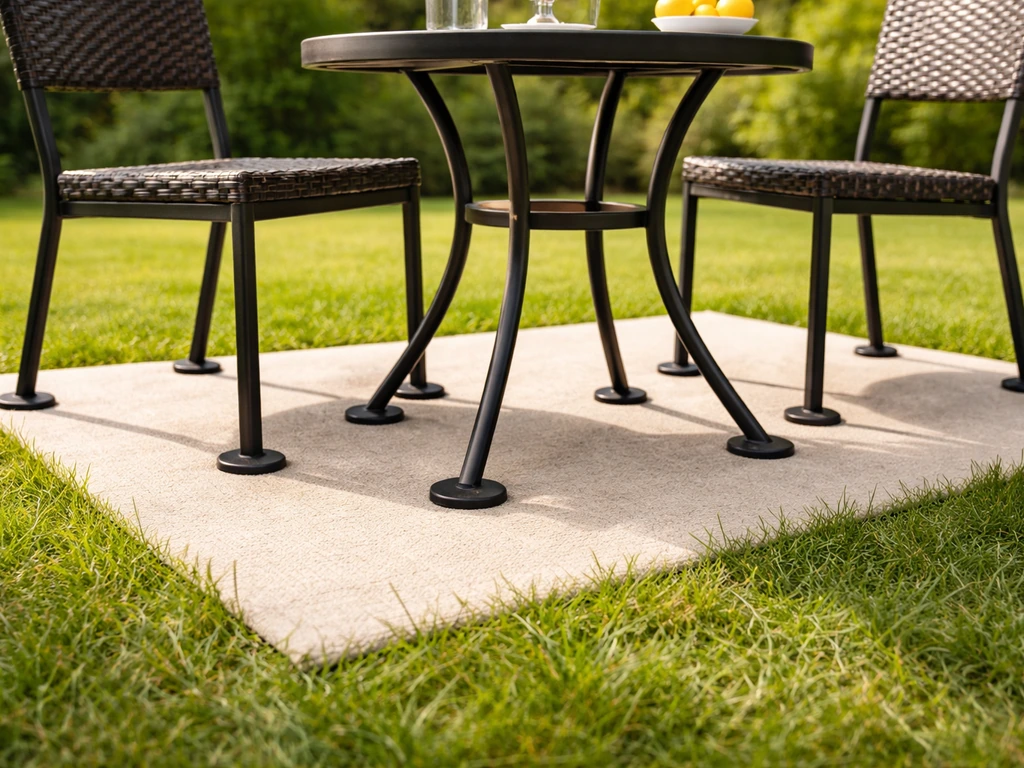
- Furniture placed on an outdoor rug, interlocking mat, or patio pavers rather than directly on soil or turf
- Artificial turf installations with proper drainage and perforated underlayment, using wide-footed furniture rotated every few weeks
When you should skip direct placement
- Heavy cast iron or dense stone-topped dining sets with narrow, pointed legs — these concentrate enormous pressure on tiny contact points and will sink or gouge soft soil almost immediately
- Any furniture sitting on wet or recently irrigated grass — Cornell Turfgrass Program specifically advises avoiding traffic on moist soils for exactly this reason
- Shaded, poorly drained areas where moisture lingers under mats or furniture for days at a time
- Sloped ground where a chair or table will be unstable — this is a safety issue, not just a lawn care one
- Long-term setups (all season) directly on natural grass with no underlayment or rotation plan
- Uncoated steel or iron furniture on damp grass — the constant moisture contact will corrode the finish and rust the metal faster than almost any other outdoor condition
Protecting Your Grass, Turf, and Furniture from Damage
The two things you're fighting here are moisture and pressure, and they're related. Moisture softens the soil or turf surface, which makes pressure do more damage. Here's how to manage both.
Protecting natural grass from compaction and die-off
The simplest thing you can do is spread the load. Narrow chair legs act like little stakes driving into the soil; wider furniture feet or rubber leg caps distribute the same weight over a larger area, which reduces per-square-inch pressure dramatically. Beyond that, rotation matters: move chairs and tables at least once a month during the season so no single patch of lawn is under constant cover and pressure. If you notice yellowing under a rug or mat, that's your cue to move things sooner. After a long summer, core aeration with a basic garden fork or rented aerator can help break up compaction and let the roots breathe again.
Protecting artificial turf from flattening and heat
For artificial grass, the goal is to prevent fiber compression and manage heat. Use furniture with wide, flat feet rather than narrow legs. If your chairs have skinny legs, buy inexpensive rubber furniture caps or small paving slabs to sit under each leg. Move heavy pieces every two to three weeks and brush the flattened fibers back upright with a stiff-bristled broom. During summer heat waves, schedule outdoor use for morning or late afternoon, and avoid leaving metal furniture sitting directly on hot turf for extended periods. Artificial turf specialists also recommend periodically checking drainage holes or gaps in the turf system to make sure water isn't pooling underneath.
Protecting your furniture from rust, rot, and corrosion
Grass is wet. Even when it looks dry, morning dew and irrigation cycles mean the base of your furniture legs is regularly in contact with moisture. For steel and iron furniture, this is a real problem: once the factory finish is scratched or chipped, bare metal in damp conditions rusts fast. Inspect the legs and feet of metal furniture every few weeks during the season.
Touch up any scratched or chipped paint with a rust-inhibiting spray paint rated for outdoor metal. Aluminum doesn't rust, which makes it the friendliest material for direct grass contact, but it can still corrode if the finish breaks down. Wood furniture is the most vulnerable: wood sitting on wet soil or grass will absorb moisture, and rot or mold can start from the bottom up without you seeing it until real damage is done.
Always use a mat, rug, or pad under wood furniture on any grass surface.
The Best Ways to Set Patio Furniture on Grass
There are four main approaches, ranging from dead simple to a proper weekend project. If you want the most stable result, learn how to set up patio furniture with the right underlayment for your surface and season set patio furniture on grass. Which one is right depends on how long the furniture is staying and how much you care about the lawn underneath.
Option 1: Outdoor rug or weather-resistant mat
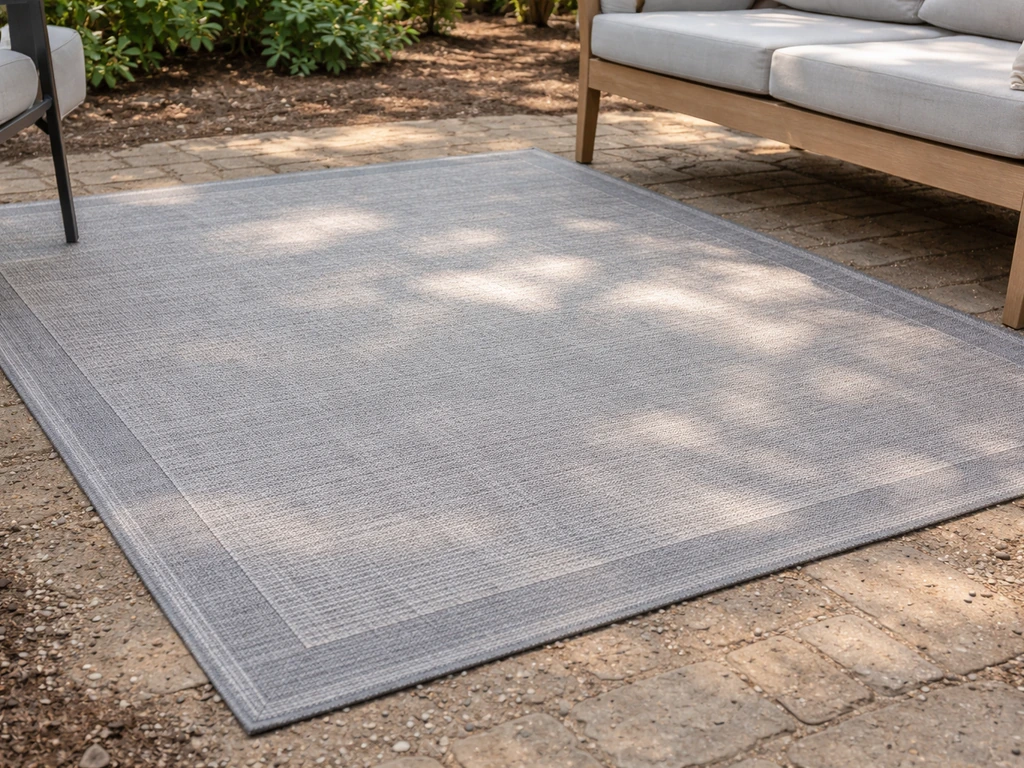
This is the quick fix for most situations. A polypropylene or synthetic outdoor rug under a seating set distributes weight, keeps furniture legs from sinking into soft soil, and creates a defined space that looks intentional. The catch is that rugs with rubber or latex backing trap moisture underneath them, which can kill grass faster than bare furniture would. Look for rugs specifically rated for outdoor use with an open or breathable weave. Elevating one edge occasionally to let the grass breathe helps too. For artificial turf, avoid rubber-backed rugs entirely and stick to open-weave designs that let heat and moisture escape. Cost: a decent outdoor rug runs $30 to $120 depending on size.
Option 2: Interlocking deck or patio tiles
Interlocking wood composite or rubber deck tiles are a huge upgrade over a rug if you want something more stable and longer-lasting. They click together in minutes, sit directly on the grass, and most are designed with enough gaps to let water pass through and grass to breathe somewhat. They're especially good for dining sets where chair legs would otherwise poke through a rug. They're also easy to pull up, store over winter, and reinstall. For artificial turf, choose perforated or ventilated tiles rather than solid rubber, which can trap heat and moisture. Budget: $2 to $6 per square foot, so a 10x10 area runs $200 to $600. Check Facebook Marketplace for secondhand sets.
Option 3: Leveling pads and furniture leg caps
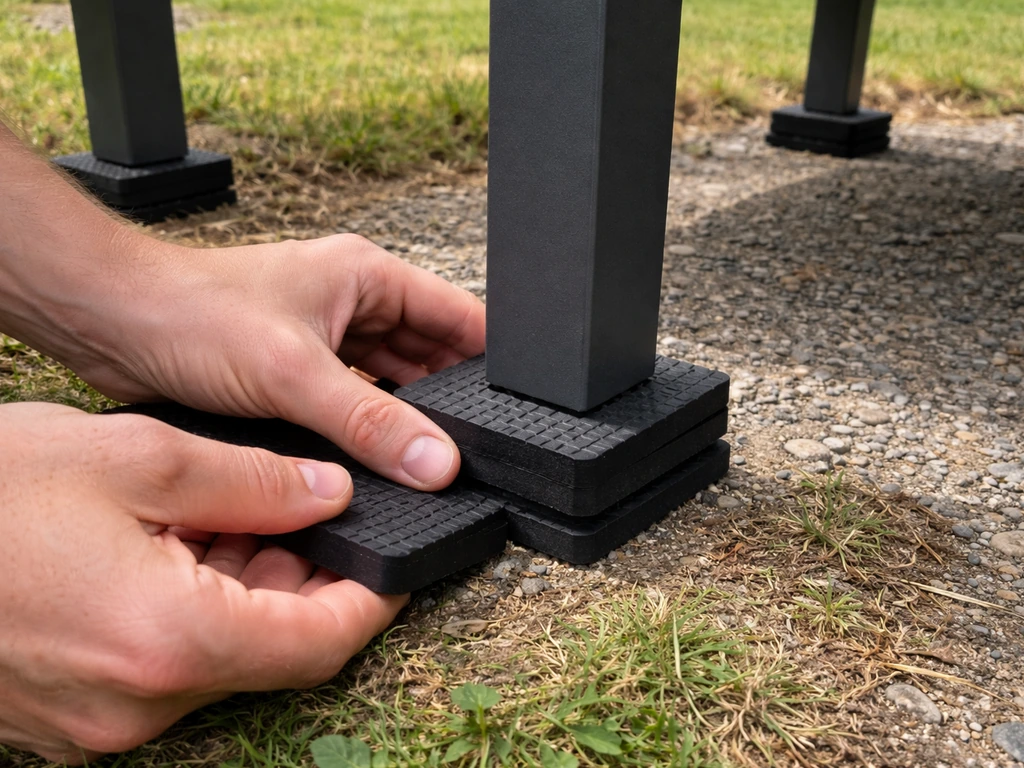
For uneven ground, small plastic or rubber leveling pads placed under each leg solve the wobble problem and protect both the turf and the furniture feet. These are sometimes called furniture glides or anti-sink feet. For artificial turf, this is actually what turf manufacturers recommend: use pads or small pieces of plywood under heavy objects to spread the load and prevent fiber compression. A set of furniture leg caps runs about $8 to $20. For a dedicated setup, pairing leg caps with an outdoor rug gives you the best of both worlds.
Option 4: Patio pavers or stepping stones
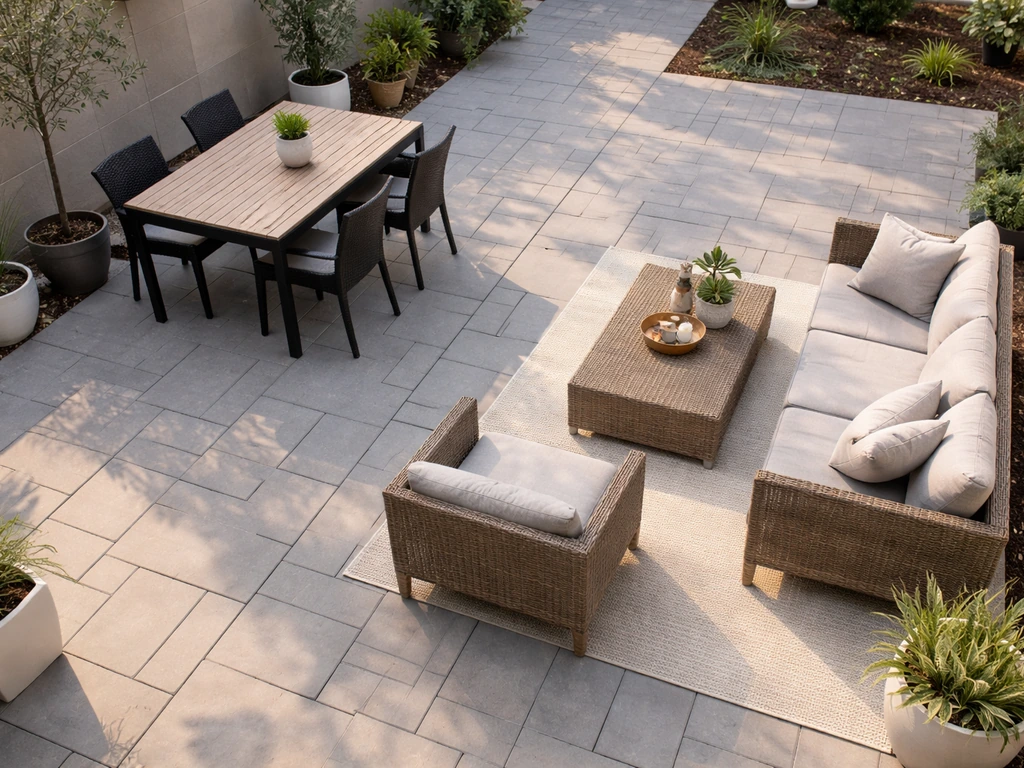
If you're setting up furniture in the same spot every year and you're tired of dealing with sinking legs and dead grass patches, a simple paver pad is the right long-term answer. You don't need a full concrete pour. A dry-laid paver area with a compacted base can be done in a weekend and costs far less than hiring a contractor.
This gives your furniture a firm, level, non-organic surface that won't compact, won't die, and won't rust your furniture legs. Setting up furniture on pavers is really its own project, and if you're at that stage, it's worth reading up on how to lay out patio furniture properly before you finalize any paver dimensions.
If you want a cleaner, more comfortable layout, the same principles apply, so it helps to know how to lay out patio furniture before you finalize the shape and measurements.
Step-by-Step: Setting Up a Stable Underlayment for a Patio Set on Grass
This is the practical process for the most common scenario: you want to put a dining set or seating group on your lawn for the season without trashing the grass or rusting the furniture. This setup uses interlocking tiles over a breathable outdoor rug, which is the best middle ground between quick and durable. Total time: about an hour. Cost: $80 to $300 depending on area size and materials.
- Mow the area first. Cut the grass short (around 2 to 2.5 inches) in the footprint where the furniture will sit. Shorter grass compacts less and dries faster underneath a mat. If the ground is wet, wait at least 48 hours after rain or irrigation before proceeding.
- Mark the footprint. Use spray paint, stakes, or a garden hose to outline the area you need. Measure your furniture with everything pulled out (chairs scooted back, table leaves extended if applicable) and add 12 to 18 inches on each side. A four-person dining set typically needs a 10x10 foot minimum.
- Level the ground. Walk the area and press on any soft or uneven spots. Fill low spots with a thin layer of sand or fine gravel if needed. This step matters more than most people expect: an unlevel surface makes furniture wobble, and wobbling furniture shifts off the mat over time.
- Lay the breathable outdoor rug. Place an open-weave, non-rubber-backed outdoor rug over the area. Smooth out any wrinkles. This layer acts as a barrier between the grass and the tiles, reducing moisture buildup while still allowing some air circulation.
- Install the interlocking tiles over the rug. Start from one corner and click the tiles together row by row. For a 10x10 space you'll need roughly 25 standard 24-inch tiles. Trim edge pieces with a utility knife or jigsaw if needed to fit the space. Perforated tiles are better for natural grass; solid tiles hold more heat, which matters more on artificial turf.
- Place furniture and check stability. Set each piece down and rock it gently. If anything wobbles, slide a rubber leveling pad under the offending leg. For chairs with narrow feet, add rubber leg caps before placing them so they don't punch through tile gaps.
- For artificial turf: skip the rug layer and use a ventilated or perforated drainage underlayment directly on the turf instead. This elevates the tile surface slightly and allows heat and moisture to escape rather than building up under the mat. Place your interlocking tiles on top of that.
Temporary Events vs. All-Season Setup: What Changes
How you handle a one-day party setup versus a furniture arrangement that sits from May through October is completely different, and treating them the same is where most lawn damage happens.
Temporary placement (hours to a few days)
For a backyard party or a weekend gathering, you can place furniture directly on dry, level grass with minimal risk, especially if it's lightweight aluminum or resin. Skip the elaborate setup and just put down a basic outdoor rug to keep legs from sinking and to define the space visually. Move everything back off the lawn within 48 hours if possible. The grass will recover from short-term coverage without any intervention.
Seasonal placement (weeks to months)
This is where you need the full underlayment setup described above. For a season-long installation, commit to at least one of these habits to keep the lawn healthy underneath: lift and rotate furniture position every three to four weeks, or pull the entire setup back briefly once a month to let the grass see sunlight. Check the grass underneath each time you move things. Yellow but still-living grass usually recovers in a week of sun. Brown, flat, and matted grass means you've left it too long. On artificial turf, do a monthly brushing of any exposed fiber edges around the furniture perimeter to keep the pile upright.
Ongoing maintenance and inspection schedule
A quick inspection routine takes about ten minutes and saves you from expensive repairs to both furniture and lawn later. Here's what to check and when:
| Frequency | What to Check | What to Do If There's a Problem |
|---|---|---|
| Weekly | Furniture leg contact points for moisture buildup or rust spots | Dry thoroughly, touch up paint chips with rust-inhibiting spray |
| Every 2–3 weeks | Turf or grass under and around the mat edges | Rotate furniture position or lift mat edge to air out |
| Monthly | Stability of interlocking tiles or rug (shifting, bunching) | Re-level and relock tiles; smooth rug and check for rubber backing peeling |
| Monthly (artificial turf) | Fiber flatten zones and drainage gaps | Brush fibers upright with stiff broom; clear any debris from drainage channels |
| End of season | All furniture legs and feet for corrosion; mat/tile condition | Clean, dry, and store furniture; stack tiles; core-aerate lawn if grass shows compaction stress |
One thing I've learned the hard way: the end-of-season moment when you pull everything off the lawn tells you exactly how well your setup worked. If the grass underneath is mostly green and bounces back within a week, you nailed it. If you're looking at a dead rectangle, adjust your rotation schedule or underlayment approach for next year.
On the furniture side, that end-of-season inspection is also the best time to catch rust before it spreads, touch up any nicked paint, and decide whether anything needs more serious repair or replacement before storage. Thinking through how to organize patio furniture for off-season storage while you're already doing this check makes the whole process more efficient.
If you want to keep your patio usable all season, also plan how to organize patio furniture around your underlayment and rotation schedule.
Which Underlayment Should You Actually Buy?
If you're still not sure which route to take, here's the honest comparison to help you decide quickly. If you want the same kind of clarity for shopping, this guide on how to buy patio furniture walks you through what to look for comparison to help you decide quickly.
| Underlayment Type | Best For | Grass Impact | Cost (10x10 ft) | Durability |
|---|---|---|---|---|
| Open-weave outdoor rug (no rubber backing) | Temporary to medium-term on real grass; lightweight furniture | Low-moderate; some grass die-off if left months without rotation | $30–$80 | 1–3 seasons |
| Interlocking wood composite tiles | Seasonal setup on real grass; dining sets | Low if tiles are gapped/vented and lawn is rotated | $200–$400 | 3–7 seasons |
| Perforated rubber/foam tiles | Artificial turf; areas needing cushioning | Low on turf; avoid solid rubber on real grass | $150–$350 | 4–8 seasons |
| Ventilated drainage underlayment + tiles | Artificial turf in hot or wet climates | Minimal — designed for drainage and heat management | $250–$500 | 5–10 seasons |
| Dry-laid patio pavers | Permanent or semi-permanent setup; heavy dining sets | Eliminates grass entirely in footprint | $400–$1,200+ | 10–25+ seasons |
My personal recommendation for most homeowners doing a seasonal setup on real grass: start with a $50 open-weave outdoor rug under interlocking composite tiles. It's the most reversible, reasonably priced, and effective combination for a standard dining or seating set. If you're on artificial turf, swap the rug for a perforated drainage underlayment and you're set. If the furniture is staying in the same spot year after year and you're tired of maintaining the grass underneath, invest the weekend and go with pavers.
FAQ
Can you put patio furniture directly on grass without any mat or underlayment?
Yes for very short use, like a dry, level day, especially if the furniture is lightweight and has wider feet. For anything that stays more than a day or two, add an open-weave outdoor rug, leg caps, or tiles to reduce both pressure and moisture contact.
How long can patio furniture sit on natural grass before it damages the lawn?
There is no exact safe number, but damage risk rises quickly with duration, soil moisture, and furniture weight. If you notice yellowing or the grass looking flattened under leg positions, move it sooner and let the area recover in full sun before returning it.
Does it matter if the grass is wet when I put furniture out?
Yes. Wet soil drives compaction deeper and is harder to reverse, and it also increases rust risk for steel, iron, and any scratched metal. Wait for the ground to dry when possible, or use wider support (leg caps, rugs, or tiles) to reduce sinking.
What’s the best way to protect lawn and furniture if I have narrow chair legs?
Use rubber furniture leg caps or place small leveling pads under each leg. This spreads weight over a larger area so the legs do not behave like small stakes that punch into the turf.
Are rubber-backed rugs safe for grass underneath?
They can be risky because they tend to trap moisture and reduce airflow at the base of the rug. If you use a rug, choose one rated for outdoor use with an open or breathable weave, and periodically lift one edge to let the grass breathe.
Can I use a rug on artificial grass without harming the fibers?
Avoid rubber or latex-backed rugs, since they can trap heat and moisture. Stick to open-weave designs and consider lifting or sliding the rug occasionally so the same fibers are not compressed for weeks.
How do I handle patio furniture on artificial grass during hot summer days?
Prefer morning or late afternoon use, and avoid leaving dark metal frames in one spot for extended periods. Use wider flat feet, ventilated supports, and brush the fibers monthly to keep the pile from staying crushed.
Will aluminum patio furniture corrode on grass?
Aluminum is the least likely to rust, but it can still corrode if the protective finish breaks down. Regularly inspect feet and touch up chips or wear spots, especially after seasons of wet grass contact.
How often should I rotate patio furniture on grass?
A practical rule is to change the layout at least every month during the season. If the furniture is heavy or the area stays sunny and damp, check underneath more frequently, and increase rotation timing when you see discoloration.
What should I do if I already have dead patches shaped like furniture legs?
Remove the furniture and improve the area before the next season, since compaction and root damage can persist. Loosen the soil by core aerating, then consider re-seeding or re-sodding the shaped dead zone once it dries and conditions are suitable.
Can I use pavers on grass directly, or do I need a base?
If you want true long-term stability, use a dry-laid paver pad on a compacted base rather than laying pavers loosely on grass. A firm base prevents shifting, keeps the surface level, and reduces the chance that moisture migrates into the lawn.
What’s the fastest cleanup routine at the end of the season?
When you remove furniture, inspect legs and touch up any scratched metal paint, then check the grass underneath for color and flattening. If the grass is yellowing but still alive, expect recovery after a week of sun, but brown and matted areas may need aeration and repair.