The fastest fix for a patio rug that keeps blowing around is to combine a non-slip grip pad underneath with mechanical anchors at the corners. A grip pad alone handles everyday sliding and bunching on calm days, but if you're dealing with real wind, you need corner stakes, straps, or weighted anchors too. Which combination works best depends on your surface (concrete, deck boards, pavers, grass) and how severe your wind situation is. This guide walks you through diagnosing the problem, picking the right solution for your setup, and installing it correctly so you're not chasing your rug across the yard every time a gust rolls through.
How to Weigh Down a Patio Rug: DIY Fixes That Work
Maren Grady
17 Jun 2026
Why your patio rug keeps blowing in the first place
Before you throw money at accessories, spend two minutes diagnosing why the rug is moving. The cause tells you exactly which fix will actually work.
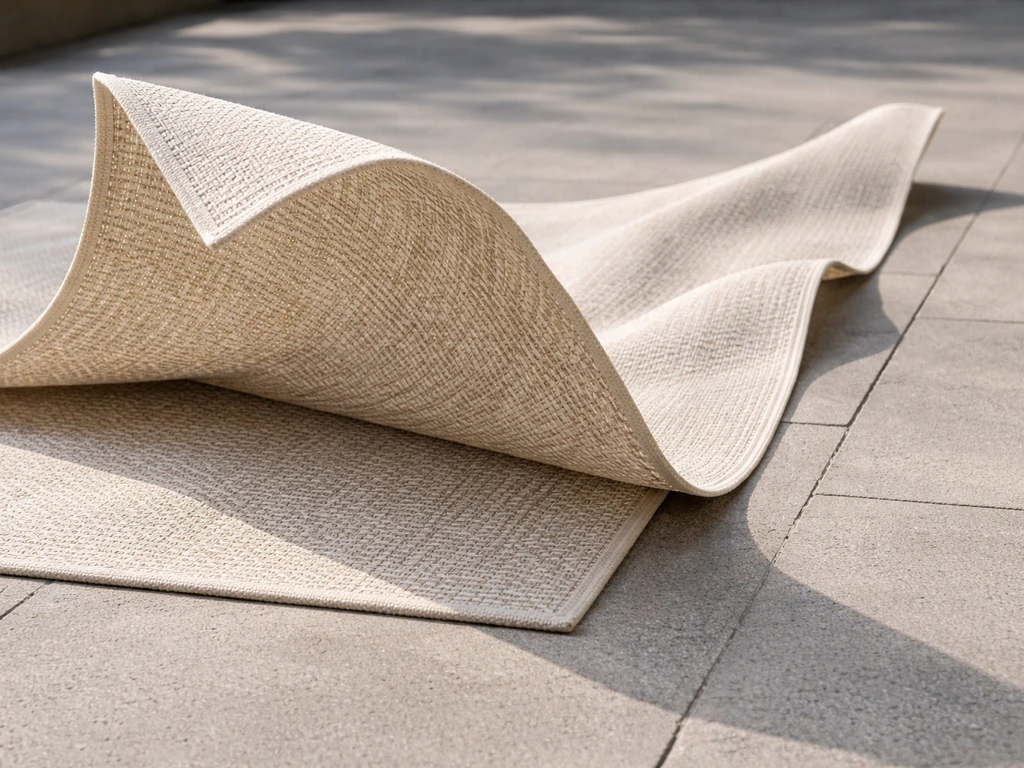
- The rug is too light. Thin polypropylene flatweave rugs and open-weave designs act like sails. They have almost no mass, so even a modest breeze catches the edge and lifts it.
- The surface is smooth and slippery. Concrete, tile, and painted deck boards offer almost no friction. Without something grippy between the rug and the surface, the whole thing moves as a unit.
- The corners have nothing holding them down. Wind almost always attacks the edges first. If the corners aren't weighted or anchored, the rug folds back on itself and gets carried.
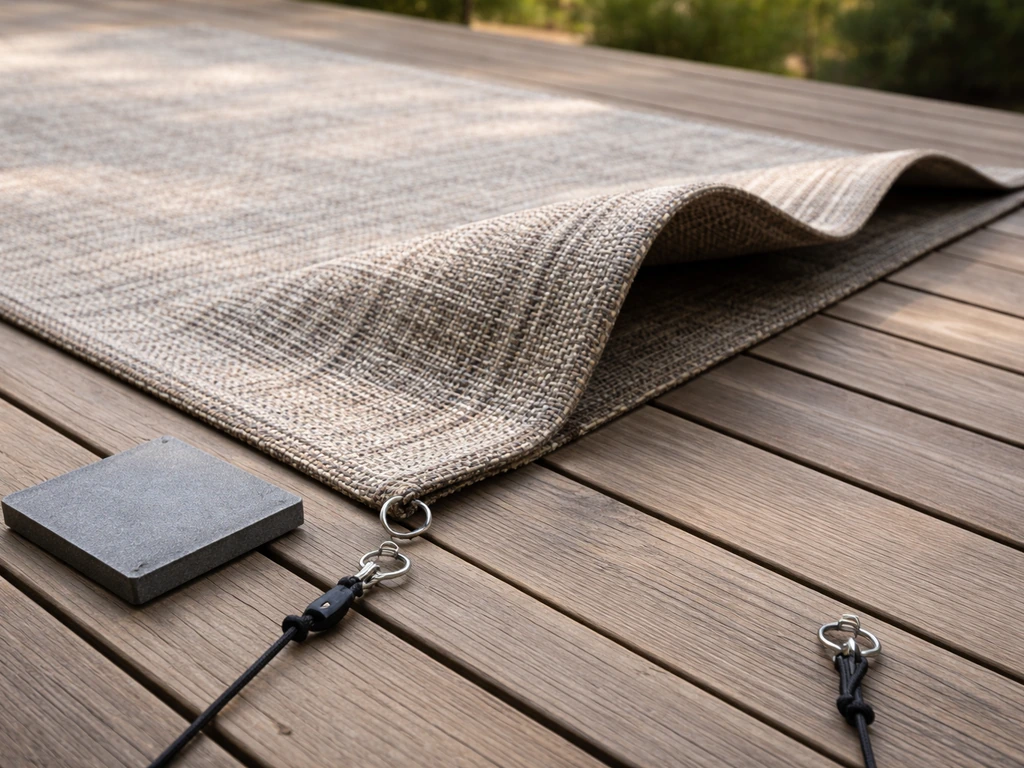
- There's no attachment point on the rug. Many basic outdoor rugs have zero grommets, D-rings, or loops. You have nothing to clip, stake, or tie to.
- Moisture is reducing grip. A wet or damp concrete pad under an unanchored rug becomes almost frictionless. If your rug sits wet for extended periods, existing grip pads can lose their traction and the rug backing can warp or curl.
The most common scenario I see: a lightweight rug on a smooth concrete patio with no underlay and nothing on the corners. That's essentially a kite. If that's your situation, you'll want to address all three layers at once: add grip underneath, weight the corners, and consider adding attachment points. If your rug is heavier (like a thick braided or tufted outdoor rug) and you're only dealing with occasional bunching from furniture movement, a good grip pad is often enough on its own.
Best add-on weights: anchors, tie-downs, and rug grips
These are the ready-to-buy options that solve the problem most reliably. I'll rank them by how much wind they can actually handle.
Outdoor grip pads and non-slip underlays
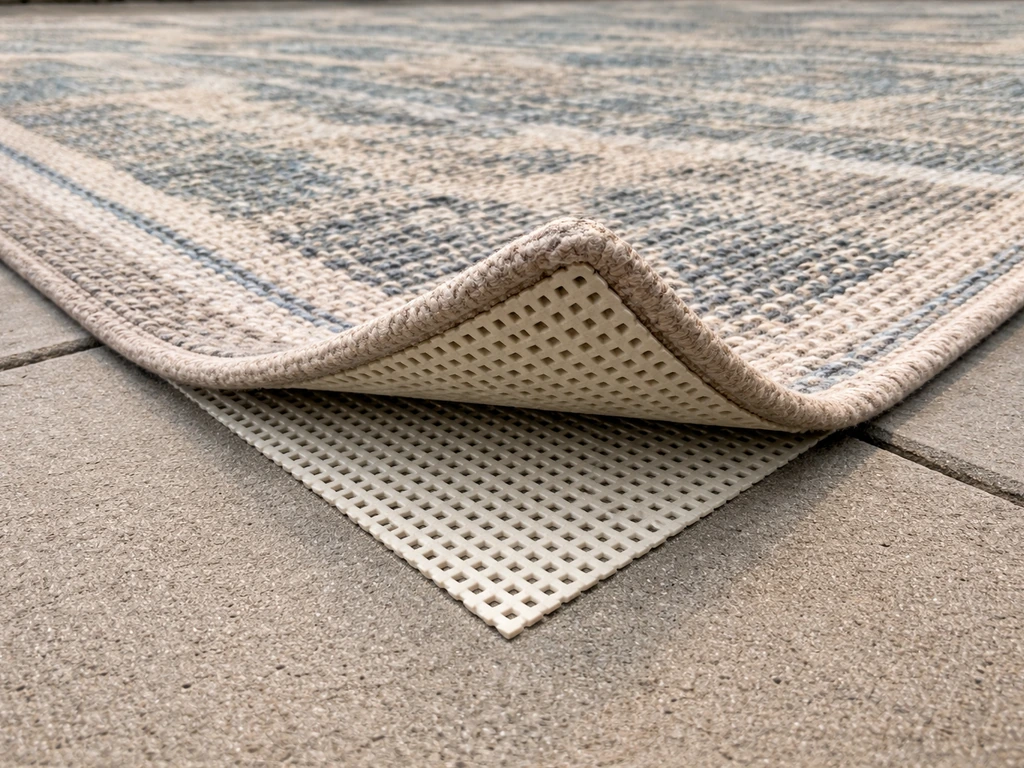
A dedicated outdoor grip pad is the foundation of any rug stabilization system. Products like the [Slip-Stop outdoor rug pad](https://www. homedepot. com/hdus/enUS/DTCCOM/HomePage/Specialty/BrandPages/Flooring/Mohawk/Body/Docs/BuyingGuidehires.
pdf) are designed specifically for hard outdoor surfaces like concrete and work by creating high-friction contact between the rug and the ground. The key thing people get wrong is installation prep: the surface needs to be completely clean and dry before you lay the pad down. Any dust, moisture, or debris and you might as well skip the pad entirely. Lay it rubbery side down, let everything settle, and then place the rug on top.
Grip tabs (like Mohawk's Outdoor Carpet Tabs) are a slimmer alternative that attach at intervals around the rug perimeter without adding the bulk of a full pad. These work well on decks where a full pad would trap moisture underneath.
Grommet corner anchors with stakes or tie-downs
If your rug already has reinforced metal grommet corners, this is your best wind-proofing option for grass, gravel, or soil surfaces. You run a short length of rope or a strap through each grommet, then connect it to a ground stake driven at an angle into the soil. The stake angle matters: drive it at roughly 45 degrees away from the rug so the pull direction actually holds tension.
Some outdoor patio rugs (Lippert's Easy Care Patio Mat is a good example) come with grommet corners pre-installed specifically for this purpose, and they're designed to prevent both blow-away and trip hazards since the attachment happens at the rug surface level rather than adding raised objects nearby. If you're buying a new rug and wind is a real concern, look for this feature specifically.
Corner weights and clip systems
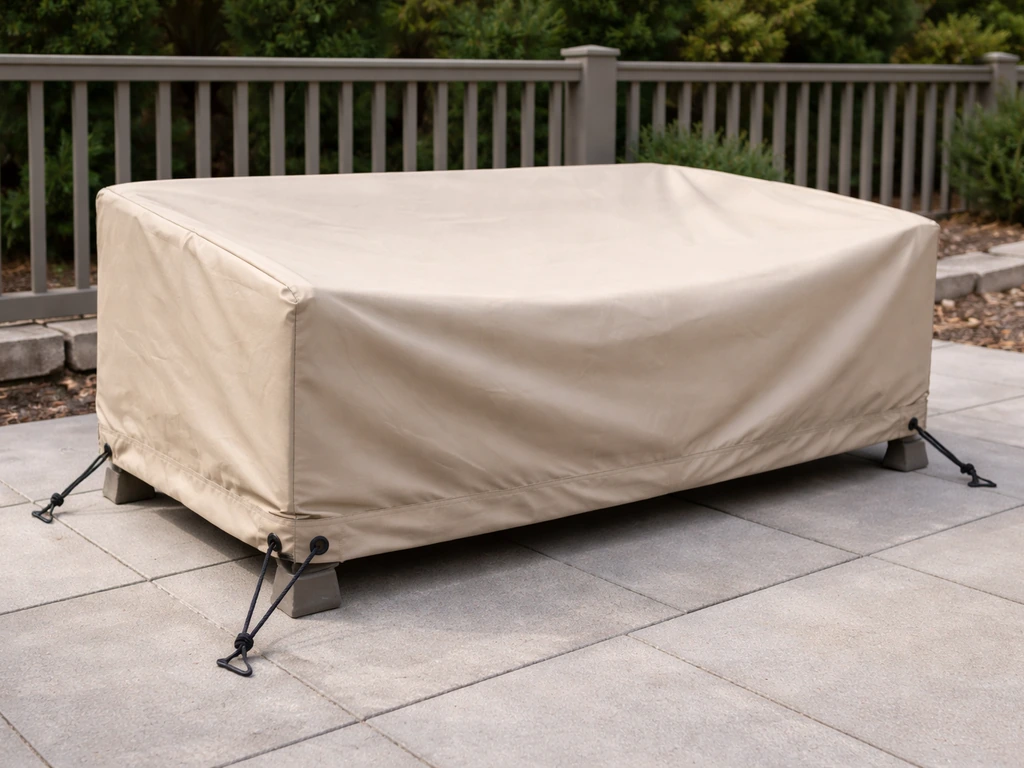
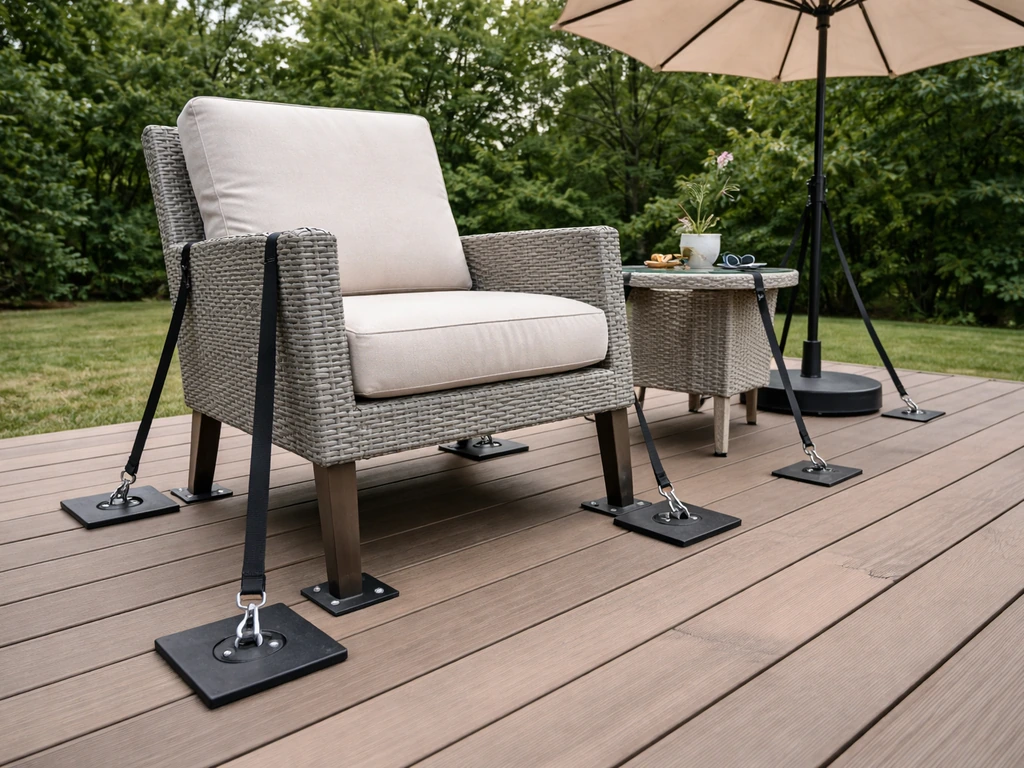
For hard surfaces where you can't drive stakes, corner weights that sit on top of the rug corners are a practical middle ground. You can buy purpose-made outdoor furniture strap sets that clip to a rug corner and anchor to a nearby furniture leg or railing. The concept is the same as what's used to secure patio furniture covers: multiple anchor points, reliable buckles, and enough tension that wind can't get under the edge. One clip on each corner of the rug, connected to something heavy or fixed, handles a surprising amount of wind load.
DIY weight options that actually work
If you don't want to buy specialty products or you need a same-day fix, these homemade approaches hold up well in practice.
Sandbags at the corners
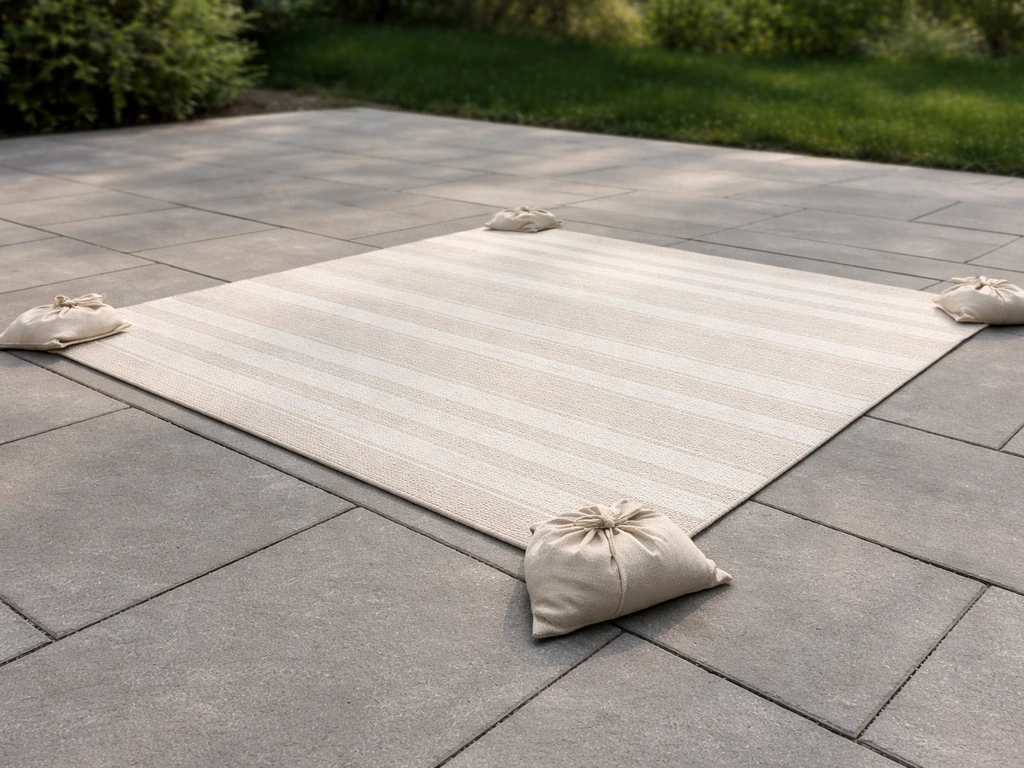
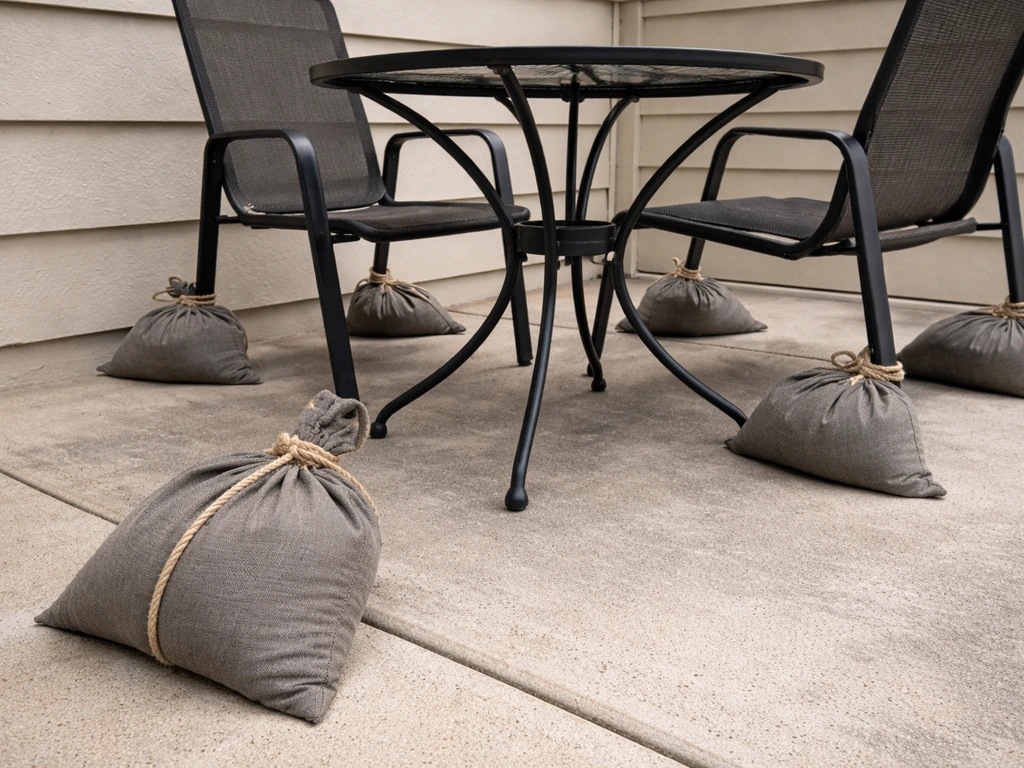
A simple fabric bag filled with sand and placed under each rug corner is one of the oldest stabilization tricks, and it works. For a clean outdoor look, sew or buy small canvas or burlap pouches (roughly 6 by 8 inches), fill them about two-thirds full with play sand or pea gravel (leave some room so the bag can flex and lie flat), then fold and sew the top closed.
Two thirds full is important: an overstuffed bag creates a lump that lifts the rug corner rather than holding it down. Tuck each bag under the corner so it sits between the rug and the ground. If you are working with vinyl patio curtains, use the same edge-stabilizing mindset: secure the corners and hem edges so the clear vinyl stays taut and resists flutter how to make clear vinyl patio curtains.
Four bags run you maybe five to eight dollars in materials. The bags will eventually absorb moisture, so check them each season and replace the sand if it clumps.
Water-filled weights
Water weights are easy to store empty and fill on-site, which makes them great if you take your rug in for winter. The simplest version: fill heavy-duty zip-lock freezer bags with water, double-bag them, and slip them under the corners. A more durable option is using small, flat water-fillable plastic containers (the kind used for ballast in outdoor umbrella bases) tucked under the rug edges. These work fine in mild wind but aren't as strong as sand because a full water bag weighs roughly 8 pounds per gallon, and the bag itself may shift more than sand. In freezing climates, drain them before temperatures drop or you'll split the bag.
Weighted corner inserts
If you're handy with a needle and thread, sew small pockets directly into the underside of the rug corners and fill each pocket with fishing weights, flat river stones, or metal washers. This is more permanent than loose bags but keeps the weight profile very low and doesn't create any trip hazard. Use outdoor thread (UV-resistant polyester) and stitch the pocket securely since the weight puts stress on the seams.
A handful of metal washers from the hardware store costs almost nothing and adds meaningful downward pressure right where the wind attacks first. You can use the same idea of adding downward pressure on the corners to learn how to weigh down patio curtains so they stay put in gusts.
Placement and installation by surface type
The surface you're working on changes which anchoring methods are safe and effective. Getting this wrong either damages your patio or means your anchor doesn't hold.
| Surface | Best method | What to avoid |
|---|---|---|
| Concrete or tile | Outdoor grip pad (clean, dry surface first) + corner weights or straps tied to furniture | Adhesive grip sprays not rated for outdoor use (like RugLock, which explicitly states it is not approved for outdoor rugs); latex-backed pads that trap moisture and can stain or damage certain concrete finishes |
| Wood deck boards | Grip tabs at intervals around the perimeter + strap clips to deck railings or furniture legs | Full-coverage rubber-backed pads that trap moisture under the boards and accelerate rot; adhesives that can lift deck paint or sealant |
| Pavers or flagstone | Grip pad plus corner weights; sandbags tucked under edges on uneven joints | Driving stakes between pavers (risks cracking or shifting them); anything that holds water against porous stone |
| Grass or dirt | Grommet corner stakes driven at 45 degrees; sandbags under corners | Rubber grip pads (no traction on loose soil); water weights (can sink into soft ground) |
| Composite decking | Grip tabs + lightweight corner straps tied to fixed points | Heavy rubber pads that can react with composite material coatings; check manufacturer guidelines before using any adhesive product |
A quick note on hardware: if you're using any metal stakes, clips, or grommets outdoors, choose stainless steel. Zinc-plated hardware will rust within one to two seasons in most outdoor environments, and galvanized hardware lasts a bit longer but still corrodes, especially at cut or drilled edges where the protective coating is broken. Stainless costs a bit more upfront but won't leave rust stains on your rug or patio and doesn't need replacing every year.
Wind-proofing the edges: grommets, straps, and layering mats
Corner anchors handle the biggest lifts, but wind also catches the long edges of a rug, causing them to flip or bunch in the middle. Here's how to address the whole perimeter.
Adding grommets to a rug that doesn't have them
If your rug has no attachment points, you can add them with a grommet kit from any hardware store. Kits typically include a hole punch, setting tool, and brass or stainless grommets. Work on a solid, hard surface (not the patio if it's tile) so the punch cuts cleanly without cracking anything underneath. The grommet package will show you which half goes on which side.
The critical step is reinforcing the rug material before you punch: cut a small square of heavy canvas or webbing tape and sandwich it behind the corner before installing the grommet. This distributes the load and prevents the grommet from tearing out under tension. Without that backing, a loaded grommet will rip through lightweight outdoor rug material in one good gust.
Edge straps and multi-point tie-downs
Once you have attachment points, run short bungee straps or paracord loops from each grommet to the nearest fixed anchor: a furniture leg, railing post, deck screw, or ground stake. Keep the rope lengths managed and low to the ground so there's no loose section that can flap or become a trip hazard. A multi-point system (at least four anchor points, one per corner) handles wind dramatically better than two. If your rug is large, adding mid-edge attachment points on the long sides makes a real difference in preventing the center from billowing up.
Layering a mat underneath for added weight
One underused trick: lay a heavier rubber-backed indoor-outdoor mat directly under the patio rug. The mat adds mass and friction without being visible. Choose a mat that's slightly smaller than your rug so the edges stay hidden. This approach works especially well on covered patios where rain isn't a constant concern. Just check periodically that moisture isn't getting trapped between the two layers and promoting mildew.
Maintenance, seasonal checks, and knowing when to upgrade
Even a well-anchored rug needs periodic attention. Here's what to check and when.
Routine maintenance without removing anchors
- Spray or hose the rug surface without removing corner anchors. Just loosen straps enough to lift the edge slightly, rinse underneath, and let it dry fully before retightening. A wet rug that gets reanchored while damp traps moisture and encourages mildew.
- Check grip pad condition every two to three months. Lift a corner of the rug and look at the pad: if the rubber is crumbling, sticky, or has lost its texture, it's no longer gripping. Replace it.
- Inspect grommet hardware each season. Look for surface rust, loosening of the grommet barrel, or fraying around the attachment point. Catch these early and they're a five-minute fix. Ignore them and you end up with a torn corner.
- Re-tension straps and cords after heavy rain or wind events. Fabric straps stretch when wet and may loosen overnight.
When it's time to replace or upgrade the rug
Some rugs simply aren't built to stay put in real outdoor conditions, no matter what you add to them. If you've tried a grip pad, corner anchors, and edge straps and the rug is still regularly bunching or flying, the rug itself is the problem.
Signs it's time to upgrade: the rug is under three pounds total (it will never stay flat in wind), the backing has degraded and no longer holds any grip system, the corners are fraying so badly that grommets won't hold, or the weave has opened up so much that wind passes straight through and creates lift from below. When shopping for a replacement, prioritize rugs with reinforced grommet corners, a heavier pile weight, or a bound and sealed edge.
A rug designed for anchoring will save you the frustration of retrofitting a solution onto something that was never built for wind exposure.
One last thing: if you're fighting wind problems across your whole patio setup, a rug is rarely the only thing moving. Furniture, cushions, and curtains all face the same issue. The same multi-point anchoring logic applies to keeping other outdoor pieces secure. The same multi-point anchoring logic also works for how to weigh down patio furniture so it stays put in gusts. Getting the rug sorted is a good first step, and the techniques carry over directly to the rest of your outdoor space.
FAQ
Can I use only a non-slip grip pad to stop a patio rug from blowing away?
Yes, but only if the pad can grip your specific surface. On smooth concrete, rubber outdoor grip pads typically perform well, while on textured pavers or decking boards they may need corner anchors to prevent edge lift. If your rug still flips at the long edges, add grommets and straps or corner weights even when the pad is installed.
What’s the best way to prep the patio surface before installing a rug grip pad?
Don’t skip cleaning. Wipe the concrete or deck with a dry brush first, then damp-mop if there’s grime, and let it fully dry before placing the pad. If you lay it onto dusty or slightly damp areas, the pad can lose friction quickly, and you’ll see gradual sliding rather than an immediate fix.
How full should sandbag pouches be when I’m weighing down the rug corners?
Avoid overfilling. If sand or pea gravel pouches are stuffed too full, they create lumps that lift the corner instead of pressing it down flat. A good target is filling about two-thirds full so the bag flexes and lies tight between rug and ground.
Is stainless steel always necessary for anchors and grommets on patio rugs?
Stainless is the safest choice, especially for parts that get stressed under wind. If you use galvanized or zinc-plated hardware, expect rust and staining sooner, particularly at cut edges. Also rinse off any salt spray exposure on coastal patios, since that accelerates corrosion even on treated metal.
Can I add grommets to an outdoor rug if it doesn’t already have corners?
Yes, especially if your rug has strong edges that won’t tear. Use a reinforcing backing behind each grommet (heavy canvas or webbing tape) so the grommet doesn’t pull out. If you skip the backing, lightweight rugs can tear during repeated gusts even if the first installation looks secure.
How tight should corner straps or bungee lines be, and should they hang low?
Keep the straps low and controlled, and avoid long dangling lengths. A slack loop can flap in wind, which can loosen knots or create a trip hazard. If you’re using bungee straps, choose lengths that stay taut at rest and re-check tension after the rug settles.
When should I add anchor points along the edges, not just at the corners?
Measure the rug and choose the anchor points to match. Four points (one per corner) usually outperform two, but for large rugs you may need mid-edge attachments on the long sides to stop the center from billowing. If the rug is wider than it is deep, prioritize mid-edge anchors on the long sides where the lift happens first.
Is it okay to put a heavier mat underneath the patio rug for extra grip and weight?
It can trap moisture if the two layers stay wet, especially on covered patios with poor airflow. Check at least once a month during rainy periods, and separate and dry the layers if you notice a damp smell or visible condensation between them. Replace the underlayer when mildew spots appear.
What are the freezing-climate precautions for water-filled weights under a rug?
Yes, but drain before freezing temperatures and don’t assume “waterproof bag” means “freeze-proof.” Freezing water expands and can split thin bags or containers, and the failure can leave corners unweighted. Store the bags empty indoors, refill only when temperatures stay above freezing, and verify placements after a windy day.
What signs mean my patio rug can’t be saved and I should replace it?
If the rug keeps bunching after you’ve installed a grip pad and corner anchoring, the issue is likely the rug construction. Common culprits include very light total weight, degraded backing, fraying corners that can’t hold hardware, or an open weave that lets wind press from below. At that point, replacing with a rug designed for anchoring (reinforced grommet corners, bound sealed edges, heavier pile) usually fixes the problem more reliably than adding more DIY weight.