The most reliable way to keep a patio rug in place is to pair a dedicated outdoor-rated rug pad with corner grippers, then anchor the whole thing under furniture legs wherever possible. That three-layer approach handles the two real culprits: low friction on slick outdoor surfaces and wind getting under lifted edges. If you need a fix today before you can order anything, sliding furniture onto the corners right now buys you real stability while you set up a longer-term solution.
How to Keep Patio Rug in Place: Fixes That Work
Maren Grady
5 Jul 2026
Why your patio rug keeps moving
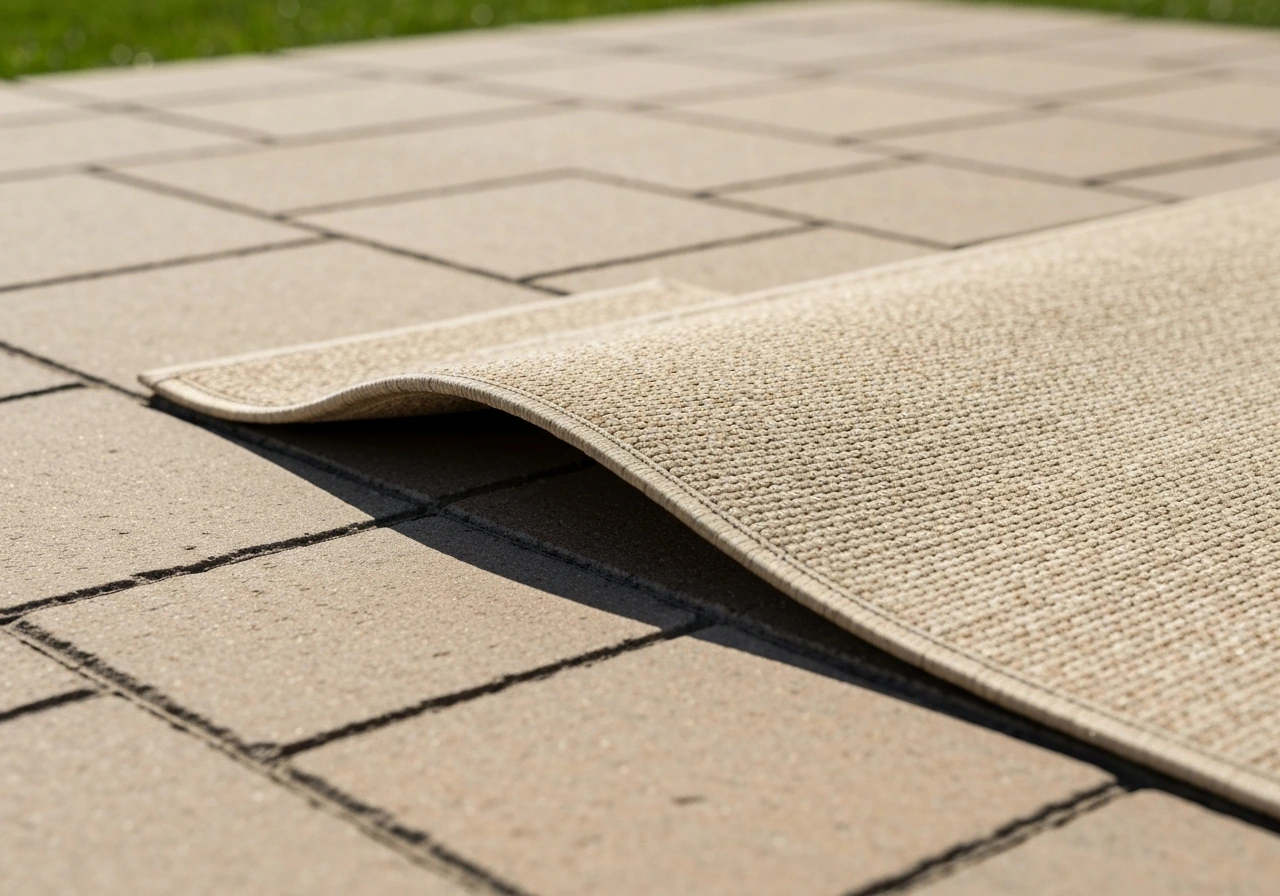
Wind is the obvious villain, but the mechanics matter if you want to actually stop it. When a rug edge lifts even slightly, wind slides underneath and creates upward pressure across the whole surface. Each gust lifts and re-sets the rug a little further from where it started. This is why a rug that seemed fine in the morning ends up bunched against the fence by afternoon.
The surface underneath makes the problem worse or better. Sealed concrete, polished porcelain pavers, and composite decking are all low-friction surfaces. After rain, they get even slicker, and a rug sitting on top of them has almost nothing to grip. On textured concrete or rough natural stone, you get a bit more traction by default, but moisture still fills in the texture and kills that grip temporarily.
Uneven ground is the third factor that most people overlook. Even subtle slope changes and uneven patio surfaces can loosen rug edges, causing them to lift and re-set as water and foot traffic alter friction and contact points Uneven ground is the third factor that most people overlook.. If your patio has even a subtle slope, or if individual pavers have shifted slightly from moisture and settling over time, your rug will never lie fully flat. Those lifted spots act like sails. Foot traffic then pushes the rug downslope in tiny increments, and it gradually migrates.
Quick fixes you can do right now
These won't replace a proper setup, but they genuinely work in the short term and some people find them sufficient depending on how exposed their patio is.
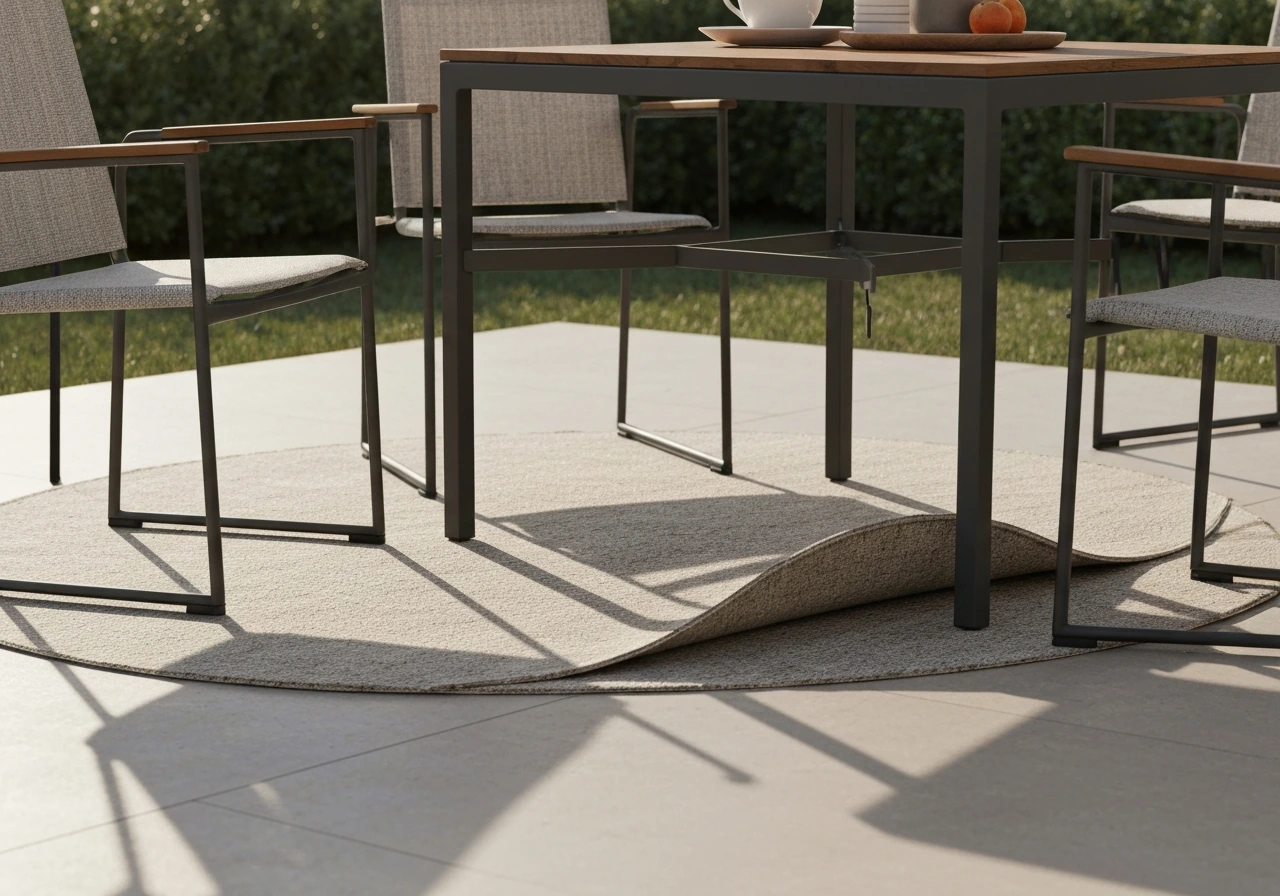
- Move your furniture onto the rug edges. This is the fastest and most effective immediate fix. Slide your chairs, table, or sofa legs directly onto the perimeter of the rug. Weight defeats wind. If your furniture legs sit inside the rug rather than on the border, scoot everything outward so at least one or two legs press down on the edge.
- Use double-sided outdoor rug tape on the corners. You can pick this up at most hardware stores for under $10. Peel and stick each corner to the patio surface. It won't hold through a serious storm, but it flattens the corners and removes the wind entry point.
- Try self-adhesive corner grippers. Products like NeverCurl corner grippers have a weatherproof adhesive on one side that sticks to the underside of the rug corner and grips the floor. They claim residue-free removal, which matters on wood decking. Press one onto each corner and that's all there is to it.
- Flip the rug upside down for a few hours if it's curling. Freshly unrolled rugs curl at the corners because of how they were stored. Laying it face-down in the sun for an hour or two flattens it out before you anchor it, which makes every other fix work better.
The best grip products for outdoor rugs
Not every anti-slip product you'll find is rated for outdoor use, and that distinction genuinely matters. Some popular spray-on rug grips, including RugLock, explicitly state they are not approved for outdoor use because wet conditions reduce their anti-slip properties. Buy the wrong thing and you've wasted money on a product that stops working the first time it rains.
Outdoor rug pads
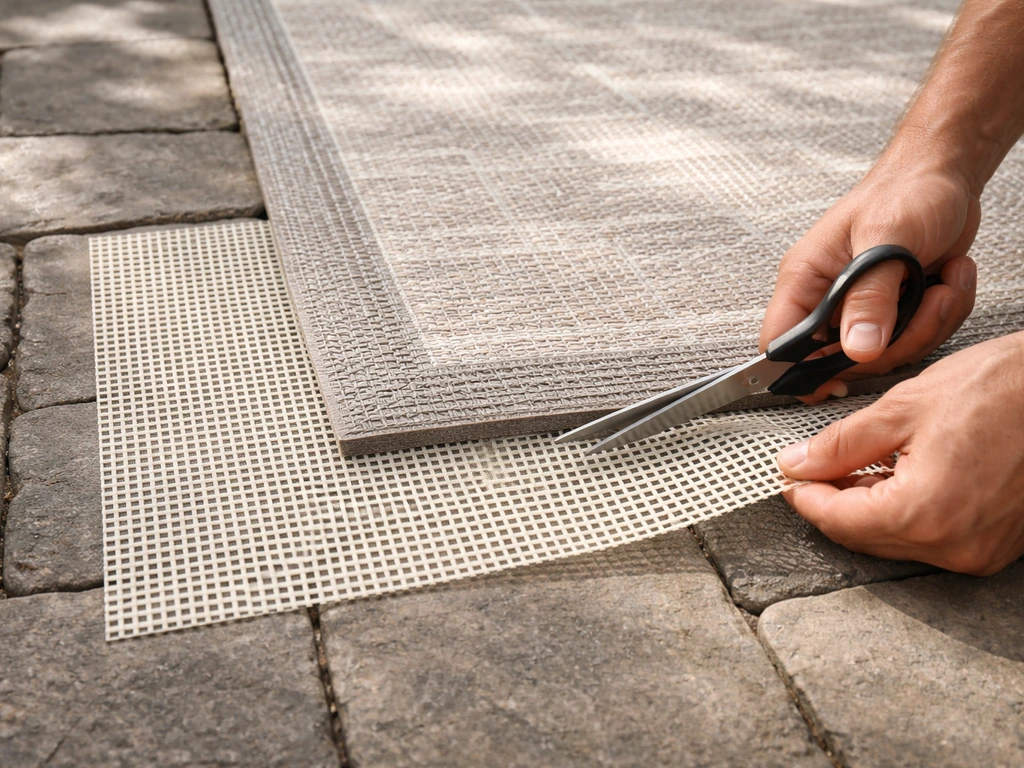
A purpose-built outdoor rug pad is your best investment. Look for one with an open-weave or mesh construction rather than a solid sheet. The StayPut Outdoor pad is a well-known option: it uses a knitted polyester scrim coated in a natural/synthetic rubber blend, and the open-weave design lets water drain through instead of pooling underneath. This matters enormously. A solid foam or solid rubber pad traps moisture and creates a mold factory under your rug within weeks. The Home Depot specifically recommends choosing a rug pad that is approved for outdoor use, and this is the reason why.
Budget-wise, outdoor rug pads typically run $20 to $50 depending on size. Cut the pad about one to two inches smaller than the rug on all sides so it doesn't peek out from the edges, which can be a tripping hazard and looks sloppy.
Corner grippers and rug tape
Corner grippers are small triangular or V-shaped pads with adhesive on both sides: one side sticks to the underside of your rug corner, the other grips the patio surface. They cost almost nothing, around $5 to $12 for a set of four, and they work well as a complement to a rug pad rather than a standalone fix. Products like Giltgrip are marketed as having long-lasting non-skid performance with residue-free removal, though the manufacturer does recommend against repeatedly peeling and re-sticking them.
Outdoor rug tape (double-sided adhesive strips) can work on pavers and concrete, but always check whether the tape is rated for your specific surface before applying it. Some adhesives can stain or lift sealant from sealed wood decks or delicate stone. When in doubt, test a small piece in an inconspicuous corner and let it sit for 24 hours before taping the whole perimeter.
| Product Type | Best Surface | Holds in Wet Conditions? | Approximate Cost | Notes |
|---|---|---|---|---|
| Outdoor rug pad (open-weave rubber) | Decking, pavers, concrete | Yes (drains water) | $20–$50 | Best all-around solution; cut 1–2 inches smaller than rug |
| Corner grippers (weatherproof adhesive) | Most hard surfaces | Yes if rated outdoor | $5–$12 per set | Pair with a rug pad for best results |
| Double-sided outdoor rug tape | Concrete, pavers | Moderate | $8–$15 | Check surface compatibility before applying |
| Furniture weight alone | Any | Yes | Free | Works best combined with another method |
| Spray-on grip (e.g., RugLock) | Indoor hard floors only | No | $10–$20 | Not approved for outdoor use; avoid |
DIY anchoring methods that actually hold
If your patio rug still migrates after a rug pad and corner grippers, or if your setup is exposed to serious wind, it's time to physically anchor the rug. Here's where to go depending on your rug type and patio layout.
Landscape stakes through grommets
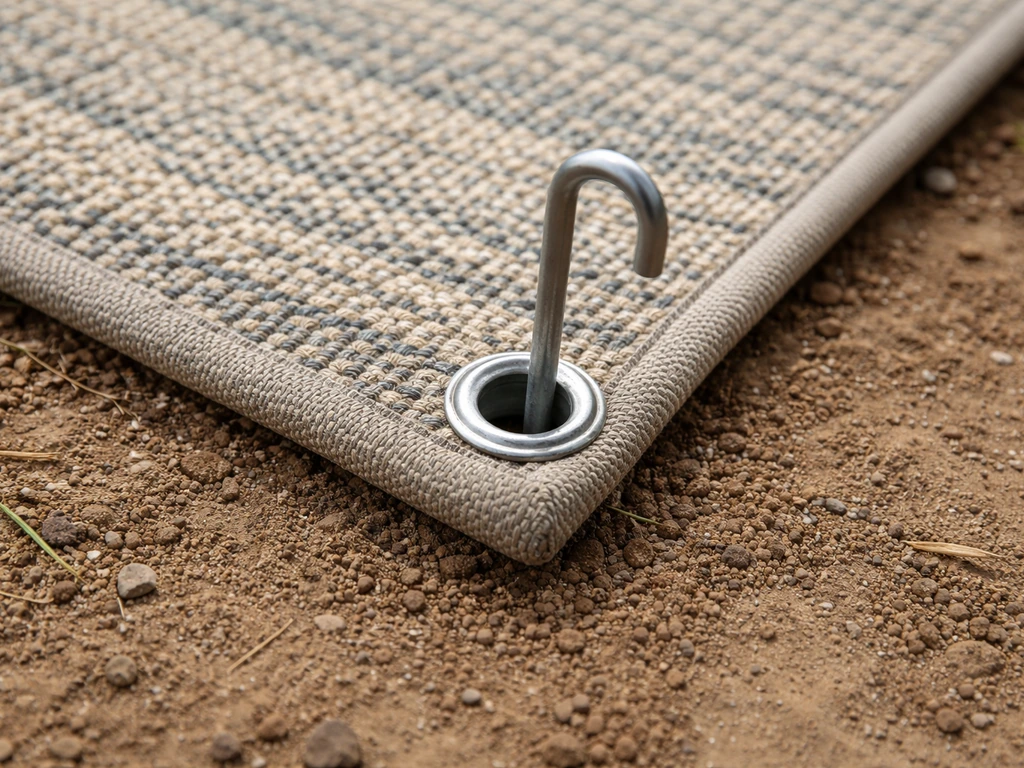
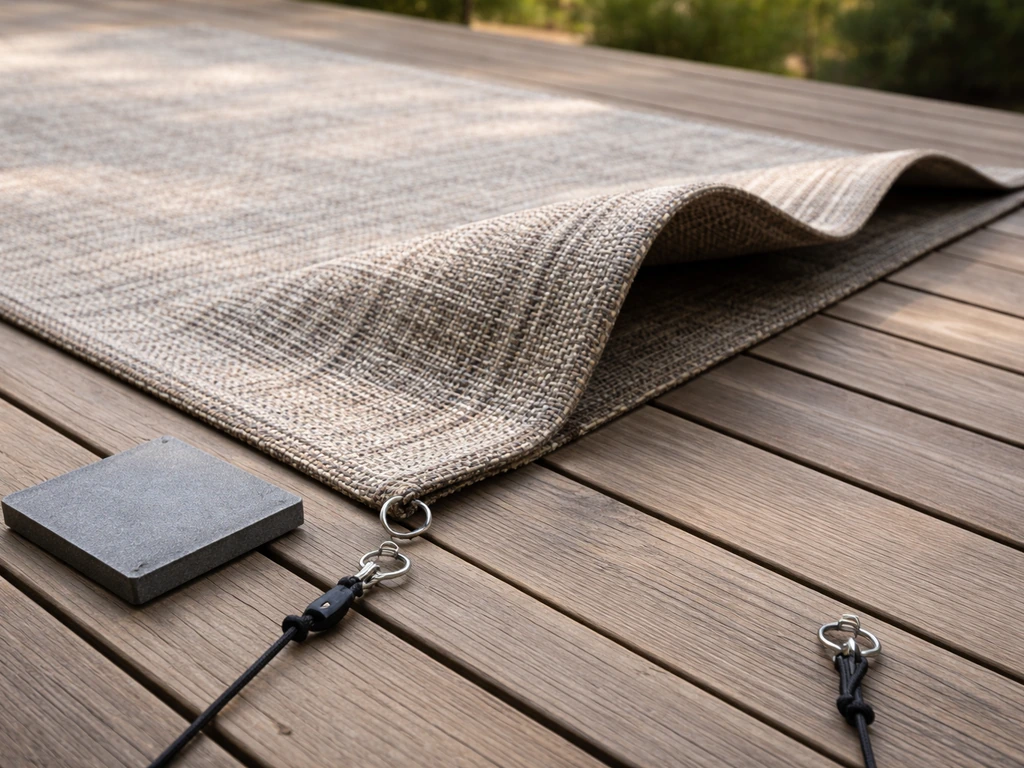
Some outdoor rugs come with metal grommets already installed at the corners. If yours does, you can push a landscape stake or ground stake through each grommet and directly into a soil border, a gap between pavers, or a planter box. U-shaped landscape fabric staples work especially well in grass or dirt adjacent to a patio edge. This method is bombproof in wind but only works if your patio has a border you can stake into.
Adding your own grommets
If your rug doesn't have grommets, you can add them yourself with a grommet kit from any hardware store (around $10 to $15). The kit includes a punch tool, grommets, and a setter. Pick a spot in each corner hem of the rug, punch the hole, and set the grommet. This works best on flat-woven polypropylene outdoor rugs, which have a tight enough weave to hold a grommet without fraying. Avoid punching grommets into thick pile rugs or rugs with a loose woven border.
Zip ties and cable anchors for decks
On a wood or composite deck, you can loop a zip tie or a short length of bungee cord through the rug's corner or border, then hook or tie it around a deck baluster, railing post, or a screw-in deck anchor. This isn't the prettiest solution, but it's fast, cheap, and extremely effective for rugs in exposed windy spots. Use UV-resistant zip ties so they don't become brittle and snap after a summer in the sun.
Weighted edge strips
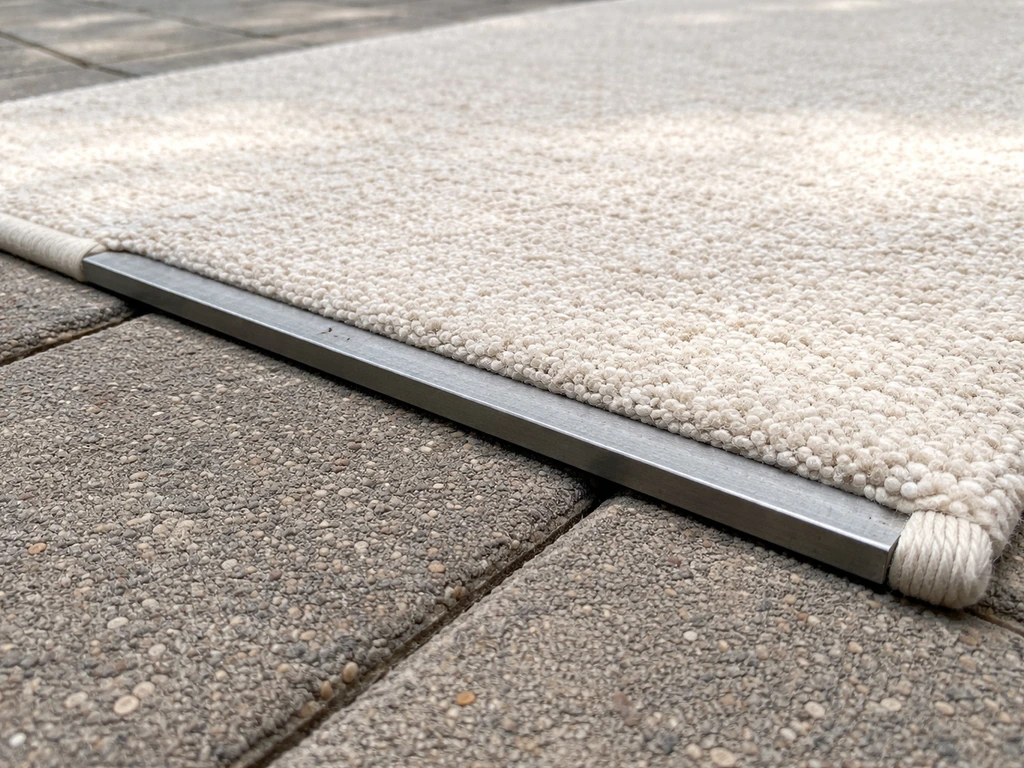
For rugs on concrete or pavers where you can't stake, cut a piece of metal bar stock (available at hardware stores for a few dollars per foot) and slide it under each short edge of the rug. The added weight along the edges prevents lifting without any adhesive or holes. If you want to specifically weigh down a patio rug, focus on adding weight along the rug’s edges so the corners can’t lift weigh down patio rug. This works especially well on runners.
How to install your rug setup for long-term hold
The installation itself is where most people shortcut things and then wonder why the rug still moves. Taking 20 extra minutes here saves you from re-doing this every few weeks.
- Clean the patio surface first. Sweep and then mop or hose down the area where the rug will sit. Dirt, grit, and dried debris under a rug pad act like ball bearings. The pad grips the grit, the grit moves, the rug moves. Let the surface dry completely before laying anything down.
- Check for slopes or uneven spots. Crouch down and look across the patio surface at eye level. If you see any paver edges, cracks, or low spots, address them now. A thin layer of polymeric sand swept into paver joints, or a concrete patching compound on cracked concrete, levels out the surface so the pad has full contact.
- Measure and cut your rug pad. Lay the pad out and mark it about one to two inches back from each edge of the rug. Cut with scissors or a utility knife. Smaller is better: if the pad is flush with or larger than the rug, the exposed edge becomes a tripping hazard and catches more wind.
- Lay the pad, then the rug, and flatten everything. Unroll the rug on top of the pad and align the edges evenly. Walk over the entire surface pushing any air pockets toward the edges. If the rug was freshly unrolled and the corners are curling, flip it face-down for 30 to 60 minutes in the sun first.
- Apply corner grippers and tape. With the rug lying flat, lift each corner and press a corner gripper onto the underside. Then lower it back down firmly onto the patio surface. For tape, apply strips along the full edge of each short side of the rug for maximum hold.
- Position furniture on the rug border. Slide at least two to four furniture legs onto the rug perimeter. Even a small side table counts. This is your last line of defense against wind.
Keeping the grip through rain, heat, and the whole season
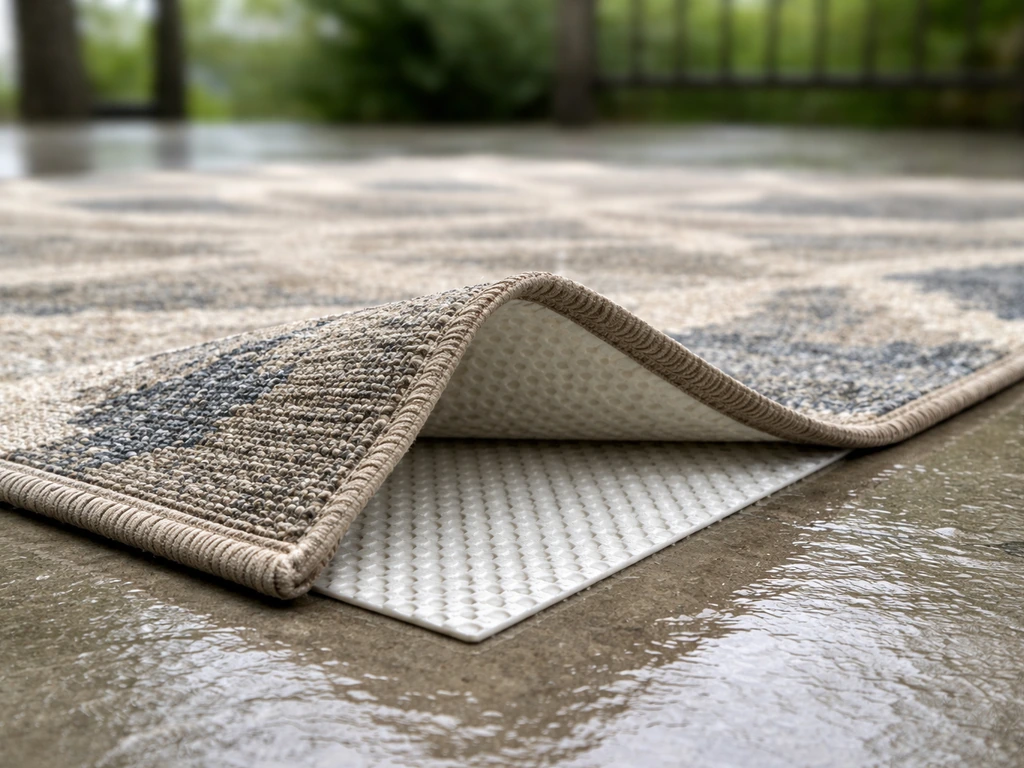
The fix you install in spring won't maintain itself through summer storms and winter storage without a little attention. Here's what actually matters for long-term hold.
Regular cleaning without wrecking the grip
Vacuum or sweep your outdoor rug regularly to prevent dirt and debris from accumulating underneath the edges and lifting them. When you do a deeper clean, remove the rug and pad separately. For the rug, hose it off and let it dry completely in the sun before replacing it. For an open-weave rubber rug pad, simply wipe it clean with a damp cloth. Avoid soaking a rubber pad in soapy water or scrubbing it aggressively, as harsh cleaners can degrade the rubber compound over time.
After any heavy rain, check whether moisture has pooled under the rug. If it has, pull the rug back, let both the pad and the patio surface dry out fully, then replace everything. If you also have clear vinyl patio curtains, keep them secured so wind cannot flap or tug at the surrounding setup. A wet surface underneath is the main reason grips and adhesives fail prematurely.
What to do before a storm
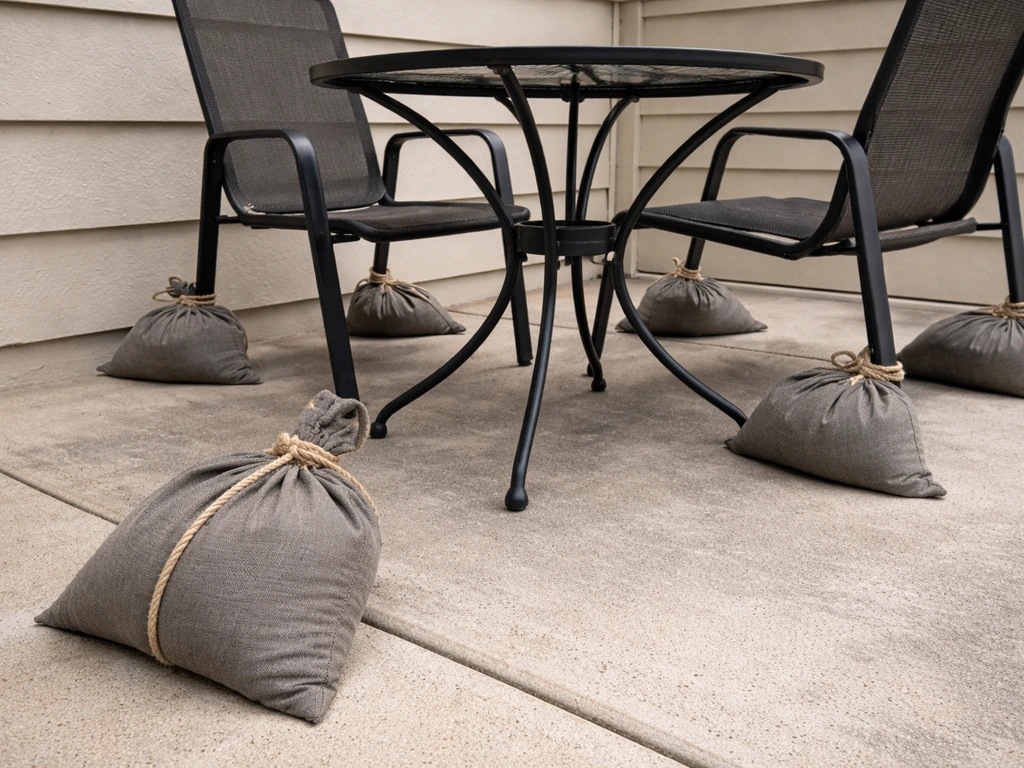
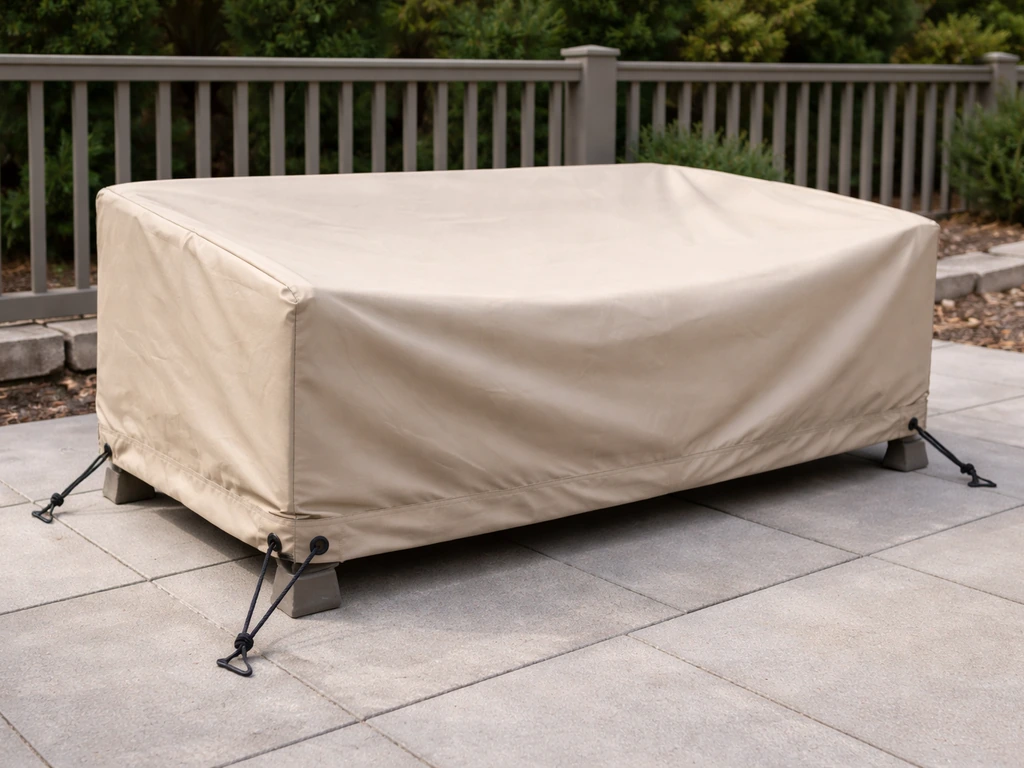
If you know serious wind or rain is coming, the simplest thing you can do is roll up the rug and store it inside or in a shed. This is not overthinking it. Consumer Reports specifically recommends stowing outdoor rugs before heavy rain to prevent mold and mildew buildup underneath. Corner grippers and tape do not stand up to a 50-mph gust, and re-anchoring a rug that got soaked and dragged across the patio is much more work than rolling it up for a night. The same logic applies to the rest of your patio setup: weighing down or storing patio furniture before a storm protects everything at once. If you want the same wind-proof stability for seating, use weights or tarps to weigh down patio furniture before storms hit weighing down or storing patio furniture.
Seasonal storage and reinstallation
At the end of the season, clean the rug thoroughly, let it dry completely in the sun, and roll it tightly (never fold it) for storage. Store it in a dry, covered spot. Before storing, peel off any corner grippers that have already lost their grip and replace them with fresh ones at the start of next season. Recheck your rug pad: if the rubber has started to crumble, crack, or leave residue on the patio surface, it's time for a new one. A good outdoor rug pad should last two to four seasons depending on how much sun and moisture it's exposed to.
When your rug still won't stay put
If you've done all of this and the rug still moves, run through this short checklist before giving up. Is the patio surface still dirty or damp under the pad? Is the rug pad actually rated for outdoor use, or did you accidentally buy an indoor pad? Are the rug corners curling because the rug needs more time to flatten out? Is the rug too lightweight for your wind exposure, where a heavier or more densely woven rug would hold better? If you’re trying to weigh down patio curtains, use the same idea: add an anchor weight or tie-down points so wind can’t lift and pull the fabric heavier or more densely woven rug. And finally, are there any paver or decking sections that are noticeably raised or sunken, creating a fulcrum point that constantly lifts one corner? Fixing the surface problem underneath, rather than adding more grip on top of it, is often the real solution.
FAQ
How do I keep my patio rug from slipping after it rains?
If it moves mostly when the patio gets wet, prioritize an outdoor-rated rug pad that drains (open-weave/mesh) and avoid indoor anti-slip pads, even if they feel grippy dry. Also check that the pad is cut to stay fully under the rug edges, because exposed pad corners can curl and lift, reducing traction.
Can I reapply corner grippers or tape on a rug that got soaked?
Yes, but use the right timing and technique. You can re-anchor quickly by re-positioning the rug and reapplying corner grippers only after everything dries fully, otherwise the adhesive can fail. If you need a temporary fix, sliding furniture onto the rug corners works while you wait for dry conditions.
What rug pad type works best for outdoors to prevent lifting and moisture problems?
Avoid solid foam or solid rubber pads, they trap moisture underneath and can lead to mold and premature rubber breakdown. Stick to outdoor-approved pads with drainage (open-weave or mesh) and choose a size so it covers the rug footprint without peeking out at the edges.
Will adding weight in the center of the rug stop it from moving?
For concrete or pavers where staking is impossible, weight along the edges works better than placing a single heavy item in the center. Use metal bar stock or edge weights positioned so each short side has extra downward pressure, which blocks the corner-lift mechanism that lets wind get underneath.
My corners curl up, and the rug keeps bunching. What should I do?
If your corners keep curling, the rug may need time to relax flat or it may be too stiff or too lightweight for your wind exposure. Let it flatten in place after cleaning and drying, then switch to a heavier or more densely woven rug if curling continues, especially on open, gusty patios.
How can I tell if rug tape or adhesive will damage my patio surface?
On delicate stone or sealed surfaces, always test adhesive products in an inconspicuous spot first. Let the test area sit for about 24 hours, and if you see staining or sealant lifting, switch to non-adhesive options like an outdoor rug pad plus corner grippers or edge weights.
Why does my anti-slip tape or grippers lose their hold so quickly?
Corner grippers and tape usually fail after repeated wet-dry cycles or when the patio surface is dusty. Before reapplying, sweep and wipe the patio clean and dry, then replace any grippers that have lost their grip instead of trying to stretch their lifespan.
Can I add grommets to any patio rug, or are there specific rug materials to avoid?
For grommet installation, it works best on tight, flat-woven polypropylene rugs with enough structure to prevent fraying. Avoid punching into thick pile rugs or loose woven borders because the fabric can unravel and weaken, making the anchor less effective.
What’s the best way to anchor a patio rug on a deck without drilling?
It helps most to anchor to something that prevents corner lift, not just to a nearby spot. If you are using zip ties or bungee cord, route them through rug corner areas or borders and connect to a stable deck component like a baluster, railing post, or deck anchor, then use UV-resistant ties for sun durability.
Should I remove my patio rug during storms to keep it in place long-term?
Yes, for heavy exposure the simplest strategy is to roll up and store the rug indoors or in a shed before major rain. This prevents soaked-mold issues underneath and avoids the work of dragging and re-anchoring a rug that has shifted during gusts.
What if the rug keeps migrating even after I installed a rug pad?
Check two things first: whether water is pooling under the rug after rain, and whether the pad is outdoor-rated. If moisture pools, you likely need better drainage (open-weave pad) and you may have to dry the system fully before using grips again.