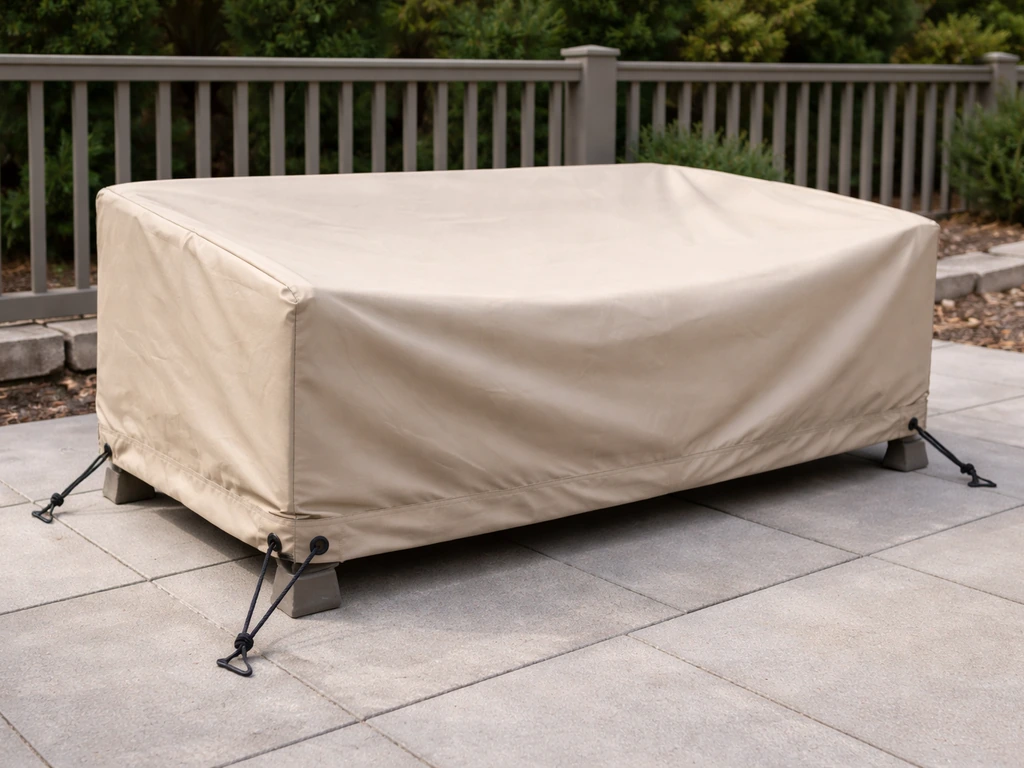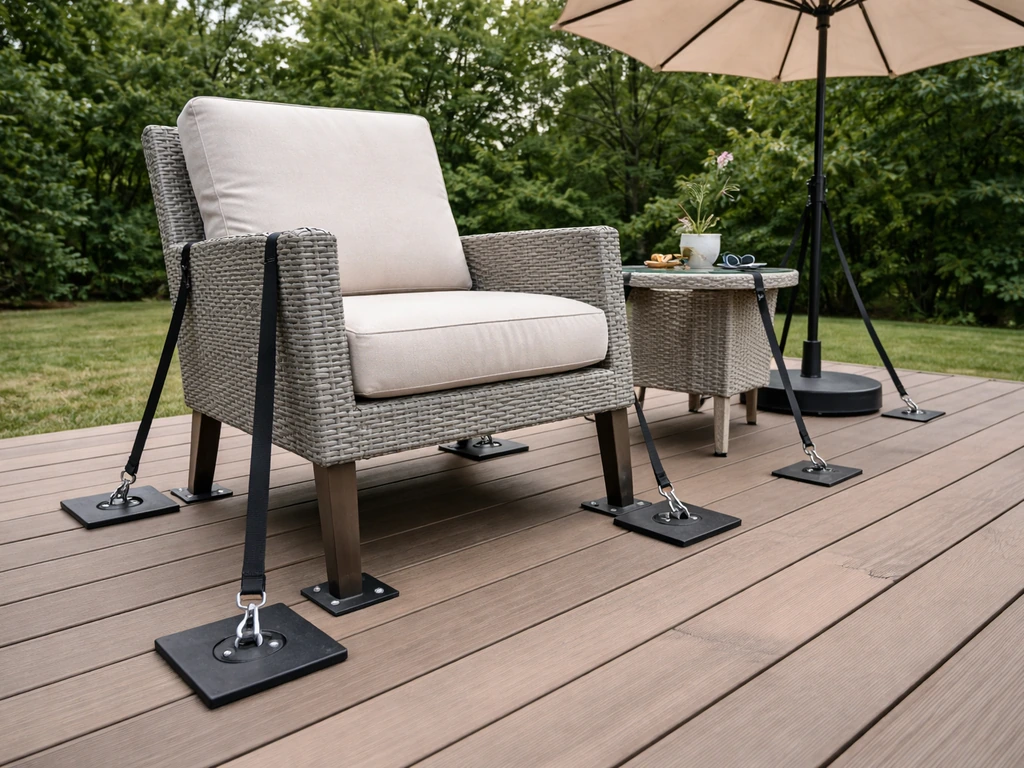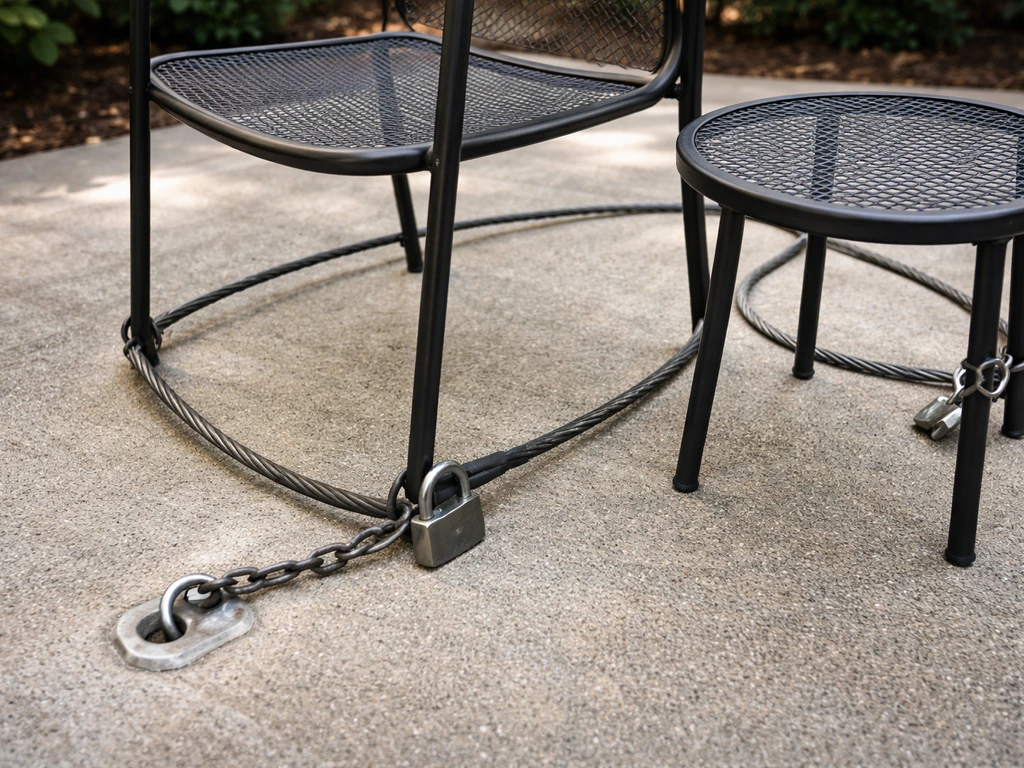
The safest and most effective way to weigh down patio furniture is to combine added weight at the base with a physical anchor or strap, no single method is enough on its own for serious wind. For a table, fill the base or legs with sand, add sandbags underneath, and strap it to a deck anchor or wall mount.
How to Weigh Down Patio Furniture: Tables and Chairs
Maren Grady
7 May 2026
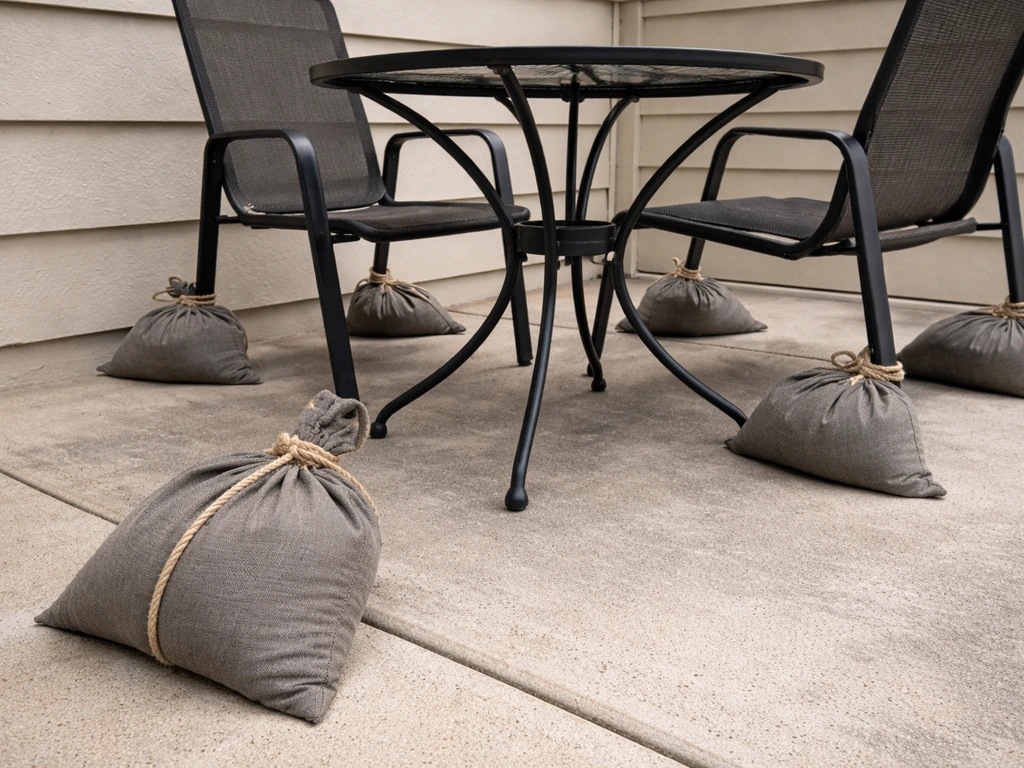
ePackage Supply notes that sand weighs roughly 16 lb per gallon, which would be about 80 lb for 5 gallons when wet fill the base or legs with sand. For chairs, use sandbag pouches clipped to the frame or leg weights, and daisy-chain the chairs together with bungee cords or ratchet straps when a storm is coming.
Which exact method works best depends on your furniture material, your surface type, and how much wind you're actually dealing with.
Why patio furniture moves in the first place
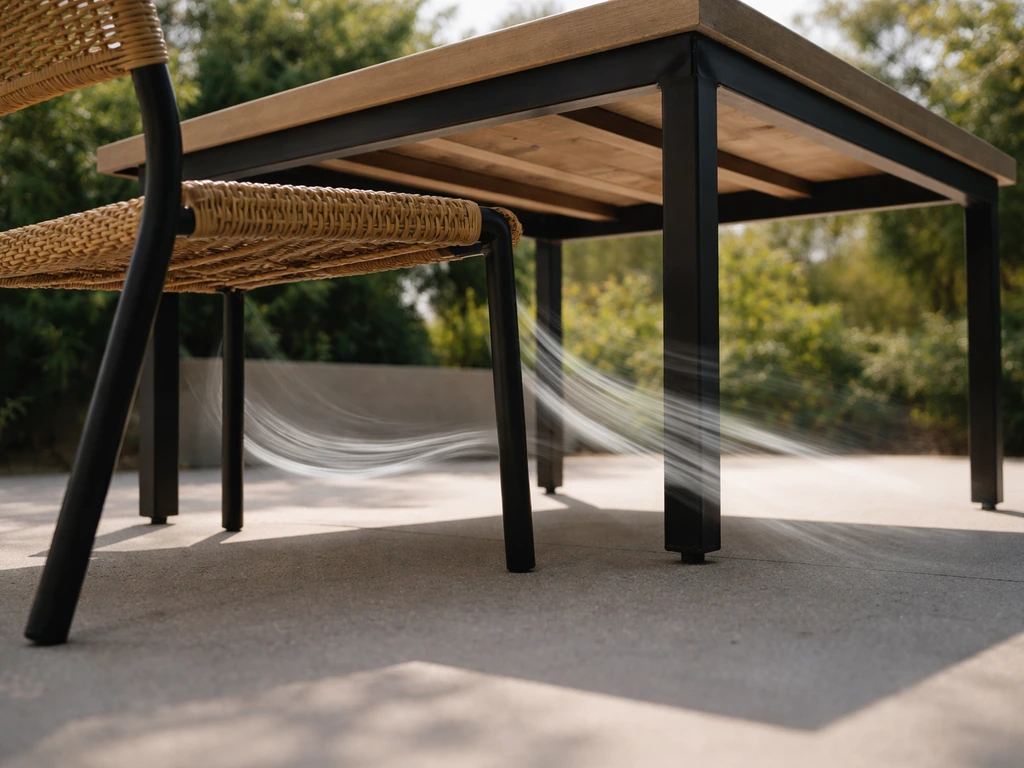
Wind doesn't just push furniture sideways, it creates lift. When wind moves over and under a flat surface like a tabletop or a chair seat, it generates upward pressure (the same aerodynamic principle as a wing). Lightweight aluminum and plastic furniture are especially vulnerable because there's not enough mass to counteract that lift. Slick surfaces make it worse: polished concrete, composite decking, and wet pavers offer almost no friction. Grass and gravel are slightly better because they grip legs, but they're also uneven, which means furniture can rock and tip instead of slide. If you've ever come home to find your chairs scattered across the yard, that's wind uplift at work, not just gusts pushing them over.
The three main failure points are: too little weight, no anchor point, and furniture that's spaced out so each piece acts alone. Once you fix all three, you've solved 90% of the problem.
Figure out what you're working with before you buy anything
Before you spend a dollar or drill a single hole, spend five minutes assessing your setup. The right solution for a 40-pound cast-iron table on a concrete patio is completely different from what you need for a lightweight aluminum bistro set on a wood deck.
Furniture type and material
| Furniture Type | Wind Risk | Best Weighting Approach |
|---|---|---|
| Lightweight aluminum or resin chairs | Very high | Leg weights or sandbag pouches, chain together |
| Heavy cast iron or steel chairs | Low to moderate | Usually fine; add anchor in severe storms |
| Plastic/resin tables | Very high | Sand-fill base, sandbags underneath, strap to anchor |
| Aluminum patio table | High | Add ballast underneath, anchor to deck or wall |
| Wood or teak furniture | Moderate | Natural weight helps; strap during storms |
| Umbrella table with hollow base | Very high | Fill base with 55+ lbs of sand or gravel |
| Freestanding umbrella | Extremely high | Weighted base (75 lbs minimum), spike anchor or strap |
Surface type matters just as much
- Concrete or pavers: You can drill anchor bolts, use non-slip furniture pads, or set sandbags directly on the surface without them sinking.
- Wood decking: Avoid drilling into decking joists without knowing their location; use deck-mount anchors designed for composite or wood boards, or rely on weight-based solutions.
- Grass or soil: Leg spikes, auger-style ground anchors, and sandbags all work well here. Furniture will sink slightly over time, which actually helps stability.
- Gravel: Legs shift in loose gravel, so wide-base leg caps and sandbag weight underneath the table frame are your best bet.
- Tile: Very slippery when wet. Non-slip pads plus weight is a must; avoid drilling into tile unless you're experienced.
Don't forget the umbrella
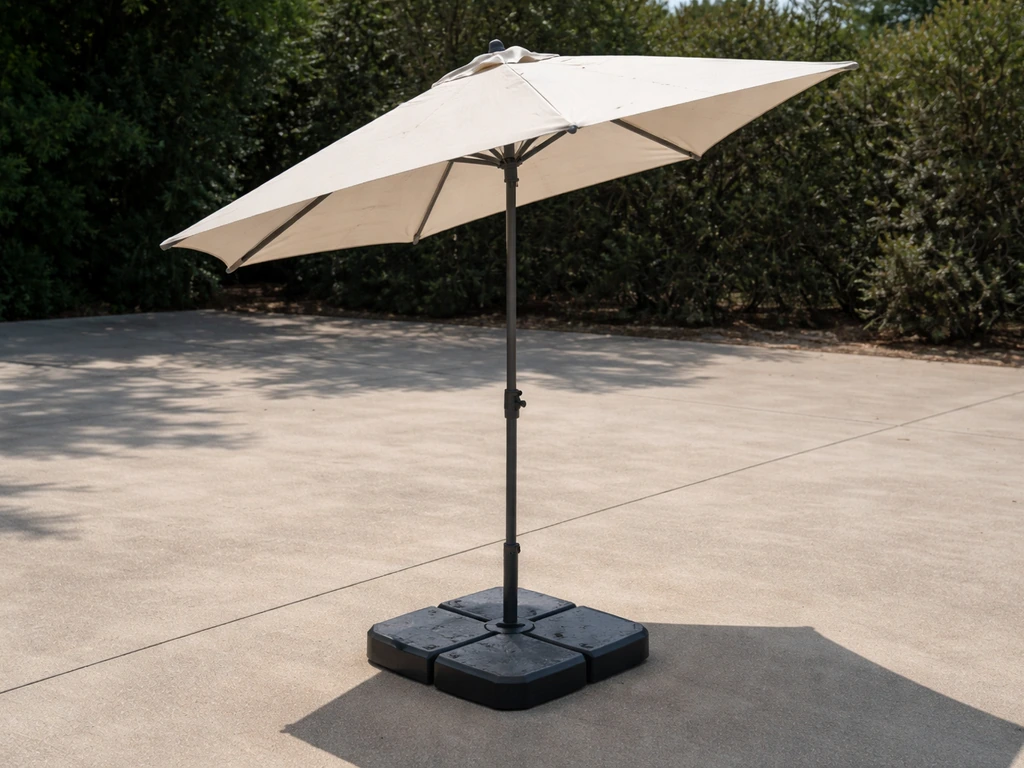
If your table has an umbrella, that's your biggest wind problem. An open patio umbrella acts like a sail and transfers enormous force straight down to the base and table legs. ASTM F3681 safety testing, which the CPSC uses as its benchmark for umbrella safety, requires a resistance of 75 pounds at the base pole to be considered secure in winds up to 30 mph. That's the minimum.
Most hollow umbrella bases don't come close to that without being filled. A typical umbrella table manual calls for filling the base with at least 55 lbs of sand or gravel for basic stability, and the same manual warns not to use the table in windy conditions at all until that base is properly filled.
If you have an umbrella, close it anytime winds pick up above 20 mph, and make sure the base is filled before you do anything else.
Quick fixes you can do today
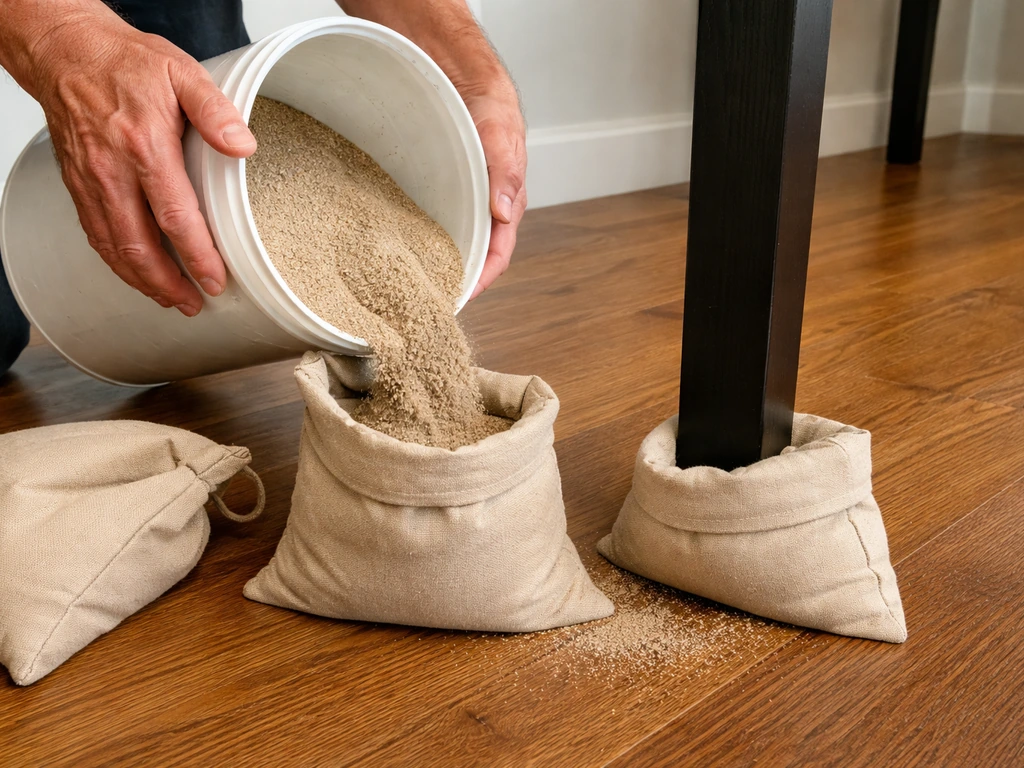
If a storm is coming tonight and you need a solution right now, here's what you can pull together with stuff you probably already have or can pick up at a hardware store for under $30.
Sandbags
Sandbags are the fastest, cheapest, most versatile weight you can use. A 50-lb bag of play sand from any hardware store costs about $5 to $8. Pour it into smaller canvas bags, old pillowcases tied shut, or purpose-made sandbag pouches (sold as patio furniture sandbags for around $10 to $15 a set). Drape them over chair legs, hang them from the frame underside of a table, or lay them flat under the table skirt. For chairs, even a single 10-lb pouch on each chair leg makes a meaningful difference. For a table, aim for at least 20 to 30 lbs of distributed weight underneath.
Water-filled weights and bases
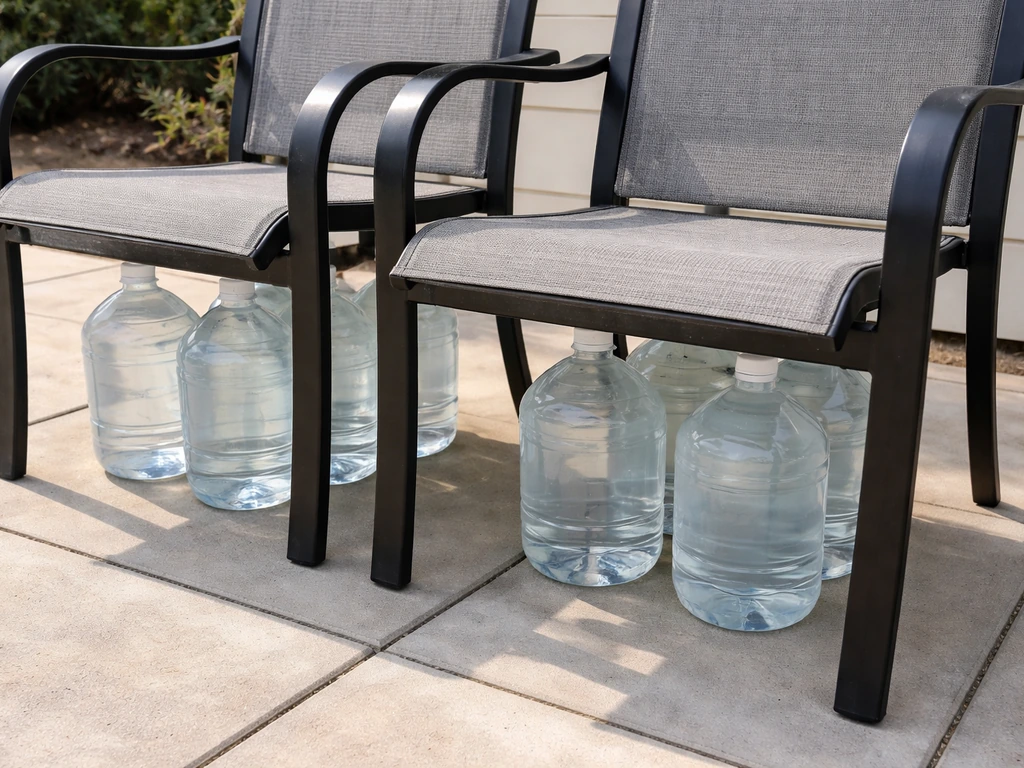
If you already have a hollow umbrella base, fill it with water right now, it's free and adds 30 to 50 lbs depending on size. Sand is heavier and more stable long-term (sand won't slosh or freeze and crack the base in winter), but water works as a quick fix. Some umbrella bases and chair-leg weights are specifically designed to be water-filled; just make sure yours is rated for it before you fill. Never fill a base that has cracks, and drain it completely before any hard frost.
Bungee cords and ratchet straps
Strapping chairs together in a cluster and tying the cluster to a fixed point (deck railing, fence post, a table leg that's anchored) dramatically reduces how far anything travels if it does get picked up. Use ratchet straps rather than bungee cords if winds are above 30 mph, bungees stretch and can snap back dangerously. Home Depot’s bungee cord warning says not to stretch the cord more than 50% of its unstretched length and to inspect it regularly for wear. This is a 10-minute job and costs nothing if you already have straps in the garage.
Improvised household weights
- Gallon jugs of water (about 8 lbs each): place in chair seats or under table
- Cinder blocks: heavy and effective under a table, just protect the surface underneath
- Buckets filled with gravel or sand: set on lower deck shelves of serving carts or storage ottomans
- Dumbbell plates: slide over chair legs if the leg diameter fits, or use as ballast under the table
Longer-lasting solutions worth the investment
Quick fixes are great for emergencies, but if you're tired of moving sandbags every time the forecast changes, these more permanent options will save you a lot of hassle by the end of the season.
Deck anchors and floor mounts
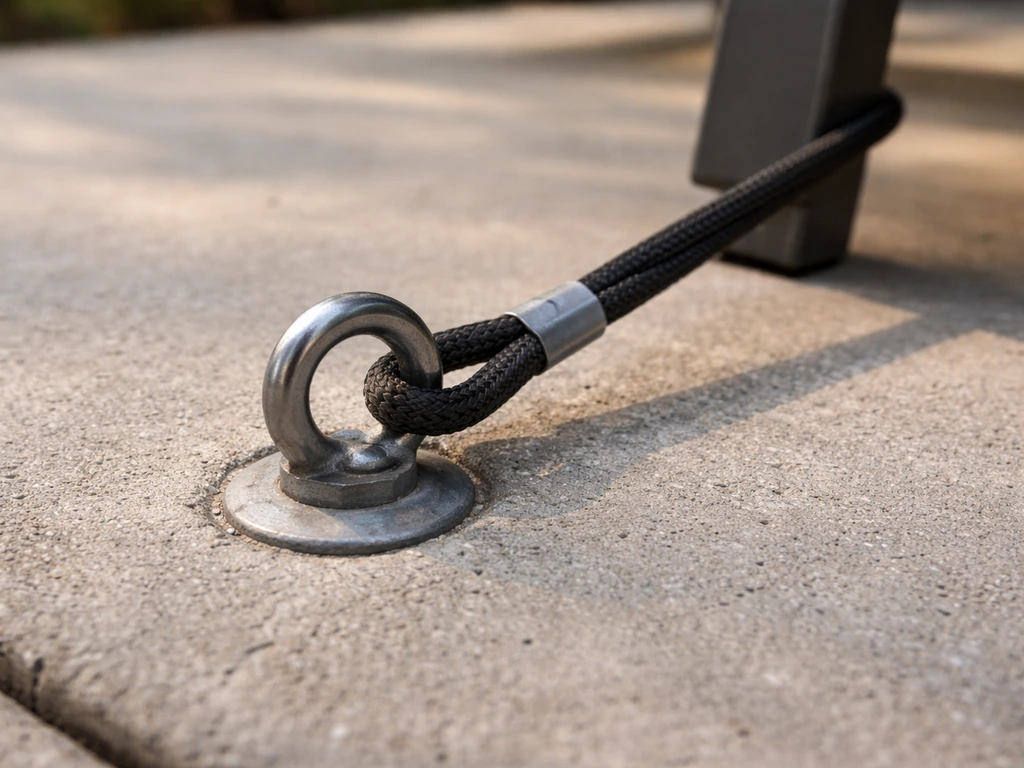
A deck anchor is a bolt or bracket that screws into the deck, concrete, or pavers and gives you a fixed point to strap furniture to. For concrete, concrete anchor bolts (around $3 to $5 each, installed with a hammer drill) are extremely secure. For wood decking, use lag screws into a joist or a surface-mounted D-ring anchor plate. The furniture doesn't have to be bolted directly, you can just run a strap or cable from the anchor to the chair or table leg. This keeps furniture in place without restricting your ability to rearrange it for dinner.
Weighted furniture bases
Several manufacturers sell weighted leg wraps, base rings, and strap-on ballast systems specifically for patio furniture. These typically range from $20 to $60 per chair and can be left on all season. Some are disguised as decorative base covers. They're worth it if you have lightweight aluminum or resin furniture that you've already lost to the wind once. For umbrella tables, a purpose-built commercial umbrella base plate that bolts to the deck is the gold standard, no amount of sand weight inside a freestanding base beats a properly installed through-bolt anchor.
Ground spikes and auger anchors
If your furniture sits on grass or soil, auger-style ground anchors are one of the best permanent solutions. You screw them into the ground by hand or with a drill, then clip a strap to the loop at the top. They pull out easily for mowing or rearranging, and they're reusable season after season. Expect to pay $10 to $25 for a set of four. Just remember to mark them with a flag or stake so you don't trip over the loops after dark.
Non-slip furniture pads and grip mats
Sliding on hard surfaces is a separate problem from wind uplift, and non-slip rubber leg caps or grip pads address it directly. To keep a patio rug in place, use a non-slip rug pad or outdoor grip mat and secure the edges with rug grippers or tie-downs non-slip rubber leg caps or grip pads. They cost almost nothing (a pack of 16 rubber leg caps runs about $6 to $10), protect your floor or deck from scratches, and dramatically reduce the distance furniture travels before an anchor or weight can do its job. Use them with any other method, they're always worth adding.
Step-by-step: how to weigh down a patio table
Here's a concrete process you can follow from start to finish. This works for most aluminum, resin, or lightweight wood patio tables on a concrete, paver, or deck surface.
- Check the table legs for hollow sections or a base cavity. Many aluminum and plastic tables have hollow legs or a center post. If yours does, you can pour dry sand into the legs using a funnel — cap the openings with rubber plugs when done. Even 10 to 15 lbs of sand inside hollow legs helps a lot.
- If the table has a hollow base (common in umbrella tables), fill it with sand or gravel until it reaches the fill line or until you've added at least 55 lbs. Use a bucket and funnel. Sand is preferable to water long-term because it won't freeze or evaporate.
- Add sandbags underneath the table frame. Use canvas sandbag pouches filled with play sand, or double-bag the sand in tied-off pillowcases. Lay them flat in the center underside of the table where they won't be a trip hazard. Aim for 20 to 40 lbs total depending on how exposed your patio is.
- Install non-slip rubber pads on every leg. Peel-and-stick rubber feet work fine on smooth surfaces. For rough concrete or pavers, a rubber leg cap that wraps around the leg bottom is more durable.
- If you're on a deck or concrete pad and want a permanent solution, screw a D-ring anchor bolt into the deck or drill a concrete anchor into the slab near the table. Run a short loop of coated cable or a quick-release strap from the anchor to the table frame's center leg. Keep it loose enough to move the table a few inches for repositioning, but tight enough to stop it from traveling.
- If the table has an umbrella, close the umbrella completely whenever winds are forecast above 20 mph. A closed umbrella reduces wind load by about 80%. If the umbrella is damaged or the tilt mechanism is loose, address those repairs before the next windy season.
Step-by-step: how to weigh down patio chairs
Chairs are harder than tables because they're lighter, more numerous, and you need to move them around constantly. The goal is to add weight without making them annoying to use.
- Start with rubber leg caps on every leg. This takes 10 minutes and immediately reduces sliding. For stacked chairs, do this even if you're adding other weights — it protects the deck too.
- Add leg weight pouches. You can buy these as sets of 4 for about $15 to $25, or make your own by filling small canvas drawstring bags with 3 to 5 lbs of sand and tying them around each front leg. The front legs matter most because they're what lifts first in wind uplift.
- For chairs with sled-style or flat bases, lay a filled sandbag flat across the base between the legs — it's hidden under the seat and adds 10 to 15 lbs right where you need it.
- When a big storm is coming, link chairs together in groups of two or four using a ratchet strap looped through the legs. A cluster of four chairs weighs collectively much more and is harder to tip or scatter than individual chairs.
- Strap the cluster to a fixed anchor: a deck railing post, a wall anchor, a heavy table that's already weighted, or a ground auger if you're on grass. One connection point per cluster is enough.
- Stack chairs when you're not using them for extended periods. A stack of four chairs is significantly more wind-resistant than four individual chairs spread around the patio, and the weight of the stack keeps the bottom chair grounded.
Safety, stability, and keeping your furniture (and family) out of trouble
Adding weight and anchors is supposed to make things safer, but done wrong, it can create new problems. Here's what to watch for.
Don't create trip hazards
Sandbags on the ground, exposed strap buckles, and cable anchors are all tripping hazards, especially at night or when kids are running around. Keep sandbags tucked under furniture, not in walkways. Use coated cables rather than exposed metal wire. If you're using ground anchor loops on grass, mark them with a small bright flag or stake so they're visible.
Avoid rust and surface damage
Sandbags left in constant contact with metal furniture legs will trap moisture and accelerate rust on steel or iron pieces. Use a rubber or plastic layer (even a folded grocery bag works) between a sandbag and a bare metal leg. For aluminum furniture, rust isn't the concern, but abrasion is, sand inside rough canvas bags can scratch powder-coated finishes over time. Smooth nylon pouches are better for aluminum. For cushions, never place weights directly on fabric, wind can grind a sandbag against a cushion and tear the cover.
Don't over-tighten anchors
This is one of the most common mistakes with any bolted or screwed anchor system. When installing deck anchors or concrete bolts, snug is enough, crank them too tight and you'll strip threads, crack pavers, or stress the furniture frame at the attachment point. The anchor just needs to prevent movement, not crush the connection. As anchor installation guides note: if there's no forward or backward motion, the anchor is doing its job. Tighter than that is just wear and tear on your hardware.
Know your wind limits
Even a well-anchored umbrella table should have the umbrella closed above 20 to 30 mph winds, that's the ceiling of what any weight system can safely manage, according to ASTM F3681 standards. No amount of sandbags makes an open umbrella safe in 50 mph gusts. When a serious storm is coming, bring furniture inside or stack and strap it, rather than relying on weights alone.
Seasonal care: adjusting your setup as the year changes
A weighting strategy that works great in summer needs to be revisited before winter, and again before spring. Here's a simple seasonal checklist so you're not scrambling when conditions change.
Late spring setup
Before you put furniture out for the season, inspect all anchor hardware for rust or loose fittings from winter. Replace rubber leg caps if they've cracked or hardened. Refill sand-based bases that may have compacted or absorbed moisture, and top them back up to the recommended weight. If you used water-filled bases last year, drain them fully and refill with fresh water or switch to sand for better long-term stability.
Summer storm season
Keep an eye on the forecast. For storms under 30 mph, your permanent setup should handle it fine if you've followed the steps above. For anything stronger, close umbrellas, strap chair clusters, and consider moving the lightest pieces inside or into a shed. A 15-minute prep before a big storm beats spending an afternoon retrieving furniture from your neighbor's yard.
Fall storage and winterizing
Before you put furniture away for winter, remove all sand or water from hollow bases. Water left in a base will freeze, expand, and crack the base or the surrounding ground connection. Sand can stay in place if you're leaving furniture out, but drain any water-filled components completely. Remove sandbag pouches from chair legs before storing chairs, sand trapped in wet fabric bags can mold and corrode metal over a winter.
Repositioning throughout the season
If you find yourself moving furniture around a lot for entertaining, quick-release ratchet straps and removable auger anchors make that much easier than drilled mounts. It's a slightly lower level of security than a bolted anchor, but for most backyards, the convenience trade-off is worth it. Think of drilled anchors for your main table that almost never moves, and strap-and-auger systems for chairs and side tables that you rearrange constantly.
While you're thinking about keeping outdoor things in place, the same logic that applies here, weight plus grip plus anchor, also comes up when dealing with patio rugs and outdoor curtains. If you want clearer visibility without the wind grabbing the fabric, learn how to make clear vinyl patio curtains that hang securely outdoor curtains.
If you're trying to weigh down outdoor curtains too, focus on adding weight at the base and using a secure strap or anchor point so wind can't lift them patio rugs and outdoor curtains. A similar weight-plus-grip approach is also how you weigh down patio rugs so they don't bunch up or slide in strong wind.
A rug that slides out from under a chair compounds the furniture movement problem rather than helping, so it's worth solving both at the same time if you have rugs on your patio.
FAQ
How many pounds of weight do I actually need to stop patio furniture in wind?
Use weight as a baseline, not a single number. As a starting point, aim for 20 to 30 lbs distributed underneath a lightweight table, and for chairs, add at least about 10 lbs per chair leg (or pouch). Then increase if the forecast is higher, the furniture is aluminum or plastic, or the surface is slick (wet pavers, polished concrete).
Can I just put heavy sandbags on the tabletop or chair seats instead of anchoring?
It usually fails because the wind can still create lift and tip movement, and sand on top is easier to fling or blow off. Weight should be low (legs, underside, base area) and, for serious gusts, paired with a strap to a fixed point so the furniture cannot translate. “Low and anchored” matters more than “heavy and high.”
What is the best anchor for a deck that is not concrete?
For wood decks, the more reliable approach is to attach a lag-screw bracket or D-ring plate into a joist or into a mounting plate designed for that deck structure, then strap from the anchor to the furniture leg or frame. Avoid anchoring only into thin boards, because straps can loosen as the boards flex in wind and temperature changes.
Do bungee cords work, or should I always use ratchet straps?
Bungees can be fine for moderate gusts, but above roughly 30 mph they stretch and can snap back, which is both unsafe and less effective. For higher winds, use ratchet straps with firm tension, and check them after the first strong gust to confirm they did not loosen.
How do I weigh down furniture on grass without damaging my yard?
Use reusable auger-style ground anchors with straps clipped to the loop. They pull out for mowing and can be reused season to season. After installing, mark the loop location with a visible stake so you do not trip over it in the dark.
Are weighted leg caps enough if my patio surface is smooth?
Leg caps help reduce sliding, but they do not stop wind uplift by themselves. On slick surfaces, friction reduction is only one part of the problem, so pair leg caps or grip pads with low weight and at least a light anchoring method (strap to an anchor point or clustering chairs and tying them down).
Should I fill umbrella bases with water or sand?
Water is fast and cheap as an emergency fix, but it can slosh and, in cold climates, must be fully drained to prevent freeze cracking. Sand is heavier for long-term stability and does not freeze or slosh, but you still need to ensure the base is undamaged and properly filled to the manual’s guidance.
My umbrella base is hollow, but it has cracks. Can I still fill it to weigh it down?
Do not fill a cracked umbrella base. Cracks weaken the structure and can cause the base to fail under load, which can be dangerous in wind. Replace the base or use a purpose-built bolted umbrella base plate if the umbrella must stay outside.
Can I keep sandbags on patio furniture all winter?
Not always. If you leave sandbags in constant contact with metal, it can trap moisture and accelerate rust on steel or iron. Use a barrier like a rubber or plastic layer between sandbags and bare metal legs, and remove or relocate sandbag pouches before storing chairs so wet fabric does not mold or corrode hardware.
What should I do with sandbags so they do not become a tripping hazard?
Keep sandbags tucked under furniture or under table skirts, avoid placing them in walkways, and secure any straps so buckles and cable ends are not exposed at knee height. If you use ground anchors on grass, visible flags or stakes are important for evening safety.
How tight should deck anchors or concrete bolts be when installing?
Snug is enough. Over-tightening can strip threads, crack pavers, or stress the furniture frame at the connection point. If there is no forward or backward motion after installation, the anchor is doing its job.
If I need to rearrange furniture often, what setup balances safety and convenience?
A common approach is to permanently anchor only the main table and use removable solutions for chairs and side pieces. Quick-release ratchet straps plus removable auger anchors make moving easier, with the trade-off that this setup is slightly less secure than through-bolted anchors.
Do I need to close my umbrella even if I anchored the table?
Yes, if winds are above the umbrella’s safe threshold. Even a correctly anchored umbrella table should have the umbrella closed once winds reach the low-to-mid 20s mph range, because a large open canopy can overpower weight and strap systems.