The best way to protect patio furniture from sun damage is to combine shade (umbrellas, shade sails, or a pergola), breathable covers for when the furniture sits unused, and material-appropriate UV protectants applied to clean, dry surfaces every season. No single step does the whole job, but those three together will stop most of the fading, cracking, and drying that destroys outdoor furniture in just a few summers.
How to Protect Patio Furniture From Sun Damage
Maren Grady
29 Apr 2026
What sun damage actually looks like (and where to check first)
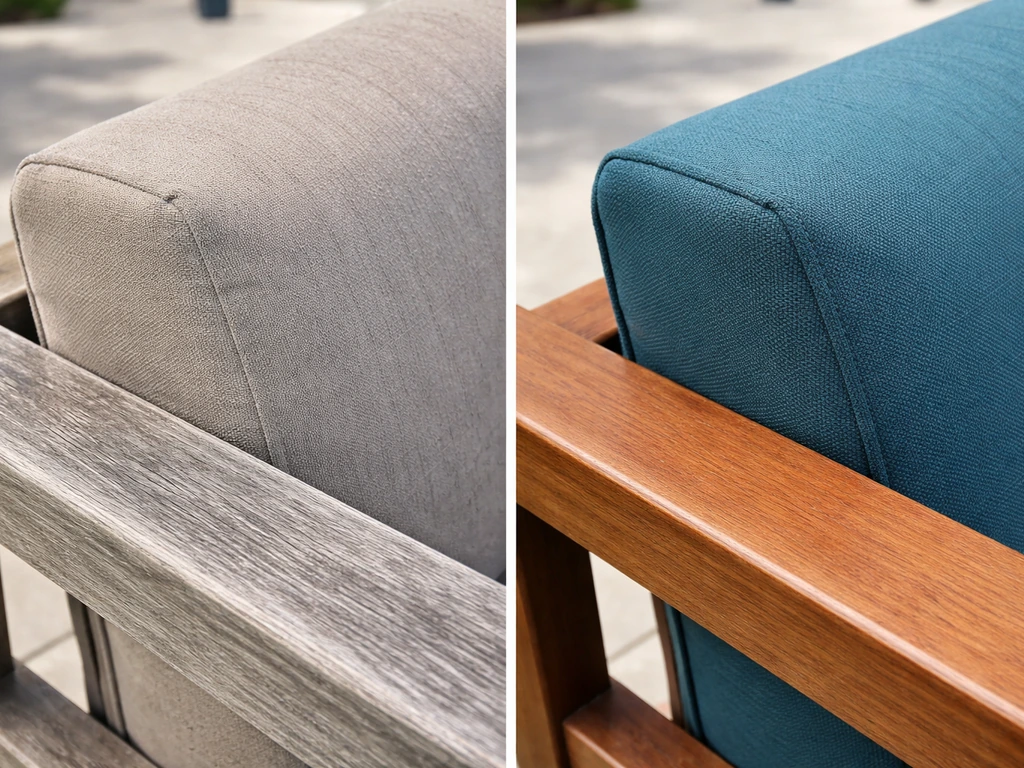
UV radiation attacks outdoor furniture from two angles at once: it breaks down the pigments that give color, and it degrades the binders, resins, and fibers in the material itself. The color shift happens first and is the most obvious sign, but the structural damage underneath is the part that actually shortens a piece's life.
Here is what to look for on each material type before you start treating anything:
- Metal (powder-coated aluminum, wrought iron, steel): Look for a whitish, powdery film you can rub off with a finger. That is chalking, and it means the protective coating's binder is breaking down from UV exposure. You may also see loss of gloss and slight color shift before any chalking appears. Left untreated, the coating eventually becomes brittle and cracks.
- Wood: A dull, washed-out, grayish surface means the protective finish has broken down and bare wood fibers are weathering. If you run your hand across it and it feels rough or furry, the UV degradation is already into the wood surface itself.
- Plastic and resin: Fading is the first sign, but the more serious red flag is a slightly brittle or chalky texture. Once plastic starts feeling fragile or shows surface cracks, polymer degradation is already underway and you cannot fully reverse it.
- Wicker and rattan: Look for bleached color, brittleness in individual strands, and small splits or breaks in the weave. Natural rattan is especially vulnerable because UV dries out the core fibers.
- Fabric and cushions: Uneven fading (especially on the tops of cushions and the back of seat cushions that face upward) is the tell. The fabric may also feel stiffer or thinner in heavily exposed areas.
- Vinyl and faux leather: Cracking, peeling, or a dry, stiff feel rather than the original supple texture. UV removes plasticizers from vinyl, which is what causes that brittleness.
The parts of any piece that face directly upward (tabletops, cushion tops, armrests) take the most abuse because they get direct overhead sun for the longest stretch of the day. Always start your inspection there.
Choose the right shade for your patio setup
Shade is your first and most effective defense because it reduces UV load before it ever touches your furniture. Everything else you do (covers, protectants, sealers) buys you more time, but shade buys you the most. Here is how to think through your options:
Furniture placement
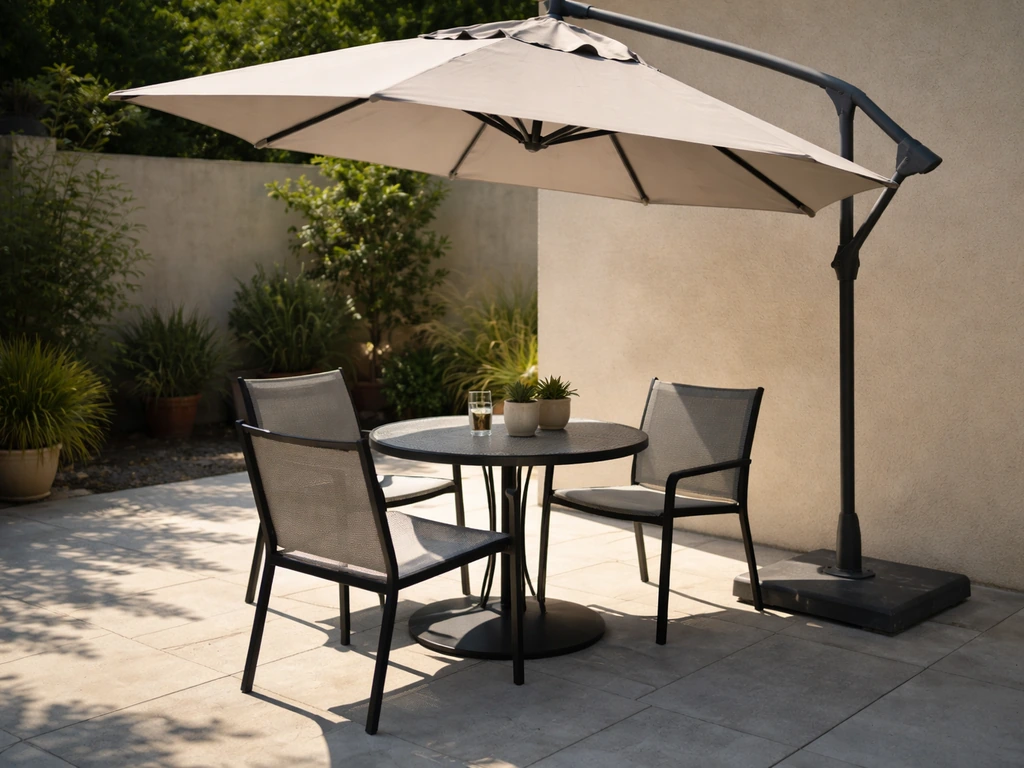
This is the free fix that most people overlook. Direct south-facing sun exposure (in the Northern Hemisphere) is the most intense. If you can position your furniture so a wall, fence, or existing tree canopy blocks the midday sun between roughly 10 a.m. and 3 p.m., you cut the UV load dramatically without spending anything. Even a partial canopy overhead makes a real difference.
Patio umbrellas
A good cantilever or market umbrella with a UPF 50+ rated canopy is the most flexible option because you can angle and move it as the sun shifts. Look for solution-dyed acrylic fabric (like Sunbrella) rather than pigment-printed polyester. Solution-dyed fabric has color baked in all the way through, which means it resists fading far longer than surface-printed alternatives. Replace the canopy when it starts to fade noticeably, because faded canopy fabric offers less UV protection even if it is still physically intact.
Shade sails
Triangle and rectangle shade sails are a budget-friendly middle ground. A decent HDPE knitted shade sail (the kind with tiny holes rather than a solid sheet) costs $30 to $100 for a 12-by-12-foot size, blocks 90 to 95 percent of UV rays, and allows air to flow through so heat does not trap underneath. The key installation detail: pull it tight. A loose sail flaps in the wind and tears at the attachment points within a season. Attach to posts, a wall anchor, or a sturdy pergola beam using stainless steel turnbuckles that let you tension the sail properly.
Pergolas and permanent structures
A pergola with a louvered roof, solid polycarbonate panels, or a retractable shade cloth gives you the best long-term coverage and protects the furniture even when you are not home to close an umbrella. This is the most expensive option (DIY pergola kits start around $500 to $800, professional installs run much more), but it also protects the patio surface, the furniture, and anyone sitting there. If you are already replacing faded furniture every three or four years, a pergola can pay for itself in saved replacement costs.
Cover strategy: how to pick, fit, and use covers without making things worse
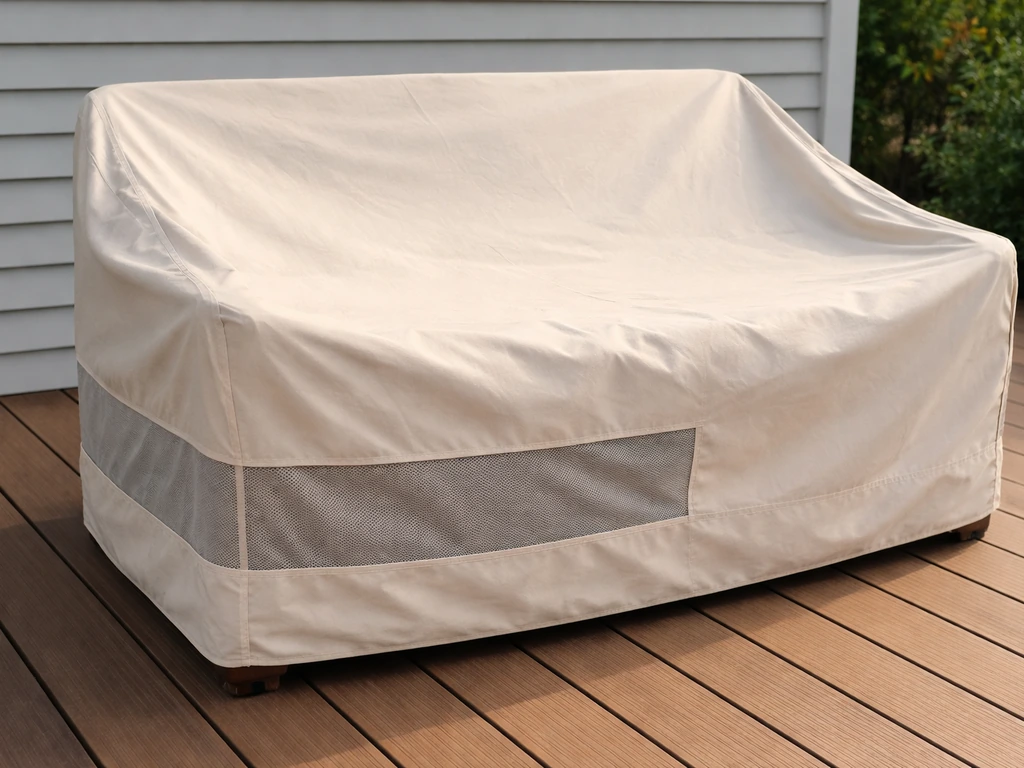
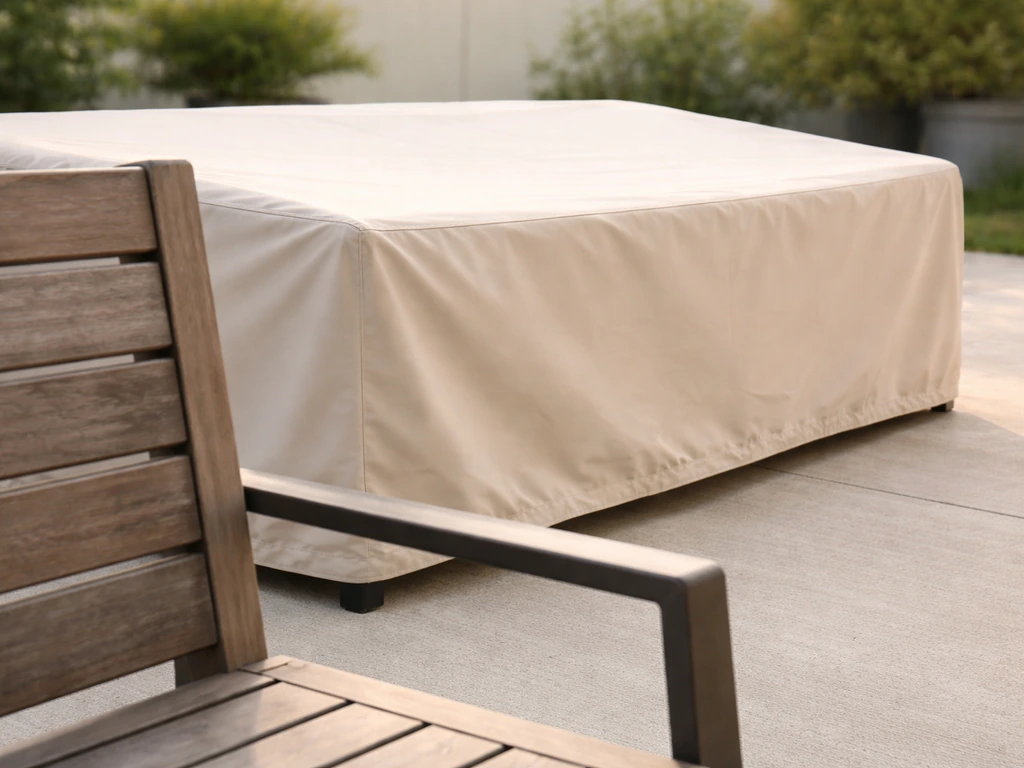
Covers protect furniture from UV when it is not in use, but there is a real trap here that I have seen ruin cushions and corrode metal: covering furniture while it is still wet or damp. Moisture trapped under an impermeable cover turns into a perfect mold and mildew incubator, and on metal frames it accelerates rust. Always make sure furniture is completely dry before you put a cover on it, especially after rain. After rain, make sure the furniture is fully dry before putting it away or covering it completely dry.
What to look for in a good cover
- Breathable fabric, not fully waterproof plastic: Vented or breathable covers reduce condensation buildup underneath. A cover does not need to be 100% waterproof to do its job. What it must do is allow moisture vapor to escape so things dry out rather than stay damp.
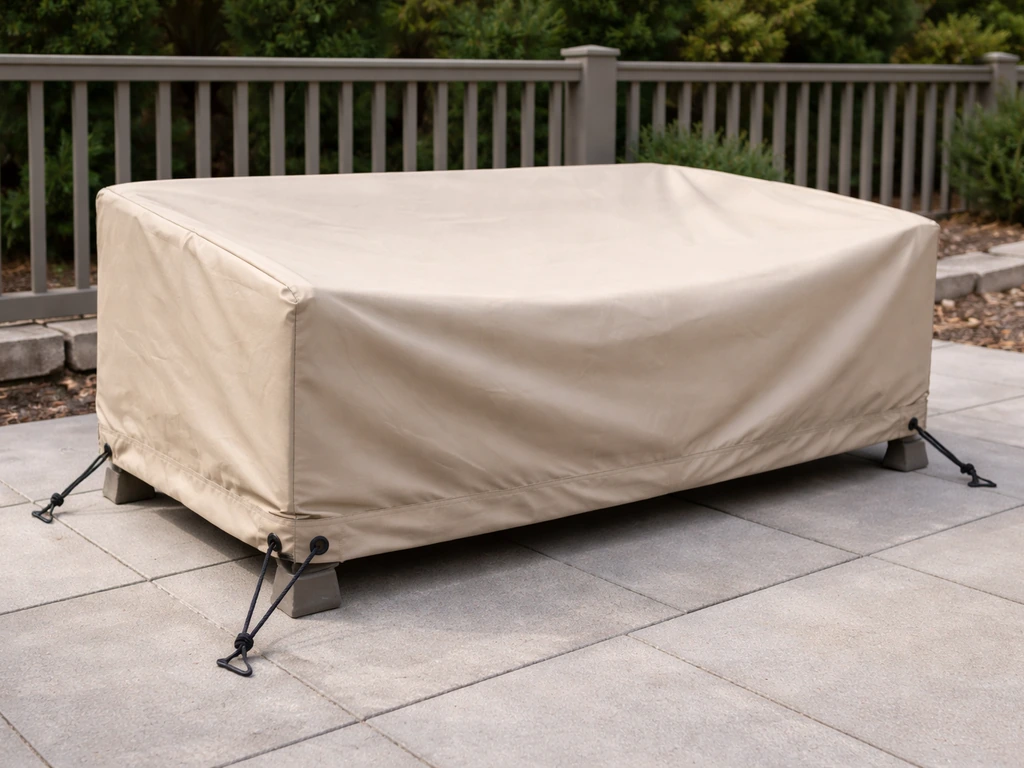
- Proper fit: A cover that is too large will flap in the wind and wear against edges, scratching finishes. Too tight and you cannot get it on and off without a fight. Measure length, width, and height before buying, and add 2 to 3 inches to each dimension for easy fit.
- Tie-downs, straps, or buckles: These keep covers on during wind. Elasticated hems work on chairs and small tables. Strap-and-buckle systems are better for larger sets.
- UV-resistant cover material: Covers made from non-UV-stabilized polyester will themselves crack and fray within a season or two. Look for 600D or higher polyester with a UV-resistant coating, or solution-dyed fabric covers.
- Ventilation grommets or vents: Some covers include small mesh vents near the bottom to allow airflow. This is a good feature to prioritize.
When to use covers and when to take them off
Use covers primarily when furniture will sit unused for multiple days, during overnight periods when dew is heavy, and during long storage. Do not put covers on right after rain. Let the furniture air-dry completely, which typically takes an hour or two on a mild day and longer in humid weather. If rain is forecast, it is fine to cover dry furniture before the rain starts. After the rain passes, pull the covers off, let everything dry, then re-cover.
Material-specific protection: what works for your furniture type
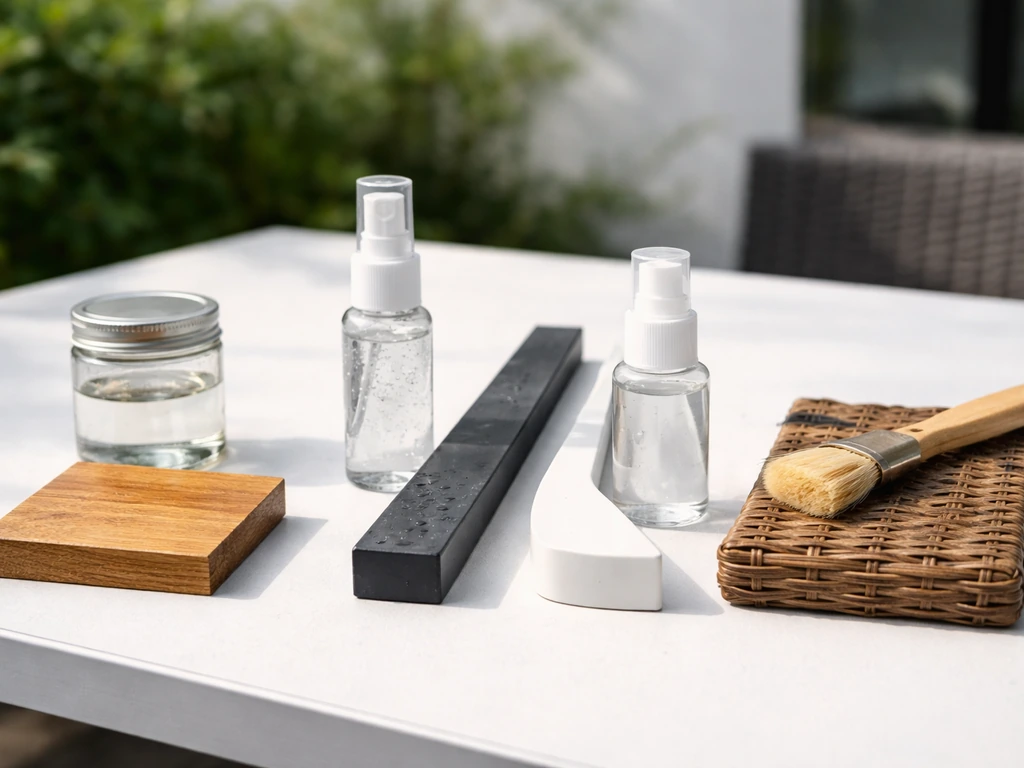
Different materials degrade differently, so a one-size-fits-all protectant does not really exist. Here is what actually works for each common patio furniture material.
Wood (teak, eucalyptus, cedar, pine)
For dense, oily hardwoods like teak and eucalyptus, use a dedicated teak sealer that contains UV inhibitors rather than teak oil. Teak oil sounds like the obvious choice but it does not provide meaningful UV protection and it actually attracts mildew over time. A good teak sealer (Semco is a well-known brand) contains both UV blockers and moisture protection. Apply it to clean, dry wood, and reapply annually or when water stops beading on the surface.
For painted or stained softer woods like pine or cedar, clean the surface first, sand lightly if the existing finish is chalking or peeling, and apply a fresh coat of an exterior stain or paint with UV blockers included. A penetrating exterior stain soaks into the wood rather than sitting on top as a film, which makes it more forgiving when you miss a reapplication year because it cannot peel the way a film-forming finish can.
That said, if you neglect a penetrating finish for two or three years and the wood has grayed out significantly, you may need to treat with an oxalic acid cleaner to remove discoloration and open up the grain before a new finish will absorb properly.
Metal (powder-coated aluminum, wrought iron, steel)
Powder-coated metal is actually quite UV-resistant when the coating is intact, but once chalking and loss of gloss appear, you need to act before the coating fails completely. Clean chalked powder coat with a mild detergent and a soft brush, rinse thoroughly, and then apply a paste wax (automotive paste wax works well) or a dedicated powder coat protectant. This fills in micro-surface pores and gives the coating a new barrier against further UV attack.
For wrought iron and bare steel, the sun concern is secondary to rust, but UV degrades the paint that keeps rust out, so keeping those paint layers fresh and sealed is the protection strategy. For a deeper dive on metal-specific approaches, wrought iron and aluminum each have their own quirks worth understanding separately.
If you are specifically working with aluminum patio furniture, focus on keeping the coating intact and reapplying the right protectant before chalking and fading accelerate damage. For a complete walkthrough, see how to protect metal patio furniture step by step.
Plastic and resin
Once plastic furniture becomes brittle and deeply cracked, there is no fixing it, so prevention is everything here. A UV protectant spray like 303 Aerospace Protectant applied to clean plastic surfaces every 3 to 6 months replenishes the surface and dramatically slows UV-driven polymer degradation. This is genuinely one of the best dollars-to-results products available for outdoor furniture. Apply it, let it soak in for a minute, then wipe completely dry with a clean cloth. If plastic chairs still look faded but are not yet brittle, you can restore a reasonable amount of color and sheen with a plastic restorer product before applying the UV protectant on top.
Wicker and rattan
Natural rattan needs to stay out of prolonged direct sun and should be kept on a covered porch if possible. For sealing natural wicker, a clear penetrating sealer designed for wood works well. Apply it with a brush, working it into the weave, and reapply every year before the hot season. Synthetic resin wicker (HDPE or PE wicker) is far more sun-resistant but still benefits from periodic cleaning and a UV protectant spray. The main threat to synthetic wicker from sun is color fading rather than structural failure.
Fabric, vinyl, and faux leather
Clean thoroughly before applying any protectant. This is non-negotiable. Dirt and residue sitting under a protectant layer will lock in stains and prevent the product from bonding properly to the fibers. For outdoor fabric slings and chair backs, a UV fabric protectant (Scotchgard Water and Sun Shield, Star Brite Ultimate Fabric Guard, or similar) applied after cleaning and once per season gives you strong UV resistance. Vinyl and faux leather respond well to 303 Aerospace Protectant, which prevents the plasticizer loss that leads to cracking. More detail on cleaning and care for cushion fabrics specifically is in the next section.
UV finishes and coatings: which product to use and how to apply it right
The market is full of sealers, stains, sprays, and oils, and the labels do not always make it easy to tell what you actually need. Here is a practical breakdown:
| Product Type | Best For | How Often to Reapply | Key Application Notes |
|---|---|---|---|
| Teak/hardwood sealer with UV inhibitors | Teak, eucalyptus, dense oily hardwoods | Annually or when water stops beading | Clean and dry wood first; apply thin coats; wipe off excess |
| Penetrating exterior stain (UV-blocking) | Cedar, pine, softer outdoor woods | Every 1-2 years | Sand or clean surface; apply to dry wood; wipe in direction of grain |
| Exterior paint or film-forming finish | Painted wood furniture | Every 2-3 years or when peeling | Sand, prime bare spots, apply in thin coats; avoid applying in direct sun |
| 303 Aerospace Protectant spray | Plastic, resin, vinyl, faux leather, wicker | Every 3-6 months | Apply to clean surface; let sit 1 min; wipe completely dry |
| Automotive paste wax or powder coat protectant | Powder-coated metal | Every 6-12 months | Apply to clean, dry surface; buff off haze when dry |
| Scotchgard Water and Sun Shield or similar fabric protectant | Outdoor fabric, slings, chair straps | After each cleaning and once per season | Fabric must be clean and fully dry; spray evenly; allow to cure before use |
| UV-blocking clear wood sealer (penetrating) | Natural wicker, rattan | Annually before hot season | Brush into weave; allow to fully dry before use |
The single most common mistake with all of these products is applying them to a dirty or even slightly damp surface. Every product in that table will perform worse, and some will actually trap problems, if the surface underneath is not clean and dry. Take the extra 30 minutes to prep properly and the protectant will last its full rated lifespan. Skip the prep and you will be reapplying in half the time.
How to apply UV sprays correctly
- Clean the surface thoroughly with a mild soap and water or the manufacturer's recommended cleaner. Rinse completely.
- Let the surface dry fully. Depending on temperature and humidity, this can take 30 minutes for fabric or several hours for wood. When in doubt, wait longer.
- Apply the product in a thin, even layer. For sprays, hold the can 6 to 8 inches away and use slow, overlapping passes.
- For products like 303 Protectant, let it absorb for about one minute, then wipe completely dry with a clean microfiber cloth. Do not leave it wet on the surface.
- For fabric protectants, allow the full cure time listed on the product (often 2 to 4 hours) before the furniture sees rain or use.
- Check coverage by watching whether water beads on the surface. If it soaks in rather than beads, the protection has worn off and it is time to reapply.
Cushion and fabric care: cleaning, protecting, and storing smart
Cushions take some of the heaviest UV abuse of anything on your patio because they sit face-up in full sun. If you want the best results, combine UV protection with proper cleaning and correct storage so the fabric stays resilient through the season protect patio furniture cushions. The fabric care strategy has three parts: clean regularly, protect after cleaning, and store correctly.
Cleaning before you protect
For most outdoor fabric cushion covers, a solution of mild dish soap and warm water applied with a soft brush, then rinsed thoroughly, handles routine cleaning. For stubborn mildew stains, a diluted white vinegar solution or a fabric-safe mildew cleaner works well. The important thing is to rinse completely, because any soap residue left in the fabric will interfere with UV protectant adhesion. After washing, hang the covers in a shaded, ventilated spot to dry rather than leaving them in direct sun, which both minimizes prolonged UV exposure right after cleaning and prevents heat from setting any remaining residue into the fabric.
Applying fabric UV protectant
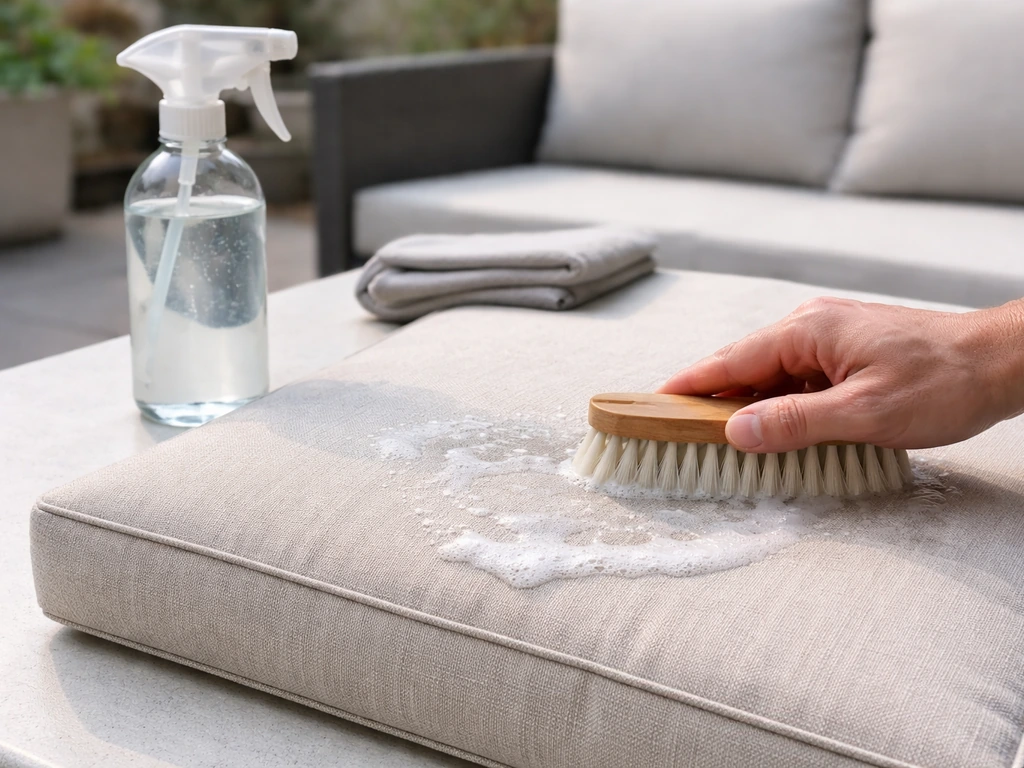
Scotchgard Water and Sun Shield and Thompson's WaterSeal Fabric Waterproofing are both practical options for outdoor cushion fabrics. Both require the fabric to be clean and thoroughly dry before application, and both recommend reapplying after every cleaning and at least once per season. If your cushions live outside all summer, apply protectant when you first put them out in spring and again after any deep cleaning. For 303 Protectant used on UV protection every 3 to 6 months, that likely means a mid-season top-up in addition to the start-of-season application.
Storing cushions to avoid damage
The most common cushion storage mistake I see is stuffing them into a sealed plastic bin or trash bag. Cushion foam holds moisture even when it feels dry to the touch, and sealing that moisture in creates the perfect mildew environment. Use a breathable storage bag or a ventilated deck box with drainage holes. Store cushions on their edge rather than stacked flat, which improves airflow between them. And never store them until the fabric is completely dry, even after a light rain.
Seasonal routine: the maintenance schedule that keeps protection working
One-time treatment does not hold up against a full season of sun. The furniture that lasts 10 to 15 years is the furniture that gets a little attention three or four times a year, not the furniture that gets one heroic treatment and then nothing. Here is the routine that actually works: Following a seasonal routine like this is one of the best ways to protect patio furniture year after year.
Spring (before the first heavy use)
- Inspect every piece for chalking, fading, cracks, or finish breakdown. Note what needs full treatment versus just a protectant refresh.
- Clean all surfaces thoroughly: mild soap and water for most materials, dedicated cleaners for mildew or heavy oxidation on metal.
- Sand and refinish any wood pieces where the existing finish has broken down. Use oxalic acid cleaner if wood has grayed significantly before applying new stain or sealer.
- Apply fresh UV sealer or stain to wood pieces. Apply paste wax or powder coat protectant to metal frames.
- Apply UV fabric protectant to all outdoor fabric, cushions, and slings after they are clean and dry.
- Check that all cover straps, buckles, and tie-downs are intact and functional.
- Reposition furniture or adjust shade sails and umbrellas to optimize coverage for the summer sun angle.
Mid-summer (around the 8 to 10 week mark)
- Reapply 303 Protectant to plastic, vinyl, and resin surfaces (recommended every 6 to 8 weeks for maximum protection).
- Check fabric surfaces: if water is no longer beading on cushions or slings, reapply UV fabric protectant.
- Look for any early signs of finish failure on wood: if areas look dull or dry, a quick wipe-on coat of your sealer can catch it before the wood starts to absorb water.
- After any heavy rainstorms, remove covers once furniture is dry, check for moisture trapped in tight spots, and allow full air-drying before recovering.
End of season (before storage)
- Do a full clean of all pieces before storing. Do not store dirty furniture because grime and bird droppings continue to degrade finishes even over winter.
- Dry everything completely. This is the single most important step before covering or storing anything.
- Apply a protective coat of sealer, wax, or protectant to wood and metal pieces before covering for the season. This gives them a fresh barrier going into the off-season.
- Store cushions in breathable bags or deck boxes, standing on edge, in a covered space.
- Cover furniture with breathable, vented covers rather than fully sealed tarps.
- Note anything that needs repair or refinishing over winter so you can tackle it before next spring.
If you do all of this, the cumulative UV damage that turns a $600 patio set into a $600 replacement every four years simply does not happen at the same rate. The materials still age, but they age gracefully rather than catastrophically. The spring inspection is the most important step in the whole routine because it is the moment you catch small problems before they become expensive ones.
FAQ
Can I apply UV protectant right after it rains, or should I wait?
Start with “dry equals clean” prep. If it rained, wait until the furniture is fully dry, then rinse off pollen and dust, and let it air for another 30 to 60 minutes if humidity is high. Applying UV protectant to damp surfaces can reduce adhesion and increase mildew risk under covers.
Is covering patio furniture all day a good substitute for shade?
Yes, but only if the cover is breathable and you keep airflow. For most patios, use covers mainly overnight or during multi-day storage, and remove them after rain so the furniture can dry. For long, sunny days, shade (umbrella, sail, pergola) usually prevents UV damage more reliably than covering alone.
How do I know when it’s time to replace a shade canopy or UV-blocking fabric?
If the fabric is already faded, don’t assume it still blocks UV. Check the canopy or fabric for uniform fading and chalky texture, and replace once it visibly loses color, because the UV protection level drops along with pigment and protective chemistry even if the fabric still looks intact.
What’s the safest way to clean patio furniture before protecting it from sun?
Use a microfiber cloth or soft brush, and avoid pressure washing unless the material manufacturer explicitly allows it. High-pressure water can force dirt deeper into seams, strip finishes faster, and damage wicker weave, powder coat texture, or cushion stitching.
When is the best time of day to apply UV protectants and sealers?
Treat in a shaded window, early morning or late afternoon, so the surface is cool and the product can cure evenly. Midday application can cause protectants to flash off or dry too fast, leading to patchiness and uneven UV resistance.
How often should I reapply UV protection, and does it differ by material?
Expect different schedules by material. Hard plastics typically need top-ups every 3 to 6 months, while many sealers and fabric protectants work closer to seasonal reapplication, plus a mid-season top-up if the item stays in direct sun all day.
Can I use regular furniture oil or conditioners to protect from sun damage?
Not usually. Many oils and restorer products improve appearance but do not provide meaningful UV shielding, and some can even promote mildew on teak-type woods. For teak, use a UV-inhibiting sealer rather than teak oil, and for other woods follow the finish type (penetrating stains behave differently than film finishes).
What if I already applied the wrong product, can I put a new UV protectant over it?
It can, if the protectant is incompatible with the previous treatment. For example, film-forming products may prevent penetrating stains from soaking in, which leads to peeling or uneven protection. If you are switching product types, lightly sand or strip according to the older product’s instructions before reapplying.
My powder-coated metal is chalky and faded, what should I do next?
First, dry the furniture, then clean off any chalking residue with a mild detergent and soft brush. After it is fully rinsed and dry, apply paste wax or a powder-coat-specific protectant. Don’t wait until rust starts, because rust prevention depends on keeping the coating layer intact.
Can UV protectant revive badly faded plastic furniture, or is it too late?
For plastic, stop if the pieces are deeply cracked or flexing poorly, because UV protectants can slow further damage but cannot restore structural integrity. For sun-faded but still flexible plastic, a restorer can improve color and sheen, then you apply UV protection on top to slow further polymer breakdown.
What’s the most common cushion storage mistake that worsens sun and mildew damage?
Foam can hold moisture even when the fabric feels dry, and stacking can trap air and speed mildew. Store cushions on their edge in a breathable bag or a ventilated container with drainage, and only store after the fabric is completely dry.
Should I check on covered furniture during humid weeks or bad weather?
Yes, especially in winter or during storms. Even if you cover furniture, check after wind-driven rain or heavy dew, then remove covers to dry. One wet week under a non-breathable cover can undo months of careful UV protection by starting mildew and accelerating metal rust.