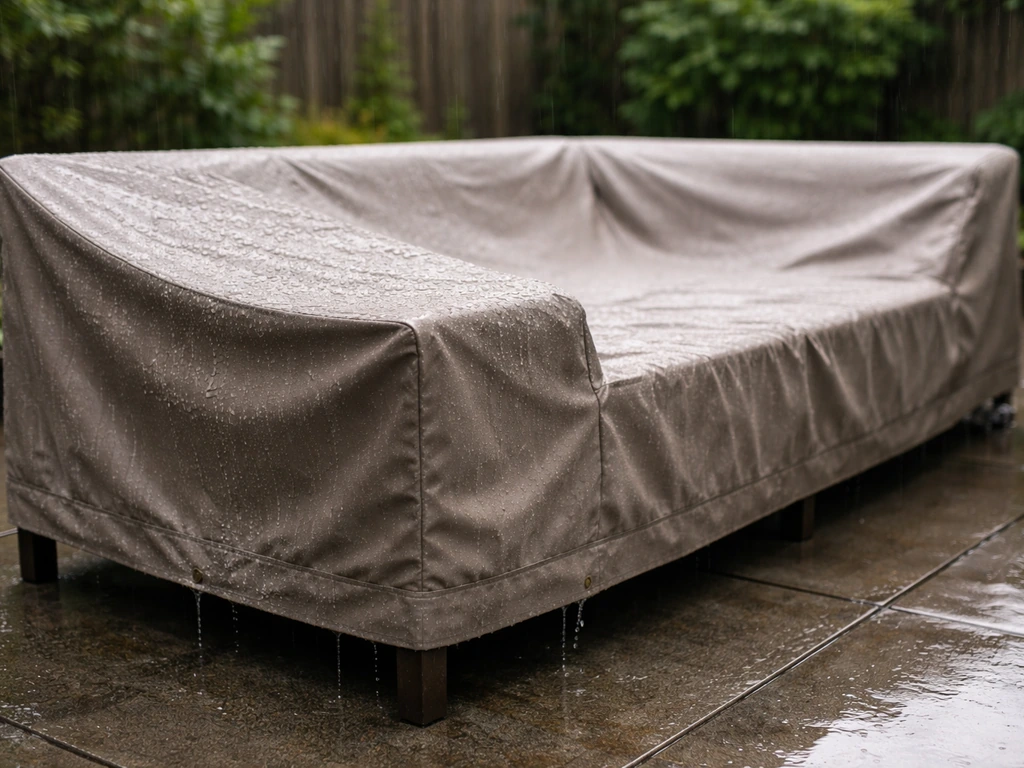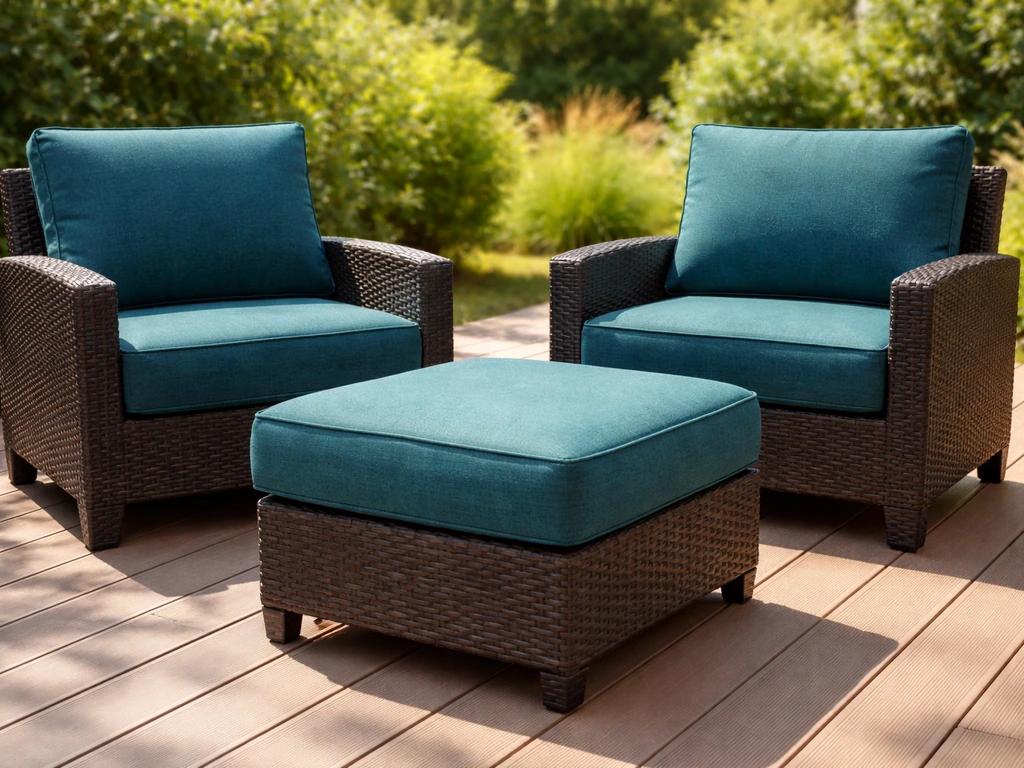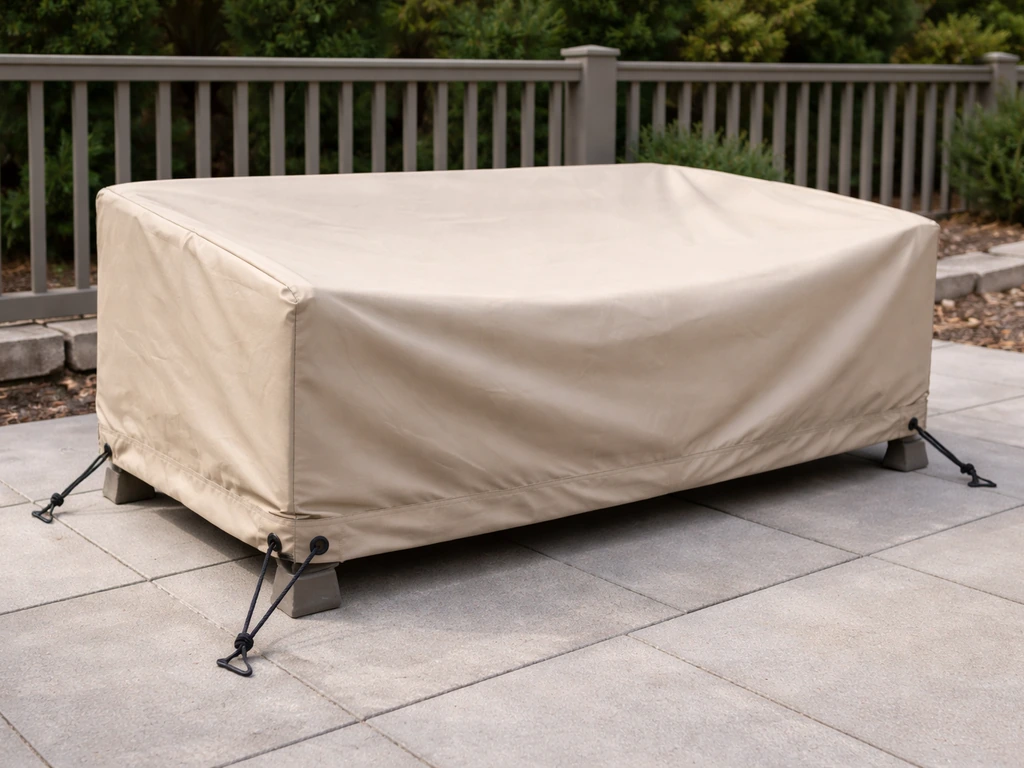
You can make durable slipcovers for patio furniture by measuring each piece carefully, choosing a weather-resistant fabric like solution-dyed acrylic, drafting simple panel patterns, and sewing reinforced seams with closures that let you pull the cover on and off easily. It takes a weekend and some patience, but the result beats buying replacement covers that never quite fit right, and it costs a fraction of what custom covers run at retail. If you prefer shopping instead of sewing, you can still find patio furniture covers by choosing the right size and weatherproof fabric for your frame and cushions buying replacement covers.
How to Make Slipcovers for Patio Furniture Step by Step
Maren Grady
19 Jun 2026
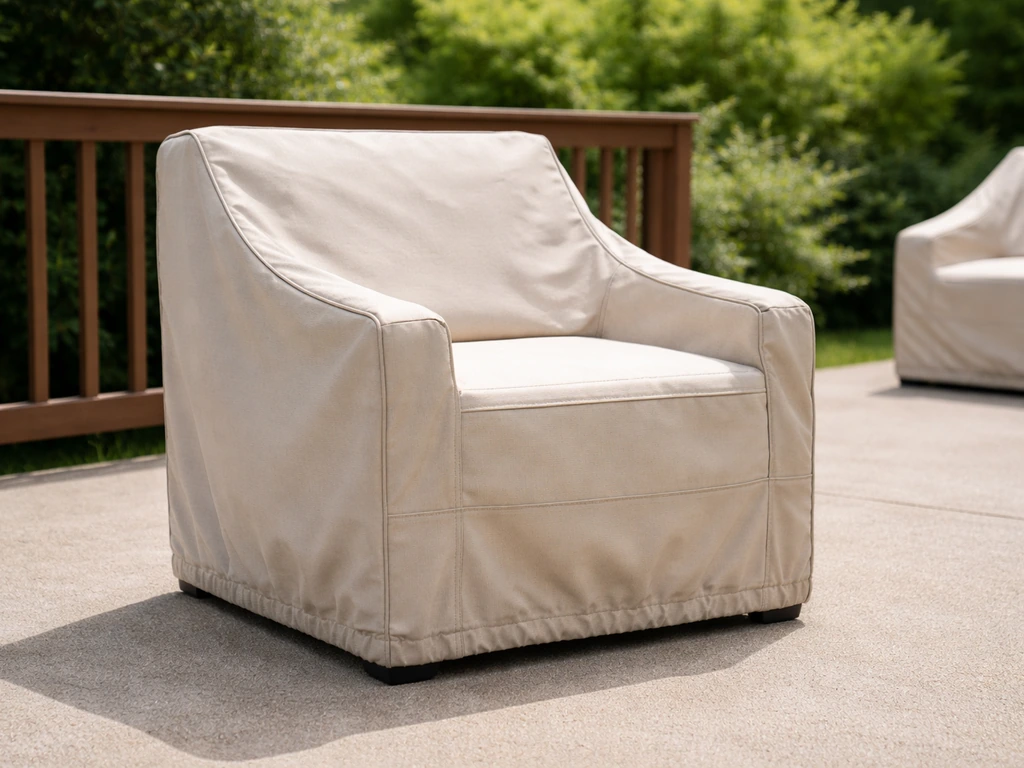
Choosing the right slipcover type for your patio furniture
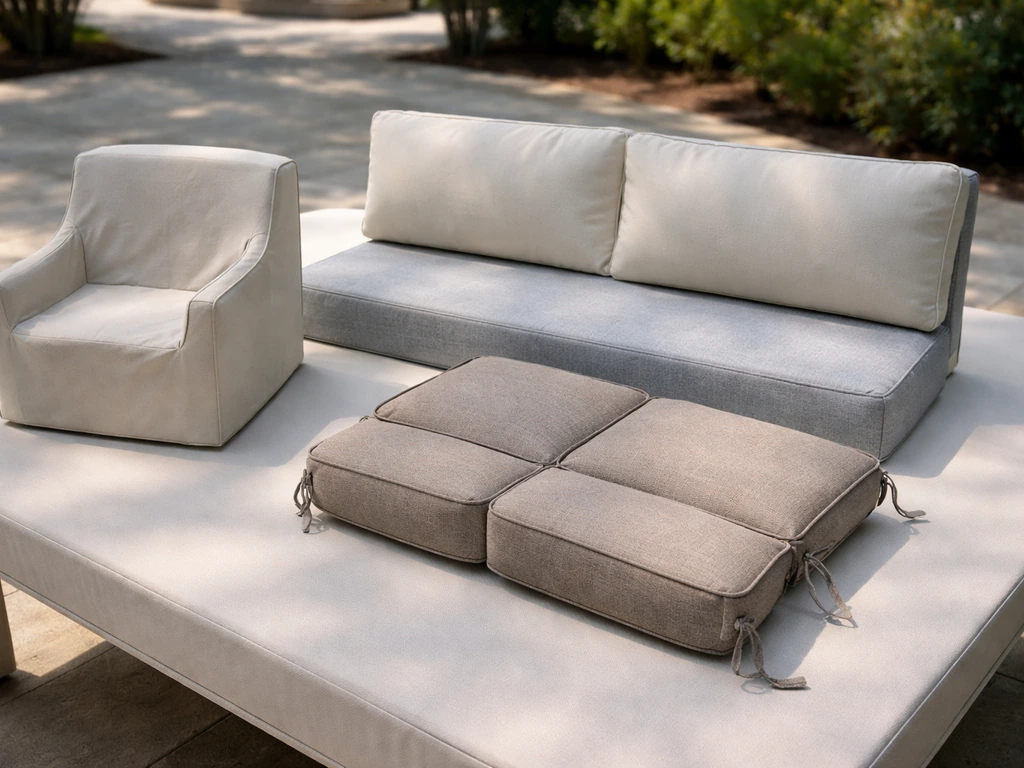
Before you cut a single piece of fabric, you need to decide what kind of slipcover you're actually making, because that shapes every measurement and material decision that follows. Outdoor slipcovers generally fall into three categories: full furniture slipcovers that wrap the entire frame and cushions together, cushion-only slipcovers that leave the frame bare and just replace worn covers on the seat and back pads, and full protective covers that drop over the whole piece for off-season storage. This article focuses on the first two, since they're the ones you'd leave on while using the furniture.
For chairs with arms and a defined back, a full slipcover works best because it tucks and drapes around the shape of the frame. For dining benches, you're usually dealing with a simpler rectangular seat, with or without a back, so a cushion slipcover or a fitted band-style cover is more practical than a full drape. Loveseats and outdoor sofas are the most fabric-intensive, and their yardage can vary dramatically depending on whether you include a skirt. Cushion-only slipcovers are the easiest starting point if you're new to sewing, and they make sense whenever the frame is in good shape but the existing cushion covers are faded or damaged.
| Furniture Type | Recommended Slipcover Style | Difficulty Level |
|---|---|---|
| Dining chair (no arms) | Seat cushion cover + back panel or full slip | Beginner |
| Armchair / club chair | Full fitted slipcover with tuck-in allowance | Intermediate |
| Dining bench | Cushion slipcover or band-style fitted cover | Beginner |
| Loveseat / outdoor sofa | Full slipcover, paneled, with or without skirt | Intermediate to Advanced |
| Individual seat/back cushions | Envelope or zipper cushion covers | Beginner |
Measuring, fit planning, and fabric math
Measurement mistakes are where most DIY slipcover projects go wrong, and I say that from experience. The most common error is measuring only the outside dimensions of the furniture and ignoring how the cover actually needs to wrap around and drop. Use a flexible tape measure and write every number down as you go. Measure twice, seriously.
Key measurements to take for chairs and sofas
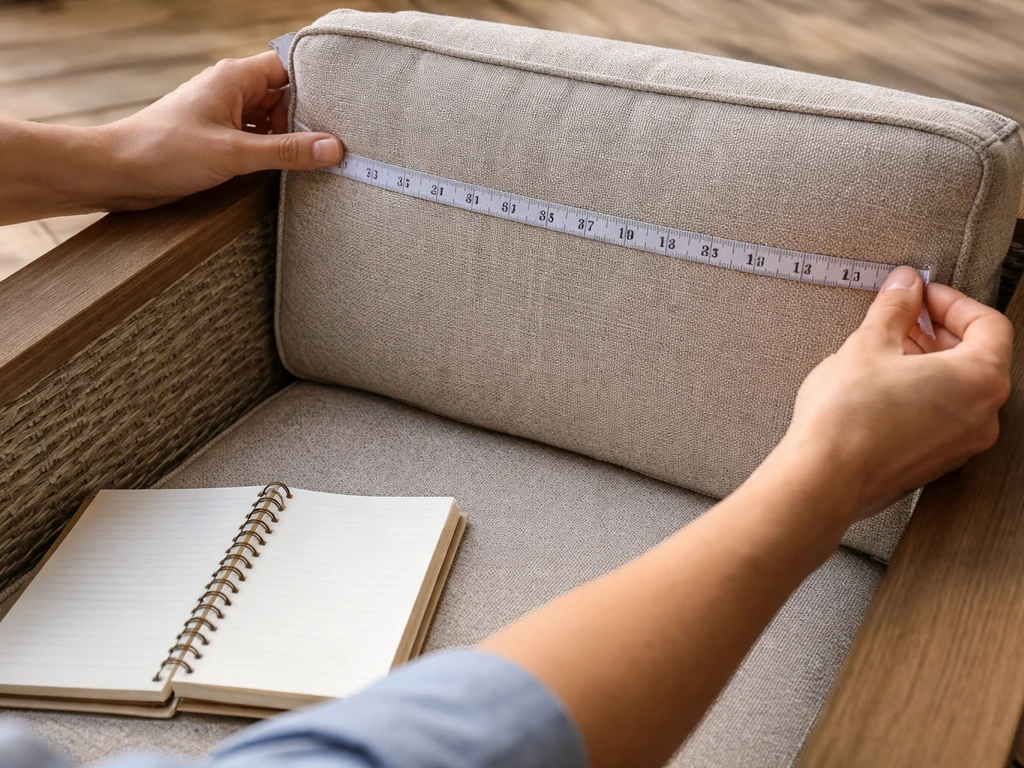
- Inside back height: from the seat surface up to the top of the back, measured on the interior face
- Inside back width: measured at the widest point between the inner edges of the arms
- Seat width: across the front of the seat, not the full frame width
- Seat depth: from the front rail or cushion edge to where the back meets the seat (not the overall front-to-back of the whole piece)
- Arm height: from the seat surface to the top of each arm
- Arm width: across the top of the arm pad
- Outside back height and width: the exterior dimensions of the back panel
- Full front-to-back depth of the whole piece: including the back of the chair to the front of the seat cushion, used to calculate the drop hem
- Drop height: from the seat rail or cushion bottom to the floor, so you know how long the skirt or side panels need to be
For bench cushions, measure the width, the length front to back, and the thickness of the cushion itself. Cushion dimensions are always Width x Length x Thickness, and the thickness matters a lot because you need to wrap around that depth. A cushion that's 4 inches thick needs 8 extra inches of fabric just to cover the sides, plus seam allowances.
How to calculate fabric yardage
Once you have your measurements, the calculation approach is panel-based. Sketch out each piece of the slipcover as a flat rectangle: the seat top, the seat front boxing panel, the back panel (inside face), the outside back panel, the arm panels, and the skirt if you want one. For each panel, add 1 inch on all sides for seam allowances, plus another inch of ease if you want the cover to slip on without a fight.
Then lay your sketched panels out on paper ruled to your fabric's width, typically 54 inches for most outdoor upholstery fabrics. Count the rows of panels you need, multiply rows by the cut length of each panel, add that all up, and divide by 36 to get yards. For a standard armchair slipcover, plan for roughly 6 to 8 yards. A loveseat or two-seat sofa typically runs 10 to 14 yards depending on skirt style.
If you're unsure about fitting pattern pieces into a non-standard width, the most practical approach is to actually lay your paper pattern pieces out on the floor at the fabric width you plan to buy, then measure the total length you've covered. That floor-layout method beats guessing every time.
One thing to flag: if you choose a fabric with a printed pattern or stripe, buy an extra half yard per repeat for pattern matching. A 6-inch repeat on a 10-yard project can easily cost you 2 to 3 additional yards if you're not careful.
Materials, hardware, and weatherproofing choices
The fabric choice is probably the single most important decision in this whole project, especially for outdoor use. Natural fabrics like untreated cotton canvas can retain moisture and become a mildew breeding ground within a single wet season. Don't use them outdoors unless you've thoroughly treated them with a water-repellent coating and are prepared to reapply it every year.
Best fabrics for outdoor slipcovers
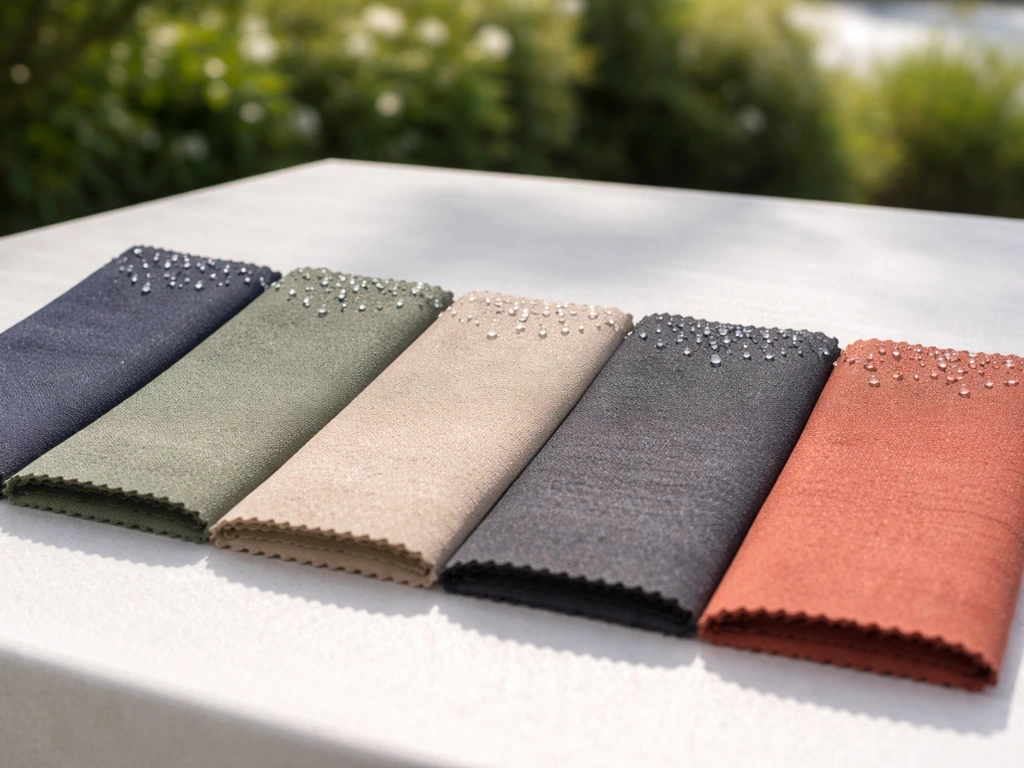
Solution-dyed acrylic is the gold standard for outdoor upholstery fabric. The color is locked into the fiber during manufacturing rather than applied on top, which means it resists UV fading for years instead of a single season. Brands like Sunbrella are the name you'll hear most, but there are other solution-dyed acrylics on the market at lower price points. These fabrics are water-resistant, mold and mildew resistant, and can be cleaned with a mild bleach solution without destroying the color. Polypropylene (olefin) performance fabrics are a budget-friendly second choice, offering decent UV stability and moisture resistance. PVC-coated polyester is more waterproof but stiffer to sew and not as breathable, which can trap moisture underneath and cause its own problems.
| Fabric Type | UV Resistance | Water Resistance | Mildew Resistance | Sewing Ease | Relative Cost |
|---|---|---|---|---|---|
| Solution-dyed acrylic (e.g., Sunbrella) | Excellent | High | High | Good | Higher |
| Polypropylene / olefin | Good | Good | Good | Easy | Moderate |
| PVC-coated polyester | Good | Excellent | Good | Harder (stiff) | Moderate |
| Treated canvas (natural) | Fair | Fair (fades over time) | Poor without treatment | Easy | Lower |
| Standard indoor fabric | Poor | Poor | Poor | Easy | Lowest |
For most DIYers, solution-dyed acrylic or a quality polypropylene fabric is the right call. If budget is tight, look for fabric remnants or off-cuts from marine canvas suppliers, since boat canvas is often the same solution-dyed acrylic material at a lower per-yard price when bought as a remnant.
Seam sealing and waterproofing hardware
Even a water-resistant fabric can leak at the seams because needle holes create pathways for water. If you want them to resist rain even longer, focus on truly waterproof outdoor fabric and seam sealing for every stress point water-resistant fabric. For cushion covers that sit directly on the seat, seam sealing is worth doing. Waterproof seam tape, applied to the inside of sewn seams with an iron, bonds into the fabric and closes those needle holes.
The key steps: make sure the fabric is clean and dry before application, keep the fabric flat without folds while pressing the tape down, and apply light tension so the tape lies smooth. Butyl rubber-backed seam tapes with a polyester fabric facing provide a durable bond and work well on acrylic fabrics. You'll find these at marine canvas suppliers and some outdoor fabric retailers.
Beyond tape, think about airflow. If your slipcover has a skirt that reaches the ground, trapped moisture under the hem accelerates mold growth on both the cover and the furniture frame. Leaving at least 2 to 3 inches of clearance between the bottom hem and the ground helps air circulate and lets the cover dry out between rain events.
Thread, needles, and other notions
- Thread: use UV-resistant polyester thread, not cotton, which degrades in sun and moisture faster
- Needles: a size 16 or 18 heavy-duty or denim needle handles outdoor upholstery weight fabrics without skipping stitches
- Zippers: use marine-grade or outdoor nylon coil zippers that won't rust; YKK #5 is a standard reliable choice
- Velcro: use outdoor-rated hook-and-loop tape, which has a stronger bond and resists moisture better than standard Velcro
- Elastic: braided elastic holds up better outdoors than knitted elastic, which absorbs water and loses stretch
- Cord or twill tape for ties: look for polypropylene or nylon webbing rather than cotton
Cutting and sewing methods for outdoor slipcovers
Making your pattern pieces
Unless you're an experienced sewer, skip trying to drape fabric directly on the furniture and instead make paper patterns first. Kraft paper or brown packing paper works great. Cut out rectangles for each panel using your measurements plus seam allowances, label every single piece (inside back, outside back, seat top, seat front boxing, left arm top, and so on), and mark which edge is the top. Then do a dry run by taping the paper panels together with masking tape and placing the paper mock-up over the furniture. This is where you catch sizing mistakes before they happen in expensive fabric.
For furniture with curves, like rounded chair backs or barrel-shaped arms, you'll need to cut notched or curved edges into your pattern and add ease. Transfer the curve by holding the paper against the furniture and tracing with a pencil, then smooth the line. Add at least 1 inch of seam allowance along every curved edge because curves eat seam allowance faster than straight seams.
Cutting the fabric accurately
Lay your fabric on a flat, clean surface and secure the pattern pieces with fabric weights or straight pins. Cut with sharp fabric scissors or a rotary cutter and cutting mat. Outdoor upholstery fabrics are dense, so don't try to cut multiple layers at once unless you have a very sharp rotary cutter and a firm hand. Single-layer cutting is slower but more accurate. Mark each cut piece immediately with a fabric marker on the wrong side so you know exactly what it is.
Sewing techniques that hold up outside
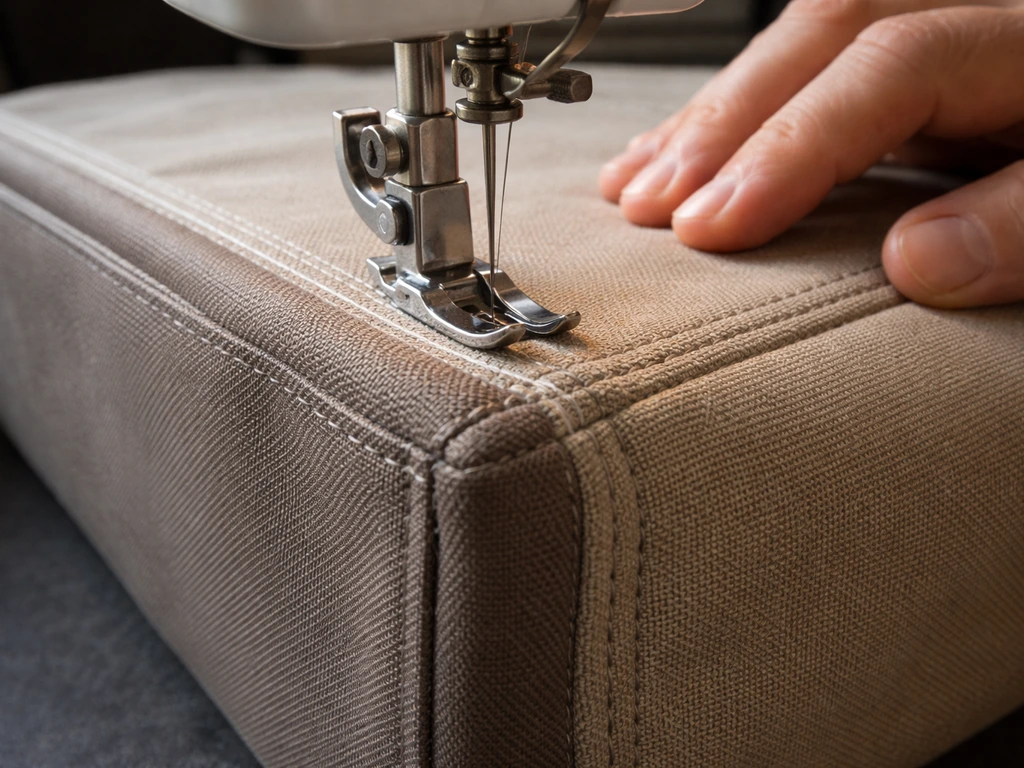
Use a stitch length of 3. 0 to 3. 5mm for most seams on medium-weight outdoor fabric, and move up to 4. 0mm for very heavy materials.
A standard straight stitch is fine for most panels, but at stress points like corners and where the seat meets the arm panels, backstitch thoroughly or use a double row of stitching. For the main seams, a flat-felled seam or a twice-sewn seam with the raw edges folded in and topstitched gives you durability that a single-pass seam won't.
If you have access to a serger or zigzag stitch, finish all raw edges to prevent fraying, even on synthetic fabrics that technically don't fray as fast as cotton, because wind and washing still work the edges over time.
Boxing seams, which join a flat top panel to a vertical side panel to wrap around a cushion's depth, are the trickiest part of cushion slipcovers. Pin the boxing strip to the top panel at each corner, clip the boxing strip seam allowance at the corners so it can pivot, and sew slowly through the corner. Rushing corners is how you end up with puckered, bunched fabric at every edge of the finished cushion.
Adding closures, stretch, and details
A slipcover without a good closure system is frustrating to use and won't stay put in any kind of wind. There are a few ways to handle this, and the right choice depends on the furniture shape and how often you'll be removing the cover.
Zippers
Zippers are the cleanest solution for cushion slipcovers. Position the zipper along the back bottom edge of a seat cushion cover, or along the back seam of a chair back cover. An invisible zipper gives a polished look, but for outdoor use a standard nylon coil zipper is actually more durable because it handles UV exposure and repeated use better. Install the zipper before sewing the boxing seam closed, and make sure the zipper pull is on the outside so you can actually reach it after the cushion is in place.
Ties and drawstrings
For full chair slipcovers, fabric ties at the back legs and under the seat are the traditional method, and they work well for keeping the cover from shifting. Cut ties from the same fabric (about 1.5 inches wide, folded and sewn into a tube, then turned right-side out), or use pre-made polypropylene twill tape. Attach ties at the back corners of the seat, at each back leg, and optionally at the front corners under the seat for a chair that tends to slip. Drawstrings threaded through a folded hem along the bottom edge are useful for bench covers, letting you cinch the cover under the bench frame.
Elastic and Velcro
A channel of braided elastic sewn into the bottom hem of a chair seat cover creates a fitted, chair-hugging edge that won't blow off in light wind, similar to how a fitted sheet works. Use 1-inch braided elastic and leave a 2-inch opening in the hem channel so you can thread the elastic through and adjust the tension before closing it up. Velcro tabs are great for joining the back panel of a full slipcover at the back legs, giving you a flat closure that lies flatter than a zipper along a structural edge. Sew the hook side to the outer panel and the loop side to the underlap so the rough Velcro face doesn't scratch the furniture frame.
Hems that last
Finish every hem with a double-fold: fold the raw edge under by half an inch, then fold again by an inch, press with an iron at a low synthetic setting (no steam, which can distort some outdoor fabrics), and topstitch at about 1/4 inch and 1 inch from the edge with a 3.5mm stitch. That double-topstitched hem resists unraveling and handles washing without rolling or curling. On the bottom hem of a skirt or full cover, a row of topstitching at the very edge and a second row 1 inch up both add durability and keep the hem from catching on the furniture as you pull the cover on.
Putting on the cover, testing fit, and finishing touches
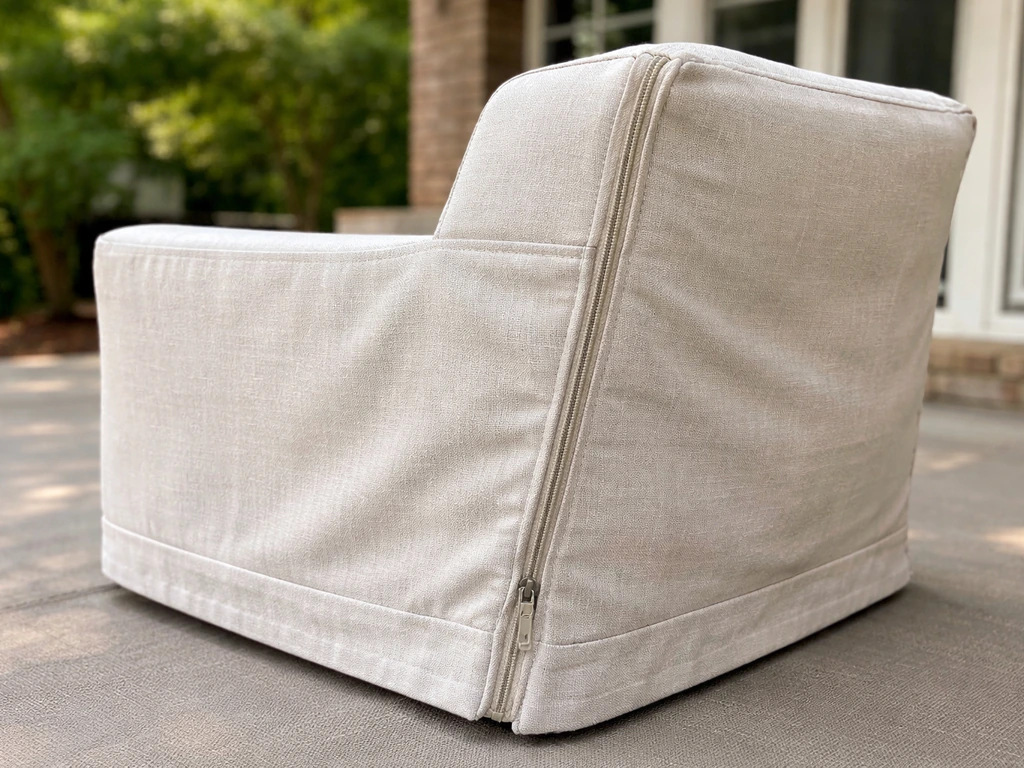
The first time you put a homemade slipcover on, expect to make some adjustments. That's not failure, that's the process. Start by placing the cover over the furniture without fastening anything, then work the fabric into place from the top down. For chair slipcovers, tuck the back panel into the crevice between the seat and back first, then smooth the side panels down and tie or close the back. Wrestle the corners into position before you stress about the hemline.
Once it's on, check these things: the seams at the cushion top should sit at the edges of the cushion, not floating up above them or buried under the cushion weight. The back panel should reach fully to the floor or your intended hem height without pulling tight. The arm panels should lie flat without gathering. If anything is pulling, note where and by how much. Pin the excess or mark where you need to let out a seam, then take the cover off and adjust before it sets into a stress pattern.
For finishing touches that make the cover look intentional and stay in place: add a small strip of Velcro or a hook-and-eye to any gap at the back where the two panels meet. If the cover migrates forward when someone sits down, add two more ties anchored to the back legs of the frame. If the bottom hem balloons in wind, sew small lead weight tape into the hem channel, the kind used in drapery, which you can find at fabric stores and online.
Care, cleaning, and seasonal storage tips
Good fabric and good sewing only take you so far if you don't maintain the covers. The good news is that solution-dyed acrylic fabrics are genuinely low-maintenance compared to most outdoor textiles.
Regular cleaning routine
For routine dirt and surface grime, brushing the fabric dry first and then rinsing with a garden hose handles most of it. For stubborn stains or mildew spots (which grow on dirt and debris left on the fabric surface, not on the acrylic fiber itself), mix 1 cup of bleach and 1/4 cup of mild liquid soap per gallon of water. Apply the solution, let it soak for 15 minutes, scrub gently with a soft brush, then rinse thoroughly until no soap residue remains. Soap left in the fabric attracts more dirt.
Always let the covers air dry completely before folding or storing them. This is non-negotiable. Do not put outdoor acrylic fabric in a machine dryer; the heat can distort the fabric and degrade the fibers. Hang the covers over a railing or lay them flat on a clean surface in the sun. If you've had the covers dry-cleaned for any reason, be aware that the process can strip the water-repellent finish, so you may need to apply a spray-on water repellent treatment afterward to restore that protection.
Mildew prevention between uses
- Never fold or store covers while damp, even slightly; one damp storage session can set a mildew problem that's hard to fully reverse
- If you leave covers on the furniture during rainy periods, make sure the hem design allows airflow underneath so moisture doesn't pool
- Shake or brush off pollen, leaves, and debris regularly because organic matter sitting on the fabric surface is where mildew starts
- In humid climates, remove covers every few weeks to let the furniture frame and the cover both dry out fully
Seasonal storage at the end of the outdoor season
Before storing slipcovers for winter, wash them with the bleach and soap solution described above, rinse thoroughly, and let them air dry completely, at least 24 hours in a dry environment. Fold them loosely rather than tightly compressing them, since hard folds in the same spot season after season can crack coatings and weaken seams over time. Store in a breathable fabric bag or a pillowcase, not a sealed plastic bag, which traps any residual humidity and encourages mold. A cool, dry indoor location is ideal. If you live somewhere that stays humid year-round, tuck a silica gel packet into the storage bag.
If you're planning to make dedicated off-season protective covers as a separate project from your slipcovers, that's worth doing since slipcovers aren't designed for the same total-protection role as a heavy-duty drop cover. The two serve different purposes and are worth having separately. Similarly, if you want to customize the color of your finished slipcovers down the road, there are specific dyeing processes that work on outdoor-grade synthetic fabrics, though it's a more involved process than standard fabric dyeing.
The whole project, from measuring to final fitting, realistically takes a full weekend for one chair or a couple of cushions, and closer to two to three weekends for a loveseat or full sofa set. Once you have the pattern and yardage planned, use these steps as your guide for how to make your own patio furniture covers for each piece you own. Budget a few extra hours for the inevitable seam adjustment on the first piece. Once you've made one slipcover and worked through the fit on your specific furniture, every subsequent piece goes faster because you already know the quirks. That first one is the investment.
FAQ
Can I make cushion-only slipcovers instead of full covers for outdoor chairs?
Not always. Cushion-only covers work when your frame is solid and the cushion shape has not collapsed, but full slipcovers help when the frame shows wear, the chair back contour is irregular, or you need a wind-resistant system that covers more than just the seat pads. If your existing cushions are still structurally fine but the top covers are faded, start with cushion-only to reduce yardage and fitting complexity.
Do I need to add ease to my measurements for patio slipcovers?
You should still allow for removal. Outdoor slipcovers need an ease margin so you can get the cover on over slightly out-of-square frames and cushions, plus seam allowances for reinforced stitching. If you skip ease, you may end up with a tight cover that stresses seams at corners, then puckers or tears sooner when the furniture shifts.
How do I avoid the most common fit problem with bench cushions (being too short at the sides)?
Measure cushion thickness and wrap depth carefully, then test with paper first. A good rule is to account for the extra side coverage from thickness plus the way the cover bridges from the cushion top to the boxing seam. If your fabric is patterned or stripe-matched, the added panel length can also change where stripes land at seams.
What should I do differently when my outdoor fabric has stripes or a repeating print?
If you have a patterned fabric, pre-check repeats before cutting. Plan yardage based on the repeat size, and when laying out panels, try to align the pattern direction consistently across major visible surfaces (seat top, front boxing, outer back). Mismatched repeats usually look fine on inside panels but become obvious on front-facing areas.
Where should I place a zipper so it stays reachable after the cushion is on?
If the zipper is hard to reach, it can be worse than no zipper. Position the zipper so the pull stays accessible when the cushion is installed, commonly along a back edge where you can grab it without dismantling the cushion. Also confirm that the zipper placement will not interfere with boxing seams, stitch lines, or any tie points.
Which closure system works best if I plan to take the covers on and off often?
Many DIYers choose one closure type and later regret it when wind or fit issues appear. For full chair slipcovers, ties and elastic edge channels both help movement control, but they behave differently: ties secure at points, elastic stabilizes the bottom edge. If you frequently remove covers, choose closures that let you remove in minutes without unthreading long drawstrings.
Will the bleach-and-soap mildew clean damage the color or leave residue?
Test it on a hidden seam allowance first, then re-check after your first washing. Even though solution-dyed acrylic is colorfast outdoors, bleach-and-soap cleaning can gradually lighten some prints, especially if the fabric has additional coatings. Rinse very thoroughly, because soap residue attracts dirt and can make “clean” areas look dirty again faster.
Can I machine-dry outdoor slipcover fabric after cleaning?
Drying method matters. Heat from a dryer can warp panel shapes, shrink slightly, or loosen coatings, which then shows up as looseness at hems and stress points. Air drying flat or over a railing helps the cover maintain its geometry, especially for skirts and long chair backs.
What should I do if my slipcovers were dry-cleaned and now they shed water less?
Yes, but only if you reseal seams and restore repellent finish where needed. If fabric is cleaned professionally, the process can strip the water-repellent treatment, so water may start beading less effectively. After dry-cleaning, apply a spray-on water repellent made for synthetics and test on a small area before coating the whole project.
How should I store patio slipcovers to prevent mildew and cracking?
Avoid tight, repeated creases during storage. Loosely fold or roll the covers so you do not create permanent fold lines that can crack coatings over the season. Also store in a breathable bag, and if your climate is humid, add a silica gel packet or increase airflow to reduce condensation-driven mildew.
When is it worth adding lead weight tape to the hem of a skirted slipcover?
Lead weights in the hem are most helpful when wind lifts a skirt or lower edge. If you insert drapery-style weight tape, place it so it runs continuously along the hem channel, then ensure the channel closes without puckering. Weights reduce billowing, but they do not replace proper clearance for airflow under skirts.
If I already have store covers, how do I confirm their size will match my DIY measurements?
Yes, but keep it practical. Custom matching to specific upholstery dimensions is ideal when cushions are oddly sized or have specialty shapes, but if you are switching from store-bought covers, compare both frame size and the cushion depth, not just the “chair size” label. Most buying mistakes happen when the cover is sized by overall length without considering how it needs to wrap and drop over the cushion thickness.