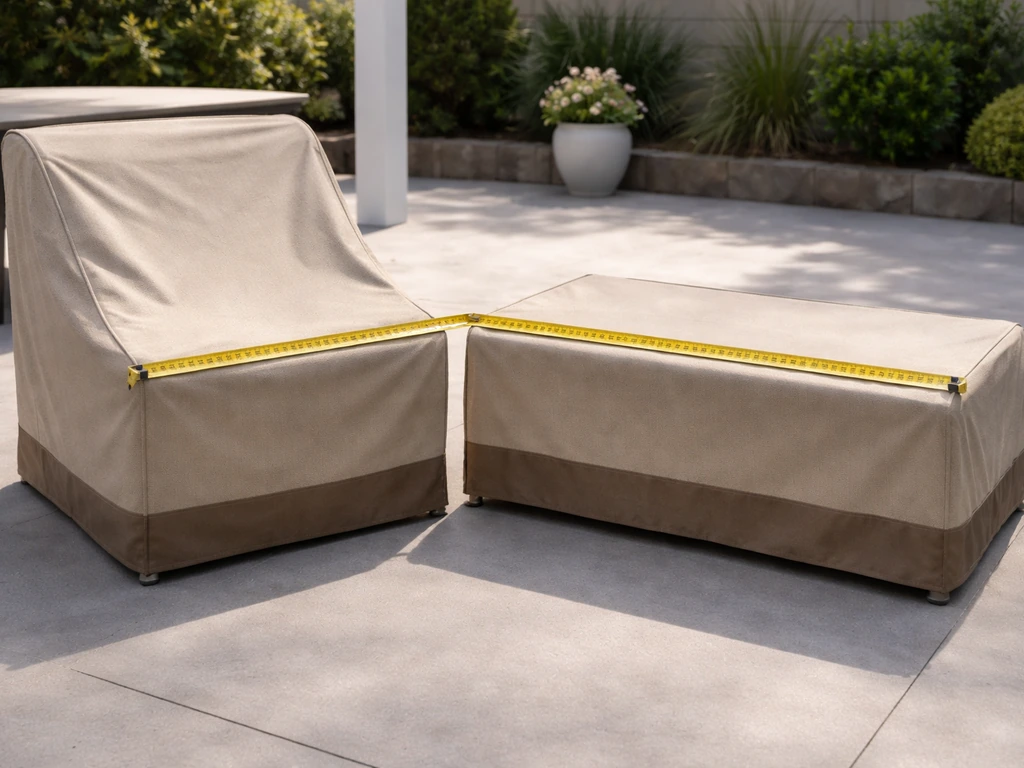
Measure the actual seating area of your chair or bench, not the frame and not an old worn cushion. You need three numbers: width (left to right across the seat opening), depth (front to back), and thickness (how tall you want the cushion to sit). Round each to the nearest half inch, record all three, and you have everything you need to order or cut the right cushion the first time.
How to Measure Patio Cushions for a Perfect Fit
Maren Grady
27 May 2026
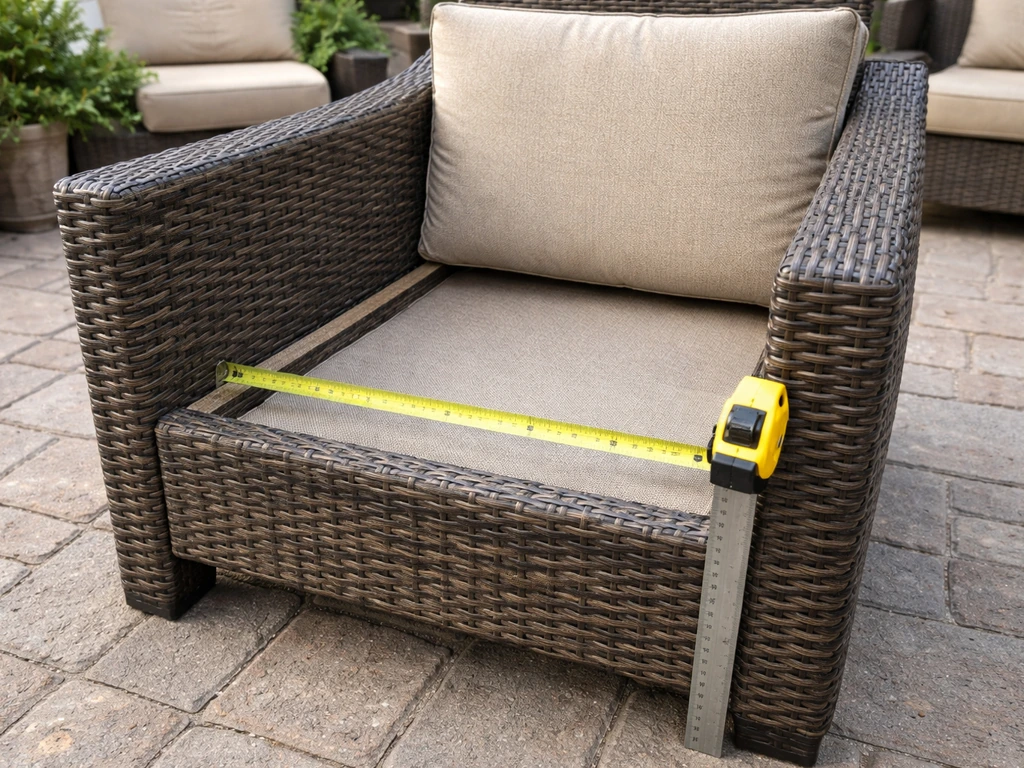
Tools you'll need and where to start
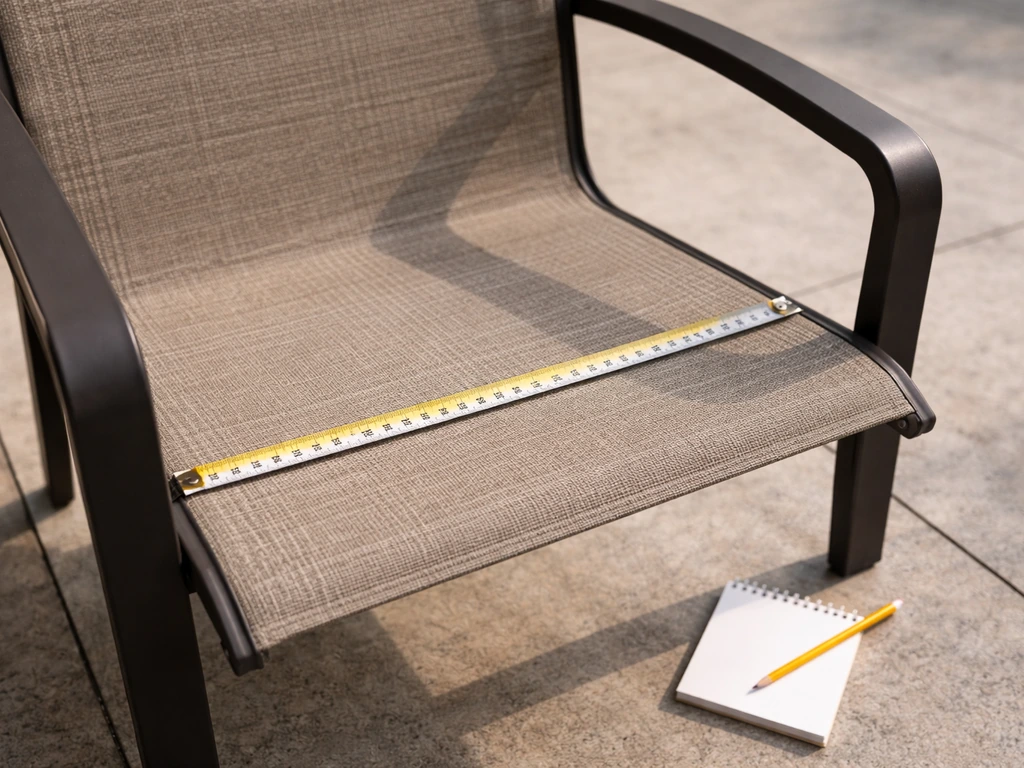
You don't need anything fancy. A flexible tape measure is the main tool, and a cloth or soft tape works better than a stiff metal one on curved surfaces. Grab a pencil and a notepad (or open your phone's notes app) and write down every number as you go. Do not trust your memory between the yard and the computer screen. You'll also want a piece of kraft paper or newspaper if you have any irregular shapes to trace for a template. That's genuinely it.
Before you measure anything, clear the chair. Remove any old cushions, pillows, and debris so you're looking at the bare seat frame. If there's an old cushion flopped across the seat and it's been sitting out for two seasons, please don't measure that cushion instead of the chair. Fabric stretches, corners round off, and foam compresses over time, so old cushion dimensions are unreliable. Measure the chair itself, and your new cushion will actually fit.
How to measure cushion length, width, and thickness
Every cushion order, whether you're buying off a catalog or having something custom made, is built around three dimensions: width, depth, and thickness. Here's what each one means and exactly where to put your tape measure.
Width
Width runs left to right across the seat. If your chair has armrests, place the tape on the inside edge of the left armrest and stretch it to the inside edge of the right armrest. You want the usable seating space, not the outer frame dimension. If there are no armrests, measure the inner seat opening from rail to rail. Round to the nearest half inch.
Depth (also called length or seat depth)
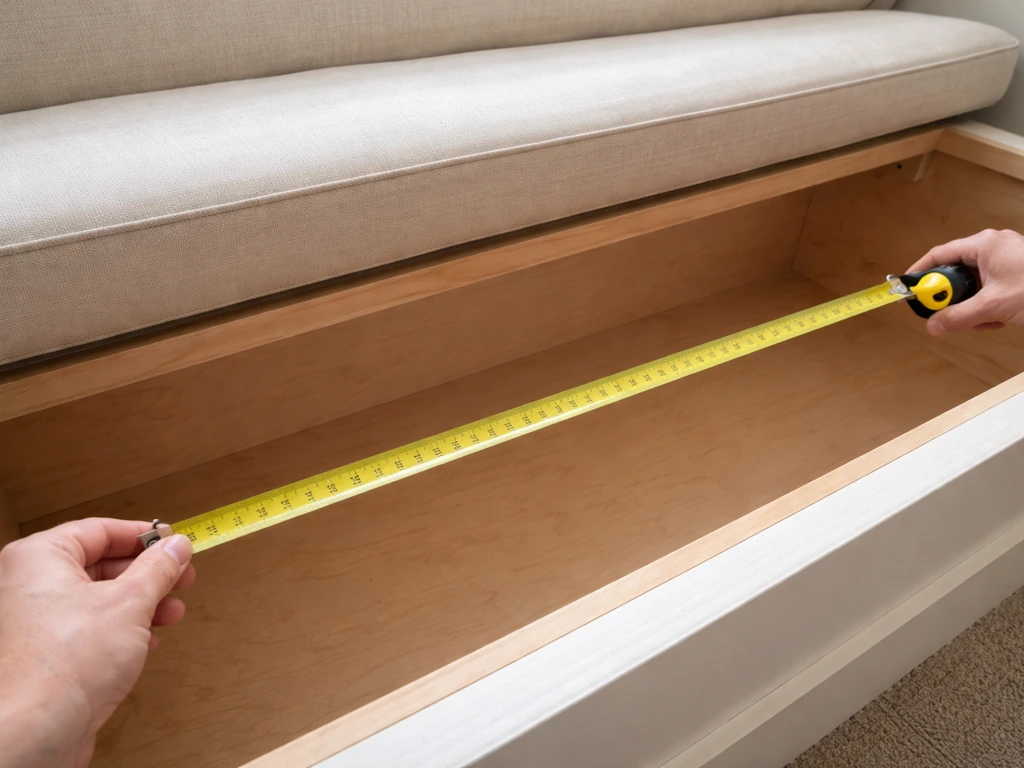
Depth runs front to back. Start at the front edge of the seat rail and measure straight back to the point where the seat meets the back of the chair. If the chair has a front lip or raised rail, measure to the inside edge of that lip so the cushion doesn't overshoot and create a trip hazard at the front. Round to the nearest half inch. Some vendors call this dimension "length," but it's the same measurement.
Thickness
Thickness is how tall the finished cushion sits, measured top to bottom through the middle of the cushion, seam to seam. This is the dimension most people forget to think about. The standard range for outdoor seat cushions runs from 2 to 6 inches, adjustable in 1-inch increments at most vendors. A 2-inch cushion feels firm and close to the seat. A 4-inch cushion feels generous and comfortable for long outdoor dinners. If you're replacing an existing cushion and it still has its shape, measure its thickness from seam to seam across the center, not at the corners where foam tends to compress first. Patio Lane also instructs measuring existing cushion thickness seam to seam to match the common replacement-cushion convention for finished dimensions measure its thickness from seam to seam across the center.
Write all three numbers down in this format: Width x Depth x Thickness. For example: 21 x 19 x 3 inches. That's the format almost every vendor will ask for when you go to order.
Measuring for bench-style vs chair-style patio cushions
The measuring process is the same for both, but the context changes a bit depending on what you're sitting on.
Chair cushions
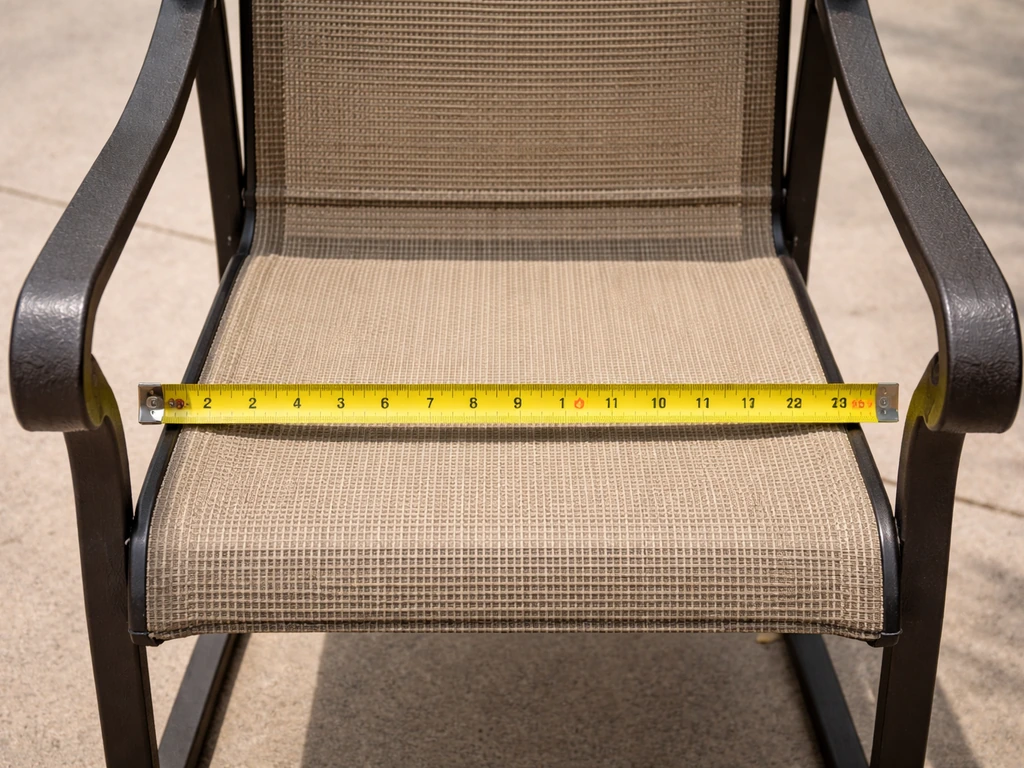
For a single patio chair, measure the seat opening as described above. If the chair also needs a back cushion, measure the back separately. Back width goes from inside armrest edge to inside armrest edge. Back height runs from the top of the seat frame (not the top of the seat cushion) up to the top of the back rail. Here's the critical detail most people miss: if you're ordering a separate seat cushion and a back cushion, you need to subtract the seat cushion's thickness from the back cushion height. Home Depot's measuring guide PDF also advises adding an extra one inch in the relevant chair-cushion context for a one-piece chair cushion total length. The back cushion sits on top of the seat cushion, so it starts that many inches higher than the bare frame. If you ignore this, your back cushion will hang down and bunch up behind your knees.
Bench and multi-seat cushions
For a bench or a loveseat-style piece, measure the full seating area as one unit if you want a single long cushion. Width runs the full length of the bench opening (this is what most people would call "length" in everyday speech), and depth goes front to back as usual. If you have a sectional or a multi-seat configuration, measure each seat section individually rather than the whole run. Seat widths vary slightly between sections, especially on older or handbuilt furniture, and a cushion that fits one section may not fit the next. Measure each one, write them down separately, and compare before you order.
Measuring for tie-on, zipper, and tufted covers, and how fit preference changes your numbers
The cushion fill and the cover are two different things, and how they connect to your chair affects your measurements. When you shop for patio furniture covers, use your measured cushion dimensions so the cover fits properly and doesn't sag or pull at the seams cushion fill and the cover are two different things. Before you finalize your numbers, decide which attachment style you're working with.
| Attachment Style | What It Affects | Measurement Tip |
|---|---|---|
| Tie-on straps or Velcro | Ties anchor through chair back slats or around frame rails | Confirm strap placement matches slat spacing before ordering; ties are typically 6–8 inches from cushion corners |
| Zipper enclosure | Zipper adds a small amount of bulk at the seam edge | Measure seam to seam on the cushion itself; zipper is tucked into the seam and doesn't add to finished size |
| Tufted (buttoned) | Buttons pull fabric inward, reducing effective cushion height slightly | Measure thickness at the center, not at the tuft points, for accurate thickness dimension |
| Slip-over / no attachment | Cushion sits loose on the frame | Add roughly 1/2 inch to width and depth if you want a snug fit that grips the seat; go true-to-size or slightly under for easy removal |
The snug vs. loose question is real and worth thinking about. A cushion cut exactly to your seat dimensions will feel tight and secure in most frames. A cushion cut a half inch under on each dimension slides in and out easily, which is nice if you're storing cushions nightly or seasonally. A cushion cut over your seat dimension will overhang and rock, and that gets annoying fast. My default recommendation: measure accurately to the half inch and order true to your measurement. If you're recovering an existing cushion insert, the same logic applies, and it's closely tied to how much fabric you'll need when you cut your pieces.
How to handle irregular frames, rounded corners, and slatted seats
Rectangular seats are easy. The real world, unfortunately, is full of rounded corners, curved backs, tapered seats, and bowl-shaped papasan chairs. Here's how to handle each situation without guessing.
Rounded corners
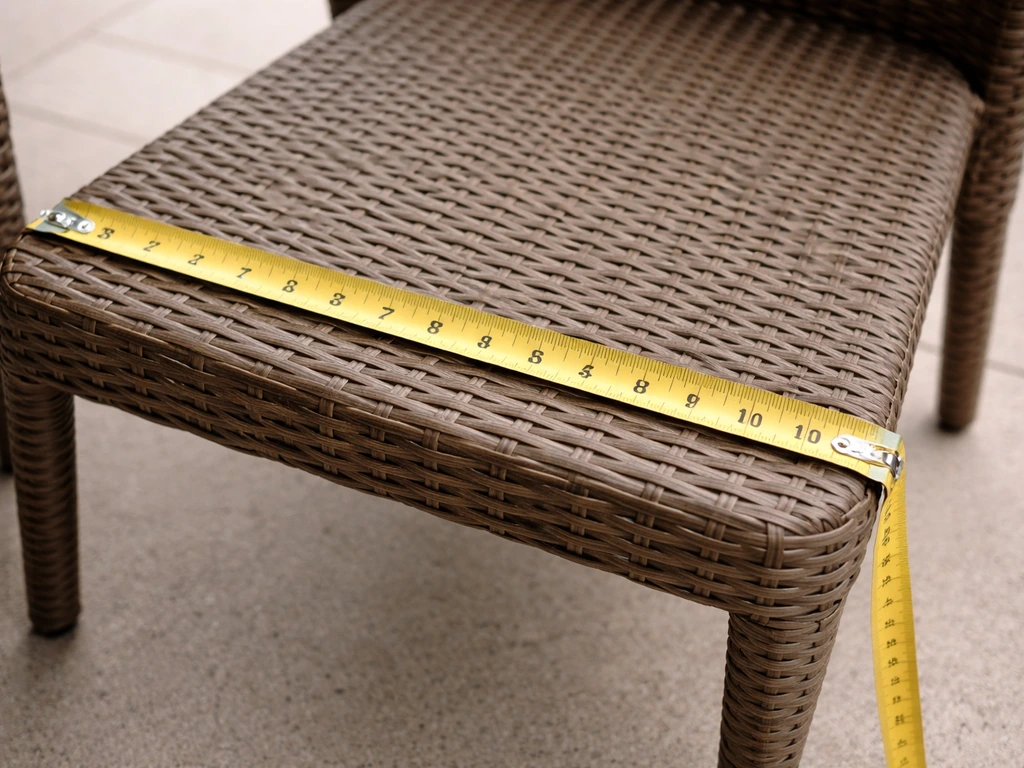
When a seat has rounded front corners (common on wicker and resin chairs), you need to measure two things: the rectangle that would enclose the full seat, and the corner radius. The corner radius is the distance from where the curve begins to the imaginary inside corner point. Measure width and depth as normal for the full rectangle, then measure the radius at each rounded corner (they may not all be the same). Provide all of those numbers to a custom cushion vendor and they'll cut the corners to match. For a DIY cut, trace the actual seat onto kraft paper to make a template you can send or use directly.
Curved or tapered seats
If your seat curves in a horseshoe or crescent shape (common on curved sectionals and some rocking chairs), measure the straight portion of the depth separately from where the curve begins. A good rule: measure from the back of the seat to the point where the seat starts to curve, record that as your straight depth, then measure the arc of the curve separately. For anything truly irregular, skip the tape measure game and make a paper template by tracing the seat opening directly. Any reputable custom cushion vendor will accept a mailed or photographed template for odd shapes.
Papasan and bowl-shaped chairs
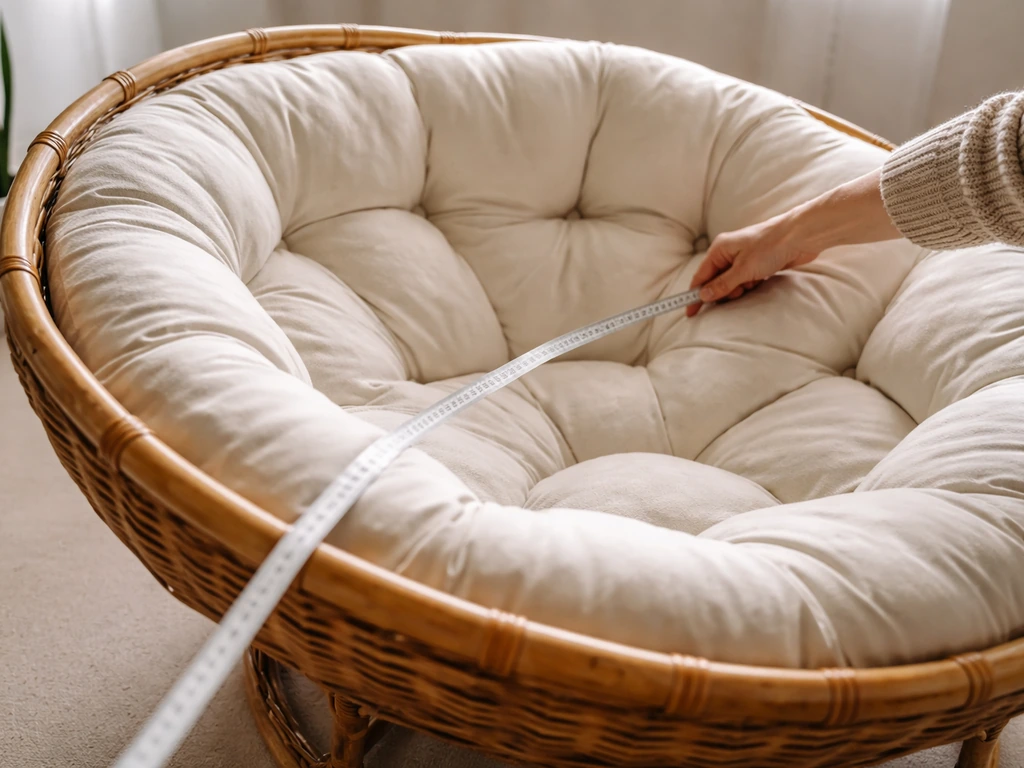
For a papasan or any deeply bowl-shaped seat, don't measure straight across the opening like you would a flat seat. Lay the tape measure along the curve of the bowl itself and measure the full arc from one edge to the other. That arc measurement is your effective diameter for the cushion. A flat measurement will give you a cushion that's too small and sits up in the bowl instead of filling it.
Slatted seats
Slatted seats (teak chairs, metal grid benches) don't have a solid surface to measure against, but the method is the same: measure the full opening from inner rail to inner rail, width and depth. The slats don't change your cushion size, but they do matter if your cushion has tie straps. Confirm the tie attachment points line up with gaps between slats so the ties can thread through cleanly. If the slat spacing doesn't match the standard tie placement, a custom order with specified tie positions is worth the extra few dollars.
Record your measurements and choose the right size (and where people go wrong)
Here's the exact checklist I use before clicking "add to cart" or cutting a single piece of foam. If you're seeing bugs in patio cushions, make sure your measurements and fit are correct so the covers seal well and leave fewer gaps for pests.
- Width: measured inside armrest to inside armrest (or inner rail to inner rail), rounded to nearest 1/2 inch
- Depth: measured front rail to back (inside edge of any front lip to back of seat), rounded to nearest 1/2 inch
- Thickness: measured top to bottom through the cushion center, seam to seam, in whole inches (2–6 inch range)
- Corner radius: only needed if corners are rounded, measured from inside corner point to where curve begins
- Back cushion height: if applicable, back frame height minus seat cushion thickness
- Attachment style: tie straps, Velcro, zipper, or none, and confirm tie spacing if applicable
- Shape note: rectangle, tapered, curved, or irregular with template attached
When you go to match your numbers to a vendor's catalog, most stock cushions are sized in half-inch increments for width and depth. If your seat measures 20.75 inches wide, round to 21 inches. If it measures 19.25, round down to 19. Most vendors have a tolerance of about a half inch in either direction for standard styles, so you have a little breathing room. Thickness is usually sold in whole-inch increments, so a seat that needs something between 3 and 4 inches has to commit to one or the other.
The mistakes I see most often
- Measuring the outer frame instead of the inner seating area: outer frame measurements make your cushion too large and it won't sit flat
- Measuring a worn old cushion instead of the chair: stretched fabric and compressed foam give you undersized numbers
- Forgetting thickness entirely and ordering a flat pad when the chair needs real support
- Ignoring the front lip or rail overhang, which causes the cushion to stick out past the seat edge and slide forward
- Not accounting for seat cushion thickness when measuring back cushion height, leaving a visible gap or causing the back cushion to bunch
- Measuring a rounded or curved seat as if it were a rectangle and ending up with a cushion that doesn't lie flat
Once you have your three numbers confirmed and your shape noted, you're genuinely ready to order or fabricate. Here are the common steps and checks for how to fix patio cushions so you can decide whether replacement is the best move. If you're buying replacement cushions, most vendors will ask for Width x Depth x Thickness in that exact order. If you're recovering your own inserts at home, those same measurements drive your fabric cutting layout. To figure out how much fabric you need to recover patio cushions, use your Width x Depth x Thickness measurements and add a little extra for seam allowance and trimming. If you’re wondering how to restuff patio cushions, the measurements you just recorded will tell you exactly how much foam and batting to cut and replace. And if your cushions have lost their shape rather than just their covers, those same numbers are exactly what you need to restuff them with fresh foam cut to spec.
FAQ
Should thickness be measured on the cushion I’m replacing, or from the frame?
Measure thickness on the bare seat frame, not on the cover or any pad underneath. If you stack a pad or liner, its height changes the finished sit level, so include that extra height in your thickness target.
What if my cushion sits on a raised lip, brackets, or a removable insert?
If the chair has removable seat inserts or a sling, measure the opening of what the cushion actually supports, not the surrounding decorative frame. For cushions that sit on brackets or a raised platform, measure to the top surface the cushion rests on so it sits flush.
Do I measure to the inside or outside edges of the seat rails?
Use inside-edge measurements wherever the cushion or cover has to fit, such as between armrest rails or inner seat rails. If a vendor asks for outer measurements, compare their photo or sizing diagram first, because cushions made to outside dimensions often end up too tight or misaligned at the seams.
When I need a back cushion, do I always subtract the seat cushion thickness from the back height?
For back cushions that are independent (not a single set attached together), confirm the “stacking” height before ordering. Subtract the seat cushion thickness only if the back cushion truly rests on top of the seat cushion, not if it hooks to the chair frame separately.
How do I measure thickness if my seat slopes or tilts forward?
If the seat has a slight slope, take at least two thickness checks across the middle (front half and back half) and use the larger value as your thickness target. That prevents a cushion that feels too low on one side and too high on the other.
Do I measure for the cover using the same width and depth as the foam insert?
If you see stitching or piping that changes the finished size, measure the inside dimensions that the cushion fill actually occupies, not the outer welt. For tight covers, confirm whether the vendor sizes the cover to finished dimensions or to fabric-cut dimensions.
My chair has tie straps, how do tie locations affect measurements?
For ties, measure where the tie attaches on the chair (distance between tie points, and their position relative to the seat edges). If tie locations vary by slat gap, request a custom tie placement, otherwise the ties may end up threading incorrectly.
Is it ever better to order one long cushion for a multi-seat bench or sectional?
Yes. Measure each section separately on sectionals or multi-seat benches, then compare the seat widths before ordering one continuous cushion. If the widths don’t match, you’ll likely need either separate cushions or a custom cut that includes step-downs.
How can I double-check my fit before cutting foam or fabric?
Do a “fit check” with a cardboard or kraft-paper mockup cut to your rounded dimensions before cutting fabric or foam. If you have rounded corners or a curve, the mockup shows whether the cushion will overhang, bind, or create gaps at the front lip.
What rounding should I use if my measurements are between stock sizes, and clearance matters?
Round to the nearest half inch for stock sizing, but if the cushion must clear a tight feature (a narrow front rail, a tight frame lip, or a stored-cover mechanism), consider rounding in the direction that increases clearance by about a half inch at most. Always match the vendor’s tolerance guidance for your specific cushion type.
What if the seat shape isn’t perfectly rectangular, like it widens toward the front?
If your seat is wider at the front than the back, take two width measurements (front opening and back opening) plus the center depth. Share those with a custom vendor or trace the opening, because a single rectangle often produces uneven side gaps.
I’m replacing only the cover, how do I avoid ordering the wrong size?
For cover-only replacements, measure the existing cover if it’s stretched or baggy only as a clue, then re-measure the chair opening and target thickness. Most cover fit issues come from incorrect thickness or from forgetting how covers relate to the fill and attachment points.