To measure patio furniture for a cover, you need three numbers: width (left to right across the widest point), depth (front to back at the deepest point), and height (ground to the tallest point, usually the top of the chair back or table surface). Take all three with a flexible tape measure, round up to the nearest inch, and then add 1–2 inches to your width and depth when shopping so the cover slides on and off without a fight. That's the core of it. The rest of this guide handles the specifics by furniture type so you don't end up with a cover that's six inches too short or one that balloons off in the first breeze.
How to Measure Patio Furniture Covers Step by Step
Maren Grady
3 May 2026
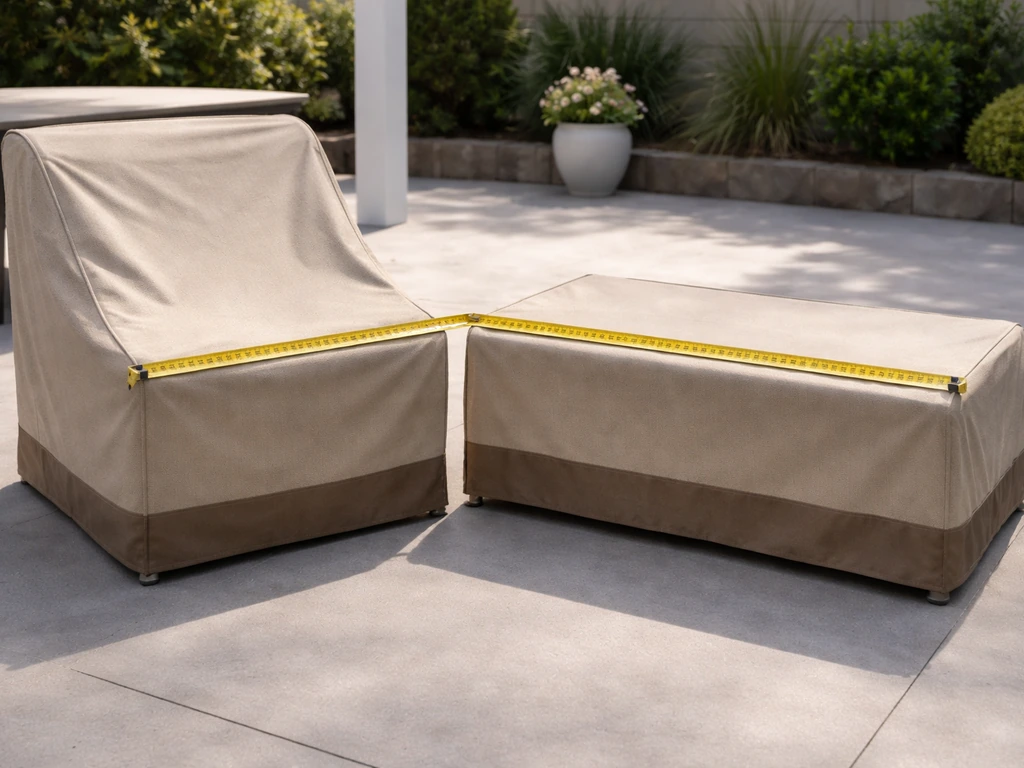
Grab These Tools Before You Start
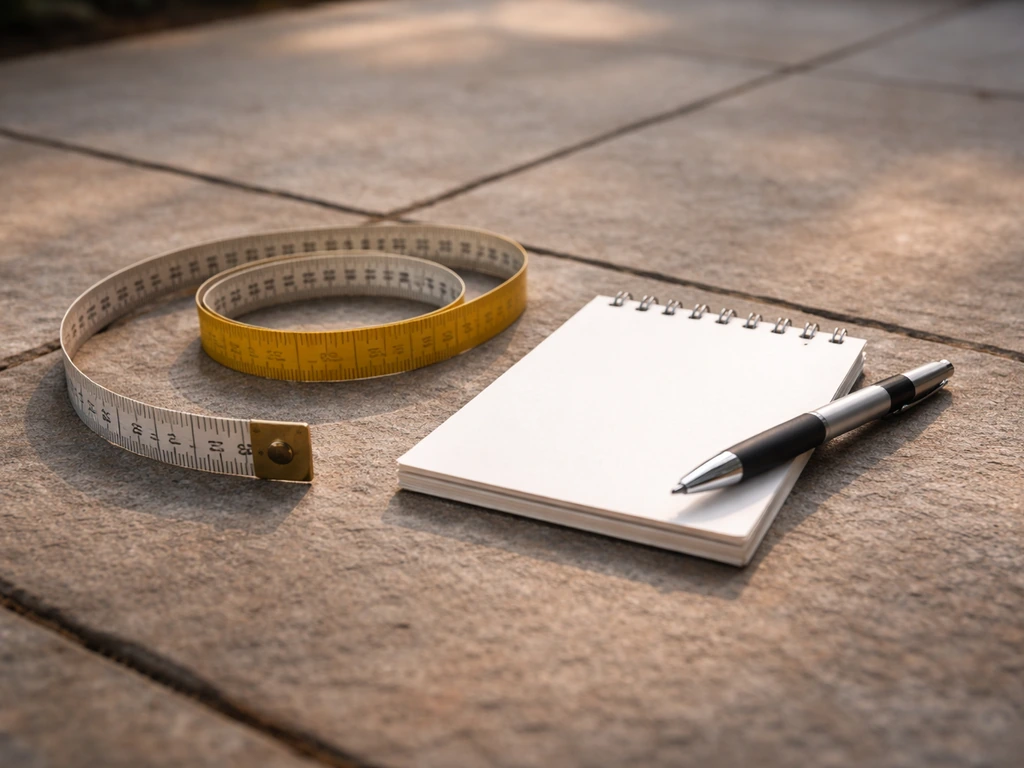
You only need a few things: a flexible tape measure (the soft fabric kind works best around curved pieces, but a standard metal one works fine for most furniture), a notepad or your phone's notes app, and ideally a second person to hold one end of the tape on larger pieces. Measure your furniture as it will actually be covered. If you plan to cover a chair with the cushions on, measure it with the cushions on. If you're covering a table with chairs tucked under or pushed around it, decide now whether you're buying a table-only cover or a full dining set cover, because those measurements are completely different.
Gather the Right Measurements: Width, Depth, and Height
Every cover sizing chart you'll find, regardless of brand, uses some version of these three dimensions. Width is always left to right across the front of the piece. Depth is front to back, from the leading edge to the farthest point behind it. Height is from the ground up to the tallest point, which on a chair is usually the top of the back, and on a table is the tabletop surface itself. Some brands call height the 'drop' when referring to tables, meaning the distance from the tabletop down to the ground, but it's the same measurement. Round everything up to the nearest inch and write it down before you start shopping.
One mistake I see constantly: people measure only the seat or the main body of the piece and forget about arms, decorative scrollwork, or angled legs that flare outward at the base. Always measure the outermost points. The cover has to clear all of it, so measuring anything less than the true maximum width and depth is how you end up buying a cover twice.
| Measurement | What to Measure | Where to Start / End |
|---|---|---|
| Width | Left to right at the widest point | Outermost edge of arms, legs, or frame |
| Depth | Front to back at the deepest point | Front leg/wheel base to rear leg/wheel base |
| Height | Ground to tallest point | Ground level up to top of back or tabletop surface |
How to Measure Seating-Style Furniture
Seating covers the widest range of pieces: single chairs, armchairs, loveseats, benches, and chaise lounges. The approach is the same for all of them, but the tricky parts differ.
Chairs and Armchairs
Measure width from the outside of one arm to the outside of the other. If the chair has no arms, measure the widest point of the seat or the frame, whichever is wider. Depth goes from the front of the front legs to the back of the rear legs. Height is ground to the top of the chair back.
Some cover brands also ask for 'front height,' which is ground to the seat or ground to the arm (whichever is lower). This tells the cover maker where the hem should land so it doesn't drag or leave the legs totally exposed. If a brand asks for front height, measure ground to the underside of the armrest, or ground to the seat surface if there are no arms.
Loveseats and Benches
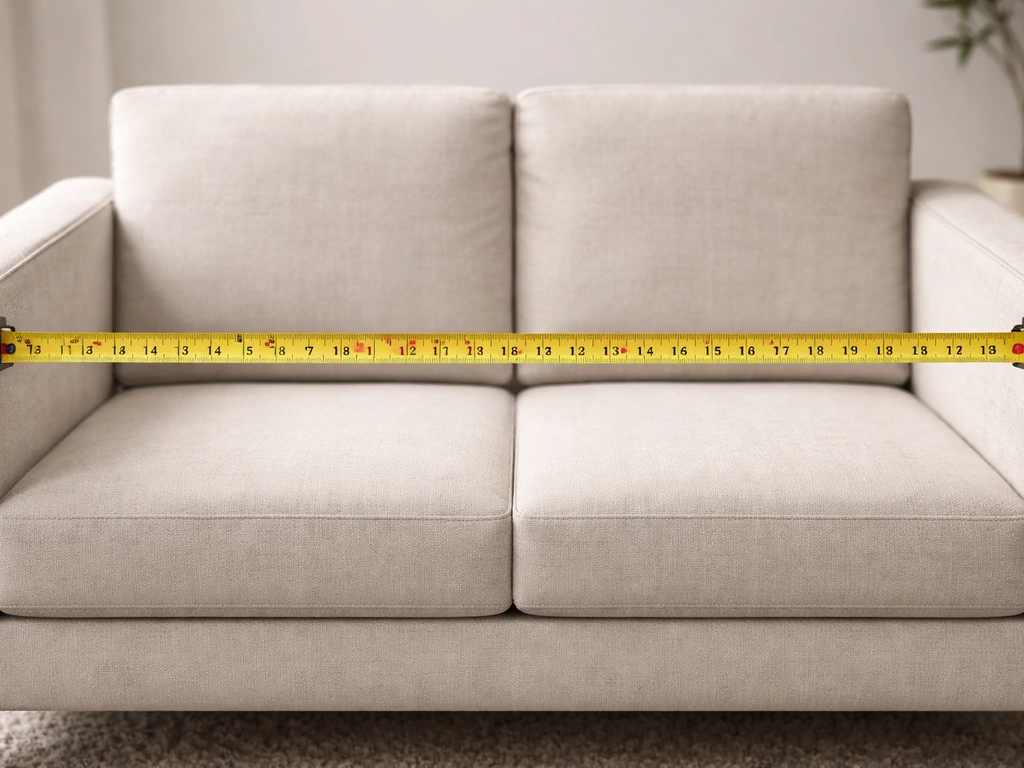
Same three measurements, but width is where most people underestimate. A typical loveseat is 50–60 inches wide, so take the tape all the way across including both arms. Depth on a loveseat is usually 30–36 inches from front leg to back leg. Don't measure just the seat cushion depth; get the full frame. Height is ground to the top of the back, just like a chair.
Chaise Lounges
Chaises are long and low, so depth becomes your biggest dimension. Start your depth measurement at the front leg base or the front wheel, whichever sticks out farther. End it at the rear leg or rear wheel. Width is measured at the widest side, which is usually across the mid-section of the chaise. Height is measured with the back reclined to whatever angle you normally leave it at, from the ground to the top of the reclined backrest. If the back is adjustable, measure at the most upright position so the cover fits regardless of which angle you choose.
How to Measure Dining-Style Furniture
Dining covers come in two flavors: table-only covers and full dining set covers. The measurements are very different, so decide which type you want before you start measuring.
Rectangular and Square Tables
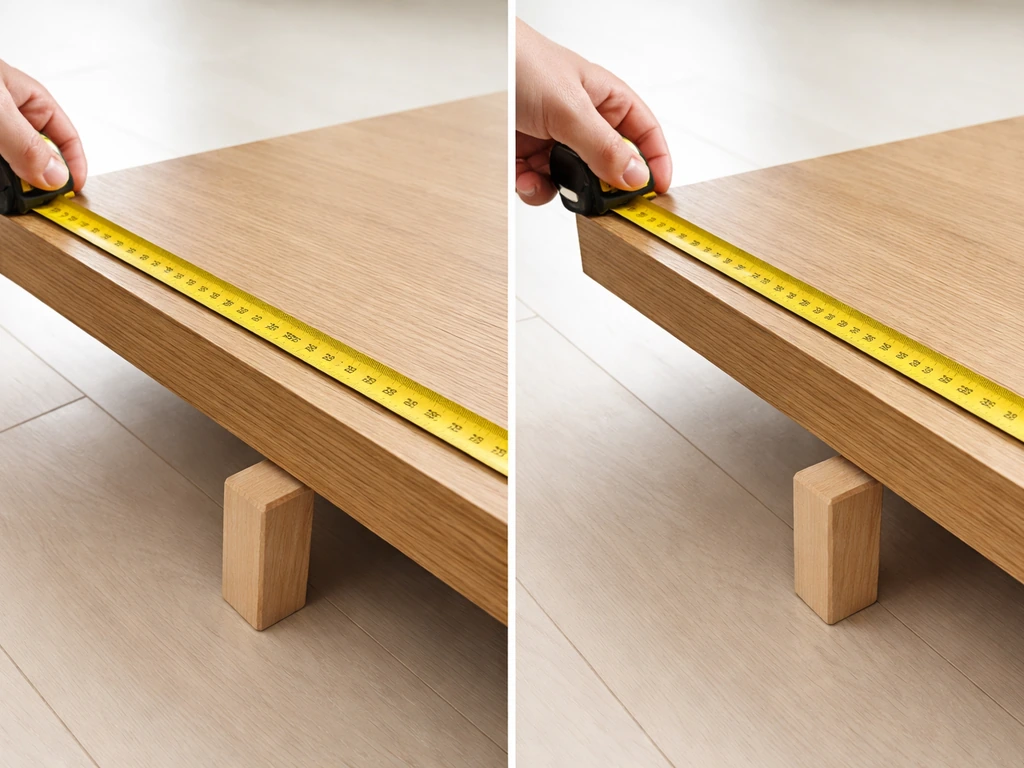
For a table-only cover, measure width as the longest side of the tabletop edge to edge, depth as the shorter adjacent side, and height as the distance from the tabletop surface all the way down to the ground. That last one trips people up. Height on a table cover is not the thickness of the tabletop; it's the full drop from tabletop to ground, legs and all. A standard dining table sits about 28–30 inches off the ground, so most table covers in the 28–30 inch height range will work, but always verify.
Round Tables
For round tables, skip width and depth and just measure the diameter, which is a straight line across the widest part of the tabletop through the center. Then measure height the same way as a rectangular table, from tabletop to ground. If your table has an umbrella hole, the cover's diameter just needs to clear the outer edge of the table; the hole itself doesn't affect sizing. When your measured diameter falls between standard cover sizes, go one size up. A slightly oversized cover is much easier to work with than one that won't pull down over the edge.
Full Dining Set Covers
If you want a single cover over the whole set, table plus chairs, your measurements will be considerably larger than the table alone. With the chairs pushed in or arranged the way they'd sit when covered, measure width from the back of one chair on one side all the way across to the back of the opposite chair on the other side. Do the same for depth, measuring front-chair-back to rear-chair-back. Height is measured from the ground to the top of the table surface, or to the top of the chair backs if they're taller than the table. Most dining chair backs are 36–40 inches tall, so check both and use whichever is higher.
Account for Fit Details: Slack, Snug vs. Loose, and Fastening Systems
Here's where a lot of people overthink it. The rule is simple: add 1–2 inches to your measured width and depth when comparing against cover dimensions to allow the cover to go on and come off without a struggle. Keep height the same as measured. Classic Accessories also emphasizes the importance of measuring chair and table dimensions accurately and using those measurements for sizing the right cover fit Keep height the same as measured.. You don't want extra height because a cover that pools on the ground traps moisture, promotes mold, and tears faster at the hem.
On the other end of the spectrum, going too large is just as bad. A cover that's 6 inches too wide on each side will balloon and flap in the wind, which wears out the cover fabric and can scrape against furniture finishes. Aim for that 1–2 inch buffer, not 4 or 6.
Coverstore and similar brands actually recommend sizing a cover 1–2 inches shorter than the furniture height for breathability. Air needs to circulate under the hem to prevent moisture buildup. So if your chair measures 38 inches tall, a cover with a 36–37 inch drop is ideal, not one that reaches the ground.
Beyond raw dimensions, think about how the cover stays on the furniture. Most covers use at least one of these fastening systems, and each one can affect how you finalize your measurements:
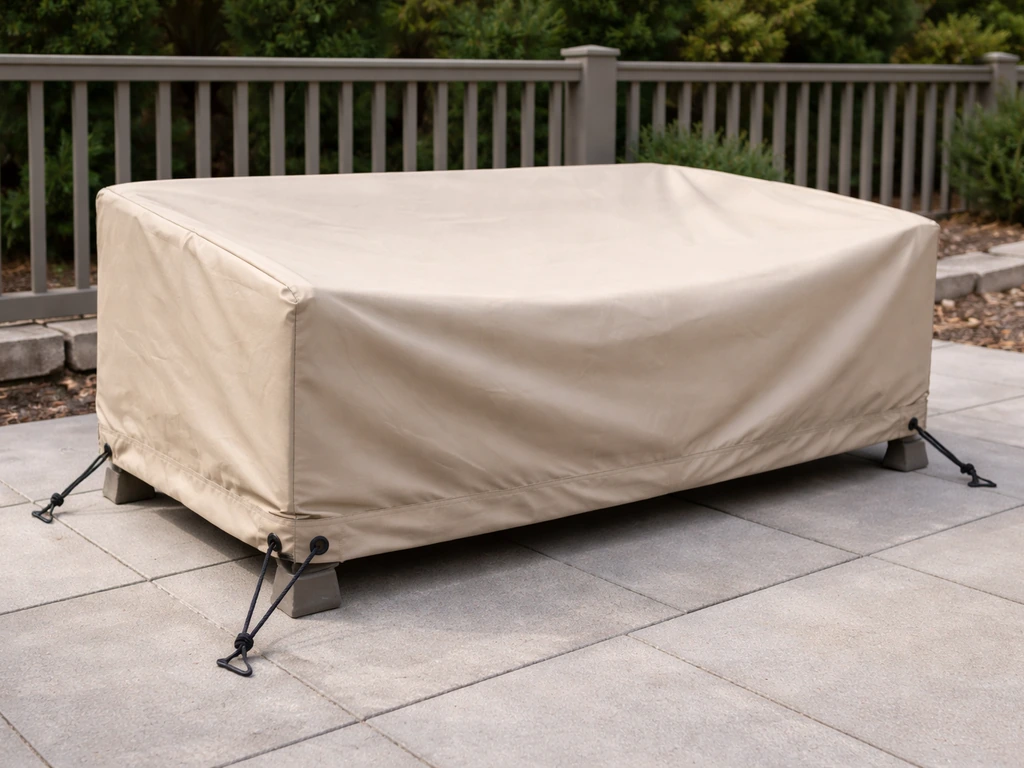
- Shockcord drawstring: An elastic cord sewn into the hem that cinches the cover tight around the base. Works well for chairs and small tables. No special measurement needed, but the cover's hem diameter has to be large enough to pull over the furniture's base.
- Buckle straps: Sewn into the inside of the cover and loop under the furniture to clip together. Critical for larger pieces and any cover over a sectional. If a cover uses these, the strap length has to match the furniture's depth, so accurate depth measurement matters even more.
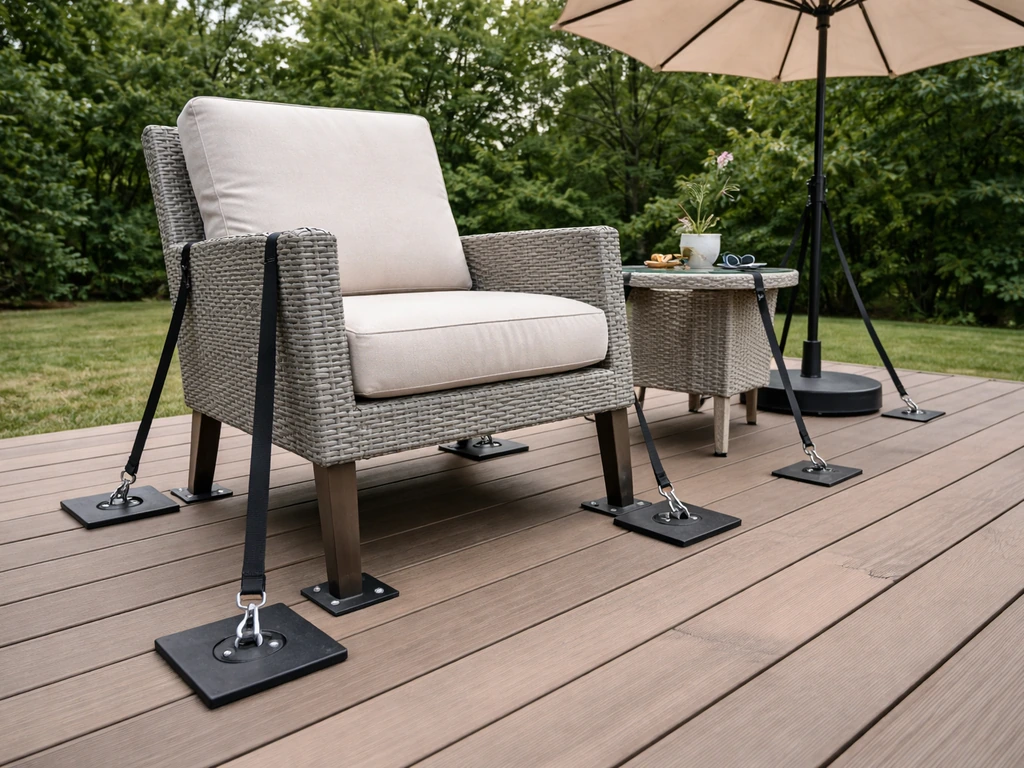
- Internal leg straps: Wrap around individual legs to keep the cover from lifting. These don't change your size selection but are worth looking for if you live somewhere windy.
- Grommets: Metal-reinforced holes at the hem you can thread a cord through for additional tie-down. Good for exposed or coastal locations.
Measure Special Cases: Sectionals, Swings, Ottomans, and Odd Shapes
Sectional Sofas
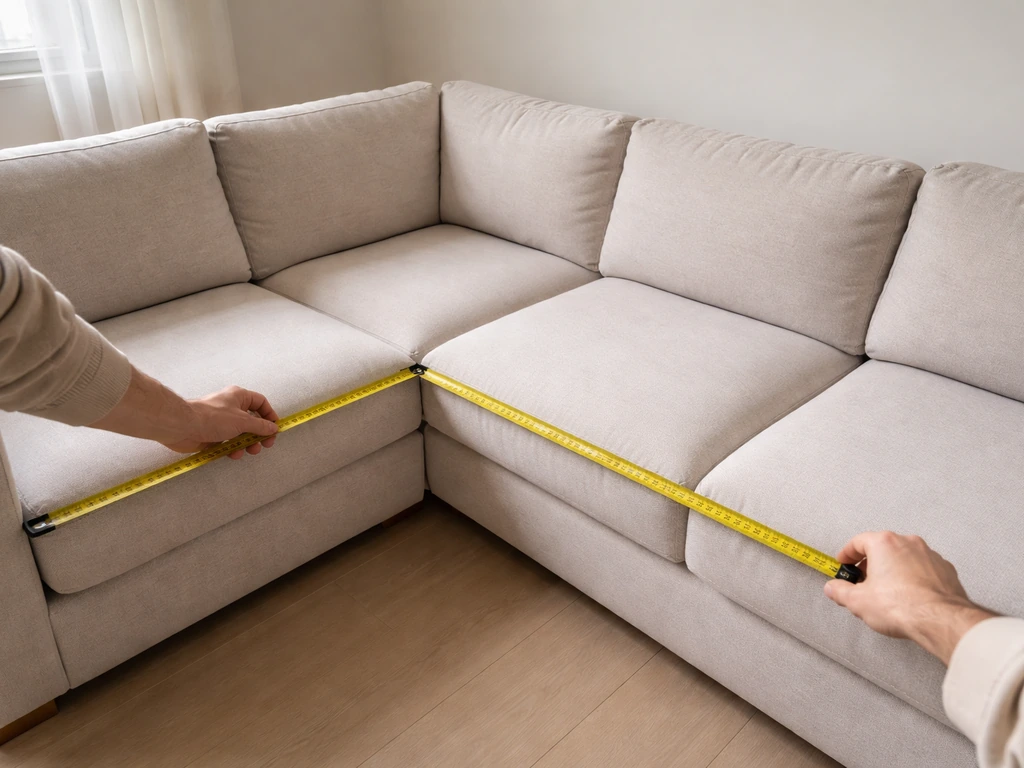
Sectionals are the trickiest because they're L-shaped or U-shaped, and no single rectangular measurement captures the whole footprint. You have two options: buy a cover designed specifically for sectionals (sold in L-shape or U-shape configurations), or cover each section individually with separate covers. If you go the sectional-specific route, you'll usually need to provide the length of each arm separately.
Measure the long arm from the far end to the inside corner, then measure the short arm from that corner to the other end. Also measure depth (typically consistent across the piece) and height. Write all of these down because sectional cover listing pages usually ask for them separately.
For the buckle strap systems on large sectional covers, strap placement is built into the inside front and back of the cover and wraps beneath the furniture, so accurate depth is essential for the straps to reach.
Canopy Swings and Gliders
For a canopy swing, measure width and depth across the canopy fabric itself, not the base frame. The base extends further, but the cover is primarily protecting the canopy and seating. Height is measured from the ground up to the top of the canopy. One nuance worth knowing: some brands don't require height as a strict fitting measurement for swing covers because the cover drapes over the canopy rather than wrapping tightly. Still measure and record it because some brands do use it, and having it costs you nothing.
Ottomans
Square and rectangular ottomans use the same width, depth, height method as chairs. Round ottomans use diameter plus height, exactly like a round table. The one thing to watch with ottomans is whether you're covering the ottoman alone or combined with a chair as a set. If combined, measure the combined footprint as a single unit.
Irregular and Asymmetrical Pieces
Wicker egg chairs, hammock stands, bar-height sets, and other non-standard shapes need extra care. Always measure the absolute maximum extent in each direction, even if only a small part of the piece reaches that point. The cover has to clear the widest, deepest, and tallest point simultaneously. If a piece is so irregular that no standard cover fits, a custom-cut cover is worth exploring. You'll pay more, but a single good cover that actually fits beats replacing cheap ill-fitting covers every season.
Check Cover Compatibility and Do a Quick Sizing Double-Check
Before you click buy, do this: pull up the cover's listed dimensions and compare them directly to your measured furniture dimensions. Cover listings show cover dimensions, not furniture dimensions. Some brands (Coverstore is one) explicitly state that their published dimensions refer to furniture dimensions, meaning you can match your measurements directly. Others list the actual cover size, which will be slightly larger than the furniture to allow for the fit buffer. Read the product description carefully to figure out which convention the brand uses, because getting this wrong is the most common sizing mistake out there.
Here's a simple double-check routine to run before every purchase:
- Compare your width measurement to the cover's listed width. The cover should be equal to or up to 2 inches larger than your furniture width.
- Do the same for depth.
- For height, the cover's drop should be equal to your furniture height, or up to 2 inches shorter to allow airflow at the hem.
- If your measurements fall between two standard cover sizes, go one size up in width and depth, and stay at the smaller size or exact size for height.
- Check whether the cover listing includes fastening features like straps or drawstrings, and confirm those features suit your furniture style and your local wind conditions.
- If buying for a dining set, confirm whether the dimensions given are for the table only or the table-plus-chairs footprint, and match accordingly.
One last thing worth mentioning: cover measurements and cushion measurements are different problems. If you're also dealing with worn-out or ill-fitting cushions on the same furniture, that's a separate sizing and material project. If the cushion covers are the part that's worn, you may also want to estimate how much fabric do i need to recover patio cushions so you can plan the fabric and trim before you start.
If your patio cushions are damaged or don’t sit right, you may need to repair or replace the cushion before buying a new cover worn-out or ill-fitting cushions. If the cushion covers are what need fixing, you may need to restuff patio cushions before choosing a new cover worn-out or ill-fitting cushions.
If your cushions themselves are worn out, you'll also want to decide whether to clean and reuse them or replace them before buying new covers worn-out or ill-fitting cushions. Getting the cover right protects whatever is underneath, so it makes sense to sort the cover first, then worry about what's under it. If your patio cushions are already suffering from bugs, take a quick look for signs like droppings or webbing before you cover them bugs in patio cushions.
Taking accurate measurements before you buy is genuinely the difference between a cover that lasts three seasons and one you're wrestling with all summer. Spend ten minutes with a tape measure now and you'll save yourself a return shipping headache and another trip to the hardware store later.
FAQ
What if my patio furniture has angled legs, curved arms, or decorative scrollwork?
If your furniture is irregular (flared legs, scrollwork, rounded arms), take each measurement to the absolute outermost point that the cover must clear. Then apply the 1 to 2 inch width and depth buffer to those final “max” numbers, not to the body of the chair or table.
Should I measure patio furniture in its normal position or in a fully extended or reclined position?
Measure while the piece is assembled and in the position you typically use. For adjustable chairs, record height at the recline or back angle you leave it most often, because many covers won’t fit if the back is later moved to a more upright or more reclined position.
How do I measure if I’m keeping the cushions on under the cover?
If the cover will sit over cushions, include the cushion height in your height measurement, because height is the ground to the highest point when covered. If you’re ordering a “cushion-in” style cover, also measure the full outer width and depth with the cushions on, not the frame only.
How do I measure “front height” for chair covers?
For covers that specify “front height,” measure from the ground to the underside of the armrest. If there are no arms, measure to the seat surface (or the underside of the seat where the hem would land), then use that number for hem placement.
When a table cover listing says “drop” or height, do I measure tabletop thickness or tabletop to the ground?
If a cover listing asks for drop or table height, use the full distance from the tabletop surface down to the ground (legs included). Do not use tabletop thickness as a substitute, because that’s only part of the drop and will make the cover too short.
Do I need to measure around the umbrella hole for a round table cover?
Use the diameter measurement only for round covers, and measure through the center of the widest part of the tabletop. The umbrella hole generally doesn’t change sizing, but the cover’s diameter should clear the outer edge of the table and any rim or hardware around it.
What should I do if my round table diameter falls between two cover sizes?
When your measured diameter falls between sizes, choose the next larger cover size. It’s easier to pull a slightly oversized cover down and secure it, and it usually avoids gaps at the edges that let wind in.
How do I measure for a cover that fits the whole dining set (table plus chairs)?
For chair and table sets, measure the combined footprint with chairs pushed in as they would be when covered. Then use the higher of chair back height versus table surface height for the overall height requirement.
How can I tell whether a brand lists furniture dimensions or actual cover dimensions?
If the brand’s sizing convention isn’t clear, the safest approach is to compare both “furniture dimensions” and “cover dimensions” against the listing notes. If the listing doesn’t specify, assume it is listing the actual cover size and expect it to be slightly larger than furniture to allow fit.
Do strap or buckle systems change how I should measure patio furniture depth?
If fasteners are included, depth and placement matter because straps usually need to reach underneath to tension the cover. Measure the depth to the farthest front-to-back extent of the covered area (including any protrusions), then apply the buffer carefully so the cover still reaches where the strap system attaches.
For a canopy swing, should I measure the frame or the fabric, and does height matter?
Measure the canopy cover across the canopy fabric area, not the base frame, since the fabric is what the cover is protecting. For height, measure ground to the top of the canopy (as it sits normally), even if some brands don’t treat height as a strict fit parameter.
Do I measure ottomans separately or as part of the combined set?
If you’re covering both a chair and an ottoman together, treat it as one combined unit and measure the total width and depth across the footprint. If you’re covering them separately, measure each piece independently to avoid wasting money on a cover that only fits one layout.
What happens if I buy a cover that’s too big or too small?
If a cover is clearly too large in width and depth, it will flap and wear faster, and it can scuff finishes. If it’s too small, it can put stress on seams and pull hem lines upward, leaving uncovered areas at the corners.
Should I ever use a shorter cover height than my measured height?
If you’re comparing height, remember that some brands recommend a slightly shorter drop for breathability to prevent pooling. In that case, keep width and depth aligned with the fit buffer, but consider using the recommended shorter height (or drop) for the moisture-control goal.
When is it worth paying for a custom cover instead of trying standard sizes?
If there is no standard cover shape that matches (for example, extremely egg-shaped or very irregular pieces), prioritize a custom-cut cover based on your “maximum extent” width, depth, and height. Custom is usually worth it because repeated returns and replace cycles cost more than the initial upgrade.