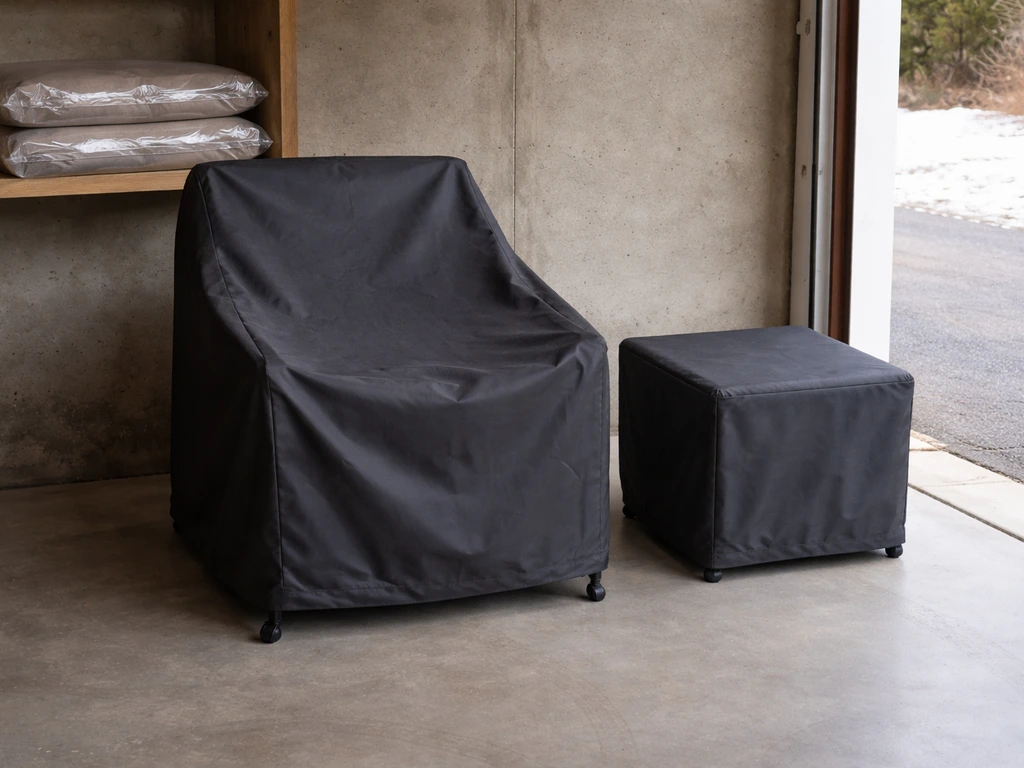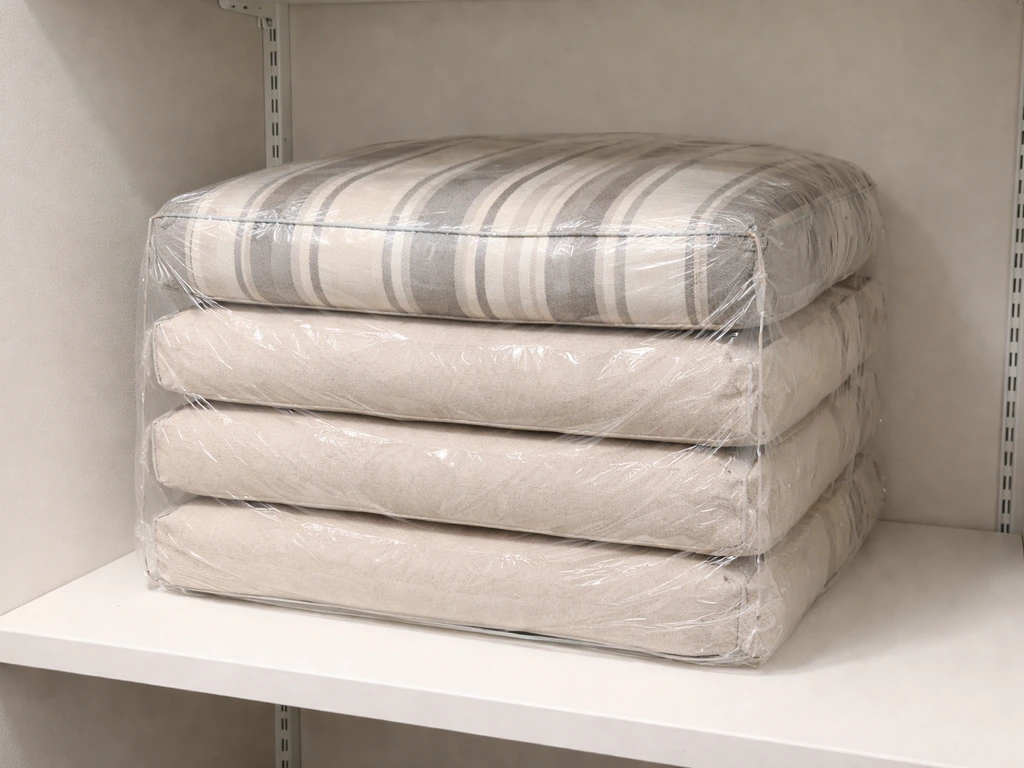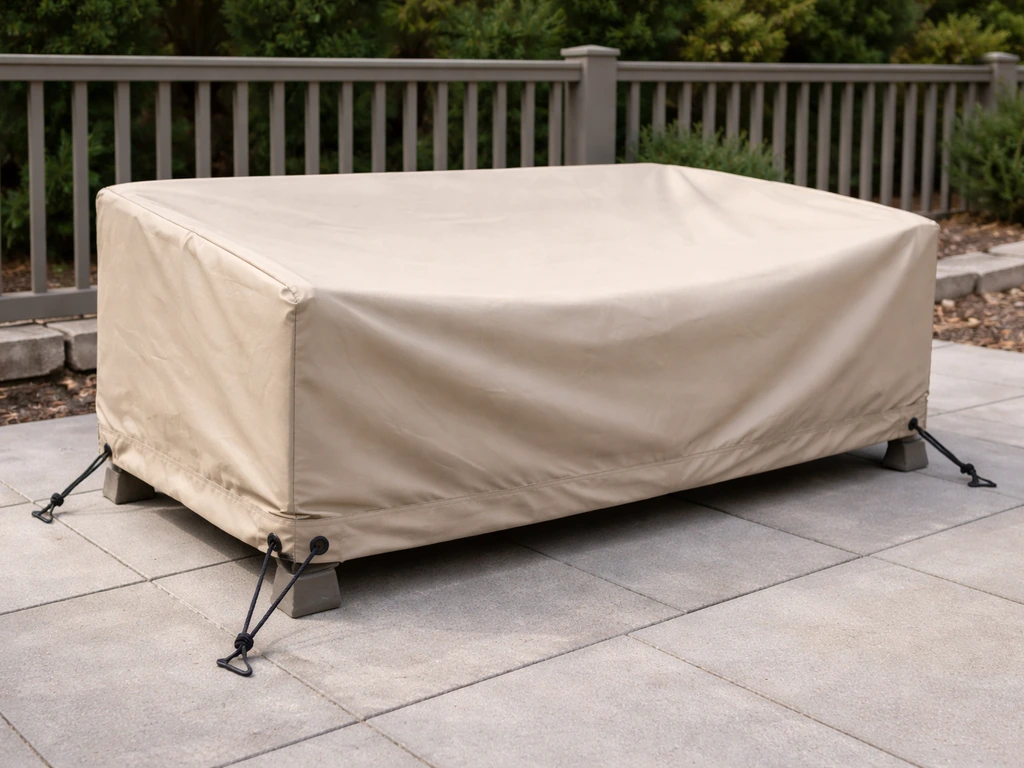
The best way to care for patio furniture is to match your routine to the material, clean it at least twice a year (spring and fall), protect it with breathable covers between uses, and catch small problems like loose bolts and surface rust before they turn into expensive replacements. It sounds like a lot, but once you know what you have and what it needs, most of this takes less than an afternoon twice a year.
How to Care for Patio Furniture: Cleaning and Seasonal Maintenance
Maren Grady
20 May 2026
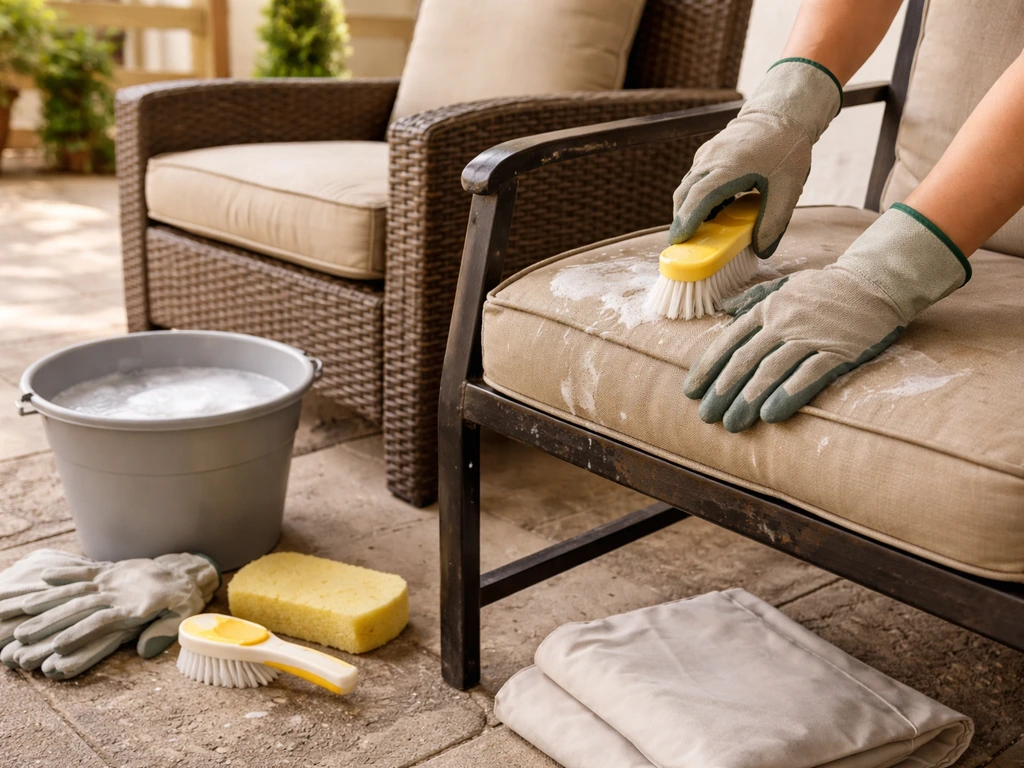
Start here: know what your furniture is made of
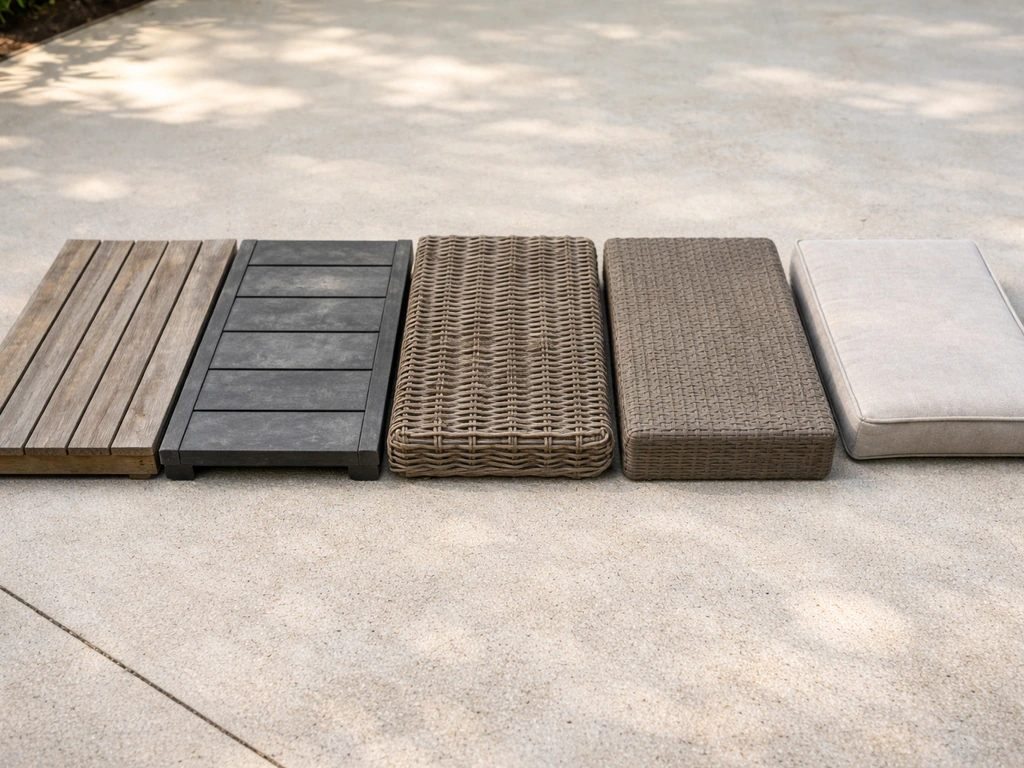
This is the step most people skip, and it's why they end up using the wrong cleaner and accidentally stripping a finish or cracking a frame. Before you grab a bucket and sponge, figure out what you're actually working with. The care rules for teak are completely different from the rules for aluminum, and the rules for natural wicker are almost the opposite of those for synthetic resin wicker.
Wood (teak, cedar, eucalyptus, acacia)
Teak is the gold standard for outdoor wood furniture because it's naturally dense and oily enough to resist moisture without any sealant or teak oil. Yes, skip the teak oil. It's actually a linseed-oil-and-solvent product that can go rancid, clog the pores of the wood, and eventually cause more problems than it prevents. Teak just needs an occasional light cleaning and that's genuinely it. Other hardwoods like eucalyptus and acacia need a little more attention, and softer woods like pine need annual sealing to survive outdoor seasons well.
Metal (aluminum, steel, wrought iron, cast iron)
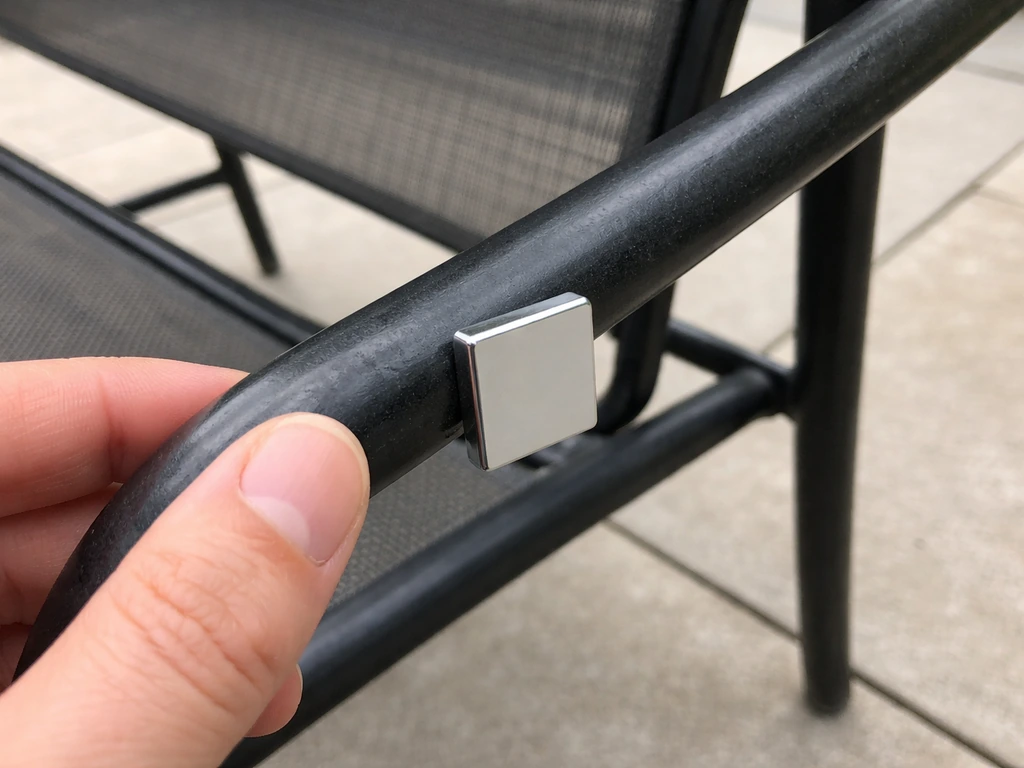
Here's a quick test worth doing right now: hold a common refrigerator magnet up to your furniture frame. If it sticks, you have steel or iron. If it doesn't stick at all, you almost certainly have aluminum. This matters a lot because steel and iron rust, while aluminum only oxidizes (forming a dull white-gray haze rather than red flaking rust). Aluminum is far more forgiving outdoors, but it still needs regular cleaning and occasional oxidation treatment. Steel and iron frames need rust prevention built into their care routine.
Wicker and rattan
These two terms get mixed up constantly. Wicker is a weaving technique, not a material. Rattan is one of the natural materials that can be woven into wicker. The important distinction for outdoor care is whether you have natural wicker (rattan, bamboo, or similar organic materials) or synthetic/resin wicker. Natural wicker is genuinely fragile outdoors and should only be used in covered, sheltered spaces. It will crack, split, and deteriorate fast if left in rain or direct sun without protection. Synthetic wicker looks almost identical but is made from all-weather resin and handles outdoor conditions much better.
Plastic and resin
Resin and plastic furniture (think stacking chairs, Adirondacks, and most budget patio sets) is the most forgiving material to maintain. It doesn't rust, rot, or crack easily, but it does fade, get chalky from UV exposure, and collect surface grime in its texture. The main cleaning caution is to avoid anything abrasive or bleach-heavy that strips the surface.
Cushions and fabric
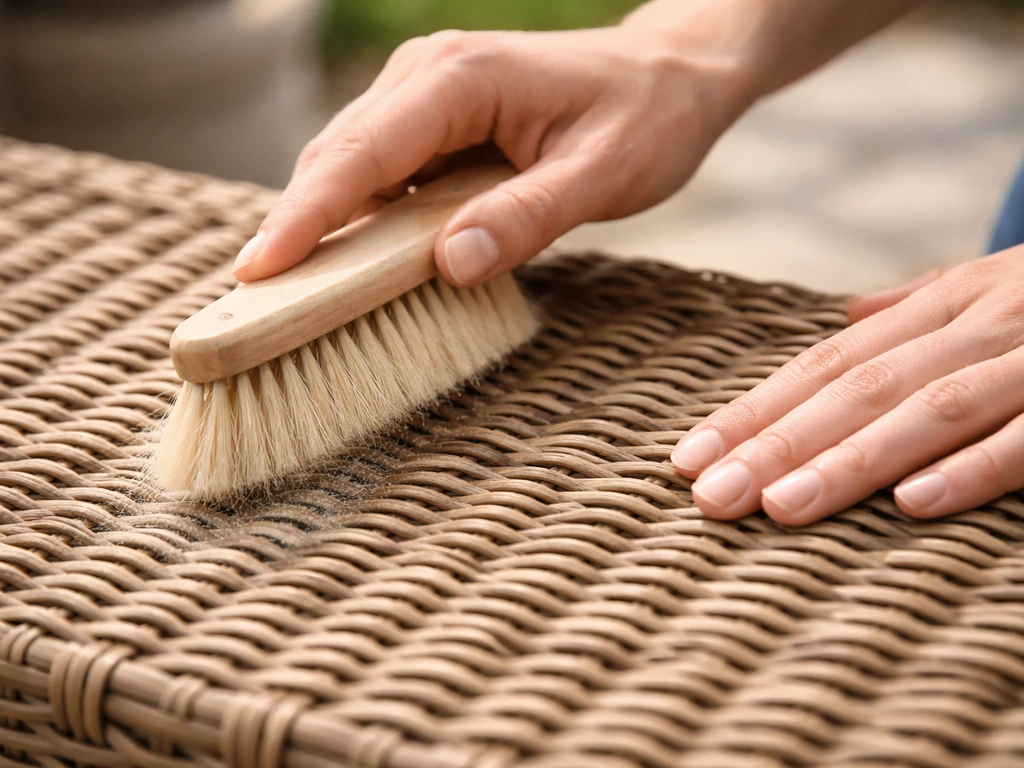
Outdoor cushions are usually filled with quick-dry polyester foam and covered in a solution-dyed acrylic fabric. Sunbrella is the most recognized brand in this category. These fabrics are designed to resist mold and fading, but they still need regular cleaning and re-waterproofing over time. The inner foam core is the real enemy here: if moisture gets in and doesn't get out, you'll have a mildew problem that no amount of surface scrubbing will fix.
Your cleaning schedule and how to actually do it
A twice-a-year deep clean (once in spring, once in late fall before storage) plus a quick wipe-down after storms or heavy use covers most of what outdoor furniture needs. Here's what a proper cleaning looks like for each material.
Wood furniture
- Mix a few drops of mild dish soap into a bucket of warm water.
- Wipe down all surfaces with a soft cloth or sponge, going with the wood grain.
- For stubborn spots or algae buildup, a soft-bristle brush works well—nothing metal.
- Rinse thoroughly with a garden hose at low pressure. Do not use a pressure washer on teak or other outdoor wood: it damages the wood surface and can drive moisture deep into grain.
- Allow to air-dry completely before replacing cushions or covers.
- If teak has developed surface stains or mildew marks, a diluted white vinegar solution (equal parts vinegar and water) applied and rinsed off handles most cases.
Aluminum furniture
- Do this on a cloudy day or in the shade. Aluminum gets extremely hot in direct sun and the cleaning solution can dry and streak before you rinse it off.
- Mix mild dish soap with warm water and wipe down all surfaces with a soft cloth.
- For the dull, chalky oxidation haze that builds up over time, make a 1: 1 vinegar-water solution, wipe it over the affected areas, let it sit a few minutes, then scrub gently and rinse clean. A dedicated aluminum cleaner works faster on heavy oxidation.
- Rinse well, especially at weld joints and underneath frame rails where soap tends to collect.
- Dry with a clean cloth to prevent water spots.
Steel and iron furniture
- Wash with mild soap and warm water using a soft cloth.
- Check every joint, weld, and paint edge for rust spots while the surface is wet—they show up clearly.
- Rinse and dry thoroughly right away. Leaving steel or iron wet accelerates rust.
- Address any rust you find immediately (see the rust repair section below).
Wicker and rattan furniture
- Use a soft damp cloth or very soft brush to wipe down all woven surfaces and the frame.
- Never use abrasive cleaners, stiff brushes, bleach, or harsh solvents on wicker or rattan—these degrade the material and strip protective finishes.
- Do not pressure wash. High pressure can break and unravel the weave.
- For light dirt, warm water and a drop of mild dish soap on a soft cloth is enough.
- Let the piece dry completely in a shaded, ventilated spot before covering or storing.
Plastic and resin furniture
- Brush off loose debris first.
- Mix non-bleach liquid laundry detergent or mild dish soap with warm water.
- Scrub with a soft brush, working into textured surfaces where grime hides.
- For mildew or sap spots, a product-specific mildew remover can be used; check that it's safe for resin.
- Rinse well and air dry.
Stain removal quick guide
| Stain type | Surface | What to use |
|---|---|---|
| Mildew/mold | Sunbrella and performance fabrics | Diluted bleach + mild soap solution, soak 15 min, rinse thoroughly |
| Mildew/mold | Wood | Diluted white vinegar solution, scrub gently, rinse well |
| Oxidation haze | Aluminum | 1:1 vinegar-water or dedicated aluminum cleaner |
| Surface rust | Steel/iron | White vinegar soak, scrub with wire brush, then prime and paint |
| Tree sap/bird droppings | Any hard surface | Warm soapy water and gentle scrubbing; rubbing alcohol for stubborn sap |
| UV chalking/fading | Plastic/resin | Mild dish soap scrub; car polish or plastic restorer for deeper fading |
Seasonal care from spring to winter
Outdoor furniture lives through a full cycle of weather stress every year. Thinking about care seasonally (rather than only when something looks dirty) is the difference between furniture that lasts 5 years and furniture that lasts 20.
Spring: start-up inspection and deep clean
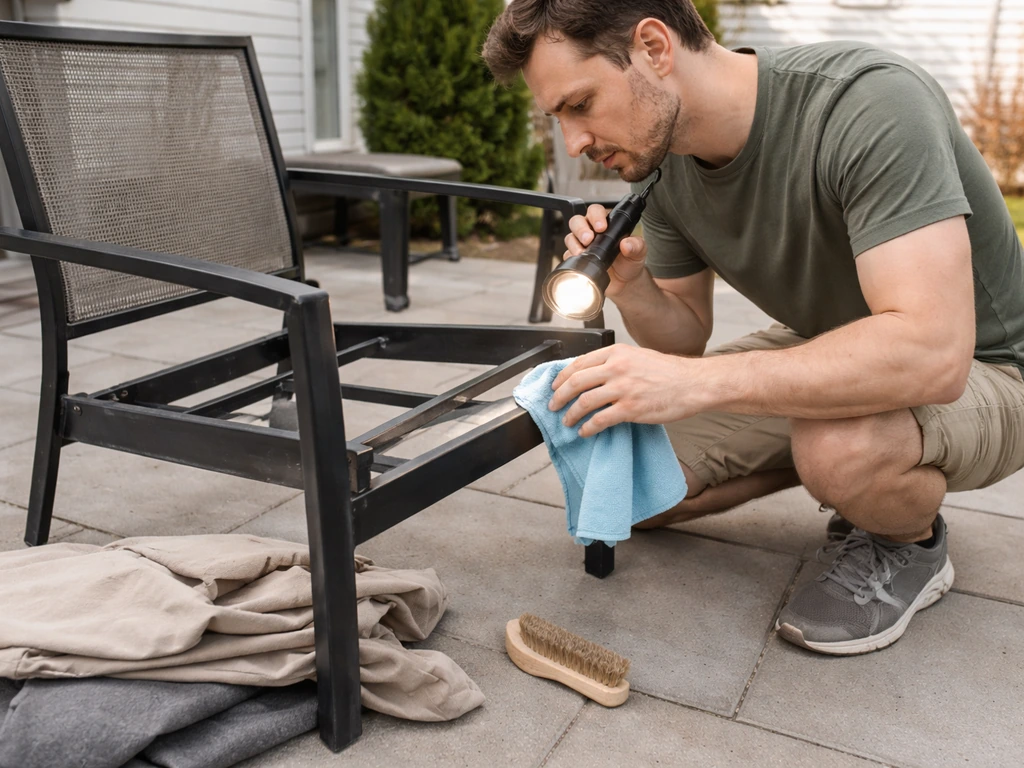
Spring is when you assess the winter's damage before it gets worse. Pull everything out of storage, remove covers, and go through this checklist before the first cookout of the year.
- Deep clean all frames using the material-appropriate method above.
- Inspect every weld, joint, and bolt for rust, cracking, or looseness.
- Check cushion covers for mildew, tears, or fading. Wash them now so they're fully dry before use.
- Look for UV damage on plastic and resin: chalking, cracking, or brittleness.
- Check wooden surfaces for raised grain, cracking, or discoloration—light sanding and re-oiling (for cedar/eucalyptus) may be needed.
- Test all hardware: tighten loose bolts, replace any that are corroded.
- Inspect covers for tears, broken tie-downs, or mold growth.
Summer: ongoing upkeep
Summer is mostly about staying ahead of small problems. A quick wipe-down after a thunderstorm, bringing cushions in when rain is forecast, and covering the set when you're not using it for several days makes a real difference over the season.
- Wipe down frames after storms or heavy pollen days.
- Bring cushions inside or stack them in a covered bin when rain is in the forecast.
- Apply a UV-protectant spray to plastic furniture in mid-summer if you notice chalking starting.
- Check for any new rust spots on metal frames and address them immediately.
- Keep furniture off wet ground where possible—set legs on rubber feet or small pavers to reduce moisture wicking.
Fall: prep for the cold months
Fall prep is honestly more important than spring start-up. Putting furniture away clean prevents mold, corrosion, and pest nesting over the winter. If you want to store patio furniture in a garage, make sure it is fully dry, covered with a breathable cover, and kept off wet concrete how to store patio furniture in garage. Don't just cover dirty furniture and hope for the best.
- Do a second full deep clean of all frames and cushions.
- Let everything dry completely before covering or storing. Covering damp furniture is how mildew starts.
- Apply touch-up paint or rust-inhibiting primer to any exposed metal spots you found during the season.
- For teak and other woods, do a final rinse and thorough drying, and make sure pieces aren't sitting in water puddles.
- Store natural wicker indoors (garage, basement, shed) for the winter. It will not survive being left outside.
- Fold and store cushions in a dry indoor space or a cushion storage bag. Don't leave them in a pile on a wet patio.
- Cover remaining outdoor furniture with breathable, UV-resistant covers that have secure tie-downs.
Winter: storage and protection
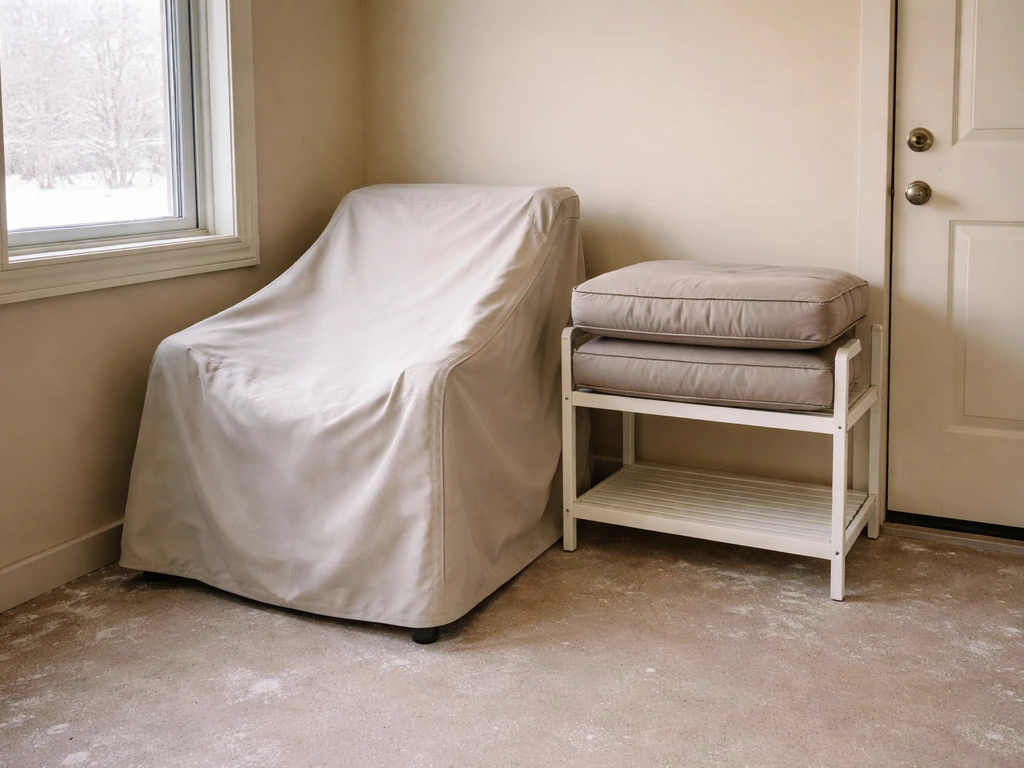
The ideal for most patio furniture is indoor storage during winter, especially for natural wicker, wood, and cushions. If you're short on space, the next best option is quality covers and elevated storage so pieces aren't sitting directly on wet concrete or frozen ground. There's a lot more detail in this guide on winter storage, including how to protect different patio furniture materials outside best way to store patio furniture outside. There's a lot more to unpack on proper winter storage for specific furniture types and cushions, which is a full topic on its own. If you want the safest results, take those winter steps and then match them to your patio furniture material and cushion type winter storage for specific furniture types and cushions.
Protecting your furniture from weather and sun
Choosing the right cover
The single most important feature in a patio furniture cover is breathability. A thick, non-breathable plastic cover draped over your furniture for months traps condensation underneath and creates exactly the kind of damp, warm environment that mold and mildew love. Look for covers specifically labeled breathable, with UV treatment and reinforced tie-downs so wind doesn't constantly blow them off. After you choose breathable covers, make sure they are properly stored between uses to keep them clean and ready for the next season how to store patio furniture covers. Always clean both the furniture and the cover before storage: a cover coated in grime will transfer that grime right back onto your clean set.
Rust prevention for metal furniture
The best rust prevention for steel and iron frames is keeping the protective paint coating intact. Every chip, scratch, or worn spot is a spot where rust can start. After cleaning in spring and fall, touch up any bare metal immediately with a rust-inhibiting primer followed by a compatible topcoat. Products like Rust-Oleum's Stops Rust line are widely available and designed for exactly this use. Apply multiple thin coats rather than one heavy one, and let each coat dry fully.
Coatings, sealants, and oils: what actually helps
This is a heavily marketed category where a lot of products promise more than they deliver. A few honest notes: teak furniture does not need sealant, oil, or preservative. It genuinely maintains itself with just cleaning. Cedar and other outdoor woods benefit from annual application of a penetrating oil or wood sealer, but check the manufacturer's care guide first because some pre-treated woods shouldn't be sealed on top of their existing finish. Aluminum doesn't need any coating, but a coat of car wax or a dedicated aluminum protectant will slow down oxidation between cleanings. Metal frames with factory powder coating just need touch-up paint when the coating chips.
Hardware, frames, and joints: don't ignore the small stuff
Loose hardware is one of the most overlooked maintenance tasks for patio furniture, and it's also one of the fastest things to fix. Most outdoor furniture uses standard hex bolts or machine screws that you can tighten with a wrench or socket set in a few minutes. Do a systematic check every spring and fall: sit in each chair, rock it side to side, and wiggle each armrest. If something moves, tighten the hardware. If a bolt is corroded beyond turning, soak it with penetrating oil (like PB Blaster) for a few hours before trying again.
- Lubricate hinges, folding joints, and recline mechanisms with a silicone spray or light machine oil at the start of each season. This prevents squeaking and keeps joints from seizing.
- Check weld points on metal frames for cracks or corrosion. A cracked weld is a structural issue and may need professional welding or replacement.
- On wicker and rattan, look for sections of weave that have started to lift or unravel. A small dab of outdoor-safe adhesive can reattach minor sections, but avoid scrubbing or using abrasive cleaners around those areas since they'll damage the finish and lamination holding the material together.
- Rubber feet and nylon glides on chair legs wear down over time. Replacements are cheap (usually a few dollars at any hardware store) and prevent both scratching your patio and rust-starting moisture wicking from direct concrete contact.
- For wooden joints that have loosened, outdoor-rated wood glue applied and clamped overnight handles most cases. Make sure the joint is dry and free of old finish before applying.
Cushion and fabric care
Regular cleaning
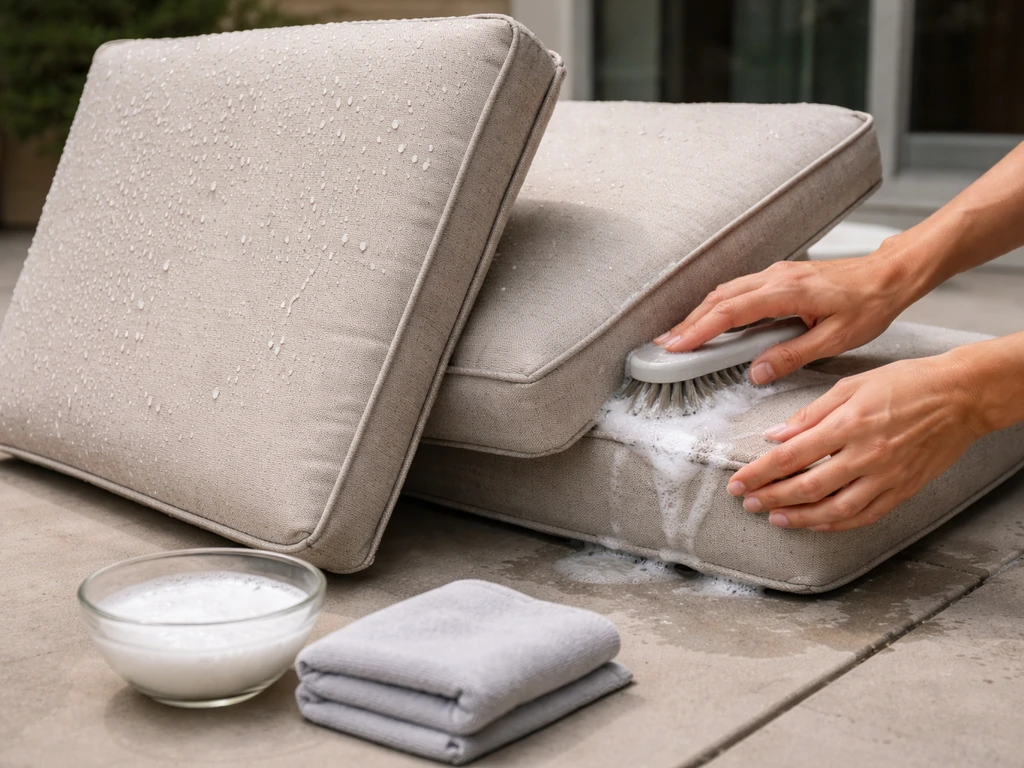
For routine cleaning, brush off loose debris first, then spot-clean with mild soap and warm water using a soft brush. Rinse thoroughly and stand the cushions on their edges in a shaded, ventilated area to air dry completely before putting them back or storing them. This last step is where most people rush and cause their own mildew problems. Even a slightly damp cushion core left in an enclosed space will start to smell within a few days.
Mildew removal
For mildew on performance outdoor fabrics like Sunbrella, don't be timid with the treatment. Sunbrella's own guidance confirms that mold and mildew require a diluted bleach solution, not just mild soap. Mix a small amount of mild soap and a diluted amount of chlorine bleach in water, apply to the affected area, and let it soak for about 15 minutes before scrubbing gently with a soft brush and rinsing thoroughly. For severe mildew, the bleach concentration can be increased. Always rinse completely because leftover bleach residue will weaken the fabric over time. This approach applies specifically to solution-dyed acrylic fabrics designed for bleach tolerance. Check your fabric's care tag before using bleach on anything else.
Re-waterproofing
Outdoor fabric's water repellency degrades over time from UV exposure and repeated washing. If water is soaking in rather than beading off, it's time to re-treat. A fabric waterproofing spray like 303 Fabric Guard or similar products restores the DWR (durable water repellent) finish. Apply after cleaning and drying the fabric, let it cure fully, and you've bought another season of protection. Most outdoor cushions need re-waterproofing every one to two years depending on how much sun and rain they see.
Day-to-day fabric habits that matter
- Bring cushions inside or store them in a weather-resistant bin on rainy days when possible.
- Never stack wet cushions on top of each other. Moisture gets trapped between them.
- Let covers and cushion surfaces dry quickly after rain by standing them upright or propping them open.
- Store cushions indoors for the winter. A cushion storage bag or a large plastic storage bin in the garage works well and costs very little.
Troubleshooting common problems
Surface rust spots on metal frames
This is very DIY-able when it's caught early and the rust is localized. Here's the process: scrub off flaking rust with a wire brush or steel wool until you reach solid metal. Apply white vinegar directly to the area and let it sit for at least 30 minutes to dissolve remaining rust, then scrub again. Rinse and dry completely. Apply a rust-inhibiting primer in thin coats, let it dry fully, then apply a matching topcoat paint. Rust-Oleum's Stops Rust line is the go-to for this. The whole job takes a couple of hours and costs under $20 in materials. If rust is spread across most of the frame or has eaten through a structural section, that's a different conversation (see below).
Mildew on cushions
Surface mildew: bleach solution plus thorough rinsing, as described above. If the smell persists after cleaning and drying, the foam core is probably affected. You can unzip the cover and remove the foam insert, then wash the foam gently in a tub with soap and water, rinse thoroughly, and air dry it completely outside (this can take a full day or two). If the foam itself is deeply stained or structurally degraded, replacing just the foam insert is usually inexpensive and worth doing before buying an entirely new cushion.
Faded or chalky plastic furniture
Light chalking responds well to a thorough scrub plus a plastic restorer product (often sold as outdoor plastic furniture restorer or automotive plastic restorer). Apply with a soft cloth, buff in, and you'll recover a lot of the original color. Deep fading from years of UV exposure is harder to reverse, but a coat of spray paint designed for plastics can refresh the look for another few seasons. This is worth doing before spending money on replacement.
Squeaky or wobbly joints
Start with the simplest fix: tighten all the hardware. If the wobble is at a wooden joint rather than a bolt, clean out the joint and re-glue with outdoor wood glue. Squeaky metal hinges and pivot points just need lubrication. If a frame is structurally bent or a weld has cracked, that's either a trip to a local welder (often worth it for quality cast iron or wrought iron pieces) or a replacement decision.
Teak turning gray
Teak naturally weathers to a silver-gray color over time when left untreated outdoors. This is not damage, it's just oxidation of the surface wood. If you prefer the original honey-brown color, a light sanding with fine-grit sandpaper followed by cleaning will restore it. If you like the silver-gray look, you don't have to do anything at all. Either way, the wood is not deteriorating.
When to DIY and when to replace (or call for help)
| Problem | DIY-able? | Notes |
|---|---|---|
| Surface rust spots (localized) | Yes | Wire brush, vinegar, primer, and touch-up paint. Easy weekend job. |
| Widespread rust or structural corrosion | Partially | Full refinishing is doable but labor-intensive. Structural damage may need welding. |
| Mildew on cushion covers | Yes | Bleach solution for performance fabrics. Check care tag first. |
| Mildew in foam core | Yes, usually | Wash and air-dry the foam. Replace if structurally compromised. |
| Loose bolts and joints | Yes | Tighten with basic tools. Add thread-locking fluid for bolts that keep backing out. |
| Cracked or broken welds | No (usually) | Needs a welder. Worth it for quality iron frames, not cheap steel. |
| UV-faded plastic | Yes | Restorer product or spray paint for plastics. |
| Broken wicker weave sections | Small repairs, yes | Outdoor adhesive for minor unraveling. Major structural breaks are difficult. |
| Torn or faded cushion fabric | Yes | Recovering cushions in new outdoor fabric is a realistic DIY project. |
| Bent aluminum frame | Rarely | Aluminum cracks rather than bends back cleanly. Usually a replacement situation. |
The general rule I follow is this: if the structure is sound and the problem is surface-level (rust, fade, mildew, loose hardware), it's almost always worth the DIY fix. If the frame itself is cracked, bent, or has widespread corrosion eating through the metal, and the piece wasn't expensive to begin with, the math on replacement usually wins. For quality pieces you actually love, professional repair or refinishing is often worth every dollar.
FAQ
Can I use the same cleaner on every type of patio furniture?
Test a hidden area first, then avoid “strong” cleaners on most finishes. For metal powder coating and resin/plastic, use mild soap and warm water only. For wood, don’t assume one product fits all, teak skips oils and sealers, cedar and similar woods may need an annual penetrating treatment, but only if the manufacturer says so. If you’re unsure, start with the gentlest cleaner and increase only if you still see residue after drying.
Is it okay to cover patio furniture right after cleaning, before it’s completely dry?
Yes, but the key is timing and ventilation. Always let furniture and especially cushions fully dry before covering. If you must cover between storms, use breathable covers and consider bringing cushions under shelter, since trapped moisture inside covers is a common cause of mildew.
How do I prevent mildew when storing cushions?
For cushions, do not store while damp or even slightly cool-and-wet. The fastest safe method is to stand covers and cushions on their edges in shade with airflow, then verify dryness by feel, no cool damp spots, and no odor. If they smell even faintly musty after drying, the foam core likely needs washing and full air-drying outdoors.
What should I look for in a patio furniture cover to actually prevent mold?
Covers should be breathable, UV-treated, and sized so they do not stay tightly stretched over the furniture. Between uses, store the cover clean and dry, and keep it off wet concrete or standing water. Also clean both the furniture and the cover before storage so grime does not transfer back onto the next season.
Can I store patio furniture in a garage during winter?
Winter garage storage works only if everything is fully dry, protected from condensation, and kept off wet concrete. Use a breathable cover over the clean furniture, keep items raised (so they are not sitting in damp flooring zones), and leave enough airflow that trapped moisture cannot build up.
How can I tell whether my patio set is aluminum or steel so I treat it correctly?
No, because different metal types react differently. A magnet test helps, if it sticks you likely have steel or iron, if it does not you likely have aluminum. Steel and iron need rust prevention at damaged spots, aluminum mainly needs regular cleaning and oxidation care, car wax or an aluminum protectant can slow oxidation between cleanings.
When is rust DIY repair enough, and when should I replace or call a pro?
If rust is localized and the metal is still solid, you can DIY. Scrub away flaking rust to solid metal, dissolve remaining rust (for example with white vinegar), then apply a rust-inhibiting primer and matching topcoat in thin coats. If rust has spread across major sections or has weakened a structural part, replacement or professional repair is usually the safer decision.
Can I use bleach on patio cushion fabric, and how do I know it is the right kind?
For solution-dyed acrylic performance fabrics, mildew removal can use a diluted bleach mixture, but only after checking the care tag. Always rinse thoroughly until there is no lingering bleach smell or residue, because leftover bleach weakens fabric over time. If odor persists after cleaning and the fabric has been thoroughly dried, the foam core may be affected.
How do I fix chalkiness or fading on resin or plastic patio furniture?
Plastic and resin furniture often comes back from light chalking with a plastic restorer, gentle scrubbing, and careful rinsing. For deep fading, color refresh is possible with spray paint made for plastics, but it works best after cleaning and dry, scuffed surfaces. Test in an inconspicuous spot first because some plastics need specific primers or adhesion promoters.
My patio chairs wobble slightly, what should I check first and how often?
In most cases, it is preventable. Tighten all hardware during spring and fall checks, inspect for wobble by rocking and wiggling parts, and stop problems early. If a bolt is corroded and will not turn, soak with penetrating oil before trying again, forcing it can strip threads and create new damage.
Do I need to oil or seal my outdoor wood, and what if it already looks protected?
If a wood piece is already pre-finished or sealed, applying extra oil or sealer can trap moisture or cause uneven buildup. The safest move is to locate the manufacturer’s care instructions for your exact wood and finish type, then decide whether you need an annual penetrating oil for that species. Teak is the exception, it usually should not be oiled or sealed, light cleaning is enough.
Citations
Homeowners can distinguish aluminum vs steel using a common household magnet test: a magnet typically sticks to steel (ferrous), but not to aluminum (non-ferrous).
https://www.okonrecycling.com/industrial-scrap-metal-recycling/steel-and-aluminum/distinguishing-aluminum-steel/
Visual inspection can provide preliminary clues to identify metals: steel is more likely to show rust if exposed to moisture, while aluminum is rust-resistant and won’t show the same iron-oxide behavior; a magnet test is still used for confirmation.
https://biologyinsights.com/how-to-tell-the-difference-between-steel-and-aluminum/
Wicker is a weaving technique, while rattan is a specific material; rattan furniture can be made into wicker weaves, but the terms aren’t always interchangeable.
https://rattankind.com/blog/rattan-vs-wicker-difference/
Natural wicker (organic materials like rattan/bamboo/grass elements) is highly susceptible to damage from weather (rain, hail, sleet, snow, wind), so it’s treated much more delicately than “synthetic wicker.”
https://www.wickerliving.com/blog/protecting-outdoor-wicker-furniture/
Rattan/wicker-use instructions from a retail product care manual specify: gently wipe down rattan/wicker and metal frame surfaces; avoid abrasive cleaners/brushes and avoid bleach or harsh solvents.
https://images.thdstatic.com/catalog/pdfImages/1b/1bd8b3c7-ca1e-4348-97d6-a390ec302854.pdf
For teak care: avoid pressure washing because it can damage the wood surface.
https://www.countrycasualteak.com/how-to-clean-teak-outdoor-furniture
Country Casual Teak also advises not to use teak oil on outdoor teak furniture (teak oil is described as a linseed-oil/solvent product); instead, the page frames teak as low-maintenance with light annual cleaning.
https://www.countrycasualteak.com/how-to-clean-teak-outdoor-furniture
A manufacturer/collection care guide for “Loll Furniture” (TimberTech Invite Collection) states TimberTech furniture will not require pressure washing, and provides guidance to avoid certain cleaner types; it also emphasizes testing in an inconspicuous area.
https://www.timbertech.com/wp-content/uploads/2022/09/Loll-Furniture-TimberTech-Invite-Collection-Cleaning-and-Maintenance-Guide.pdf
For aluminum (uncoated/unpainted) routine maintenance: use mild dish soap and warm water; clean on a cloudy/cool day because aluminum can get too hot in direct sun.
https://www.bobvila.com/articles/how-to-clean-aluminum/
For aluminum corrosion/oxidation/haze: a vinegar-water wipe method (or a dedicated aluminum cleaner) is recommended, followed by rinsing and drying.
https://www.povison.com/blog/home-improvement/how-to-clean-patio-furniture-step-by-step.html
For severe mildew on Sunbrella outdoor fabrics: Sunbrella’s own guidance indicates mold/mildew can be removed using a bleach solution (with detailed instructions in their care/cleaning section).
https://help.sunbrella.com/hc/en-us/articles/4405048815123-How-do-I-clean-mold-and-mildew
Sunbrella cleaning instructions (Sunbrella-branded guidance) include the use of a diluted chlorine bleach/soap mixture for spot cleaning of mildew/roof run-off–type stains, with thorough rinsing.
https://www.cushion.com/support/cleansunbrella.aspx
A major rust-removal approach for metal furniture is: scrub off flaking rust first (wire brush/steel wool), dry thoroughly, then treat; vinegar is also described as an effective rust remover when applied and left to sit before scrubbing.
https://www.idealhome.co.uk/garden/garden-advice/how-to-clean-rust-off-metal-furniture
Rust touch-up products: Rust-Oleum’s Stops Rust Touch Up Paint is designed for touch-ups on indoor/outdoor metal furniture/accessories, and it points users to a rusty metal primer for sound-rusted or clean-metal prep.
https://rustoleumsupport.zendesk.com/hc/en-us/articles/4421702517261-Stops-Rust-Touch-Up-Paint
A practical DIY stain-removal plan for outdoor cushions: some guidance recommends spot/mildew treatment via a bleach solution plus mild soap, applied with a soak time (example: apply mixture and allow it to soak for ~15 minutes), then follow product instructions.
https://www.womanandhome.com/homes/how-to-clean-outdoor-cushions/
For outdoor resin/plastic frame cleaning: one manufacturer care guide for “Forever Patio” notes brushing then spraying/rinsing and using non-bleach liquid laundry detergent or mild dish soap; for mildew/sap/tough stains it mentions mildew remover or similar products.
https://www.foreverpatio.com/wp-content/uploads/2021/02/2021-Forever-Patio-How-To-Clean-Furniture-Frames-and-Resin-020321.pdf
For winterizing wicker/rattan: one guidance recommends wiping down with a soft damp cloth, then storing/keeping it in a dry, ventilated indoor-like space (garage/shed/basement/attic) when possible rather than leaving it exposed.
https://www.wickerliving.com/blog/protecting-outdoor-wicker-furniture/
Home Depot’s product care PDF for wicker/rattan includes guidance to store furniture indoors during winter/extended non-use and also includes instructions like cleaning with warm water and keeping cushions inside for rainy days with quick cover surface drying.
https://pdf.lowes.com/productdocuments/cc7c4478-d477-4fcd-b60f-e381fe7e69e9/71686606.pdf
For teak specifically, some teak care guidance emphasizes not allowing teak pieces to sit on wet ground/puddles and includes periodic cleaning with thorough rinsing to avoid detergent residue.
https://teakanddeck.com/wp-content/uploads/2010/09/5-Steps-To-Teak-Maintenance.pdf
A teak-care guide for outdoor teak describes that teak requires no sealers/preservatives and can be maintained with light annual cleaning, and emphasizes thorough drying/rinsing after any cleaning.
https://www.countrycasualteak.com/how-to-clean-teak-outdoor-furniture
A cover-related seasonal rule: choose breathable outdoor furniture covers to reduce condensation and help prevent mold/mildew; covers should also be secured (tie-downs) so they don’t balloon in wind.
https://www.lowes.com/n/buying-guide/types-of-outdoor-furniture-covers
Another outdoor-cover buying guideline recommends breathable, UV-resistant covers and notes that non-breathable plastics draped long-term can be risky; it also advises cleaning both covers and furniture so grime doesn’t transfer back onto clean cushions.
https://www.consumersearch.com/home-garden/protecting-teak-wicker-best-practices-outdoor-covers
When choosing and using covers: Lowe’s notes breathability helps prevent condensation (moisture buildup underneath a cover).
https://www.lowes.com/n/buying-guide/types-of-outdoor-furniture-covers
Outdoor cover features: PatioLiving’s cover guide describes “breathable material” engineered with UV treatment and reinforced ties/tie-downs to reduce wind-related movement.
https://www.patioliving.com/buying-guides/outdoor-furniture-covers-buying-guide
For wicker winter protection, a cover recommendation is to use heavy-duty, water-resistant but breathable fabric to keep moisture and cold air out.
https://www.wickerliving.com/blog/protecting-outdoor-wicker-furniture/
For metal rust protection: a primer/touch-up system is commonly recommended for outdoor metal—Rust-Oleum support specifically calls out using a rust primer before the topcoat (example primers listed) for sound rusted/clean metal.
https://rustoleumsupport.zendesk.com/hc/en-us/articles/4421702517261-Stops-Rust-Touch-Up-Paint
A metal care guide for aluminum/steel frames instructs cleaning and rinsing carefully, with vinegar-water (1:1) suggested for lightly oxidized aluminum oxidation, plus attention to underside/weld joints.
https://images.thdstatic.com/catalog/pdfImages/a1/a17d5063-d281-4d4e-9e03-5e3b8c6044ef.pdf
For teak, avoid sealants in some manufacturer guidance (example: one teak product care page says not to use sealant on ‘Weathered Teak’ because it’s already treated with a stain).
https://terraoutdoor.com/pages/furniture-care-and-maintenance
Metal hardware repair/maintenance guidance includes the use of rust-inhibiting primers before paint or touch-ups; Patio Productions’ refinishing guidance for wrought/cast iron specifies a rust-inhibiting metal primer with multiple thin coats for rust protection.
https://www.patioproductions.com/blog/news/refinishing-rusty-patio-furniture/
Touch-up rust repair readiness: Rust-Oleum’s touch-up paint guidance directs users to prepare with a specified rust primer when metal is sound-rusted or clean before applying the finish coat.
https://rustoleumsupport.zendesk.com/hc/en-us/articles/4421702517261-Stops-Rust-Touch-Up-Paint
A cast/aluminum furniture care page advises that for weathering/corrosion issues (including calcium build-up) you can use a vinegar-water approach and also use touch-up paint when needed, implying touch-up processes for protective finishes.
https://todayspatio.com/pages/cast-aluminum-furniture-care
For rattan furniture maintenance, one caution is to avoid abrasive cleaners/harsh solvents that can degrade the material; this matters for DIY repairs because you shouldn’t ‘scrub through’ finishes/laminations when trying to fix squeaks or loosened sections.
https://images.thdstatic.com/catalog/pdfImages/1b/1bd8b3c7-ca1e-4348-97d6-a390ec302854.pdf
For furniture-cover repairs (like tie-down functionality): ALCO’s guide addresses cover tie-downs/splits as part of maintaining cover performance in weather.
https://www.alcocovers.com/knowledge-base/tie-downs-splits/
Sunbrella’s official guidance confirms that mold/mildew can be removed using bleach solutions appropriate for Sunbrella fabric care.
https://help.sunbrella.com/hc/en-us/articles/4405048815123-How-do-I-clean-mold-and-mildew
A Sunbrella upholstery care PDF provides guidance for mold & mildew stain removal and discusses how bleach quantities may be increased for severe mold/mildew, plus it includes product-specific instructions.
https://www.sunbrella.com/media/pdf/sunbrella-upholstery-care-cleaning-en-us.pdf
A cover-and-cushion rule: Home Depot’s wicker/rattan care manual includes storing cushions inside for rainy days and quickly drying cover surfaces; it also advises storing furniture indoors during winter/extended non-use.
https://pdf.lowes.com/productdocuments/cc7c4478-d477-4fcd-b60f-e381fe7e69e9/71686606.pdf
If you wash inner cushion cores: a cushion-care article recommends air-drying thoroughly before placing cushions back on the furniture, to prevent moisture-related mildew.
https://www.womanandhome.com/homes/how-to-clean-outdoor-cushions/
One key DIY decision rule for cushion fabric: severe mildew/mold may require bleach solutions for certain outdoor performance fabrics (e.g., Sunbrella), rather than only mild soap—use the manufacturer’s care/cleaning instructions.
https://help.sunbrella.com/hc/en-us/articles/4405048815123-How-do-I-clean-mold-and-mildew
For persistent metal rust: if rust is already spreading or paint is flaking, the suggested course is to scrub/prepare, dry thoroughly, then apply rust-inhibiting primer and touch-up paint; this implies DIY is reasonable when corrosion is localized and you can prep/paint correctly.
https://www.patioproductions.com/blog/news/refinishing-rusty-patio-furniture/
For teak: because teak is forgiving but can be damaged by pressure washing and abrasives, “red-flag” DIY behavior is using pressure washers/harsh abrasives—these are explicitly discouraged in teak cleaning guidance.
https://www.countrycasualteak.com/how-to-clean-teak-outdoor-furniture
For wicker/rattan: avoid high-pressure washing because it can damage porous/delicate weaving; DIY should stay at hose-gentle/soft-brush levels and follow manual warnings about avoiding bleach/harsh solvents.
https://images.thdstatic.com/catalog/pdfImages/1b/1bd8b3c7-ca1e-4348-97d6-a390ec302854.pdf