To cover patio furniture correctly, you need a breathable, water-resistant cover sized within a few inches of your furniture's actual dimensions, secured with elastic hems or adjustable straps, and placed over clean, dry furniture with cushions either stored inside or wrapped separately. That combination stops rain, UV, and snow from degrading your frames and fabrics while preventing the mildew and finish damage that bad covering habits cause.
How to Cover Patio Furniture: Step-by-Step Guide
Maren Grady
7 May 2026
Why covering patio furniture actually matters
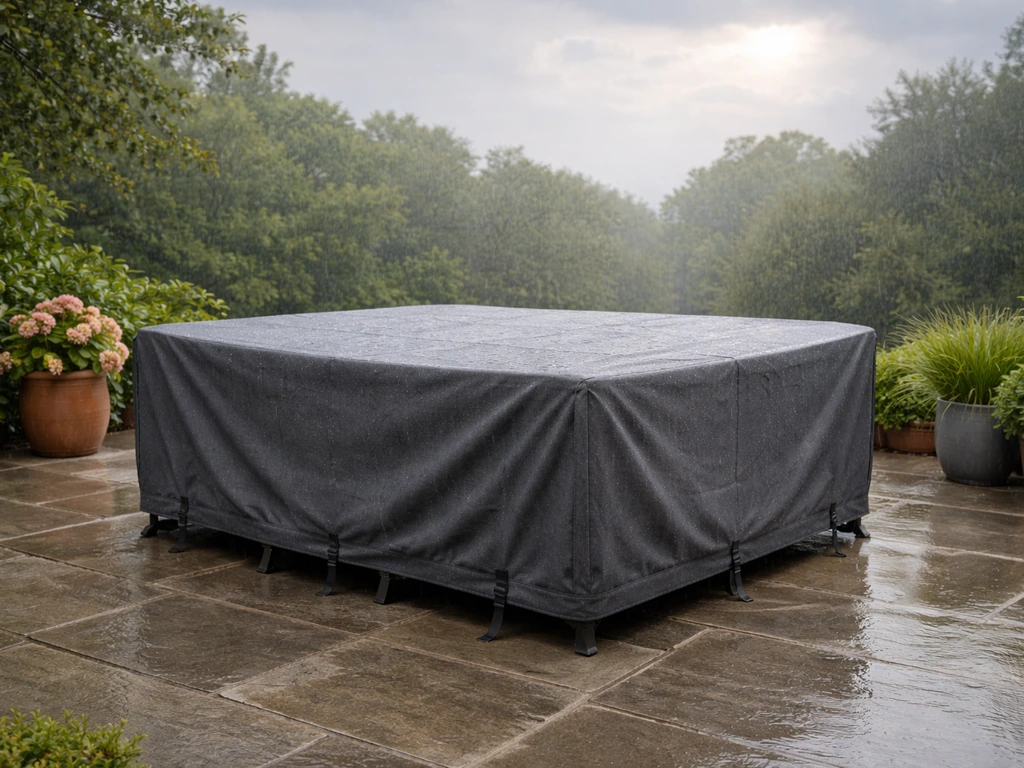
Sun is honestly the sneakiest threat. UV rays break down resin wicker, fade cushion fabric, and dry out teak or acacia wood faster than rain does. Rain adds rust on steel and aluminum frames, swells wood joints, and soaks cushions that then sit wet and grow mildew. Snow and ice add weight stress and freeze moisture into cracks. Wind-driven debris scratches glass tabletops and polished aluminum. All of that damage is cumulative, and most of it happens while your furniture is just sitting there doing nothing.
A good cover cuts down most of that exposure for almost nothing compared to the cost of replacing a set. Even a basic universal cover extends furniture life by several seasons. Whether you're debating whether to cover at all, or just trying to figure out how to do it right, the mechanics here will apply to every patio setup.
Choosing the right cover: material, fit, and size
Material: breathable vs. waterproof vs. both
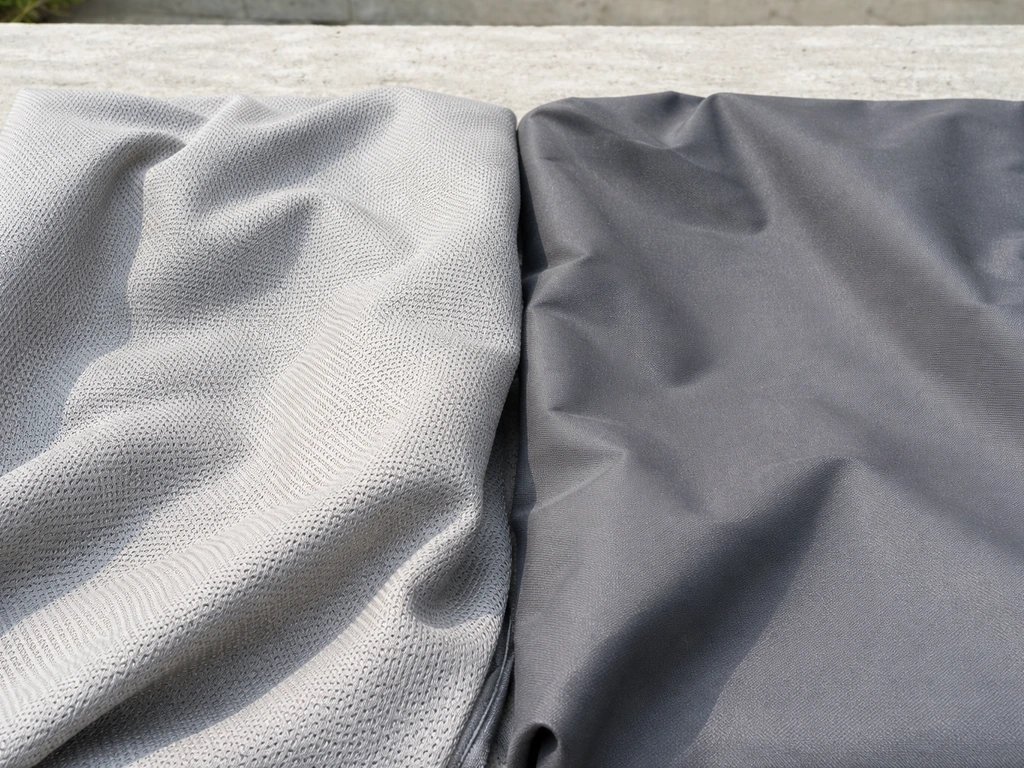
This is where most people get tripped up. A cover that is 100% waterproof with no ventilation traps humidity underneath, which is actually worse than no cover at all if you live somewhere humid. The U.S. EPA recommends keeping indoor humidity below 60% (ideally 30% to 50%) to help prevent mold growth by controlling moisture blank" rel="noopener noreferrer">keeping humidity below 60% (ideally 30% to 50%) to prevent mold growth. You want a cover that is highly water-resistant on the outside but breathable enough to let moisture vapor escape. Transhield’s “Breathable Covers” technical bulletin explains how breathable membrane behavior supports moisture management, which is helpful context for choosing a breathable option breathable enough to let moisture vapor escape. Look for a hydrostatic head rating of at least 1,000 mm for basic protection, but quality covers from brands like Shield Outdoor Covers spec out at 6,000 to 10,000 mm while still including a breathable inner membrane. Restoration Hardware's house-brand covers use breathable, stain-resistant fabric that repels water and resists mold and mildew without sealing the furniture in a plastic bag. That's the standard to aim for.
On a budget, look for covers labeled "solution-dyed polyester" or "600D Oxford polyester" with a PU-coated outer layer and a soft inner lining. Avoid thin single-layer plastic tarps for anything you want to keep in good shape. They trap moisture, scratch finishes, and shred in wind within a season.
Fit: custom vs. universal
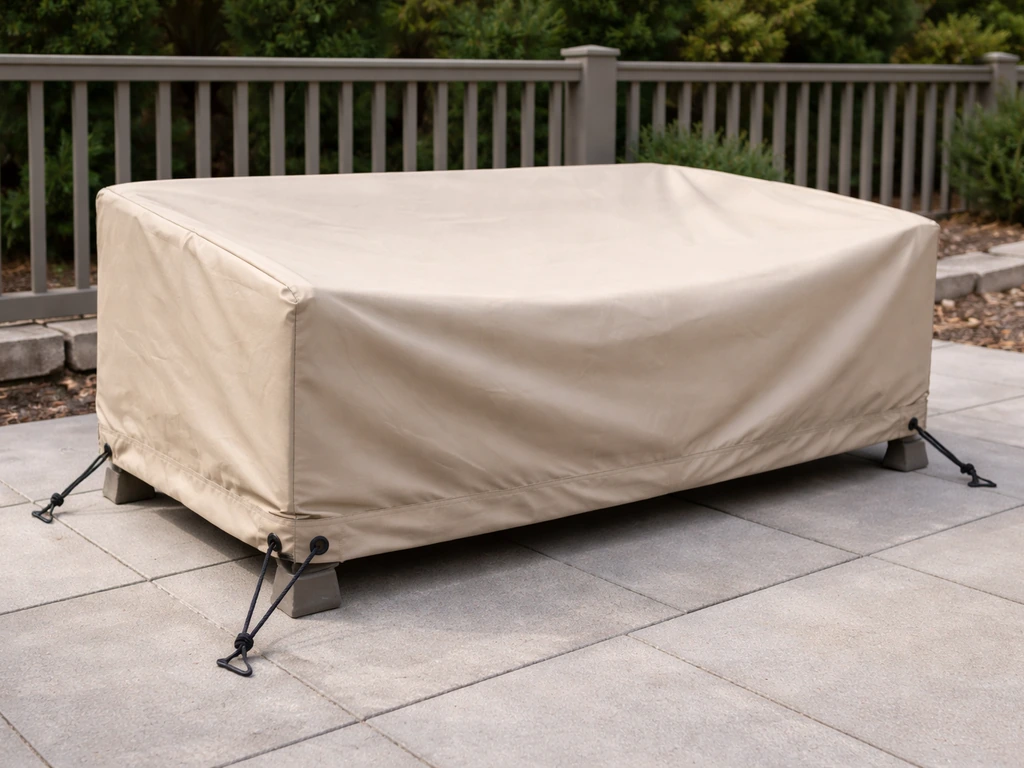
Custom covers fit your exact furniture model and are worth the money for high-end or oddly shaped pieces. Universal covers are sized by category (e.g., "4-seat sofa," "round dining table up to 60 inches") and work fine for most standard sets. The key rule: a cover should be large enough to drape 6 to 12 inches past the lowest point of the furniture frame on all sides, but not so oversized that it billows and catches wind like a sail. A cover that's too big is almost as problematic as one that's too small.
How to measure before you buy
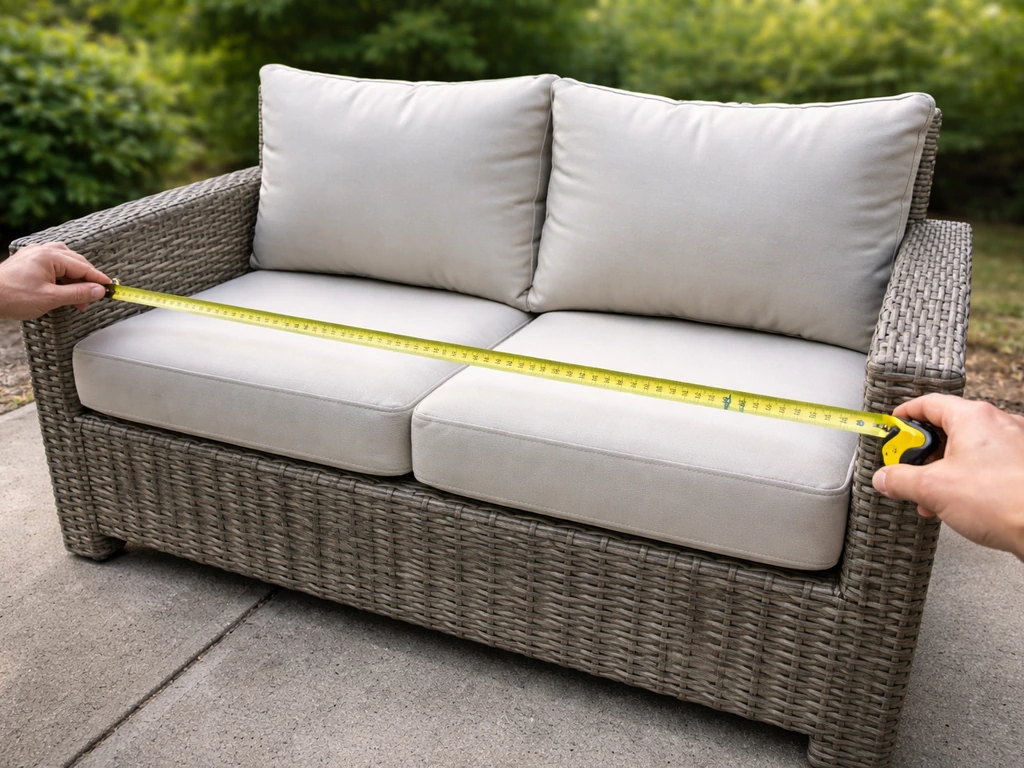
- Measure the widest point of your furniture, including armrests and any protruding legs.
- Measure the depth (front to back) at the deepest point.
- Measure the height from the ground to the tallest point (back of chair, top of umbrella hole if applicable).
- Add 2 to 4 inches to each dimension to allow for the fabric to drape properly.
- Match those numbers to the cover's listed dimensions, not just the category name.
| Cover Type | Best For | Water Rating | Breathable | Approx. Cost |
|---|---|---|---|---|
| Budget universal (polyester/PU) | Standard chairs, small tables | 600–1,000 mm | Varies, check label | $15–$40 |
| Mid-range 600D Oxford | Sofas, dining sets, sectionals | 1,000–3,000 mm | Usually yes | $40–$90 |
| Premium multi-layer breathable | High-value furniture, harsh climates | 6,000–10,000 mm | Yes (membrane layer) | $90–$200+ |
| Custom-fit brand cover | Specialty or designer pieces | Varies by brand | Yes (quality brands) | $100–$300+ |
Prep your furniture before you cover it
Covering dirty or damp furniture is one of the most common mistakes I see. You're basically sealing in the problem. Spend 20 to 30 minutes prepping before the cover goes on and you'll avoid mildew, rust, and finish damage all season.
Clean it first
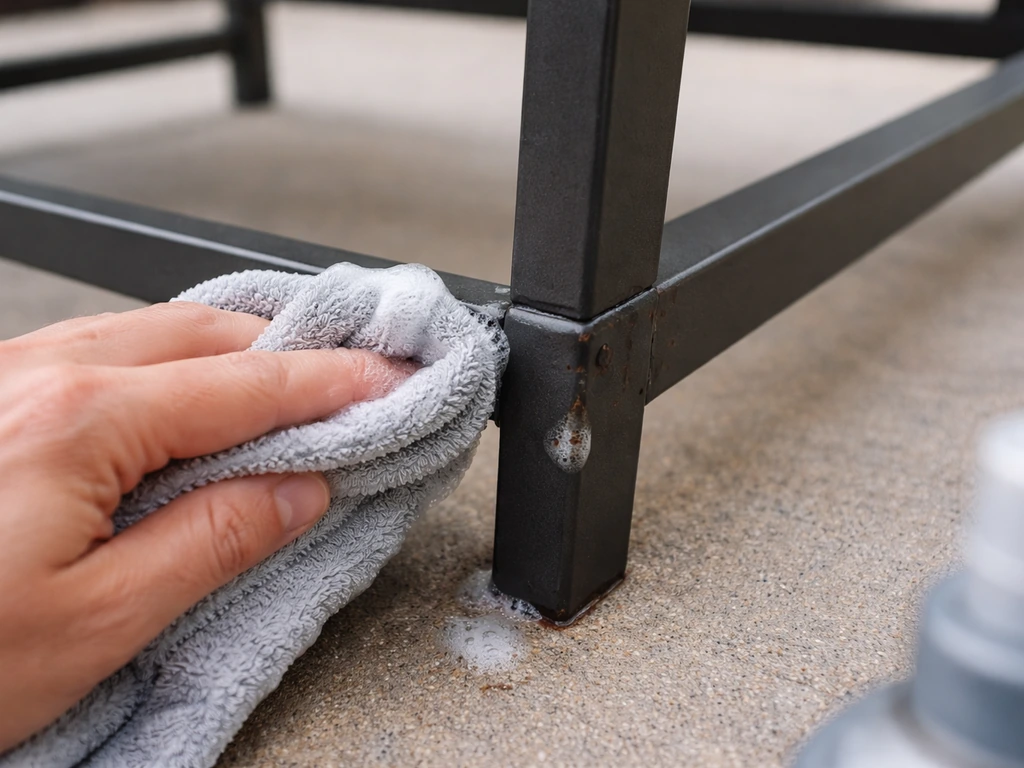
Wipe down frames with a damp cloth and mild dish soap. For metal frames, check for any early rust spots and hit them with a rust converter or touch-up spray before covering. For teak or wood, a quick scrub with a wood-safe cleaner removes dirt and any surface mildew that would otherwise grow under the cover. Cushion fabric should be spot-cleaned and allowed to fully air dry before covering or storing.
Dry everything completely
This is non-negotiable. If furniture is even slightly damp when you cover it, you're creating a humid greenhouse underneath. After cleaning, give everything at least 2 to 3 hours in open air and sun before putting covers on. If it's been raining and you need to cover quickly, shake off what you can, prop cushions upright to drain faster, and leave the cover slightly vented at one end for the first few hours.
Quick frame check
- Re-tighten any loose bolts or screws on chair and table frames so shifting doesn't happen under the cover.
- Fold down or remove a tilting patio umbrella before covering the base or table.
- Retract any extendable footrests on loungers to their compact position.
- Remove and separately store throw pillows and thin accent cushions that aren't cushion-cover rated.
- Apply a thin coat of teak oil or metal protector if you haven't done so in the past season.
Step-by-step: how to cover different patio furniture styles
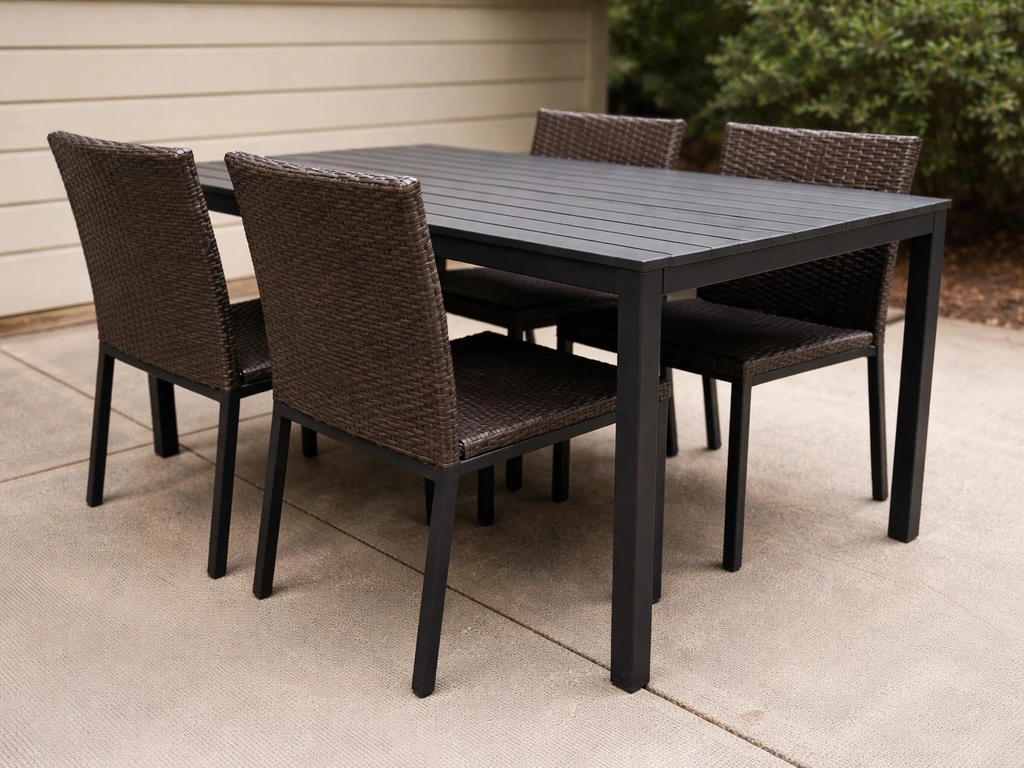
Dining sets (table plus chairs)
- Push chairs in toward the table as closely as possible to create a compact, low-profile footprint.
- If your chairs have cushions that aren't weather-rated, pull them off and store them inside or in a deck box.
- Start the cover from one end of the table, draping it over the top and working toward the far end.
- Pull the cover down evenly on all four sides so it clears the chair legs by at least a few inches.
- Fasten any elastic hem, drawcord, or buckle straps at the base to snug it down.
Sectional sofas
Sectionals are tricky because of their L or U shape. If you're using a single large cover, connect all the sofa sections first into their assembled position, then drape the cover starting from the tallest or innermost corner and work outward. Tuck the cover along the inner joint where sections meet, otherwise wind gets underneath. If you can't find a cover that fits your exact sectional shape, two overlapping covers with the overlap on the leeward side (away from prevailing wind) works fine.
Individual chairs and lounge chairs
For standard patio chairs, stack them in pairs or groups of four when possible before covering. One cover over a stack of four chairs uses less material, holds more securely, and is faster than individual covers per chair. For lounge chairs and chaises, leave them fully reclined flat rather than upright before covering. A cover placed over a reclined lounger sheds water better and is less likely to billow.
Cushions: on or off?
The honest answer is: off and stored inside is always better for cushion longevity. But if you have weather-rated outdoor cushions and a breathable cover, leaving them on the furniture is reasonable for short-term cover use between uses or during moderate rain. If you need to keep patio furniture out during rainy stretches, the key is choosing a breathable, water-resistant cover and ensuring everything is fully dry before covering leaving them on the furniture is reasonable. For winter storage or extended periods, always pull cushions and store them in a dry space or a cushion storage bag. Leaving cushions under a cover for months in winter is asking for mold.
Umbrella bases and tables with umbrella holes
Remove the umbrella pole before covering the table. Most covers have a small vent or opening at the center for umbrella tables, but this vent should be closed or sealed when there's no pole in place. Use a fitted plug or tie the vent closed. Leave the umbrella base cover separate or buy a dedicated base cover that fits around the weighted stand.
Securing covers against wind and preventing moisture problems
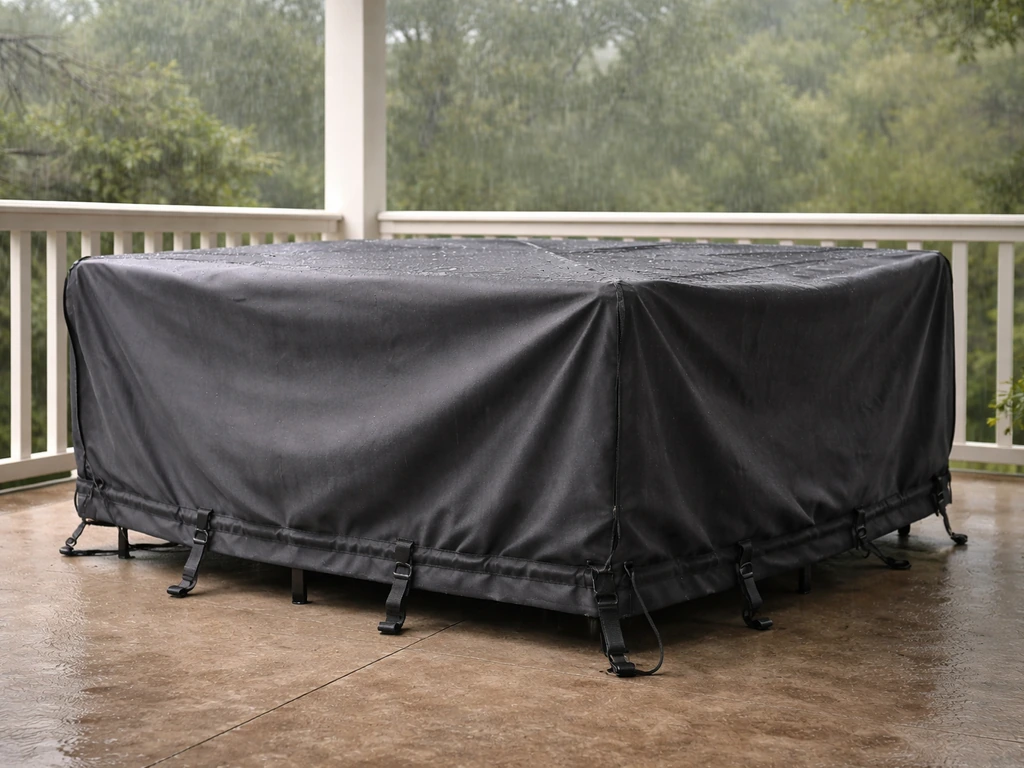
Fastening options that actually hold
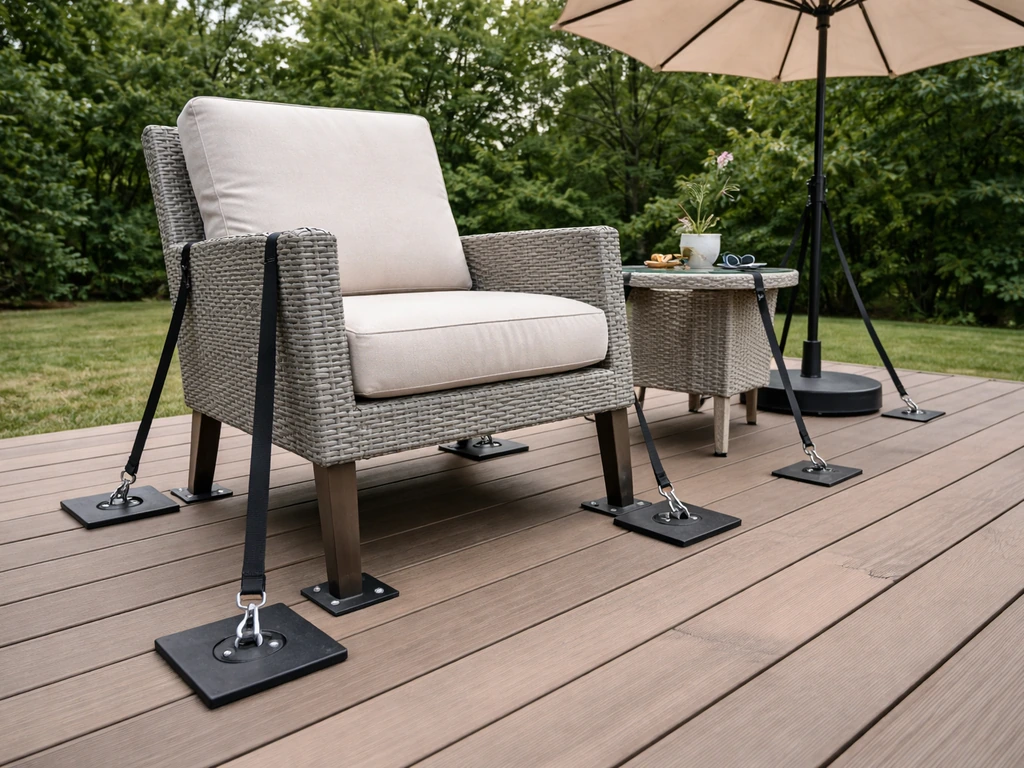
The elastic hem at the bottom of most covers does most of the work, but it's rarely enough on its own in any real wind. Look for covers with adjustable buckle straps that cinch under the furniture frame, or drawcords that you can tighten and tie off. For heavier furniture on a deck, some covers include grommet holes at the hem that let you clip bungee cords or run a cord underneath and knot it. On a patio with gaps between pavers, ground stakes work well for flat covers on loungers.
In genuinely windy climates or hurricane-prone areas, you need more. Run a heavy bungee or nylon strap under the furniture frame and clip both ends to the cover's grommets. You can also use furniture leg weights or sandbags placed over the bottom hem of the cover. For large dining sets, I've used simple velcro cable ties looped around chair legs and through the cover hem to stop it moving even in strong gusts.
Keeping moisture from building up underneath
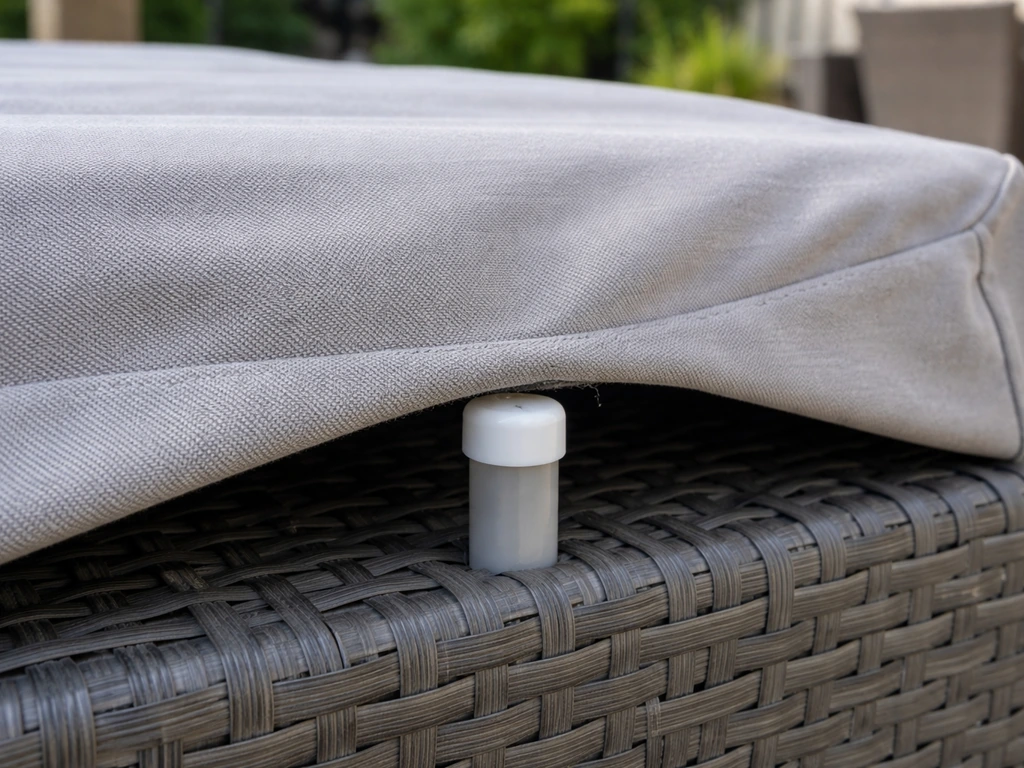
Even a good breathable cover needs airflow to work. Avoid laying a cover so tight that it presses against every surface with zero air gap. A small wooden dowel or a PVC pipe capped at both ends placed horizontally across a table or sofa back creates a ridge that props the cover off flat surfaces, promotes airflow, and helps water run off instead of pooling. Some premium covers include internal wire supports for exactly this reason.
Common mistakes and how to fix them
Cover keeps blowing off
Almost always a sizing or fastening issue. If the cover is too large, there's too much material catching wind. Size down or add straps to cinch the excess. If the cover fits but still lifts, you need additional tie-down points. Add bungee clips from the grommet holes to the furniture legs, or thread a cord under the frame from side to side and tie it snug.
Mildew forming under the cover
This is almost always caused by covering damp furniture or using a non-breathable cover. CDC/NIOSH notes that any mold growth indicates a moisture or water problem, and remediation should address the source of that moisture. If you lift a cover and smell mildew, remove it immediately, let everything air out and dry fully in direct sun, and treat any visible mildew on cushions with a diluted white vinegar spray or an outdoor fabric mildew cleaner. Switch to a breathable cover and never cover wet furniture again. Leaving a slight tent or propped gap on the leeward side on humid nights also helps.
Standing water pooling on top of the cover
A flat cover over a flat table will pool water after heavy rain. That weight stresses seams, and if any water gets in through those seams, you're back to moisture problems. Fix it with the prop trick described above (a ridge underneath the cover), or choose a cover with a peaked or domed shape. For a quick cheap fix, stuff a small ball or a plastic container upside-down under the center of the cover before you put it on.
Cover scratching or marking the finish
Thin single-layer covers with abrasive inner textures can scratch polished aluminum or glass surfaces when wind makes them move around. Look for covers with a soft fleece or brushed inner lining. If you already have a cover that's scratching, lay an old cotton sheet or a few towels over the furniture first as a buffer layer before adding the cover.
Mismatched size causing gaps
A cover that's too small won't reach the bottom of the furniture legs, leaving them exposed to rain splash and rust. Always measure actual furniture dimensions before buying and cross-reference with the cover's listed measurements, not just the furniture category label. When in doubt, go one size larger and use straps to secure the extra material.
Seasonal covering strategy
Summer: UV and heat are the main enemies
In summer, you're probably using the furniture regularly, so you're more likely to cover it at night or for a few days between uses than for extended periods. Focus on UV-resistant cover fabric (look for labels mentioning UV stabilizers or fade resistance) and make sure ventilation is good so heat doesn't build up and warp plastic or dry out wood. You don't need to cover every single night, but covering during extended stretches of sun exposure when you're not using the furniture makes a real difference in how well the finish and fabric hold up over the years. If you're wondering whether you should i cover my patio furniture every night, the short answer is that you only need nightly covering when storms, heavy UV, or long periods of sun exposure are expected.
Winter: snow, ice, and long-term storage
Winter covering is a longer-term commitment. If you are wondering, should i cover my patio furniture in winter, the safest approach is to use a breathable, properly fitted cover and check it after major storms. Furniture should be thoroughly cleaned, dried, and treated before going under a cover for the season. In climates with heavy snow, make sure covers are rated to handle weight without seams splitting, and check on them after major snowfall to brush snow off before it becomes ice. In freezing climates, heavy ice buildup can distort cover shape and press against furniture surfaces in damaging ways. For anything valuable, winter storage inside a garage or shed with a light breathable cover is genuinely better than leaving it outside under a heavy cover.
Maintaining your cover so it keeps doing its job
Covers need care too, otherwise they degrade faster than the furniture they're protecting. Wash covers once or twice per season with mild soap and cool water (most can be hosed off or machine-washed on gentle). Let them air dry completely before folding and storing. Never store a damp cover folded up, because mildew will grow in the folds. Inspect seams and grommets each spring before re-using. A seam that's starting to split can be resealed with a seam sealer product from any camping supply store for a few dollars, which is far cheaper than buying a new cover.
Store covers flat or loosely rolled rather than tightly folded when not in use. Tight folds create permanent crease lines that eventually crack the fabric coating. A breathable storage bag or an old pillowcase works perfectly for keeping a clean, dry cover ready for the next season.
FAQ
Can I put a patio cover on right after it rains?
If it might rain, you still want the cushions to be dry before covering. Shake off surface moisture, prop cushions upright to drain, and if you have to cover immediately, leave one edge slightly vented (even an inch or two) until everything has fully aired out.
How often should I check a covered patio to make sure it is not trapping moisture?
For ongoing comfort, check weekly during humid months, and after any big weather event. Lift a corner to confirm the underside smells normal and looks dry, if you see condensation or odor, uncover and dry before continuing coverage.
Is it okay to apply furniture cleaner or protectant before covering?
Yes, but only if you keep the cover breathable and avoid stacking heavy items that rub. Don’t spray directly under a sealed cover, instead pre-treat and rinse, then let surfaces air dry completely before covering to prevent trapped chemical residue.
What should I do if I discover mildew smell under the cover?
For mold on cushions, remove them from under the cover if possible. Blot and rinse first, then use a diluted white vinegar solution or a fabric mildew cleaner, fully dry in open air and sun, and only then re-cover with a breathable cover.
Can I use a tarp instead of a breathable patio furniture cover?
Do not rely on plastic tarps, even thick ones, because they seal in vapor and can scratch with wind movement. If you must use a tarp temporarily, add ventilation by keeping a gap at one side and remove it as soon as you can switch to a breathable water-resistant cover.
My cover keeps ballooning in the wind, what is the best fix?
If your cover is billowing, it is usually too large or under-secured. Tighten straps or add tie-down points from grommets, and consider propping airflow ridges so the cover stays arched rather than touching every surface.
What if universal covers do not fit my patio sectional or bench perfectly?
If your furniture has irregular corners or a bench with arms, expect universal sizing to be close but not perfect. Use the actual measurements, look for a cover that drapes past the lowest points, and consider custom or a secondary overlapping cover for complex shapes.
How tight should the cover fit, should there be any gap at the bottom?
A gap is good, but a cover that lifts at the bottom defeats the purpose. Aim for full coverage down to the bottom of legs or frame rails, then secure with buckles, drawcords, or stakes depending on your surface.
How can I prevent cover material from scratching glass or polished metal?
If the cover touches glass or polished aluminum, wind-driven rubbing can cause fine scratches over time. Use a soft buffer like a cotton sheet or towels on those surfaces before covering, especially with thinner covers.
How do I maintain the cover so it lasts more than one season?
Check grommets, seams, and strap hardware in spring, and replace any cracked or stretched elastic. For cleaning, treat stains before storing and ensure the cover is completely dry, damp storage is what accelerates seam failure.